- English
- French
- German
- Portuguese
- Spanish
- Russian
- Japanese
- Korean
- Arabic
- Greek
- German
- Turkish
- Italian
- Danish
- Romanian
- Indonesian
- Czech
- Afrikaans
- Swedish
- Polish
- Basque
- Catalan
- Esperanto
- Hindi
- Lao
- Albanian
- Amharic
- Armenian
- Azerbaijani
- Belarusian
- Bengali
- Bosnian
- Bulgarian
- Cebuano
- Chichewa
- Corsican
- Croatian
- Dutch
- Estonian
- Filipino
- Finnish
- Frisian
- Galician
- Georgian
- Gujarati
- Haitian
- Hausa
- Hawaiian
- Hebrew
- Hmong
- Hungarian
- Icelandic
- Igbo
- Javanese
- Kannada
- Kazakh
- Khmer
- Kurdish
- Kyrgyz
- Latin
- Latvian
- Lithuanian
- Luxembou..
- Macedonian
- Malagasy
- Malay
- Malayalam
- Maltese
- Maori
- Marathi
- Mongolian
- Burmese
- Nepali
- Norwegian
- Pashto
- Persian
- Punjabi
- Serbian
- Sesotho
- Sinhala
- Slovak
- Slovenian
- Somali
- Samoan
- Scots Gaelic
- Shona
- Sindhi
- Sundanese
- Swahili
- Tajik
- Tamil
- Telugu
- Thai
- Ukrainian
- Urdu
- Uzbek
- Vietnamese
- Welsh
- Xhosa
- Yiddish
- Yoruba
- Zulu

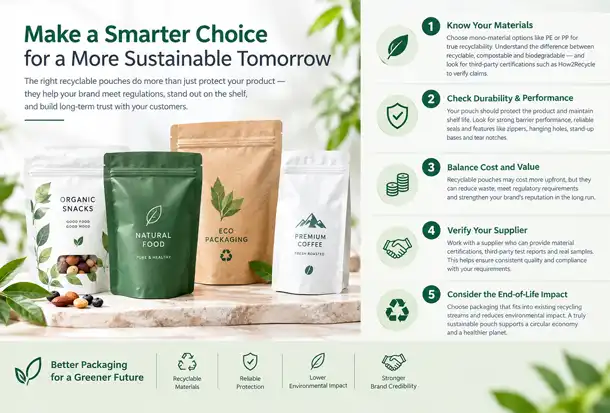
Choosing the right recyclable pouches is one of the most consequential packaging decisions a sustainability-focused brand can make. Whether you manage a pet food label, a natural snack line, or a personal care range, the shift toward mono-material flexible packaging affects compliance, shelf appeal, and brand credibility simultaneously. This guide walks you through five practical tips—covering material types, durability, cost trade-offs, supplier verification, and end-of-life impact—so your team can move from intention to informed procurement with confidence.
Understand the Different Types and Materials of Recyclable Pouches
Not all pouches that say they are eco-friendly are actually recyclable. When your brand has to meet EPR requirements or goes through retailer sustainability audits, this difference is very important.
Mono-Material Structures Are the Gold Standard
Cleanly integrate into established curbside and drop-off recycling streams are mono-material recyclable pouches made entirely of PE (#4) or PP (#5). Normal multi-layer laminates stick together different kinds of materials, but mono-PE and mono-PP structures can be separated and handled without mixing with the recycling batch. MDOPE/PE designs work well in both stand-up and spouted forms because they are flexible and easy to seal. BOPP/CPP structures have better gloss and stiffness, which makes them good for dry snacks, coffee, and pet treats.
Know What You're Actually Buying
Before choosing a source, procurement teams need to be able to tell the difference between claims that something is recyclable, compostable, or biodegradable. For a pouch to be compostable, industrial composting infrastructure is needed. For a pouch to be recyclable, existing plastic drop-off programs can be used. FDA-compliant products must be used for food-contact uses in the U.S. market. Verified recyclable pouches with third-party recognition, like How2Recycle labels, give your compliance team proof that can stand up to scrutiny.
Evaluate the Durability and Functional Features Critical to Your Product
Protection cannot be given up for sustainability. A recyclable pouch that doesn't do its job as a barrier shortens the shelf life, causes more returns, and makes more waste, which is the opposite of what was meant to happen.
Barrier Performance in Mono-Material Formats
When EVOH barrier layers are added to the PE or PP structure of modern single-material recyclable pouches, they let the same amount of air and moisture through as standard aluminum-foil laminates. This is a very important step forward. For pet food brands in particular, strong air walls are needed to keep the food's taste and nutritional value over long shelf lives. Before starting full production, third-party testing must be done to confirm the sealing strength, puncture resistance, and consistency of the heat seal.
Here are the practical qualities that should be given the most weight during your evaluation:
- Resealable zipper closure: keeps dry goods and pet food fresh even after they've been opened, which cuts down on waste and encourages people to buy again. The bag is made of only one material because it has a reusable zipper made from the same base polymer.
- Hanging hole option: you can use a standard pegboard display without any extra packaging hardware. This is very important for pet specialty and natural food stores.
- Stand-up base design: a stable gusseted base supports upright shelf presentation, making products easier to see and reducing damage from handling while they are being stocked.
- Tear notch: allows for controlled, clean cutting without scissors, an attention to detail that raises the quality of the package experience.
These features collectively determine whether a pouch performs in real retail and distribution situations. Once the functional requirements have been confirmed, you should ask for real samples and test them on your actual filling line before giving the go-ahead for production.
Analyze Costs Versus Long-Term Sustainability Benefits
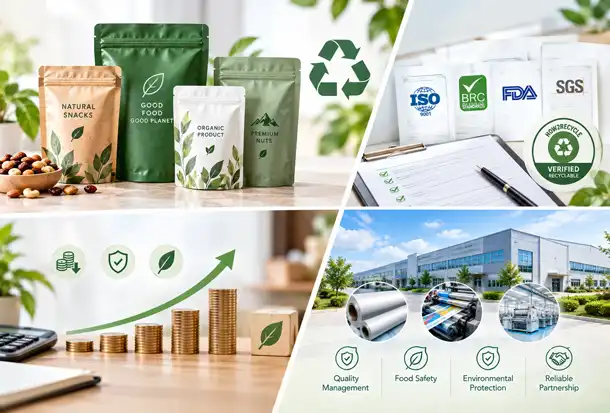
Flexible packaging that is better for the environment usually costs 10–30% more than regular multi-layer laminates. That number doesn't need to be a cause for alarm.
Total Cost of Ownership Tells the Real Story
When EPR compliance fees, plastic package taxes, and possible fines for materials that don't follow the rules are taken into account, the extra cost of mono-material recyclable pouches often drops by a large amount. Brands that sell in the EU already have to follow producer responsibility rules. Some U.S. states, like California and Maine, have also made these rules required. It makes perfect financial sense to pay a small extra per unit to avoid having to pay higher compliance costs later on.
When you order in bulk, unit costs go down by a lot. Digital printing orders at Guoshengli Packaging start at 500 units, which lets small brands see how the market responds before going big. Rotogravure print runs are good for larger quantities because they are cost-effective at scale and can reproduce up to 11 colors in a way that looks like regular packaging. Several Nielsen and McKinsey customer studies have shown that confirmed sustainable packaging builds brand value over time. This loyalty dividend is something that unit-cost comparisons alone can't show.
Verify Supplier Credibility and Compliance with Industry Standards
About the same amount of real innovation and greenwashing can be found in the market for recyclable packaging. The way you choose suppliers must be able to tell the difference between the two.
Certifications and Traceability Are Non-Negotiable
A reliable company that makes recyclable pouches will have third-party approvals that can be checked. Check for ISO 9001 quality management certification, BRC food packaging certification, and FDA paperwork that shows they follow the rules for food handling. Suppliers should show test reports from SGS or a similar third party that confirm the performance of the barriers, the limits of migration, and assessments of how well they can be recycled. Approval by RecyClass or membership in the How2Recycle program adds independent verification of promises that something can be recycled.
Guoshengli Packaging has been making flexible packaging for 25 years and has ISO 9001, BRC, and FDA certifications. The factory uses water-based inks and solvent-free lamination, and it uses foreign RTO exhaust gas treatment technology to control production emissions. These are the kinds of details that matter when your brand's sustainability story needs to stand up to an outside audit. Ask for documentation ahead of time; a reliable supplier will gladly give it to you.
Evaluate Production Flexibility and Communication
In addition to certifications, you should also check to see if a supplier can work with the way your business works. Sourcing risk is greatly reduced by having flexible MOQ options, lead times as short as 7 days for digital print projects, and clear cooperation processes from the time of inquiry to delivery. A supplier with experience in the North American, European, and Asia-Pacific markets knows how the rules work in each area, which makes your compliance work easier.
Consider the Recycling Process and End-User Environmental Impact
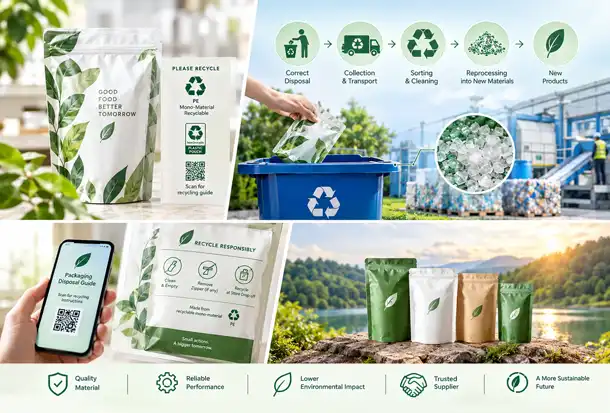
Picking materials that can be recycled is important but not enough. The recyclable pouch has to get to a recycling center and be processed properly.
Design for the Recycling Infrastructure That Exists
In the U.S., you can recycle PE film at major retailers through drop-off programs, and the infrastructure for recycling PP film is still growing. If you choose a pouch material that works with the systems that are already in place in your area instead of one that might work in the future, you can be sure that your claim of sustainability will actually lead to fewer bags going to landfills. Contamination is still the main reason why film recycling fails. Keeping the whole bag structure made of one material gets rid of the sorting confusion that causes rejection.
End-user cooperation rates are higher when there are clear recycling directions on the package, How2Recycle labels, and QR codes that link to disposal instructions. The circular economy loop ends when people know the right way to discard a pouch. When brands put money into educating end users, they build trust that marketing alone can't do.
Conclusion
The quality of the material, how well it works, how much it costs, how trustworthy the seller is, and how well it fits with the recycling system must all be carefully considered when switching to truly recyclable pouches. PE and PP structures made of only one material now give food, pet food, and personal care brands the barrier performance, print quality, and useful flexibility they need. The legal and market benefits of eco-friendly flexible packaging are structural, not cyclical. As rules about compliance get stricter in the U.S. and around the world, brands that make sure their products can be recycled will have a clear edge.
FAQ
1. What makes a pouch truly recyclable versus just eco-labeled?
A pouch that is really recyclable has a structure made of a single material, like mono-PE or mono-PP, so it can be recycled with other plastics without getting messed up. Multi-layer laminates made of different polymers or metal foil stuck together can't be separated during normal recycling, so they usually end up in a dump. Third-party verification through programs like How2Recycle or RecyClass backs up claims that something can be recycled with proof.
2. How do mono-material pouches compare to aluminum foil laminates in barrier performance?
In many food and pet food uses, modern structures made of a single material and EVOH barrier layers work just as well as traditional foil laminates at blocking oxygen and wetness. Transmission rates should be confirmed by test reports from a third party before you decide on the final material for sensitive products.
3. What certifications should I require from a recyclable pouch supplier?
Set ISO 9001, BRC food package approval, and FDA food-contact compliance as top priorities. Ask SGS or a similar third-party to test the performance of the barrier and the safety of movement. Certifications that test for recyclability, like RecyClass approval, give more independent proof.
4. What is the minimum order quantity for custom recyclable pouches?
Digital printing projects at Guoshengli Packaging begin with 500 units, which allows for small-batch testing before going to full production levels.
Partner with a Trusted Recyclable Pouches Manufacturer
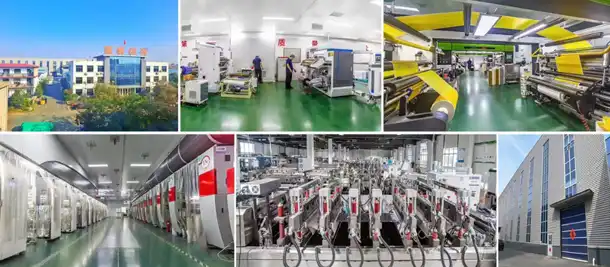
Guoshengli Packaging makes approved, high-performance, recyclable pouches based on their 25 years of experience with flexible packing. Our structures made of only PE and PP are compliant with FDA, ISO 9001, and BRC standards. We use solvent-free production and water-based inks to support your green paperwork. We offer a customizable MOQ, quick wait times, and helpful technical support, no matter how many units you need or how many you need in total. You can get samples from our team by emailing sales@guoshengpacking.com. Start your packaging transition today.
References
1. Ellen MacArthur Foundation. The New Plastics Economy: Rethinking the Future of Plastics & Catalysing Action. 2017.
2. McKinsey & Company. Sustainability in Packaging: Inside the Minds of US Consumers. 2020.
3. How2Recycle. Labeling Standards for Recyclable Flexible Packaging. 2022.
4. RecyClass. Recyclability Evaluation Protocol for Flexible Plastic Packaging. 2023.
5. European Commission. Packaging and Packaging Waste Regulation — Extended Producer Responsibility Framework. 2022.
6. ASTM International. Standard Guide for Evaluation of Single-Material Flexible Packaging Recyclability (ASTM D7611). 2020.