- English
- French
- German
- Portuguese
- Spanish
- Russian
- Japanese
- Korean
- Arabic
- Greek
- German
- Turkish
- Italian
- Danish
- Romanian
- Indonesian
- Czech
- Afrikaans
- Swedish
- Polish
- Basque
- Catalan
- Esperanto
- Hindi
- Lao
- Albanian
- Amharic
- Armenian
- Azerbaijani
- Belarusian
- Bengali
- Bosnian
- Bulgarian
- Cebuano
- Chichewa
- Corsican
- Croatian
- Dutch
- Estonian
- Filipino
- Finnish
- Frisian
- Galician
- Georgian
- Gujarati
- Haitian
- Hausa
- Hawaiian
- Hebrew
- Hmong
- Hungarian
- Icelandic
- Igbo
- Javanese
- Kannada
- Kazakh
- Khmer
- Kurdish
- Kyrgyz
- Latin
- Latvian
- Lithuanian
- Luxembou..
- Macedonian
- Malagasy
- Malay
- Malayalam
- Maltese
- Maori
- Marathi
- Mongolian
- Burmese
- Nepali
- Norwegian
- Pashto
- Persian
- Punjabi
- Serbian
- Sesotho
- Sinhala
- Slovak
- Slovenian
- Somali
- Samoan
- Scots Gaelic
- Shona
- Sindhi
- Sundanese
- Swahili
- Tajik
- Tamil
- Telugu
- Thai
- Ukrainian
- Urdu
- Uzbek
- Vietnamese
- Welsh
- Xhosa
- Yiddish
- Yoruba
- Zulu
BLOG LIST
In today’s hyper-competitive food and Consumer Packaged Goods (CPG) market, speed and flexibility are paramount. Whether you're launching a disruptive snack line, introducing a seasonal coffee flavor, or testing a new pet food formula, traditional packaging methods often create unnecessary friction and financial hurdles.
That's why digital printed pouches have rapidly become the go-to packaging solution for startups, small-batch producers, and even large manufacturers seeking agility.
This article details precisely why digital printing solves high MOQ (Minimum Order Quantity) problems, drastically reduces lead times, eliminates punitive plate costs, and accelerates your time-to-market—complete with a comprehensive buyer’s guide and industry-specific insights.
Why Traditional Packaging Slows Brands Down
Traditional rotogravure printing (also known as Gravure) is optimized for sheer volume and consistency, but it comes with three well-known, brand-crippling pain points:
1. Pain Point: Crippling High MOQs (20,000–50,000 pcs per SKU)
Rotogravure requires high setup costs and long production runs to achieve economy of scale. This makes it financially impossible or extremely high-risk for:
· Startups testing market viability.
· Brands with extensive SKU diversity (many flavors/variations).
· Seasonal or limited-edition lines that only need a few thousand units.
The consequence is often dead inventory—warehouses full of pouches that become obsolete, tying up critical cash flow.
2. Pain Point: Excruciatingly Long Lead Times (4–6 weeks)
The complexity of preparing for a rotogravure run extends the timeline significantly:
· Cylinder Production: You must create 6–10 heavy steel cylinders (one per color). This process alone takes one week.
· Color Matching & Press Setup: Setting up the cylinders, aligning the colors, and getting the press running requires significant queue time.
· Production Queues: Large, multi-million unit orders often take precedence, pushing smaller runs further down the calendar.
This latency severely limits a brand's ability to pivot or quickly replenish stock.
3. Pain Point: Expensive Plate/Cylinder Fees ($60–$150 per color)
The high initial investment in steel cylinders is a massive barrier. For a standard 8-color design, you could pay $480 to $1200 just for the tooling.
· If your artwork changes—even minor updates to the nutrition facts or a promotional logo—you must pay to create the new cylinders all over again.
Digital printing eliminates these three obstacles completely, shifting the cost structure from CAPEX (capital expenditure) to OPEX (operating expenditure).
What Are Digital Printed Pouches?
Digital printed pouches utilize high-resolution, CMYK-based digital presses (like the HP Indigo 25K/20000) to print directly onto packaging film.
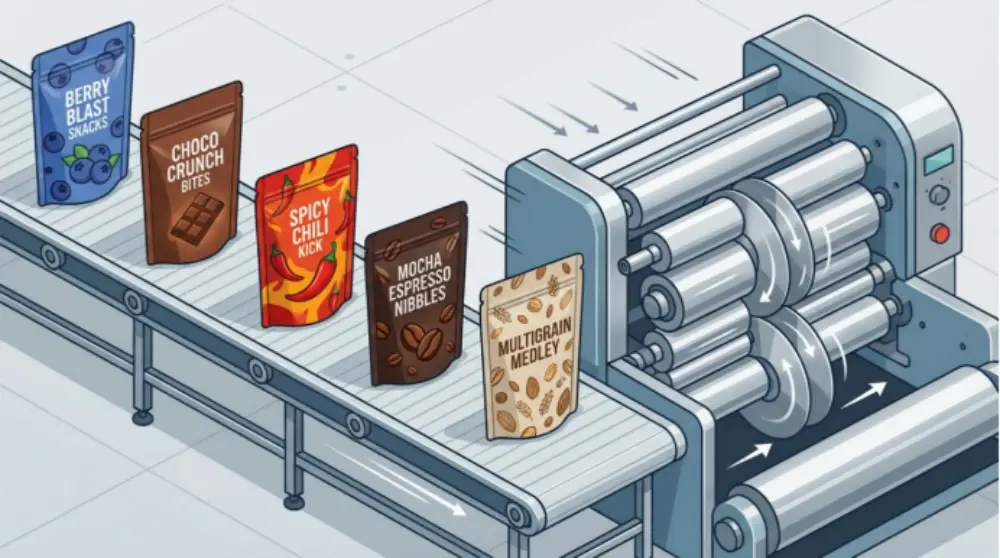
This process is similar to a high-end commercial printer, but scaled for flexible film: no cylinders, no plates, and minimal setup time.
Perfect for brands that need:
· Low MOQ (typically 500–3,000 pcs).
· Fast Lead Time (as quick as 7–12 days).
· Multiple SKUs printed in a single batch.
· Frequent design changes or testing of new concepts.
Key Benefits of Digital Printing (Explained With Real Business Scenarios)
Benefit 1: Low MOQ — Launch More SKUs With Less Risk
Scenario: A startup is releasing five distinct snack flavors. Instead of being forced to order 10,000 pieces of each flavor (total 50,000 bags), they can print 500 pieces per flavor.
· This significantly reduces the initial cash outlay and allows them to test the market, gain sales data, and commit to large volumes only for the winning SKUs.
Benefit 2: Zero Plate Cost — Save $600–$2,000 Per Design
Digital printing uses a file-to-print process. The cost of a design change is zero.
This is a game-changer for brands that frequently update their labels due to:
· Seasonal promotions (e.g., Pumpkin Spice, Holiday blend).
· Regulatory compliance (e.g., changes to nutrition facts, allergen warnings).
· Barcode or serial number variations.
Benefit 3: Faster Lead Times — From Design to Delivery in 7–12 Days
By skipping the 3–4 week cylinder production phase, digital printing compresses your product launch timeline by 50% to 70%.
· This is crucial for: Seasonal products, limited edition coffee roasts, or addressing urgent emergency replenishment orders caused by unexpected sales spikes.
Benefit 4: Multi-SKU Printing — No Extra Cost or Setup Time
With rotogravure, changing a design means new plates and a new, costly setup. With digital, switching between designs is instant.
· You can print 10 flavors in the same batch, under the same order, for the same unit price.
· Perfect for: Snack "combo box" brands, coffee roasters offering multiple origins, or pet food sampler packs.
Benefit 5: High-Definition Printing — Premium Shelf Presence
Digital printing is renowned for its fidelity and resolution, typically offering 600–1200 DPI.
· It excels at reproducing photographic images, smooth gradients, and intricate details without the visible screen dots sometimes associated with traditional printing.
· Some advanced presses offer an Extended Color Gamut, allowing for closer matches to a wider range of brand and Pantone colors, drastically improving shelf appeal.
Benefit 6: Inventory Reduction & Cash Flow Optimization
By shifting to an on-demand printing model, you minimize inventory holding costs.
The Hidden Cost of High MOQ: When you order 30,000 pouches, you are tying up cash in materials, paying warehouse fees, and risking having to write off the entire batch if the product or recipe changes.
· Result: Better cash flow, reduced waste, and the ability to pivot faster than your competition.
Material Options for Digital Printed Pouches
Digital printing is compatible with the most popular and advanced flexible packaging films. Crucially, the ink is always sandwiched between two layers (laminated), ensuring it never touches the food and provides robust protection against abrasion and freezer conditions.
|
Material Structure
|
Features
|
Barrier Property
|
Best For
|
|
PET/PE
|
Cost-effective, strong, clear or opaque finish
|
Good (Moisture & Gas)
|
Snacks, Cookies, Nuts
|
|
MOPP/PET/PE
|
Matte finish, premium soft touch feel
|
Good
|
Coffee, Granola, Superfoods
|
|
Kraft/PET/PE
|
Natural paper look, digital print on the kraft surface
|
Good
|
Organic & Natural Brands
|
|
Recyclable PE/PE
|
Mono-material structure, lowest environmental impact
|
High-Grade (Often MDOPE)
|
Sustainable Packaging, General Food
|
|
Nylon/PE or AL/PET/PE
|
Highest puncture resistance and ultimate barrier
|
Excellent (OTR/MVTR)
|
Pet Treats, Freeze-Dried Food, Liquid
|
Barrier Note: For products highly sensitive to moisture and oxygen (like ground coffee or jerky), suppliers incorporate layers of Metallized PET (MET-PET) or Aluminum Foil (AL), which is essential for preserving shelf life.
Most Popular Bag Types for Digital Printing
Digital presses can print the rollstock needed to produce virtually any type of pouch:
· Stand Up Pouch (SUP): The most popular format, excellent for shelf display.
· Flat Bottom Pouch: Offers superior stability and a large display surface.
· Side Gusset Pouch: Ideal for coffee and high-volume products.
· Three-Side Seal Pouch
· Spout Pouch (for liquids/sauces)
· Shaped Pouch (custom die-cut designs)
· Rollstock Film (for automated filling machines)
All styles support common features like: Zippers, Tear Notches, Euro Holes, Matte or Gloss finishes, and Clear Windows.
How to Choose the Right Supplier (B2B Procurement Guide)
Vetting a digital printing partner requires focus on technical capability and quality control.
✔ Check Printing Equipment
Look for suppliers using industry-leading digital presses like the HP Indigo 25K / 20000 or equivalent high-resolution technology. This ensures color accuracy and reliability.
✔ Confirm True MOQ & Lead Times
A genuine digital printer will offer:
· MOQ: 500–3,000 pieces.
· Lead Time: 7–12 days after final artwork approval (DFA).
✔ Review Material & Facility Certifications
Always ensure the supplier meets strict food-grade standards:
· FDA (US) or EU Food Contact certified films.
· ISO/BRC (British Retail Consortium) certification for facility quality and hygiene.
✔ Ask for Color Proofing and Management
Digital printing should provide:
· A physical, press-accurate printed proof of your design.
· Confirmation they use a calibrated spectrophotometer to ensure color consistency from run-to-run.
✔ Confirm Post-Press Capabilities
The supplier must manage the entire process in-house or through a trusted partner:
· Lamination: Ask about the type of adhesive (preferably solvent-less for faster turnarounds and environmental benefits).
· Slitting and Pouch Making: Ensure they handle die-cutting and bag assembly.
Cost Comparison Table: Digital vs Rotogravure
This table illustrates the fundamental differences in cost structure and agility:
|
Item
|
Digital Printing
|
Rotogravure
|
|
Best For
|
Small/Medium orders (500–15,000)
|
Large Volume (50,000+)
|
|
MOQ
|
500–3,000
|
10,000–50,000
|
|
Plate Cost
|
$0
|
$60–$150 per color (Massive upfront investment)
|
|
Lead Time
|
7–12 days
|
20-25 days
|
|
Multi-SKU Cost
|
Same unit price (easy design switching)
|
New plates + extra setup cost for each SKU
|
|
Color Quality
|
Excellent (Photographic detail, Extended Gamut)
|
Excellent (Volume-optimized)
|
|
Inventory Risk
|
Low (On-demand printing)
|
High (Risk of obsolescence)
|
Common Use Cases by Industry
Snack Industry
The digital model supports the constant demand for new flavor innovations and seasonal themes. Digital enables brands to launch three new flavors for the cost and time it traditionally took to launch one.
Pet Food & Treats
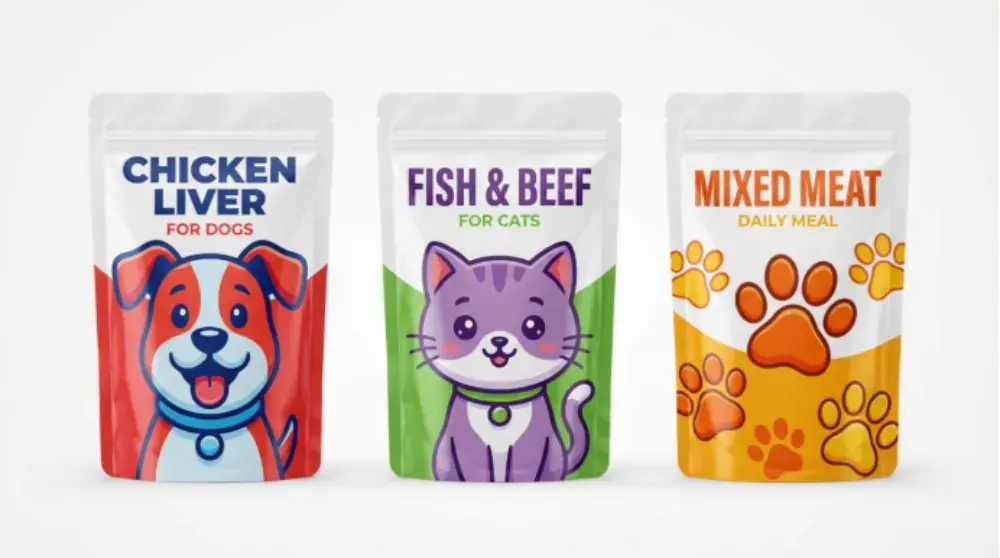
Many pet food lines have a high SKU count (different proteins, different sizes). Digital allows brands to keep every SKU in stock and respond quickly to demand for specialty or high-margin treats.
Coffee & Tea
Digital is ideal for micro-lot sourcing. Roasters can confidently purchase small batches of rare beans and print highly customized, premium-looking bags (often with a luxurious matte/spot gloss finish) without tying up thousands of dollars in inventory for a limited-run roast.
Supplements & Health Foods
This industry faces frequent FDA/regulatory label changes. Digital printing allows for immediate label updates, ensuring strict compliance and dramatically reducing the risk of costly recalls or discarding outdated packaging.
Nuts, Dried Fruits & Superfoods
Often sold in granular or high-value quantities, these products benefit from small-batch production and the need for strong barrier protection, which digital film structures readily provide.
How to Ensure High Printing Quality
High quality starts with high-quality artwork submission:
1. Use Vector Artwork: Submit your text and logos as PDF / AI / EPS vector files. This ensures sharp, clean lines and prevents jagged edges when the image is scaled.
2. Set 300 DPI for Images: Any raster images (photos) should be set to a minimum of 300 Dots Per Inch (DPI) at the final print size. Lower DPI leads to a blurry or pixelated finish.
3. Choose Matte + Spot Gloss for Premium Effect: Digital technology allows you to easily apply a full matte finish with a targeted spot gloss over logos or key elements, providing tactile and visual appeal without the need for a separate plate.
4. Use CMYK Color Profiles: While digital can hit a wide gamut, always convert artwork to the industry-standard CMYK (Cyan, Magenta, Yellow, Black) profile to avoid oversaturated or unpredictable colors that can result from RGB profiles.
♻️ Environmental Benefits
Digital printing technology inherently promotes a more sustainable supply chain:
· No Plate-Making Waste: Eliminates the use of chemicals, metals, and solvents involved in cylinder creation.
· Lower Inventory Waste: By printing only what is needed, the risk of discarding thousands of obsolete pouches is drastically reduced. This supports true on-demand production.
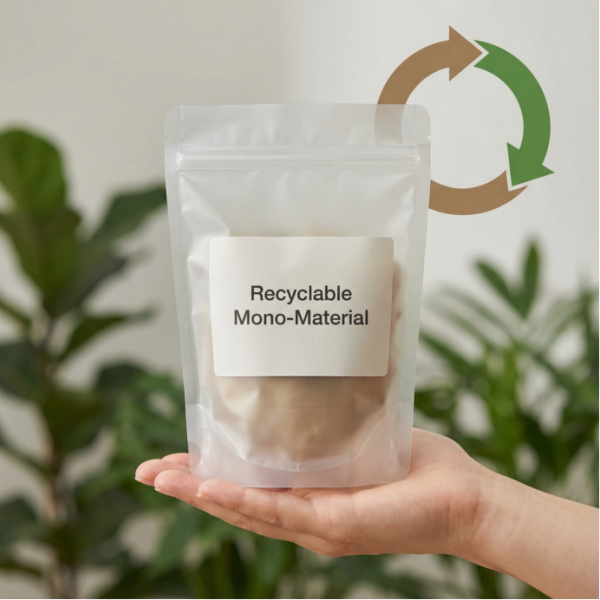
· Compatibility with Mono-Materials: Digital presses are fully compatible with new recyclable PE/PE structures (using specialized films like MDOPE), helping brands meet sustainability goals while maintaining strong barrier protection.
FAQ
Q1: Is digital printing durable for frozen or oily food?
A: Yes. The integrity comes from the lamination. The ink is completely protected inside the lamination layer, making it highly durable against moisture, abrasion, and freezer temperatures.
Q2: Can digital printing match Pantone colors?
A: Digital uses a CMYK base (and sometimes an extended gamut). While it can achieve a very close match to most Pantone colors, it is not 100% identical like a dedicated spot color in rotogravure.
Q3: What is the largest pouch size you can digitally print?
A: The width of most high-end digital presses accommodates almost all standard food, snack, and coffee pouch sizes.
Q4: Can I order multiple designs in one batch?
A: Absolutely. Zero plate cost means you can order unlimited SKUs, mixing designs freely within your minimum order quantity requirements.
If you are struggling with restrictive MOQs, enduring long lead times, or facing expensive plate fees, digital printed pouches are your fastest, most flexible path to market and sustained growth.
As a 25-year flexible packaging manufacturer, we specialize in high-quality digital solutions engineered for the CPG industry:
· MOQ 500–1,000 pcs
· 7–10 day lead time
· Recyclable material options
· BRC/FDA certified production
· Full customization & design support
Contact us today to get a free quotation or request digital printed samples tailored to your product needs.
In the fiercely competitive snack market, flexible packaging is not just a covering; it's your invisible salesperson, your quality commitment, and a critical factor in brand premiumization. For snack brands aiming for excellence, choosing the right packaging structure determines your product’s shelf life and market resilience.
This article serves as your authoritative guide for formulating your 2025 snack packaging strategy. We will conduct a deep analysis of material science, bag type selection, and provide a high-value supplier audit checklist focused on procurement needs, ensuring your products are both fresh and compliant in the marketplace.
1. Introduction: The Strategic Role of Flexible Snack Packaging
Flexible packaging is the dominant choice for snacks due to its cost-effectiveness, lightweight nature, and excellent print adaptability. Heading into 2025, the industry faces a dual challenge:
· Extreme Preservation Challenge: Increased consumer demand for natural, fewer-additive snacks requires packaging to deliver superior barrier properties against oxidation and moisture.
· Sustainability Challenge: Market demands and global regulations, especially the phased implementation of Extended Producer Responsibility (EPR) mandates, compel brands to switch to recyclable mono-material structures.
Neglecting these trends will leave your product vulnerable in the future market landscape.
2. Core Elements of Quality Snack Packaging
A high-quality flexible snack package must meet the following key functionalities:
The Science of Maximum Freshness: OTR vs. WVTR
The primary role of packaging is to prevent environmental factors from degrading the snack's flavor and texture. The two core metrics for measuring barrier properties are:
· OTR (Oxygen Transmission Rate): The amount of oxygen that permeates the material per unit of time. A lower OTR means better protection against fat oxidation and flavor loss (critical for nuts, chips, jerky).
· WVTR (Water Vapor Transmission Rate): The amount of water vapor that permeates the material per unit of time. A lower WVTR means better protection against the snack getting stale, soft, or moldy (critical for puffed snacks, cookies).
Safety and Compliance: Food-Grade Standards and Anti-Burst Design
All food packaging materials must comply with food contact standards such as FDA (US) or EU Regulation 10/2011 (EU), ensuring low migration of inks and adhesives. Simultaneously, the packaging’s heat seal strength must be rigorously tested to withstand transit pressures and prevent bag failure.
Meeting EPR (Extended Producer Responsibility) Mandates
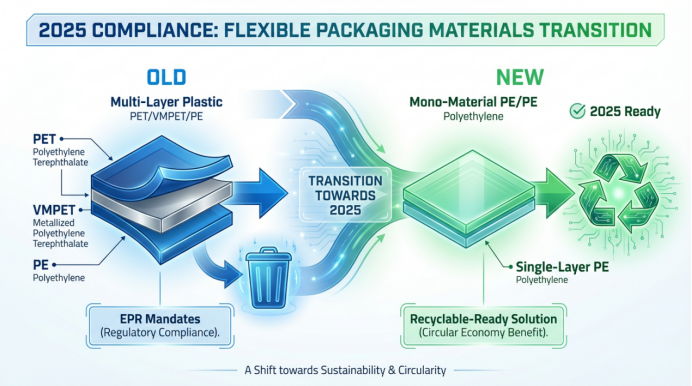
EPR legislation holds producers accountable for the end-of-life management of their packaging. For your packaging, this means: it must be recyclable. Brands must prioritize structures made of mono-materials (like PE/PE or PP/PP) to align with future recycling infrastructure requirements and avoid escalating non-compliance fees.
3. Snack Packaging Materials: Barrier Performance & Cost-Benefit Analysis
The composition of the multi-layer film is central to balancing barrier properties and cost.
|
Material Structure
|
Cost Comparison
|
Barrier Level (OTR/WVTR)
|
Recyclability
|
Applicable Snack Types
|
|
PET/PE
|
Medium
|
Basic
|
Poor (Multi-material)
|
Candies, Short shelf-life snacks
|
|
PET/VMPET/PE
|
Medium-High
|
Excellent
|
Poor (Multi-material)
|
Nuts, Chips, Dried fruit
|
|
Aluminum Foil Laminates
|
High
|
Highest (Near-zero)
|
Poor
|
Extremely long shelf-life or light-sensitive products
|
|
Recyclable Mono-PE/PE
|
High (New Technology)
|
Moderate to Excellent
|
Excellent (Mono-material)
|
Chips, Nuts (Eco-compliant)
|
Expert Recommendation: While PET/VMPET/PE remains the most cost-effective choice for high barriers, investing in Recyclable Mono-Materials is a strategic move to ensure long-term compliance and market viability, especially when targeting North American and European retailers.
4. Snack Packaging Bag Types: Maximizing Shelf Appeal and Functionality
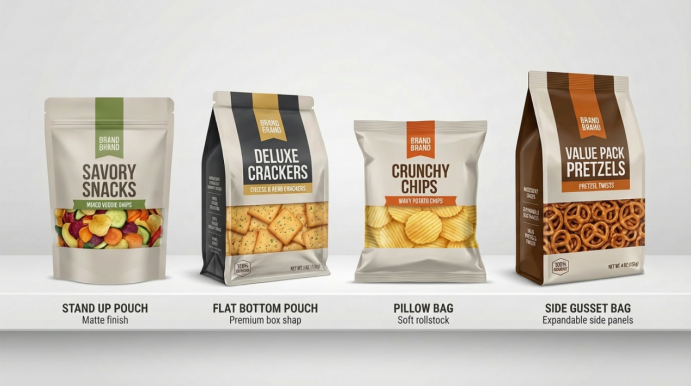
The bag type is the consumer's first physical interaction with the brand and must combine aesthetics with functionality.
· Stand Up Pouch: Highest market share. Self-standing capability, most suitable for snacks with zippers for reclosing, such as nuts and cereals. Typical thickness is around $120 \mu m$.
· Flat Bottom Pouch (Box Pouch): Best for premium display. Five printable panels, stable structure, gives the product a "gift-box" aesthetic, common for premium bakery items or specialty snacks.
· Pillow Bag (Rollstock): Most cost-efficient. Formed automatically on high-speed VFFS (Vertical Form Fill Seal) machines from roll film, it's the primary choice for large-volume, low-cost items like chips and puffed snacks.
· Side Gusset Bag: Maximum capacity. Often used for bulk or large-format snacks, where side folds allow for expanded volume.
· Added Feature: Easy-Open Functionality: Features like Laser Scoring (pre-cut lines), Tear Notches, or specialized zipper profiles are essential for improving the consumer experience and preventing frustration when opening the bag.
5. Choosing the Right Barrier Structure by Snack Category
Customize the packaging structure based on the snack's sensitivity to moisture and oxygen. For each category, we must consider the optimal flexible packaging film thickness to balance protection and cost.
|
Snack Category
|
Core Barrier Requirement
|
Recommended Material Structure
|
Recommended Total Thickness
|
Recommended Bag Type
|
|
Nuts & Seeds
|
High Anti-Oxidation (Very Low OTR)
|
PET/VMPET/PE or Recyclable PE/PE (High Barrier Film)
|
$130-140 \mu m$
|
Stand Up Pouch, Flat Bottom Pouch
|
|
Chips & Puffed Snacks
|
High Moisture Barrier (Very Low WVTR)
|
PET/VMPET/PE or BOPP/VMPET/PE
|
$100-120 \mu m$
|
Pillow Bag, Stand Up Pouch
|
|
Freeze-dried snacks
|
Extreme Moisture Challenge
|
PET/Alu/PE or KPET/PE
|
$110-130 \mu m$
|
Stand Up Pouch
|
|
Gummies & Candies
|
Moderate Moisture, Anti-Sticking
|
PET/PE or BOPP/CPP
|
$80-100 \mu m$
|
Small Sachets, Pillow Bag
|
6. Printing & Aesthetics: Brand Differentiation and Compliance
Printing technology is the main driver of brand differentiation, but ink safety must be prioritized.
· Rotogravure Printing: Ideal for large volume orders, offering the highest color saturation and precision. Once printing plates are made, the unit cost is very low, making it the choice for mass production by established brands.
· Digital Printing: Suitable for Low MOQ, multiple SKUs, or startup brands needing rapid market testing, with a key advantage in fast lead times.
Food-Safe Ink & Sustainability
To meet stringent food safety standards, professional manufacturers must use solvent-free adhesives and low-migration inks. This not only ensures food safety but is a crucial component of a sustainable production process.
7. Snack Packaging Supplier Checklist (2025 High-Value Procurement Focus)
Selecting the right supplier is paramount to product quality and supply chain resilience. This checklist helps you screen partners for high-value procurement:
|
Evaluation Focus
|
Key Question
|
Professional Consideration (Risk Mitigation)
|
|
Vendor Certification & Compliance
|
Do they hold BRC, FDA, or FSSC 22000 certifications?
|
Ensures the production environment and processes meet international food safety standards.
|
|
Sustainable Sourcing & Expertise
|
Do they have proven experience with Mono-Materials and familiarity with EPR mandates?
|
Prevents future packaging obsolescence due to non-compliance with environmental regulations.
|
|
Technical Support
|
Can they provide professional structural recommendations, shelf-life predictions, and barrier test reports?
|
Gauges the supplier's material science authority, not just printing capability.
|
|
Production Efficiency & Film Yield
|
How is the Film Yield controlled? What is their efficiency on high-speed lines?
|
Ensures the packaging runs efficiently on your production lines, lowering overall operational costs and waste.
|
|
Factory Status
|
Are they a manufacturer with full production lines, or a trading company?
|
Direct manufacturer engagement guarantees price transparency, quality control, and communication efficiency.
|
|
Quality Control
|
What is the range for Color Deviation ($\Delta E$) control? Is seal strength data-backed?
|
Ensures brand consistency across batches and minimizes catastrophic bag failure rates.
|
⭐ Soft CTA: Ready to vet your current supplier against these standards? Contact our technical team for a free benchmark audit today.
8. Common Mistakes to Avoid (The High Cost of Non-Compliance)
Common errors in snack packaging procurement often involve sacrificing quality for short-term cost savings, leading to catastrophic long-term consequences:
1. Wrong Material/Thickness: Incorrect structures (e.g., lacking VMPET or Aluminum Foil) will lead to premature spoilage, irrevocably damaging brand trust.
2. Ignoring Data-Backed Barrier Needs: Relying solely on experience rather than OTR/WVTR laboratory data for barrier selection is a high-risk gamble that leads to product failure.
3. Supplier Instability Trap: Choosing cheap, uncertified vendors results in issues like off-odors, ink rub-off, or indefinite lead time delays, paralyzing your production line.
4. Ignoring Global Mandates: The High Cost of Non-Compliance: Failure to transition to recyclable structures will soon incur punitive environmental taxes or risk immediate delisting by major retailers in EPR-active states/regions.
9. Conclusion + CTA
In the fast-paced snack market, high-quality, compliant packaging is your most reliable long-term investment. Choosing a professional food-grade flexible packaging manufacturer means partnering with a company that provides scientific assurance, market insight, and supply chain stability.
We are a specialized manufacturer of premium food-grade flexible packaging ([Your Company Name]), serving as your packaging structure consultant. We focus on high-barrier solutions, FDA/BRC certification standards, and future-proof Recyclable-Ready technology.
Final Call to Action: Your snacks deserve packaging that shines on the shelf and stays fresh throughout its shelf life.
Click Here to Contact Us! Receive a Free, Customized Packaging Structure Optimization Plan and 2025 Compliance Consultation to keep your packaging strategy ahead of the curve.
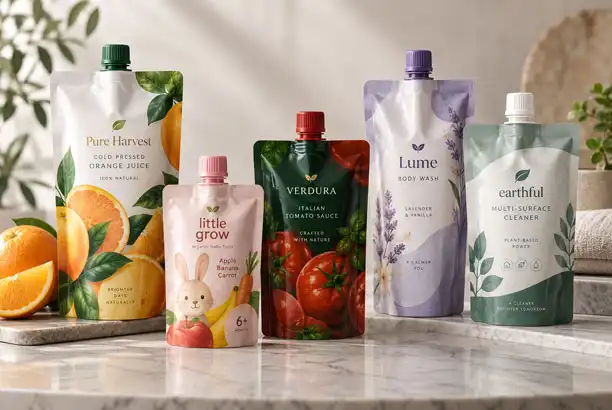
Understanding Spout Pouch Packaging: Definition and Key Characteristics
Material Architecture and Barrier Performance
Sealing Technology and Quality Assurance
Core Benefits of Using Spout Pouches Over Traditional Packaging
Enhanced User Experience and Consumer Convenience
Superior Product Protection and Extended Shelf Life
Logistics Efficiency and Cost Reduction
Sustainability and Environmental Responsibility
Comparing Spout Pouches with Other Packaging Types: Making an Informed Choice
Spout Pouches vs. Traditional Bottles and Cans
Spout Pouches vs. Standard Stand-Up Pouches and Sachets
Procurement Insights: Choosing and Sourcing the Right Spout Pouch Packaging
Critical Quality Certifications and Compliance Standards
Manufacturing Capabilities and Customization Flexibility
Supplier Reliability and Long-Term Partnership Potential
Best Practices and Design Ideas to Maximize the Benefits of Spout Pouch Packaging

Branding and Visual Impact Strategies
Material Selection for Optimal Performance
Filling Line Compatibility and Operational Integration
Conclusion
FAQ
1. Can spout pouch packaging handle hot-filling processes?
2. How do manufacturers prevent leakage at the spout connection point?
3. What spout diameter should I specify for my product?
4. Are recyclable options available for spout pouch packaging?
Partner with Guoshengli Packaging for Your Spout Pouch Solutions

References
.webp)
Understanding Bottle Shape Juice Pouches: Overview and Key Benefits
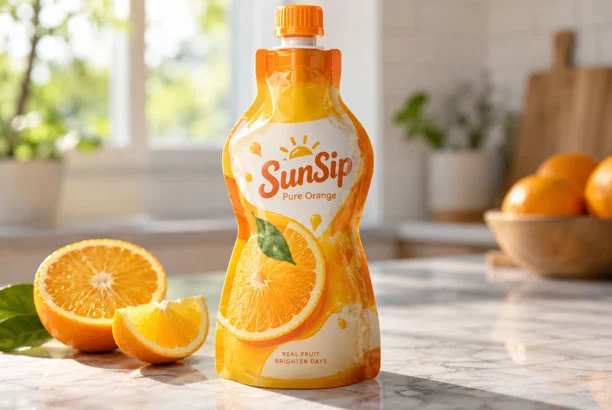
What Makes Bottle-Shaped Flexible Packaging Different?
Core Performance Benefits That Solve Real Business Problems
Operational Advantages for Production and Filling
Comparing Bottle Shape Juice Pouches with Alternative Packaging Solutions
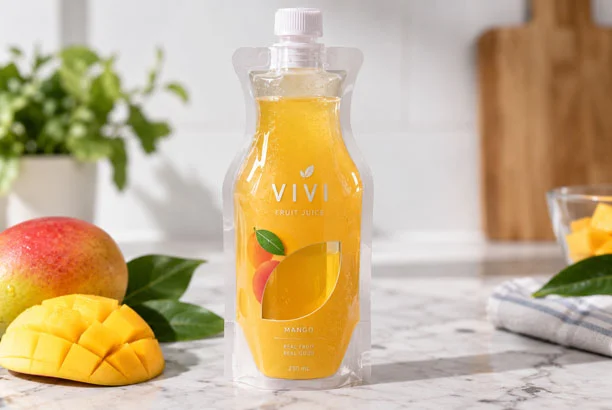
How Bottle-Shaped Pouches Stack Up Against Traditional Bottles
Flexible Versus Rigid Materials: Performance Considerations
Closure Options: Spouts, Caps, and Consumer Convenience
Selecting the Right Bottle Shape Juice Pouch for Your Business Needs
Evaluating Capacity, Durability, and Barrier Requirements
Sustainability: Recyclable and Biodegradable Options
Customization for Brand Differentiation
Practical Considerations: MOQ, Pricing, and Supplier Selection
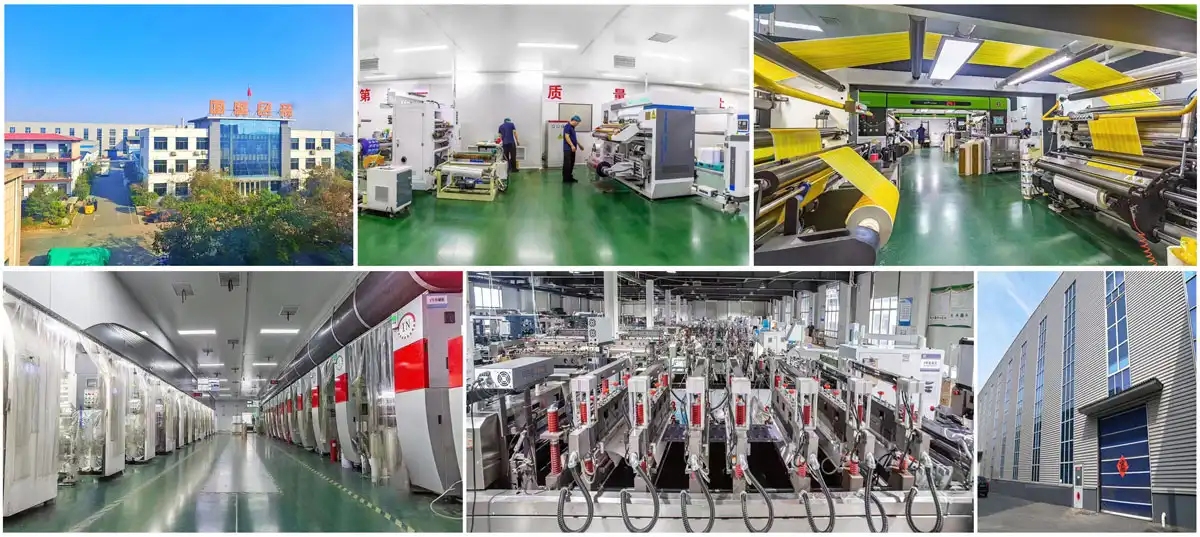
The Manufacturing and Filling Process of Bottle Shape Juice Pouches
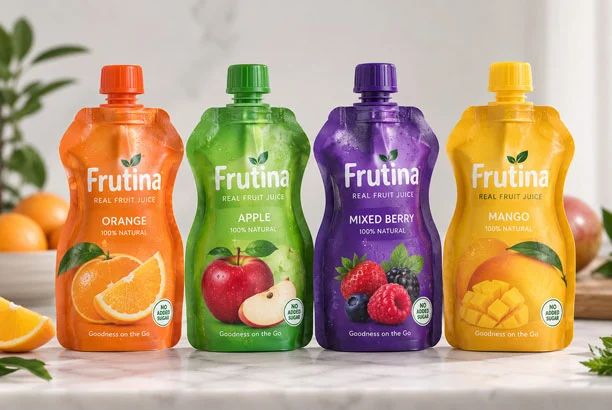
From Raw Materials to Finished Pouches
Quality Control Throughout Production
Filling Line Integration and Automation
Why Leading Brands and Businesses Trust Bottle Shape Juice Pouches
Supplier Reliability and Long-Term Partnership Value
Future Trends: Innovation in Bottle-Shaped Flexible Packaging
Making the Final Decision: What Matters Most
Conclusion
FAQ
1. What juice products work best with bottle-shaped pouches?
2. How does cost compare to traditional packaging?
3. Can these pouches support organic or clean-label positioning?
Partner with Guoshengli Packaging for Your Bottle Shape Juice Pouch Needs
References
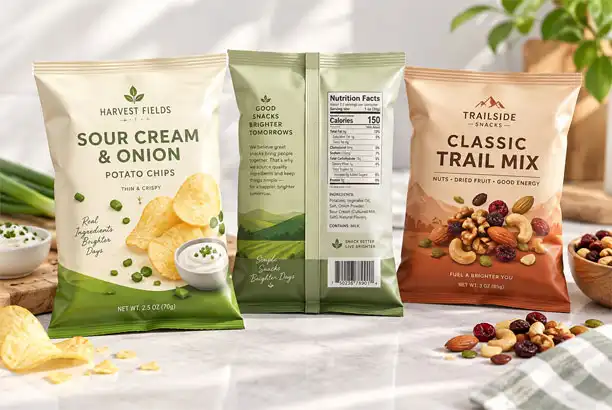
When procurement professionals search for reliable, cost-effective packaging that protects product integrity while enhancing shelf presence, fin seal pouches consistently emerge as a top choice. This pillow-style packaging format—recognized by its distinctive back seal configuration—combines structural strength with production efficiency, making it indispensable across food, pet treats, confectionery, and supplement industries. Understanding how these pouches work, when to choose them, and what to look for in a manufacturing partner can directly impact your product's market success and operational costs.
Understanding Fin Seal Pouches: Definition, Functionality, and Benefits
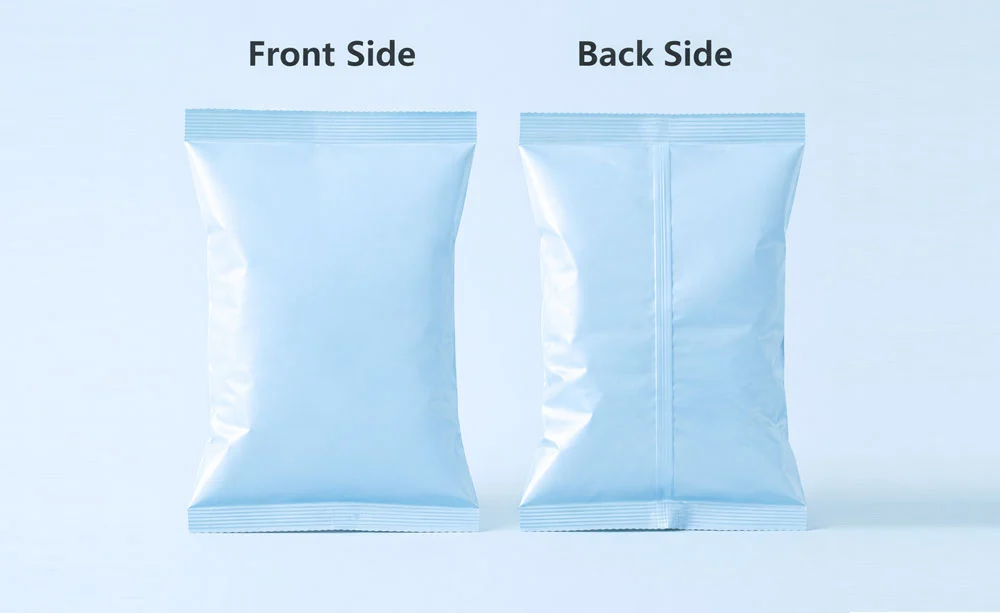
What Makes Pillow Pouches Different from Other Formats
A Fin seal pouch, also known as a pillow pouch or T-seal pouch, is made by folding flexible film in half and closing the insides together to make a "fin" that sticks out along the back panel. This back center seal does a great job of keeping the structure strong and the contents safe from moisture, oxygen, and other outside contaminants. The design works perfectly on both Vertical Form Fill Seal (VFFS) and Horizontal Form Fill Seal (HFFS) machines, so production can go quickly without affecting the quality of the seals or the consistency of the sizes.
Core Functional Advantages for B2B Buyers
This style of bag is useful for procurement teams in a number of ways. When you use the interior-to-interior seal method instead of lap seals, which need the outer and inner pieces to be suitable, you can use a stronger barrier. ASTM F88 measurements show that the heat seal strength stays high across production runs. This keeps the seals from popping during shipping and lowers customer complaints. A low coefficient of friction (COF) makes it easy for materials to move over forming collars without sticking. This keeps automated filling lines running smoothly and increases throughput.
Brand Visibility and Shelf Impact
Full print areas on the front and back of packaging make it a marketing tool. Rotogravure printing in up to 11 colors makes designs that are bright and lifelike, which stand out on store shelves where there are a lot of other products. Custom finishes, like shiny, dark, metallic, or see-through window panels, let brands show right away that their products are of high quality and are brand new. Optional euro holes make it easier to hang displays, which increases the number of ways to show products and raises the exposure of candy, snacks, and pet treats in stores.
Types, Materials, and Design Options of Fin Seal Pouches
Material Structures Engineered for Barrier Performance
The shelf life and protection of a product are directly affected by the laminate structure that is chosen. To meet the needs of different applications, multi-layer films find a good mix between being able to print, being a barrier, and being able to seal. The outside layer is usually made of PET, matte PET, or BOPP, which makes it strong, easy to print on, and nice to look at. To stop the flow of air, light, and moisture, middle barrier layers are made of nylon (NY), metallized PET (MET-PET), aluminum foil (AL), or EVOH. Inner sealant layers made of PE, CPP, LLDPE, or recyclable PE make sure that the package can be heat sealed and meets food contact regulations like FDA and EU rules. To meet the rising demand for sustainability, mono-PE structures that can be recycled and PLA/PBAT films that can be broken down and composted are being used. These choices are good for the environment and help brands meet their business responsibility goals. They also appeal to eco-conscious customers, especially in North American and European markets using fin seal pouches.
Customization Parameters That Align with Production Needs
For each type of product, specific requirements must be met. Size and form can be changed completely to fit the weight, volume, and needs of the filling system. There are different ways to print, from colorful rotogravure for large orders to adaptable digital printing for short runs and test markets. For some special orders, the wait time is as little as seven days. Add-ons that do something improve the user experience and the performance of the store. Euro holes make hanging displays possible, easy-tear cuts make opening easier, resealable zippers keep food fresh longer after opening, and clear windows let you see the food right away, which is especially helpful for high-end candy and fancy snack brands. For digital printing projects, lower MOQs are possible, but the minimum order quantity for each design starts at 10,000 pieces.
Distinguishing Pillow Pouches from Alternative Formats
Knowing the differences in structure helps procurement teams choose the best format. Side seal bags have seals along the edges, which makes them flatter but less stable in the vertical direction. Bottom gusset bags give you a stable base for standing, which is great for heavy products that need to be shown off straight. For products that are used often, like pet treats or protein powders, zip lock pouches put resealability first. Vacuum pouches take out the air in perishable things to make them last longer, but they need special care and tools. Fin seal pouch packaging is the best choice for high-speed production settings that need to keep the integrity of the seal and switch over quickly because it is both cost-effective and useful.
Comparing Fin Seal Pouches with Other Packaging Solutions
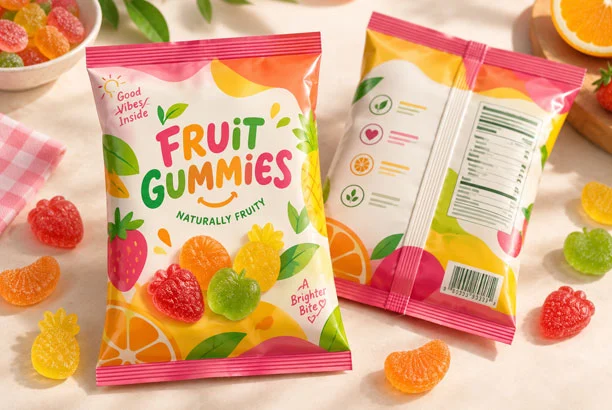
Cost Efficiency and Material Utilization
Lower costs per unit are a direct result of material efficiency. Pillow designs cut down on trash by making the best use of film and working with fast-converting machines. Time-to-market for new products and seasonal package changes is sped up by easy setup, uniform sealing, and little downtime. When compared to more complicated formats that need special tools or steps that must be done by hand, these practical benefits lower the total cost of ownership.
Application-Specific Performance Considerations
Different formats are good for some types of products. For liquid goods like sauces or soaps, you may need bottom gusset or spout bags with stronger seams and special seals. Products with sharp edges, like hard treats or nuts with shells, need extra protective layers or thicker gauge films to keep them from being punctured. Professionals in charge of buying things should look at these things along with the needs of the product in order to pick packaging that meets goals for cost, ease, and preservation.
Procurement Guide: How to Source and Buy Fin Seal Pouches for Your Business
Evaluating Manufacturing Partners and Quality Certifications
Long-term supply stability and product consistency depend on how reliable the supplier is. ISO 9001 quality management systems, BRC food packaging licenses, and FDA compliance paperwork all make sure that foreign standards are met and lower the risk of not following them. The ability to make things is important. Advanced rotogravure printing lines (with up to 11 colors), precise laminating equipment, and automated fin seal pouches making machines make sure that measurements are always correct and colors stay the same from one order to the next. Quality problems that cause filling lines to stop, goods to be refused, and expensive delays can be avoided by checking the seals, barriers, tensile strength, and print durability in-house.
Order Logistics and Lead Time Optimization
Minimum order amounts, price structures, and shipping times all have a direct effect on planning your inventory and your cash flow. Manufacturers with variable MOQs (starting at 10,000 pieces per design) can test the market or roll out the product on a big scale. With lead times as short as seven days, digital printing makes it easier for new businesses and limited editions to get their products out there. Uncertainty is reduced by clear communication throughout the buying cycle. You can expect detailed steps for making the die line, approval processes for the artwork, and regular production reports from the design phase through final delivery. Export-grade box packing and palletizing keep things from getting damaged while they're being shipped internationally, whether by sea or fast air freight.
Compliance, Testing, and Risk Mitigation
Food-grade rules are different in each market. U.S. imports are controlled by FDA rules, while EU rules add extra migration and contact testing rules. Working with suppliers who offer SGS and third-party testing helps make compliance paperwork and customs clearance go more quickly. Fully tracked raw materials and quality records at the batch level make it possible to respond quickly to audits or customer questions, which protects the brand's image and keeps disagreements from happening later on.
Environmental Impact and Future Trends of Fin Seal Pouch Packaging
Assessing Recyclability and Compostability Options
Traditional multi-layer laminates protect better, but they are hard to recycle because they are made of different materials. Mono-material innovations, especially recyclable mono-PE and mono-PP laminates, keep the barrier performance and high-speed runnability while making it possible to use current recycling streams. Compostable PLA/PBAT films break down at the end of their useful life in industrial composting facilities, which makes them appealing to brands that want to reach environmentally conscious customers using Fin seal pouches.
Manufacturing Innovations Reducing Environmental Footprint
During printing and laminating, advanced RTO (Regenerative Thermal Oxidizer) exhaust gas treatment technology captures and neutralizes volatile organic compounds (VOCs). This lowers air pollution and makes the workplace safer. Water-based inks and solvent-free adhesives cut down on the use of chemicals without affecting the quality of the prints or the strength of the laminate bonds. These changes to the process are in line with the company's goals for sustainability and with legal trends that favor better ways of making things.
Strategic Sourcing for Sustainable Packaging
More and more, procurement workers in North America and Europe are being pushed to show that they care about the climate. Using pillow pouches that can be recycled or composted shows that you care about the environment while still protecting products and extending their shelf life. Lifecycle evaluations, asking for environmental product declarations (EPDs), and checking third-party sustainability approvals are all things that can help prove what suppliers say and support clear reporting to stakeholders.
Conclusion
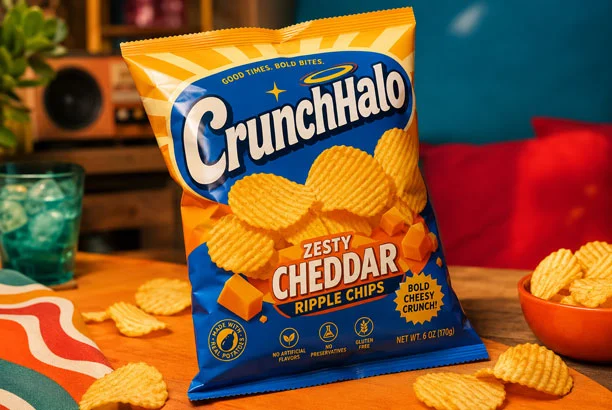
Fin seal pouches are a tried-and-true, flexible way to package products that protects, speeds up production, and raises brand awareness in a wide range of industries. They are great for food, candy, pet treats, and supplements because they have a strong back seal structure, can work with high-speed automated lines, and can have their designs changed to fit your needs. Procurement pros can get packaging that consistently works, lowers operational risk, and supports long-term market growth by learning about the structures of materials, comparing different format options, and choosing production partners with strong quality systems and environmentally friendly practices.
FAQ
1. Why choose a pillow pouch over a lap seal for barrier-sensitive products?
Fin seal pouches bind the inner layers together, which makes the barrier work better because the same-side seal stops problems with the outer and inner films not working well together. Lap seals need materials on the outside and inside that are compatible, which can limit barrier options and make them less flexible.
2. How can leaks at top and bottom junctions be prevented?
Most leaks happen because the bigger T-junction area doesn't have enough rest time or pressure. By changing the sealing jaw's temperature, pressure, and contact time, you can make sure that the junction melts at the right temperature without burning thinner film sections and keeping the seal.
3. What causes the back fin to curl or wrinkle during production?
Most of the time, uneven web strain or an uneven coefficient of friction between film layers cause them to curl or wrinkle. With accurate tension control on VFFS tools and consistent materials, this problem can be solved, resulting in a flat, professional look.
4. Are pillow pouches suitable for liquid products?
High-barrier nylon (BOPA) laminates with special sealants can be used for liquids like sauces, dressings, or detergents, even though they are mostly made for solids and powders. Punctures and leaks are stopped by reinforced gaps and thicker gauge films.
Partner with a Trusted Fin Seal Pouch Manufacturer
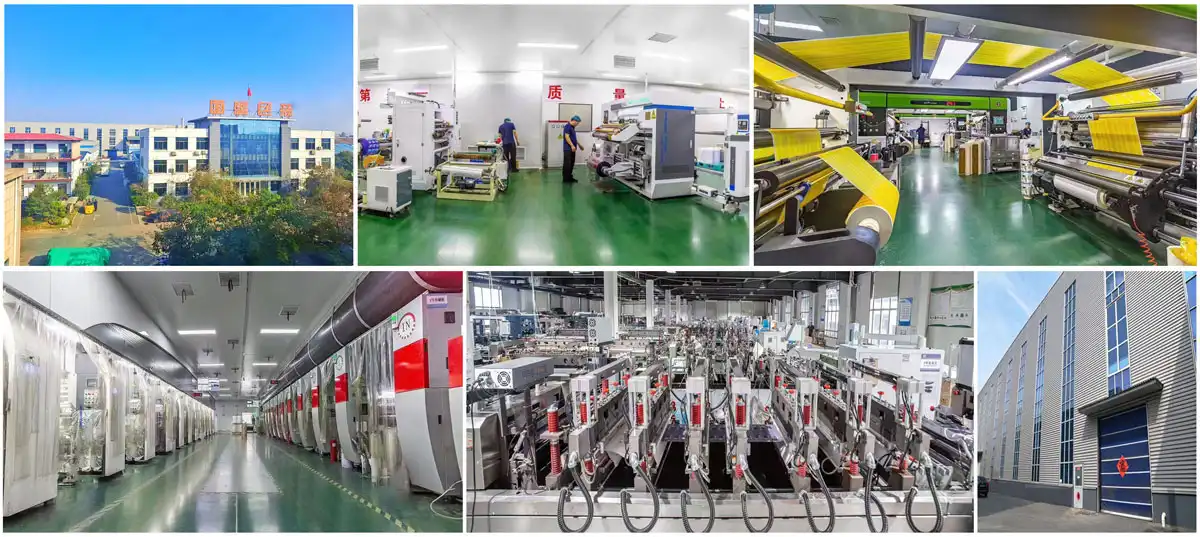
Guoshengli Packaging offers enterprise-level Fin seal pouches solutions backed by 25 years of manufacturing experience, ISO 9001, BRC, and FDA certifications, and the ability to produce 20,000 tons of goods every year. Our flexible packaging, which includes strong back seals, long-lasting multi-layer laminates, euro hole options, clear window displays, and recyclable materials, keeps your goods safe while making the most of their shelf impact. With flexible MOQs, wait times of as little as seven days for some orders, and dedicated technical support, we help brands of all sizes, from those just starting out to those that are very big, get consistent quality and reliable supply. Check out our full selection of solutions that can be changed to fit the needs of your product. Email our expert advisers at sales@guoshengpacking.com to talk about bulk orders, price, and environmentally friendly package choices.
References
1. Robertson, Gordon L. Food Packaging: Principles and Practice, 3rd Edition. CRC Press, 2013.
2. Marsh, Kenneth and Betty Bugusu. "Food Packaging—Roles, Materials, and Environmental Issues." Journal of Food Science, Vol. 72, No. 3, 2007.
3. Selke, Susan E.M., John D. Culter, and Ruben J. Hernandez. Plastics Packaging: Properties, Processing, Applications, and Regulations, 3rd Edition. Hanser Publications, 2016.
4. Coles, Richard, Derek McDowell, and Mark J. Kirwan, editors. Food Packaging Technology. Blackwell Publishing, 2003.
5. Emblem, Anne and Henry Emblem, editors. Packaging Technology: Fundamentals, Materials and Processes. Woodhead Publishing, 2012.
6. Yam, Kit L., editor. The Wiley Encyclopedia of Packaging Technology, 3rd Edition. Wiley, 2009.
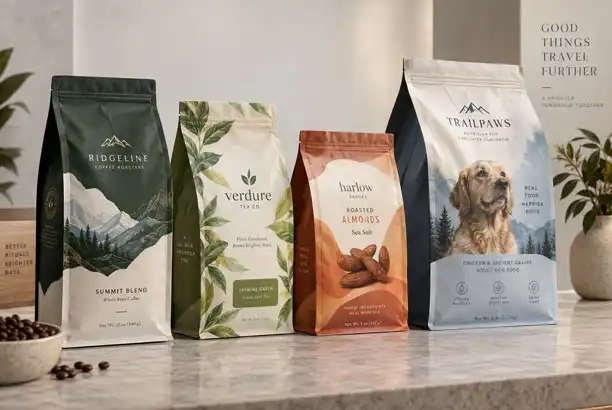
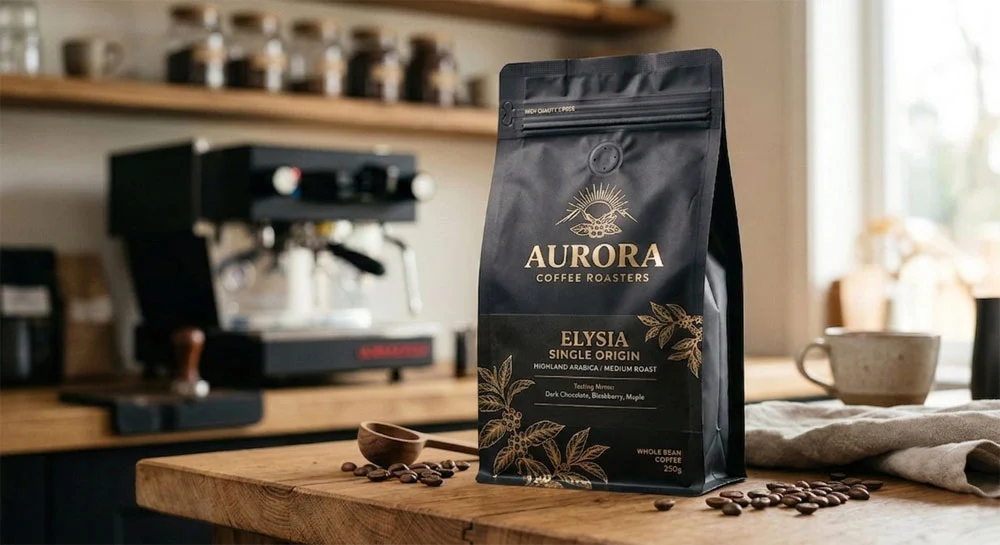
When premium brands need packaging that commands shelf presence while maintaining exceptional product protection, the 250g custom flat bottom pouch offers an ideal solution. This box-style flexible packaging combines the structural stability of rigid containers with the versatility and cost-efficiency of pouches. With five printable panels and a stable base, these pouches stand upright confidently on retail shelves, creating maximum brand visibility while protecting contents from moisture, oxygen, and light. For coffee roasters, specialty snack brands, pet treat manufacturers, and organic food producers targeting discerning consumers, this packaging format delivers the premium unboxing experience that builds brand loyalty.
Understanding 250g Custom Flat Bottom Pouches
What Makes Flat Bottom Pouches Unique
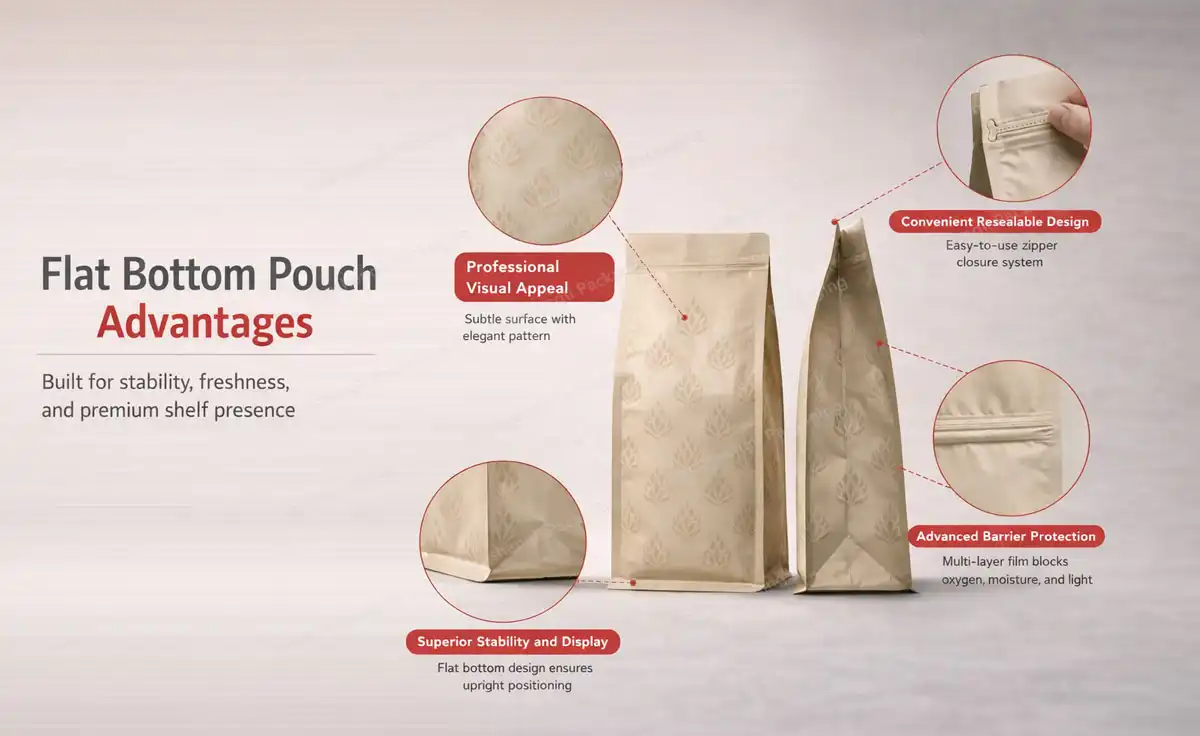
Flat bottom pouches, often called box pouches, are made with five panels, which is distinct from other forms of flexible packaging. Unlike standard stand-up pouches, these designs are made comprised of a front panel, a back panel, two side gussets and a flat bottom. This innovation makes the bag incredibly sturdy so it stands up straight even before it’s full. The box-like form makes the pouches highly beneficial for both shelf display and transportation as it maximises the space inside while keeping the footprint minimal. Brands use this format because it falls between high-end hard packaging and flexible choices.
Material Options and Barrier Performance
250g custom flat bottom pouches are made of multiple layers that work together to create a better barrier of protection that is necessary to extend the shelf life of food. Some common combinations of materials are PET for strength, aluminum foil for best barrier performance, PE for heat sealing, and kraft paper for a natural look. Each layer has a specific job to do. The outer layers protect against punctures and make printable surfaces, the middle layers stop the flow of air and wetness, and the inner food-contact layers make sure the safety of the product. Depending on how sensitive your product is and how long you want it to last, we have designs that range from basic three-layer laminates to advanced seven-layer setups.
Material choices are being influenced more and more by environmental concerns. Recycling single-material structures made of PE or PP on all layers makes the end-of-life process easier while still providing enough protection for many uses. Compostable choices with PLA and PBAT work for brands that believe in the cycle economy, but they need to be carefully tested to make sure they work with other products and last a long time. Our expert team helps you find a balance between your goods' real protection needs and your goals for sustainability. They do this by avoiding solutions that lower quality for the sake of marketing claims.
Key Features That Enhance Usability
In addition to being better for structure, flat bottom pouches can hold functional features that make the customer experience better. When used more than once, resealable zipper seals keep things fresh. This is especially helpful for coffee, nuts, and pet treats that are eaten over a few days. One-way degassing valves let CO2 out of freshly roasted coffee beans while blocking oxygen from getting in. This protects the flavors during the important time after roasting. Easy-tear notches make it easy to open flexible packaging without knives or other tools, which is a regular problem.
Transparent windows let customers see the products inside, which boosts their trust by showing them the quality before they buy. These windows can be built into the front panel or spread out over several areas, but each one needs to be carefully thot out in terms of the barrier. Selective window placement along with high-barrier base films works well for brands that want to balance visibility with protection.
Comparing 250g Custom Flat Bottom Pouches with Other Pouch Types
Structural Advantages Over Stand-Up Pouches
The bottom gussets of traditional stand-up pouches keep them stable. This makes the base round, which can tip over when the pouch is partly full or stacked. This weakness isn't present in flat bottom designs because they have a designed base panel that spreads weight evenly and keeps the product standing straight throughout its lifecycle. This stability is especially important in stores where people decide what to buy based on how things look. In comparison to the curved surfaces of standard stand-up formats, the four vertical panels of 250g custom flat bottom pouches offer superior graphics space, enabling more effective brand storytelling.
Another useful difference is the efficiency of the filling line. Because flat bottom pouches are shaped like boxes, the hole sizes stay the same during automatic filling operations. This lowers the number of jams and increases output. Stand-up bags may fall apart or twist while being filled quickly, so the line needs to be adjusted more often. For brands that are increasing the number of products they make, this operational reliability means less downtime and more stable manufacturing costs.
When Gusset Pouches Make More Sense
Side gusset pouches are better in some situations where flat bottom pouches might not be worth the extra money. Coffee roasters who need larger amounts—500g to 1 kg—of coffee often choose side gusset designs because they make the inside space bigger while being easier to build. These pouches also fit standard packaging equipment better, so businesses that already have equipment for gusset formats don't have to buy anything new. The difference in cost gets smaller as the number of orders goes up. This makes side gussets a good choice for well-known products that are always in demand.
But flat bottom pouches often make the investment worth it for specialty brands that want to position their products in stores with a lot of competition because they look better on the shelf. The choice will depend on how you position your brand in the market, the needs of your retail channels, and whether the packaging is a key part of your brand's differentiation or just a way to keep things safe.
Evaluating Resealable and Valve Options
Adding reusable zippers raises the cost per unit, but the goods are more valuable to customers because they can be used more than once. Based on our experience, the convenience premium pays off for products that are priced above the mid-market range. This is because the quality of the packaging shows how good the product is overall. Procurement managers should compare the cost of the feature to the amount of waste that could be cut down and the number of repeat purchases. Fresh products make people want to use them and buy more of them.
Degassing valves are especially useful for coffee packaging, where CO2 keeps escaping for weeks after the coffee is roasted. Without valves, pressure inside the package can cause bags to break or packages to swell up and look damaged. One-way valves solve this problem while stopping air from getting in, which quickly ruins coffee. Even tho valves are more complicated and cost more, they are still necessary for specialty coffee makers that want to keep the flavor.
Procurement Guide for 250g Custom Flat Bottom Pouches
Minimum Order Quantities and Customization Scope
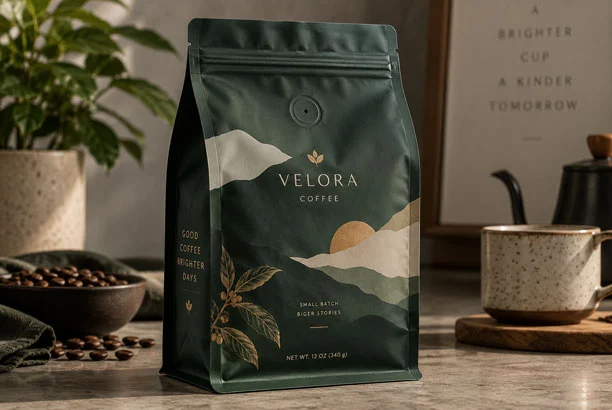
Guoshengli Packaging offers practical MOQs for 250g custom flat bottom pouches, helping growing brands test markets without excessive inventory. Customization includes materials, structures, printing, finishes, barrier levels, zippers, and valves. Design support ensures brand concepts become practical specifications that perform reliably during production and filling.
Understanding Pricing Determinants and Lead Times
Custom flat bottom pouch prices depend on materials, printing methods, structural complexity, finishes, and features. Digital printing suits short runs with 7–10-day lead times, while rotogravure offers consistent colors and lower unit costs for larger orders but requires 15–20 days. Rush services support urgent launches and market opportunities.
Supplier Evaluation and Sourcing Strategy
Selecting a packaging supplier requires evaluating reliability, technical expertise, communication, and certifications. ISO 9001, BRC, and FDA compliance reduce quality and regulatory risks. Suppliers with strong production capacity can support growth and prevent shortages, while experienced international partners help manage sourcing costs, customs, documentation, and communication effectively.
Design and Printing Techniques for Optimized Branding
Advanced Printing Methods and Quality Implications
Rotogravure printing provides accurate, stable colors for large runs of 250g custom flat bottom pouches, supporting complex designs and consistent brand presentation. Up to 11 colors enable gradients, photos, and precise branding. Digital printing offers faster turnaround, lower setup costs, and flexibility for smaller runs, testing, and initial launches.
Design Strategies for Maximum Shelf Impact
The five-panel form of flat bottom bags gives graphic designers both chances and problems to work with. All areas that can be seen—the front, back, sides, and bottom—should be used by good designs to tell full brand stories while keeping the visual order. The main brand name and important product features that make people want to buy should be on the front panel. Side panels hold extra details like certificates, highlighted ingredients, and cooking directions without taking away from the main images.
In North America and Europe, clean layouts with big fonts, lots of empty space, and the occasional use of high-end finishes are popular design trends right now. Matte lamination with spot gloss adds interest to the touch and a sense of quality. Metallic inks and foil stamping give off a sense of luxury that fits with a high-end brand. These finishing methods work especially well on kraft paper because its natural look fits with brand positioning that is natural and handmade.
Certification display requires strategic placement that satisfies compliance requirements without dominating brand storytelling. Certification displays need to be placed in a way that meets compliance standards without taking away from the brand's story. On the back panels, regulation information, certification logos, and batch codes are usually laid out in a way that keeps the professional look. When packaging is well-designed, it's easy to meet both law and business goals.
Communicating Sustainability Credentials
Clear recycling or composting labels help consumers dispose of packaging correctly and support sustainability goals. To avoid greenwashing, brands should use specific, verifiable environmental claims supported by materials and certifications.
Enhancing Packaging Performance and Sustainability
Barrier Properties and Shelf Life Extension
The main job of any food packaging is to keep the food inside from going bad. 250g custom flat bottom pouches are great at this because they have multiple layers that are designed to stop specific threats. Dry foods like coffee, nuts, and snacks go bad faster when they let moisture through. High-barrier films stop moisture vapor from passing through to almost nothing, keeping the crunch and taste. Oxygen causes oxidation reactions that break down fats, vitamins, and aromatic compounds. Aluminum foil layers or metalized films block almost all oxygen.
Light, especially UV bands, breaks down chemicals that are sensitive in coffee, tea, and nutraceuticals. Photodegradation can't happen because of opaque structures or films that stop UV light. We help brands set barrier standards based on the ingredients in the product, how long they want it to last, and how it will be distributed. Over-engineering barriers wastes money and time and causes problems with quality; the right way to design barriers strikes a balance between these two points of view.
Using good packing to make food last longer cuts down on food waste all along the supply chain. Products that stay fresh longer need to be thrown away less often at the retail and consumer levels because they are about to expire. Getting rid of less trash is a big part of being environmentally friendly, but this reduction also helps the environment in other ways.
Balancing Reusability with Practical Application
Reusable packaging is good for the environment in theory, but in practice, people don't always follow through. Most people don't have ways to clean and reuse food pouches, and contamination makes recycling dirty packaging impossible. Recognizing these facts leads to better ways of doing things. Single-use packaging made from easily recycled materials is often better for the earth than packaging that is supposed to be reused but ends up in landfills.
Using single-materials that are easily processed by recycling infrastructure in disposable packaging that is designed for circular material flows matches sustainability goals with practical reality. Our PE and PP structures can be recycled in existing systems, so they don't need any new infrastructure to be built. This kind of practical sustainability gives the environment real benefits instead of just nice words.
Material Innovation and Smart Packaging Technologies
The technology behind packaging keeps changing quickly. Barrier performance that used to require multi-material laminates can now be achieved by structures made of just one material. This makes recycling easier while still providing security. Bio-based products made from renewable resources lower the need for fossil fuels, but they still need to be tested for efficiency. Instead of pushing ideas that haven't been tested, we keep a close eye on these new ideas and introduce proven technologies as soon as they can be used in business.
For some uses, smart package technologies like QR codes that connect to product information, freshness signs, and authentication features are useful. If it makes sense for the brand plan, these features can be added to flat bottom pouch designs. The important thing is to make sure that the use of technology is based on real market value, not just on novelty.
Conclusion
250g custom flat bottom pouches are a smart choice for premium brands that need to stand out on the shelf, protect their products well, and allow for easy customization. The 250g size works well for coffee, specialty snacks, pet treats, and health products where the quality of the packaging shows how the brand is positioned overall. Knowing the different types of materials, comparing pouch sizes, carefully checking out suppliers, and designing for maximum impact are all things that can help you get the most out of your packaging investments. This will pay off in the form of better brand recognition and customer satisfaction. As concerns about sustainability become more important in buying choices, flat bottom pouches offer ways to be more eco-friendly without sacrificing the performance that keeps goods safe and profits high.
FAQ
1.What is the typical minimum order quantity for 250g custom flat bottom pouches?
Minimum order quantities vary a lot from one supplier to the next, but they are usually between 10,000 and 50,000 units. We at Guoshengli Packaging have more variable MOQs to meet the needs of growing companies and testing situations. Minimums are different for each printing method and level of customization. For example, digital printing usually has smaller minimums than rotogravure. We suggest that you talk about your expected volumes and growth to find the most cost-effective way to proceed.
2.Can I request samples before committing to large orders?
Of course. It is common practice to ask for samples when buying packaging, and it helps make sure that the specifications meet your needs. Once the design specs are set, we send samples of both regular configurations and prototypes made just for you. This sampling method finds problems before they happen in full production, which saves money on fixing them later. Lead times for samples are usually between 5 and 7 days, which lets you quickly evaluate and make a choice.
3.How do eco-friendly materials impact cost and performance?
When compared to regular materials, sustainable materials usually cost 10 to 30 percent more, but this can vary by material and volume. When looking at performance qualities, you need to be very careful. For example, some reusable mono-materials now have the same barrier properties as multi-layer materials, and some compostable films have shelf life limits. We give you clear information about our performance so that you can make smart choices that balance your needs for environment, product safety, and your budget.
Partner with Guoshengli Packaging for Your Custom Flat Bottom Pouch Needs
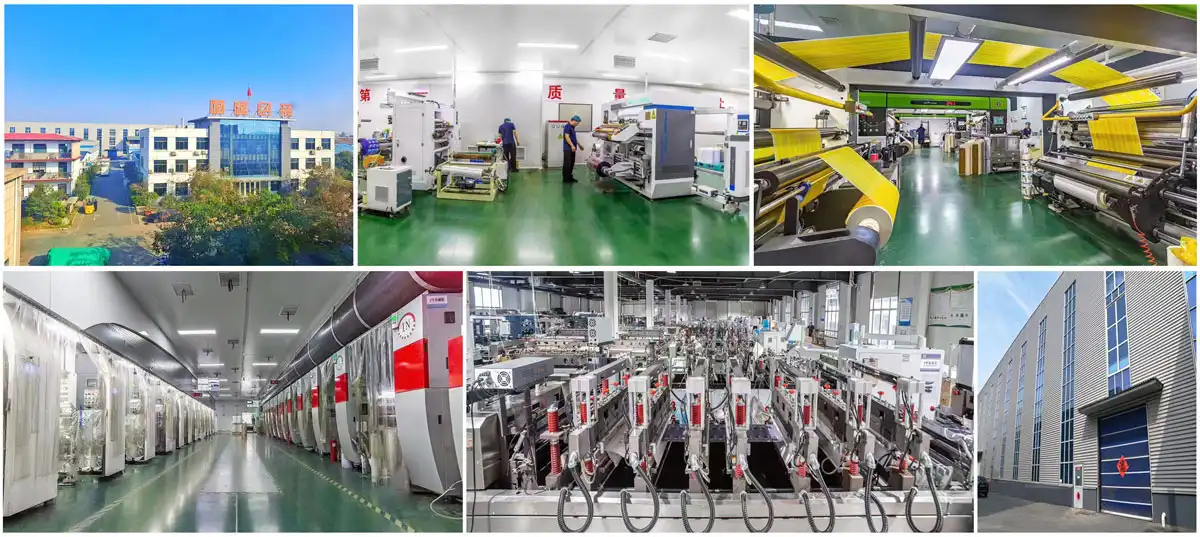
In competitive markets where shelf visibility and product safety can't be ignored, a brand's success depends on how well its packaging is made. As a manufacturer of 250g custom flat bottom pouches with more than 25 years of experience in flexible packaging, Guoshengli Packaging offers solutions that work reliably across production runs and market conditions. Our ISO 9001, BRC, FDA, and SGS certifications make sure that we follow international standards. This lowers your regulatory risk and speeds up the approval process for retail sales.
We know how hard it is for specialty brands to deal with things like small production runs, tight start dates, and the need for packaging that supports their premium branding. These problems are directly solved by our variable MOQs, quick response times, and full design support. We can make what you need, whether it's materials that can be recycled, high-barrier protection for fragile products, or up to 11-color printing for complex branding.
Ready to elevate your brand with packaging that stands out on shelves and protects products reliably? You can talk to our team about your needs by emailing sales@guoshengpacking.com. We offer reasonable prices, thorough technical specs, and samples that show how dedicated we are to making the best packaging possible. Let's come up with packaging ideas that will help your brand grow and do well in the market.
References
1. Robertson, Gordon L. Food Packaging: Principles and Practice, 3rd ed. Boca Raton: CRC Press, 2013.
2. Marsh, Kenneth and Betty Bugusu. "Food Packaging—Roles, Materials, and Environmental Issues." Journal of Food Science 72, no. 3 (2007): R39-R55.
3. Yam, Kit L., ed. The Wiley Encyclopedia of Packaging Technology, 3rd ed. Hoboken: John Wiley & Sons, 2009.
4. Coles, Richard, Derek McDowell, and Mark J. Kirwan, eds. Food Packaging Technology. Oxford: Blackwell Publishing, 2003.
5. Selke, Susan E.M., John D. Culter, and Ruben J. Hernandez. Plastics Packaging: Properties, Processing, Applications, and Regulations, 3rd ed. Munich: Hanser Publications, 2016.
6. Brody, Aaron L. and Kenneth S. Marsh, eds. The Wiley Encyclopedia of Food Science and Technology, 2nd ed. New York: John Wiley & Sons, 2000.
.webp)
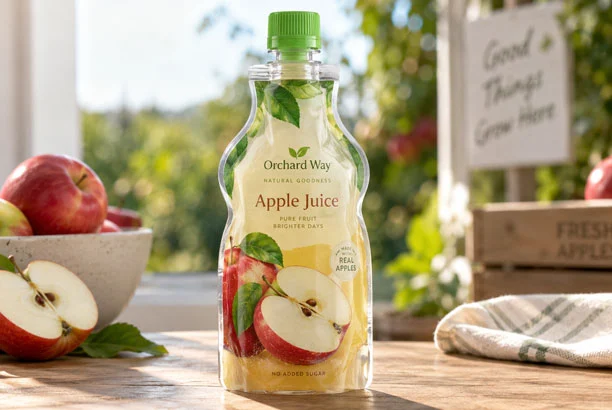
When you're sourcing flexible packaging for beverage products, you need solutions that protect freshness, reduce shipping costs, and capture consumer attention on crowded retail shelves. A bottle shape juice pouch solves these challenges by combining the visual appeal of rigid bottles with the efficiency of flexible film structures. This innovative packaging format uses multi-layer laminate construction to deliver superior barrier protection while offering a distinctive bottle-like silhouette that differentiates your brand and appeals to modern consumers seeking convenience and sustainability.
Understanding Bottle Shape Juice Pouches
What Defines a Bottle Shape Juice Pouch?
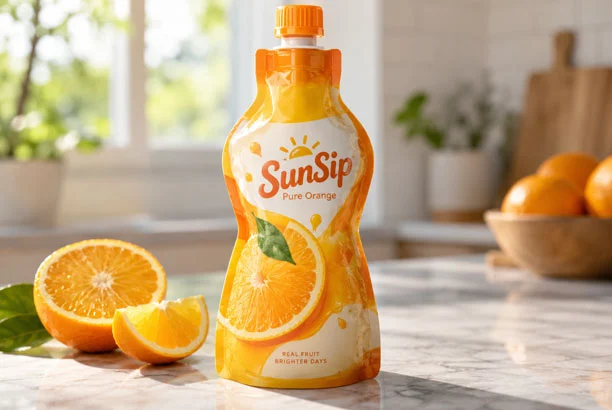
The juice pouch is die-cut to appear like a bottle, making it a distinctive kind of flexible packaging. Standard stand-up pouches are rectangular or round. However, these pouches have thinner necks, clear shoulders, and broader bodies. This utilitarian style makes objects simpler to handle and recognise, conveying quality and comfort.
Buildings often employ PET/NY/AL/PE or PET/PE multi-layer laminate constructions. PET shapes the bag and makes it difficult to puncture; nylon (NY) enhances oxygen barrier; aluminium foil protects photosensitive nutrients; and polyethylene (PE) seals food safely. This approach achieves Oxygen Transmission Rates below 1.5 cc/m²/24h and Water Vapour Transmission Rates below 1.0 g/m²/24h, extending juice product shelf life.
How Bottle Shape Pouches Differ from Standard Flexible Packaging
Standard drink pouches and spouted pouches do their jobs, but they don't have a unique shape that makes them stand out on the shelf. Traditional bags often look the same, which makes it hard to recognize a name in a crowded store. The bottle shape format gets around this problem by giving you a printable surface that can be seen from all sides and recognizable outlines that make your brand's story more interesting and keep customers interested.
Compared to rigid PET bottles, these flexible alternatives use up to 80% less material and weigh a lot less, which cuts down on shipping costs and the carbon footprint of distribution by a large amount. Instead of glass containers that can break and cause safety issues, bottle-shaped juice pouches are made not to break and are perfect for active lifestyles, outdoor activities, and kids' use.
Manufacturing Process and Customization Options
Rotogravure or digital printing on rollstock film is the first step in production. Up to 11-color printing lets you make drawings and images that look like photos. Lamination is used to join several layers of printed film together to make a structure that is strong and has good blocking qualities. The flat laminate is then precisely die-cut into the shape of the bottle profile. This gives this packing style its unique contours.
Customization goes beyond just the way something looks. It also includes practical features like notches that are easy to tear for customer ease, zipper systems that can be closed again for multi-use situations, and fitment integration for spouted versions. Die specifications can be changed to make shapes that are unique to a brand. These shapes create distinctive visual identities that stop competitors from copying them.
Benefits and Practical Applications for B2B Buyers
Cost Efficiency Through Material and Logistics Optimization
Transportation costs make up a big part of the cost of packaging drinks. Bottle-shaped juice pouches are lightweight, which directly lowers freight costs in both domestic and international supply chains. A pallet of flexible pouches holds a lot more units than the same-sized rigid bottles. This makes the warehouse more efficient and cuts down on storage costs.
Material efficiency also has benefits for sustainability that appeal to customers who care about the environment and business responsibility programs. Brands can use better environmental performance measures in their marketing messages if they use less plastic, use less energy during production, and release fewer pollutants during travel.
Enhanced Consumer Experience and Market Positioning
As a result, consumers are less likely to be skeptical of flexible packaging forms because having a contoured pouch feels like holding a regular bottle. The easy-tear notch feature gets rid of the need for knives or other tools, which is a common problem with sealed packages. This makes users of all demographics happier.
The bottle shape juice pouch format expresses quality placement for high-end organic NFC (Not-From-Concentrate) juice brands through its unique look. The distinctive shape sets products apart from generic cartons and pouches, which helps with premium pricing strategies and brand differentiation goals in retail categories that are very competitive.
Sustainability Initiatives and Recyclable Options
Environmentally friendly packaging is needed because regulations are getting stricter and people want it more. Modern bottle-shaped juice pouches can be made using structures made of a single material PE/PE that meet "Recycle Ready" approval standards and still work well as barriers for juice that needs to be kept fresh.
Brands can meet their green goals with these recyclable choices that don't hurt product safety or shelf life standards. High-barrier EVOH or metalized layers are used in the aluminum-free designs to protect against oxygen and wetness. This creates package solutions that are in line with circular economy principles and extended producer responsibility laws.
Applications Across Beverage Categories
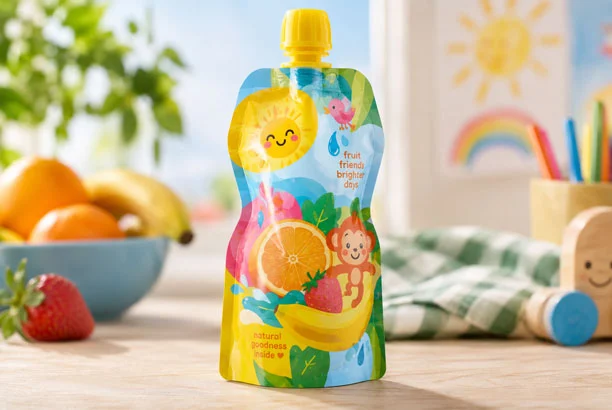
Children's juice products are safer for parents because they are made of materials that won't break and have bright pictures that kids will enjoy. The small size and light weight make it easy to carry in lunch boxes, bags, and other places where you might need to eat or drink while on the go, where glass or hard containers could break.
It's important for sports nutrition drinks to come in packaging that can stand up to rough handling, being outside, and changing temperatures. When properly designed bottle shape juice pouches are punctured, they have a high resistance (more than 50N), which keeps the seal intact during marathons, bike events, and outdoor sports where rigid packaging might crack or leak.
Applications like smoothies and mixed drinks need packages that can handle thicker liquids and textures. Hot-fill compatibility between 85°C and 95°C lets pasteurization happen right in the pouch, so medium-scale manufacturers don't have to use aseptic filling systems and can make production simpler.
Comparison and Decision-Making: Choosing the Right Bottle Shape Juice Pouch
Spouted vs. Non-Spouted Configurations
Spouted versions have plastic fittings at the neck or top panel that allow for controlled pouring and reclosability for drinking more than one serving at a time. This configuration works well for a bottle-shaped juice pouch in bigger sizes (250ml to 500ml) that people plan to drink in several sittings. The fitting costs more and is more complicated, but it improves the user experience and cuts down on waste from not using everything all the way.
Non-spouted designs can be opened with scissors or tear holes, which lets you use them for single-serve or full-pour. These are more cost-effective for smaller portions (100ml to 200ml) like kids' drinks, smoothies for one serving, or sampling where being able to close the lid again doesn't add much value.
Material Selection Based on Product Requirements
Juices with light-sensitive vitamins, like vitamin C, need aluminum foil barriers to keep them from going bad while they're being stored. Compared to clear or see-through materials, foil layers completely block light, which keeps nutrients intact and increases shelf life.
To keep the fresh taste profiles of cold-pressed drinks with few added preservatives, they need the best air barrier performance possible. Multi-layer structures with nylon and EVOH are better at blocking oxygen transfer than basic PE/PE designs. The higher cost of the materials is justified by longer shelf life and lower spoilage losses.
Balancing Performance with Environmental Goals
It's becoming more common for procurement choices to involve trade-offs between goals for best barrier performance and recyclability. Aluminum foil is used in traditional high-barrier laminates, which protect products very well but make recycling infrastructure more difficult. Recycling single-material options like metallized films or high-barrier PE grades provide enough protection for many juice uses while also meeting green goals.
To make the choice, specifics about the product must be carefully considered, such as its pH level, pasteurization methods, shelf life goal, and marketing circumstances. Accelerated shelf life studies and testing make sure that the materials chosen meet both performance needs and environmental goals without affecting the safety or quality of the product.
Procurement Guide: How to Buy Bottle Shape Juice Pouches for Your Business
Supplier Evaluation and Sourcing Strategy
Evaluation of production skills, quality management systems, and legal compliance is necessary for locating qualified bottle shape juice pouch manufacturers. Certifications like ISO 9001, BRC (Brand Reputation through Compliance), FDA registration, and SGS testing records show that quality control and food safety management are done in a planned way.
When planning for business growth and changes in seasonal demand, production capacity is important. Multiple printing lines, laminating equipment, and converting machines show that a facility has the infrastructure to handle large orders and keep delivery schedules consistent. Scalability makes sure that your suppliers can support your business growth without having to make big changes to your suppliers.
Customization Capabilities and Minimum Order Quantities
Custom die-cutting tools are a one-time purchase that you'll need to make the outline of your bottle. This one-time cost of the tools is spread out over many production runs, which is why minimum order amounts (usually 10,000 to 20,000 units) are needed to get unit prices that are profitable. When suppliers offer flexible MOQ choices, customers can test and confirm the market for a product before committing to full-scale inventory.
During the specification process, design support services like structural engineering help, graphic optimization for printing processes, and material suggestions based on product needs are very useful. Suppliers with a lot of experience can help you avoid mistakes that cost a lot of money and cut down on the time it takes to go from an idea to production-ready packaging.
Understanding Pricing Variables
The choice of material has the biggest effect on cost, with metal foil laminates being more expensive than all-plastic designs. Printing complexity also affects unit costs. For example, full-coverage graphics that need to separate multiple colors take longer to make and use more ink than simple two- or three-color designs.
At certain quantity levels, order volumes lead to step-function cost reductions. Figuring out these break points lets you place smart orders that balance the costs of keeping supplies with the best unit prices. It's possible to get better prices when you combine volume promises for more than one SKU, even if individual orders are less than the normal quantity breaks.
Quality Assurance and Compliance Verification
Before the goods are filled, vacuum leak detection is used to check the integrity of the seal and find tiny leaks in the complex curves and outlines of bottle-shaped juice pouches. This proactive quality control keeps production from stopping, which would be expensive, and keeps products from going bad during filling runs.
Burst pressure testing shows that pouches can stand up to the vertical stacking loads that happen during palletization and storage without the seal breaking or the pouch deforming. Testing the outer surfaces for Coefficient of Friction (COF) makes sure that automatic filling lines, where pouches move along motorized guides and handling equipment, work smoothly.
Migration testing makes sure that parts of the packaging follow rules about food contact, such as FDA 21 CFR 177 standards and EU Regulation 10/2011. Testing records should be easy to get from suppliers so that they can be used to back up government filings and customer checks.
Building Trust: Leading Brands and Supplier Insights
Evaluating Manufacturer Experience and Track Record
Established makers with more than 25 years of experience in flexible packaging bring a wealth of information that stops common production problems before they happen. This knowledge is vital when sourcing a bottle-shaped juice pouch. Proactive engineering suggestions, the ability to troubleshoot materials, and process optimization are advantages that younger providers can't match.
When a supplier has long-term relationships with beverage brands in North America, Europe, and the Asia-Pacific region, it shows that they can meet international quality standards and understand the complicated rules that apply to each market. Case studies and examples from related product categories can help you trust that a supplier understands the problems you're having with your application.
Global vs. Regional Sourcing Considerations
Because their supply chains are so well connected and they make so much, Asian manufacturers, especially Chinese ones, can often offer competitive prices. But when buying something, people have to compare the unit cost to the total landed cost, which includes freight, duties, lead time, and the cost of keeping inventory.
Communication skills, technical knowledge, and the ability to respond quickly all play a big role in how well foreign buying relationships work out. When problems happen, suppliers with expert teams that speak English and have experience working with Western markets can quickly clear things up and avoid mistakes.
OEM and Private Label Opportunities
Original Equipment Manufacturing (OEM) agreements let brands use the design and production skills of a partner without having to learn how to do their own packaging. Suppliers like Guoshengli Packaging offer full services, from choosing materials to final production. This helps brands that would rather spend their time and money on product development and marketing than making packaging.
Private label partnerships let importers and wholesalers make their own brand-specific wrapping that makes their products stand out in wholesale channels. Customization options like unique shapes, special barrier formulations, and unique graphic treatments give you a competitive edge that keeps your products from becoming too similar.
Conclusion
A clever packaging solution that meets several business goals at once is the bottle shape juice pouch. Its unique look helps it stand out on shelves, and the flexible shape makes operations easier and better for the environment. For implementation to go smoothly, you need to carefully think about the materials you choose, the abilities of your suppliers, and the customization options that work best with your product needs and market positioning. Beverage makers can choose packaging options that protect product quality, help the business grow, and are good for the environment by looking at barrier performance needs, compliance requirements, and total cost of ownership instead of just unit price.
FAQ
1. What materials work best for cold-pressed juice in bottle shape pouches?
Cold-pressed drinks with few or no added preservatives need the best oxygen shield protection possible. When used in a bottle shape juice pouch, multiple layers of aluminum foil or EVOH (Ethylene Vinyl Alcohol) provide Oxygen Transmission Rates below 1.5 cc/m²/24h, which are needed to stop rusting and keep fresh taste profiles while storing on a shelf. Compared to basic PE/PE designs, these high-barrier laminates make food last longer on the shelf and keep light-sensitive vitamins safe.
2. How do minimum order quantities affect procurement planning?
Because of the set costs that come with custom die-cutting tools needed for bottle shape profiles, minimum orders are usually between 10,000 and 20,000 pieces. When planning their inventory levels, procurement teams should keep in mind that rotogravure printing takes 15 to 20 days, and they should also see if orders for more than one SKU can be combined to get better prices.
3. Can bottle shape juice pouches support hot-fill pasteurization?
When properly designed, bags made of heat-resistant RCPP (Retort Cast Polypropylene) or high-density PE keep their shape at temperatures ranging from 85°C to 95°C for hot filling. This feature lets tunnel pasteurization happen right in the pouch, so expensive aseptic filling systems aren't needed. Microbiological safety for shelf-stable goods is still ensured.
Partner with Guoshengli Packaging for Your Bottle Shape Juice Pouch Needs
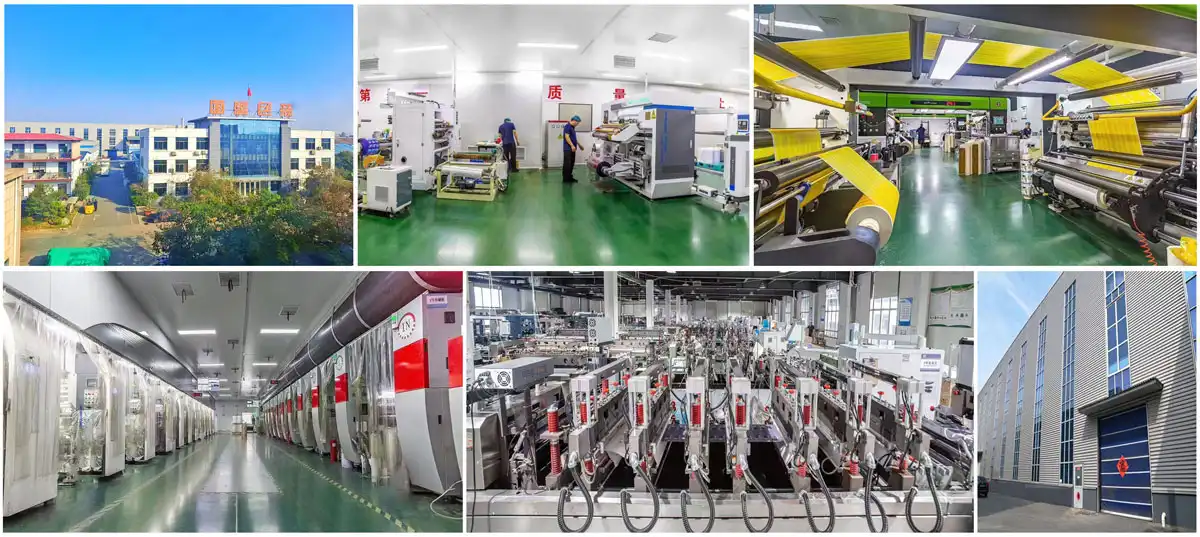
Your drink brand should have packaging that works the same way every time it's made and gives customers a unique experience. Guoshengli Packaging provides bottle shape juice pouch solutions backed by 25 years of manufacturing excellence, ISO 9001 and BRC certifications, and technical know-how for food and beverage brands around the world. Our factory has 7 printing lines that can use up to 11 colors of rotogravure to make bags that have been tested to be barrier-proof and compatible with hot filling. Our team can help you with everything from choosing the right materials to production, whether you need buildings made of a single material that can be recycled or the best barrier protection for premium organic drinks. Get in touch with our knowledgeable experts at sales@guoshengpacking.com to talk about your unique needs, ask for samples, and find out why top beverage companies trust Guoshengli Packaging as their bottle shape juice pouch provider.
References
1. Robertson, G.L. (2016). Food Packaging: Principles and Practice (3rd ed.). CRC Press.
2. Marsh, K. & Bugusu, B. (2007). Food Packaging—Roles, Materials, and Environmental Issues. Journal of Food Science, 72(3), R39-R55.
3. Yam, K.L. (2009). The Wiley Encyclopedia of Packaging Technology (3rd ed.). John Wiley & Sons.
4. Coles, R. & Kirwan, M.J. (2011). Food and Beverage Packaging Technology (2nd ed.). Wiley-Blackwell.
5. Han, J.H. (2014). Innovations in Food Packaging (2nd ed.). Academic Press.
6. Verghese, K., Lewis, H., & Fitzpatrick, L. (2012). Packaging for Sustainability. Springer-Verlag London.
.webp)
A fin seal pouch is a versatile flexible packaging solution featuring a distinctive back seal that resembles a fin. This pillow-style design creates a secure, hermetic closure ideal for protecting candies, snacks, frozen foods, and powdered products during high-speed production and distribution. Trusted by medium to large-scale manufacturers worldwide, this packaging format combines efficient material usage with strong barrier properties, making it a cost-effective choice for brands seeking reliable freshness protection and eye-catching shelf presentation in competitive retail environments.
Understanding Fin Seal Pouch Structure and Core Functionality
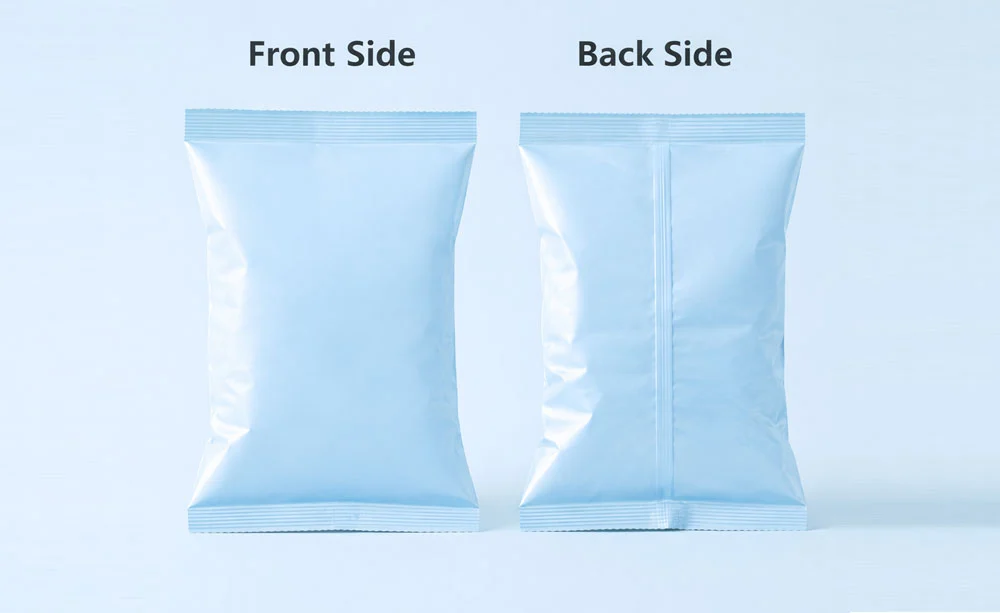
How the Fin Seal Mechanism Works
A fin seal pouch is different because it has a straight back seal. The inside film layers are stuck together to make a fin that goes along the back of the package. It's not at all like lap seals or side gusset constructions how this seals. When the film is being made, it is folded and heat-sealed at specific temperatures and pressures. This makes a strong closure that can stand up to pressure while it's being filled, moved, and handled. This design keeps the shape uniformly and lowers the chance of leakage or contamination, which is especially helpful for products that are sensitive to oxygen and moisture.
Multi-Layer Laminate Structures for Superior Protection
These days, pillow bags are made with complicated, multi-layer laminates that are made to balance price, safety, and the ability to print. Most of the time, PET or BOPP make up the top layer. This gives it compressive strength and a clean surface for high-resolution printing. Air, light, and water can't get thru middle barrier layers like metalized films, aluminum foil, or EVOH. This makes the food last a lot longer. PE or CPP is often used as the inner sealant layer. It keeps the food safe and makes sure the heat seal works well. These tiered structures can be changed to fit the needs of your product, whether you need very high barriers for nitrogen-flushed snacks or sweets with sharp edges that won't let holes thru.
Compatibility with High-Speed Form-Fill-Seal Systems
The fact that it works well with both vertical and horizontal form-fill-seal lines is one of the best things about this bag type. The film has a steady tension, a low coefficient of friction, and heat seal windows that work best. Costs per unit go down and time to market goes down because of this operational efficiency. They like this stability because it means they don't have to change a lot of parameters, waste a lot of materials, or stop work without planning to. All of these things are very important when they have to fit a lot of work into a short amount of time.
Types and Design Options: Choosing the Right Configuration
Standard Pillow Pouches for Streamlined Production
Its shape is clean and simple, and it has heat seals on the top and bottom, as well as the signature back fin. This plan makes the best use of space and materials and is great for things that don't need to be able to be closed again or be hung on the wall. This style is often chosen by candy makers, frozen food makers, and quick drink makers because it is cheap and safe. The smooth front and back panels give you a lot of space for full-color logos, nutrition facts, and ads, which makes your goods stand out on crowded grocery store shelves.
Advanced Functional Add-Ons for Enhanced Convenience
There are many useful extras that can be added to fin seal pouch designs so that they can meet the needs of many customers. Posters can be hung from Euro holes made near the top edge. This makes the store more visible and better utilizes room. People find easy-tear cuts helpful since they don't need to use scissors or other tools. With resealable zippers, you can use the item for longer after opening it. This is helpful for families who want to control how much food they eat and keep it fresh for longer. Customers can see how good a product is before they buy it, which makes them more likely to trust the company and reduces the number of returns. Every one of these changes can be made to fit the brand's stance and the tastes of the audience.
Sustainable Material Choices for Environmentally Conscious Brands
Being responsible for the environment has become an important factor for both consumers and procurement teams when they are buying things. Existing systems can be used to recycle PE structures made of a single material. This cuts down on the amount of trash that ends up in landfills without changing how well the barriers work. Brands that want to reach customers who care about the environment can switch to PLA or PBAT films that can be broken down naturally. These pictures break down in places where composting is done professionally. If you choose products that are good for the environment, you should still make sure that they have the same shelf life, seal integrity, and production line compatibility. Guoshengli Packaging helps clients find a balance between their business needs and their environmental goals. Making sure that eco-friendly packaging doesn't make more food go bad or more unhappy customers is important.
Benefits and Uses of Pillow Packaging Across Multiple Industries
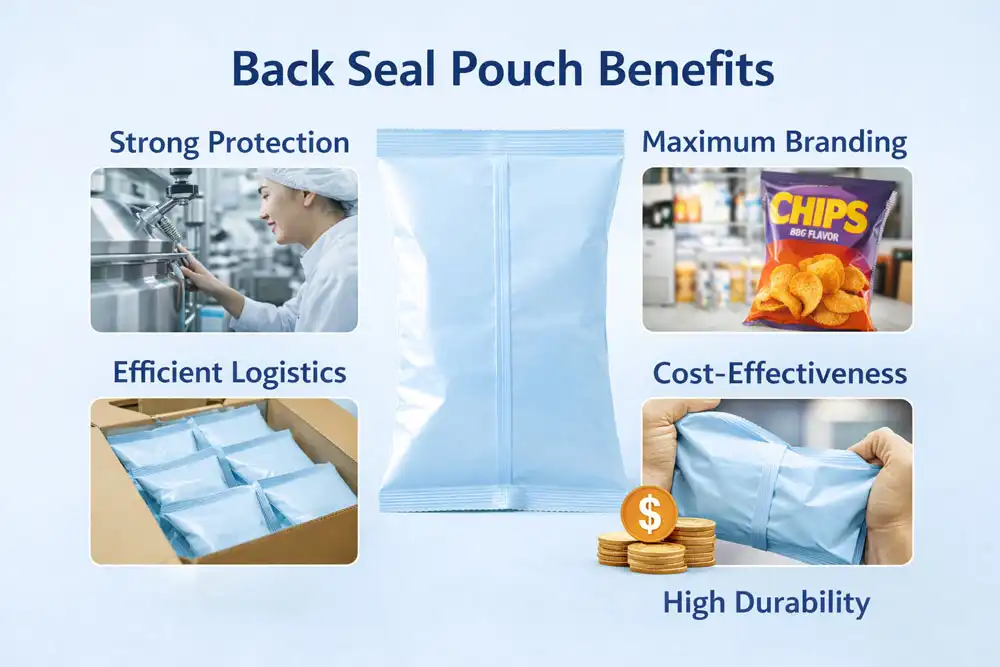
Cost Efficiency Through Material Optimization and Speed
Because it's simple, pillow-style packaging uses less material than tougher styles like stand-up or quad seal bags. When less film is wasted during production, the cost of raw materials goes down. This is especially important for orders that have a lot of film. Compatibility with automated Form-Fill-Seal systems cuts down on labor costs and speeds up work even more. Companies that make things that don't have to stop often and work well save a lot of money on both direct and chance costs. This is a good thing for the economy because it helps them make more money while still meeting the high standards that retailers and end customers expect.
Superior Product Protection for Extended Shelf Life
The high-barrier laminates used to make these bags protect the things inside from things in the environment that can break them down. Goods that are freeze-dried or hygroscopic don't clump or go bad because of moisture barriers. Layers that block light keep the color and taste of things that change color when exposed to light, like instant drinks and spices. These safety measures keep people from returning products, cut down on waste, and boost the brand's image. Heat seals keep food from getting contaminated while it's being shipped or stored.
Versatile Applications Across Food and Non-Food Sectors
This packaging format serves a broad spectrum of industries and product categories. Candy companies use it to separately wrap sweets, chocolates, and gummies, and they often add clear windows to show off the products. People who make snacks put potato chips, popcorn, and nuts in nitrogen-flushed pillow bags to keep the flavors and crunch. Firms that make frozen foods use laminates that can't be punctured to keep buns, vegetables, and fish safe while they are being kept and shipped. For businesses that sell powdered goods, like those that make protein supplements, instant coffee, and spices, features that keep out moisture and make it easy to fill are useful. Many things that aren't food, like pet treats and industrial detergents, use this flexible format to keep things safe and make the brand stand out.
Comparison Guide: Evaluating Pillow Packaging Against Alternatives
Fin Seal Versus Lap Seal Construction
It helps procurement teams choose the best places to get things when they know how fin seal and lap seal fin seal pouch pouches are built differently. The outer and inner film layers meet and stick together in a lap seal arrangement. This means that different materials must be able to work together. This may restrict the kinds of barriers that can be used and weaken the seals at the point where two barriers meet. The fin seal, on the other hand, joins two inner surfaces that are exactly the same. This lets you choose from more materials and usually makes seals that are stronger and more consistent. The fins' form also makes it easier to connect to fast machines. This cuts down on the time it takes to set up and the waste that happens during production runs.
Stand-Up Pouches Versus Pillow Pouches
Since stand-up bags can stand on their own, they are better for store displays. This makes them easier for customers to see and useful. But they are harder to make because the steps are more difficult and the materials normally cost more. However, pillow bags are simpler to make, less expensive when bought in bulk, and better for situations where hanging displays or extra packaging like boxes keep the product stable on the market. Pillow forms are often preferred by brands that want to save money and make things quickly, while stand-up designs may be preferred by brands that want to put their products in a premium position and make them stand out on the shelf. The choice depends on the features of the product, how it will be distributed, and how much money you have to spend.
Evaluating Zipper and Non-Zipper Options
Taking a look at choices with and without zippers, resealable zippers make things more useful and appealing to customers, especially when the product will be used more than once. In crowded categories, this feature can help brands stand out and justify a higher price. However, adding a zipper can increase converting complexity and may affect production speed and unit cost. Pouches without zippers are less expensive and work better for single-serve products or things that are eaten right away after being opened. Buyers have to think about the pros and cons of extra ease of use, cost, and how they want customers to act when deciding whether to add resealable seals.
Buying and Customizing Solutions: What Procurement Managers Should Know
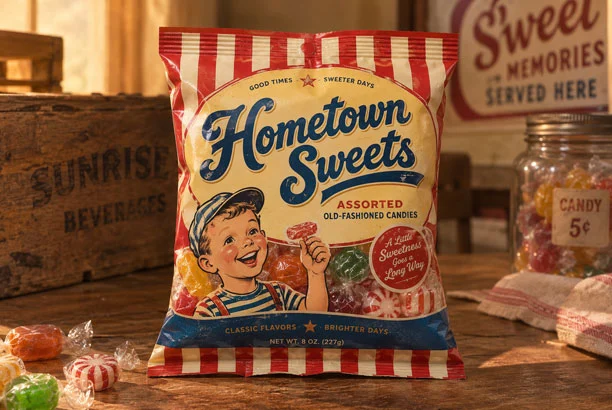
Minimum Order Quantities and Flexible Procurement Options
One problem that buying teams often have is keeping track of their stock, cash flow, and orders. When you order a lot of rotogravure printing, which is cheap and gives you bright, consistent color, many companies require you to buy at least 10,000 pieces of each design. Digital printing has lower minimum order numbers (MOQs) and reaction times that are usually seven days or less. Brands can test new products or handle smaller runs more easily this way. When purchasing managers know about these options, they can plan when to buy packaging based on when a product is going to be released, how seasonal demand changes, and how much cash they have on hand.
Evaluating Supplier Credibility and Certifications
Looking at the supplier's reputation and credentials, suppliers you can trust show they care about quality and safety by getting recognized certifications and using open manufacturing practices. With BRC certification, you can be sure that strict rules for food safety are being followed. With ISO 9001 certification, you can be sure that strong systems for managing quality are in place. Following FDA rules makes sure that materials in the U.S. are safe to touch food, and SGS tests make sure that the barrier works and the seal is still in place. If possible, people who work in buying should ask for copies of the certificates, check out the factories, and read case studies or quotes from past customers. It's safer to do business with reliable suppliers over a long period of time because the quality of the work will stay the same for repeat orders. It also helps the brand's reputation in the market.
Custom Printing and Brand Differentiation Strategies
Packaging is a great way to market, and with custom printing, brands can clearly show what makes their product special. This type of printing can use up to eleven colors, which lets you make pictures, gradients, and small details that look like photos and stand out. You can pick finishes like matte, glossy, or metallic to make your brand stand out and put your products in the right place. You can see how good the product is in real life thru the clear windows. This makes people more likely to trust the business and buy. During the design process, procurement managers should share brand rules, information about the target audience, and a study of the competition with packaging suppliers. This will help make sure that the finished product meets government labeling standards and marketing goals.
Ensuring Compliance with International Food Safety Standards
There are a lot of rules and laws that must be followed very carefully when doing global marketing. In the US, packaging products have to follow FDA rules. In Europe, they have to follow EU rules. In other areas, they have to follow rules that are similar. There should be limits on how much stuff can move from packaging into food, and allergens should be correctly labeled. Everything in the supply chain should also be able to be tracked. Features that make it impossible to tamper with, like perforated tear strips or sealed covers, protect both the buyer and the brand. Suppliers who know a lot about regulations and can test products can help procurement teams navigate the complicated world of compliance. This lowers the risk of expensive recalls, legal problems, and damage to the brand's reputation.
Conclusion
To choose the right package style, you have to think about how to balance cost-effectiveness, product safety, operating compatibility, and brand recognition. Pillow-style packaging with a back fin seal pouch has been used successfully in many fields, from frozen foods and powdered goods to sweets and snacks. The machine's simple design lets it work quickly, cuts down on waste, and uses advanced barrier laminates to reliably keep food fresh. Brands can meet customers' wants and needs by giving them customization options like zippers that can be closed again, clear views, euro holes, and eco-friendly materials. Procurement managers need to know about technical specifications, supplier certifications, and regulatory compliance requirements in order to make strategic sourcing decisions that help the company grow and stay ahead of the competition over the long term.
FAQ
1.What Is the Main Difference Between Fin Seal and Lap Seal Designs?
The inside film layers of a fin seal pouch are joined together to make a back fin that sticks out. The outside and inside film layers of a lap seal pouch are folded over each other. Most of the time, the fin seal method makes stronger, more consistent seals and lets you use more materials. This makes it better for high-barrier situations and fast-paced production settings.
2.Can Pillow Pouches Be Made from Recyclable Materials?
Yes, structures made of just one material (PE) can be recycled in any way that works with the system we have now. With these options, the high level of barrier performance and seal integrity is kept while less damage is done to the environment. If a business cares about the environment, it can also choose options made from PLA or PBAT that can be broken down in industrial composting facilities.
3.How Do I Ensure My Supplier Can Handle Large Volume Orders?
Check the supplier's yearly output capacity, the skills of their machinery, and their list of satisfied customers. Suppliers with dedicated high-speed printing, laminating, and converting lines, such as those with 20,000-ton annual capacity, can reliably fulfill large orders without delays. Request production plans, quality control methods, and transportation support to confirm their ability to meet your timelines and volume requirements regularly.
Partner with a Trusted Fin Seal Pouch Manufacturer
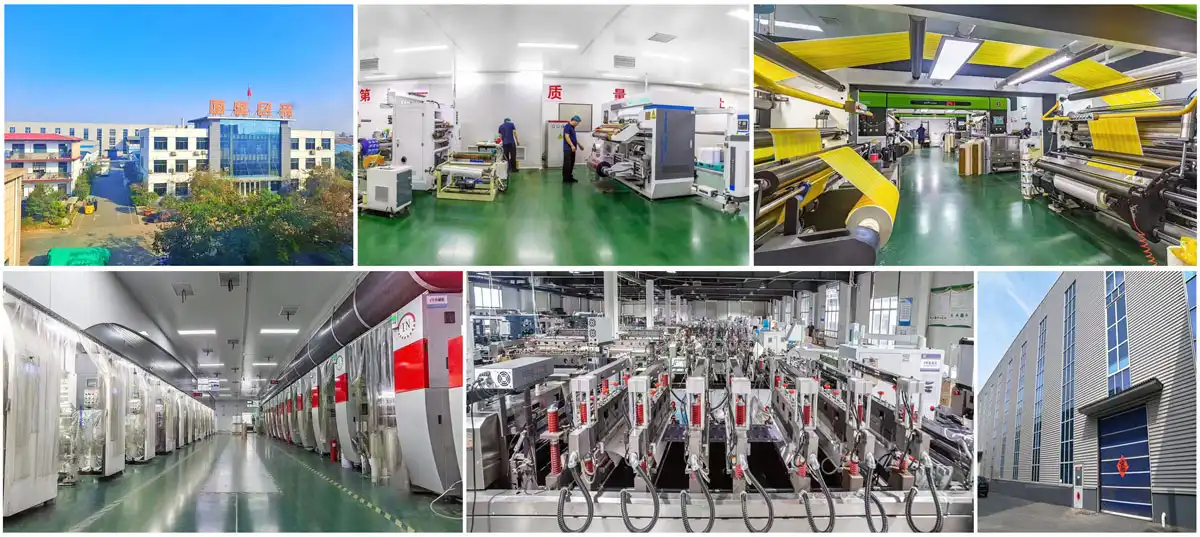
Guoshengli Packaging has been making packaging for over 25 years and can make up to 20,000 tons of it every year. They can help medium and big food makers all over the world. Our fin seal pouch solutions are designed to work with fast FFS, provide better barrier protection, and be scalable at a low cost. ISO 9001, BRC, and FDA certified, we offer uniform quality across repeat orders, helping your brand avoid costly production delays and product spoilage. With flexible MOQs, lead times of as little as seven days for digital printing, and a lot of customization options, you can make sure that your packaging meets both operational needs and market expectations. Visit guoshengpack.com or email sales@guoshengpacking.com to talk about your project needs, ask for samples, and find out how our custom packaging solutions can help your brand grow and be successful.
References
1. Robertson, G. L. (2016). Food Packaging: Principles and Practice (3rd ed.). CRC Press.
2. Marsh, K., & Bugusu, B. (2007). Food Packaging—Roles, Materials, and Environmental Issues. Journal of Food Science, 72(3), R39-R55.
3. Yam, K. L. (2009). The Wiley Encyclopedia of Packaging Technology (3rd ed.). John Wiley & Sons.
4. Selke, S. E., Culter, J. D., & Hernandez, R. J. (2004). Plastics Packaging: Properties, Processing, Applications, and Regulations (2nd ed.). Hanser Publications.
5. Coles, R., McDowell, D., & Kirwan, M. J. (2003). Food Packaging Technology. Blackwell Publishing.
6. Brody, A. L., & Marsh, K. S. (1997). The Wiley Encyclopedia of Packaging Technology (2nd ed.). John Wiley & Sons.
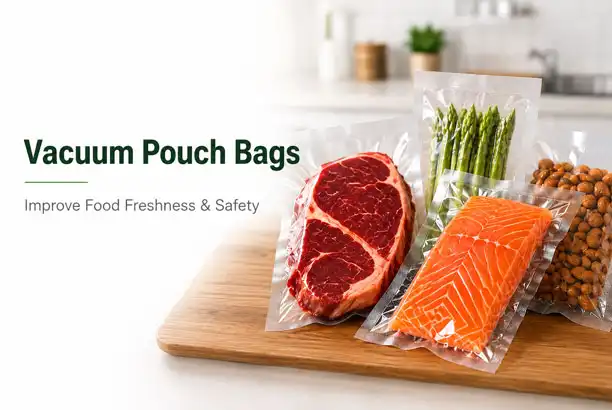
When you remove oxygen from around food and create an airtight seal, something remarkable happens: microbial growth slows dramatically, oxidation stops in its tracks, and products stay fresh significantly longer. Vacuum pouch bags accomplish exactly this by using advanced multilayer film structures—typically combining Polyamide (PA) and Polyethylene (PE)—to create a hermetic barrier. This packaging method extends the shelf life of proteins, seafood, dairy, and processed foods compared to traditional methods, all while maintaining flavor, texture, and nutritional integrity without chemical preservatives.
Understanding Vacuum Pouch Bags and Their Role in Food Freshness
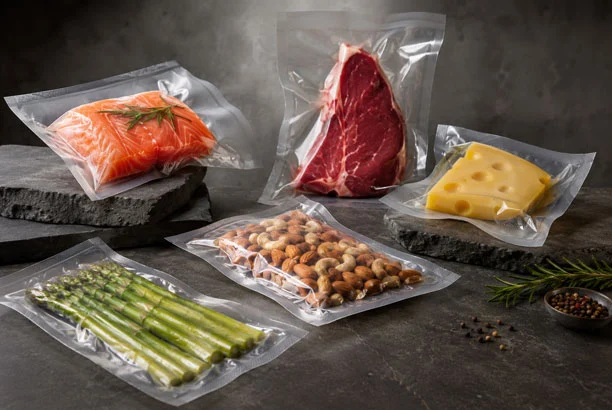
What Makes Vacuum Packaging Work
The key to vacuum packing is to manage the environment. Mould, yeast and aerobic bacteria require oxygen to grow. Vacuum pouch bags remove air and hence trap in the environment and make it difficult for those organisms to thrive. The hermetic seal also prevents loss of moisture that may cause freezer burn and textural changes to frozen foods. Professional films have an OTR (Oxygen Transmission Rate) of under 50 cc/m3/day and a WVTR (Water Vapour Transmission Rate) of under 10 g/m2/day. This gives them the barrier properties needed for long-term storage.
Material Structures That Deliver Protection
The existing vacuum packing requires sophisticated material engineering. excellent gas barrier properties of nylon and excellent moisture resistance and heat sealability of polyethylene are obtained with PA/PE laminates. “PET/PE frameworks are very clear and they do not puncture easily when used for retail displays. The high performance vacuum pouch bags are made of 7 to 9 layers of co-extruded material. Each layer gives a specific property, such as barrier function, structural strength, seal integrity or printability. These multilayer structures tolerate temperature ranges from -40°C in blast freezers to 100°C in sous-vide water baths. This is vital for cold chain logistics and cooking.
Different Types for Different Applications
Smooth vacuum pouch bags are available for chamber type industrial sealers and stamped (channelled) for external suction devices. Smooth films are best suited for automated packaging lines in meat processing industries where high throughput and uniform sealing are needed. Clamp-style home and small business sealers include embossed surfaces that provide paths for air to escape. Different thicknesses from 65 microns to 120 microns may suit various protective demands. Thinner films are more suitable for dry products and soft proteins, while thicker films are more suitable for protection against bone-in cuts and sharp shellfish that might shatter thinner films.
Comparative Insights: Vacuum Pouch Bags vs Other Packaging Options
Superiority Over Traditional Storage Methods
Standard zipper bags and rigid containers aren't as good at keeping things fresh as vacuum packaging. Even when zipper bags are squished by hand, they still hold some air with oxygen in it that keeps reactive processes going. Rigid packages take up too much room when they are being moved or stored in a refrigerator. Vacuum-sealed packages, on the other hand, fit the shape of the product perfectly. This makes cold storage more efficient while also keeping out air, which ruins the color of red meat, makes fats go sour, and makes coffee taste bad.
Cost Analysis for Bulk Purchasers
When purchasing managers look at the economics of packaging, they need to look at more than just the unit price. They also need to look at the total cost of ownership. Vacuum pouch bags keep food from going bad, which can cost 5 to 15 percent of the value of goods in protein supply chains. Longer shelf life lets products be distributed over a wider area and limits the need for emergency discounts before they go bad. Less wasted space in cold storage means less money spent on energy per item kept. When added up over a year's worth of volumes, these operational savings often make up for the higher cost of materials compared to basic polyethylene bags.
Environmental and Reuse Considerations
Traditional PA/PE multilayer films are hard to recycle because it's hard to separate the materials. In response, the industry has come up with high-barrier films made of a single material that are based on polyethylene. These films keep the stream clean in recycling facilities. Some businesses clean and use vacuum pouch bags again and again for internal processing steps, but this needs to be done according to approved cleaning standards. Single-use containers are still the norm for sale and final distribution to keep food safe and protect the barrier. More and more, buyers are asking for information on sustainability, which is pushing makers toward film technologies that are recyclable and use less carbon without sacrificing security performance.
Practical Guidance: How to Use and Seal Vacuum Pouch Bags Correctly
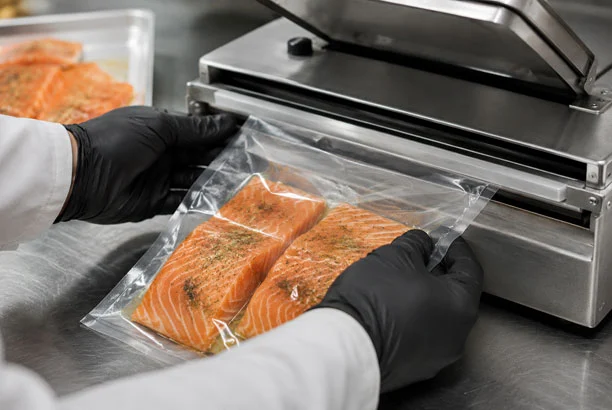
Selecting Appropriate Equipment
Chamber vacuum sealers empty out whole chambers, which means that products that contain liquid can be packed without spilling. This makes them perfect for packaging meats and other foods that are marinated or sauced. Small businesses are more likely to use external suction sealers, which need stamped bags and work best with dry or almost dry goods. Nozzle-type sealers are easier to move around in the field, but they don't provide as uniform seal pressure. For meat and seafood processors that work in factories, rotary chamber machines can be built into production lines and can seal hundreds of packages an hour with vacuum levels and seal times that can be programmed to match different film structures.
Step-by-Step Sealing Protocol
The right way to do something starts with getting the product ready. This means getting rid of any sharp bones that could puncture the film, wiping off any extra moisture from the seal areas, and leaving enough headspace (usually 3 to 4 inches) for the sealing bar. Place the bag's open end across the seal bar so that it doesn't have any wrinkles that could let water in. Set the vacuum time based on how dense the item is; things that are thick need more time to be evacuated. Change the seal temperature and stay time based on the thickness of the film. Seals that don't get enough heat are weak, while seals that get too much heat burn through the material. After closing, look at it visually and do a squeeze test to make sure all the air is gone and the seal is still good.
Hygiene and Safety Best Practices
Vacuum packaging doesn't kill germs, but it does keep food from going bad by controlling the air flow. Before being packaged, products must be treated in a clean way. Temperature control is still very important: proteins that are vacuum-packed need to be kept cold at or below 4°C all the time to stop viruses and psychrotrophic bacteria like Listeria monocytogenes from growing, even in low-oxygen conditions. For sous-vide uses, vacuum pouch bags need to be able to keep the right temperature during cooking without the film parts coming apart or moving around. To ensure safety on foreign markets, regulatory compliance means using only films that are FDA-approved and EU 1935/2004-compliant.
Procurement Strategies for Vacuum Pouch Bags: What B2B Buyers Need to Know
Evaluating Supplier Capabilities
Suppliers you can trust show stability in their work by doing well on return orders as well as initial samples. Systematic quality management is shown by certifications like ISO 9001, BRC Food Packaging, and market approvals like FDA for US exports and EC compliance for European markets. Technical know-how is important. Suppliers should give exact OTR and WVTR values, seal strength data, and measurements of puncture resistance. Ask about their production ability, lead times for both regular and rush orders, and their backup plans in case they run out of materials, which could stop your filling lines.
Customization and Branding Opportunities
Wrapping is not just a functional tool, but also a way to achieve commercial objectives. High-definition rotogravure printing (up to 11 colours) enables you display your brand in a stunning aesthetically pleasing style that sticks out on shop shelves. The quality of the goods and information are shown on transparent windows and printing panels. Matte finishes say this is a high-end product. Shiny films make things appear fresh. Custom size helps to maximise the usage of the material. Bags that are too huge squander film and storage space, while pouches that are too tiny might cause seal failures. Supplier minimum order quantities vary.
Negotiating for Long-Term Value
When you commit to buying in bulk, you can get better prices, but your purchase plan should balance cost with supply security. Dual-source methods lower the chance of quality problems or production problems. Frame deals with promises to volume every three months and monthly call-offs give you options while protecting your capacity. Talk about material escalation clauses that are linked to resin indices so that prices don't go up without warning during contract periods. As part of your supplier relationship, ask for technical help with things like optimizing seal parameters, fixing problems with the packaging line, and suggesting new materials when product specifications change. The best relationships go beyond just buying things one time and start working together to solve problems, which protects the goods and makes operations run more smoothly.
Future Trends and Innovations in Vacuum Pouch Bag Technology
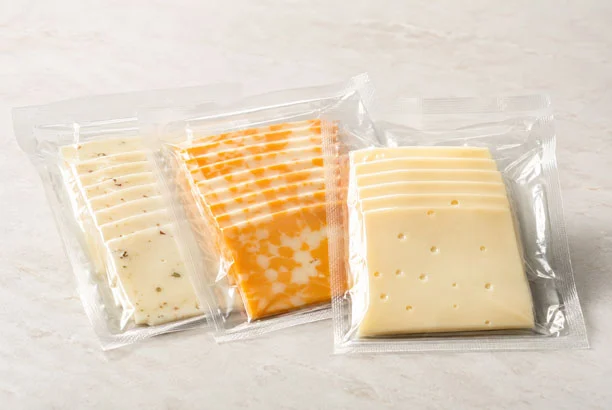
Sustainable Material Development
Pressure from regulators and corporate commitments to sustainability are speeding up the move toward packaging that can be recycled. OTR values that used to need multilayer PA structures can now be reached with single-material polyethylene films that have better barrier coatings. Compostable films made from PLA (polylactic acid) and PBAT (polybutylene adipate terephthalate) have some potential uses, but the ones that are currently available often don't work well as barriers or can handle high temperatures. The business keeps trying to find a balance between protecting the earth and keeping food from going bad. No environmentally friendly packing will work if it lets the food go bad, losing the much more valuable resources that went into making the food.
Smart Packaging Integration
New technologies include sensors inside or on vacuum pouch bags that can track the food's temperature history, find seal breaks, or use color-changing inks that react to volatile chemicals released during spoiling to show how fresh the food is. When QR codes are linked to blockchain systems, the whole supply chain can be tracked. This meets both food safety rules and consumer requests for openness. While these technologies are still not widely used in basic markets that care about price, they are being used more and more in high-end and export-oriented goods. The information gathered helps with managing the cold chain by showing where temperature changes happen and allowing for quick action before the quality of the goods suffers.
Adapting to Evolving Market Demands
Sous-vide is popular in business kitchens and meal kit services, which increases the need for vacuum pouch bags that have been tested to work well at high temperatures. For meat and seafood to be delivered directly to consumers, the packaging needs to be able to handle the stresses of shipping while still looking great. As the market share of plant-based proteins grows, the packaging needs to change because these products often have different moisture profiles and problems with shelf life than animal proteins. Instead of selling generic products, responsive manufacturers make solutions that are tailored to specific applications and work with customers to test how well they work in real-world settings. This partnership makes sure that packaging works efficiently when it's needed, during production, distribution, and finally to protect the image of the brand.
Conclusion
For extending food freshness and ensuring safety throughout complicated supply chains, vacuum pouch bags are a tried-and-true, science-based answer. Their effectiveness comes from controlled atmosphere packaging that stops the growth of microbes and oxidation while keeping the quality of the product without adding chemicals. For companies that process meat, seafood, dairy, and ready-to-eat foods, these special films solve important problems: they keep bone-in products from getting punctured, they keep freezer burns from happening, they can handle different processing temperatures, and they make sure they follow international rules. Businesses can cut down on waste, reach more customers, and protect their brand's image by making sure products are always of high quality when they use strategic buying that looks at total cost, source reliability, and technical support.
FAQ
1.Are vacuum-sealed bags safe for all food types?
Food-grade vacuum pouch bags made from BPA-free materials and following FDA and EU rules are safe to put meat, fish, dairy, veggies, and dry goods in directly. Foods that are high in moisture and low in acid (pH above 4.6) need to be refrigerated or frozen, even if they are vacuum-sealed, because anaerobic bacteria like Clostridium botulinum can grow in places without air at room temperature. When properly chilled and packed in vacuum pouch bags, food stays fresh for a long time without using chemical additives.
2.Can vacuum pouches be reused safely?
Most commercial food businesses don't reuse vacuum pouch bags because they can get contaminated again and the barrier quality isn't as good after the first use. Micropunctures or damage to the seal area that can't be seen with the naked eye can let oxygen in and microbes in. There are certain risks that come with using raw proteins in certain ways. For non-food products or in controlled processing settings where pouches are cleaned and inspected, limited reuse may be okay. However, the cost savings rarely outweigh the quality and safety risks when compared to new packaging.
3.What factors matter most when ordering vacuum pouch bags in bulk?
In addition to unit price, you should look at data on puncture resistance (in Newtons or grams of force), verified OTR and WVTR specifications, temperature range capabilities, and certifications that match the markets you want to sell to. Your operational continuity is directly affected by the production capacity and lead time consistency of your suppliers. Instead of asking for specially made prototypes, ask for samples from actual production runs. Then, test them in real life situations like vacuum sealing, cold storage, and handling before committing to large orders. To protect against batch differences, include clear quality standards and inspection procedures in the contracts you sign.
Partner with Guoshengli Packaging for Reliable Vacuum Packaging Solutions
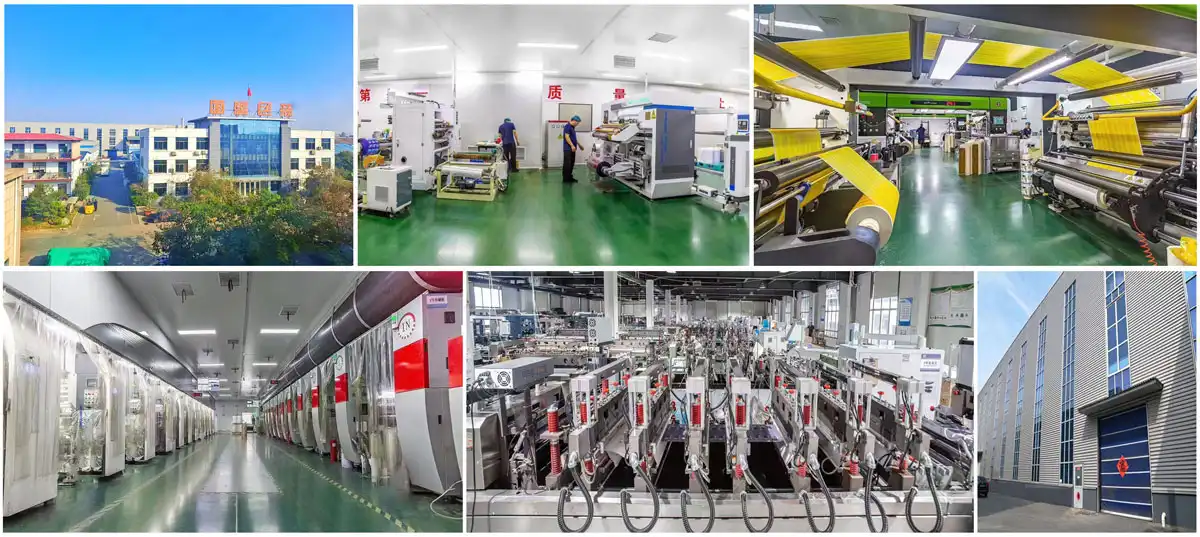
Food companies that handle meat and fish, make dairy products, and sell ready-made meals depend on packaging that works the same way every time it's made. We make high-barrier vacuum pouch bags at Guoshengli Packaging that are designed to work with demanding cold chain applications. Because we've been in the flexible packaging business for 25 years, we can offer puncture-resistant films with proven barrier properties, quick lead times of as little as 1-2 weeks, and clear choices that show off the quality of the product. We have ISO 9001, BRC, and FDA licenses, which show that we know how to make vacuum pouch bags and that every order meets international food safety standards. Our expert team can help you with material choices and closing parameters that are specific to your production needs, whether you need standard configurations or custom-engineered solutions for bone-in meats, shell-on seafood, or sous-vide applications. Get in touch with our packaging experts at sales@guoshengpacking.com to talk about how our vacuum packaging solutions can help your brand by ensuring reliable performance from the factory to the final consumer and reducing the risk of spoilage.
References
1. Johnson, M. R., & Thompson, K. L. (2021). Vacuum Packaging Technology in Food Preservation: Mechanisms and Applications. Food Science International Press.
2. Petersen, K., Nielsen, P. V., & Olsen, M. B. (2020). "Barrier Properties of Multilayer Plastic Films for Modified Atmosphere Packaging." Packaging Technology and Science, 33(4), 187-203.
3. Robertson, G. L. (2022). Food Packaging: Principles and Practice (4th ed.). CRC Press, Taylor & Francis Group.
4. Sacharow, S., & Griffin, R. C. (2019). Principles of Food Packaging: A Comprehensive Guide to Material Selection and Performance. AVI Publishing Company.
5. Singh, P., & Heldman, D. R. (2020). Introduction to Food Engineering (6th ed.). Academic Press, Elsevier.
6. Yildirim, S., Röcker, B., Pettersen, M. K., & Nilsen-Nygaard, J. (2018). "Active Packaging Applications for Food Safety and Quality." Comprehensive Reviews in Food Science and Food Safety, 17(1), 165-199.
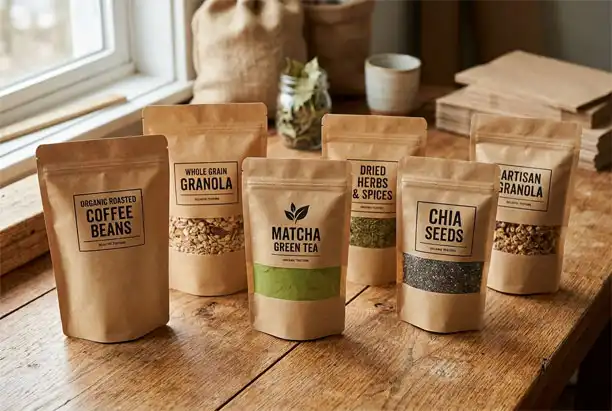
When a brand wants packaging that looks natural and genuine, brown kraft paper pouches are often a workable option for organic foods, specialty coffee, and products that benefit from a recognisable kraft finish. They pair the look of kraft paper with multi-layer barrier materials, so the package can be built around the shelf-life needs of a particular product while still feeling natural in the hand. Guoshengli Packaging makes these pouches in 120 to 160 micron material structures, with options including three-side seals, easy-tear notches, and hang holes for retail use in North American and European markets.
Understanding Brown Kraft Paper Pouches
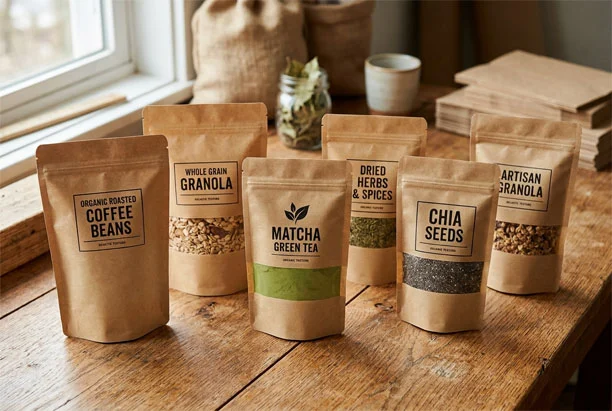
Brown kraft paper pouches are flexible packages that combine a kraft-paper appearance with the working properties of barrier films. Beneath the paper exterior, they may use layers of aluminium foil, metallized PET, or EVOH-containing film. Plain paper bags usually offer little protection against oxygen or moisture. By contrast, laminated kraft pouches can be designed to protect products that are sensitive to oxidation or moisture and still hold up during filling, shipping, and display.
What Defines Modern Kraft Pouches
The outer kraft layer is usually chosen for the desired look, print result, and finished pouch construction. Some applications use 40 to 80 GSM paper. Rotogravure printing can apply up to 11 colours to this layer, which gives the pouch its familiar textured kraft look. The middle barrier layer can be selected around the product's sensitivity to oxygen, moisture, or light. PE, CPP, or LLDPE inner sealant layers provide heat sealing and food-contact performance. Together, these layers let a brand keep the feel of kraft paper while specifying the barrier and mechanical properties its product needs.
Key Variants and Functional Designs
Stand-up pouches with bottom gussets are a common kraft format because they can stand filled on a shelf. Flat-bottom pouches have a box-like profile for a more premium retail display. Side-gusset formats make efficient use of capacity, while three-side seal pouches suit products such as jerky and dried foods. Freshly roasted coffee may need a one-way degassing valve so CO2 can escape without allowing much outside air in. Resealable zippers can help preserve quality after opening. Clear windows make the product visible while retaining much of the kraft look, though their material and size affect light protection and barrier performance. These options can work for products from handmade cookies to freeze-dried pet treats.
Industries Benefiting From Kraft Packaging
Specialty coffee roasters often choose a kraft exterior for an artisanal look, with barrier layers selected to reduce oxygen, moisture, and aroma loss. Organic snack producers can pair the natural finish with simple graphics to support clean-label positioning without making unsupported environmental claims. Pet food brands use kraft pouches for a natural-looking package; a properly designed inner film can also control grease migration and keep the paper surface from staining. Low-WVTR structures may protect hygroscopic powdered supplements and protein mixes from moisture uptake and clumping during storage or international distribution.
How to Choose the Right Brown Kraft Paper Pouch for Your Business
Choosing brown kraft paper pouches starts with matching the material to the product and the intended market presentation. Procurement teams should look at the product's sensitivity to moisture, oxygen, light, and grease, then set an appropriate shelf-life target. Products high in fat or oil may need structures that resist grease migration. Hygroscopic powders generally need low-WVTR structures to reduce moisture uptake. Finish is a branding choice as well: matte kraft has a natural look, while partial gloss or spot UV can create contrast.
Evaluating Material Structures and Barrier Performance
Barrier structure matters throughout the intended storage period. Aluminium foil laminates can offer very high protection against oxygen, moisture, and light for sensitive products. Metallized PET also provides useful oxygen and moisture barrier, with a different cost and material profile. Its environmental performance should be assessed across the full packaging structure, not assumed to be better than foil. EVOH offers strong oxygen-barrier performance and may work in certain PE-based structures designed for recyclability, within relevant design-for-recycling guidance. Procurement teams should request oxygen transmission rate (OTR) and water vapor transmission rate (WVTR) data under defined test conditions. That helps prevent over-engineering that raises cost without need, as well as under-specification that can put product quality at risk.
Customization Options That Drive Differentiation
Printing has a direct effect on how a pouch looks on the shelf. Rotogravure can produce vivid, consistent graphics over stable production runs, including complex brand artwork and photographs. Digital printing is more flexible for short runs, multiple SKUs, seasonal releases, and test-market launches. Matte varnish and similar finishes can protect the printed surface without losing the kraft-paper look. Soft-touch coatings change the feel of the package. Euro holes support hang-sell displays, tear notches make opening easier, and clear PET or BOPP windows show the product, though they alter the light and barrier properties in that part of the pouch. Select these features for the retail channel and the way customers use the package, not appearance alone.
Comparing Kraft Pouches With Alternative Materials
Traditional plastic stand-up pouches provide many material and barrier choices, but they are receiving closer scrutiny under EPR schemes, recyclability requirements, and packaging-waste rules in markets including Europe. Plastic structures can serve conventional and sustainability-oriented brands alike. Uncoated paper usually has limited oxygen and moisture barrier for sensitive foods. Brown kraft paper bags strike a different balance, combining the visual and tactile qualities of kraft with protective film layers chosen for the required product performance. A kraft surface alone is not evidence of recyclability or environmental superiority. The full laminate and the available end-of-life system determine the environmental profile.
Supplier and Brand Selection: Finding Trusted Partners
Reliable brown kraft paper pouches manufacturing depends on suppliers producing consistent results on repeat orders, not merely on the first sample. Changes to materials, printing, lamination, or converting can alter filling-line compatibility, seal performance, dimensions, and print appearance. Procurement teams should look beyond the unit price and consider manufacturing capability, quality controls, technical support, documentation, and consistency from one order to the next.
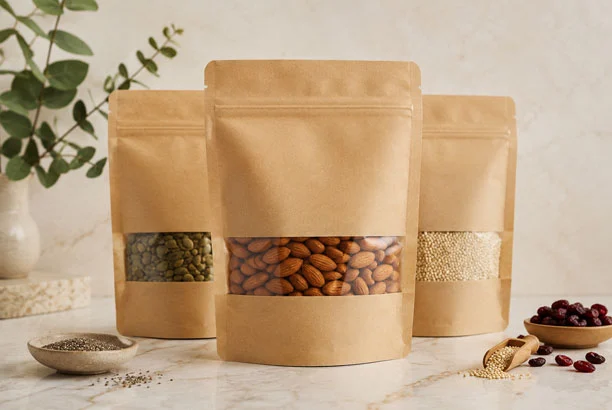
Critical Supplier Selection Criteria
Production capacity indicates whether a supplier can support higher order volumes, but actual production planning and delivery performance are better measures of lead-time reliability. Equipment also matters. Controlled lamination helps keep adhesive application and bond performance consistent, while precise pouch-making equipment supports stable dimensions for manual and automated filling. ISO 9001 and BRCGS Global Standard Packaging Materials certification indicate structured quality-management and packaging-production systems. Food-contact compliance should be backed by documentation appropriate to the materials, intended use, and destination market. Claims about recyclability, biodegradability, or compostability need suitable assessment or certification for the complete package, rather than a generic certificate for one material.
Assessing Technical and Communication Competence
Good supplier relationships depend on clear discussion of material structures, barrier data, sealing needs, and risks specific to the application. An experienced manufacturer can flag issues such as heat-seal compatibility with filling equipment or differences in print appearance between substrates. Sampling should fit the project's stage and risk. It may involve digital mock-ups for artwork review, physical material or pouch samples, production-representative samples, and line trials where needed. Seal strength, barrier data, dimensions, and other performance points should be assessed with methods suitable for the application. Clear, timely communication helps prevent misunderstandings and delays when technical or production questions come up.
Evaluating Long-Term Partnership Potential
Long-lasting supplier relationships involve more than transactions. Manufacturers that keep developing materials, converting methods, and sustainability options are better able to support brands as packaging regulations and market requirements change. They may offer PE-based structures intended to improve recyclability or certified compostable structures for suitable applications, provided product performance and local end-of-life infrastructure are taken into account. Flexible order planning can help with smaller launches and later move toward more efficient volume production as demand grows. Pricing that separates material, printing, tooling, and functional-feature costs gives buyers a clearer way to optimise specifications instead of switching suppliers only to chase a lower unit price.
Optimizing Procurement: Ordering and Cost Considerations
When buying brown kraft paper pouches, compare unit cost with the total cost of ownership: quality risk, inventory cost, lead time, and supply-chain resilience all count. Procurement is more than price comparison. Buyers also need to know whether the packaging will perform consistently and keep production running efficiently over repeat orders.
Understanding Cost Drivers and Pricing Structures
Material choice affects cost substantially. Kraft paper GSM influences appearance, handling, and material use, though a higher GSM does not automatically improve print quality or finished-pouch performance. The barrier layer changes both cost and function. Aluminium foil provides a very high barrier, while metallized film can offer a different performance and cost profile depending on the application. Order quantity affects unit economics because printing and converting setup costs are spread across the run. Rotogravure is usually more economical as stable repeat volumes grow. Digital printing can make more sense for short runs, multiple designs, or frequently changing artwork. Zippers, valves, windows, and shaped die-cuts add material or converting steps, so they should earn their place through a clear functional benefit.
Best Practices for Initial Orders and Sampling
Appropriate sampling can prevent expensive production mistakes. Buying teams may start with existing material or pouch samples, then move to production-representative samples when closer validation is necessary. Alongside visual checks, trials on the actual filling equipment can show whether pouch size, structure, seal area, and functional features fit the intended process. Where shelf life is important, review barrier data and product-specific shelf-life evidence as well. The responsible brand or product team should make the final shelf-life decision using evidence for the actual product, package structure, filling process, and storage conditions.
Managing MOQs and Inventory Strategy
Minimum order quantities can be difficult for new brands while demand is still taking shape. Digital printing supports shorter runs and multiple designs without dedicated printing cylinders, which can reduce initial inventory exposure. For stable, higher-volume repeat orders, rotogravure may become more economical because the setup cost is spread over more units. MOQ is not a single industry-wide figure. It depends on pouch dimensions, material structure, artwork count, converting requirements, and the supplier's production setup. Inventory planning also needs to weigh holding cost against production and replenishment lead time. Plans based on actual sales velocity and expected repeat demand help both buyer and supplier schedule production more efficiently.
Practical Applications and Case Studies
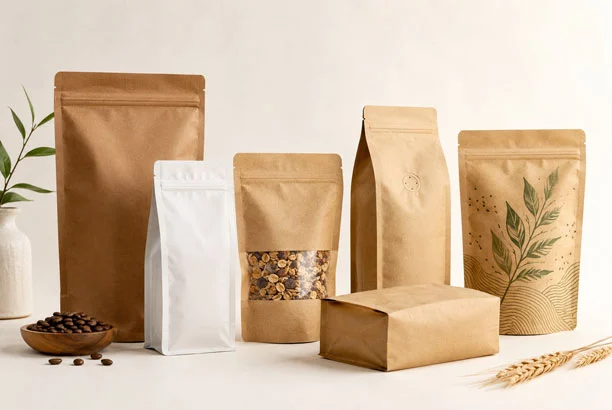
Brown kraft paper pouches suit applications where both product protection and brand presentation matter. The examples below show how material structures and functional features can be matched to the product being packed.
Specialty Coffee Roasters
Craft coffee roasters need to manage CO2 released by freshly roasted beans and limit oxygen exposure that speeds aroma loss and oxidative quality changes. A kraft pouch can use a high-barrier laminate and one-way degassing valve for that job. Its kraft exterior supports an artisanal or farm-to-cup identity, while the valve releases excess CO2 and restricts outside air entry. Barrier structure, valve performance, seal integrity, roast-to-pack timing, and storage conditions all need to be considered when setting shelf life. Testing finished pouches with the actual coffee is more dependable than making a broad shelf-life claim from the material alone.
Organic Snack Brands
An organic trail mix brand may choose kraft bags with metallized PET barriers, clear windows, and resealable zippers to retain a natural look while providing visibility and convenience after opening. Select the barrier structure around sensitivity to oxygen, moisture, and fat oxidation, and treat the window area as part of the overall barrier design. Grease-resistant laminates can also reduce oil migration through the pouch and staining of the kraft exterior. The final format should be tested with the actual product, intended shelf-life target, and distribution conditions.
Freeze-Dried Pet Treat Manufacturers
Premium pet food brands may use kraft packaging for freeze-dried chicken, beef, or other treats when a natural-looking package suits the product's positioning. Three-side seal and stand-up formats can be selected for fill weight and retail display, while hang holes support pegboard merchandising. Freeze-dried products are sensitive to moisture uptake, so the finished pouch needs suitable moisture protection and dependable seals. Tear notches and resealable zippers can make the pouch easier to use where appropriate. The full structure still needs validation against the actual product and intended storage period.
Conclusion
Brown kraft paper pouches are a practical option for brands that want a natural kraft appearance as well as the barrier and mechanical performance their products require. A multi-layer structure can meet oxygen, moisture, light, grease, and sealing needs when it is chosen for the specific application. Sound procurement means matching construction to product sensitivity, working with suppliers that can show repeat-order consistency, and selecting order volumes that balance production economics with inventory risk. For coffee, snacks, pet treats, and other dry products, kraft pouches can stand out on the shelf while protecting the product. Any environmental claim should reflect the real material structure and the recycling or end-of-life infrastructure available, not the kraft look alone.
FAQ
1.Can brown kraft paper pouches be fully recycled?
Recyclability depends on the full laminate structure and the recycling system in the target market. Conventional kraft-paper laminates that contain plastic films, metallized layers, or aluminium foil can be hard to process through standard paper or plastic recycling streams. PE-based structures designed for better recyclability may fit suitable PE collection, sorting, and recycling systems more readily, but coatings, inks, adhesives, and closures must also be included in the assessment. For industrial composting, the complete pouch, not just a PLA or PBAT layer, must meet the relevant compostability requirements. Buyers should check environmental claims against the final package construction and intended market.
2.How do kraft pouches perform with high-moisture or oily products?
Performance depends on the complete inner film and barrier structure. Basic kraft/PE laminates may work for some low-moisture products. Products needing stronger water-vapour protection may require lower-WVTR structures. EVOH is mainly used to improve oxygen barrier. Depending on the structure, metallized films or aluminium foil can add protection against oxygen, moisture, and light. For oily products, the finished laminate should be designed and tested to limit grease or oil migration that may stain the kraft surface. Paper grease-resistance methods such as the Kit Test do not prove the oil-barrier performance of an entire laminated pouch. Evaluate finished-pack performance using a method suited to the real application.
3.What customization services support brand differentiation?
Advanced suppliers can offer rotogravure printing in up to 11 colours for complex graphics, matte or gloss varnishes to control surface appearance, partial windows that pair product visibility with kraft aesthetics, and custom die-cutting for selected shapes. They can also add degassing valves for freshly roasted coffee, resealable zippers for products used more than once, and hang holes for retail display. Digital mock-ups are useful for reviewing layout and feature placement before production. Physical samples are still necessary when material, dimensions, sealing, or functional performance needs to be checked.
Partner With a Trusted Brown Kraft Paper Pouches Supplier
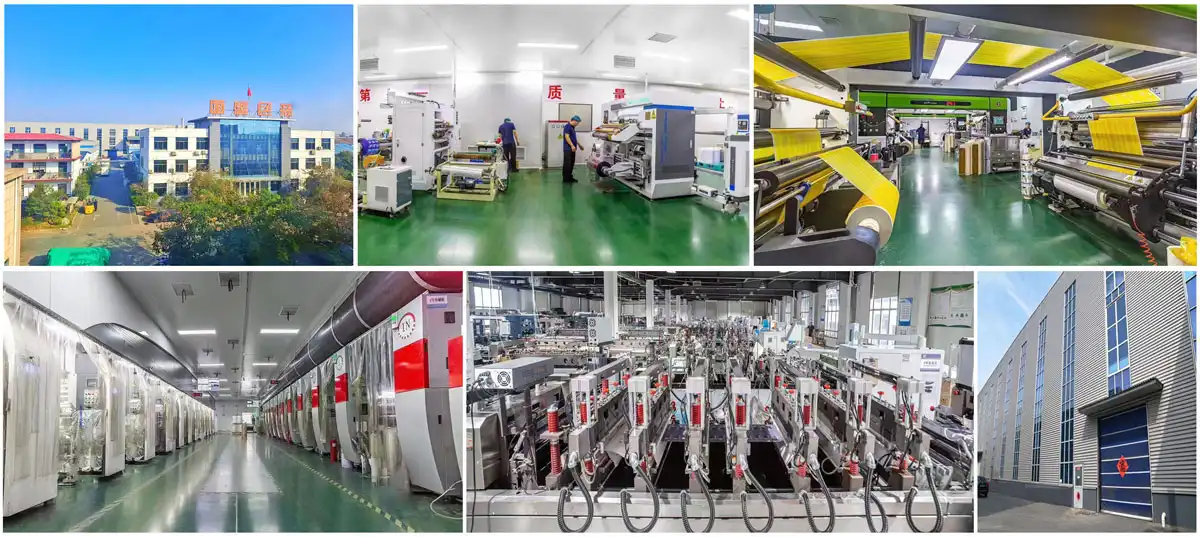
For more than 25 years, Guoshengli Packaging has manufactured flexible packaging for brands that need reliable brown kraft paper pouches. Depending on the application, pouch structures can be developed in the 120 to 160 micron range for dried meats, coffee, pet treats, and organic snacks. ISO 9001 and BRCGS Global Standard Packaging Materials certification support our quality systems, and we provide food-contact compliance documentation for the selected material structure and destination market. Rotogravure printing suits stable, higher-volume production. Digital printing gives more flexibility for shorter runs, multiple designs, and test-market projects. MOQ depends on the pouch format, material, dimensions, artwork count, and production method, rather than one fixed threshold. Our technical team works with customers to select barrier structures and functional features that meet each product's protection needs. Email sales@guoshengpacking.com to discuss your packaging needs, request material samples, and review production options for your market.
References
-
European Parliament and Council. Regulation (EC) No 1935/2004 on materials and articles intended to come into contact with food.
-
European Commission. Commission Regulation (EU) No 10/2011 on plastic materials and articles intended to come into contact with food.
-
European Parliament and Council. Regulation (EU) 2025/40 on packaging and packaging waste (PPWR).
-
CEFLEX. Designing for a Circular Economy (D4ACE): Design Choices for flexible packaging materials, barriers, adhesives, inks and additional features.
-
BRCGS. Global Standard Packaging Materials, Issue 7.
-
TAPPI. T 559 - Grease resistance test for paper and paperboard (Kit Test).
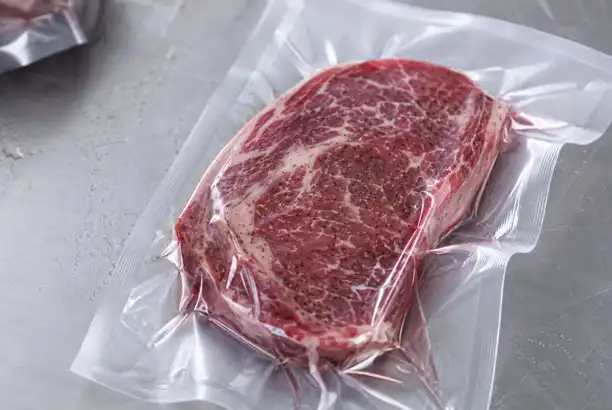
Understanding Vacuum Pouch Bags and Their Role in Meat Packaging
What Are Vacuum Pouch Bags?
Material Structures and Food Safety Standards
Types of Vacuum Films for Different Meat Products
Core Criteria for Selecting Vacuum Pouch Bags for Meat Packaging
Thickness and Puncture Resistance Requirements
Seal Integrity and Vacuum Retention
Temperature Tolerance for Cold Chain and Cooking Applications
Regulatory Compliance and Quality Certifications
Comparing Vacuum Pouch Bags vs. Other Packaging Solutions for Meat

Vacuum Packaging vs. Modified Atmosphere Packaging
Reusable vs. Disposable Vacuum Solutions
Performance Impact of Barrier Properties
How to Source and Procure Vacuum Pouch Bags for B2B Meat Packaging Needs
Evaluating Supplier Capabilities and Certifications
Benefits of Direct Manufacturer Relationships
Custom Printing for Brand Identity and Traceability
Balancing MOQ, Lead Times, and Inventory Management
Best Practices and Tips for Using Vacuum Pouch Bags to Maximize Meat Shelf Life

Proper Meat Preparation Before Vacuum Sealing
Optimizing Vacuum Sealer Settings
Storage Conditions After Vacuum Packaging
Common Mistakes That Compromise Vacuum Packaging Performance
Conclusion
FAQ
1.Are vacuum pouch bags safe for all types of meat products?
2.How do I determine the correct size and thickness for different meat cuts?
3.Can vacuum pouches be used for both freezing and sous-vide cooking?
4.What certifications should I require from vacuum packaging suppliers?
Partner with Guoshengli Packaging for Professional Vacuum Pouch Bags Solutions
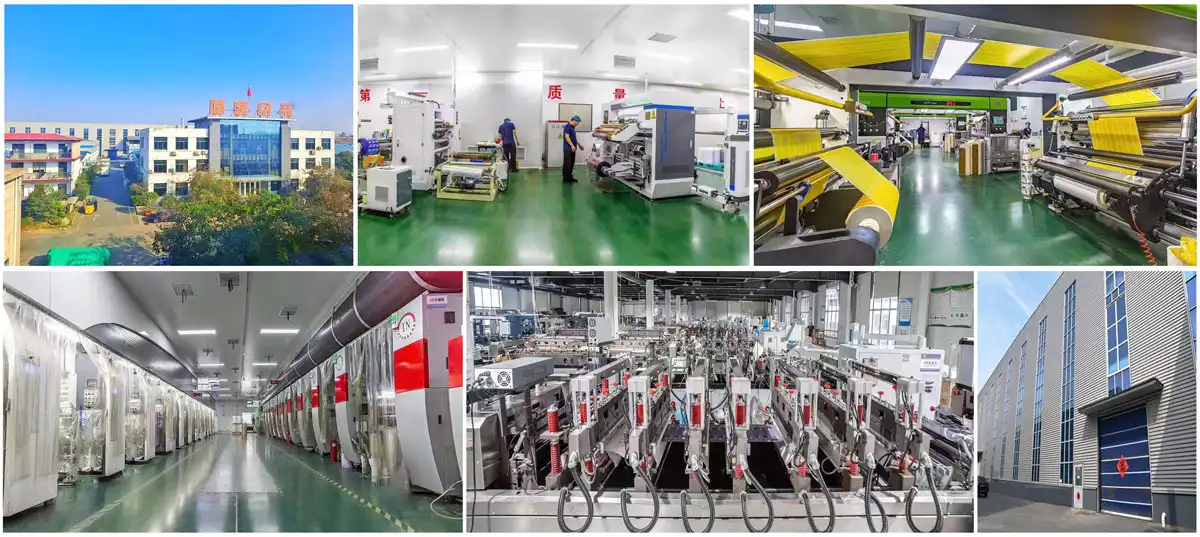
References
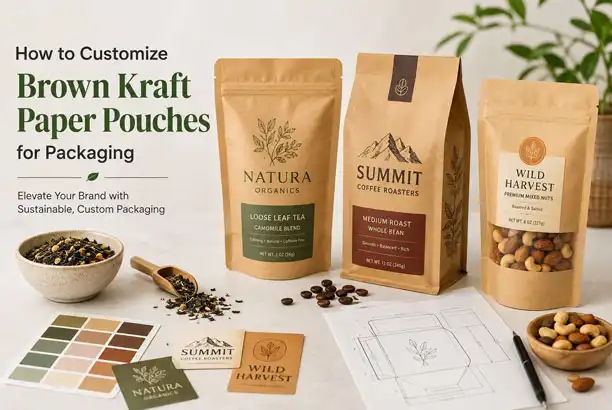
Customizing brown kraft paper pouches for packaging involves selecting the right material structure, choosing functional features like tear notches and hang holes, determining print specifications, and working with an experienced manufacturer who understands barrier requirements and retail presentation. These pouches blend natural aesthetics with protective performance, making them ideal for organic foods, specialty coffee, dried meats, and pet treats. The customization process requires careful attention to material layers, printing techniques, closure systems, and compliance standards to ensure your packaging protects products while communicating brand values effectively.
Understanding Brown Kraft Paper Pouches and Their Benefits
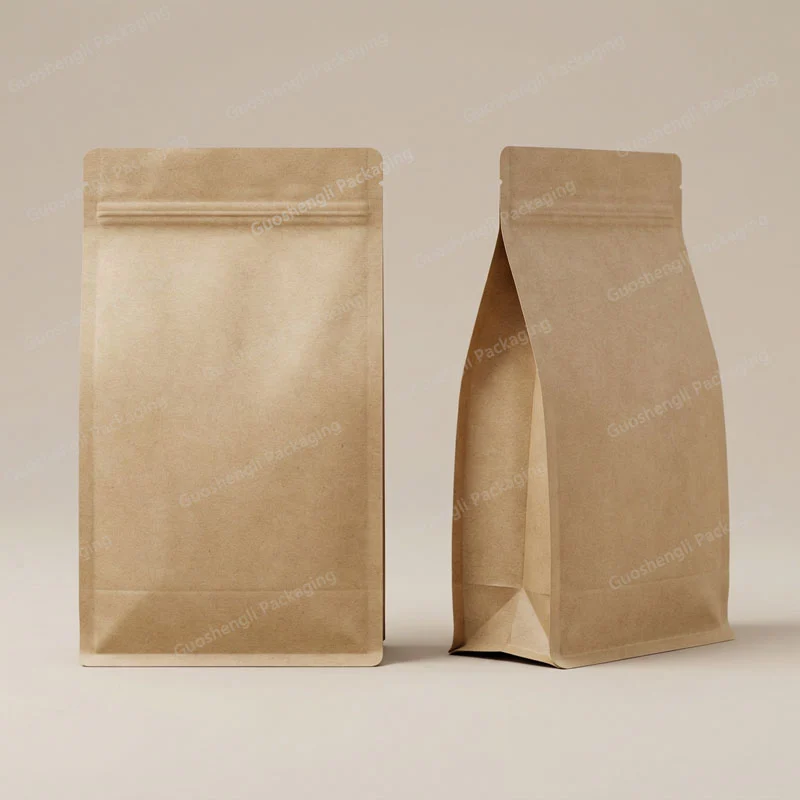
Brown kraft paper pouches are engineered packaging solutions made of advanced barrier laminations and unbleached kraft paper on the outside. These pouches are different from regular paper bags because they can resist water. They have multiple layers, including kraft paper (40–80 GSM), barrier films like aluminum foil or metallized PET, and inner layers that can be sealed with heat. Organic and specialty brands face a big problem: they need to keep their natural, earthy look while also providing the protection needed for longer shelf life. This hybrid construction solves that problem.
Why Natural Kraft Packaging Appeals to Modern Consumers
Kraft paper has a matte, textured surface that tells you it’s genuine without having to say it explicitly, or use words like “environmentally friendly.” For the consumer, kraft packaging always means clarity, little processing and being good for the environment. But when your organic snack or artisan coffee is packaged in brown kraft paper pouches and is prominently displayed in shops, shoppers can instantly recognise that the ingredients are excellent and the brand is trustworthy. The visual shorthand works particularly effectively for products targeted at health-conscious consumers in North America and Europe, where “clean label” branding is the key to getting people to purchase.
Barrier Performance Meets Eco-Conscious Branding
Today’s brown kraft paper pouches are more than ordinary paper bags. The barrier layers formed beneath the kraft surface block air, moisture and UV radiation, the three major elements that degrade products. Our three side seal structure using aluminium foil or EVOH barrier films may extend the shelf life of oxygen sensitive products like roasted coffee beans and dried fruits. For beef jerky and cat treats moisture and scent prevention is highly essential, so they don’t go bad while being delivered and exhibited in shops. This technological performance enables the brands to reach their environmental aims and their practical preserving demands.
Functional Features That Enhance User Experience
The frequency of repeat purchases is directly affected by simplicity of use. Customers prefer it when they don’t need tools to open products and can rip them open easily. Pouches may be converted to retail-ready displays with hang hole options to place on pegboard hooks or display on a table. The resealable zippers keep food fresh once you open it, which is great for foods you eat more than once. Transparent windows allow you to view the goods while preserving the barrier, fulfilling the client demand to see what they purchase. Each beneficial aspect may be introduced depending on the characteristics of the product and the preferences of the target market.
Core Principles of Customizing Brown Kraft Paper Pouches
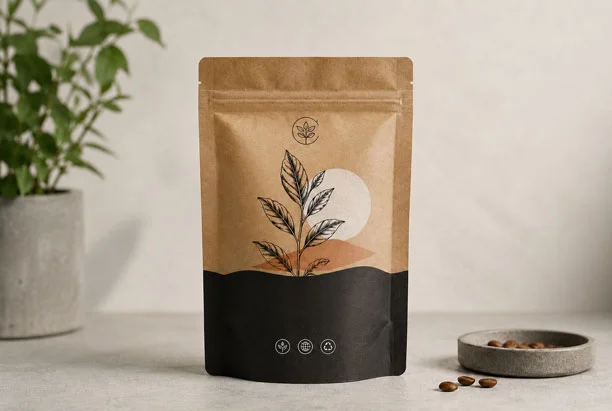
The first stage of good design is to clarify package objectives. Are you primarily speaking about sustainability, product longevity, differentiation on shop shelves, or compliance? Most businesses are trying to achieve many goals at the same time, so they have to make judgements on materials, printing processes, and design features that are fair to all.
Material Structure Engineering for Product Protection
Customised pouch construction incorporates kraft paper for printability and strength, barrier layers like aluminium foil, metalized PET, nylon or EVOH for moisture and oxygen protection, and PE, CPP or LLDPE sealant layers for airtight sealing and filling compatibility. The thickness is typically 120-160 microns. Burst and seal testing ensures consistent performance.
Printing Technologies and Brand Presentation
Rotogravure printing is ideal for long runs on kraft paper up to 11 colours with intricate designs and uniformity. Digital printing is ideal for small orders (less than 20,000 pieces), seasonal products and customisation. Matte, partial UV, and glossy finishes may add to the retail appeal, giving it a natural, accentuated, or luxury look.
Closure Systems and Convenience Features
Heat seals provide robust tamper-evident security for single-use products, while resealable zippers and tin-tie closures facilitate repeated use and enhance kraft-style packaging. Freshly roasted coffee releases CO₂ and degassing valves allow it to escape while keeping air out to maintain quality. Clear windows allow clients to see the products while yet providing the needed barrier protection.
Step-by-Step Guide to Ordering Customized Kraft Paper Pouches
Getting thru the customization process quickly and easily avoids delays that cost a lot of money and makes sure that the packaging meets all technical and marketing needs. Here's how Guoshengli Packaging helps brands along this path.
Supplier Evaluation and Partnership Criteria
Evaluate vendors on certifications, manufacturing capacity, lead times, logistics and technical know-how. Compliance: ISO 9001, BRC, FDA show quality and food-contact safety. Guoshengli Packaging has an annual capacity of 20,000 tons and can handle orders from 20,000 to 20 million bags. Experienced providers should also be able to offer knowledgeable advice on barrier films, kraft-paper lamination and coatings.
Defining Specifications and Requirements
Clear specifications should include product, shelf life, transportation and display circumstances, filling technique, size and needed headspace. The quantity planning should account the demand, storage and order size. Standard sizes save money, bespoke sizes provide you efficiency and a better presence on the shelf. Rotogravure often needs 20,000+ units; digital printing is better for lower runs.
Artwork Preparation and Design Mockups
Vector artwork with outlined fonts, CMYK colours and high definition photos for perfect manufacturing. You may see graphics, gussets, zippers and windows with digital 3D mockups before manufacture and tangible samples confirm materials, printing, filling performance, durability and look.
Production Timeline and Quality Assurance
Production lead times depend on how the order is printed and how complicated it is. Rotogravure printing usually takes 15 to 20 days after the artwork is approved. This includes cutting on the cylinder, printing, laminating, turning, and checking for quality. Digital printing can be done faster (7–10 days), which is good when speed is more important than the extra cost for smaller quantities.
At Guoshengli Packaging, quality control doesn't just happen at the end of the process; it happens all the way thru production. Before packaging, we make sure that the printing colors are consistent with accepted standards, that the lamination bond is strong, that the seal is intact by testing it under pressure, and that the dimensions are correct. Every pouch is looked at visually for flaws to make sure that only packaging that meets the requirements gets to your facility.
Delivery logistics require careful planning for international shipments. Air freight (4-5 days) is best for pressing needs or first trial orders. Ocean shipping, on the other hand, is more cost-effective for bigger numbers and longer planning periods. When suppliers put carton count ahead of pouch protection, compression damage during transit is common. This can be avoided by properly packaging finished brown kraft paper pouches. We use strong boxes and smart bin placement to make sure that the pouches arrive ready to be filled.
Comparison and Decision-Making for Customized Kraft Paper Pouches
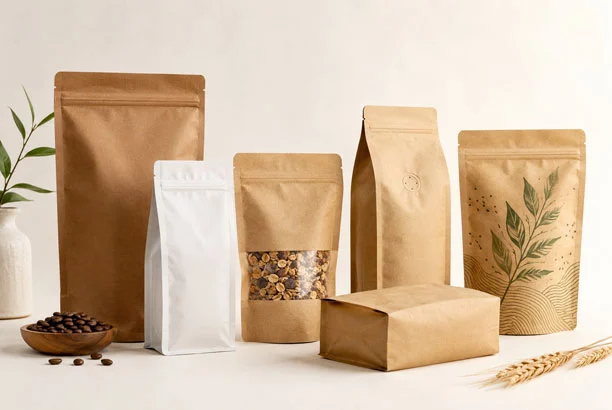
For strategic packaging decisions, you need to know what the trade-offs are between the different choices. How do different options affect performance, cost, and how the business is positioned?
Kraft Paper Versus Plastic Film Pouches
Brown kraft paper pouches make it possible to stand out visually and in the environment in ways that clear or white plastic films can't. Without any extra labels, the natural dark color shows that the product is organic, has been processed minimally, and is committed to sustainability. Plastic pouches have a wider range of protection choices and slightly lower material costs, but they don't stand out on the shelf like kraft does.
Biodegradability claims require careful consideration. Even tho kraft paper breaks down naturally, the aluminum and PE barrier layers that are laminated on top of it stop it from breaking down completely in most situations. Recyclability relies on how well local processes can separate materials. Paper-based barrier technologies are used in fully recyclable kraft bags, but they may not offer as much protection as metal foil structures. When you're honest about the real environmental effects of your products, you can avoid being accused of greenwashing and keep your reputation with knowledgeable customers.
Closure System Selection
When compared to heat-seal-only designs, zipper closures add 15–30% to the cost of pouches, but this investment pays off when the products are used more than once. Resealable bags are great for keeping coffee, nuts, dried fruits, and pet treats fresh and improving the user experience. For single-serving products or products that are eaten right away after opening, the higher cost of the zipper may not be worth it.
The strength of a heat seal depends on the type of caulk layer used and the sealing factors. The PE inner layers close well at a lot of different temperatures and work with most filling machines. CPP is useful when the inner surface appearance is important because it makes things clearer and stiffer. LLDPE is better at keeping things from getting punctured when they have sharp edges.
Plain Versus Custom Printed Kraft Pouches
Custom printing helps people remember your brand and follows the rules by printing information directly on the product. The prices of rotogravure printing include the one-time cost of cutting the cylinder and the cost of printing each unit. This arrangement works best for bigger production runs because the cost of the cylinders is spread out over a lot of units. Digital printing doesn't charge for tools, so even tho it costs more per unit, it's still a good deal for smaller orders.
When designs change a lot or when testing different versions of a product, plain brown kraft paper pouches with labels already on them are flexible. Labels add extra steps to the process of filling and may make fully printed bags look less uniform. This method works well for small production runs or lines of products that change quickly.
Best Practices and Industry Applications
By looking at how big brands create brown kraft paper pouches, we can learn useful strategies that can be used in many different types of products.
Specialty Coffee and Tea Packaging
Coffee roasters always choose brown kraft paper pouches because the natural look goes well with their artisanal positioning. Degassing valves are very important because newly roasted beans keep releasing CO2 for days after they're roasted, and packages that don't have enough air flow can swell or burst. The one-way valve lets out air inside the container while stopping oxygen that would make the coffee go bad in weeks.
With their narrow profile and increased capacity, side gusset pouches make the best use of shelf space. This style can hold anywhere from 12 oz to 5 lb of coffee and stay stable when standing upright. Matte painting keeps the look of handicrafts while giving you bright brand images. A lot of roasters have small clear screens that let customers see the color and level of roasting of the beans. This is a great way to sell specialty grades.
Organic Snacks and Dried Foods
Brown kraft paper pouches are used by natural and organic snack brands to support their stories about using clean ingredients. The package itself becomes a brand statement, so there's no need for clear comments about sustainability that could be seen as greenwashing. Three-side seal pouches are a cheap option for trial sizes and sampling programs, while stand-up styles give products more shelf presence in retail channels.
For nut and seed goods, grease protection is very important. This stops oil from moving inside and staining the paper outer, which makes it look bad. With this technical ability, brands can show off natural looks without sacrificing functionality.
Pet Treat and Freeze-Dried Food Packaging
Pet food brands that use brown kraft paper pouches stand out in a market where most of the packaging is made of plastic. More and more pet owners want natural, barely made foods for their animals, and the way a product is packaged has a big impact on how good people think it is. The natural brown paper look makes you think of healthy foods and responsible production.
For thick, hard treats, being able to prevent punctures is very important. Heavy-gauge kraft paper (70–80 GSM) and strengthened barrier films keep the paper from tearing while it is being handled and displayed. Hang holes let pegboards be put up in places where they will get a lot of attention, like in pet stores where vertical display space is very important. Resealable zippers keep treats fresh so they don't go bad while they're being eaten, which would disappoint customers and get bad reviews.
Personal Care and Wellness Products
Brown kraft paper pouches are used by natural personal care brands to package bath salts, organic soaps, and health vitamins. Before people read the ingredient lists, the packaging tells them about the product's philosophy. Moisture barrier protection is very important—bath goods can't be exposed to humidity that would make them clump or dissolve before they are used.
Transparent windows let you see the colorful bath salts or botanical ingredients inside, and the natural look of the packaging is kept. This way of visual merchandising combines the realness of kraft with the product visibility that customers expect. It works especially well for handcrafted or expensive products that are worth seeing more than paying more for.
Conclusion
When customizing brown kraft paper pouches, you have to find a balance between how they look and how well they work. The natural look successfully expresses brand values, and multi-layer barrier structures safeguard goods during distribution and show in stores. Customization works best when specifications are clear, manufacturing partners are experienced, and prints, closures, and useful features are planned ahead of time. At Guoshengli Packaging, we help brands choose materials, make artwork look its best, do samples, and start production. Our quality systems make sure that all orders get the same results. Personalized brown kraft paper pouches give your new organic snacks, specialty coffee, pet treats, or health goods a unique look on the shelf and fit in with today's environmentally aware customers.
FAQ
1.Can brown kraft paper pouches be fully recycled in municipal systems?
How well brown kraft paper pouches can be recycled depends on the materials that are used as a barrier layer underneath the paper. Pouches with paper-based barrier technologies or PE layers that are easy to separate are better for recycling than structures made of aluminum foil, tho how well they recycle depends on the facilities in your area. In many places, mixed products have to be separated before they can be processed. There are versions that are fully compostable and use PLA liners, but they don't work as well as regular structures as barriers. We suggest being clear about your unique pouch structure instead of making broad claims about how recyclable it is.
2.How do kraft pouches handle greasy or oily products without staining?
For grease protection, you need special inner barrier layers that stop oil from moving thru the layered structure. This keeps oils from nuts, seeds, or fried snacks inside without staining the outside of the kraft. This engineering keeps the product's clean, natural look throughout its shelf life while also protecting it in the way it needs to be protected.
3.What printing methods work best for small production runs?
When printing less than 20,000 units, digital printing is the most cost-effective option because it doesn't require the expensive cylinder engraving that rotogravure printing does. Digital ways have higher costs per unit, but because there are no setup fees, small runs can be done affordably. Professional standards are met for color accuracy and detail quality, but rotogravure works better for large-scale production where setup costs are spread out over many units.
Partner with a Trusted Brown Kraft Paper Pouches Manufacturer
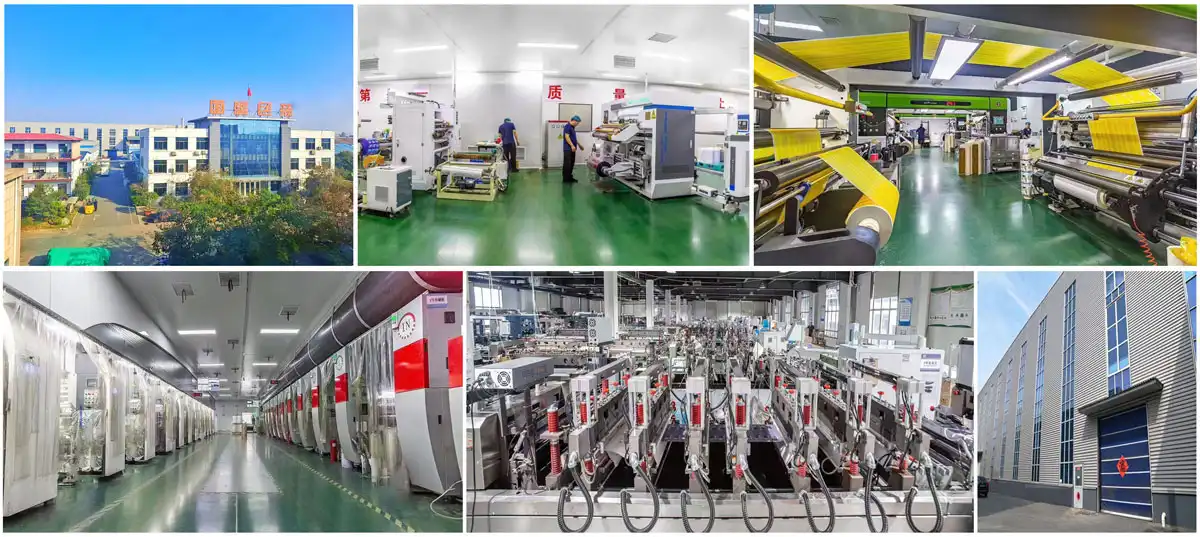
Every customization project that Guoshengli Packaging works on is backed by more than 25 years of experience in flexible packaging. Our rotogravure printing can produce up to 11 colors that stay the same from one production run to the next. Meanwhile, our material research team makes sure that the barrier performance is perfect for your product. We keep our ISO 9001, BRC, and FDA certifications up to date, which makes sure we follow all North American and European food contact rules. Our team gives you expert advice that helps your packaging work reliably from the time you come up with the first specifications to the time you send the finished product. Our 20,000-ton annual capacity can grow with your business, so you don't have to worry about running out of pouches when you need 20 million for national distribution. Our packaging experts can be reached at sales@guoshengpacking.com to talk about your needs for brown kraft paper pouches and get personalized suggestions based on your product and market goals.
References
1. Anderson, M.R. (2021). Sustainable Packaging Materials: Environmental Performance and Consumer Perception. Journal of Packaging Technology and Research, 5(3), 187-203.
2. Chen, L. & Roberts, K.D. (2022). Barrier Technologies in Kraft Paper Laminations: Oxygen and Moisture Transmission Rates. Packaging Science and Technology International, 18(2), 94-112.
3. European Flexible Packaging Association. (2023). Guidelines for Food Contact Compliance in Multi-Layer Pouches. Brussels: EFPA Publications.
4. Morrison, J.T., Phillips, S.E., & Kumar, R. (2020). Printing Techniques for Textured Paper Substrates: Rotogravure and Digital Comparison. International Journal of Print Technology, 12(4), 276-291.
5. Sustainable Packaging Coalition. (2023). Recyclability and Compostability Claims: Best Practices for Laminated Structures. Charlottesville: SPC Technical Reports.
6. Williams, H.A. & Zhang, Q. (2022). Consumer Response to Natural Kraft Packaging in Organic Food Categories. Journal of Marketing Research and Consumer Behavior, 29(1), 45-68.