- English
- French
- German
- Portuguese
- Spanish
- Russian
- Japanese
- Korean
- Arabic
- Greek
- German
- Turkish
- Italian
- Danish
- Romanian
- Indonesian
- Czech
- Afrikaans
- Swedish
- Polish
- Basque
- Catalan
- Esperanto
- Hindi
- Lao
- Albanian
- Amharic
- Armenian
- Azerbaijani
- Belarusian
- Bengali
- Bosnian
- Bulgarian
- Cebuano
- Chichewa
- Corsican
- Croatian
- Dutch
- Estonian
- Filipino
- Finnish
- Frisian
- Galician
- Georgian
- Gujarati
- Haitian
- Hausa
- Hawaiian
- Hebrew
- Hmong
- Hungarian
- Icelandic
- Igbo
- Javanese
- Kannada
- Kazakh
- Khmer
- Kurdish
- Kyrgyz
- Latin
- Latvian
- Lithuanian
- Luxembou..
- Macedonian
- Malagasy
- Malay
- Malayalam
- Maltese
- Maori
- Marathi
- Mongolian
- Burmese
- Nepali
- Norwegian
- Pashto
- Persian
- Punjabi
- Serbian
- Sesotho
- Sinhala
- Slovak
- Slovenian
- Somali
- Samoan
- Scots Gaelic
- Shona
- Sindhi
- Sundanese
- Swahili
- Tajik
- Tamil
- Telugu
- Thai
- Ukrainian
- Urdu
- Uzbek
- Vietnamese
- Welsh
- Xhosa
- Yiddish
- Yoruba
- Zulu

Spout pouch packaging is a flexible, lightweight container built around an integrated dispensing spout, engineered for liquids, pastes, semi-solids, and granular products. Constructed from multilayer laminated films—typically PET, PE, nylon, or aluminum foil—these pouches deliver strong barrier protection against oxygen, moisture, and UV exposure. The integrated spout enables controlled dispensing, easy resealing, and near-complete content evacuation. For B2B procurement teams sourcing packaging for sauces, baby food, personal care products, or industrial fluids, spout pouch packaging offers a compelling combination of performance, cost efficiency, and sustainability.
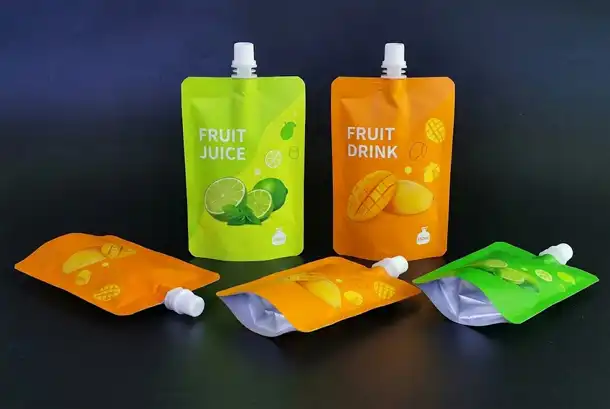
What Is Spout Pouch Packaging?
Core Structure and Mechanics
If you heat-seal or ultrasonically solder a stiff thermoplastic fitting into the film body of a layered flexible bag, you havespout pouch packaging. Most of the time, the diameter of the spout is between 8.5 mm and 33 mm, depending on the type of liquid or dry grains being used. Most commercial forms can stand up straight on store shelves without any extra help, which is why sourcing teams often call them "stand-up pouches with spouts."
The format of the picture changes depending on the use. For high-barrier needs, standard designs use PET/AL/PE. Retort-grade pouches, on the other hand, change the PE layer on the inside with RCPP so they can be sterilized at 121°C. More and more people are using buildings made of only PE because they can be recycled by cities and still keep their good oxygen and moisture barrier performance thanks to EVOH coats.
Why the Spout Matters
The spout is not just a nice-to-have feature; it is an important part of the engineering. Ultrasonic welding at the point where the spout meets the film makes an airtight seal that doesn't leak under pressure, drop impact, or stack weight during shipping on pallets. The precise geometry of the pour cuts down on product waste, and testing by outside groups consistently shows that content evacuation rates reach 99%. For sauces, baby food purees, and energy gels, that amount of extraction directly raises unit economics and customer happiness.
Key Benefits of Spout Pouch Packaging for B2B Businesses
When purchasing managers look at different types of flexible packing, they always find five practical benefits that set spout pouch packaging apart from rigid options.
For mid-sized and growing brands, these are the main reasons why this style is a good choice:
- Barrier protection that extends shelf life. High-barrier laminated walls stop oxygen from getting in and water from getting out. This keeps the taste, texture, and nutritional value even over long supply lines. For brands of salt and spice, moisture resistance keeps the product from clumping together without the need for desiccant packets, which are needed in many hard containers.
- Warehouse and logistics efficiency. When they are empty, bags take up about 90% less room than rigid bottles of the same size. It costs a lot to ship a pallet of empty glass jars, but it only takes a fraction of the space to ship the same number of flat-packed spouted pouches. Filled bags are much lighter than their metal or glass counterparts, which lowers the cost of freight per unit.
- Content evacuation and waste reduction. The bendable wall that collapses gets rid of the empty space that keeps goods in hard containers. Consumers take out almost all of the goods, which makes it seem like less trash and supports messages about sustainability.
- Customizable barrier and format options. You can change the spout width, the film structure, the print area, and the type of closure. If a brand needs retort compatibility, a clear window panel to show off the product, or an All-PE construction that can be recycled, the format can meet those needs without having to pay as much for tools as hard molding.
- Compliance-ready certifications. Reliable makers provide FDA paperwork for food contact, BRC approval, and SGS test results from a third party. This paperwork must be shown by all makers of baby food and healthy drinks that want to sell in the U.S.
These advantages translate directly into lower total packaging cost, improved on-shelf presentation, and reduced compliance risk—outcomes that resonate with both procurement managers and supply chain directors.
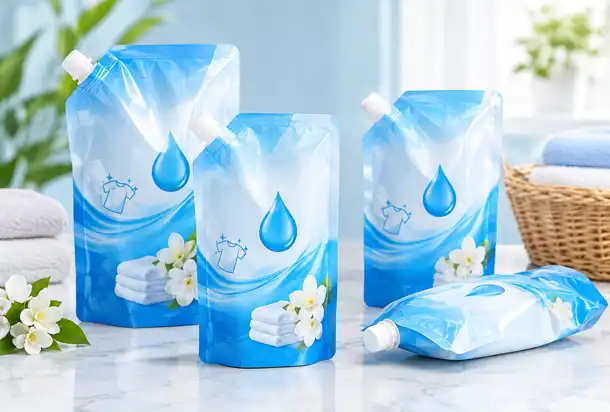
Comparing Spout Pouch Packaging With Traditional Packaging Options
Flexible Pouches vs. Rigid Bottles and Glass Jars
People are used to seeing rigid containers, and they last a long time. But they come with big weight penalties, high storage costs for empty units, and bigger carbon footprints when they're being shipped. Before it's filled, a 500 ml glass sauce jar weighs about 300–400 g. A similar spout pouch packaging weighs less than 20 g. This difference in weight gets bigger when you look at full production runs and shipping lines.
When properly coated, spout pouch packaging is also better at resisting punctures than hard containers. Impact energy is absorbed by a well-designed multilayer structure instead of being broken. This lowers claims for transit damage and product loss. When shipping things across foreign borders where temperatures can change and there is a lot of handling stress, flexible layered structures often hold up better than glass or thin-wall PET.
Flexible Pouches vs. Bag-in-Box
Bags in boxes are good for large-scale food service applications, but they don't stand out as much on store shelves and aren't as convenient for customers as spout pouch packaging that stands alone. Spout pouch packaging can be used in both retail and food service because they have a stand-up base and a precision spout that are built in. This means that brands only need to manage one SKU that works in all distribution formats.
Selecting the Right Spout Pouch for Your Business Needs
Matching Film Structure to Product Requirements
Film choice is based on the thickness, pH, oil level, and processing temperature of the product. Sauces and seasonings that are high in fat need core layers that are known to be resistant to fat so that they don't separate over time. For hot-fill uses between 85°C and 95°C, the middle layers must be aligned PP or RCPP. To sterilize in a retort at 121°C, full RCPP construction is needed. Baby food companies have to make sure that all of their film parts are BPA-free and meet FDA food-contact standards.
The diameter of the spout is chosen based on how the product flows. 8.5–12 mm spouts work well for thin liquids like soy sauce and juice. For useful filling and dispensing, thick sauces, nut butters, and granular goods like specialty salt need bigger fittings in the 22–33 mm range.
Evaluating Manufacturer Capabilities
A trustworthy company that sells spout pouch packaging should be able to show that they can seal the spout interface with ultrasonic waves or precise heat, provide proof of their sealing power, and show drop-test results according to ASTM D5276 or a similar standard. Before shipping, hermetic integrity is checked by vacuum leaks tests according to ASTM D3078. By asking for these test results during the sampling phase, the most frequent source of leakage issues can be stopped further down the line.
For brands that want to grow, lead time and MOQ options are important. Rotogravure printing, which is best for color accuracy and high volume consistency, usually takes 15–20 days to finish. Digital printing can do short runs in 7–10 days.
Applications and Use Cases
Spout pouch packaging is useful in more fields than most buyers first think. Most of the adoption is happening in the following areas:
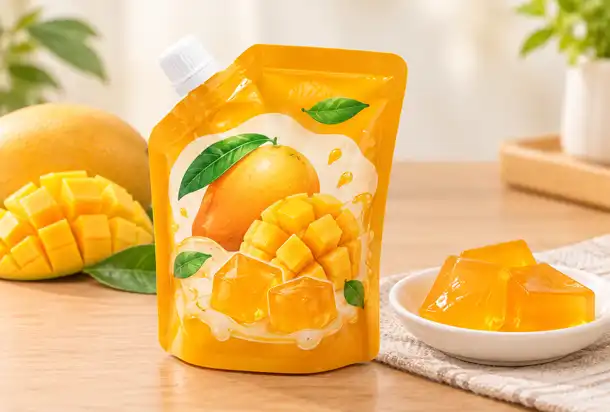
Food and Beverage is still the most popular entry area. The moisture-resistant barrier and precise pour spout are good for table salt, sea salt, and specialty seasoning blends. These stand-up containers are used to ship condiments, salad sauces, hot pot bases, soy sauce, and baby food purees. Single-serve spout pouch packaging is used for carrying energy gels and healthy beverage mixes around.
Spout pouch packaging is used by Personal Care and Home Chemical names for liquid soap, shampoo, conditioner, and detergent refill pouches. The shape of the spout makes it resistant to chemical surfactants and gives users the controlled, drip-free dispensing they expect from high-end personal care forms.
Lubricants, screen wash fluids, and specialty chemicals are used in industrial and automotive settings. These pouches have to be able to handle stack pressure while being shipped by sea and mechanical stress in the workshop. Well-engineered layered structures always meet these needs.
Conclusion
Spout pouch packaging is an established and highly advanced style that helps brands in the industrial, personal care, and food industries run their businesses more smoothly. It's a good alternative to rigid containers because it has high barriers for protection, controlled dispensing, efficient logistics, and options for environmentally friendly materials. When brands switch to spouted flexible pouches, they usually lower their packaging costs, make their logistics footprint smaller, and improve the customer experience all at the same time. Procurement workers looking at choices in the U.S. market and around the world can make confident sourcing decisions if they understand the technical parameters and supplier skills described here.
FAQ
1. What spout diameters are standard for spouted pouches?
For thin liquids and drinks, the standard diameter of spout pouch packaging is 8.5 mm. For thick sauces, nut butters, and grainy foods like gourmet salt, the standard diameter is 33 mm. The right diameter depends on the viscosity of the product and how well it works with the equipment in the fill line.
2. Can spouted pouches handle hot-fill or retort sterilization?
Yes. The inner layers of RCPP can be hot-filled at 85–95°C and fully sterilized in a retort at 121°C. Standard PE inner layers can be used for both warm and cold filling. Heat-related seal failures can be avoided by choosing the right inner film during sample.
3. How is leakage prevented at the spout weld?
A reliable maker will either use ultrasonic welding or precise heat-sealing with special W-shaped sealing bars to join the hard fitting to the film in a way that keeps air out. Drop tests according to ASTM D5276 and pressure leaking tests according to ASTM D3078 make sure the seal is still good before it is shipped.
4. Are recyclable spouted pouches available?
Structures made of only PE and coated with EVOH can go through many municipal recycling systems and still keep their oxygen and moisture barrier performance at a commercially acceptable level. Talk to your sustainability team to make sure that the local recycling infrastructure works with the claims that you want to put on the packaging about being recyclable.
5. What certifications should a spout pouch supplier hold?
For brands that want to sell in the U.S. and Europe, the most important certifications are ISO 9001 for quality management, BRC for food packaging safety, FDA food-contact compliance, and SGS third-party testing. During the sampling step, ask for full paperwork.
Partner With Guoshengli Packaging for Your Next Project
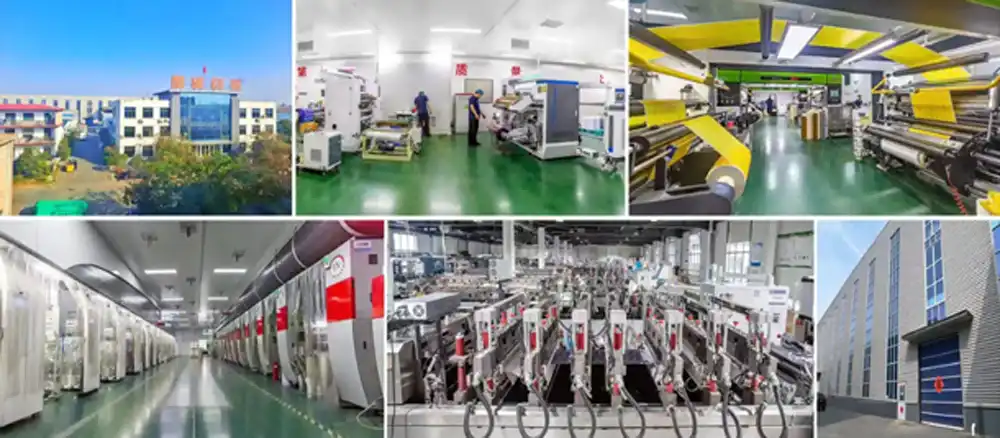
With 7 printing lines, 6 laminating machines, and 49 turning machines, Guoshengli Packaging has been making flexible packaging for 25 years and brings that experience to every job. We are a trusted spout pouch packaging maker that works with industrial, personal care, and food brands in North America and beyond. Our solutions are ISO 9001, BRC, FDA, and SGS-certified, and digital print wait times are 7–10 days. You can start the buying process right away by sending an email to sales@guoshengpacking.com with your requirements.
References
1.Flexible Packaging Association. Flexible Packaging: Sustainability and Market Trends Report. Flexible Packaging Association, 2022.
2.Packaging World. Stand-Up Pouches and Spouted Formats: Innovation in Consumer Packaging. Packaging World, 2021.
3.Food and Drug Administration (FDA). Guidance for Industry: Food Contact Substance Notification Program. U.S. Department of Health and Human Services, 2023.
4.ASTM International. ASTM D3078: Standard Test Method for Determination of Leaks in Flexible Packaging by Bubble Emission. ASTM International, 2021.
5.BRC Global Standards. BRC/IOP Standard for Packaging and Packaging Materials, Issue 6. BRC Trading Ltd., 2019.
6.Smithers Pira. The Future of Flexible Packaging to 2026. Smithers Pira, 2021.