- English
- French
- German
- Portuguese
- Spanish
- Russian
- Japanese
- Korean
- Arabic
- Greek
- German
- Turkish
- Italian
- Danish
- Romanian
- Indonesian
- Czech
- Afrikaans
- Swedish
- Polish
- Basque
- Catalan
- Esperanto
- Hindi
- Lao
- Albanian
- Amharic
- Armenian
- Azerbaijani
- Belarusian
- Bengali
- Bosnian
- Bulgarian
- Cebuano
- Chichewa
- Corsican
- Croatian
- Dutch
- Estonian
- Filipino
- Finnish
- Frisian
- Galician
- Georgian
- Gujarati
- Haitian
- Hausa
- Hawaiian
- Hebrew
- Hmong
- Hungarian
- Icelandic
- Igbo
- Javanese
- Kannada
- Kazakh
- Khmer
- Kurdish
- Kyrgyz
- Latin
- Latvian
- Lithuanian
- Luxembou..
- Macedonian
- Malagasy
- Malay
- Malayalam
- Maltese
- Maori
- Marathi
- Mongolian
- Burmese
- Nepali
- Norwegian
- Pashto
- Persian
- Punjabi
- Serbian
- Sesotho
- Sinhala
- Slovak
- Slovenian
- Somali
- Samoan
- Scots Gaelic
- Shona
- Sindhi
- Sundanese
- Swahili
- Tajik
- Tamil
- Telugu
- Thai
- Ukrainian
- Urdu
- Uzbek
- Vietnamese
- Welsh
- Xhosa
- Yiddish
- Yoruba
- Zulu

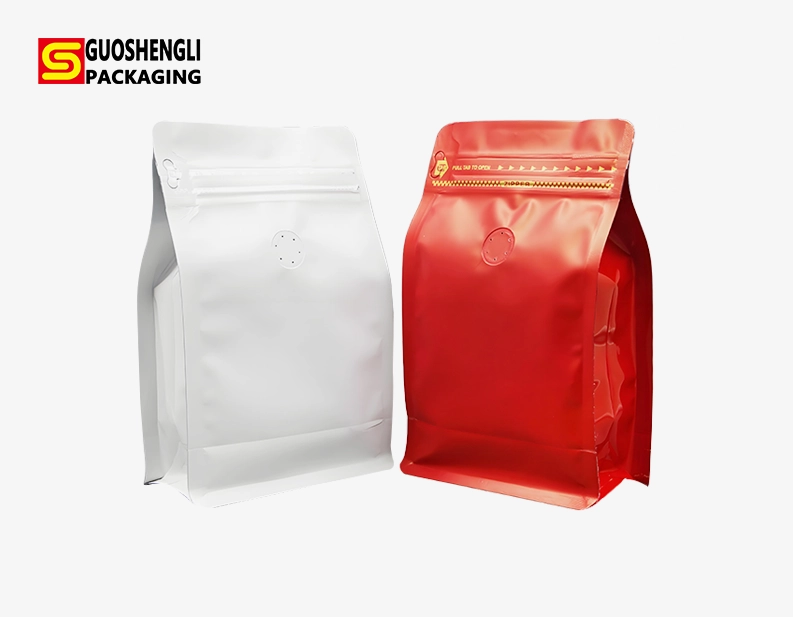
Quad Seal Pouches & Bags represent a breakthrough in heavy-duty flexible packaging, delivering what bulk powder and granular product manufacturers need most: structural strength without compromising efficiency. Featuring reinforced four-corner seals, these innovative pouches provide exceptional load-bearing capacity—up to 25kg—making them ideal for flour, rice, pet food, and agricultural products. Their unique box-like shape maximizes shelf presence while offering five printable surfaces for branding, addressing the dual demands of protection and market appeal that procurement professionals prioritize.
What Are Quad Seal Pouches? Understanding Their Design and Function


The unique four-vertical-seal structure of Quad Seal Pouches & Bags makes them stand out from other packing. In regular three-side seal bags, the seals put most of the stress on a few points. This design, on the other hand, spreads the weight over four reinforced corners. Each vertical seal goes along the sides of the pouch from top to bottom, making a square or rectangular shape that looks like a box when it's full.
Engineering Behind the Structure
Precision heat-sealing methods are used to bond multi-layer laminate films at each corner of the structure. This method gets rid of the center back seal that comes with standard bags, leaving a smooth back panel perfect for branding and a lot of product information. The side gussets naturally expand when the product is added, making a stable base that doesn't need a separate bottom gusset insert.
Advanced converting equipment that keeps tolerances very tight is needed for manufacturing, especially for high-speed automated filling lines. At Guoshengli Packaging, our 49 converting machines make sure that the dimensions stay the same from one production run to the next. This keeps the machines from getting stuck or out of alignment during filling. Before being shipped, each pouch is put through a pressure test to make sure the seal is still good.
Material Composition and Barrier Technology
Modern Quad Seal Pouches & Bags are made of multi-layer laminates that include PET for rigidity, aluminum or metalized films for barrier performance, and PE for the ability to seal with heat. This setup allows oxygen to pass through at less than 1 cc/m²/day and water vapor to pass through at less than 0.5 g/m²/day, which is very important for goods that need to keep their wetness, like flour or fertilizer.
Oxidation and clumps are common problems that cause expensive product recalls. The shield layers stop these problems. Our technical team tests the compatibility of client goods by measuring how much wetness they gain over 30 to 90 days at different temperatures and humidity levels. This approach is based on data, so there is no need to guess when choosing materials.
Key Benefits of Quad Seal Pouches in Packaging
Quad Seal Pouches & Bags have benefits that go beyond how they look. They directly solve practical problems that food processors and farm sources face.
Superior Load-Bearing Capacity
With reinforced corner seals, you can distribute weight in a way that regular pouches can't. The burst strength was tested and found to be over 200 kPa, which is more than twice as strong as similar flat bags. This means that fewer bags will break while being palletized, transported, and handled in stores.
When a Southeast Asian rice mill switched their 20kg bags to a Quad Seal Pouches & Bags format, they cut their packaging claims by 73%. Forklifts and stacking pressure used to cause back-seal bags to break, but the vertical seals stopped those problems. This makes the product and company last longer, which is important for long supply lines.
Enhanced Shelf Stability and Visibility
The shape of the box makes sure that goods stay straight on store shelves without any extra help. This is very important in competitive situations where visibility affects decisions about what to buy. Our 11-color rotogravure printing picks up fine details that show quality, and the front and back panels have plenty of room for high-resolution graphics.
When compared to stand-up pouches, side panels give brands 40% more space to advertise, letting them add nutritional panels, cooking instructions, and marketing messages without sacrificing the look of the design. Retailers like the clean, uniform look because it makes it easier to organize shelves and follow planograms.
Versatility Across Product Categories
Quad Seal Pouches & Bags can be used for many things, but they work best for powders and grains. With degassing valves, coffee roasters can let go of CO2 while keeping air out. Pet food companies like that the kibble packaging is made so that it doesn't tear easily. Agricultural companies depend on them for seeds because they protect the seeds' ability to germinate.
By choosing the right laminates, the format can be changed to fit liquid products. Adding nylon layers makes sauces and other concentrated drinks less likely to get punctured. Because of this, buying teams can combine suppliers, which lowers the costs of managing vendors while still meeting performance standards for each area.
Quad Seal Pouches vs. Other Packaging Options: Making the Right Choice

When choosing packaging, you have to think about a lot of things, like cost, performance, equipment compatibility, and your goals for sustainability. Knowing where Quad Seal Pouches & Bags work best can help you avoid costly mistakes.
Comparison with Flat Bottom Pouches
Flat bottom pouches have a stable base made of a separate folded flap, while Quad Seal Pouches & Bags designs use the weight of the product to make the base. For selling coffee or snacks in stores, flat-bottom types look a little more high-end. But Quad Seal Pouches & Bags are more reliable when they come to heavier loads, and because they are simpler to make, they usually cost 8–12% less when the quantity is over 50,000 units.
When filling speeds are higher than 80 bags per minute, Quad Seal Pouches & Bags work better. Continuous side seals make it easy for bags to move through automatic systems. Flat bottom types, on the other hand, can get caught on filling spouts. During high-volume runs, production managers say that Quad Seal Pouches & Bags formats cause 15-20% fewer line stops.
Advantages Over Traditional Side Gusset Bags
In traditional side gusset bags, the seals are in the middle back, which makes printing harder and weakens the seal. With Quad Seal Pouches & Bags design, seals are moved to the edges, which gets rid of this weak spot. When dropped from a height of 1.5 meters, Quad Seal Pouches & Bags stay closed 92% of the time, while center-seal bags only do so 68% of the time.
The uninterrupted back panel makes it easier to follow the rules. Without sacrificing style, manufacturers can show all the necessary information, like allergens, ingredients, and lot numbers. This is especially important for foreign markets where marking rules are getting stricter.
Sustainability Considerations
Both forms can support structures made of a single material that can be recycled, but Quad Seal Pouches & Bags designs make the best use of materials by making the most of room. When compared to pouches with different shapes, their small cube shape cuts truck load volumes by 18–25%. This lowers transportation emissions, which are becoming a bigger concern for corporate sustainability reports.
At Guoshengli Packaging, we design PE-based laminates that can be recycled and still do their job as barriers while meeting the standards for How2Recycle certification. Our RTO exhaust treatment system makes sure that emissions from manufacturing meet EU and US environmental standards. This helps with supplier audits that look more closely at how production affects the environment.
Procurement Guide: How to Source Quality Quad Seal Pouches
Buying packaging in bulk requires a lot of money, so choosing the right supplier is very important. When quality is low, work stops, products are lost, and relationships with customers are hurt. These problems have costs that are much higher than the original price differences.
Evaluating Supplier Credentials
Certifications offer basic peace of mind, but they need to be understood in the right context. ISO 9001 certification shows that the process is consistent, and BRC or FSSC 22000 certification shows that the company has food safety management systems. Ask what the certificate covers; some only cover parts of production. Our BRC approval covers everything from getting raw materials to storing finished goods, so we can make sure quality control from start to finish.
For materials that come into touch with food, the FDA needs migration tests and supplier documents. Ask for data on what can be extracted and what can be leached, especially for goods that have acids or oils that can react with the packaging. At Guoshengli Packaging, we make sure that our material specs are FDA-compliant and include certificates of compliance with every shipment. This makes it easier for customers to meet their paperwork needs.
Material Selection and Customization
Set the barrier requirements based on how sensitive the product is and how long you want it to last. Flour needs barriers that are modest (WVTR ≤ 5 g/m²/day) but have good puncture protection. Coffee needs very little oxygen to pass through (OTR ≤ 0.5 cc/m²/day) and the ability to let air out. Pet food needs to have a high tensile strength so that the edges of the kibble don't tear.
Before placing a large order, ask for a sample to be tested. Send the product to the seller for fill trials, where you can check how well the seal works, how the product looks after being filled, and how stable it is in storage. We do accelerated aging studies by keeping full pouches at 38°C/90% RH for two weeks to make them last as long as six months in normal conditions. This lets us find problems before they reach your buyers.
Understanding Minimum Order Quantities and Lead Times
Rotogravure printing, which is the standard for consistent, high-quality graphics, needs cylinder engraving that is spread out over longer runs. MOQs are usually between 20,000 and 50,000 pieces per design, but digital printing options can lower this to 5,000 to 10,000 units, though each unit costs a little more. Digital printing is good for testing the market for new products, while rotogravure is better for making existing products more cost-effective.
Standard wait times include printing, laminating, turning, and quality checking, and they range from 18 to 22 days from acceptance of the artwork to loading of the container. With rush services, this can be cut down to 12 to 15 days by speeding up the production schedule. By keeping framework deals with plans every three months, suppliers can store materials ahead of time, which lowers the cost of emergency orders.
Negotiation Strategies for Long-Term Value
When people talk about prices, they should talk about the total cost of ownership, not just the unit price. A pouch that costs $0.02 more but cuts down on filling line jams by 10% saves a lot of money because it increases throughput. Check how reliable a provider is at delivering—late orders that leave production lines idle cost a lot more than changes in price.
When you sign an annual deal with a volume promise, you get better prices and guaranteed capacity during busy times. We have tiered pricing that rewards bigger promises while still letting us adapt to changes in the market. For new customers, payment terms usually start with a 30% deposit and the rest due against the bill of lading. As relationships get stronger, terms change to net-30 or net-60.

Conclusion
Quad Seal Pouches & Bags are a great way to package big powder and granular products because they are strong, can be customized in many ways, and are reliable in their operations. Their strengthened four-corner design can hold up to 25 kg of weight and gives your products a better look on the shelf with five printable areas. When choosing packaging partners, procurement professionals should know about material science, supplier qualifications, and total cost. The format can be used for food, pets, and agriculture, and there are more and more eco-friendly options. This makes it a smart choice for companies that want to protect their products and make them more competitive in the market.
FAQ
1.What products work best with quad seal bag designs?
Powders and grains that can flow easily, like flour, rice, coffee beans, pet food, fertilizers, and protein powders, work great in Quad Seal Pouches & Bags. The format works well with weights between 500g and 25 kg. The constant seal structure gets rid of any possible leak places, which is good for products that need the best barrier security. Farmers who make seeds like how resistant it is to punctures, and food processors like how the moisture and oxygen barriers make the food last longer. The design allows for resealable zippers and degassing valves, which makes it more useful for specific uses.
2.How do environmental concerns affect quad seal pouch selection?
As customers and retailers expect environmental duty, sustainable packaging becomes a bigger factor in buying choices. Traditional multi-material laminates are being replaced by recyclable mono-PE structures that keep their barrier performance through special coatings. These items meet the standards set by How2Recycle and can be recycled at stores. There are compostable options that use PLA and PBAT, but they need to be tested to make sure they keep the integrity of the product throughout the supply chain. At Guoshengli Packaging, we help our clients balance their environmental goals with performance needs and budgetary constraints by giving them life cycle assessment data that compares different material options.
3. How Do Quad Seal Pouches & Bags Improve Packaging Efficiency?
Quad Seal Pouches & Bags improve producers handling of bulk powders and granular materials with better stability during filling, storage and transit. Its four-corner reinforced design helps distribute loads and the box-like form allows for easy stacking and shelf display. The style also offers extensive printing surface areas for branding and product information. When choosing materials, procurement teams should consider product sensitivity, barrier needs and filling equipment and anticipated transportation circumstances. Also, before confirming a bulk purchase, a supplier should give samples for fill testing, seal-strength testing and storage testing.
Partner with a Trusted Quad Seal Pouch Manufacturer

When packaging fails during production or delivery, it costs more than just replacing the damaged goods. Customers will complain, and the brand's image will be hurt for a long time. These risks are taken away by Guoshengli Packaging, which has been making heavy-duty flexible packing for 25 years. With their reinforced four-corner construction and multi-layer barrier technology, our Quad Seal Pouches & Bags make sure that your flour, grains, pet food, or farm goods get to customers in perfect condition. Our quality systems are backed by ISO 9001, BRC, and FDA certifications. We offer cheap factory-direct pricing and adjustable MOQs so that we can test the market and make a lot of products. You can email our technical team at sales@guoshengpacking.com to talk about choosing materials, get samples, or ask for bulk pricing that is based on your individual filling tools and product needs.
References
1. Robertson, G.L. (2016). Food Packaging: Principles and Practice (3rd ed.). CRC Press.
2. Marsh, K., & Bugusu, B. (2007). Food Packaging—Roles, Materials, and Environmental Issues. Journal of Food Science, 72(3), R39-R55.
3. Selke, S.E., Culter, J.D., & Hernandez, R.J. (2004). Plastics Packaging: Properties, Processing, Applications, and Regulations (2nd ed.). Hanser Publishers.
4. Yam, K.L. (2009). The Wiley Encyclopedia of Packaging Technology (3rd ed.). John Wiley & Sons.
5. Soroka, W. (2009). Fundamentals of Packaging Technology (4th ed.). Institute of Packaging Professionals.
6. Brody, A.L., & Marsh, K.S. (1997). The Wiley Encyclopedia of Packaging Technology. John Wiley & Sons.