- English
- French
- German
- Portuguese
- Spanish
- Russian
- Japanese
- Korean
- Arabic
- Greek
- German
- Turkish
- Italian
- Danish
- Romanian
- Indonesian
- Czech
- Afrikaans
- Swedish
- Polish
- Basque
- Catalan
- Esperanto
- Hindi
- Lao
- Albanian
- Amharic
- Armenian
- Azerbaijani
- Belarusian
- Bengali
- Bosnian
- Bulgarian
- Cebuano
- Chichewa
- Corsican
- Croatian
- Dutch
- Estonian
- Filipino
- Finnish
- Frisian
- Galician
- Georgian
- Gujarati
- Haitian
- Hausa
- Hawaiian
- Hebrew
- Hmong
- Hungarian
- Icelandic
- Igbo
- Javanese
- Kannada
- Kazakh
- Khmer
- Kurdish
- Kyrgyz
- Latin
- Latvian
- Lithuanian
- Luxembou..
- Macedonian
- Malagasy
- Malay
- Malayalam
- Maltese
- Maori
- Marathi
- Mongolian
- Burmese
- Nepali
- Norwegian
- Pashto
- Persian
- Punjabi
- Serbian
- Sesotho
- Sinhala
- Slovak
- Slovenian
- Somali
- Samoan
- Scots Gaelic
- Shona
- Sindhi
- Sundanese
- Swahili
- Tajik
- Tamil
- Telugu
- Thai
- Ukrainian
- Urdu
- Uzbek
- Vietnamese
- Welsh
- Xhosa
- Yiddish
- Yoruba
- Zulu

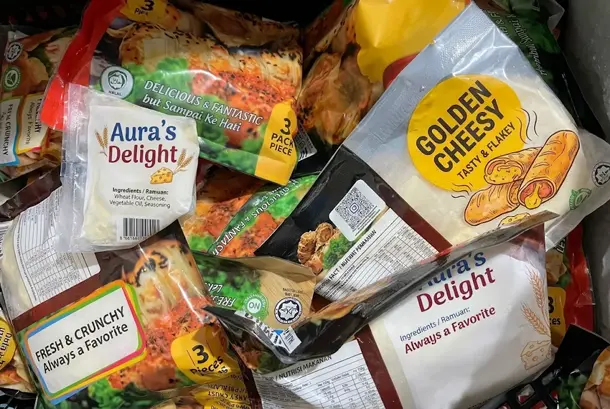
Food packaging affects taste indirectly by controlling what reaches the food after it leaves the filling line. A strong barrier keeps oxygen out, so fats do not turn rancid. It blocks moisture, so crisp snacks stay crisp and powders stay loose. It holds aroma in, limits light exposure, and avoids passing odors from inks or adhesives into the product. Food packaging does not add flavor, but it decides how much of the original flavor reaches the shopper. At Guoshengli Packaging, we design flexible pouches and films around that fact. Below, we explain how that works and what buyers should specify.
Why Food Packaging Can Change the Taste of Food
Oxygen Turns Good Fat into Off-Flavor
Most things that go bad quickly are coffee, nuts, granola, and fried snacks. When mixed with unsaturated fats, it turns into chemicals that taste old, bitter, or like paint. Lipid oxidation is the name for this process. Food science reviews that look at how edible oils break down show that heat, light, and oxygen speed up the process. To know if it's more than just "high barrier," we need to know the ASTM D3985 oxygen transmission rate (OTR). If the OTR is low and the seal is tight, the last pack on the shelf should taste the same as the first one.
Moisture Changes Texture, and Texture Changes Flavor
The way something feels can change the way it tastes. It still works the same way for crackers that get soft, candy that sticks together, and powders that gather. They all taste bad. ASTM F1249 can be used to find the water vapor transmission rate (WVTR). Water vapor goes through a pack in a different way when the inside and outside are dry and when they are not. Still, some foods can get dry and hard, like dried fruit. There is only one way to food packaging so that water doesn't get in. There should be a need for the building, and it should also last as long as planned.
Aroma, Light, and Odor Migration
The smell is the third thing. There's a hole that lets gas out but not air in. Why does this take place? If you roast coffee or tea, the chemicals that make them flammable are quickly lost. Coffee that is still fresh also gives off carbon dioxide. Thicker or darker layers block light, which speeds up the fat-burning process. Food packaging can also change how the food inside tastes. Lemon oils, such as limonene, can be added to polyolefin seals for the scalp to make them taste better. Paints and glues can smell if you don't let them dry all the way. You can make these two risks less likely by carefully printing, laminating, and smelling empty packs. Since neither can be fixed once the plane is airborne, it is better to stay away from them while the plane is being built.
How Food Packaging Materials Influence Taste
Plastic, Paper, Glass, and Metal Compared
It's heavy and easy to break glass, but it doesn't change the taste much and keeps the gas inside. To keep food fresh, it needs to be sealed in the right kind of foil or metal can. There are several ways to keep food service and baking paper and cardboard dry and free of grease. For foods that are oily, sour, smelly, or frozen, you need a different resin or one that is layered. Plastic is cheap and easy to carry. Each type of recyclable material needs to be tested separately for smell, protection, and heat. A study from 2007 in the Journal of Food Science says that the main goals of food packaging are to protect, contain, make life easy, and share.
Multilayer Flexible Structures for Specific Foods
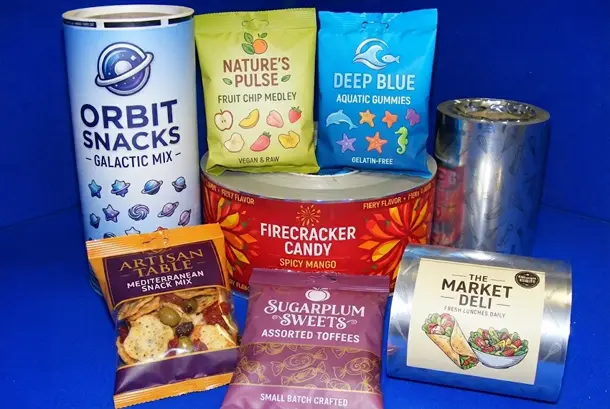
Flexible laminates are made up of different layers, and each layer serves a different purpose. There is a film on the outside that holds the print in place and a layer inside that seals. Light and gas can't get through. To pack food, we always have Kraft/VMPET/PE, BOPP/CPP, PET/PE, and PET/VMPET/PE on hand. Some foods, like coffee and snacks, go bad when they get air and light, but you can store them in PET etc. Dry and frozen packs from NY/PE are less likely to tear or cut. Dry items that only need to last a short time are often packed in BOPP/CPP. The ends of Kraft/VMPET/PE are made of metal and look like they were cut by hand. Putting the goods through tests helps us choose which one to buy. To match each structure, you can use both an OTR and a WVTR target.
Primary, Secondary, and Tertiary Layers
Already-crushed boxes can't be saved by a strong bag. Make sure it works with everything else, close it, and stop migration. These are the most important parts of primary packaging. If you handle, drop, or hit the units, they can break. But extra packaging like a display box keeps them safe. As tertiary packaging, boxes, pallets, and stretch wrap are used to keep things safe when they are sent abroad. The food is stacked three high. When someone buys food, they should be able to see the heat, chill, and freeze lines all at the same time. Stress during travel can make a hole in something, just like a weak film. Finally, it's easier to ship flexible pouches than rigid ones because they are lighter.
Design Principles for Food Packaging That Preserves Taste
Match Barrier Targets to Product Sensitivity
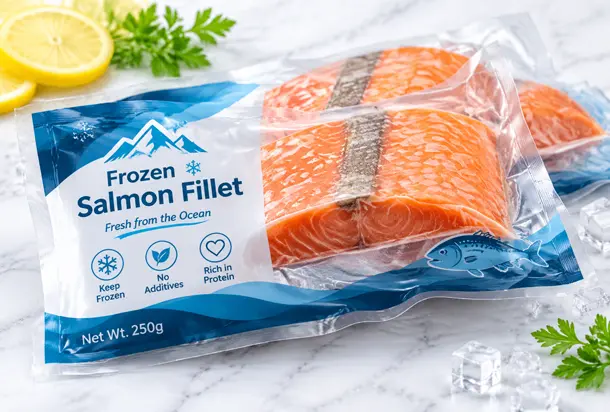
Putting your goals on a short list will help you stay on track. Write down the desired shelf life, the OTR and WVTR, the temperature at which to fill, and the conditions under which the item will be stored. For crisp snacks, you need a low WVTR. For nuts and granola, you need a lot of light and low OTR. Coffee should have a valve that keeps the smell inside. So it doesn't stick, candy needs to be able to make its own water. Foods that have been frozen need films and seals that don't break when they get cold. They won't get freezer burn or weak cracks this way. Foods that are oily need to be able to handle grease so that the fat doesn't get on the outside. Most of the time, a simple bag can only hold one thing.
Closures, Valves, and Formats That Protect Freshness
When the package is opened, the taste goes away. A degassing valve keeps coffee safe, and a zipper lets shoppers reseal food that can be used more than once and dried fruit. It's easier to use and show things when you make clear tears, hang holes, and window holes. You can stuff different kinds of things into stand-up, flat-bottom, side-gusset, three-side-seal, and spouted pouches. For those who pour from the spout, this means that sauces and other liquids have less air in them. With either the FFS or VFFS machine, rollstock film can be filled right away. The seal can break in any of these ways, so buyers should check the sealed pack to make sure it works right. To finish off the look, the shelf has dull, shiny, and soft-touch finishes.
Compare Options by Total Cost, Not Unit Price
Private-label teams work to margin targets, so price matters, but unit price is only one line. When you plan how to pack food, you should think about things like plates, line speed, freight, storage, product waste, returns, and tests to make sure you're following the rules. Something that keeps snacks safe costs a little more than an extra-thick film that lets snacks melt. Each flexible packaging needs less freight because it is lighter than a set box. For tests and one-time things, it's better to print digitally. But gravure printing is better for big jobs where the color stays the same. First, get a full-cost price from each provider. Then, compare that to how the food tastes after it's been put away.
Food Packaging Safety, Testing, and Sustainability for B2B Buyers
Build a Complete Compliance File
In the United States, chemicals that touch food must follow certain rules. Regulation (EC) No 1935/2004 covers everything in the EU that has to do with food. Regulation (EU) No 10/2011 says that 10 mg per dm² is the most plastic that can move. They need to see proof that the rules were followed, the results of the migration tests, a list of the materials that were used, and the way that each batch was tracked. A lot of stores will only hire people who are BRC-certified. Find out who has it and what it means. There are rules set by the FDA and the EU that we follow when we food packaging. Not only can SGS and a third party help you keep track of every sale, but they can also help you keep track of the raw materials also.
Test Taste Transfer with the Real Product
What you taste is not the same as the numbers in the lab. For the ISO 4120 triangle test, a group of tasters can compare a test food to food that has been stored in the right way. Tasters have to pick the thing that is different from the other two. It should be used with odor checks on empty packs and shelf-life checks to make sure it is kept at the right temperature. Write down the OTR, WVTR, and sensory scores all at once to make sure the claims and results are correct. Not every finished item will work as well as the first one, so make sure you check more than one batch. Keep these checks in the specification file.
Sustainability Claims Need Evidence
Many retail groups have goals for recyclable packaging. Individual PLA/PBAT pouches can be composted, and recyclable mono-PE and mono-PP pouches can be reused. After the building changes, the wall might not work as well. Before you put the new pack on the market, compare it to the old one to see how it tastes and how long it lasts. Also, make sure things pick up in your area, since you can only recycle a package at a place that takes it. Compostable films need to be tested for heat, smell, and safety on their own. We don't back structures that haven't been shown to work because we want to keep the product safe. If the food doesn't taste good, it doesn't matter if it says it's eco-friendly.
How to Select a Custom Food Packaging Supplier
Check Technical Fit Before Price
Before giving you a price, a good food packaging provider will ask you about your product, how long it will last, and your end goal. Folks can help you pick the right stuff, plan the barrier, print it, cut it to the right sizes, and make sure you follow the rules. There are 49 machines that can change things, 7 machines that can print, 6 machines that can seal, and one machine that can do two-color rotogravure printing. It has been making flexible food packaging for more than 25 years. BRC and ISO 9001 systems are also in place. You can make stable bags that stay the same size and color for each sale. In other words, the line that fills doesn't need to stop.
Compare Order Quantity and Lead Time
The printing method tells you how early to pack food and how little to pack. It will take 15 to 20 days to gravure print more than 20,000 pieces. The color doesn't change over long runs, so it works well. Digitally printing 500 to 1000 pieces could take 7 to 10 days. You can make limited editions for events, test out new items, and get them out quickly this way. It takes 4–5 days to send important things by air. First, make a digital batch. Then, use the real stuff to see how it tastes and how long it lasts. Last, use gravure to figure out the amount. When you sign, make sure you understand the sample choices and how the goods will be packed to be sent abroad.
A Short Buyer's Checklist
Before you approve food packaging, you should write down the following information: how sensitive the product is to light, moisture, fat, acid, oxygen, and smell; its target shelf life; its filling temperature; its storage conditions; its OTR and WVTR targets; how well the seal and closure work; its compliance documents; its ability to track batches; its minimum order quantity; its lead time; and its total cost. Anyone who needs to know what to do should be given the list. This way, everyone will know what to do. First, make sure they taste good and will last a long time, then freeze the specification only after results match the supplier of food packaging's claims.
Conclusion
You can change how food tastes by controlling the flow of water, air, light, smell, heat, and damage from the packing line to the customer. Things that are made of water or pictures can add or take away smells, and air breaks down food. You should make sure that the valves and seals you use are right for the product and its OTR and WVTR goals. You should also use designs like NY/PE or PET/VMPET/PE, as different materials protect tastes in different ways. Claim files, transfer records, batch tracking, and tests on real products to see how they taste and how long they last all back up what is said. Unit price isn't as fair when comparing costs because it doesn't take waste and returns into account. There are many steps in the food packaging supply chain that make sure the food tastes good.
FAQ
1. Does food packaging change the flavor of food?
Sometimes, but not all the time. If the food packaging lets air or moisture in, the food takes longer to go bad, get soft, and lose its smell. When things are wrapped in a film that fits the item, these changes take longer to happen. This is why you need to smell filled samples and empty packs. Glues, inks, and seals can leave smells on food.
2. Which material keeps flavor best?
That one thing doesn't always win. Glass is heavy, but food still tastes the same in it. They can be changed by adding or taking away layers of plastic films. Metal laminates keep air and light out. Choose something based on what it is, how long it will last, and how it will be sold. Then, eat the foods you chose to make sure you made the right choice.
3. What should private-label buyers request from a supplier?
As for the transfer test results, the scope of the certification, batch tracking, and OTR and WVTR data, you should be able to show all of these things. Then try it with the real product to see how it tastes. So that they can pack this kind of food, Guoshengli Packaging helps outside groups like SGS test the food.
Discuss Your Food Packaging Requirements with Guoshengli Packaging
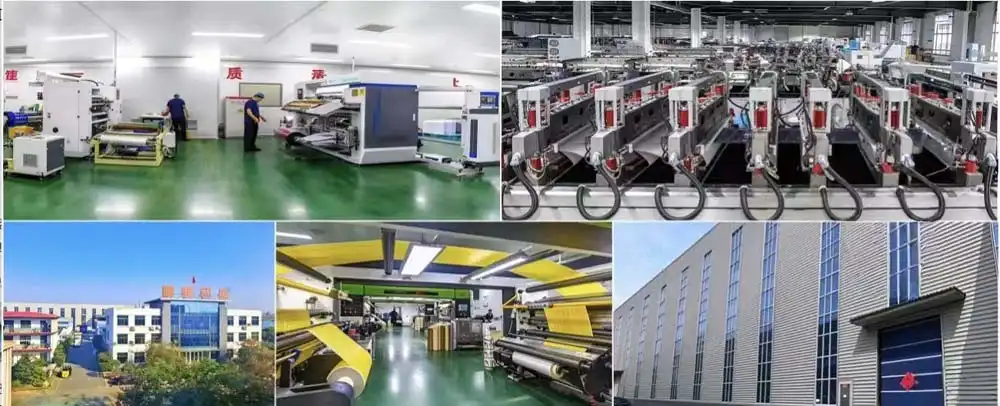
Flexible food packaging has been made by this company for more than 25 years, and they get BRC-certified production for the things they make. You can get digital printing for as few as 500 items. Mail an email to sales@guoshengpacking.com about the goods, the type of bag you want, how it will be filled, and the people you want to reach. We'll help you find the best barrier structure for your needs and your goals for the shelf life. Head over to guoshengpack.com to find out more.
References
1. Journal of Food Science, 2007 — Marsh and Bugusu, "Food Packaging—Roles, Materials, and Environmental Issues"
2. Food Packaging: Principles and Practice (CRC Press), 2012
3. Food Packaging Technology (Blackwell Publishing), 2003
4. Regulation (EC) No 1935/2004 of the European Parliament and of the Council, 2004
5. Commission Regulation (EU) No 10/2011, 2011
6. ASTM International, Standard Test Method F1249 for Water Vapor Transmission Rate Through Plastic Film, 2020