- English
- French
- German
- Portuguese
- Spanish
- Russian
- Japanese
- Korean
- Arabic
- Greek
- German
- Turkish
- Italian
- Danish
- Romanian
- Indonesian
- Czech
- Afrikaans
- Swedish
- Polish
- Basque
- Catalan
- Esperanto
- Hindi
- Lao
- Albanian
- Amharic
- Armenian
- Azerbaijani
- Belarusian
- Bengali
- Bosnian
- Bulgarian
- Cebuano
- Chichewa
- Corsican
- Croatian
- Dutch
- Estonian
- Filipino
- Finnish
- Frisian
- Galician
- Georgian
- Gujarati
- Haitian
- Hausa
- Hawaiian
- Hebrew
- Hmong
- Hungarian
- Icelandic
- Igbo
- Javanese
- Kannada
- Kazakh
- Khmer
- Kurdish
- Kyrgyz
- Latin
- Latvian
- Lithuanian
- Luxembou..
- Macedonian
- Malagasy
- Malay
- Malayalam
- Maltese
- Maori
- Marathi
- Mongolian
- Burmese
- Nepali
- Norwegian
- Pashto
- Persian
- Punjabi
- Serbian
- Sesotho
- Sinhala
- Slovak
- Slovenian
- Somali
- Samoan
- Scots Gaelic
- Shona
- Sindhi
- Sundanese
- Swahili
- Tajik
- Tamil
- Telugu
- Thai
- Ukrainian
- Urdu
- Uzbek
- Vietnamese
- Welsh
- Xhosa
- Yiddish
- Yoruba
- Zulu

North American and European organic food firms, speciality coffee roasters and clean-label product enterprises have adopted brown kraft paper pouches as their preferred packaging type. With a natural paper front and high-barrier inner lamination, these pouches provide companies the benefits of an authentic shelf presence and reliable product protection. Kraft paper pouches, with a shelf life of up to 24 months depending on barrier configuration, solve one of the largest conflicts in sustainable packaging: being eco-friendly without losing performance. This tutorial covers everything you need to know as a procurement specialist before you start sourcing.
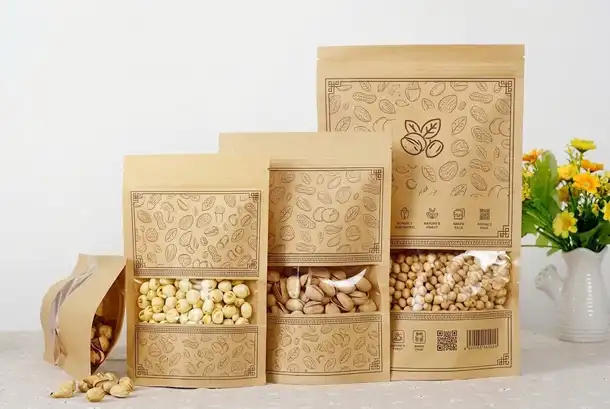
Understanding Brown Kraft Paper Pouches: Features & Benefits
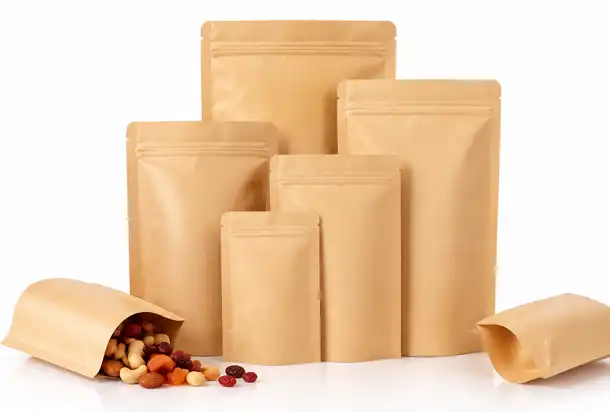
Brown kraft paper bags are constructed of natural sulphate wood pulp paper and are bonded with protective films such as PE, VMPET, EVOH, or aluminium foil. They are flexible wrapping designs with multiple layers. This style of architecture is like old paper bags and new high-barrier packaging.
What Makes the Material Work
About 40 to 80 GSM is the weight of the top layer of paper. It has a rough surface that says "natural" on a shop shelf. It's easy to tear and can be written on. Air and water vapor can only pass through at a certain speed through the middle barrier layer. For better oxygen protection, it can be made of aluminum foil. For a smaller size, it can be made of metalized PET. The inner sealant layer is made of food-grade PE, CPP, or LLDPE so that it can withstand heat and direct product contact, as required by FDA 21 CFR 177.1520. Mullen tests show that the best range for burst strength is between 120 and 160 microns, which is how thick the whole board is.
Functional Features Built Into the Pouch
Brown kraft paper pouches can have many different features added to them to make them more valuable for business. You can get these main kinds of services from Guoshengli Packaging:
- Resealable zipper – Keeps freshness and important for snacks, coffee and pet treats, when consumers open the pouch again and again.
- Easy tear notch – Provides a clean, controlled opening without scissors, improving the consumer’s first experience with the product.
- Degassing valve – This is a valve that lets out CO2 from the freshly roasted coffee while not letting oxygen in. This is a must-have feature for speciality coffee brands.
- Hang hole / euro hole - Convert the pouch into a retail ready display unit for hooks and pegboards without the need for extra equipment.
- Transparent window – Provides product visibility with heat-welded PET or BOPP panels, while maintaining the full oxygen barrier.
Each feature is built into the structure of the pouch while it is being made. This keeps the natural paper look while adding useful features.
Certifications That Matter for B2B Procurement
They have rules about how to package their goods if they want to sell them in the US and EU. Brown kraft paper pouches produced by approved businesses have documentation for ISO 9001 quality management, BRC food packaging, and FDA food contact. With these qualifications, there is a much lower chance that you will break the rules during audits for customs clearance and store onboarding.
How to Use Brown Kraft Paper Pouches in Your Packaging Line
Integrating kraft paper pouches into a production workflow requires attention to sealing parameters, filling method, and the specific pouch format chosen.
Filling and Sealing on Automated Lines
Kraft paper pouches work on both manual filling stations and VFFS/FFS automated lines, provided the heat seal parameters match the inner sealant material. PE sealant layers typically seal between 150°C and 180°C. Grease-proof inner liners (rated to KIT test level 7–12) prevent oil migration from products like roasted nuts, which would otherwise stain the kraft exterior and compromise shelf appearance.
Best Practices by Product Category
Different items have different demands on the same pouch format. Brown Kraft Paper Pouch 3 Side Seal Brown kraft paper pouches are great for beef jerky and other dried meat products, since the flat, sealed design helps keep moisture and odour out, without adding any material. Coffee is good in stand-up or side gusset with degassing valves. For precise WVTR control, an essential need for organic powders and superfoods, aluminium foil barrier layers are the correct standard. The pouch format is designed to match the product's actual moisture sensitivity and oxygen tolerance so as not to over-engineer costs.
Recycling and End-of-Life Considerations
Standard brown kraft paper pouches with PE inner liners need specialised pulping equipment to separate paper from plastic film, and are not considered curbside recyclable by most US towns. For brands that need 100% end-of-life compliance with extended producer responsibility (EPR) regulations, there are fully compostable versions with either PLA or PBAT-based inner layers. Guoshengli Packaging provides both structures so that brands can choose the one that best matches their sustainability claims and the certification criteria they need to fulfil.
Comparing Brown Kraft Paper Pouches with Other Packaging Solutions
Procurement managers often compare Kraft paper pouches with clear plastic stand-up pouches, foil retort pouches and rigid containers. These are actual trade-offs, and they must be properly mapped.
Kraft vs. Clear Plastic Pouches
All of it is visible because it’s in clear plastic pouches and the cost per unit at huge volumes is less. Brown kraft paper bags lose some visibility (unless you include a window), but they convey a far stronger sustainability message. For firms that leverage organic or natural credentials, this trade-off continually leans toward kraft, as the tactile paper texture conveys authenticity in a manner a glossy translucent pouch cannot. According to independent research published in the Journal of Consumer Psychology, matte, natural-textured packaging is linked to higher perceived product quality among health-conscious consumers.
Zipper vs. Non-Zipper Formats
Brown kraft paper pouches without zippers are cheaper and fit for single-use formats like sample sachets, beef jerky pieces or individual servings. Resealable zipper formats add 5–15% to the per-unit cost but greatly prolong customer use for bigger pack sizes. The resealable zip is especially great for luxury product lines aimed at eco-savvy consumers, reducing food waste and providing a very compelling case to end consumers and retail purchasers alike.
Stand-Up, Flat Bottom, and Three-Side Seal Options
Self-stand on shelves without fixtures, perfect for snack, coffee and pet treat categories. Flat bottom pouches provide a box-like bottom for premium positioning and maximum billboard printing area. The three side seal brown kraft paper pouch is the most cheap and is used for beef jerky, dried meat, single serve items and samples to retain freshness. Structural stability is not a primary concern but cost and freshness protection are.
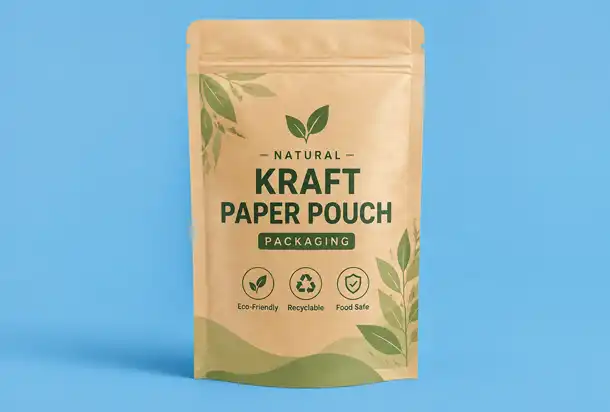
How to Choose & Procure the Best Brown Kraft Paper Pouches for Your Business
The best kraft packaging supplier is not only about comparing pricing per unit.
Evaluating Material Quality and Print Performance
Rotogravure printing on kraft paper is able to print up to 11 colours with continuous colour registration over long production runs – a key quality for brands that demand exact Pantone matching for seasonal restocks. Digital printing may be performed at a reduced setup cost and smaller minimum order quantities (MOQ) thus it’s ideal for product launches or limited edition SKUs. Test several shelf effects using matte kraft, glossy kraft, and partial UV spot treatments before committing to a full run.
Verifying Supplier Certifications and Capacity
A supplier’s certifications tell you about their quality procedures, but their annual production capacity tells you about their ability to develop with your brand. As baseline standards for US and EU food markets look for ISO 9001, BRC and FDA documents. Guoshengli Packaging’s annual production capacity surpasses 20,000 tonnes. Brands can depend on consistent output quality from 20,000-unit trial orders to multi-million unit seasonal quantities.
MOQ, Lead Times, and Sampling Process
Most new brands looking to produce custom brown kraft paper pouches go through two to three rounds of print and material sample before receiving production clearance. Digital printing MOQs are ideal for small quantity orders. Rotogravure is cost effective beyond 20,000 pieces. Standard rotogravure lead time is 15-20 days, digital printing lead time is 7-10 days. Air freight delivery to US and European markets is 4–5 days.
Expert Tips & Future Trends in Kraft Paper Pouch Packaging
More and more packaging is being made with patterns that work well both on the shelf and when they are recycled.
Barrier Optimization Without Over-Engineering
Aluminum foil isn't needed for many things. EVOH and VMPET barrier layers are lighter and better at blocking oxygen. This saves money and is better for the environment for goods that only need to last a short time. One easy way to lower the cost of packaging per unit without lowering the shelf life is to match the barrier specification to how sensitive the product is to oxygen. This is better than setting the barrier to the highest level.
Mono-Material and Compostable Directions
Plastic taxes and EPR rules in the EU make recycling structures more appealing. As a result, recyclable kraft pouches made of a single material and laminated with only PE are becoming more popular. More and more stores need approved compostable packaging, especially for natural personal care products and organic food. Compostable PLA/PBAT designs meet this need. These days, brown kraft paper bags can go in either direction. We need to make sure that the shelf life meets the needs of the product first before it can be used on a large scale.
Digital Integration in Packaging Supply Chains
QR codes printed on the outside of kraft pouches now connect physical packaging to digital records of where products came from, how they can be tracked, and sustainable approvals. It is very important for companies that sell organic food and specialty coffee to have clear supply lines. This is because it is good for business and the law in places like the US and EU.
Conclusion
Brown kraft paper pouches offer organic and natural brands a packaging format that works on all levels: barrier protection that extends shelf life, natural looks that communicate sustainability without being seen as greenwashing, and customization options that support retail-ready display across multiple formats. The form changes based on the item, like stand-up coffee cups with degassing holes or three-side seal beef jerky packaging. It stays true to the story of the brand. When purchasing teams compare kraft packaging to other types, the data always shows that kraft is the best choice for brands that want to make sure their products look good on shelves and are environmentally friendly.
FAQ
1. Can brown kraft paper pouches be used for direct food contact?
Yes. The inner sealant layer, which can be PE, CPP, or LLDPE, is made to meet the requirements of FDA 21 CFR 177.1520 for use with food. To meet the needs of retailers and customs officials, each batch of production comes with full documentation that shows where the materials came from.
2. What printing quality can I expect on kraft paper pouches?
You can print up to 11 colors on brown kraft paper bags with rotogravure, and the colors will always be the same when you place another order. For shorter runs, digital printing can be used. Matte varnish finishes keep the feel of the paper while getting images that are clear at 300+ DPI.
3. What are the standard lead times for bulk orders?
Rotogravure production runs take 15–20 days after the art is approved. Every digital printing order is sent out in 7–10 days. Air freight takes an extra four to five days to get to North America and Europe. Many times, two or three rounds of tasting are done before production starts.
4. What is the minimum order quantity?
Small-batch runs with a low minimum order quantity (MOQ) can be done with digital printing. These are good for launching new products and trying them out. For every 20,000 units you print with rotogravure, you save money. You can pick either one based on your needs and schedule.
5. Do kraft pouches hold up during international shipping?
Outer boxes that are strong enough for ocean and air freight are used to pack and put our brown kraft paper pouches on pallets. A total layer thickness of 120–160 microns keeps the structure from getting squashed while it's being moved.
Get a Custom Quote for Your Kraft Packaging From Guoshengli Packaging

The boxes that hold your brand's goods should really work hard. For more than 25 years, Guoshengli Packaging has been making flexible packaging. They are certified by ISO 9001, BRC, and FDA, and they can print in up to 11 colors using rotogravure. They make supplier-grade custom brown kraft paper pouches. Even if your order is very small, we promise that the quality will be the same from the first sample to the last shipment. Send us an email at sales@guoshengpacking.com or visit www.guoshengpack.com right now to get your sample.
References
1. Coles, R., McDowell, D., & Kirwan, M. J. (Eds.). (2003). Food Packaging Technology. Blackwell Publishing.
2. Robertson, G. L. (2012). Food Packaging: Principles and Practice (3rd ed.). CRC Press.
3. Marsh, K., & Bugusu, B. (2007). Food packaging — Roles, materials, and environmental issues. Journal of Food Science, 72(3), R39–R55.
4. Pauer, E., Wohner, B., Heinrich, V., & Tacker, M. (2019). Assessing the environmental sustainability of food packaging: An extended life cycle assessment including packaging-related food losses and waste. Sustainability, 11(4), 925.
5. Keller, K. L. (2013). Strategic Brand Management: Building, Measuring, and Managing Brand Equity (4th ed.). Pearson Education.
6. European Environment Agency. (2022). Plastic Packaging and the Circular Economy: Progress and Policy in the EU. EEA Report.