- English
- French
- German
- Portuguese
- Spanish
- Russian
- Japanese
- Korean
- Arabic
- Greek
- German
- Turkish
- Italian
- Danish
- Romanian
- Indonesian
- Czech
- Afrikaans
- Swedish
- Polish
- Basque
- Catalan
- Esperanto
- Hindi
- Lao
- Albanian
- Amharic
- Armenian
- Azerbaijani
- Belarusian
- Bengali
- Bosnian
- Bulgarian
- Cebuano
- Chichewa
- Corsican
- Croatian
- Dutch
- Estonian
- Filipino
- Finnish
- Frisian
- Galician
- Georgian
- Gujarati
- Haitian
- Hausa
- Hawaiian
- Hebrew
- Hmong
- Hungarian
- Icelandic
- Igbo
- Javanese
- Kannada
- Kazakh
- Khmer
- Kurdish
- Kyrgyz
- Latin
- Latvian
- Lithuanian
- Luxembou..
- Macedonian
- Malagasy
- Malay
- Malayalam
- Maltese
- Maori
- Marathi
- Mongolian
- Burmese
- Nepali
- Norwegian
- Pashto
- Persian
- Punjabi
- Serbian
- Sesotho
- Sinhala
- Slovak
- Slovenian
- Somali
- Samoan
- Scots Gaelic
- Shona
- Sindhi
- Sundanese
- Swahili
- Tajik
- Tamil
- Telugu
- Thai
- Ukrainian
- Urdu
- Uzbek
- Vietnamese
- Welsh
- Xhosa
- Yiddish
- Yoruba
- Zulu

Protein powder pouches work best when the film blocks moisture, the zipper closes cleanly, and the seals keep powder inside. Good protein packaging combines a barrier laminate, a resealable closure, and a print method that fits your launch schedule. I recommend choosing the structure only after you know your powder, your filling line, and your sales channel. This guide covers formats, materials, printing, and compliance, so you can brief a supplier with confidence. I also explain how Guoshengli Packaging supports small launches and larger runs.
Protein Packaging Performance: What the Pouch Must Protect
Moisture and Clumping in Protein Packaging
A lot of the time, people say they're too wet. Powders that are clumped together get bad reviews and are sent back. This is because protein powders soak up water. Effective protein packaging makes use of a laminate that keeps out moisture and a lid that snaps shut after each scoop. Most of the structures in this group are PET/PE, PET/VMPET/PE, and NY/PE. Which one is best depends on how long you want the food to last and how it will be stored. Plain PET/PE doesn't block water vapor as well as a layer that is metallized. I believe you should write down and ask your source about the build and thickness. Then make your own recipe and see how long it will last. How a powder works can be changed by the fat and flavorings it contains.
Oxygen and Light Protection
O2 and sunlight change how fresh food is and how long its flavors last. Powders with a lot of fat can lose their flavor when oxygen gets to them. This can happen with some plant-based blends and mass gainers. Some vitamins and plant extracts that are used in mixed formulas can also be damaged by UV light. Most of that light is blocked by metal or something else dark. People can see the powder through a clear window, but it doesn't keep out as much light. A mostly solid panel or a small gap is the best way to package protein for tricky recipes. They can tell you which ingredients need the extra protection.
Seals and Powder Leakage
The first issue with automatic filling lines is that powder gets lost. There is fine dust near the seal, and a seal that is dirty can come off while it is being shipped. Good protein packaging has two parts: a sealant layer that can handle some dust and a seal width that works with your machine. Pouch bags need to be strong enough not to tear when they're being shipped because boxes and sharp points press on them. If you want to start making things, you should do a practice fill and then check samples that have been filled for leaks, drops, and squeezes. You can compare these checks to a batch of returned bags. They are cheap and show weak spots early on.
Protein Powder Packaging Options: Formats, Materials, and Sustainability
Pouch Formats for Protein Packaging
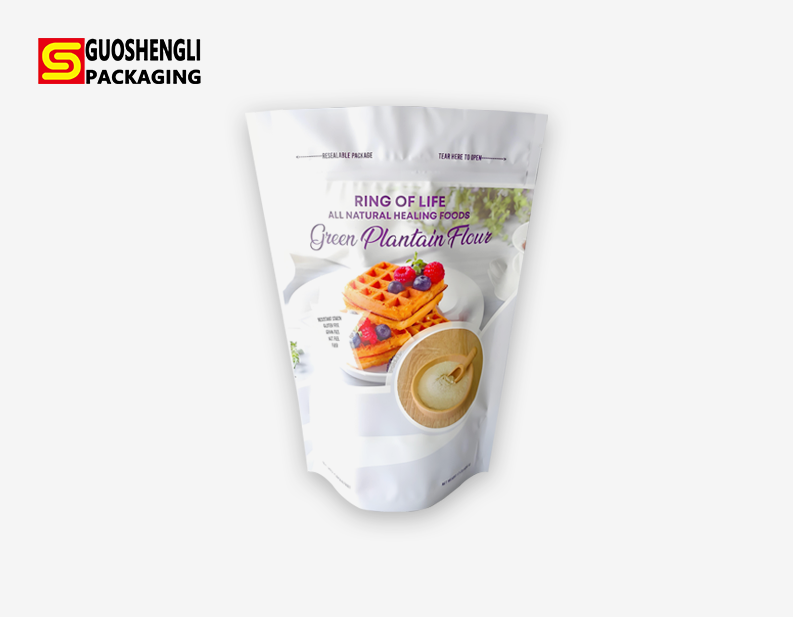
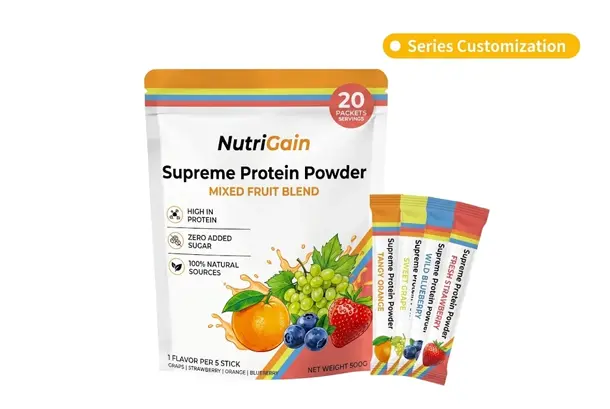
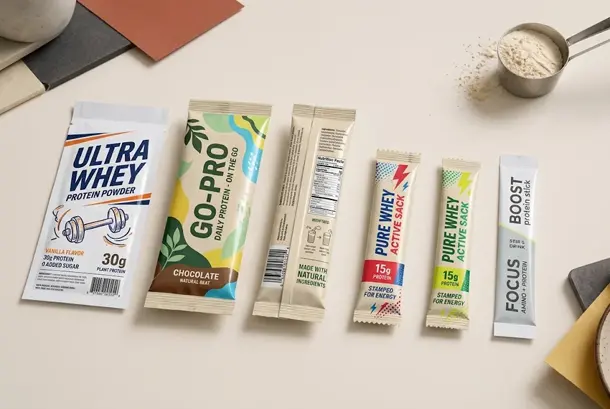
There are several shapes that work well with protein shakes. Stand-up pouches are the most common way to package protein and supplement powders because they have a large print area. Bags with flat bottoms look good and stay put on the shelf well. Side gusset bags are good for bigger vitamin amounts, and pillow pouches are good for single-serve packs. It is important for contract fillers to know that rollstock film can be used with automatic powder filling machines. Flexible protein powder packaging is lighter and easier to move, but rigid tubs are still good for some brands. The format should be based on the fill weight, how often you serve, and the sales channel.
Barrier Materials and Structures
You can tell how long a powder stays fresh by how it was made. PET/PE is a basic material that can be used to store dry things that don't last long. A layer of metal is added to PET/VMPET/PE to make the barrier against light and water stronger. It is harder to puncture NY/PE, which is good when the fill weight is high. Some of the other high-barrier laminates we make depend on the needs of the product. The picture is on the film on the outside. The main seal is made by the layer inside, which blocks light, air, and moisture. If you tell us how long you want the protein to last and how it should be kept, we will provide you with a protein packaging structure instead of guessing.
Sustainable Protein Packaging Choices
A lot of brands are now looking for solutions that can be used again and again. For MONO-PE and MONO-PP pouches, we have designs that can be recycled and ones that are light so that shipping doesn't pollute as much. Because each area has its own way of collecting recyclables, I tell brands to learn about their market before making broad environmental claims. Films made of one material can protect powder, but before you put together a multi-layer laminate, you should compare how well the barrier works to how long you want the powder to last. It can also be hard to recycle things like inks, glues, and buttons. Our team can figure out what kind of protein packaging will work best for your product, and we won't push a shape that could harm the powder.
Custom Protein Packaging Design: Zippers, Finishes, and Printing
Zippers and Daily Use
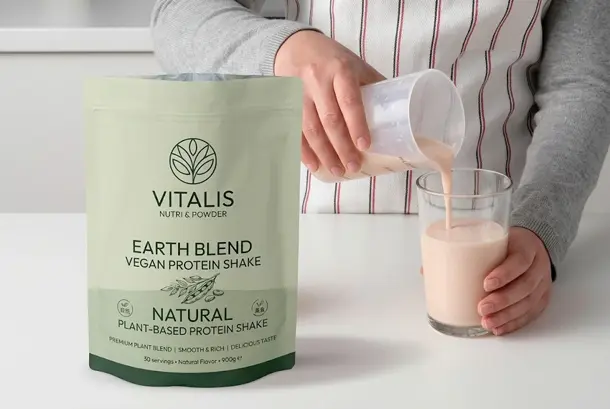
It changes how people feel about buying protein bags because they have zippers that they have to open and close a lot. The powder stays dry between scoops, and the pouch can stand up on a table thanks to a zipper that can be closed many times. A tear groove on the top of the box makes it easy to open for the first time, and the smooth sides make it easier to handle and less likely to get damaged. Also, a big hole makes it easier to scoop. People who buy things tell the owners to test the zipper at home with powder dust on the track. Customers are more likely to buy again if the protein packaging stays closed after being used for weeks.
Matte Finishes and Shelf Look for Protein Packaging
Before you even read the label, a lot can be told about how something looks on the shelf. It comes in both matte and gloss styles. Many sports nutrition brands like the way matte makes things look calm and high-end. You can see the powder through a window, but a full wall keeps out more light. On the front, put the name, the type of protein, the taste, and the net weight in a clear order. Color blocks can help you sort items of a certain size or taste. Before you print, check the accepted dieline to make sure that the text and barcodes are not in the pockets or seals.
Digital and Gravure Printing
The way you print depends on how big your order is. Digital printing starts at 500–1000 pieces and takes 7–10 days. This is good for testing new flavors, getting products out quickly, and other things. Gravure printing can begin when you buy more than 20,000 items. It takes about 15 to 20 days and is good for big runs that need steady color. Our gravure lines can print in up to 11 colors. A lot of private-label protein packaging projects start with digital to try out a new taste and then move on to gravure when the volume stops growing. We can talk about how to make sure the colors are the same on both ways if you send us your art and color references early.
Compliance and Quality in Protein Packaging
Food Contact Documents
Food contact documents are often asked for when people in the US and Europe want to buy something. Our stuff has been approved by the FDA and can be used with food. Also, ISO 9001 and BRC have approved our building, and SGS helps with checks and tests. You need to use the right words. This phrase "FDA approved" does not mean "compliant materials," and I would never use it to talk about packing. Rule 1935/2004 covers things in the EU that come into contact with food. Regulation (EC) No 2023/2006 tells us the best way to make these things. Talk to your market about which documents will work for them before you choose protein packaging.
Who Owns 21 CFR Part 111
When people buy supplements, they might think that the company that packs them is in charge of GMP. Part 111 of 21 CFR tells us the best way to make food vitamins right now. These tasks belong to the business that creates, packs, labels, or stores the supplement. Most of the time, this is your filler and brand. Some of them also make claims about nutrition. A provider of protein packaging will give you materials that can come in contact with food, exact pouch specs, and records of quality. Before we print the label, your team and your filler should look it over first.
Traceability and Batch Consistency
Orders that come back show how reliable a supplier is. Our quality system keeps track of each order and checks materials, work-in-progress, and finished goods as they come in. There are 49 turning machines, seven printing machines, and six laminating machines in the workshop. This means that a lot of SKUs can be lined up. Rollstock for contract fillers stays stable on the line as long as the film size and how it seals stay the same. We'll see what we can do to help if you tell us what records your QA team needs. Get an NDA before you share files if the art for your company hasn't been made public yet. Orders for protein packaging depend on being able to do that.
Sourcing Custom Protein Packaging: Process, Timeline, and Mistakes
Preparing Your Brief
Every quote goes faster when the brief is clear. Find out the type of product, the fill weight, the bag size, the shelf life goal, the sales area, the artwork's state, the amount that is expected, and the tools used for filling. If you hire a contract filler to pack your powder, look into their line. Often, they will tell you what kind of film or bag to use. Let us know if you need a green frame, a zipper, a window, or a matte finish. Lastly, don't just look at the price per unit; look at the quotes based on the structure, thickness, size, printing method, and delivery terms as well. Providers of protein packaging can only give you a correct price if you give them these details.
From Sample to Reorder
Once a type of pouch is chosen, samples are usually sent out and a trial order is made. The pouches are then restocked every month or three months. Test orders are kept small by digital printing, which takes 7–10 days to finish. When time is short, it takes about 4–5 days to ship by air. Before setting the order for more boxes, make sure you're happy with the quality of the seal, the dust control, and how well the boxes fit on your line. You can plan reorders around the time you make powder once the design is stable. Have extra stock on hand in case a busy time of year stops a launch.
Protein Packaging Mistakes to Avoid
When people only look at price or price, they cause a lot of problems. Weak locks and cheap building materials can both let water in and out. The text might get pushed into the seal zones if you finish the art before the dieline is set. Problems with dust are hidden until production by missing the filling tests. If you say something is sustainable, you need to show proof of the framework and market. This is another mistake that people often make: they blame the pouch supplier for label compliance when the brand and filler are really to blame. No matter how many times you order, these things will make your protein packaging project fail.
Conclusion
It works well when the protein packaging solution pouch's form matches the recipe, the filling line, and the sales route. If powder has a lot of air, light, and water, it will stay fresh for a longer time. Stand-up, flat bottom, side gusset, pillow, and rollstock are some of the forms and sizes it comes in. Things are safer when they have layers of protection like PET/VMPET/PE and NY/PE. The way they look and feel changes how people use them. Digital printing is best for small runs, while gravure printing is best for large runs. The company that makes the packaging needs to make sure it is safe for food contact. However, the brand and filler are in charge of dietary supplement GMP under 21 CFR Part 111, labeling, and claims. Clear briefs, pilot fills, and tests can help you avoid most problems.
FAQ
1. What is the best pouch type for protein powder?
It's most often a stand-up bag with a zipper. Side-gusset bags can hold more things and look more expensive than flat-bottom bags.
2. Can I order small quantities for new flavors?
Yes. A digital print job takes 7–10 days to finish, and the price starts at 500–1000 pieces. You need to buy at least 20,000 pieces of gravure to make them.
3. Does the packaging supplier handle 21 CFR Part 111?
Not at all. Following GMP rules for dietary supplements is the job of the companies that make, package, name, or hold the supplements. We provide good paperwork and FDA-approved materials that come into touch with food.
Start Your Protein Packaging Project with Guoshengli Packaging

Guoshengli Packaging is a protein packaging manufacturer with 25+ years of flexible packaging experience, digital printing from 500 pieces, and gravure for larger runs. Send your fill weight, pouch format, and target shelf life to sales@guoshengpacking.com, and our team will recommend a structure and sample plan. Visit guoshengpack.com for more details on custom protein packaging.
References
1. U.S. Food and Drug Administration, Current Good Manufacturing Practice in Manufacturing, Packaging, Labeling, or Holding Operations for Dietary Supplements (21 CFR Part 111), 2007
2. European Parliament and Council, Regulation (EC) No 1935/2004 on Materials and Articles Intended to Come into Contact with Food, 2004
3. European Commission, Regulation (EC) No 2023/2006 on Good Manufacturing Practice for Materials and Articles Intended to Come into Contact with Food, 2006
4. Marsh and Bugusu, Food Packaging: Roles, Materials, and Environmental Issues, Journal of Food Science, 2007
5. Robertson, Food Packaging: Principles and Practice, CRC Press, 2012
6. BRCGS, Global Standard Packaging Materials, Issue 6, 2019