- English
- French
- German
- Portuguese
- Spanish
- Russian
- Japanese
- Korean
- Arabic
- Greek
- German
- Turkish
- Italian
- Danish
- Romanian
- Indonesian
- Czech
- Afrikaans
- Swedish
- Polish
- Basque
- Catalan
- Esperanto
- Hindi
- Lao
- Albanian
- Amharic
- Armenian
- Azerbaijani
- Belarusian
- Bengali
- Bosnian
- Bulgarian
- Cebuano
- Chichewa
- Corsican
- Croatian
- Dutch
- Estonian
- Filipino
- Finnish
- Frisian
- Galician
- Georgian
- Gujarati
- Haitian
- Hausa
- Hawaiian
- Hebrew
- Hmong
- Hungarian
- Icelandic
- Igbo
- Javanese
- Kannada
- Kazakh
- Khmer
- Kurdish
- Kyrgyz
- Latin
- Latvian
- Lithuanian
- Luxembou..
- Macedonian
- Malagasy
- Malay
- Malayalam
- Maltese
- Maori
- Marathi
- Mongolian
- Burmese
- Nepali
- Norwegian
- Pashto
- Persian
- Punjabi
- Serbian
- Sesotho
- Sinhala
- Slovak
- Slovenian
- Somali
- Samoan
- Scots Gaelic
- Shona
- Sindhi
- Sundanese
- Swahili
- Tajik
- Tamil
- Telugu
- Thai
- Ukrainian
- Urdu
- Uzbek
- Vietnamese
- Welsh
- Xhosa
- Yiddish
- Yoruba
- Zulu

Dog treat packaging preserves flavour, decreases fat oxidation and lets customers know what’s in the bag. When selecting packaging for pet treat goods, evaluate barrier performance first, then closure, bag format, label space and supplier paperwork. Oily jerky, freeze-dried nibbles and soft training incentives all respond differently to air, moisture and odour, so one structure seldom suits all. Weak bags mean stale products, refunds and negative ratings. A properly sized bag protects both your brand and your margins, while keeping goodies fresh throughout transit and shelf life.
What to Look For in Packaging for Pet Treat Products
Start with what you want the treat to be, then match the bag to that. These four checks account for most purchase decisions.
Barrier Performance Comes First
The fat, moisture and oxygen determine how long a food remains pleasant. Oxygen interacts with the lipids and develops rancid flavours, while moisture softens crisp cookies. There are two ASTM ways for purchasers to compare numbers: ASTM D3985 for oxygen transmission rate, and ASTM F1249 for water vapour transmission rate. For example, many brand teams have a goal of less than 15.5 cc/m2/day of oxygen transfer rate for greasy or freeze-dried goods. Then ask each supplier for film statistics and verify with filled samples, since true findings will be changed by seals, zippers and the product itself. We provide PET/VMPET/PE, NY/PE and other high barrier laminates for pet treat line packaging, so you may match a structure to your shelf-life target.
Odor Control and Flavor Protection
In pet treat products, odour control in packaging is a two-way street. Odours might escape from a bag and undesirable odours can enter from inks or adhesives. Both make it less palatable and get complaints. Customers can smell the jerky and freeze-dried liver sitting on the shelf. Gas chromatography findings for residual solvent are commonly requested by contract fillers, some of whom have established restrictions around 10 mg/m². Fill a sample and scent test it after many days of storage. Request data from any source. Our multi-layer materials include an odour barrier to lock in product scents. Your quality team may evaluate reports backed by our SGS and third-party testing.
Shelf Features That Help Sales
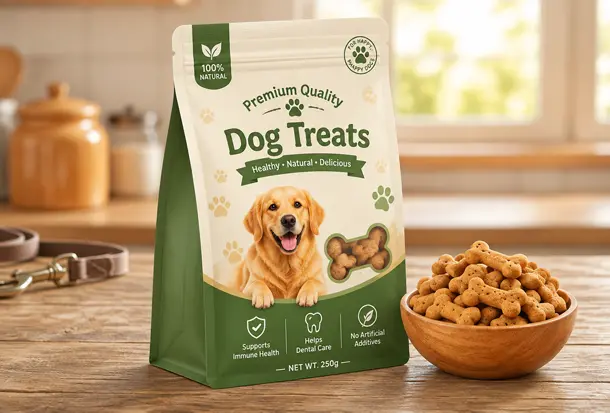
The appropriate features may make packaging a selling tool for pet treat companies. The clear glass lets buyers see the form and colour of the treat. Hanger hole for peg display. Tear notch for clean initial opening. The most important feature is a resealable zipper; owners will open a training-treat bag multiple times each week. Brand tone is established using matte or gloss finishes and high-definition gravure printing. Match each feature to the sales channel: a bag for pet-store shelves requires powerful front-panel graphics, while a bag for internet purchases needs durable sealing. We incorporate these elements into stand up pouches and other styles.
Label Space and Compliance Basics
A bag can’t make a label compliant, but good packaging for pet treat companies gives opportunity for needed label information. The FDA animal food labelling requirements in the United States, found in 21 CFR Part 501, and the AAFCO model standards that many states have adopted, lay forth expectations for product name, net amount, ingredient list, guarantyd analysis, and manufacturer name and address. Usually brands will have the term treat or snack on the front panel. A wholesaler of packaging for pet treats can provide room for these things and a batch code section to track. Requirements vary state to state, so check with your compliance expert before you print the art.
Best Materials and Bag Formats for Packaging for Pet Treat Brands
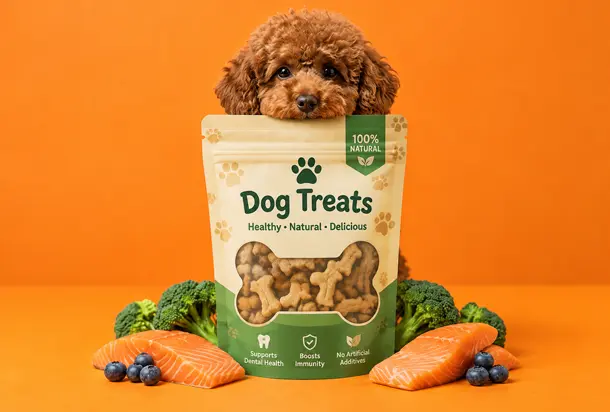
Material and format operate together, therefore you need to decide both in the same discussion.
Multi-Layer Structures Explained
Most pet treat products are packaged in a laminated film. The print is on the outer layer and is scuff resistant. It has an intermediate layer that prevents oxygen, moisture or light. The inner layer contacts the food and closes the bag. PET/PE coveralls for moderate barrier applications. PET/VMPET/PE has an opaque metallized finish that excludes light and oxygen. NY/PE provides puncture resistance, which is helpful for hard cookies and bone shaped treats. Aluminium foil laminates provide a better barrier for fatty or extended shelf-life items. If buyers need to see the treat, add a window, as metallized and foil bags cover it. Kraft paper might be natural looking, but greasy foods still need an interior barrier.
Pouch Formats Compared
Select the format by pack size, display style and filling mode. Here's a table comparing typical alternatives.
| Format | Best fit | Main advantage |
|---|---|---|
| Stand-up pouch | Retail packs of treats and snacks | Strong shelf display and easy resealing |
| Flat bottom bag | Premium or larger packs | Stable stance and a wide print area |
| Side gusset bag | Larger treat volumes | Extra capacity for family-size packs |
| Pillow pouch | Small snack packs | Simple format for automatic lines |
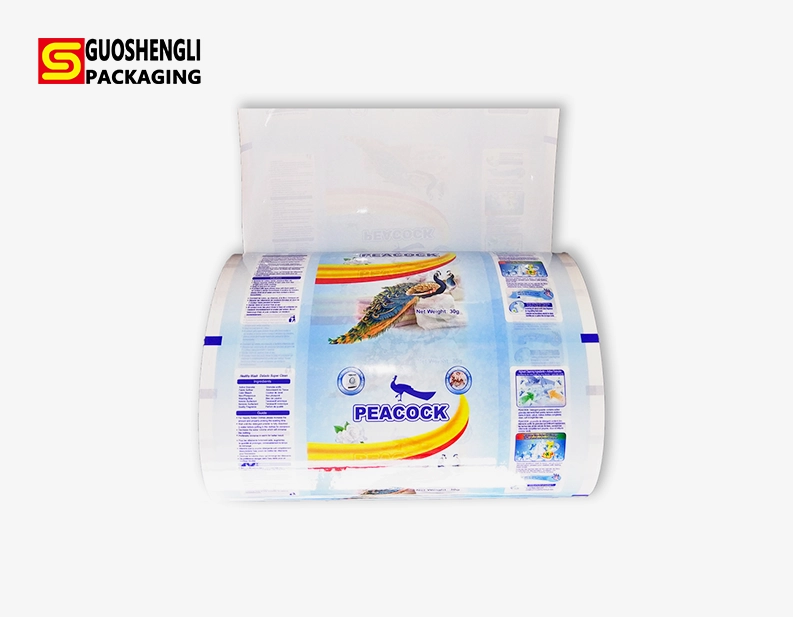
| Rollstock film | Contract fillers | Runs on automatic packaging machines |
Stand-up pouches are most popular, since they stand up on the shelf and can be closed again after opening. Double check the bag size with your filling equipment before approving a design.
Sustainable Options and Claims
Many manufacturers are seeking less waste packaging for pet treat products. We provide recyclable MONO-PE and MONO-PP constructions and lightweight films to decrease transport emissions. The performance of a mono-material barrier is different from a multi-layer laminate, hence we see performance validation as a must for any sustainable construction. We do not advocate for untested structures at the expense of protecting the product. Get filled-sample findings before committing to a new structure. There should also be a collecting route in your target market, since a recyclable film still needs a location to go to be recycled.
Closures, Printing, and Order Size for Pet Treat Bags
Film, closure, printing process and quantity are equally important for cost and launch speed.
Resealable Does Not Mean Airtight
Zipper and heat seal do various things. The main heat seal keeps the goodies fresh until they are first opened and indicates whether the bag has been opened. The zipper then secures the bag shut while in everyday usage. Most retail dog treat packs are a mix of both. Performance relies on the film barrier, seal width, sealing temperature and zipper structure. Some companies either nitrogen flush the bag or use an oxygen absorber to remove oxygen in the bag. Those are options for your filling-line testing. We recommend that you test filled samples for seal strength and freshness prior to approving packaging for pet treat manufacture.
Gravure or Digital Printing
Both are suitable for pet treat project packaging, although at different phases. Gravure printing up to 11 colours begins at 20,000 pieces, with a usual lead time of 15-20 days. It creates consistent colour on huge batches. Digital printing is suitable for 500 – 1,000 pieces, with a normal lead time of 7 - 10 days. It is a good solution for new flavours, product testing and speedy releases. A popular approach is to utilise digital runs to determine which flavour sells and then migrate proven goods to gravure which typically reduces the cost per bag at volume. Get the colour approved before you change techniques so the two runs will match on the shelf.
From Small Batch to Wholesale and Private Label
Each buyer has their own ordering habits. Private label companies usually provide many flavours thus they like digital printing and fast sampling. For contract fillers, rollstock film and pouches need to be consistent in size and colour from one brand to the next. Small orders and bags that withstand freight are what online retailers require, and puncture resistance helps safeguard packing during shipment. Pet product distributors require constant volume and repeat orders that match previous orders. We provide pet treat & snack packaging for dog training treats, cat snacks, jerky type treats, freeze-dried snacks, soft treats, crispy biscuits and useful goodies. If the stock is not there, air delivery will be 4-5 days.
How to Choose a Packaging for Pet Treat Supplier
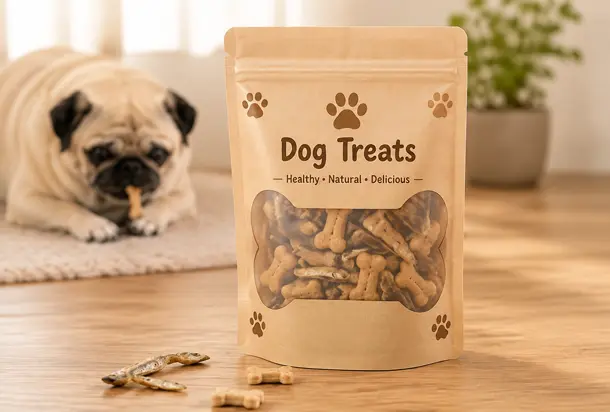
A reputable provider supports its claims with records, equipment and explicit sampling processes.
Certificates and Documents to Request
Trust begins with documentation you can verify. We have ISO 9001 quality management and BRC food packaging accreditation and work to FDA and EU food contact compliance and SGS and third party testing. If you are buying packaging for pet treat goods, ask any provider for certificate numbers and copies of the report and check them with the issuing organization. BRCGS has a public registry of certifications. In the U.S. plastic food contact materials are regulated by FDA standards like 21 CFR Part 177. Ask what rules each layer fulfils. Ask for material composition sheets and migration test records as well. Every order must be traceable to manufacturing records and raw supplies.
Factory Capacity and Batch Consistency
A repeat order should be exactly like the initial order. We have 7 printing machines, 6 laminating machines and 49 converting equipment in our plant and do in-house inspection at each vital step. Flexible packaging lines frequently go down due to little variations in pouch size, seal quality or colour from one batch to the next. Ask suppliers how they record batches, store samples and deal with remedial action if an issue arises. A consistent pet treat supply package responds with records, not promises. That constancy helps safeguard your filling schedule when switching brands or flavours.
Sampling, Lead Time, and Delivery
A defined sampling route will save you weeks. Send me your short first. Next we provide a structure and format and you get examples. Run those samples on your filling line with genuine goodies and verify seals, odour and look. Once approved, make a trial order then a volume order. Digital printing takes 7-10 days, gravure requires 15-20 days so schedule your launch dates around your chosen process. Keep your artwork files and approved samples on file so your next purchase is exactly the same. Good sampling for packaging for pet treat projects avoids surprises at scale.
A Short Checklist Before You Request a Quote
Collect the information a provider need. Treat kind, fat and moisture level, net weight, goal shelf life, your oxygen or moisture objectives. Add bag type, size, zipper, window, hanger hole and finish. Input projected yearly volume, initial order size, printing type, destination country and delivery date. Attach any papers your buyers or compliance advisor need. A comprehensive brief for pet treat packaging projects enables a supplier to provide a structure and quotation in the initial response, and helps you prevent expensive packaging adjustments after launch.
Conclusion
Packaging for pet treat goods is all about matching the bag to the goodie. First is barrier performance. ASTM tests for oxygen and moisture, validated using filled samples, tell you whether lipids and texture will survive shelf life. Then odour control, closures, windows and label space dictate how well the product works for consumers and fits U.S. labelling requirements. Layered films like PET/PE, PET/VMPET/PE, and NY/PE, and shapes like stand-up and flat bottom pouches, fit various foods and channels. Digital printing is good for short runs, gravure is good for consistent volume. Supplier certifications, batch records and sample approval are safeguards to guarantee the uniformity across repeat orders. Together these tests decrease stale goods, returns and complaints.
FAQ
1. What material works best for oily jerky?
Most oily jerky products will need a high barrier laminate, such as PET/VMPET/PE, or an aluminium foil structure and a verified heat seal. 1) Look at the oxygen transmission data (2) Confirm the findings by testing a filled sample. If consumers need to view the goodie, add a window.
2. Is a resealable dog treat bag airtight?
Not alone. The heat seal keeps the goodies secure before you open them, and the zipper helps keep them fresh once you do. The film barrier, seal breadth and seal quality will determine how well the bag keeps freshness.
3. What is the minimum order for custom printed dog treat bags?
Digital printing begins at 500 to 1,000 pieces, with a normal lead time of 7 to 10 days. Gravure printing begins at 20,000 pieces and normal lead time is 15-20 days.
4. Which documents should I request from a supplier?
We ask for BRC and ISO 9001 certifications, food contact compliance documentation, material composition sheets and SGS test results. Please check each certificate number with the granting agency before placing an order.
Discuss Your Packaging for Pet Treat Project with Guoshengli Packaging

Want a packaging for pet treat solution that gives you film, printing and pouch production all in one location? Guoshengli Packaging can provide digital printing from 500 pieces and gravure printing from 20,000 pieces. We have BRC, ISO 9001, FDA food contact compliance and SGS testing.Send us your treat kind, bag size and goal shelf life to sales@guoshengpacking.com, we will offer a structure and estimate. For further information please visit the website: guoshengpack.com.
References
1. Electronic Code of Federal Regulations, Title 21, Part 501 – Animal Food Labeling, 2024.
2. AAFCO Official Publication, Model Regulations for Pet Food and Specialty Pet Food, Association of American Feed Control Officials, 2023.
3. ASTM D3985-17, Standard Test Method for Oxygen Gas Transmission Rate Through Plastic Film and Sheeting Using a Coulometric Sensor, ASTM International, 2017.
4. ASTM F1249-20, Standard Test Method for Water Vapor Transmission Rate Through Plastic Film and Sheeting Using a Modulated Infrared Sensor, ASTM International, 2020.
5. BRCGS Global Standard Packaging Materials, Issue 6, BRCGS, 2019.
6. Electronic Code of Federal Regulations, Title 21, Part 177 – Indirect Food Additives: Polymers, 2024.