- English
- French
- German
- Portuguese
- Spanish
- Russian
- Japanese
- Korean
- Arabic
- Greek
- German
- Turkish
- Italian
- Danish
- Romanian
- Indonesian
- Czech
- Afrikaans
- Swedish
- Polish
- Basque
- Catalan
- Esperanto
- Hindi
- Lao
- Albanian
- Amharic
- Armenian
- Azerbaijani
- Belarusian
- Bengali
- Bosnian
- Bulgarian
- Cebuano
- Chichewa
- Corsican
- Croatian
- Dutch
- Estonian
- Filipino
- Finnish
- Frisian
- Galician
- Georgian
- Gujarati
- Haitian
- Hausa
- Hawaiian
- Hebrew
- Hmong
- Hungarian
- Icelandic
- Igbo
- Javanese
- Kannada
- Kazakh
- Khmer
- Kurdish
- Kyrgyz
- Latin
- Latvian
- Lithuanian
- Luxembou..
- Macedonian
- Malagasy
- Malay
- Malayalam
- Maltese
- Maori
- Marathi
- Mongolian
- Burmese
- Nepali
- Norwegian
- Pashto
- Persian
- Punjabi
- Serbian
- Sesotho
- Sinhala
- Slovak
- Slovenian
- Somali
- Samoan
- Scots Gaelic
- Shona
- Sindhi
- Sundanese
- Swahili
- Tajik
- Tamil
- Telugu
- Thai
- Ukrainian
- Urdu
- Uzbek
- Vietnamese
- Welsh
- Xhosa
- Yiddish
- Yoruba
- Zulu

Eco-friendly pouches reduce packaging weight, protect products with the right barrier layers, and help brands meet recycling goals when the material matches local collection systems. The main benefits include lower material use than rigid containers, lighter freight, strong shelf presentation, and clear documentation for sustainability reporting. Those benefits depend on the structure, though. A recyclable mono-material pouch, a compostable film, and a paper-based pouch each perform differently. In this guide, we explain how these pouches are made, how to compare them, and how to choose a supplier, based on our 25 years of flexible packaging manufacturing.
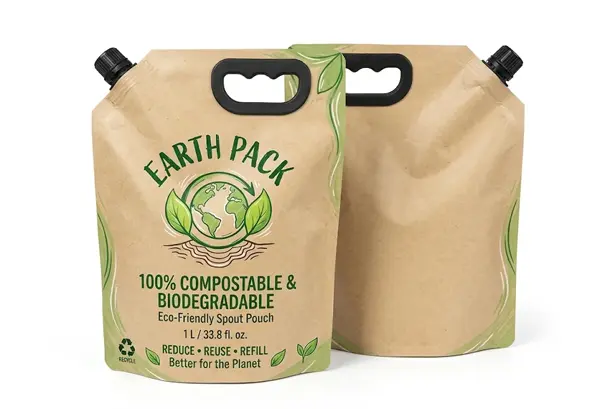
What Are Eco-Friendly Pouches and How Are They Made?
Common Materials Used in Eco-Friendly Pouches
Eco-friendly pouches use a variety of materials, each of which addresses a particular issue. There is only one type of resin used to make films that can be reused. Polyethylene or polypropylene is what it is. So, places that sort things can handle the pouch as a single stream. Being made of PE and MDOPE/PE makes it easy to bend and seal. Our PP-based structure has BOPP/CPP in it, which makes snacks and dry meals stiff, shiny, and clear. Polymers like PLA and PBAT are used as binders that can be broken down by nature. Kraft pouches are made of paper and have a thin layer inside to keep the paper safe. We talk about the thing, how it will be filled, and where it will be sold before we start working on it. Since there isn't a single material that works for all of them.
How We Produce Recyclable Pouches
It changes both the quality of things and the damage they do to the land how they are made. At our plant, we have to print, laminate, seal, make pouches, check for quality, and pack the materials. Our paints are water-based, and we don't use solvents to stick things together. The waste gas from production is cleaned by a system that was brought in from outside the country. When printing with rotogravure, you can use up to 11 colors. Digital printing is better for short runs. There are 49 machines that can convert, 7 lines of printers, and 6 machines that can laminate here. From the film to the last pouch, this means that one group is in charge of everything. This is important for eco-friendly pouches because sets that don't have to be thrown away as often mean the process is steady. For every batch that is turned down, there is less film waste.
Quality Checks That Protect Performance
Green stuff won't work if the pouch opens or leaks. You should look at how strong the seal is, how well it blocks out light, how well it stops leaks, and whether it meets food contact standards. Each batch is checked to make sure the seal is strong, the cover works, and the materials can be used together. ISO 9001 and BRC are two of the certifications we have. We can also help you stay up to date on FDA food-contact rules and SGS testing. It's also important to be able to track. Let's say a customer complains or the store is checked out. You don't have to guess to answer the question. You can use the records instead. If a business sells eco-friendly pouches, they should show you these papers before you buy a lot from them.
Key Benefits of Eco-Friendly Pouches for Sustainable Packaging
Less Material, Lower Weight, Smaller Footprint
Benefits of eco-friendly pouches use less stuff, which is a good thing. To hold the same amount of good, an open pouch needs a lot less stuff than a rigid jar, tub, or can. It weighs less and fits more units on each box when there is less stuff on it. This could help you save money on shipping and storage. There is a lot of trash, that much is clear. In 2018, plastics made up about 35.7 million tons, or 12.2% of city solid waste. A group called the Ellen MacArthur Foundation said that plastic packaging is worth 95% less after just one short use. You can keep that value alive by making packs that can be used more than once.
Barrier Protection That Reduces Product Waste
Eco-friendly pouches only cut down on waste if they keep food fresh. It smells, wet, bright, and oxygenated food goes bad faster, so the barrier tells us if the pouch keeps the food safe. What makes mono-material films work is the thin border layer they need to be as efficient as foil laminates. Our eco-friendly stand-up pouches are made from MDO-PE film that has been treated with EVOH or AlOx to make it eco-friendly. Also, they have to let less than 0.1 cc/m² of air through every day. If you make pet food or more than 5 kg, you can choose stronger forms. If you roast coffee, you can add a one-way degassing valve. The shelf life of your own product will depend on the fat, wetness, and fill temperature, so you should still test it.
Branding and Documentation for B2B Buyers
Pouches have a lot of room to print. Our rotogravure lines can print in eleven colors, and the surface can be shiny, matte, or soft touch. You can buy extras like zippers that can be reused, tear cuts, and windows that are clear or fogged. You can also get holes so that store displays can hang from them. People in business only care about half of how much a name is worth. The sustainability and procurement teams need paper work that includes test results, structure breakdowns, and certifications that say something can touch food. Regulation (EU) 2025/40 will only allow 100 mg/kg of lead, cadmium, mercury, and hexavalent chromium to be in packing after August 12, 2026. When you send something to Europe, make sure that all of your providers give you the same report. We are more likely to accept eco-friendly pouches that have clear records.
Eco-Friendly Pouches Compared With Other Sustainable Packaging Options
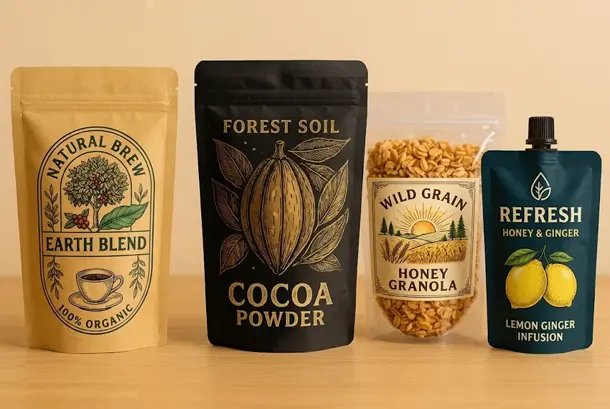
Recyclable Mono-Material Pouches
Among eco-friendly pouches, recyclable mono-material designs suit markets that already collect flexible film. These work best in stores that already collect flexible film. The code for our PE structures is 4, and the code for our PP structures is 5. In the US, many grocery stores have bins where you can put clean, dry polyethylene film. In some cities, you can also leave it at the curb. For claims, that gap is important. This is what the FTC Green Guides say: marketers shouldn't say that something can be used more than once unless enough people can get to recycling centers. The Guides say that number should be at least 60% of customers. Before you put "recycle" on a pack, check the APR Design Guide and see if it's possible to get to.
Compostable and Paper-Based Pouches
The polyesters PLA and PBAT are used to make pouches that will break down on their own. It's only when certain things happen that they break down. A set of rules called ASTM D6400 tells us what kinds of plastics can be broken down in public and business spaces. It is not a good idea to mix compostable pouches and plastic film, and many places in the US do not have the right tools to handle them. Of course, kraft pouches don't really come from natural materials. Instead, most of them have a thin layer of polymer that keeps things inside. You might not be able to say as much about reusing and composting paper this way. It is not clear when or how something will break down when it is called biodegradable. If you work in food service and want to use these eco-friendly pouches instead of film for collecting food waste, they are the best choice.
A Side-by-Side Way to Decide
If you want to compare them, you should pick the same things for each one. First, look at the barrier and how long it will last. Then, see how complicated the material is, how well it follows the rules, how much it costs, how many you need to order, and how to get rid of it. If you need to protect your product from film, it makes sense to use pouches made of a single material. Films don't last long and can be composted nearby, so it makes sense to use them. Paper makes sense when looks are important, and what you say about a polymer layer is true. So that you have a written structure, please ask each source to write down the layer types and rough amounts. If a brand saves this record, it can quickly answer a store or government servant. When you compare these two things, eco-friendly pouches use facts instead of catchphrases.
Choosing the Best Eco-Friendly Pouch for Different Products
Food, Coffee, and Pet Food
Snacks and foods that are dry should have strong seals that keep air and water out. It should also be possible to put the seals back on. Clear and stiff PP-based BOPP/CPP is what we use. It works well for coffee, snacks, and dry foods. Coffee and tea keep smells inside and block light. When coffee is ground up, it needs a valve that lets CO2 leave but keeps air out. There needs to be bigger pet food that can handle being poked and smells that don't mix. Our stand-up pouches are long-lasting and strong enough to hold 5 kg or more. When you open these buttons, food and treats stay fresh. When a multi-layer plastic is changed, eco-friendly pouches for these products should be filled with these things and checked to see how long they will last.
Personal Care, Frozen Foods, and Household Refills
Things that aren't food and frozen goods fill different needs. Many beauty products, bath salts, detergents, and cleaning items need to be able to mix with other chemicals without any problems. When cleaners and acidic items hit PE resins that are immune to them, they don't cause stress cracks. Any pouch with a mouth can hold liquids or almost liquids. It's important for refill formats to have the right spout position and cap fit so that they don't leak or dispense too much. When foods get cold, they need to be able to bend. PE films can be used for this, but it should be tried out in the freezer first to be sure. Please don't guess; just tell us the formula, the temperature at which to fill it, and the conditions under which to store it, and we'll answer you. These eco-friendly pouches must first pass chemical and leak tests.
Pouch Format and Closure Options
This includes how quickly it can be filled, how it looks on the shelf, how it can be moved, and whether it can be recycled. Our pouches have a flat bottom, a spout, and a lock on three sides. Stand-up and flat bottom types make it easy to see what's inside in stores. Samples and other small items stay inside three-side seal pouches. Pull-tabs let you open the pouch more than once to get food, coffee, or treats for your pet. With the holes in the back, it's easy to show off in stores. Spouts don't leak, but you should check the leak resistance, torque, and how well the cap fits. For eco-friendly pouches to be recycled, they need a closing that can be used again. That's why we sell reusable zippers and walk you through all the different ways they can be used. Please explain what your closing line is. We will make sure that it works with ours before we start making it.
How to Evaluate an Eco-Friendly Pouch Supplier or Manufacturer
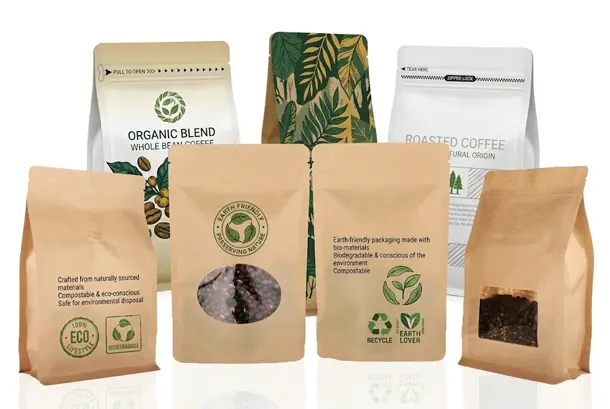
Prepare a Clear Specification
You need a good outline to get a good price. You should tell the seller what you want to sell, how many pouches you need, what kind of barrier you need, how you want the pouches to close, what kind of artwork you want on them, how much you want to sell each year, and which markets you want to sell to. We can help you choose between PE and PP, pick a barrier layer, and guess the MOQ and lead time once we know those things. Small runs work better for tests. We only charge for 500 to 20,000 pieces when you order from us. This is great for brands that are putting out new tastes or sizes because the shipping time is only 7 to 10 days. It takes 15 to 20 days with this method, but it can handle more work. Sending important things by air can take 4–5 days. When the job is clear, eco-friendly pouch prices are always right from the start.
Ask for Proof, Not Promises
If a supplier doesn't have records, their claims don't mean much. Before you approve an order, ask for these three things:
- A drawing of the whole thing with a list of every layer, color, glue, cover, and kind of resin. You can find out from this record whether the pouch is made of mono-PE or mono-PP, how much protection it has, and how it can be recycled. Mark it down and ask for a new copy every time the size or art changes.
- Proof of tests and following the rules, like food-contact sheets, heavy-metal statements, and reports from a third party. ISO 9001 and BRC are two of the certifications we have. We can also help you stay up to date on FDA food-contact rules and SGS testing. Check that each file is a real structure of the one you want to buy and not one that looks like it was used for something else. Also, compare the dates and batch numbers.
- Proof of production, like an approved sample; tests for leaks and seals; records of batch inspections; and a walk-around on the filling line. There are six laminating machines, seven printing lines, and 49 tools that can turn film into other forms. Before each batch goes out, it is checked over. Every year after the first order, the program needs to run again, so capacity is important. This is because each new order needs to be the same size as the last one.
Your quality, law, and environmental teams can all see the same information thanks to these records.
A Practical Checklist Before You Order
Before you sign, read through a short list. To begin, find out if the pouch can be recycled, composted, biodegraded, bio-based, paper-based, or a mix of these. Write down the exact word you see. Next, test the barrier, seal, and ability to keep holes out in real life. Talk about what you need to do to finish, print, and throw away the result. You should also look at the unit price, lead time, tooling, MOQ, and sampling costs from a business point of view. Before you sell something to someone in another country, make sure you know how to ship it, how to palletize it, and the Incoterms. The pouches are sent in boxes that are made for export. The boxes are put on cars and sent by courier, ship, or air. They should also read the text on the product pages about how to throw away the items to make sure that the eco-friendly pouches are what they say they are.
Conclusion
When the structure, the product, and the way of throwing them away all work together, 100% recyclabe pouch are at their best. A single green label doesn't always tell the whole story. To show this, we looked at eco-friendly films (mono-PE and mono-PP), plastics that can be broken down, and paper pouches. The biggest advantages are that you use less paper, send things lighter, add protective layers, and print on things that can bend. But it's important to check each barrier claim to see how long it lasts. Compostable pouches must only be handled in certain places. On the other hand, you have to pick up recyclable pouches locally and make them from the right resins. If you want to make something cheap or that can be recycled, you should pick a style and closing that makes sense for that type of thing. Structure, rights, and batch tracking should all be written down by the provider. They should use tests on samples and lines to prove that they can do what they say they can do. Before they place an order, people who buy things should look at these things. This will make claims, loss, and expensive reorders less likely.
FAQ
1. Can eco-friendly pouches protect food as well as foil laminates?
They can if the item works with the framework. A thin layer of EVOH or AlOx is often added to films made of only one material to keep air and water out. O2 gets through less than 0.1 cc/m³/day in our stand-up pouches that can be refilled. Before you send the product to us for approval, make sure you know how long it will last.
2. Are compostable pouches better than recyclable ones?
In every case, neither side comes out on top. Pouches that can be broken down in the soil are needed, but they are hard to find in many parts of the US. Eco-friendly pouches made of a single material that can be recycled can be used in places that collect film. Before you say something is recyclable, you should always look at the sticker.
3. What are your MOQ and lead times?
You can buy anywhere from 500 to 20,000 things at a time. A rotogravure print takes fifteen to twenty days, while a digital print only takes seven to ten days. Sending important things by air can take 4–5 days. We'll look into the time frame after you tell us about yourself.
4. How should I evaluate a manufacturer of eco-friendly pouches?
Ask for a structure breakdown, documents that let you handle food, test reports, and the ability to keep track of each batch before you place a large order. Also, check out the filling line. There are three groups that have said that we are good: ISO 9001, BRC, and SGS.
Request Custom Eco-Friendly Pouches From Guoshengli Packaging
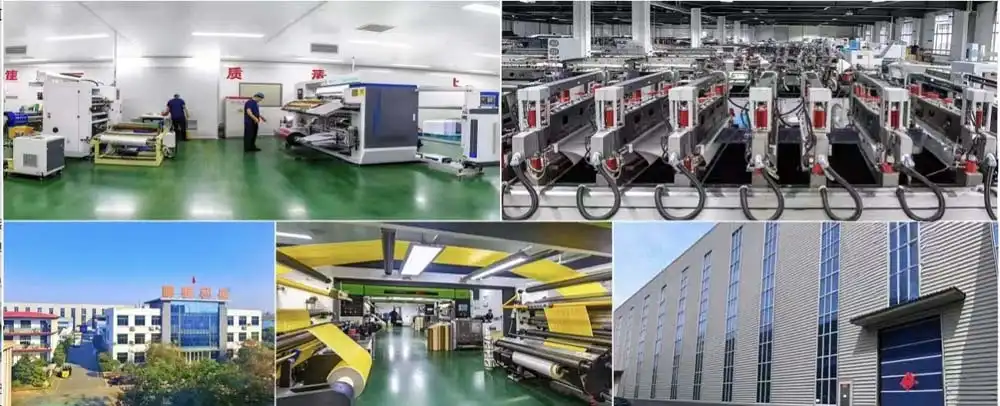
Guoshengli Packaging in China has been making eco-friendly pouches for more than 25 years. Seven print lines and 49 converting machines make up the business. Tell us what you want to sell, how full you want the pouch to be, and what kind of people you want to reach. Then we'll give you a plan and make models. To get free samples and a price quote for eco-friendly stand-up pouches, email sales@guoshengpacking.com or go to guoshengpack.com.
References
1. U.S. Environmental Protection Agency, Advancing Sustainable Materials Management: 2018 Fact Sheet, 2020.
2. Ellen MacArthur Foundation, The New Plastics Economy: Rethinking the Future of Plastics, 2016.
3. U.S. Federal Trade Commission, Guides for the Use of Environmental Marketing Claims (Green Guides), 2012.
4. European Parliament and Council of the European Union, Regulation (EU) 2025/40 on Packaging and Packaging Waste, Official Journal of the European Union, 2025.
5. Association of Plastic Recyclers, APR Design® Guide for Plastics Recyclability, 2023.
6. ASTM International, ASTM D6400: Standard Specification for Labeling of Plastics Designed to be Aerobically Composted in Municipal or Industrial Facilities, 2021.