- English
- French
- German
- Portuguese
- Spanish
- Russian
- Japanese
- Korean
- Arabic
- Greek
- German
- Turkish
- Italian
- Danish
- Romanian
- Indonesian
- Czech
- Afrikaans
- Swedish
- Polish
- Basque
- Catalan
- Esperanto
- Hindi
- Lao
- Albanian
- Amharic
- Armenian
- Azerbaijani
- Belarusian
- Bengali
- Bosnian
- Bulgarian
- Cebuano
- Chichewa
- Corsican
- Croatian
- Dutch
- Estonian
- Filipino
- Finnish
- Frisian
- Galician
- Georgian
- Gujarati
- Haitian
- Hausa
- Hawaiian
- Hebrew
- Hmong
- Hungarian
- Icelandic
- Igbo
- Javanese
- Kannada
- Kazakh
- Khmer
- Kurdish
- Kyrgyz
- Latin
- Latvian
- Lithuanian
- Luxembou..
- Macedonian
- Malagasy
- Malay
- Malayalam
- Maltese
- Maori
- Marathi
- Mongolian
- Burmese
- Nepali
- Norwegian
- Pashto
- Persian
- Punjabi
- Serbian
- Sesotho
- Sinhala
- Slovak
- Slovenian
- Somali
- Samoan
- Scots Gaelic
- Shona
- Sindhi
- Sundanese
- Swahili
- Tajik
- Tamil
- Telugu
- Thai
- Ukrainian
- Urdu
- Uzbek
- Vietnamese
- Welsh
- Xhosa
- Yiddish
- Yoruba
- Zulu

Recyclable pouches are flexible food packages made from one polymer family, usually polyethylene (PE) or polypropylene (PP). Recyclers can sort and process them more easily than multi-material laminates. They belong to the wider group of eco-friendly pouches, and they work best when the structure, barrier, and local collection access match the product. At Guoshengli Packaging, we make recyclable pouches and recyclable stand up pouches for food, pet food, and coffee brands. This guide explains how they are made, how they compare with other formats, and how to source them with confidence.
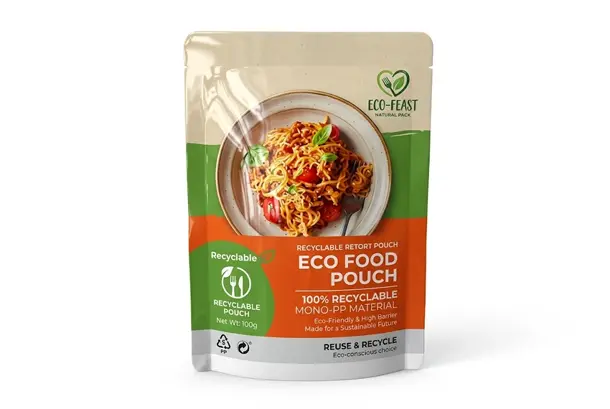
What Recyclable Pouches Are and How We Make Eco-Friendly Pouches
Mono-Material Structure Explained
A recyclable bag doesn't include plastic, foil, and paper layered one on top of another. The film, glue, ink system and zipper are all of the same polymer family, not different. Regular laminates have layers glued together which are difficult to separate for recyclers. It sees just one resin in a mono-PE or mono-PP pouch. Resin codes may assist with this : Number 4 is PE-LD , number 5 is PP . But reuse does not always work. Coatings, inks, adhesives, seals and the way individuals in the target market collect things are all part of the picture. For this reason, each bag is seen by us to be more than a film. Our eco-friendly pouches are honest on paper like this, and practical on the line where they fill.
PE-Based and PP-Based Options
There are two primary types of buildings. For the PE-based variant, MDOPE PE film is employed. It doesn't set hard and makes a good seal. It may be used with stand-up and spouted boxes with thin and thick liquids. If PP is specified, BOPP/CPP film is utilized. That’s wonderful for coffee, nibbles and dry meals since it makes things tougher, glossier and lighter.” The two structures may be designed to function with either PE or PP recycling streams . They may both feature holes for hanging stuff, zippers, windows and rip notches. They are built from polymer groups that people who recycle know already, so they are eco-friendly pouches any way. Pet food or powder packaged in PE tends to feel softer and be more difficult to break. If it is the way it looks on the shelf that sells it, PP makes it appear better. People may view the items and the way they are wrapped and can choose the things they desire.
The Production Process
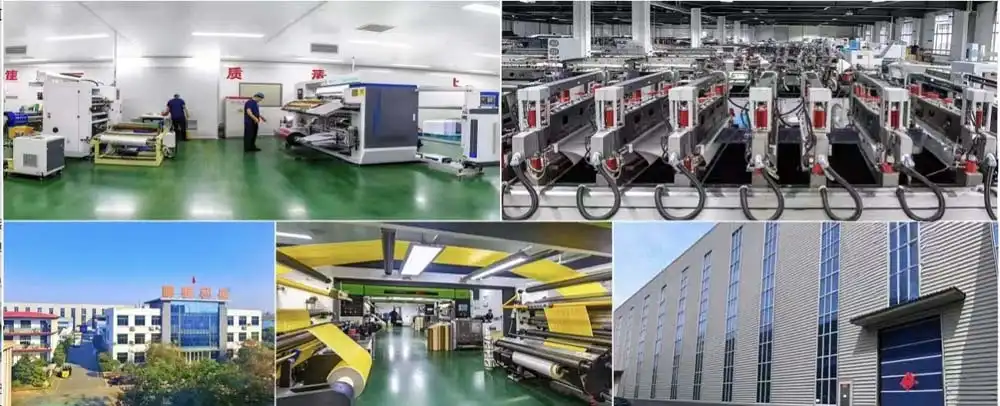
We usually do it in this order: prepare the materials, print, laminating without solvents, build the bag, check, and pack. We print in rotogravure up to eleven colors. For modest batches we use a computer press. We have 49 turning machines, 6 sealing machines and 7 printing lines in our firm, so we can do little orders, and also big orders that come back again and again. We consider the size, strength, print quality and leakage of the seals. We also examine how well they hold difficult items within. Each batch is examined before being sent in cartons on pallets. These processes guaranty that the eco-friendly pouches are same, whether it is the first purchase or the tenth.
Benefits and Food-Safety Performance of Eco-Friendly Pouches
Benefits of Eco-Friendly Pouches for Food Brands
Bags that are good for the environment are good for you in many places at once. For people who buy things in shops, an all-one-material layout helps them understand the story better and helps to meet recycling goals. Flexible film is lighter than a rigid tin or jar when it is empty. This means it takes up less room in freight and warehouses. No matter what you say about carbon, lifecycle statistics should still back it up. When brands print on the film, they have a lot of room to show off. The pack is easy to use at home because it has zippers and tear notches. Businesses that buy from other businesses can follow the store's rules about being environmentally friendly by using a bag made of a single material. This can also make it easier when packing needs change. If you want to compare each benefit, you should use measured data instead of assumptions.
Are Recyclable Pouches Waterproof and Food Safe?
The only thing that makes a bag waterproof are its seals, closing, and fittings. Most PE and PP films don't let water through. Make sure the seals on your filling machine are strong and won't leak before you put low- or high-moisture foods in it. EVOH or AlOx barrier coatings that aren't too thick can be used to make benefits of eco-friendly pouches for foods that don't like oxygen, like coffee, roasted nuts, and meat snacks. You can add a coffee degassing valve that only lets air out one way if you want to. It's our goal for some high-barrier buildings to let less than 0.1 cc/m²/day of oxygen and less than 0.1 g/m²/day of water vapor pass through them. Under 21 CFR 177.1520, the FDA controls polyolefins that come into contact with food in the United States. FDA, BRC, ISO 9001, and SGS have all approved our work. Always test your real goods for seal, burst, drop, and shelf life.
Recyclable Stand Up Pouches in Daily Use
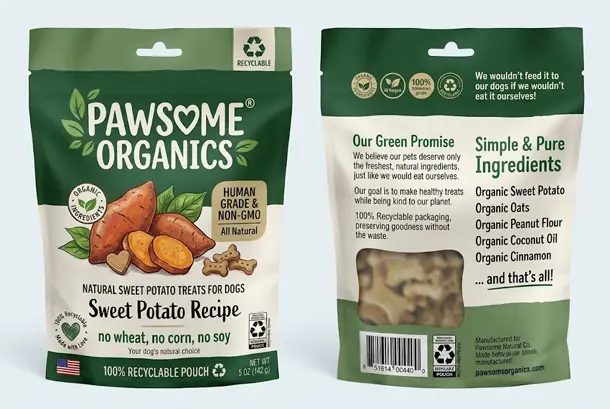
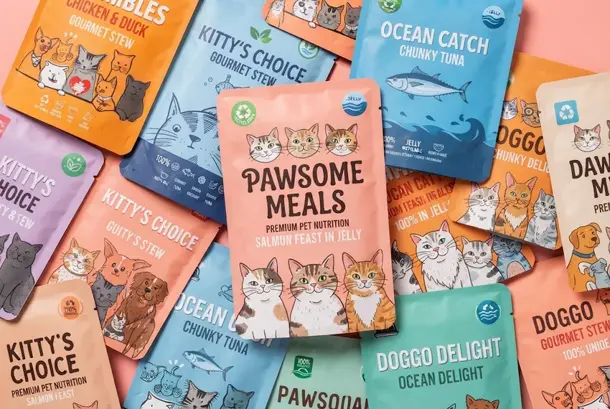
A stand-up bag made from recycled materials has a strong bottom that keeps the pack in place on a shelf. An important eco-friendly pouch that many people want is this one. Our MDO-PE versions can have a recyclable zipper that keeps nuts, dog food, or snacks fresh after they've been opened, as well as a hole for hanging so they can be put on a peg. For pet food, big containers that weigh 5 kg or more and are made to last are used because kibble is rough. Some buildings can handle hot water up to 90°C when they are filled. Shoppers can use screens to see what's for sale. It takes 7–10 days to print online and 15–20 days to rotogravure. Orders that need to be sent quickly can be sent by air in as little as 4–5 days. They can be used for both small runs and big launches because they are recyclable and easy to open.
Recyclable Pouches vs. Other Eco-Friendly Pouch Options
Compostable and Biodegradable Pouches
There are certain conditions under which compostable bags will only break down. They shouldn't put them in bins for recycling plastic because they might get dirty the PE stream. You might find a biodegradable pouch in a trash can even if you live in a place that doesn't have industrial composting. There is a lot more that the word "biodegradable" can mean. Without a named standard and test, it's hard for people to say much about it. They don't use compost sites for pouches that can be recycled; instead, they use methods for gathering and recycling. For projects that have a real way to waste, we also have PLA and PBAT choices that can be broken down. The best way to find eco-friendly pouches is to look for them at the end of their useful lives.
Paper and Reusable Pouches
Paper bags look natural and are made from materials that can be used again and again. Still, most of them need a plastic or sealing layer on the inside to keep water and grease out. This layer can make it harder to recycle. Eco-friendly paper pouches can still hold dry items that don't need to be kept for a long time. We can put the pros and cons next to each other because we make Kraft paper bags. It's good to use reusable bags when you have closed-loop systems in place, like refill programs. They need to be made of durable materials, be easy to clean, and have a way to return items that many food brands don't have yet. Most of the time, brands that sell snacks, coffee, or pet food in shops should use a pouch made of a single material that can be returned. If the company story, platform, and system allow it, paper or a format that can be used more than once may win.
Conventional Multilayer Laminates
In multilayer laminates, PET, metal foil, and PE are often mixed together. They keep food safe, but most places won't let you recycle them because the layers are stuck together. The Ellen MacArthur Foundation found in 2016 that only 14% of plastic packaging in the world was recycled. Mixed-material design is one issue that is known to be a problem. In 2018, 35.7 million tons of plastic were made, and 8.7% of that was recovered, according to the US Environmental Protection Agency. If you switch to film made of only one element, those numbers will still be wrong, but there will be one less design problem. I'm not sure if the new eco-friendly pouches will work just as well as the old ones now that things have changed. We check the structure to see how well it transfers air and wetness, and then we show you the results and let you decide.
How to Choose, Customize, and Source Eco-Friendly Pouches
Choosing the Right Pouch Format
The first thing you need to know is the product's fill weight, volume, fill temperature, filling equipment, and how long you want it to last. Then match the style. It's easy to see what's inside a bag that stands up. A pouch with a flat bottom stays in the shape of a pet food or coffee box. Pouches with three sides that seal well are good for sachets and flat packs. Pouch with a spout works better for sauces and liquids, while a pouch with a side gusset works better for larger dry goods. Next, take a look at the parts. Reusing things with zippers, tears, valves, windows, and hanging holes costs more and takes longer, so only keep the ones your customer will use. In the end, think about how dangerous the product is and compare it to the needs for the barrier, the strength of the seal, and the resistance to punctures. People who want to buy something often save a sampling round before they ask for a quote. To make good eco-friendly pouches, you need to know what you want.
Customization for B2B Food Brands
To make things fit your needs, you can change the print, finish, close, seal width, film thickness, and bag size. We can print with a rotogravure machine or a digital press, and the finish can be glossy, matte, or soft-touch. Digital printing makes it easy to print in small amounts and start with more than one flavor. For some jobs, the least amount of items that need to be ordered is anywhere from 500 to 20,000. We promise that every order will have the minimum amount. Before we print, we check the dielines to make sure that the custom eco-friendly pouches have enough room for barcodes, nutrition panels, batch codes, and dates. After going over the needs and picking out the structure, the standard steps are to approve the artwork, make models, try out the filling, and then make a lot of them. You should test the samples on your real tools because that's where issues with handling and sealing show up first. Owner-brand and OEM teams can both use the steps.
Evaluating a Supplier or Manufacturer
It doesn't matter how low the quote is if the business can't do the same good job again. Find out if you're working with a dealer, a converter, or a joint maker when you're looking for eco-friendly pouches, etc. Ask for them to get the full material structure, barrier data, compliance documents, recyclability assessment, minimum order quantity (MOQ), sampling terms, wait times, and ways to make a quality claim. Check to see how much experience they have working with food and what paperwork they have to export. We've been making flexible packaging for over 25 years. We print, seal, and change things ourselves too. We get jobs from people in North America, Europe, and the Asia-Pacific area. For ISO 9001, BRC, FDA, and SGS, we can show you test results if you ask. Many times, a quick video call or tour of the plant will let you know right away if a supplier can handle repeat business.
Claims, Compliance, and Limits of Eco-Friendly Pouches
Regulations Behind Recyclable Claims
The rules are getting stricter. This is the EU Packaging and Packaging Waste Regulation, or Regulation (EU) 2025/40. It will go into force on August 12, 2026. It says that in one package, there can't be more than 100 mg/kg of lead, cadmium, mercury, or hexavalent chromium. By 2030, packaging must be grade A, B, or C in order to be recovered. It is against the FTC Green Guides (16 CFR Part 260) in the US for an item to say that it is reusable unless most people who buy the item can get to a recycle center. Some states have passed laws that make packing companies more responsible. These states are California, Colorado, Oregon, Maine, and Minnesota. When we label eco-friendly pouches, we discuss their structure and ask buyers to check that every claim is true for the market they are going to before printing.
Challenges and Limits to Plan For
A pouch might be made to be used more than once, but people in the area might not be able to get it. Most flexible film doesn't go in US roadside trash cans. People usually bring clean PE film to places where stores take it back. The Recycling Partnership's 2020 State of Recycling report shows that gaps in access and system capacity are growing. Some foods have a high barrier that might need extra layers or coatings. Also, film made of one material might not work as well as foil as a barrier, so test data is needed for each case. It's also possible that the amount and price of recycled-content film will be limited. Even for the most eco-friendly pouches, picking them up in person is still the best choice. Don't use vague words like "fully green" or "zero impact." Instead, say something like "recyclable where facilities exist" and tell people how to bring them in. This is a better way to protect your brand than big slogans.
Our Evidence Chain for Greener Production
People are interested in both what a pouch holds and how it was made more and more. To laminate, we use glue that doesn't contain solvents, and to print, we use colors that are based on water. To keep emissions low while we're making the goods, we use an imported RTO exhaust gas system. Every sale can be tracked, from the raw materials to the finished goods. We can help with ISO 9001, BRC food packaging, FDA compliance, and SGS tests so that your quality team can look them over. Aside from that, we use less energy when we make things and take care of trash to lower our carbon footprint. These records are important for when a store checks out your supply chain. We can talk about what files, like structure sheets and test results, your market needs for your 100% Recyclabe Pouch during the sample stage.
Conclusion
Food packages that can be bent are called recyclable pouches. They are usually made from a single polymer family, like mono-PE or mono-PP. These laminates are easier to recycle than foil-based ones because they don't use foil. This study showed that the results depend on the structure of the film, the covering layer, the zipper, the ink, and how easily the film can be collected nearby. Eco-friendly pouches that test well for seal, oxygen, and moisture resistance keep food safe. The main way these are different from compostable, paper, and reusable formats is how they are thrown away. For sourcing to work, quality methods and output that can be done over and over again must be well-documented. Which products are chosen depend on what tools are accessible and what goods are needed. The EU PPWR and the FTC Green Guides say that claims that something can be recycled must be backed up by proof and be true in the area. The easy lesson here is to first pick a structure that keeps the food safe, and then only say that it can be recycled if you have proof.
FAQ
1. Are eco-friendly pouches suitable for food packaging?
Yes, as long as the glues, films, and inks are safe to use with food and pass tests for barrier, seal, and shelf life.
2. Can I use these pouches on my existing filling line?
Our bags don't need to be changed much to work with most HFFS and VFFS lines. Yet, we still believe you should test it out with small amounts.
3. What are your MOQ and lead time?
The MOQ for some projects is 500 pieces, and that number is always met for every order. To ship something, it takes digital (7–10 days), rotogravure (15–20 days), or air (4–5 days).
4. Do they match the shelf life of foil packaging?
Barrier is made in a certain way. We use coats made of EVOH or AlOx that can be reused, and we check the oxygen and wetness information to make sure it's right. Compare what you got with what you knew before you started.
Request a Quote for Custom Eco-Friendly Pouches
Just send an email to sales@guoshengpacking.com with the type of product, fill weight, bag size, target market, and expected number to get a price from Guoshengli Packaging. We've been making eco-friendly pouches for 25 years, so we can help you choose a good mono-PE or mono-PP structure, send you free samples, and share test reports if you ask. Visit guoshengpack.com to learn more about our recyclable stand up pouches, our low minimum order quantities, and how we can help you with private label or bulk orders.
References
1. Regulation (EU) 2025/40 on Packaging and Packaging Waste, Official Journal of the European Union, 2025
2. Guides for the Use of Environmental Marketing Claims (Green Guides), U.S. Federal Trade Commission, 2012
3. The New Plastics Economy: Rethinking the Future of Plastics, Ellen MacArthur Foundation, 2016
4. Advancing Sustainable Materials Management: 2018 Fact Sheet, U.S. Environmental Protection Agency, 2020
5. 2020 State of Recycling Report, The Recycling Partnership, 2020
6. 21 CFR Part 177 – Indirect Food Additives: Polymers, U.S. Food and Drug Administration, 2024