- English
- French
- German
- Portuguese
- Spanish
- Russian
- Japanese
- Korean
- Arabic
- Greek
- German
- Turkish
- Italian
- Danish
- Romanian
- Indonesian
- Czech
- Afrikaans
- Swedish
- Polish
- Basque
- Catalan
- Esperanto
- Hindi
- Lao
- Albanian
- Amharic
- Armenian
- Azerbaijani
- Belarusian
- Bengali
- Bosnian
- Bulgarian
- Cebuano
- Chichewa
- Corsican
- Croatian
- Dutch
- Estonian
- Filipino
- Finnish
- Frisian
- Galician
- Georgian
- Gujarati
- Haitian
- Hausa
- Hawaiian
- Hebrew
- Hmong
- Hungarian
- Icelandic
- Igbo
- Javanese
- Kannada
- Kazakh
- Khmer
- Kurdish
- Kyrgyz
- Latin
- Latvian
- Lithuanian
- Luxembou..
- Macedonian
- Malagasy
- Malay
- Malayalam
- Maltese
- Maori
- Marathi
- Mongolian
- Burmese
- Nepali
- Norwegian
- Pashto
- Persian
- Punjabi
- Serbian
- Sesotho
- Sinhala
- Slovak
- Slovenian
- Somali
- Samoan
- Scots Gaelic
- Shona
- Sindhi
- Sundanese
- Swahili
- Tajik
- Tamil
- Telugu
- Thai
- Ukrainian
- Urdu
- Uzbek
- Vietnamese
- Welsh
- Xhosa
- Yiddish
- Yoruba
- Zulu

Brands in 2026 need to know that roll stock film works best when it is chosen as part of a complete packaging system, not bought by price per roll. You need the correct structure to preserve the product, run consistently from batch to batch and not clog your VFFS or HFFS equipment. We care about oxygen and moisture barrier, coefficient of friction, seal strength and width tolerance. This guide outlines what to look for, how to compare providers and how we at Guoshengli Packaging help engineers who desire consistent, proven outcomes.
What Is Roll Stock Film and How Does It Run on Your Line?
How Roll Stock Film Differs from Pouches and Other Films?
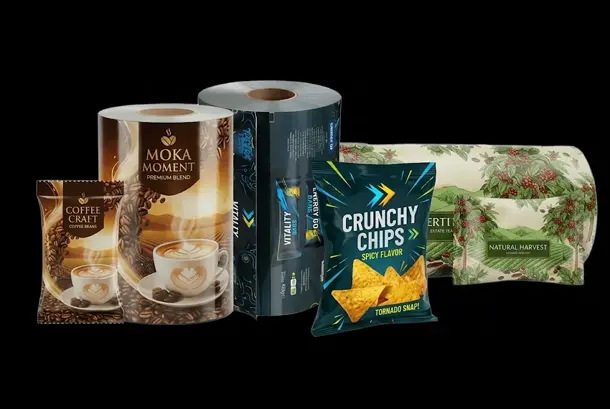
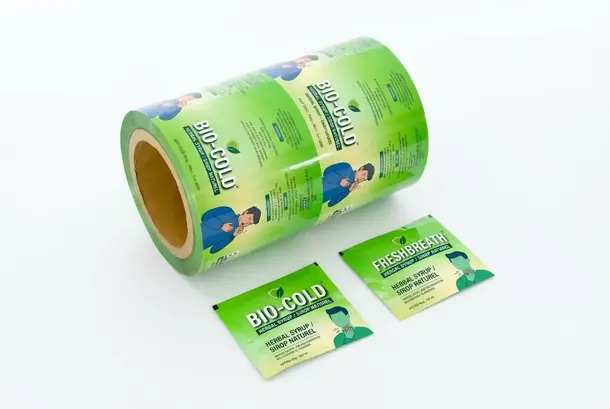
Roll stock film is a long piece of flexible film wound around a 3- or 6-inch core. It is unwound, shaped into a tube or pocket, filled, sealed, and cut all in one pass by a VFFS or HFFS machine. Since the pouches come already formed, the line only needs to fill them and seal them. Stretch film and shrink film are not the same. Instead of making a main food pack, they wrap or bundle the items. A lot of buyers also call roll stock film "FFS film" or "form-fill-seal film." These words mean the same thing, but not all films on a roll can be used on a form-fill-seal machine.
How We Make Roll Stock Film?
First, base films like PET, BOPP, nylon, and PE are made. The next step is printing, which can be done digitally or with rotogravure in up to 11 colors. Glues or extrusion processes are used to laminate the layers together, and the bond gets stronger after curing. The wide web is cut to the width of the roll by slitting, and the roll is then wound up again. The factory where our roll stock film comes from has 49 converting machines, 7 printing lines, and 6 laminating lines. Any mistake at one stage will show up later as a line jam or leak. That's why each stage has its own checks.
Why Web Tension, Winding, and Width Matter?
The roll is the only thing that can make your machine run. Telescoping or edge weaving happens when the wrapping isn't even. Wrinkles and bad tracking are caused by web tension that isn't stable. We make sure that the web width is always within +/-1 mm, and we keep the coefficient of friction (COF) between 0.2 and 0.3 to keep the forming collar from having to work too hard. Sizes range from 200 mm to 1200 mm, and our high-barrier grades go as thin as 50 mm. Before we give you a quote, you send us your core size, roll diameter, and machine speed, and we'll make sure they are compatible. This step keeps many start-up problems from happening.
Why Roll Stock Film Matters to Brands in 2026
Judge Cost by the Sellable Pack
Most of the real cost is hidden by the price per roll. There is a lot of waste, downtime, leaky packs, freight, and things that are turned down. Price changes are also made by rollstock film. Roll stock film means no inventory of completed bags and minimal trim waste from precise cutting. Each unit costs 30-50% less than a pre-formed case. How much you save depends on the volume, structure and size of the pack. A cost per sellable pack is an excellent approach to do a comparison. If a cheaper roll requires two more stops every shift, the savings are rapidly lost. Always check estimates with scrap rate and change over time.
Shelf Life Depends on Barrier and Seal
Shelf life depends on how well the barrier, seal, and filling conditions work together. Oxygen makes the tastes in nuts and coffee go bad. Crisps and cake powders get softer when they get wet. It is light that makes fat burn faster and fades printed colors. The oxygen transfer rate (OTR) of our barrier grades is less than 1 cc/m²/24h, and the OTR of our AlOx/SiOx film is less than 0.5 cc/m²/day. For oxygen, these numbers are measured with ASTM D3985, and for water vapor, they are measured with ASTM F1249. Because the seals must be at least 3.0 N/15 mm strong for every batch, even if the film tests well, it will still fail if they leak.
What Buyers Expect from Suppliers in 2026
Buyers want paperwork along with film these days. The food plants in the US need technical data sheets, food-contact paperwork, and the ability to track batches. It is our pleasure to say that we are certified by ISO 9001, BRC, FDA, and SGS. We also do migration tests for direct food contact. Gas chromatography also shows that there are no more than 10 mg/m² of residual solvents. Engineers want specifics that can be measured, not generalizations. In the case of color, we keep Delta E below 2.0 across all batches. People who buy roll stock film want to put a source on a watchlist if they send out one bad batch.
Roll Stock Film Materials, Barrier Properties, and Format Choices
Laminated Structures and What Each Layer Does
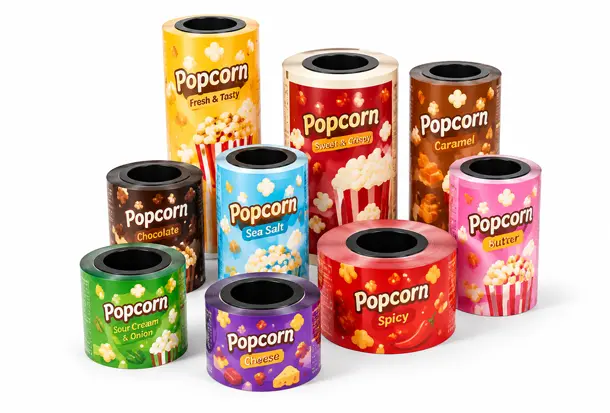
Each layer does its own thing. PET adds stiffness and a face that can be printed on. BOPP makes things clearer and more resistant to water. Nylon makes things less likely to tear. The heat seal layer is made of PE or CPP. EVOH, aluminum foil, metalized PET, or vacuum-deposited AlOx/SiOx can be used as a barrier. We make films that are 50 to 200 microns thick and have 2 to 11 layers. PET/AL/PE, BOPP/VMCPP, PET/NY/PE, PA/PE/LLDPE, PET/VMPET/PE, PET/Foil/PE, PE/PE, and OPP/CPP are all common structures. A one-layer film is cheaper, but it doesn't provide as much of a shield, so foods that are sensitive to air usually need a laminate.
Clear EVOH or Metallized and Foil Barrier?
This option is talked about in almost all expert reviews. EVOH keeps the pack clear so shoppers can see the product inside and makes a strong barrier against oxygen. Its shield weakens when it gets wet, so makers put it between layers of protection. We keep EVOH below 5% by weight in PE or PP designs that can be recycled. It works well for coffee, fatty snacks, and spices because metallicized PET and aluminum foil block light and let very little through. Foil costs more and hides the item. AlOx/SiOx coatings are another choice for clear packs that don't need EVOH. Once we know about the goods, the shelf life goal, and the sales route, we suggest a structure.
Rollstock vs. Pre-Made Pouches
Roll stock film works well on automated lines that handle a lot of film. You only buy one roll shape, make each pack on a machine, and don't have to store the final bags. You can use pre-made pouches for short runs, lines without a form-fill-seal machine, or shapes that are hard to shape. One example is a stand-up pouch with a zipper. Shrink and stretch films are used for packing, but not for main food packs. The choice is based on volume, investment in equipment, storage, and the design of the pack. A lot of people use both forms. We make roll stock film and finished pouches, so we can compare them to your volumes in a fair way.
How to Choose and Buy the Right Roll Stock Film
Define Your Product and Machine Data
Start by looking at the product itself. What is its fat content, how long it should last, how sensitive it is to oxygen and moisture, and how it should be stored? Our films can be used in a wide range of temperatures, from -18°C to 121°C, for everything from frozen storage to structures that can be sterilized. Then get information about the machine, such as the roll diameter, web width, core size, line speed, closing jaw type and temperature, forming collar size, and registration mark specs. Send us the details of your equipment, and we'll check the COF and stiffness against it. To pick the right roll stock film, think about what it will be used for in real life. For example, snacks, coffee with degassing valves, grains and pasta, frozen foods on PA/PE/LLDPE, baking items with windows, pet food, and cleaning powders on BOPP/PE and so on.
Build a Clear RFQ
A clear RFQ saves weeks of work. When you look for roll stock film overseas, you should include the structure or target barrier, the thickness, the width, the print design and colors, the type of sealant, the annual demand, the destination, and the Incoterms. For technical data sheets, certificates, food-contact declarations, and migration information, you should ask each supplier for them. Compare quotes that meet the same requirements, such as MOQ, tooling, sample lead time, and freight. The rotogravure process takes 15 to 20 days, and digital printing takes 7 to 10 days. It takes four to five days for air freight. With every price, we write down the exact plan.
Validate Before Volume
A lab study doesn't prove a picture by itself. Most of the time, it takes us one to two months to go from analyzing samples to proofing, machine validation, and then batch production. Test the seals on the windows, check for leaks in filled packs, and age the packs in real-life storage and shipping conditions. ASTM F88 talks about the strength of seals, and ASTM D882 talks about their tensile properties. Send us a piece of a film that you already use that works. We look at how it's put together and try to match or beat its results. If a picture doesn't meet the agreed-upon technical standards, we'll make a new one for free.
Common Roll Stock Film Problems, Supplier Support, and 2026 Trends
Fixing Curling, Jamming, and Weak Seals
Most line problems can be traced back to a few reasons. Curling is often caused by uneven tension during lamination or layers that expand at different rates, so check the web tension and give the fabric enough time to age. Jamming usually means that the COF is not between 0.2 and 0.3 or that the winding is not good. That's because the sealant isn't right, the area around the seal is dirty, or the seal window is too small. It has to do with fixing and treating the skin. Surface strain is linked to ink failure, and we want printed surfaces to have more than 38 dyne/cm of it. On every batch, we check the color against the standard and see how well the lamination bonds and seals.
What a Technical Supplier Provides
You can think of a good supplier as more than just a seller. Guoshengli Packaging has been in Linyi, Shandong, for more than 25 years and helps with choosing materials, building structures, reviewing artwork, making samples, and testing machines. With custom printed roll stock film, brands can make different SKUs and versions for different regions that all look the same in terms of color and registration. One structure can sometimes handle more than one product, which lowers the number of SKUs. We have clients in North America, Europe, and the Asia-Pacific region, so export documents and on-time deliveries are something we do all the time. To judge a partner, check how quick they are, how often they do the same thing, how open they are, how much they can do, and how they handle corrected actions.
Trends: Recyclable Mono-Material and Digital Printing
A lot of the 2026 plan is based on making the best use of resources. Only one type of roll stock film, like PE or PP, can be recycled, and MDO processing can make PE films three times more resistant to punctures. Barrier, stiffness, and heat resistance are still not as good as they are with PET-based laminates. Downgauging only saves material if the machine and shelf life stay the same, so make sure before you downgauge. Because it takes 7–10 days to print digitally, it's good for short runs and versioned packs. Tracking is easier with QR codes. Test claims about recycling against the people you want to reach. Our treatment of foreign RTO exhaust gas also lowers pollution from manufacturing.
Conclusion
When engineers think of roll stock film as a system with a product, a structure, a machine, and a supplier, it works well. The barrier that all foods need is made of laminated structures made of PET, BOPP, nylon, PE, EVOH, foil, metalized layers, or AlOx/SiOx coatings. Standard tests like ASTM D3985, F1249, and F88 prove this. Form-fill-seal machines work because the COF, width tolerance, and winding quality are all controlled. For high-volume lines, roll stock film works best, while pre-made bags work best for short or complicated runs. Risk is lower when there is a clear RFQ, machine data, and staged validation. The most accurate way to compare prices is to look at the cost per sellable pack instead of the price per roll. The biggest trends in 2026 will be recyclable mono-material and digital printing.
FAQ
1. What Is Roll Stock Film Used For?
Auto-form-fill-seal machines are used to pack snacks, coffee, tea, dried goods, frozen foods, bakery goods, pet food, and powders in roll stock film. Each pack is made, filled, and sealed by the machine all at once.
2. How Does Roll Stock Film Differ from Pre-Made Pouches?
You only need to fill pre-made pouches that come already formed. When it gets to your machine, roll stock film turns from a flat web into a pack. We say it costs 30–50% less per unit at scale and doesn't need to store finished bags.
3. How Should I Compare Roll Stock Film Suppliers?
Check the technical know-how, documentation, machine assistance, minimum order quantity, wait time, experience with exporting, and total cost per pack that can be sold. Price per roll doesn't show loss or downtime.
Request Your Roll Stock Film Recommendation from Guoshengli Packaging
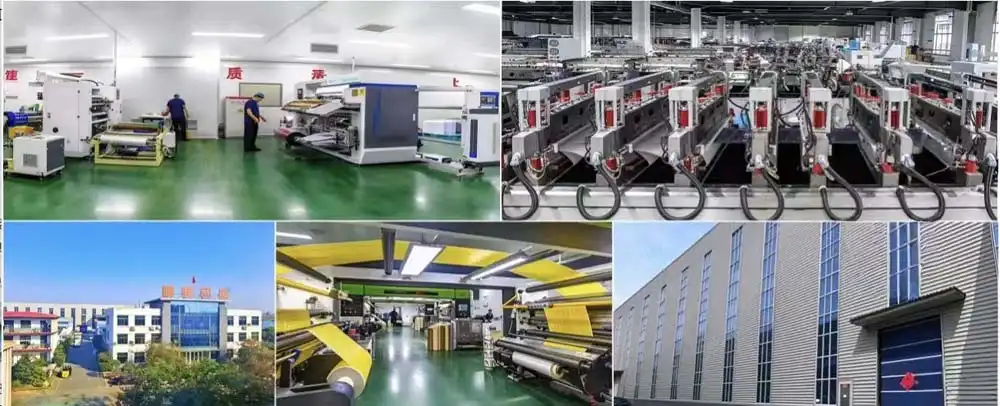
The company Guoshengli Packaging has been a supplier of roll stock film for more than 25 years and has 49 converting machines as well as ISO 9001, BRC, FDA, and SGS certifications. Send sales@guoshengpacking.com the type of product, pack size, barrier goal, machine model, and annual amount you want to buy. For your line, we will suggest a structure, sample roll, or quote. If you want to know more, go to guoshengpack.com.
References
1. Robertson, G. L., Food Packaging: Principles and Practice, CRC Press, 2012
2. ASTM International, ASTM F88/F88M Standard Test Method for Seal Strength of Flexible Barrier Materials, 2021
3. ASTM International, ASTM D3985 Standard Test Method for Oxygen Gas Transmission Rate Through Plastic Film and Sheeting Using a Coulometric Sensor, 2017
4. ASTM International, ASTM F1249 Standard Test Method for Water Vapor Transmission Rate Through Plastic Film and Sheeting Using a Modulated Infrared Sensor, 2020
5. Lange, J. and Wyser, Y., Recent Innovations in Barrier Technologies for Plastic Packaging – a Review, Packaging Technology and Science, 2003
6. Ellen MacArthur Foundation, The New Plastics Economy: Rethinking the Future of Plastics, 2016