- English
- French
- German
- Portuguese
- Spanish
- Russian
- Japanese
- Korean
- Arabic
- Greek
- German
- Turkish
- Italian
- Danish
- Romanian
- Indonesian
- Czech
- Afrikaans
- Swedish
- Polish
- Basque
- Catalan
- Esperanto
- Hindi
- Lao
- Albanian
- Amharic
- Armenian
- Azerbaijani
- Belarusian
- Bengali
- Bosnian
- Bulgarian
- Cebuano
- Chichewa
- Corsican
- Croatian
- Dutch
- Estonian
- Filipino
- Finnish
- Frisian
- Galician
- Georgian
- Gujarati
- Haitian
- Hausa
- Hawaiian
- Hebrew
- Hmong
- Hungarian
- Icelandic
- Igbo
- Javanese
- Kannada
- Kazakh
- Khmer
- Kurdish
- Kyrgyz
- Latin
- Latvian
- Lithuanian
- Luxembou..
- Macedonian
- Malagasy
- Malay
- Malayalam
- Maltese
- Maori
- Marathi
- Mongolian
- Burmese
- Nepali
- Norwegian
- Pashto
- Persian
- Punjabi
- Serbian
- Sesotho
- Sinhala
- Slovak
- Slovenian
- Somali
- Samoan
- Scots Gaelic
- Shona
- Sindhi
- Sundanese
- Swahili
- Tajik
- Tamil
- Telugu
- Thai
- Ukrainian
- Urdu
- Uzbek
- Vietnamese
- Welsh
- Xhosa
- Yiddish
- Yoruba
- Zulu

It can be hard to find the right package partner for your product, especially if you need something unique, like handmade flat bottom bags that can hold 250 grams. There is a simple answer: you can buy a high-quality 250g custom flat bottom pouch from reputable B2B platforms, experienced makers like Guoshengli Packaging in China, or packaging dealers that serve North America and Europe. The important thing is to pick suppliers that have a history of reliable delivery, quality standards, and proven production capabilities. These are the things that set reliable makers apart from unreliable sellers in today's global supply chain.
Understanding 250g Custom Flat Bottom Pouches
What Makes Flat Bottom Pouches Different?
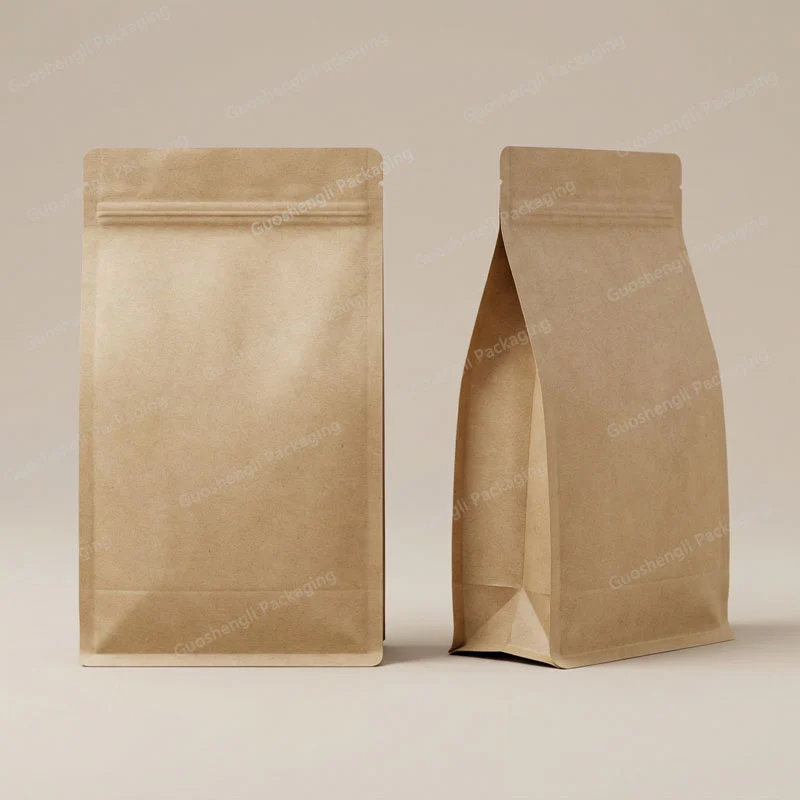
Flat bottom pouches, which are also sometimes called "box pouches," are a big step forward in the design of flexible packaging. Traditional stand-up pouches are only stable because of their gussets. These pouches, on the other hand, have a completely flat base panel and four vertical sides. This box-like structure lets the package stand straight up even before it's filled, giving it a great look on the shelf that grabs people's attention right away.
Five different pieces work together to make this design work: the front, the back, two side gussets, and the important flat bottom. This design makes the most of the space inside while keeping the overall size small. This makes moving and storing incredibly efficient. When the pouch is full of coffee beans, pet treats, or protein powder, it stays in its shape and doesn't lean or tip over. This is a huge plus in stores where look is important for making sales.
Common Applications Across Industries
Box bags in the 250-gram size work well for a wide range of products. Coffee roasters like how the stable base shows off the best beans and the multi-layer barrier keeps the flavourful oils from going bad. Pet food companies use these bags to keep treats and vitamins fresh because they know that the reusable zipper makes the product last longer after it has been opened. These pouches are used by health and wellness brands to package protein powders, superfood blends, and nutritional supplements because the structure shows quality and the large printable surface shows a lot of information about the product.
Manufacturers of snacks use flat bottom designs for nuts, dried fruits, and other unique products that look better when they are displayed upright. The 250-gram capacity is just the right size—big enough for a meaningful amount of product, but small enough for people who want easy-to-handle portions. Because it can be used in so many ways, this is why procurement teams in the food, pet care, beverage, and wellness industries are asking for flat bottom formats more and more.
Material Options and Barrier Properties
Modern pouches with flat bottoms are made with complex, multi-layer laminated structures that are designed to meet specific protection needs. Common designs include PET/AL/PE structures that offer the best protection against wetness, oxygen, and light. This makes them perfect for goods that are sensitive to oxygen, like coffee or fatty snacks that go bad quickly. PET/VMPET/PE laminates offer great performance at a lower cost for products that need moderate protection. The metallised layers keep the laminates' good looks.
Brands that care about the environment can now get structures made of a single material that are intended to be recycled for 250g custom flat bottom pouch. These structures are usually PE-based and keep their barrier qualities while making end-of-life processing easier. Some companies make recyclable choices with PLA or PBAT films, but these need to be carefully matched to the features of the product and the expected shelf life. To choose the right materials, you need to know how sensitive your product is to environmental factors, how long it's supposed to last, and what your target market wants in terms of sustainability. These are all things that you should talk about with experienced packaging engineers instead of looking at generic online catalogues.
Comparing 250g Flat Bottom Pouch Options to Make the Right Choice
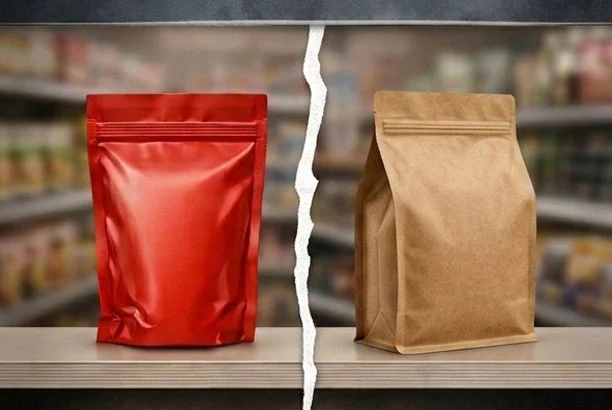
Flat Bottom vs. Stand-Up Pouches
Knowing the differences in structure helps procurement teams choose the right format. Traditional stand-up pouches have gussets on the sides or bottom that expand when the pouch is full. The weight of the product and the tension in the gussets keep the pouch stable. These are useful in many situations and usually cost a little less than flat bottom types. But they don't have the rigid, box-like look that flat bottom pouches do.
Flat bottom designs are more stable on shelves, even when they're only partly full. This is a big plus for goods that are sold by weight or that are eaten slowly. The four vertical panels, which are set up to look like hard box packing, give you more space to print and make it easier to tell your brand's story. Different filling lines work in different ways. For example, flat-bottom bags stay in the same place during automatic filling, which cuts down on jams and boosts output on high-speed lines. The choice depends on what's most important to you. If maximum shelf impact and premium positioning are the most important things to you, flat bottom construction is clearly the best option, even though it costs a little more.
Material Selection: Balancing Performance and Sustainability
More and more, decisions about what to buy have to balance functional needs with environmental concerns. Traditional aluminium foil laminates are the best at keeping out moisture and air, which greatly extends the shelf life of goods that are sensitive to these things. These structures work great for coffee, some snacks, and goods that need to be shipped or stored in difficult conditions for long periods of time.
When made with recycling in mind, plastic-based laminates that don't use foil can be good barriers at a lower cost and with less of an effect on the environment. New developments in high-barrier layers have made it possible for plastic structures to work almost as well as foil in many situations. Instead of depending on general material descriptions, procurement teams should ask for barrier property data, especially the rate of oxygen transmission and the rate of moisture vapour transmission. Failures after the product has been released to the market can be avoided by testing it in real storage conditions before committing to large production runs.
Valve vs. Non-Valve Configurations
One-way degassing valves are often used in coffee packaging. These valves let CO2 from freshly roasted beans leave while blocking air from entering. This feature keeps the package from growing and extends the shelf life, which is why roasters pay more for it. Products that don't make petrol usually skip valves, which saves money and gets rid of a possible failure point.
Zipper closures make it easier to use products more than once, which improves the user experience and justifies higher prices. Notches that are easy to tear make things easier to get to without using scissors or other tools. Each useful element increases the cost and difficulty of the product, so the design should be based on what the real product needs are and what the customers want, not just copying the package of competitors feature for feature.
How to Choose Reliable 250g Custom Flat Bottom Pouch Suppliers
Essential Quality Certifications and Standards
Packaging companies that want to sell their goods in controlled markets must show that they follow the rules by getting recognised licenses. For food-contact products sold in the US, FDA compliance is a must. This means that the materials used and the way they are made must meet food safety guidelines. Brand Reputation Compliance (BRC) certification shows that the manufacturer keeps quality controls and traceability in a systematic way. This is very important for brands that care about the integrity of their supply chains.
Getting ISO 9001 certification shows that you care about quality management systems, but it doesn't say anything about food safety for a 250g custom flat bottom pouch. Instead of depending on a single certification, look for sellers who have a number of useful certificates. Ask for copies of certificates and, if possible, check their validity with the organisations that issued them. In addition to certifications, you should also ask about the testing methods used. Reliable manufacturers test for migration, analyse seal strength, and check barrier properties during production runs, not just during the initial development phase.
Evaluating Production Capacity and Lead Times
Knowing how much a provider can make will help your business avoid problems as it grows. Ask clear questions: How many printing machines work every day? How many pouches can be made each month based on your specifications? For digital printing and rotogravure printing, how are the lead times different? Larger manufacturers with a lot of equipment, like those with multiple printing machines, sealing lines, and converting machines, can handle changes in volume and rush orders more effectively than smaller companies that are already at full capacity.
Your planning period should match the lead time you expect. Digital printing can finish bags in 7–10 days, but each unit may cost more, and the colours may not be as accurate for brand-critical uses. Rotogravure printing takes 15 to 20 days, which includes preparing the cylinder, but the colours are more consistent, and the unit costs are lower when you print in bulk. Setting reasonable due dates keeps people from making hasty choices that hurt quality or require expensive air freight to meet launch dates.
The Importance of Sample Evaluation
Don't commit to production quantities until you've looked at a sample carefully. Ask for samples that were made on real production equipment instead of trials that were made on research lines. Put test samples of your real product in real storage conditions for a few weeks to see how the seals work, how well the barriers work, and how the product and packing materials react to each other.
Carefully check the print quality by comparing the colours to brand standards, making sure the printing is straight across all panels, and using tape tests to see how well the print sticks. Functional parts should be tested. For example, do zippers open and close easily after being used several times? Do the valves work right and not leak? When it's full, does the pouch stand straight up? If you can, fill samples on your production equipment to find out if there are any fit issues before you buy the whole cylinder. This level of care finds problems early, before you have to ship thousands of broken units, when they are still easy to fix.
Where and How to Buy 250g Custom Flat Bottom Pouches Online
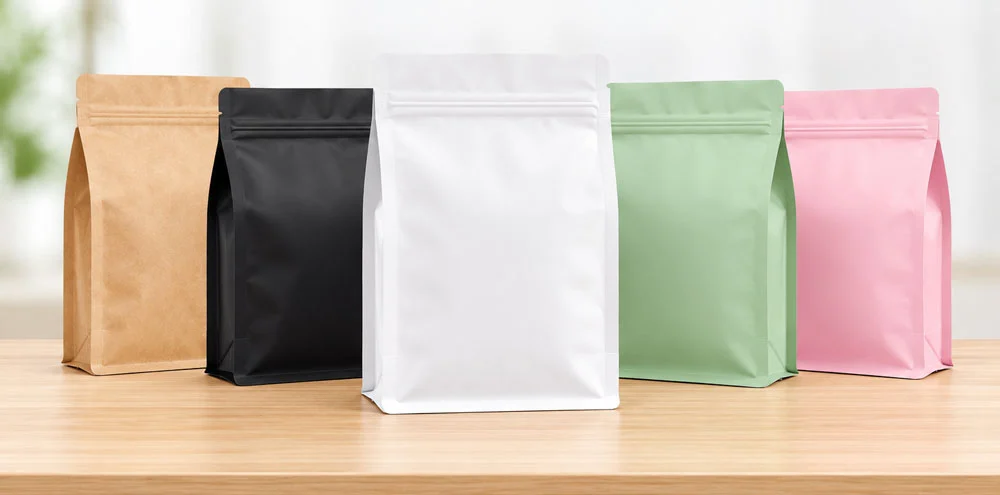
Understanding Purchasing Pathways
Buying custom packaging as a business takes a different road than buying it as a customer. You can work directly with manufacturers, use a business-to-business (B2B) platform to find suppliers, or join a distributor network. Having direct ties with makers like Guoshengli Packaging gives you the best prices and most customisation options, but you have to handle foreign shipping and talk to people in different time zones.
B2B platforms help businesses find suppliers and make transactions easier, but the quality of the sellers mentioned on these platforms varies a lot. Distributors and exporters offer local merchandise and easy buying, but they usually only offer ready-made stock products instead of fully customised solutions. Direct maker ties offer the best long-term value for branded packaging that needs specific sizes, custom printing, and regular repeat orders, even though they take more work to set up at first.
Step-by-Step Procurement Process
A structured approach is needed for sourcing to work well. Start by writing down everything you need: exact sizes, material requirements, barrier needs, functional features, print information (including artwork files and colour standards), and the number of products you want to order. Send this full list of requirements to potential suppliers and ask for formal quotes that include prices, lead times, minimum order quantities, and payment terms.
Carefully look over the quotes and don't just look at the unit price. Also, make sure you know the total landing cost, which includes shipping, taxes, and any tooling charges for printing cylinders. As we already talked about, ask for and assess samples. Once you're happy with the samples and the terms of the deal, place a trial order that's not too big and not too small so that you can see how well the seller does and still avoid too much risk if problems arise.
Keep a close eye on production and ask for reports on work and samples before shipping if you are making a lot of things. Set up an inspection before shipping if the value of the order justifies the cost. As soon as you get the package, carefully check it over and write down any problems right away. This methodical approach lowers risk and sets the stage for long-term supply relationships that get better as both parties learn more about each other's needs and skills.
Pricing Structures and Hidden Costs
To figure out how much packing costs, you need to look beyond the unit prices that are given. One-time cylinder etching prices for custom printing can be anywhere from a few hundred to over a thousand dollars, based on how complicated the design is and how many colours are used. These costs are spread out over many prints, which makes orders that are bigger cheaper overall.
Minimum order numbers are based on the economics of production. Because makers are more efficient when they work in large quantities, small orders cost more per unit. Shipping is very expensive. Sea freight takes 4 to 6 weeks but costs a lot less per unit than air freight, which gets the goods to their destination faster but increases the cost of logistics. Import duties can add 5–10% to the landed cost, depending on the country of destination and the type of material.
Payment terms affect cash flow. Some suppliers want to be paid in full up front, while others offer net terms after the relationship is established. Changes in the value of currencies add risk to international orders of 250g custom flat bottom pouch. To compare providers, you should find the total final cost per unit that takes all of these things into account, not just the FOB price that was given at the start.
Eco-Friendly and Sustainable 250g Flat Bottom Pouch Solutions
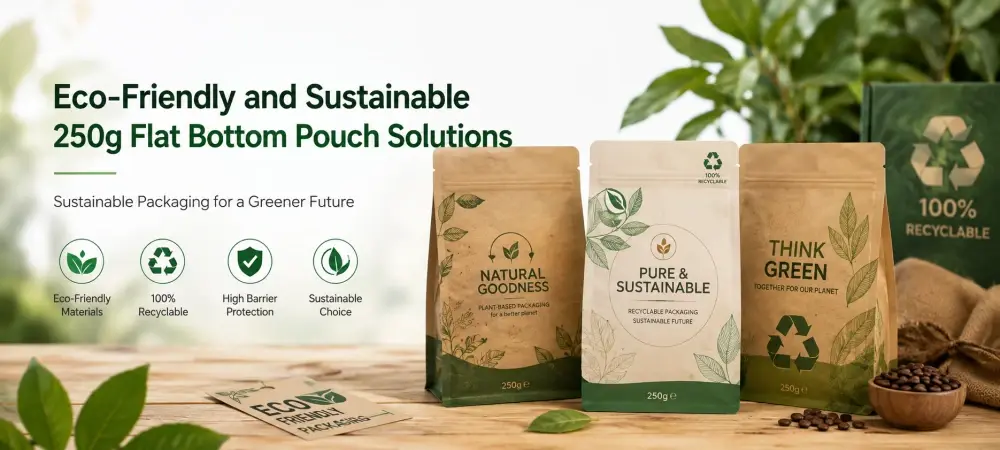
Why Sustainable Packaging Matters Now
More and more, regulations and consumer tastes are pushing for sustainable packaging. Recyclability goals are required by European Union guidelines, which push brands toward frameworks made of a single material and away from complex laminates. Extended producer responsibility programs in California and other U.S. states charge fees for packaging that is hard to discard. Consumer research consistently shows that environmental claims affect people's decisions to buy, especially when it comes to high-end products where the cost of packaging is already higher.
Sustainable packaging has real business benefits, such as a better brand image, easier compliance with regulations, the chance to charge more, and lower long-term risk as regulations get stricter. As supply lines change, early adopters gain a competitive edge, and laggards face more pressure and fewer choices. The question no longer is "should" we use sustainable packaging, but "which solutions balance performance, cost, and real environmental benefit?"
Material Innovations in Eco-Friendly Pouches
There are different material methods that deal with sustainability issues, each with their own pros and cons. Mono-material polyethylene structures make it possible to recycle by getting rid of layers of mixed materials that make sorting systems confused. However, for highly sensitive products, the barrier performance may not be as good as with traditional laminates. Paper-based laminates with thin PE layers have recyclable material and better waste potential. They are good for dry products that can handle modest barrier qualities.
Certified compostable films made from PLA, PBAT, or other bio-polymers break down in industrial composting facilities, which is a good way to get rid of waste where such facilities are available. Due to lower performance and higher costs, these can only be used in certain situations right now and can't be used in place of all conventional materials. The loop is closed by post-consumer recycled content in bag structures, but recycled content in direct food-contact layers is limited by rules about food safety.
To choose the right sustainable materials, you need to be honest about how to protect your product, the infrastructure that your target market has for collection and processing, and your willingness to spend money on validation testing. Instead of making vague marketing claims about how good something is for the environment, back up your claims with lifetime assessments and recognised badges.
Verifying Sustainability Claims
As more and more claims are made about recyclable packaging, it becomes important to check them. Instead of self-declared environmental qualities, look for approvals from a third party that you can trust. Labels with certifications like "How2Recycle" give clear directions on how to throw away things based on real recycling systems. Products that have been certified as compostable by BPI or TÜV Austria meet the technical requirements for industrial composting.
Ask the supplier for proof that the sustainable materials they sell are what they say they are: certifications for recycled content, proof that the materials can be recycled or composted, and test data for these materials. Be wary of words like "eco-friendly" that don't come with specific, verifiable qualities. Partner with suppliers who are willing to be open and honest. Companies that are genuinely committed to sustainability welcome detailed questions and give answers that go beyond marketing speak.
Conclusion
Finding the right 250g custom flat bottom pouches requires balancing a lot of things: the structural design that works for your product, materials that meet your needs for protection and your goals for sustainability, suppliers that can show you their quality systems and production capabilities, and buying processes that check performance before making big commitments. The flat bottom shape is better for shelf appearance and sturdiness, so brands that want to stand out should think about using it. Instead of guesses or copying what other companies are doing, choosing materials should be based on an honest evaluation of the barrier needs. Long-term value is higher with relationships with suppliers based on certificates, sample proof, and open conversation than with retail buying through online platforms. Sustainability is both an opportunity and a responsibility; work to make real changes for the environment instead of making empty claims. When you take the time to understand these factors and work with experienced packaging makers, you can turn packaging from something you buy as an item into a strategic tool that helps your brand grow.
FAQ
1. What is the typical minimum order quantity for custom flat bottom pouches?
Minimum order quantities vary by supplier and customization level. Fully custom printed pouches typically require 10,000-20,000 units to justify cylinder engraving costs and production setup. Some manufacturers offer lower minimums for digital printing, though at higher per-unit costs. Stock pouches with simple label application may be available in smaller quantities. When starting a new product, consider whether lower minimum suppliers serve your immediate needs or if committing to larger quantities with better pricing makes sense given your sales projections.
2. How long does custom printing take for box pouches?
Production timelines depend on printing method and supplier capacity. Digital printing generally completes within 7-10 days after artwork approval, suitable for smaller runs or urgent needs. Rotogravure printing requires 15-20 days including cylinder preparation, offering superior quality and economy for larger volumes. Allow additional time for shipping—sea freight takes 4-6 weeks, air freight 4-5 days. Building adequate lead time into your launch schedule prevents rushed decisions that compromise quality or force expensive expedited shipping.
3. Can flat bottom pouches run on standard filling equipment?
Most flat bottom pouches adapt to existing VFFS (vertical form fill seal) equipment and pre-made pouch filling lines with minimal adjustment. The stable structure often improves filling consistency compared to other flexible formats. Coordination between pouch supplier and filling equipment manufacturer helps ensure compatibility. Request technical drawings showing exact dimensions and specifications, and test samples on your actual equipment before committing to production quantities. Proper matching prevents costly delays from packaging that doesn't perform as expected on your line.
4. Are eco-friendly materials suitable for all products?
Sustainable materials vary widely in barrier performance and cost. Some products tolerate reduced barrier properties from recyclable mono-materials without meaningful shelf life compromise. Others—particularly moisture-sensitive or oxygen-sensitive products—require high-barrier structures that may not yet have fully sustainable equivalents offering equivalent protection. Honest assessment of your product's sensitivity, expected shelf life, and distribution conditions guides appropriate material selection. Testing sustainable options under real conditions before committing prevents failures after market launch.
Partner with Guoshengli Packaging for Your Custom Flat Bottom Pouch Needs
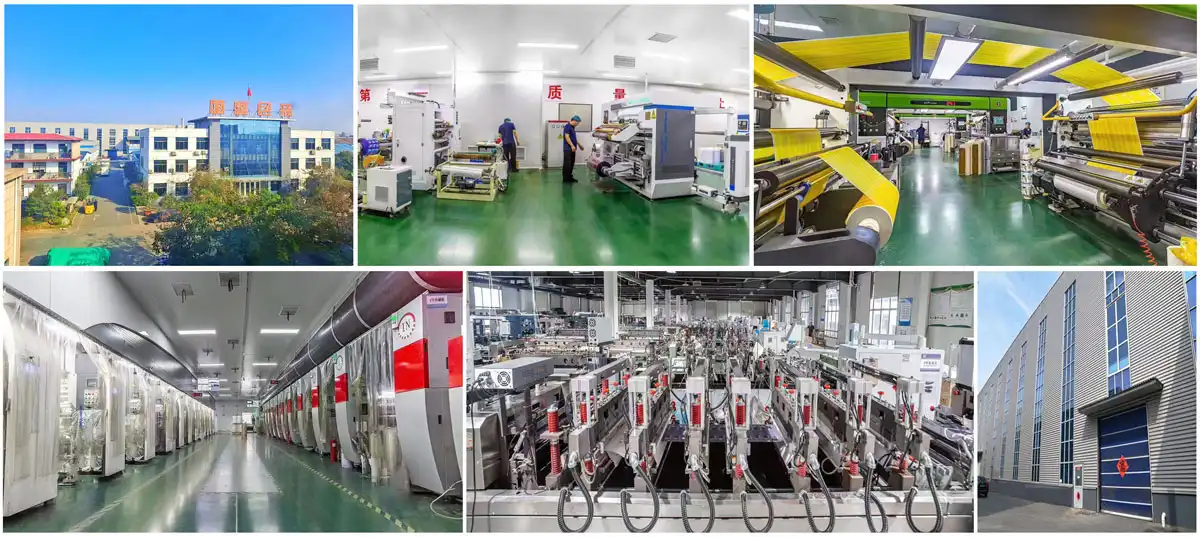
Guoshengli Packaging brings 25 years of flexible packaging manufacturing experience to brands seeking reliable custom flat bottom pouch suppliers. Our facility maintains ISO 9001, BRC, FDA, and SGS certifications, ensuring every 250g custom flat bottom pouch meets rigorous quality standards before shipment. With 7 printing machines, 6 laminating lines, and 49 converting machines, we handle orders from development samples through high-volume production runs with consistent quality and on-time delivery.
Our engineering team works closely with your specifications to optimize material structures, balancing barrier performance, sustainability goals, and cost efficiency. Whether you need traditional high-barrier laminates or recyclable mono-materials, we provide technical guidance grounded in real-world testing rather than generic recommendations. Digital printing delivers prototypes in 7-10 days; rotogravure production completes in 15-20 days with superior color consistency across repeat orders. Contact our team at sales@guoshengpacking.com to discuss your project requirements and request samples demonstrating the quality and functionality your brand deserves.
References
1. Anderson, M.J., & Chen, W. (2022). Flexible Packaging Engineering: Materials, Processes, and Applications. Packaging Technology Press.
2. European Flexible Packaging Association. (2023). Sustainability Guidelines for Flexible Packaging Procurement. EFPA Technical Report Series.
3. Institute of Packaging Professionals. (2023). Barrier Properties and Shelf Life Optimization in Food Packaging. IPP Research Publications.
4. Martinez, R.L. (2021). Global Supply Chain Management for Packaging Procurement. International Trade Publishing.
5. Sustainable Packaging Coalition. (2022). Design Guidelines for Recyclable Flexible Packaging. SPC Industry Reports.
6. Thompson, K.S., & Williams, J.R. (2023). Modern Flexible Packaging: Structures, Materials, and Manufacturing Processes. Technical Press International.