- English
- French
- German
- Portuguese
- Spanish
- Russian
- Japanese
- Korean
- Arabic
- Greek
- German
- Turkish
- Italian
- Danish
- Romanian
- Indonesian
- Czech
- Afrikaans
- Swedish
- Polish
- Basque
- Catalan
- Esperanto
- Hindi
- Lao
- Albanian
- Amharic
- Armenian
- Azerbaijani
- Belarusian
- Bengali
- Bosnian
- Bulgarian
- Cebuano
- Chichewa
- Corsican
- Croatian
- Dutch
- Estonian
- Filipino
- Finnish
- Frisian
- Galician
- Georgian
- Gujarati
- Haitian
- Hausa
- Hawaiian
- Hebrew
- Hmong
- Hungarian
- Icelandic
- Igbo
- Javanese
- Kannada
- Kazakh
- Khmer
- Kurdish
- Kyrgyz
- Latin
- Latvian
- Lithuanian
- Luxembou..
- Macedonian
- Malagasy
- Malay
- Malayalam
- Maltese
- Maori
- Marathi
- Mongolian
- Burmese
- Nepali
- Norwegian
- Pashto
- Persian
- Punjabi
- Serbian
- Sesotho
- Sinhala
- Slovak
- Slovenian
- Somali
- Samoan
- Scots Gaelic
- Shona
- Sindhi
- Sundanese
- Swahili
- Tajik
- Tamil
- Telugu
- Thai
- Ukrainian
- Urdu
- Uzbek
- Vietnamese
- Welsh
- Xhosa
- Yiddish
- Yoruba
- Zulu

When thousands of units need to be protected reliably and perform consistently every day, high barrier film rollstock is the packaging solution that was made for scale. This special multi-layer material protects against wetness and air very well while still working with automatic form-fill-seal machines. Over the past 25 years, Guoshengli Packaging has improved the way barrier film is made. We help food manufacturers, pet food brands, and health supplement companies keep the integrity of their products from production to retail shelf life.
Understanding High Barrier Film Rollstock: What It Is and Why It Matters
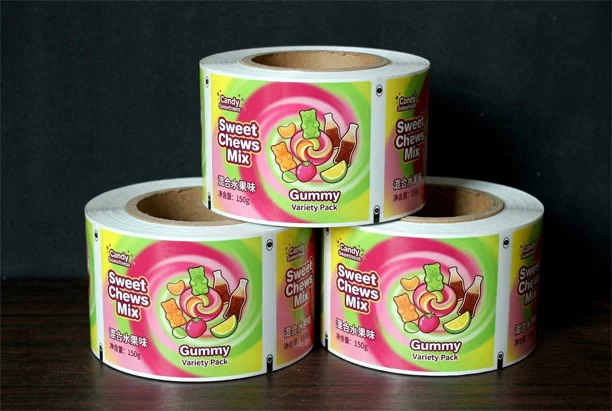
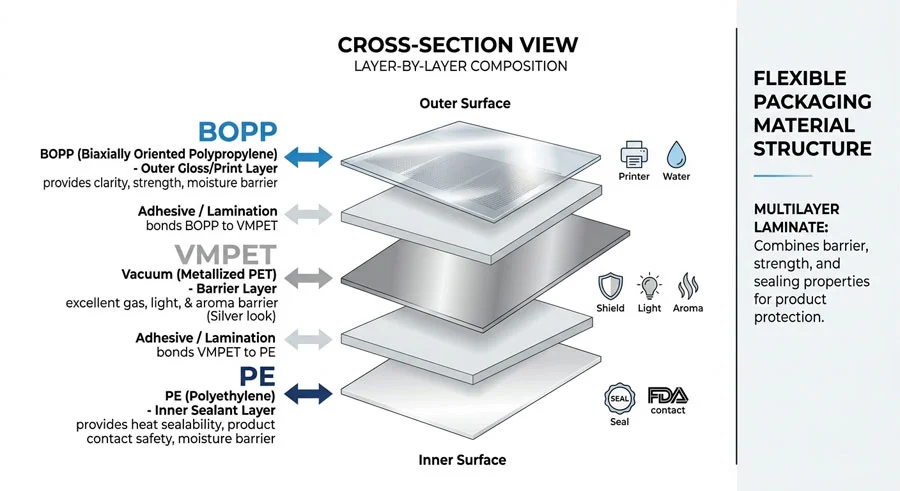
Composition and Structure
The use of high barrier film rollstock is an advanced technical method for protecting flexible packages. Unlike regular films with only one layer, these materials have several polymer layers that work together to protect the environment. The normal structure is made up of ethylene vinyl alcohol (EVOH) to fight oxygen, polyethylene or polypropylene to keep the structure strong, and special coats that protect against wetness better. Depending on the protection needs, metallised layers or PVDC (polyvinylidene chloride) can be useful in some situations.
Each layer does a different job of protecting. The outer layers make the material strong and easy to print, and the inner layers stop gases from moving through. This design makes it possible for oxygen to pass through at rates below 1 cc/m³/24h and water vapour to pass through at rates below 1 g/m²/24h. These are performance levels that greatly increase shelf life compared to regular packing materials.
Why Barrier Performance Matters
When air, wetness, or light touch sensitive chemicals, the product starts to break down. When they are exposed to moisture, coffee beans lose their aromatic compounds, dried snacks go bad, pet treats go bad, and supplement powders clump together. These problems with quality lead straight to customer complaints, store returns, and damage to the brand's image.
We make protective films that are designed to stop these problems. Our multi-layer structures keep their protective integrity even when they are moved around, the temperature changes, and they are handled with a lot of force. This dependability is especially helpful in delicate situations like nitrogen-flushed coffee packages, protein powders that are sensitive to wetness, and dried foods that are sensitive to air, where keeping the product fresh has a direct effect on how well the business does.
Critical Performance Indicators
Several technical factors, in addition to basic protection grades, decide how well packing works in the real world. Puncture strength, which is tested using ASTM F1306, makes sure that films can be handled without losing their protective properties. Seal strength (ASTM F88) keeps packages from breaking while they're being shipped. How easily rollstock goes through high-speed packing machinery is affected by the coefficient of friction. This may seem like a small thing, but it has a big effect on how efficiently production is done.
Each batch of our quality control process checks these parameters. We use MOCON sensors to test for leakage, interlayer bond strength analysis to keep layers from delaminating, and gas chromatography for solvent residue testing to make sure that no smells get into the packaged goods. This strict evaluation method gives procurement managers the stability they need when trying to place big orders.
Comparing High Barrier Rollstock Options: Making the Right Choice for Your Business
High Barrier vs. Standard Films
The difference between barrier classes affects both the amount of safety and the way costs are structured. Standard films usually let 10 to 100 cc/m² of oxygen through per 24 hours, which is fine for products that don't need to last long or aren't sensitive to oxygen. High barrier film rollstock works at transfer rates below 1.0 cc/m²/24h, which can protect products for weeks to months, based on their properties.
When you look at this difference in performance across different production volumes, it becomes economically important. A coffee maker that packages 10,000 units a month can save a lot of money by keeping the coffee fresh for longer, which cuts down on waste and helps the product reach more people. When you compare better product performance and lower loss rates, the extra cost of the materials is justifiable.
Material Selection Considerations
There are clear benefits to each type of barrier layer technology. EVOH is better at stopping oxygen, but it needs to be kept away from water because water weakens its protective qualities. To fix this, we put EVOH between layers of hydrophobic polyethylene or polypropylene. This makes a "sandwich" structure that keeps working well in a range of environmental conditions.
PVDC protects against both oxygen and moisture in a balanced way, and it works reliably in damp places. However, some markets don't allow PVDC because it contains chlorine, so EVOH shapes are better for exports to Europe and North America. Metallised films are a good barrier and don't cost too much, but they aren't clear, which is something to think about when product sight affects buying choices.
Evaluating Supplier Capabilities
When choosing a packaging partner, you have to look at more than just the material specifications. If your fifth production run works the same as your first, that's because of manufacturing stability. Controlled lamination processes, balanced ply tension during conversion, and systematic quality checks at multiple production stages help us keep this level of consistency.
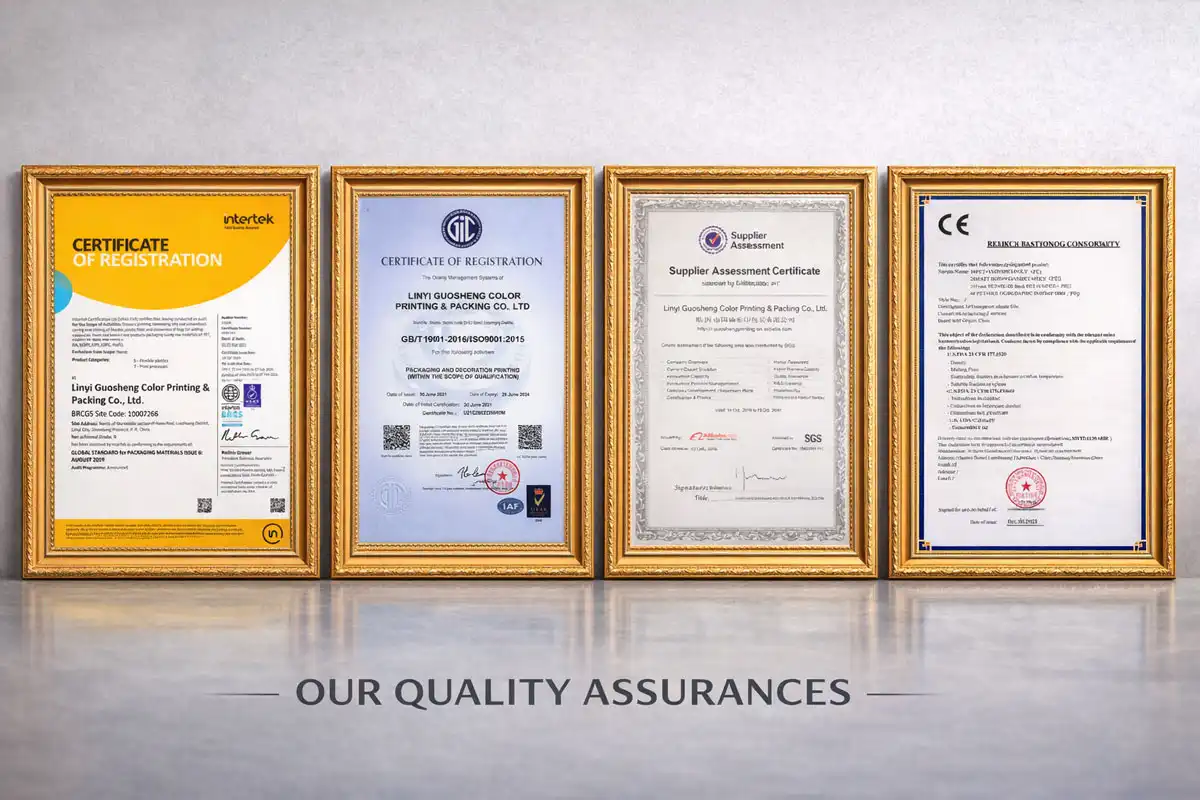
Our certifications are proof that our products meet quality standards. ISO 9001 shows that quality management is done in a planned way, BRC certification proves that food safety rules are followed, and FDA/EU compliance paperwork makes sure that regulations are followed in key export markets. These certificates lower the risk of buying and make it easier for your quality assurance teams to check for compliance.
Fast and Cost-Effective Procurement Strategies for High-Volume Orders
Pricing Models and Volume Economics
When you buy a lot of something, the cost per bit goes down a lot because of economies of scale. This is reflected in our pricing, where cost-per-kilogram rates go down as order volumes go up. A trial order of 500 kilograms sets the standard price, while commitments of more than 2,000 kilograms unlock preferential rates that make the project's economics much better.
We make our prices clear by splitting the costs of materials from the costs of customisations like printing, special finishes, or specific size requirements. This makes it possible to accurately model costs when looking at different packaging options. Buying in bulk also keeps prices stable across multiple orders, which protects against changes in material costs that can make budget planning harder.
Customization Without Complexity
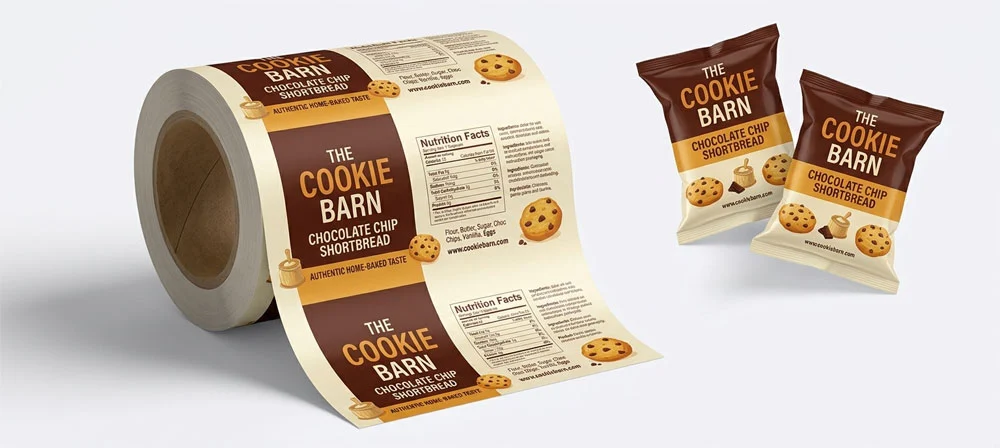
Each product has its own specific packing needs. Degassing valves are needed for coffee, anti-static qualities are needed for protein powders, and reusable caps are good for pet treats. Our method of customisation works with these requirements and doesn't make wait times too long.
For rotogravure printing projects, standard configurations ship within 15 to 20 days. For shorter runs or urgent needs, digital printing cuts the time to ship to 7 to 10 days. We have different widths, thicknesses, and finishes, and we can match the material specs exactly to your filling equipment and the way your product works. This freedom gets rid of the trade-offs that come up when goods are forced into standard packing options.
Lead Time Management
Scheduling production has a big effect on operations planning. To keep lead times low, we have a lot of manufacturing capacity. Our 7 printing lines, 6 laminating machines, and 49 converting units allow us to handle large orders without any production problems. This infrastructure supports both planned production runs and urgent orders that need to be filled quickly in response to market opportunities.
Coordinating logistics is the last part of the delivery equation. When production needs to be restocked quickly, we set up fast air freight that delivers the materials in 4 to 5 days. Standard ocean freight makes it cheap to ship planned orders. Our logistics team makes tracking clear and communicates ahead of time, which lowers uncertainty along the supply chain.
Quality Validation and Sampling
As part of responsible procurement, materials must be checked before production volumes are agreed upon. We give you samples that are true to the production materials, so you can test how well they work with your filling tools and product formulas. This step of confirmation finds possible changes that need to be made before going into full production. This keeps expensive changes from having to be made after production starts.
When you test a sample, you should make sure that it works as a barrier, that the seal is intact under the heat-sealing conditions you use, and that it is compatible with the chemical properties of your product. We help with this process by giving expert advice, explaining test results, and suggesting changes when they are needed.
Why Partner with Industry Leaders for High Barrier Rollstock Supply
Manufacturing Excellence and Experience
Twenty-five years of experience in manufacturing gives you ideas that younger businesses just can't copy. We have dealt with almost every packaging problem that comes up with a wide range of products. For example, we know how different formulations react with barrier materials, which film structures work reliably on different types of filling equipment, and how storage and shipping conditions affect the performance of packaging.
The information that has been gathered has real-world benefits. When you tell us about your product's features and how it needs to be packaged, we use a lot of past experience to come up with the best solutions instead of just giving you generic instructions. This consultation method cuts down on trial-and-error and speeds up your time to market.
Sustainable Manufacturing Practices
Regulatory standards and business sustainability pledges are making environmental duty more and more important in purchasing choices for high barrier film rollstock. There are several things we're doing to address these issues. Our factory uses imported RTO (Regenerative Thermal Oxidiser) exhaust treatment technology, which cuts down on manufacturing emissions by a large amount compared to traditional methods.
Material innovation is mainly about making structures that can be recycled and still work as barriers. We have created structures out of a single material polyethylene, that have aluminium oxide or silicon oxide coatings that give them high barrier properties while still being able to be recycled through normal waste streams. These solutions allow progress in sustainability without lowering the level of product security your customers expect.
Distribution Network and Logistics Support
For global processes to work, there needs to be effective foreign transportation. We serve customers in North America, Europe, and the Asia-Pacific region through established shipping relationships and knowledge of how to fill out customs forms. With this knowledge, you can easily meet regulatory requirements, which cuts down on clearance delays that make it hard to plan production.
Our approach to distribution strikes a balance between low costs and reliable delivery. When production is planned, container-load shipments are the most cost-effective way to send goods, while expedited air freight is best for urgent needs or market tests that need materials delivered quickly. This gives you the freedom to adapt to changing operational needs as your business grows.
Customer Success Evidence
We have long-term relationships with some of the biggest buyers of packaging in the US, Australia, and Europe, which shows that we can regularly meet high-quality standards. These relationships last for years and include many reorders, which is the real test of how reliable a manufacturer is. It's not noticeable to operations when packing works properly batch after batch. When it breaks, production stops, and costs go up very quickly. Our past performance points to the first possibility.
Maximizing Value from High Barrier Rollstock: Best Practices and Optimization Tips
Storage and Handling Protocols
Barrier film performance begins before materials reach your packaging line. Proper storage maintains technical properties throughout the material's usable life. We recommend climate-controlled warehousing below 25°C and 60% relative humidity. These conditions preserve barrier layer integrity and prevent film curl that can disrupt feeding on automated equipment.
Material rotation following first-in-first-out inventory principles ensures older stock moves to production before newer deliveries. While properly stored high barrier film rollstock maintains specifications for 12 months, systematic rotation prevents extended storage that might affect performance. Protecting materials from direct sunlight and contaminants further preserves quality through the supply chain.
Integration with Packaging Equipment
Successful rollstock performance depends on compatibility with your specific filling machinery. Film tension settings, unwind characteristics, and heat seal parameters require optimization for each material structure. We provide technical specifications that guide these adjustments, reducing setup time and minimizing waste during changeovers.
The coefficient of friction influences how smoothly material feeds through packaging equipment. We engineer surface properties to prevent slippage or excessive drag during high-speed operation. This attention to seemingly minor details translates into fewer production interruptions and higher overall equipment effectiveness.
Sustainability Implementation
Transitioning toward recyclable packaging structures requires balancing environmental objectives with product protection requirements. We approach this through systematic testing that validates barrier performance in recyclable constructions before recommending transitions away from conventional structures. This evidence-based methodology prevents sustainability initiatives from inadvertently compromising product quality.
Recycling infrastructure varies significantly across markets. Material selection should account for collection systems available in your target regions. Mono-material polyethylene structures align well with established recycling streams in North America and Europe, while other constructions may require specialized disposal processes. We provide guidance matching material recommendations to regional recycling capabilities.
Innovation Roadmap
Packaging technology continues advancing through new barrier layer chemistries, bio-based polymers, and enhanced multilayer structures. We monitor these developments, evaluating which innovations deliver practical benefits versus those requiring further maturation. Our research priorities focus on solutions that enhance product protection, improve sustainability profiles, or reduce total packaging costs without introducing operational complexity or unproven performance.
Recent developments in machine direction oriented polyethylene (MDO-PE) demonstrate the potential for recyclable films achieving barrier properties previously requiring mixed-material structures. As these technologies prove themselves through commercial-scale validation, we integrate them into our standard offerings, providing customers access to advancing capabilities without requiring them to navigate experimental materials.
Conclusion
High barrier film rollstock delivers the protection, performance, and efficiency that large-scale production demands. Through engineered multi-layer structures, rigorous quality control, and manufacturing capacity scaled for volume orders, this packaging solution addresses the core requirements of food manufacturers, pet food producers, supplement brands, and specialty product companies operating in competitive global markets. Successful procurement balances barrier performance with cost efficiency, lead time management, and supplier reliability—factors we have optimized throughout 25 years serving international customers. As sustainability requirements evolve and production volumes scale, partnering with experienced manufacturers ensures packaging continues performing reliably while adapting to changing market demands.
FAQ
1. What factors influence barrier performance in multi-layer films?
Barrier effectiveness depends on layer composition, thickness, and manufacturing quality. EVOH layers provide exceptional oxygen blocking but require moisture protection from surrounding polyethylene or polypropylene layers. Humidity affects EVOH performance, which is why we engineer sandwich structures that maintain barrier properties across varying environmental conditions. Material selection should match your specific product sensitivity and distribution environment.
2. How do I choose between high barrier rollstock and vacuum packaging?
This decision depends on product characteristics, production volume, and shelf life requirements. High barrier rollstock excels for products requiring modified atmosphere packaging or nitrogen flushing, particularly in high-speed automated lines. Vacuum packaging suits applications where removing air extends shelf life without requiring specialized barrier properties. We recommend evaluating both options based on your specific product chemistry and production capabilities.
3. What are typical lead times for bulk orders?
Standard rotogravure printing projects complete within 15-20 days, while digital printing reduces turnaround to 7-10 days for shorter runs. Lead times vary based on customization complexity, order volume, and current production scheduling. We provide accurate timelines during quotation, enabling reliable production planning. Expedited processing accommodates urgent requirements when needed.
Partner with Guoshengli Packaging for Your High Barrier Film Rollstock Needs
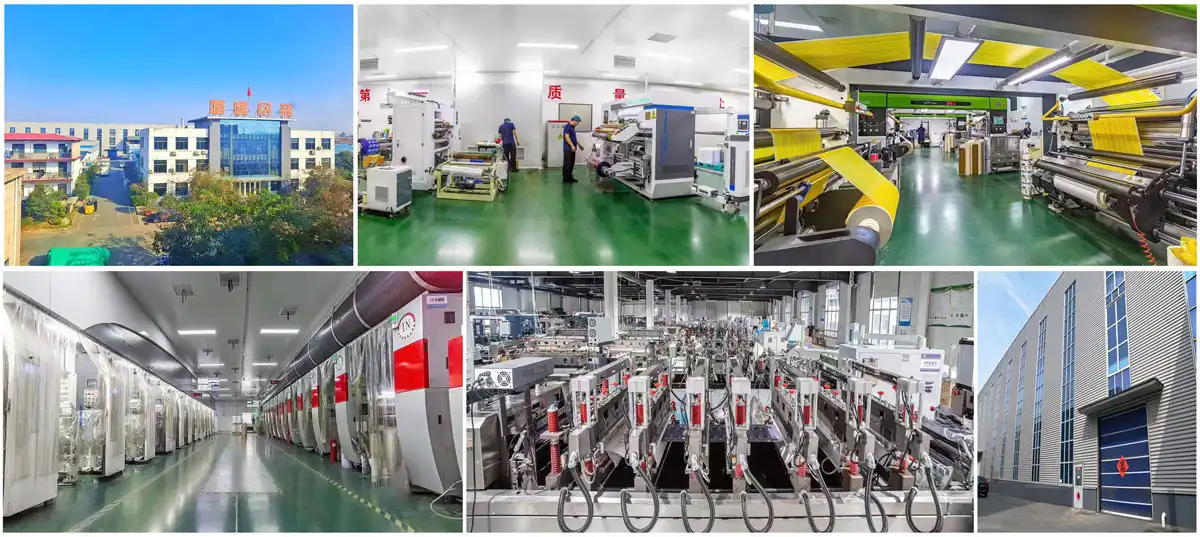
Reliable packaging should support your growth, not create operational uncertainty. As an established high barrier film rollstock supplier with over 25 years of manufacturing experience, Guoshengli Packaging delivers the consistency, quality, and technical support that large-volume production demands. Our ISO 9001, BRC, FDA, and EU certifications provide the compliance foundation international markets require, while our 7 printing lines, 6 laminating machines, and 49 converting units ensure capacity that scales with your requirements. Contact our team at sales@guoshengpacking.com to discuss your specific application, request samples for validation testing, and explore how our multi-layer barrier films can enhance product protection while optimizing your packaging costs.
References
1. Robertson, Gordon L. (2016). Food Packaging: Principles and Practice, Third Edition. CRC Press, Boca Raton.
2. Marsh, Kenneth and Betty Bugusu (2007). "Food Packaging—Roles, Materials, and Environmental Issues," Journal of Food Science, Vol. 72, Issue 3, pp. R39-R55.
3. Siracusa, Valentina et al. (2008). "Biodegradable polymers for food packaging: a review," Trends in Food Science & Technology, Vol. 19, Issue 12, pp. 634-643.
4. Coles, Richard, Derek McDowell, and Mark J. Kirwan (2003). Food Packaging Technology. Blackwell Publishing, Oxford.
5. Hernandez, R.J. and J.R. Giacin (1998). "Factors Affecting Permeation, Sorption, and Migration Processes in Package-Product Systems," in Food Storage Stability, CRC Press.
6. Lange, J. and Y. Wyser (2003). "Recent innovations in barrier technologies for plastic packaging—a review," Packaging Technology and Science, Vol. 16, Issue 4, pp. 149-158.