English
- English
- French
- German
- Portuguese
- Spanish
- Russian
- Japanese
- Korean
- Arabic
- Greek
- German
- Turkish
- Italian
- Danish
- Romanian
- Indonesian
- Czech
- Afrikaans
- Swedish
- Polish
- Basque
- Catalan
- Esperanto
- Hindi
- Lao
- Albanian
- Amharic
- Armenian
- Azerbaijani
- Belarusian
- Bengali
- Bosnian
- Bulgarian
- Cebuano
- Chichewa
- Corsican
- Croatian
- Dutch
- Estonian
- Filipino
- Finnish
- Frisian
- Galician
- Georgian
- Gujarati
- Haitian
- Hausa
- Hawaiian
- Hebrew
- Hmong
- Hungarian
- Icelandic
- Igbo
- Javanese
- Kannada
- Kazakh
- Khmer
- Kurdish
- Kyrgyz
- Latin
- Latvian
- Lithuanian
- Luxembou..
- Macedonian
- Malagasy
- Malay
- Malayalam
- Maltese
- Maori
- Marathi
- Mongolian
- Burmese
- Nepali
- Norwegian
- Pashto
- Persian
- Punjabi
- Serbian
- Sesotho
- Sinhala
- Slovak
- Slovenian
- Somali
- Samoan
- Scots Gaelic
- Shona
- Sindhi
- Sundanese
- Swahili
- Tajik
- Tamil
- Telugu
- Thai
- Ukrainian
- Urdu
- Uzbek
- Vietnamese
- Welsh
- Xhosa
- Yiddish
- Yoruba
- Zulu

A 3 sided pouch is a flat, flexible packaging format with three sealed edges and one side left open for filling before final sealing. It packs efficiently, stays compact, and accepts a wide range of material structures for different barrier and mechanical needs. You'll see it across food, supplements, pet food, and industrial applications—each spec'd to match the product's sensitivity, filling conditions, distribution, and target shelf life.
Understanding 3-Sided-Seal Bags: Definition and Manufacturing Process

In flexible packaging, the 3-sided pouch is a workhorse flat-pouch format. Unlike stand-up pouches with bottom gussets, a three-side-seal pouch has three sealed perimeter edges, with the fourth side left open for filling and final sealing. The converting construction and filling orientation shift based on your pouch dimensions, material structure, product, and filling equipment.
Construction and Material Selection
Manufacturing starts with picking the right films and laminate structures for your product. PET, aluminum foil, VMPET, PA/NY, and PE get combined based on what you need—printability, toughness, oxygen or moisture barrier, light protection, heat sealing, or all of the above. Oxygen Transmission Rate (OTR) and Water Vapor Transmission Rate (WVTR) characterize barrier performance under specified test conditions. The barrier level you need depends on the product, target shelf life, storage conditions, and the complete package structure.
Food-contact compliance needs checking for the intended material structure, product, and conditions of use. For U.S. applications, relevant components must comply with applicable FDA food-contact requirements. For EU applications, Regulation (EC) No 1935/2004 sets the general framework, and plastic food-contact materials may also fall under Regulation (EU) No 10/2011 and applicable migration limits. Pick total pouch thickness based on product weight, puncture risk, barrier needs, sealing conditions, and distribution demands—not a universal range.
Advanced Sealing and Forming Technologies
A 3-sided pouch lives or dies by consistent converting and sealing. Match heat-sealing conditions—temperature, pressure, dwell time—to the sealant layer, laminate structure, and production process. Evaluate seal strength using methods like ASTM F88/F88M where appropriate. Leak or package-integrity performance needs separate testing. Burst or dye-penetration methods work where they fit the package design and agreed project requirements.
Dimensional accuracy matters when pouches run on automated or semi-automated filling equipment. Film and pouch surface properties, including coefficient of friction (COF), affect feeding and handling. Control them within a range that suits your filling system—COF isn't a higher-is-better or lower-is-better property.
Customization Options for B2B Applications
Standard pouch formats customize to fit different branding and production needs. Guoshengli Packaging offers rotogravure printing with up to 11-color capability. Digital printing gives you more flexibility for smaller runs, multiple designs, new product launches, and projects with frequent artwork changes.
Features like resealable zippers, tear notches, and hang holes can go in where they fit the application. A zipper gives consumers reclosure after opening, but initial product protection still comes from the primary heat seal, material barrier, and overall package integrity. One-way degassing valves work for freshly roasted coffee where controlled gas release is needed. Pick pouch dimensions and features based on product volume, filling requirements, distribution, and consumer use.
Key Features and Benefits of 3 Sided-Seal Bags for B2B Packaging Solutions

The 3-sided pouch runs across a broad range of B2B applications because its flat construction adapts to different products, material structures, and filling requirements. For buyers, the format hits a useful balance between product protection, efficient packing, printing flexibility, and converting simplicity—when you spec it right.
Adaptability Across Product Categories and Industries
Size flexibility is one of the format's real advantages. Three-side-seal pouches run from small sample or single-serve packs to larger flat formats. You'll see them holding ground coffee, protein powders, dried fruits, pet treats, cosmetic samples, and select industrial products. The flat profile also supports compact storage and carton packing—though actual logistics efficiency depends on your pouch dimensions, material thickness, features, and carton configuration.
Material flexibility lets you match barrier performance closely to product sensitivity. Moisture-sensitive powders need a different structure from products sensitive to oxygen, aroma loss, light, or puncture. Build multilayer laminates around the actual protection requirement—don't assume every product needs the same high-barrier construction.
Cost-Efficiency and Operational Advantages
A 3 sided pouch offers operational advantages where a simple flat format fits. Compared with more complex gusseted or shaped formats, the converting construction stays relatively straightforward. But actual cost depends on pouch dimensions, material structure, thickness, printing method, quantity, and added features.
Flat pouches also pack efficiently before filling and support compact carton configurations for transport. But calculate freight and storage advantages using your actual pouch and carton spec—don't assume them from the format alone. Compare material use with equivalent product capacities and performance requirements.
Enhanced Product Protection and Shelf Life Extension
With the right barrier laminates, three-side-seal pouches limit oxygen, moisture, aroma, or light exposure based on the selected structure's performance. Oxygen drives oxidation in sensitive products. Moisture gain or loss hits powders, dried foods, and other moisture-sensitive contents. Light protection matters for certain products and ingredients too.
Barrier packaging supports a target shelf life when you match the laminate to the product, filling process, seal integrity, storage conditions, and distribution environment. The pouch format or barrier material alone doesn't determine shelf life. For critical applications, run filled-product trials and appropriate shelf-life evaluation.
Branding and Market Visibility Through Printing Options
Packaging appearance drives retail presentation and brand consistency even in B2B environments. Rotogravure printing with up to 11-color capability supports detailed graphics. Finishes like matte or gloss are selected based on the look you need.
Batch codes, expiration dates, and other variable information go on using suitable downstream coding systems. Clear windows can be incorporated into selected structures, but check their effect on barrier performance as part of the complete package design. Artwork needs to leave room for seals, tear notches, hang holes, coding areas, and regulatory information.
Sustainability and Regulatory Compliance
Environmental considerations now form part of most packaging specifications, but recyclability needs evaluation using the complete package, not just the base polymer. PE-rich mono-material structures improve compatibility with selected PE recycling streams—subject to the complete package design (inks, adhesives, coatings, zippers, and all other components) and local collection, sorting, and recycling infrastructure. Compostable structures require the same complete-package evaluation and certification against the applicable standard and end-of-life system.
Quality-system certifications and food-contact compliance documentation serve different purposes. ISO 9001 covers quality-management systems. BRCGS Global Standard Packaging Materials addresses packaging-manufacturing site and quality/hygiene controls. For food-contact applications, the specified structure needs relevant regulatory documentation and testing evidence for the intended market and conditions of use. Third-party test reports provide supporting evidence but don't serve as a universal certification of every pouch.
Comparing 3 Sided Pouches With Other Flexible Packaging Options

When you're selecting packaging for a new product or reviewing an existing format, you'll likely compare several flexible-packaging options. Each format brings different structural characteristics, converting requirements, display properties, and filling considerations. The best choice depends on your product, filling process, distribution channel, consumer use, and commercial requirements.
Structural Differences and Performance Factors
Stand-up pouches use a bottom-gusset structure that lets the finished package stand on a shelf. Three-side-seal pouches stay flat. These structural differences affect display, converting, and filling requirements, but neither format is inherently easier to automate across every application. Evaluate premade three-side-seal pouches against your premade-pouch filling system. Packages formed from rollstock use different HFFS or VFFS equipment configs.
Gusseted formats add internal geometry and work where you need greater pack volume or a particular shelf shape. Pillow pouches are another non-stand-up flexible format, but they use a different sealing and converting configuration from three-side-seal pouches. Base format selection on your actual product and equipment requirements—don't treat all flat packages as interchangeable.
Zippers go into suitable pouch constructions where consumer reclosure adds value, especially for products accessed repeatedly after opening. The zipper doesn't replace the primary heat seal that protects the package initially. For single-use applications, a simple sealed opening with an appropriate tear feature might be more suitable.
Economic Considerations and Order Volume Requirements
Production cost and MOQ depend on more than pouch format. Printing method, material purchasing, pouch dimensions, artwork quantity, converting setup, and additional components all affect the commercial spec. Three-side-seal pouches often work for relatively small runs, especially with digital printing, but confirm the exact MOQ based on your material structure, size, and artwork requirements.
Tooling requirements also depend on the pouch spec. Standard three-side-seal constructions may need less specialized forming than shaped pouches, while custom features can add tooling or setup requirements. Compare quotations using the same dimensions, material structure, printing method, features, and quantity.
Durability and Shelf Appeal Considerations
Distribution performance depends on the complete pouch structure—film toughness, puncture resistance, seal performance, and pouch geometry. PET is commonly used for printability and dimensional stability. PE-based sealant layers provide heat-sealing and food-contact functionality depending on the laminate. PA/NY or other layers go in where you need additional toughness or puncture resistance.
Shelf presentation depends on the sales channel. Stand-up formats work where self-standing retail display matters. The 3 sided pouch works well for hanging displays with hang holes, sample packs, secondary cartons, bulk applications, or e-commerce formats where a flat profile helps. Pick the format that reflects your actual route to market.
Selecting the Most Suitable Format for Specific Applications
Product characteristics guide pouch selection. Powders need attention to seal-zone contamination and moisture barrier. Products with sharp or hard components need additional puncture resistance. Liquid or semi-liquid products bring different requirements for sealant selection, seal integrity, filling conditions, and handling. Match pouch dimensions and filling opening to the product and filling equipment.
Distribution requirements matter equally. Compact packaging helps for export or e-commerce shipments. Products exposed to rough handling need more emphasis on mechanical strength and filled-pack performance. Factor in cost and branding alongside these technical requirements. The three-side-seal pouch is a practical option where a flat format, efficient packing, and appropriate barrier performance are priorities.
How to Choose and Purchase Quality 3 Sided-Seal Bags: A B2B Buying Guide
Buying flexible packaging well means evaluating the product, material spec, supplier capability, and commercial requirements together. Material quality, food-contact documentation, filling compatibility, and repeat-production control all affect total project performance.
Evaluating Material Quality and Barrier Performance
Base material requirements on the product and intended shelf life. Request technical information covering laminate structure, thickness, and relevant barrier properties. OTR and WVTR values should include applicable test conditions and be interpreted against your product's sensitivity—not used as universal pass/fail numbers.
Review food-contact requirements for the intended market and use. For U.S. applications, relevant packaging components must comply with applicable FDA food-contact requirements. For EU applications, Regulation (EC) No 1935/2004 sets the general framework, and applicable plastic layers may also need to meet Regulation (EU) No 10/2011 and relevant migration requirements. The documentation you need depends on the finished structure, food type, and conditions of use.
Mechanical and converting properties also matter. Seal strength, tensile properties, puncture resistance, and COF answer different performance questions—don't treat them as interchangeable. Select test methods and acceptance criteria based on the actual pouch and filling process.
Assessing Customization Capabilities and Production Infrastructure
Customization capability covers printing, material structures, pouch dimensions, and functional features. Digital printing gives more flexibility for smaller runs, multiple SKUs, product launches, or projects with frequent artwork changes. Rotogravure is the go-to for larger, stable production programs. Printed samples and approved proofs help you confirm artwork, registration, and overall appearance.
Production infrastructure affects supply capability and repeat-order consistency. Guoshengli Packaging operates 49 converting machines, seven rotogravure printing machines with up to 11-color capability, and six laminating machines. Actual lead time depends on printing method, material availability, artwork approval, pouch spec, and the current production schedule.
Understand which production and quality-control stages the supplier handles in-house. Coordination across printing, lamination, converting, and inspection helps maintain spec control and simplifies technical communication when issues come up.
Understanding Minimum Order Quantities and Pricing Structures
MOQ varies by printing method, material structure, pouch dimensions, artwork quantity, and converting setup. Digital printing suits smaller orders or multiple-SKU projects. Rotogravure becomes more practical for larger, stable production volumes. When comparing suppliers, confirm whether the MOQ applies per design, per structure, or per total order.
Evaluate pricing on the complete specification, not unit price alone. Material structure, printing, tooling, features, quantity, packing, and transportation all affect total cost. Complete quotations make it easier to compare suppliers on an equivalent technical basis.
Reliable production planning matters for inventory management. Confirm artwork approval timing, material preparation, production schedule, and shipping arrangement when building your delivery plan.
Verifying Supplier Credibility and Quality Management Systems
Distinguish between management-system certifications and product-specific compliance documentation when evaluating suppliers. ISO 9001 is a quality-management-system standard. BRCGS Global Standard Packaging Materials covers packaging-manufacturing site controls. Food-contact compliance needs separate documentation and testing appropriate to the specified structure and intended market.
Relevant production experience helps. Check whether the supplier has run similar pouch formats, material structures, filling requirements, and destination-market documentation. The goal is to know whether they can consistently reproduce the approved spec—not just make generic claims.
Before commercial production, get physical samples or run production trials to check dimensions, appearance, filling-equipment compatibility, seal-zone behavior, and filled-pack handling. Where shelf life is critical, filled-product studies under relevant storage conditions tell you whether the complete packaging system supports the product.
Establishing Long-Term Supplier Relationships
Packaging specifications affect product quality, production efficiency, and brand consistency, so communication and technical support matter when choosing a long-term supplier. Agree clearly on drawings, material structures, artwork revisions, quality requirements, and production changes to cut down misunderstandings between repeat orders.
Technical support is especially useful when launching a new product, changing materials, or evaluating filling-line performance. A supplier who can discuss material selection, converting requirements, testing, and production feasibility brings value beyond unit price. Consider technical capability, quality systems, compliance support, commercial terms, and repeat-production reliability together when building a long-term packaging supply relationship.
Future Outlook and Sustainability Trends in 3 Sided Pouch Packaging

Flexible packaging now gets evaluated against changing regulatory requirements, brand sustainability goals, and recycling-system expectations. For three-side-seal pouches, material development focuses on balancing product protection, converting performance, and better compatibility with appropriate end-of-life systems.
Addressing Flexible Packaging Waste Challenges
Traditional multimaterial laminates are hard to process in mechanical recycling systems because different polymers, aluminum foil, and other components don't fit a single recycling stream. PE- or PP-rich mono-material structures are being developed for applications where they can deliver the required package performance while improving compatibility with selected recycling systems.
Material selection for recyclability needs to consider the complete package—barrier layers, adhesives, inks, coatings, and closures where present. Lifecycle impacts extend beyond recyclability, so factor in material use, manufacturing, transportation, product protection, and end-of-life infrastructure when making comparative environmental claims.
Recycling technologies and infrastructure keep developing, but availability and suitability vary significantly by market and material structure. Check current local recycling guidance and recognized design-for-recycling criteria—don't assume a particular emerging technology provides an end-of-life route for every high-barrier flexible package.
Biodegradable and Compostable Material Advancements
Compostable packaging structures are another area of material development, but compostability doesn't come from the name of an individual polymer. The complete package must meet the applicable compostability standard and certification scheme before you make that claim.
Barrier performance, sealing, product compatibility, and converting behavior still matter when evaluating compostable structures. Also check whether suitable industrial composting infrastructure exists and whether end-of-life communication will be correct before choosing this route for a commercial package.
Clear and accurate labeling matters for compostable packaging. Confirm the applicable certification, disposal conditions, and local infrastructure before making environmental claims—make sure the package's end-of-life route gets communicated correctly.
Market Demand Trends and Growth Sectors
Three-side-seal pouches run across a broad range of food, supplement, pet-product, and industrial applications. Their flat format works well for samples, single-serve products, portion packs, and products packed inside secondary cartons or other outer packaging.
For powders, supplements, and functional-food applications, material structures are selected based on moisture, oxygen, light, and handling requirements. Reclosure can be incorporated where repeated consumer access is part of the intended use, while the primary heat seal handles initial package protection.
Pet treats and other dry products also use three-side-seal formats where a flat package fits the product and distribution channel. Base the structure and features on the actual product, pack size, barrier requirement, and handling conditions—not just the market category.
Digital Printing and Smart Packaging Innovations
Digital printing gives you artwork flexibility for smaller runs, multiple SKUs, regional variations, and more frequent design changes. It's useful for product launches, seasonal packaging, or projects where you need to manage several artworks without committing to large-volume rotogravure production right away.
Color-management and proofing processes help maintain artwork consistency between approved designs and repeat production. The right workflow depends on the printing technology, substrate, and your color requirements.
Digital information like QR codes can go right into packaging artwork for product information, traceability, or consumer engagement. More specialized smart-packaging features need separate technical evaluation—only spec them where they serve a clear function for the product and supply chain.
Regulatory Evolution and Industry Standards
Packaging regulations keep evolving across food-contact safety, recyclability, packaging design, and producer responsibility. Requirements vary by market, so brands selling across multiple regions need to identify the regulations that apply to their specific packaging and product.
Food-contact requirements also shift as substances, materials, and testing expectations get updated. Packaging suppliers should maintain relevant documentation for the specified materials and intended conditions of use. The brand or importer stays responsible for confirming the regulatory requirements that apply to the finished product and target market.
For B2B buyers, these developments reinforce evaluating material performance, recyclability claims, food-contact documentation, and market-specific requirements separately. A technically suitable 3 sided pouch should meet the actual product and process requirements while providing documentation appropriate to its intended market.
Conclusion
The 3 sided pouch is a versatile flexible-packaging format for applications where a flat profile, customizable barrier structure, and efficient packing matter. Its performance depends on the selected laminate, seal system, pouch dimensions, filling process, and distribution conditions—not the pouch format alone. Different material structures and design options support food, supplement, pet-product, and industrial applications. Recyclable or compostable alternatives need separate evaluation against performance requirements and applicable end-of-life systems. Effective procurement means balancing material performance, supplier capability, regulatory requirements, and total project cost to build a packaging spec that fits the actual product.
FAQ
1. What products are best suited for 3-sided pouch packaging?
Three-side-seal pouches are commonly used for dry products like protein powders, ground coffee, nuts, dried fruits, spices, pet treats, and supplement powders. They can also be developed for select liquid or semi-liquid products when the material structure, sealant, pouch dimensions, and filling process are designed and validated for the application. Industrial uses are possible depending on product compatibility. Base the structure and barrier level on moisture sensitivity, oxygen or light sensitivity, physical characteristics, and distribution conditions.
2. How do I verify barrier performance meets my product requirements?
Request technical data for the proposed laminate—including OTR and WVTR where relevant—along with the applicable test conditions. Interpret these values against your product's sensitivity, target shelf life, and storage conditions. Don't compare them against a universal barrier target. Where shelf life is critical, filled-product testing under appropriate storage conditions gives you more meaningful evidence of the complete packaging system's suitability.
3. What certifications should I require from a 3-sided pouch manufacturer?
Separate supplier quality-system certifications from product-specific food-contact documentation. ISO 9001 covers quality-management systems. BRCGS Global Standard Packaging Materials addresses packaging-manufacturing site controls. For food-contact applications, request documentation supporting compliance with the applicable regulations for the specified material structure and intended conditions of use. Relevant third-party test reports can provide additional supporting evidence where needed.
4. Can sustainable materials provide adequate product protection?
PE-rich mono-material structures can be designed to improve compatibility with selected PE recycling streams while providing barrier and mechanical performance suitable for certain applications. But their suitability depends on the product, complete package structure, target shelf life, filling conditions, and applicable recycling guidelines. High-barrier applications may need different material approaches. Evaluate environmental objectives alongside product protection—don't assume one material strategy works for every application.
Partner With Guoshengli Packaging for Your 3 Sided Pouch Needs
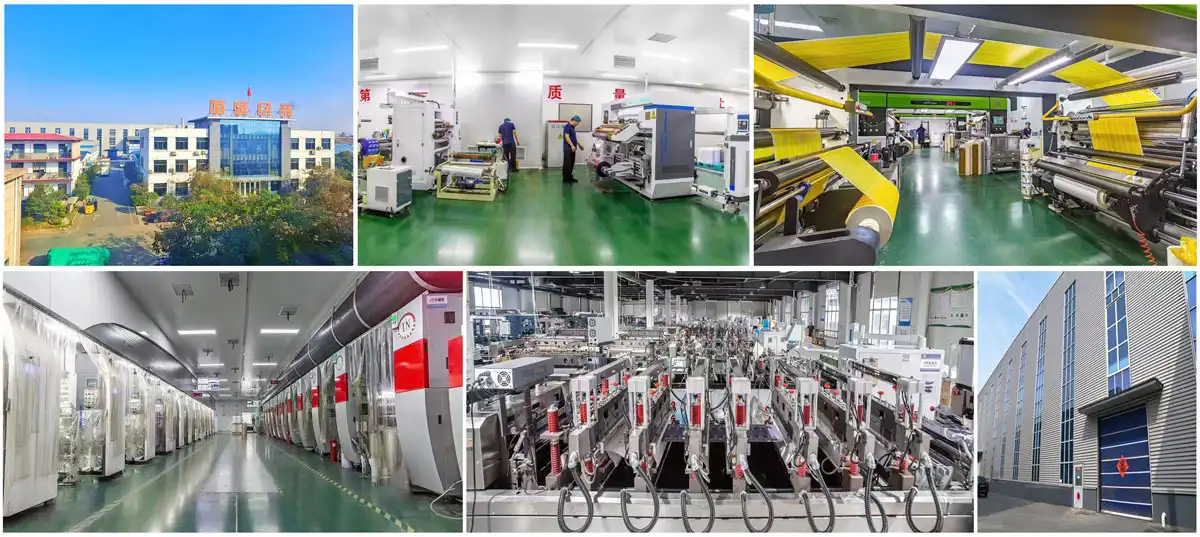
Need help selecting a 3 sided pouch for your product? Guoshengli Packaging has more than 25 years of flexible-packaging manufacturing experience. We support customers with material-structure selection, printing, pouch converting, sampling, and production preparation. Digital printing handles smaller runs and multi-design projects. Rotogravure is available for larger-volume production. We can provide relevant food-contact compliance and testing documentation for the specified structure and intended market. Contact our team at sales@guoshengpacking.com to discuss your packaging requirements.
References
-
Robertson, G.L. (2016). Food Packaging: Principles and Practice (3rd ed.). CRC Press, Boca Raton, FL.
-
Selke, S.E., Culter, J.D., & Hernandez, R.J. (2004). Plastics Packaging: Properties, Processing, Applications, and Regulations (2nd ed.). Hanser Publishers, Munich.
-
Marsh, K. & Bugusu, B. (2007). "Food Packaging—Roles, Materials, and Environmental Issues." Journal of Food Science, 72(3), R39-R55.
-
Yam, K.L. (2009). The Wiley Encyclopedia of Packaging Technology (3rd ed.). John Wiley & Sons, Hoboken, NJ.
-
Kirwan, M.J., Plant, S., & Strawbridge, J.W. (2011). "Plastics in Food Packaging." In Food and Beverage Packaging Technology (2nd ed.). Wiley-Blackwell, Oxford.
-
Coles, R., McDowell, D., & Kirwan, M.J. (2003). Food Packaging Technology. Blackwell Publishing, Oxford.
Online Message
SUBSCRIBE