English
- English
- French
- German
- Portuguese
- Spanish
- Russian
- Japanese
- Korean
- Arabic
- Greek
- German
- Turkish
- Italian
- Danish
- Romanian
- Indonesian
- Czech
- Afrikaans
- Swedish
- Polish
- Basque
- Catalan
- Esperanto
- Hindi
- Lao
- Albanian
- Amharic
- Armenian
- Azerbaijani
- Belarusian
- Bengali
- Bosnian
- Bulgarian
- Cebuano
- Chichewa
- Corsican
- Croatian
- Dutch
- Estonian
- Filipino
- Finnish
- Frisian
- Galician
- Georgian
- Gujarati
- Haitian
- Hausa
- Hawaiian
- Hebrew
- Hmong
- Hungarian
- Icelandic
- Igbo
- Javanese
- Kannada
- Kazakh
- Khmer
- Kurdish
- Kyrgyz
- Latin
- Latvian
- Lithuanian
- Luxembou..
- Macedonian
- Malagasy
- Malay
- Malayalam
- Maltese
- Maori
- Marathi
- Mongolian
- Burmese
- Nepali
- Norwegian
- Pashto
- Persian
- Punjabi
- Serbian
- Sesotho
- Sinhala
- Slovak
- Slovenian
- Somali
- Samoan
- Scots Gaelic
- Shona
- Sindhi
- Sundanese
- Swahili
- Tajik
- Tamil
- Telugu
- Thai
- Ukrainian
- Urdu
- Uzbek
- Vietnamese
- Welsh
- Xhosa
- Yiddish
- Yoruba
- Zulu

Spout pouch packaging combines the lightweight structure of flexible packaging with a rigid fitment and resealable cap for controlled dispensing. You'll see it across food, beverage, personal care, pet food, and select industrial applications where convenient pouring or reclosure matters. The pouch body can be designed with different barrier, mechanical, and sealing properties depending on your product and filling process. Compared with some rigid formats, spout pouches may also cut empty-package weight and storage volume. Mono-material structures can be developed where better compatibility with selected recycling streams is a project priority.
Understanding Spout Pouch Packaging: Definition and Key Characteristics
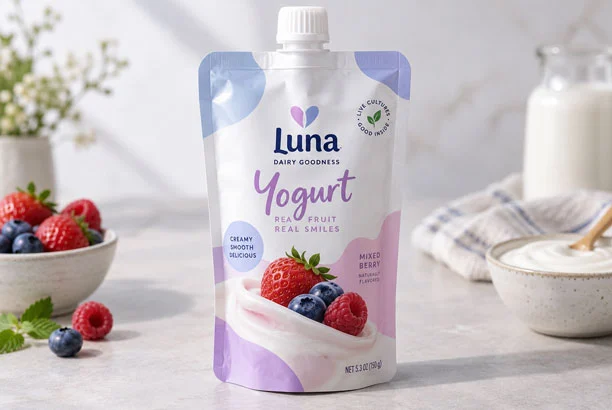
Flexible packaging with an integrated dispensing fitment is a complete packaging system—not just a pouch with a plastic spout glued on. Spout pouch packaging typically combines a flexible laminate body with a thermoplastic spout and cap. PET, PA/NY, aluminum foil, metallized film, and PE get selected based on the barrier, toughness, sealing, and product-contact properties you need. The spout is sealed into the pouch using a fitment-sealing process matched to the pouch sealant layer, spout material, and converting equipment.
Material Architecture and Barrier Performance
The performance of spout pouch packaging depends heavily on the complete material structure. Different film layers provide printability, mechanical strength, oxygen barrier, moisture barrier, light protection, or heat-sealing functionality. Oxygen Transmission Rate (OTR) and Water Vapor Transmission Rate (WVTR) characterize barrier performance under specified test conditions, but the values you need depend on the product, target shelf life, filling process, and storage environment.
Aluminum foil delivers a strong barrier to oxygen, moisture, and light where high protection is required. EVOH can go into PE-rich structures to boost oxygen barrier, but evaluate the complete structure against applicable design-for-recycling guidelines—don't assume EVOH has no effect on recycling compatibility. Establish shelf life from the actual product, package structure, filling conditions, seal integrity, and storage conditions. Don't infer it from the pouch format alone.
Sealing Technology and Quality Assurance
Fitment sealing is one of the most critical steps in spout pouch production. Specialized tooling applies controlled heat and pressure around the spout base so the sealant layer forms a secure bond with the fitment. Seal design, temperature, pressure, dwell time, and material compatibility all influence leakage performance.
For hot-fill or retort applications, the complete package—outer film, barrier layer, adhesive, sealant, spout, cap, and finished seals—must be validated for the intended thermal process. Using a heat-resistant sealant like RCPP may be part of a suitable structure, but it doesn't by itself establish hot-fill or retort capability.
Depending on the application, finished-pouch evaluation may include leak testing, seal-strength testing, burst testing, and filled-pack drop or handling trials. These methods assess different failure modes. Select them based on the actual package design and distribution requirements.
Core Benefits of Using Spout Pouches Over Traditional Packaging
Moving from rigid packaging to a flexible spout format can create advantages in dispensing, storage, and transportation in suitable applications. Procurement teams should weigh these benefits alongside product protection, filling-line compatibility, total packaging cost, and end-of-life requirements.
Enhanced User Experience and Consumer Convenience
A well-designed spout-and-cap system gives you controlled pouring or direct dispensing—particularly useful for liquid, semi-liquid, and viscous products. Match the spout opening, cap design, and pouch geometry to your product viscosity, particle content, pouch capacity, and how consumers use it.
Many spout pouches also use a stand-up bottom construction that supports shelf presentation after filling. Resealable caps add convenience for multi-use products. Transparent windows can go in where product visibility helps. Evaluate each feature against barrier requirements and the intended application.
Consumer experience depends on more than having a spout. Check dispensing flow, cap handling, pouch stability, leakage resistance, and reclosure performance using filled samples before commercial production.
Superior Product Protection and Extended Shelf Life
Product protection depends on the barrier properties of the laminate plus properly formed pouch and fitment seals. Oxygen-sensitive, moisture-sensitive, or light-sensitive products may need different structures. Select the appropriate laminate based on the actual product and storage requirements.
A flexible pouch may change shape as product gets dispensed, but the effect on oxygen exposure depends on the closure design, dispensing method, and package configuration. Repeated opening still introduces air, so evaluate oxygen-sensitive products as a complete packaging system—don't assume a collapsible pouch automatically means longer shelf life.
Where shelf life is critical, filled-product testing under appropriate storage conditions gives you more meaningful evidence than generic barrier or package-format claims.
Logistics Efficiency and Cost Reduction
One practical advantage of spout pouch packaging is that empty pouches are generally lightweight and compact compared with many rigid containers. This cuts the storage space needed for empty packaging and can improve transportation efficiency before filling.
The actual logistics benefit depends on your pouch capacity, laminate structure, fitment weight, carton configuration, and what rigid format you're comparing against. Use real project data for cost comparisons—not generic percentage savings.
Flexible pouches also eliminate glass-breakage risk, but they bring their own distribution requirements. Evaluate filled-pack drop performance, puncture resistance, pouch seals, and fitment integrity under the expected handling and shipping conditions.
Sustainability and Environmental Responsibility
Assess environmental performance across the complete package—not just the pouch body. PE-rich mono-material spout pouch structures can improve compatibility with selected PE recycling streams, but barrier layers, adhesives, inks, spout, cap, and other components all need evaluation against applicable recycling guidelines.
Flexible packaging can use less material and reduce empty-package weight compared with some rigid systems, but broader environmental claims need appropriate lifecycle data—don't assume them from package weight alone.
RTO systems may treat VOC-containing exhaust gases generated during printing and lamination. This is a manufacturing-process control measure. Describe it separately from the recyclability or environmental performance of the finished pouch.
Lightweight design, efficient material use, and recycling-oriented structures can support sustainability goals. But match claims to the complete package design and the regulatory or recycling requirements of your target market.
Comparing Spout Pouches with Other Packaging Types: Making an Informed Choice
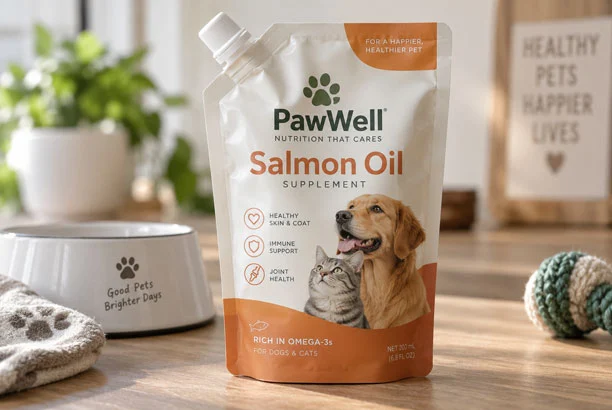
Spout Pouches vs. Traditional Bottles and Cans
Glass bottles offer rigidity, strong barrier potential, and established use in many beverage and food categories. But they're relatively heavy and can break during handling. Plastic bottles bring lower weight and good handling performance. Metal cans deliver strong barrier protection for suitable products. Each format also has its own filling, transportation, and end-of-life considerations.
Spout pouch packaging can offer advantages in empty-package weight, storage efficiency, and controlled dispensing in suitable applications. But compare total packaging cost project by project—laminate structure, fitment, cap, printing, filling equipment, order volume, and secondary packaging all influence the economics.
Flexible pouches also eliminate glass breakage and provide reclosure through a cap system. But filled-pouch strength and fitment integrity still need validation for your intended distribution conditions.
Spout Pouches vs. Standard Stand-Up Pouches and Sachets
Standard non-spouted stand-up pouches can also work for liquid or semi-liquid products when the material structure and seals are suitable. But they don't give you the same controlled dispensing and reclosure as an integrated spout-and-cap system.
Sachets are often used for single-use or portion-controlled products. Spout pouches are generally more suitable where repeated dispensing or reclosure is needed. The right format depends on your product volume, user behavior, filling method, and distribution requirements.
By combining flexible packaging with a dedicated dispensing fitment, spout pouch packaging provides a practical option where controlled pouring and reclosure matter. But base the decision on product and process requirements—not brand positioning alone.
Procurement Insights: Choosing and Sourcing the Right Spout Pouch Packaging
To source suitable spout pouch packaging, evaluate technical capability, fitment-sealing experience, quality systems, food-contact documentation, and repeat-production control. Spout pouch performance depends on multiple components working together, so supplier assessment should go beyond unit price.
Critical Quality Certifications and Compliance Standards
Quality-system certifications and food-contact compliance documentation serve different purposes. ISO 9001 covers quality-management systems. BRCGS Global Standard Packaging Materials addresses packaging-manufacturing site controls and hygiene requirements. Food-contact compliance needs separate documentation appropriate to the specified materials, intended product, and target market.
For U.S. applications, relevant packaging components must comply with applicable FDA food-contact requirements. For EU applications, evaluate the complete material structure against the applicable food-contact framework, including Regulation (EC) No 1935/2004 and, where relevant, Regulation (EU) No 10/2011 for plastic materials and articles.
Where relevant to the printing and lamination system, you may also request supporting reports for migration, residual solvents, or other specified compliance requirements. Select test methods based on the material structure, intended use, and applicable regulations—don't apply them as universal requirements.
Manufacturing Capabilities and Customization Flexibility
Production capability influences consistency, sampling, lead time, and the ability to support growing order volumes. Review printing, lamination, fitment sealing, pouch converting, and quality-control equipment when evaluating potential suppliers.
Guoshengli Packaging runs rotogravure printing with up to 11-color capability and also supports digital printing for projects needing shorter runs, multiple artworks, or more frequent design changes. Lead time depends on the printing method, material availability, artwork approval, and pouch specification.
Base spout selection on product viscosity, particle size, desired dispensing rate, pouch capacity, and filling-equipment compatibility—not a universal diameter table. Thin liquids, viscous sauces, purees, and products with particles may need different openings and fitment designs.
Material options can also be selected based on product requirements—high-barrier laminates, structures for thermal processing, or PE-rich designs developed with recyclability in mind. Clear windows, shaped pouches, tamper-evident closures, and other features can go in where technically appropriate.
Supplier Reliability and Long-Term Partnership Potential
Repeat-order consistency is especially important for spout pouches because fitment position, pouch dimensions, color reproduction, and seal quality directly affect filling-line performance. Evaluate the supplier's ability to reproduce an approved specification across multiple production runs.
Experience with similar products and filling processes also reduces implementation risk. Physical samples, production records, and communication during the development stage provide useful evidence of the supplier's technical capability and responsiveness.
International buyers should also factor in documentation support, communication efficiency, and understanding of destination-market requirements. Clear quotations and production specifications cut down misunderstandings around materials, fitments, printing, quantity, and logistics.
Best Practices and Design Ideas to Maximize the Benefits of Spout Pouch Packaging

Design decisions drive both the performance and visual impact of spout pouch packaging. Bring technical, production, and brand considerations into packaging development from the start—don't treat artwork and structure as separate decisions.
Branding and Visual Impact Strategies
Full-surface printing across the main pouch panels gives brands significant space for graphics, product information, and regulatory content. Rotogravure printing supports detailed graphics, gradients, and consistent brand reproduction. Matte or gloss finishes are selected based on the look you want.
Metallic effects, clear windows, and other decorative features can go in where they're compatible with the material structure and product requirements. Clear windows provide product visibility, but check their effect on barrier performance during material selection.
Artwork should also account for pouch geometry, spout location, seals, gussets, and viewing angles. Tamper-evident cap or fitment features can be incorporated where appropriate to show visible evidence that the closure hasn't been opened before purchase.
Material Selection for Optimal Performance
Start material selection with the product and filling process. Oxygen-sensitive products may need stronger oxygen barrier. Light-sensitive products may need opaque or foil-containing structures. Products with oils, acids, alcohols, or other chemically active ingredients may need specific sealant and fitment compatibility evaluation.
Thermal processing needs separate consideration. For hot-fill or retort applications, the complete pouch system—films, adhesive, sealant, fitment, and cap—must be validated under the intended temperature, time, and pressure conditions. Heat-resistant materials alone don't establish finished-package suitability.
Environmental objectives can also shape material design. PE-rich mono-material structures may work where they can deliver the required product protection and meet applicable design-for-recycling guidance. Evaluate their performance together with the fitment, cap, inks, adhesives, and any barrier layers.
Shelf-life evaluation should use an appropriate study design for the actual product and storage conditions. Accelerated studies can help where technically justified, but they shouldn't replace real-product validation without supporting methodology.
Filling Line Compatibility and Operational Integration
Spout pouch packaging must be compatible with your filling equipment and process. Pouch dimensions, fitment geometry, spout position, material stiffness, and filling opening all affect feeding, filling, and sealing performance.
Premade spout pouches may arrive with fitments already inserted. Other specialized systems integrate fitment insertion or package forming into the filling process. The right format depends on your equipment, production volume, and product characteristics.
Before full production, run line trials using the actual product and intended operating conditions. Monitor filling accuracy, pouch handling, spout position, seal integrity, and leakage during these trials.
For thermal filling processes, evaluate pouch distortion, fitment integrity, seal performance, and leakage under the intended filling and cooling conditions. Filled-pack trials catch practical issues that material data alone won't show.
Conclusion
Spout pouch packaging can be an effective option when controlled dispensing, reclosure, and lightweight flexible construction matter. Its suitability depends on the product, material structure, spout and cap design, filling process, seal integrity, and distribution requirements.
Don't assume every spout pouch delivers the same barrier, thermal performance, or sustainability benefits. Evaluate the complete packaging system against the actual application. Appropriate material selection, fitment design, filled-pack testing, and supplier capability all matter for reliable commercial performance.
Procurement teams that evaluate suppliers on technical support, production control, compliance documentation, and repeat-order consistency are better positioned to build packaging specs that perform reliably over time.
FAQ
1. Can spout pouch packaging handle hot-filling processes?
Yes, some spout pouch packaging structures can be designed for hot-fill or retort applications, but suitability must be validated for the complete package. Films, adhesives, sealant layers, spout, cap, fitment seals, and pouch seals all need to withstand the intended thermal process.
Hot-fill and retort are different processing conditions. A pouch suitable for one shouldn't automatically be assumed suitable for the other. Confirm the exact temperature, time, pressure, and cooling conditions before finalizing the material structure.
2. How do manufacturers prevent leakage at the spout connection point?
The spout is sealed into the pouch using controlled fitment-sealing conditions matched to the fitment and pouch sealant materials. Tooling applies heat and pressure around the spout base to form the required seal.
Seal geometry, temperature, pressure, dwell time, material compatibility, and fitment positioning all influence leakage performance. Finished-pouch leak testing and filled-pack handling trials evaluate the fitment connection under the intended application conditions.
3. What spout diameter should I specify for my product?
The correct spout diameter depends on product viscosity, particle or pulp content, desired dispensing rate, pouch capacity, and filling equipment. A thin beverage, thick sauce, and puree with particles may need very different fitment designs.
Don't just pick a diameter from a universal size chart. Give the supplier information about your product and filling process. Run dispensing samples and filling-line trials before finalizing the fitment.
4. Are recyclable options available for spout pouch packaging?
PE-rich mono-material structures can be designed to improve compatibility with selected PE recycling streams. But recyclability depends on the complete spout pouch packaging system—barrier layers, adhesives, inks, spout, and cap all count.
Assess the complete package against applicable design-for-recycling guidelines and the collection, sorting, and recycling infrastructure available in your target market. A mono-material pouch body alone doesn't guarantee the finished package is recyclable everywhere.
Partner with Guoshengli Packaging for Your Spout Pouch Solutions

Need help evaluating spout pouch packaging for your product? Guoshengli Packaging has more than 25 years of flexible packaging manufacturing experience. We support customers with material selection, fitment design, printing, pouch converting, sampling, and production preparation.
Our production capabilities include seven rotogravure printing machines with up to 11-color capability, six laminating machines, and 49 converting machines. Digital printing is also available for suitable shorter-run or multi-design projects.
We can provide relevant food-contact compliance and testing documentation for the specified material structure and intended market. Contact our team at sales@guoshengpacking.com to discuss your product, filling process, and packaging requirements.
References
-
Robertson, Gordon L. Food Packaging: Principles and Practice, Third Edition. CRC Press, 2012.
-
Marsh, Kenneth and Betty Bugusu. "Food Packaging—Roles, Materials, and Environmental Issues." Journal of Food Science, Vol. 72, No. 3, 2007.
-
Kadoya, Takashi. Food Packaging Technology. Marcel Dekker Inc., 1990.
-
Selke, Susan E.M., John D. Culter, and Ruben J. Hernandez. Plastics Packaging: Properties, Processing, Applications, and Regulations, Third Edition. Hanser Publications, 2015.
-
Coles, Richard, Derek McDowell, and Mark J. Kirwan. Food Packaging Technology. Blackwell Publishing, 2003.
-
Yam, Kit L. The Wiley Encyclopedia of Packaging Technology, Third Edition. John Wiley & Sons, 2009.
Online Message
SUBSCRIBE