English
- English
- French
- German
- Portuguese
- Spanish
- Russian
- Japanese
- Korean
- Arabic
- Greek
- German
- Turkish
- Italian
- Danish
- Romanian
- Indonesian
- Czech
- Afrikaans
- Swedish
- Polish
- Basque
- Catalan
- Esperanto
- Hindi
- Lao
- Albanian
- Amharic
- Armenian
- Azerbaijani
- Belarusian
- Bengali
- Bosnian
- Bulgarian
- Cebuano
- Chichewa
- Corsican
- Croatian
- Dutch
- Estonian
- Filipino
- Finnish
- Frisian
- Galician
- Georgian
- Gujarati
- Haitian
- Hausa
- Hawaiian
- Hebrew
- Hmong
- Hungarian
- Icelandic
- Igbo
- Javanese
- Kannada
- Kazakh
- Khmer
- Kurdish
- Kyrgyz
- Latin
- Latvian
- Lithuanian
- Luxembou..
- Macedonian
- Malagasy
- Malay
- Malayalam
- Maltese
- Maori
- Marathi
- Mongolian
- Burmese
- Nepali
- Norwegian
- Pashto
- Persian
- Punjabi
- Serbian
- Sesotho
- Sinhala
- Slovak
- Slovenian
- Somali
- Samoan
- Scots Gaelic
- Shona
- Sindhi
- Sundanese
- Swahili
- Tajik
- Tamil
- Telugu
- Thai
- Ukrainian
- Urdu
- Uzbek
- Vietnamese
- Welsh
- Xhosa
- Yiddish
- Yoruba
- Zulu

A bottle shape juice pouch gives you the look and feel of a bottle with the weight savings and storage efficiency of flexible packaging. Beverage brands use this format to stand out on shelf, make consumption easier, and cut down on shipping costs. But here's the thing—product protection comes from the whole system: laminate structure, spout and cap, seals, filling process, and distribution conditions. The pouch shape is just the starting point.
Understanding Bottle Shape Juice Pouches: Overview and Key Benefits
What Makes Bottle-Shaped Flexible Packaging Different?
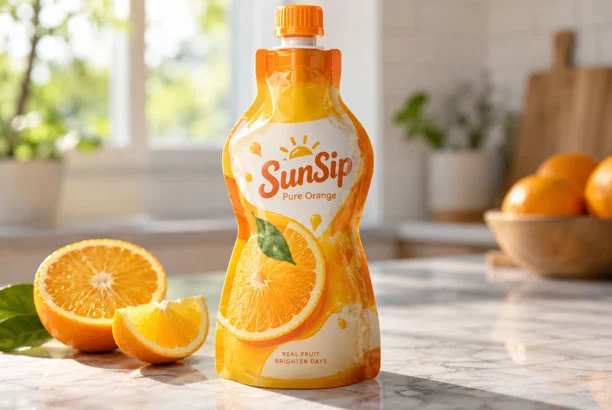
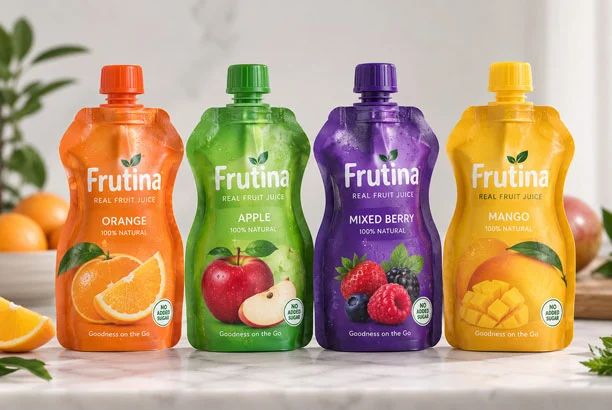
Bottle-shaped juice pouches stand apart from standard stand-up pouches through precision die-cutting that creates a bottle-like profile. This shaped format helps beverage products break away from ordinary flexible packaging, giving brands room to build a recognizable look on shelf.
The design ties appearance to practical handling. A bottle shape juice pouch can feature a defined neck or grip area, a stable bottom, and a spout-and-cap system for pouring. The exact geometry needs to work around your pouch capacity, product type, filling equipment, and how consumers actually use it—not just looks.
Core Performance Benefits That Solve Real Business Problems
Procurement managers juggle packaging cost, product protection, production fit, and consumer convenience all at once. A bottle-shaped flexible pouch addresses these needs when you spec the structure correctly for your application.
Flexible pouches use less material and weigh less than comparable rigid containers. That translates into better packing and shipping efficiency—especially when you ship empty packaging to a filling location. The actual logistics benefit depends on your pouch dimensions, fitments, carton config, shipment method, and what rigid package you're comparing against. Use your project-specific shipping data for cost and environmental comparisons.
Barrier protection matters. Bottle-shaped juice pouches use multilayer structures like PET/NY/AL/PE or other laminates chosen for your specific product and process. You spec oxygen, moisture, and light protection based on juice formulation, target shelf life, filling conditions, storage environment, and distribution route. Test barrier performance with the actual laminate under appropriate conditions—don't assume it from the pouch format.
Flexible pouches also eliminate glass breakage. But filled pouches still need evaluation for puncture resistance, leakage, seal strength, fitment integrity, and drop or handling stress. This matters most for portable beverages and products meant for frequent handling.
Operational Advantages for Production and Filling
A new packaging format has to work with your filling line. Bottle-shaped juice pouches can be designed for automated or semi-automated filling, but pouch geometry, opening characteristics, spout config, material stiffness, and sealing conditions all need to match the equipment.
For hot-fill applications, the laminate, adhesive, sealant layer, spout and cap, pouch construction, and finished seals must hold up against the filling temperature and process conditions. A bottle-shaped profile alone doesn't make it hot-fill suitable. Run filled-pack trials before commercial production whenever heat is involved.
The shaped pouch also gives you a large printable surface across the front and back panels. That's room for graphics, product information, and required labeling while keeping the bottle-shaped profile. During artwork development, account for seal areas, die-cut edges, the spout, and other functional zones.
Comparing Bottle Shape Juice Pouches with Alternative Packaging Solutions
How Bottle-Shaped Pouches Stack Up Against Traditional Bottles
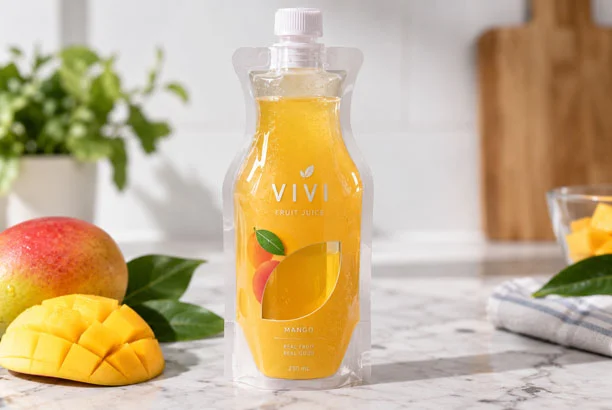
Glass bottles offer rigidity, strong shelf presence, and established recycling routes in many markets. But their weight and breakability hit you in transportation and handling. How much that matters depends on your product, distribution system, and local packaging infrastructure.
Rigid PET bottles are lighter than glass and have their own strengths in filling, handling, and recycling. They also need a different storage and transportation setup from flexible packaging. Don't assume one format is universally better—compare package weight, empty-pack storage, filling requirements, distribution performance, and end-of-life options for your actual project.
A bottle shape juice pouch gives you a bottle-inspired look with a flexible build. This can cut empty-package weight and storage volume in some applications, but the real commercial benefit comes from your finished spec, carton configuration, filling process, and distribution route.
Flexible Versus Rigid Materials: Performance Considerations
Flexible and rigid packaging protect products through different structural approaches. Rigid containers lean on wall stiffness. Flexible pouches combine film layers, seals, and fitments to deliver the mechanical and barrier performance you need.
Depending on your product and process, a high-barrier bottle-shaped juice pouch might use PET for printability and dimensional stability, PA/NY for toughness and puncture resistance, aluminum foil or metallized layers where you need stronger oxygen or light barrier, and an appropriate sealant layer for product contact and sealing. Pick the final structure based on the actual juice, filling conditions, and target shelf life.
Thermal conditions hit juice packaging especially hard. Refrigerated distribution, ambient storage, and hot-fill processing each place different demands on the laminate, adhesive, sealant, and fitment. Validate thermal-process compatibility for the complete pouch structure—don't assume it from individual material names.
Closure Options: Spouts, Caps, and Consumer Convenience
Closure design drives dispensing, reclosure, and overall package performance. Spout pouches with caps give you controlled pouring or direct drinking, and they work particularly well for multi-serving products.
Match spout diameter and geometry to your product viscosity, pulp or particle content, pouch capacity, and filling method. Thin juices don't dispense the same way as smoothies, purees, or pulpy beverages. Also evaluate the fitment and surrounding seal area for leakage and handling stress.
Hygiene and convenience needs shape the closure system. Capped spouts give you a reclosable dispensing option, while other opening systems might fit specific single-serve applications. The final choice should reflect how consumers actually use the product, what's inside, and your filling process.
Selecting the Right Bottle Shape Juice Pouch for Your Business Needs
Evaluating Capacity, Durability, and Barrier Requirements
Matching the package to the product cuts down problems during filling, distribution, and consumer use. Juice products vary in viscosity and may carry pulp or particles, so look at the spout opening, pouch geometry, and filling process together.
Pick capacity around serving format, distribution channel, and consumer use—not a one-size-fits-all rule. Smaller pouches suit single-serve applications; larger formats support multi-serving products. Get filled samples to check handling, dispensing, and standing stability before production.
Barrier requirements depend on product sensitivity, processing conditions, target shelf life, and distribution. Some juice applications need stronger oxygen and light protection; certain refrigerated or shorter-life products might work with different material approaches. Build the structure from documented product and process requirements—don't assume one laminate fits all juices.
Sustainability: Recyclable and Biodegradable Options
Sustainability now sits alongside performance, cost, and regulatory requirements in most packaging decisions. Bottle-shaped juice pouches can be built with different material strategies, but environmental claims need to reflect the complete package and the recycling or recovery infrastructure that actually exists in your market.
PE-rich mono-material structures improve compatibility with selected PE recycling streams. But recyclability depends on the entire package—pouch body, barrier layers, adhesive, inks, spout, cap, and all other components—plus local collection, sorting, and recycling systems. You still need to validate barrier and machinability for the intended juice application.
Environmental performance goes beyond recyclability. Package weight, material use, manufacturing, transportation, and end-of-life treatment all influence lifecycle impacts. When environmental comparisons matter, use actual lifecycle data and applicable recycling guidelines—not broad sustainability claims.
Customization for Brand Differentiation
Packaging drives product recognition at retail. Bottle-shaped flexible packaging gives brands freedom to combine functional design with a distinctive visual identity.
Custom die-cutting creates different bottle-inspired profiles, neck shapes, and grip areas. Develop these features with pouch strength, filling compatibility, spout position, and consumer handling in mind—visual differentiation shouldn't compromise performance.
Print quality matters just as much. Guoshengli Packaging runs rotogravure printing with up to 11-color capability, supporting detailed graphics across a range of designs. Artwork needs to leave room for seals, die-cut edges, spout placement, and required product information.
Practical Considerations: MOQ, Pricing, and Supplier Selection
Custom bottle-shaped pouches need project-specific tooling and production setup. At Guoshengli Packaging, MOQ starts from 10,000 pieces. The final number depends on pouch dimensions, material structure, printing method, spout configuration, and artwork requirements.
Price comes from the complete specification, not the pouch shape. Material structure, dimensions, printing, tooling, fitments, quantity, carton configuration, and transportation all affect the final cost. Nail these down early so you can compare quotations on the same technical basis.
Supplier evaluation goes beyond price. Look at pouch-manufacturing experience, equipment capability, quality-management systems, traceability, food-contact documentation, testing capability, and repeat-production control. Check site or quality-system certifications and product-specific compliance documentation separately.
The Manufacturing and Filling Process of Bottle Shape Juice Pouches
From Raw Materials to Finished Pouches
Manufacturing a bottle shape juice pouch starts with selecting films, adhesives, inks, and other components fit for the intended product and conditions of use. Review food-contact documentation for the complete material structure and intended application—a generic material certificate doesn't automatically cover every finished pouch.
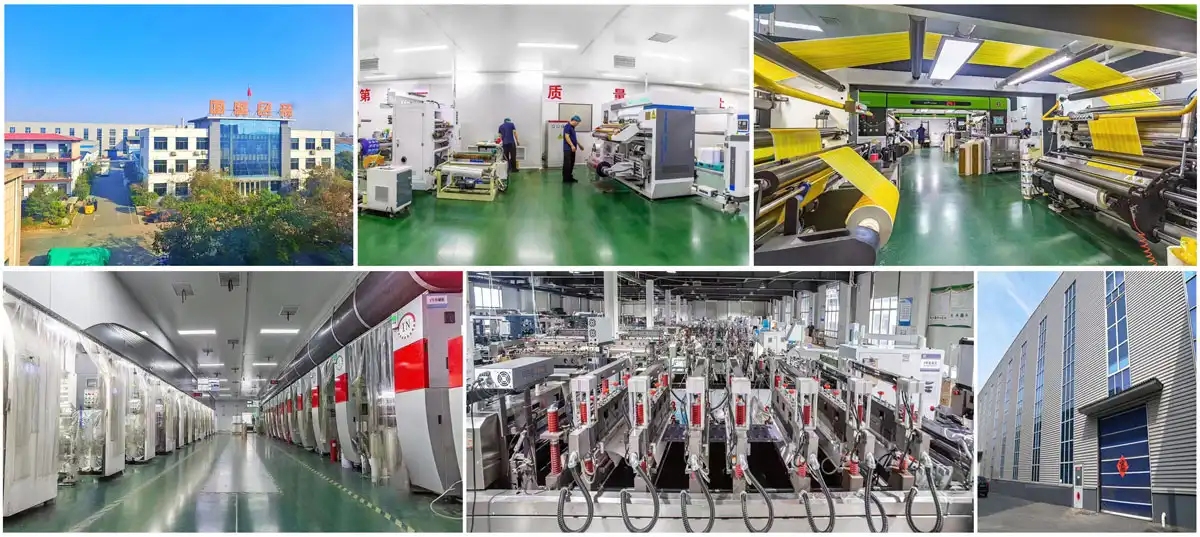
Lamination bonds the selected film layers into the required structure. Guoshengli Packaging runs six laminating machines and uses different lamination systems based on project requirements. Adhesive selection, curing, and bond performance need tight control so the finished laminate holds up during converting, filling, and distribution.
Rotogravure printing transfers approved artwork onto the film before converting. Guoshengli Packaging runs seven rotogravure presses with up to 11-color capability. We monitor registration, artwork reproduction, and production consistency during printing according to the approved project specs.
The printed and laminated material then gets converted into the required pouch geometry. Guoshengli Packaging operates 49 converting machines across different flexible-packaging formats. For bottle-shaped juice pouches, die-cutting creates the profile while the filling opening and spout configuration are set up according to the customer's design and filling process.
Quality Control Throughout Production
Packaging defects hit filling efficiency, product protection, and customer acceptance. That's why quality control runs through the entire production process, not just final inspection.
Check raw materials and incoming specs before production starts. Depending on the project, relevant properties include film thickness, appearance, dimensions, and documented material requirements. Define inspection items based on the finished pouch specification.
During production, monitor printing registration, lamination quality, dimensions, converting accuracy, and seal formation at each relevant stage. Process records help catch deviations before they affect a larger batch of finished packaging.
Finished-pouch evaluation covers dimensional checks, seal-strength testing, leak or integrity testing, puncture assessment, and filled-pack handling trials where relevant. These tests cover different aspects of package performance, so agree on the right methods and acceptance criteria for the actual product and project.
Production and material records also support traceability. Keep relevant compliance documents, material information, and quality records according to the agreed project and market requirements.
Filling Line Integration and Automation
Even a well-designed pouch needs to run reliably on your filling system. Develop bottle-shaped flexible packaging with the filling equipment and process in mind from the start.
Pouch opening, neck geometry, shoulder shape, spout position, body stiffness, and dimensional tolerances all affect filling-line handling. Share your filling-machine requirements with the pouch manufacturer before commercial production to cut down compatibility problems during line trials.
For hot-fill or other temperature-sensitive processes, evaluate the complete package—film structure, adhesive, sealant, fitment, and seals—under the intended processing conditions. A filled-pack or line trial gives you real evidence. Don't assume suitability from how the pouch looks or what the material is called.
Surface properties and material stiffness also affect pouch feeding and handling. Match film friction and web or pouch handling characteristics to your equipment—these aren't universal higher-is-better or lower-is-better properties.
Why Leading Brands and Businesses Trust Bottle Shape Juice Pouches
Supplier Reliability and Long-Term Partnership Value
Choosing a bottle-shaped pouch supplier is a long-term production decision. Tooling, artwork, filling-line setup, and approved specifications make supplier changes disruptive. Buyers benefit from evaluating manufacturing capability and repeat-order control at the start of a project.
Reliable repeat production means controlling dimensions, materials, printing, converting, and agreed quality requirements from one order to the next. This matters most when a pouch has to keep running on established filling equipment.
Guoshengli Packaging has manufactured flexible packaging since 1999. Our production line includes seven rotogravure printing machines with up to 11-color capability, six laminating machines, and 49 converting machines. These resources support a range of printed rollstock and premade pouch projects for international customers.
Technical communication matters. Discuss material selection, pouch construction, filling requirements, and applicable food-contact documentation before production so the spec reflects the actual product and process.
Future Trends: Innovation in Bottle-Shaped Flexible Packaging
Bottle-shaped flexible packaging keeps evolving as brands push for stronger differentiation, better consumer convenience, and structures built with recyclability in mind.
Digital features like QR codes can go right into packaging artwork for traceability, product information, or consumer engagement. Material development is also exploring barrier technologies that might reduce reliance on traditional multimaterial structures. But you still need to assess their suitability against the actual product, processing conditions, and applicable recycling guidelines.
Ergonomics will shape future pouch designs too. Grip areas, neck geometry, spout position, and pouch proportions can be refined through consumer and filling-line evaluation to improve handling without compromising performance.
Making the Final Decision: What Matters Most
Selecting a package format means balancing product protection, filling compatibility, distribution, cost, consumer use, brand positioning, and environmental objectives. No single format works best for every juice product.
Bottle-shaped flexible packaging gives you a distinctive shelf appearance plus the lightweight characteristics of flexible packaging. Whether it works depends on the material structure, fitment, seals, pouch geometry, and filling process—all evaluated against the actual product requirements.
For beverage brands weighing bottle-shaped pouches against rigid packaging, evaluate the complete packaging system, not one isolated feature. Material use, transportation, product protection, consumer handling, and end-of-life considerations all belong in the decision.
Conclusion
Bottle shape juice pouch packaging gives beverage brands a distinctive combination of shaped presentation, flexible construction, and customizable dispensing. But performance depends on more than the bottle-shaped look. Material structure, barrier requirements, spout and cap design, seal performance, filling conditions, and distribution all need consideration together. Compare documented package performance against your actual product requirements, and validate critical features through samples or production trials. An experienced flexible-packaging manufacturer can pull these technical, production, and compliance requirements into a practical spec.
FAQ
1. What juice products work best with bottle-shaped pouches?
Bottle-shaped flexible pouches work across a range of juice and beverage products. Lower-viscosity juices and thicker products with pulp need different spout sizes, pouch geometries, and filling setups. Hot-fill products require a package structure and fitment system validated for the actual process conditions. Refrigerated and ambient products may also need different barrier strategies depending on formulation, target shelf life, light sensitivity, and distribution.
2. How does cost compare to traditional packaging?
Cost comparison depends on the complete packaging and distribution system. Flexible bottle-shaped pouches may offer advantages in empty-package weight and storage efficiency over some rigid formats, but tooling, material structure, spouts, printing, filling equipment, and order quantity also drive total cost. Compare pouch cost, tooling, filling requirements, carton configuration, and transportation using your actual project specs—not a universal percentage difference.
3. Can these pouches support organic or clean-label positioning?
Bottle-shaped pouches can carry artwork and labeling for organic or clean-label products as long as the brand's product meets the applicable requirements. Packaging-material food-contact compliance and organic or clean-label product claims are separate issues. The brand or regulatory team should confirm final artwork, claims, and certifications for the intended market. The packaging supplier provides relevant food-contact documentation for the specified packaging structure.
Partner with Guoshengli Packaging for Your Bottle Shape Juice Pouch Needs
Need help evaluating a bottle shape juice pouch for your beverage project? Guoshengli Packaging has manufactured flexible packaging since 1999. We support customers with pouch-format development, material-structure selection, spout options, printing, sampling, and production preparation. Our facility runs under established quality-management systems, and we can provide relevant food-contact compliance and testing documentation for the specified material structure and market. Contact us at sales@guoshengpacking.com to discuss your product, filling process, and packaging requirements.
References
-
Robertson, Gordon L. Food Packaging: Principles and Practice, 3rd Edition. CRC Press.
-
Marsh, Kenneth and Betty Bugusu. "Food Packaging—Roles, Materials, and Environmental Issues." Journal of Food Science, Vol. 72, No. 3, 2007.
-
Selke, Susan E.M., John D. Culter, and Ruben J. Hernandez. Plastics Packaging: Properties, Processing, Applications, and Regulations, 3rd Edition. Hanser Publications.
-
Kirwan, Mark J. Handbook of Paper and Paperboard Packaging Technology, 2nd Edition. Wiley-Blackwell.
-
Yam, Kit L. The Wiley Encyclopedia of Packaging Technology, 3rd Edition. John Wiley & Sons.
-
Coles, Richard, Derek McDowell, and Mark J. Kirwan. Food Packaging Technology. Blackwell Publishing.
Online Message
SUBSCRIBE