- English
- French
- German
- Portuguese
- Spanish
- Russian
- Japanese
- Korean
- Arabic
- Greek
- German
- Turkish
- Italian
- Danish
- Romanian
- Indonesian
- Czech
- Afrikaans
- Swedish
- Polish
- Basque
- Catalan
- Esperanto
- Hindi
- Lao
- Albanian
- Amharic
- Armenian
- Azerbaijani
- Belarusian
- Bengali
- Bosnian
- Bulgarian
- Cebuano
- Chichewa
- Corsican
- Croatian
- Dutch
- Estonian
- Filipino
- Finnish
- Frisian
- Galician
- Georgian
- Gujarati
- Haitian
- Hausa
- Hawaiian
- Hebrew
- Hmong
- Hungarian
- Icelandic
- Igbo
- Javanese
- Kannada
- Kazakh
- Khmer
- Kurdish
- Kyrgyz
- Latin
- Latvian
- Lithuanian
- Luxembou..
- Macedonian
- Malagasy
- Malay
- Malayalam
- Maltese
- Maori
- Marathi
- Mongolian
- Burmese
- Nepali
- Norwegian
- Pashto
- Persian
- Punjabi
- Serbian
- Sesotho
- Sinhala
- Slovak
- Slovenian
- Somali
- Samoan
- Scots Gaelic
- Shona
- Sindhi
- Sundanese
- Swahili
- Tajik
- Tamil
- Telugu
- Thai
- Ukrainian
- Urdu
- Uzbek
- Vietnamese
- Welsh
- Xhosa
- Yiddish
- Yoruba
- Zulu

When specialty coffee brands evaluate packaging, the choice between stand-up pouches and flat-bottom pouches can have important implications for shelf presentation, filling, material use, branding space and cost. A 250g custom flat bottom pouch provides a distinctive box-like shape with front, back, two side-gusset panels and a flat bottom panel that can all be incorporated into the artwork layout. For specialty coffee, artisan snacks and other premium food products, understanding the structural and functional differences between these two formats can help buyers select packaging that fits both the product and the brand.
Understanding 250g Stand-Up and Flat-Bottom Pouch Packaging for Coffee
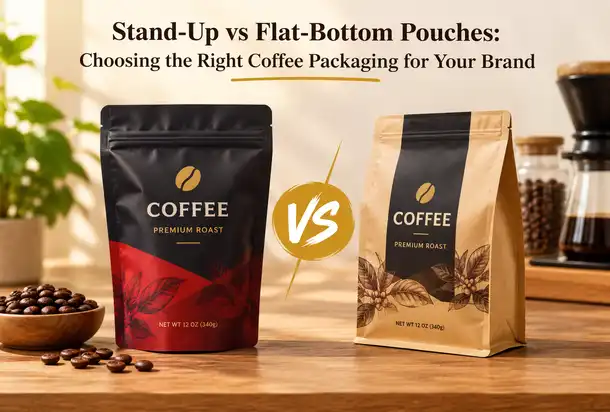
A stand-up pouch typically uses a bottom gusset that expands as the pouch is filled, allowing the finished package to stand upright. A 250g custom flat bottom pouch uses a separate flat bottom panel together with front, back and side-gusset panels to create a more structured, box-like geometry when appropriately filled. This construction changes the pouch's shelf presentation, usable artwork layout and filled-pack stability while remaining a flexible packaging format.
The 250g size is commonly used for specialty coffee in many retail markets, but the correct pouch dimensions should be selected according to the actual product rather than weight alone. Whole beans and ground coffee can occupy different volumes, while roast profile, bean density, required headspace and filling conditions can also affect the appropriate pouch dimensions. When these factors are correctly matched, a flat-bottom format can provide a stable, structured presentation on the shelf.
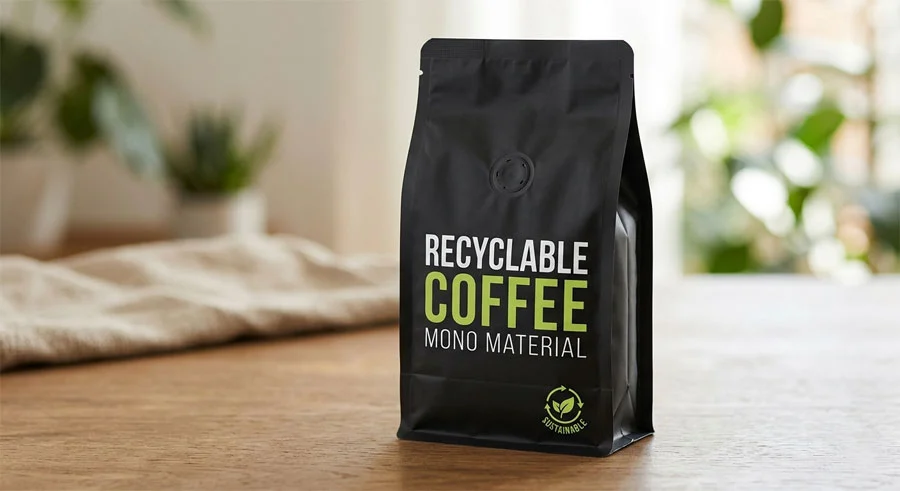
Material selection should be based on the coffee's barrier requirements, intended shelf life and distribution conditions. High-barrier structures may include PET/aluminum foil/PE or other multilayer laminates, while kraft-paper outer layers can be used where a natural visual appearance is desired. Matte finishes can provide a softer, premium surface appearance. PE- or PP-rich mono-material structures can also be considered for selected applications where improved compatibility with recycling streams is a priority, but their barrier performance should be evaluated against actual OTR, WVTR, light-barrier and shelf-life requirements rather than assumed to match conventional foil laminates.
Comparative Analysis: Stand-Up Pouches vs Flat-Bottom Pouches for Coffee Packaging
Structural and Functional Differences That Matter
Both formats can be equipped with features commonly used for coffee packaging, including tear notches, resealable zippers and one-way degassing valves. The main differences lie in pouch geometry, shelf presentation, panel layout, converting complexity and the way the filled package behaves during storage and display.
Stand-up pouches can provide a relatively simple and cost-efficient format for many coffee applications. Their front and back panels provide the primary branding areas, while the bottom gusset expands when filled. A 250g custom flat bottom pouch, by comparison, provides front, back, two side-gusset panels and a bottom panel that can be incorporated into the overall artwork layout. The side panels can provide additional space for information such as coffee origin, brewing instructions, certifications or flavor notes. When pouch dimensions and fill volume are appropriately matched, the flat rectangular base can also provide a structured, box-like shelf presentation.
Here is how the two formats compare across criteria relevant to specialty coffee procurement:
Shelf stability: A properly designed flat-bottom pouch can provide a structured upright presentation when appropriately filled. Stand-up pouches also stand upright, but their shelf geometry and stability depend on bottom-gusset design, pouch dimensions, film structure and fill volume.
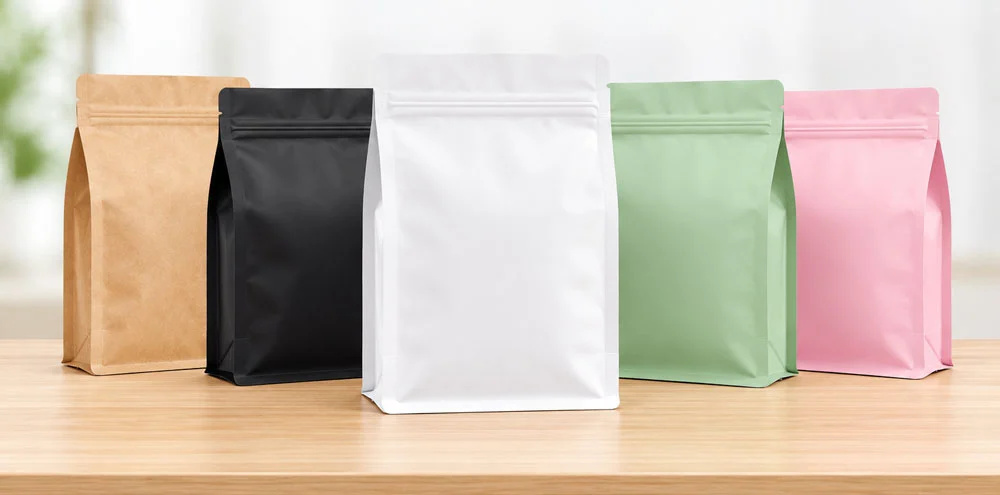
Branding surface: Flat-bottom designs provide front, back, two side-gusset panels and a bottom panel that can be incorporated into the artwork, giving designers additional surfaces for brand and product information.
Freshness retention: Neither format is inherently better for coffee freshness. The laminate provides the primary oxygen, moisture and light barrier; the primary heat seal protects the unopened package; a one-way degassing valve allows gases released by freshly roasted coffee to escape while limiting external air ingress; and a zipper provides reclosure after opening.
Cost position: Stand-up pouches generally involve a simpler converting structure, while flat-bottom pouches require a more complex construction. Actual unit cost depends on pouch dimensions, material structure, printing method, quantity, zipper, valve and other features.
How to Choose the Right 250g Coffee Packaging for Your Brand?
Matching Packaging Format to Brand Objectives
Packaging format should reflect both the product requirements and the intended market presentation. For coffee sold through specialty retailers, direct-to-consumer channels or other environments where structured shelf presentation is important, a 250g custom flat bottom pouch can provide a distinctive box-like appearance and additional side-panel space for brand communication. A stand-up pouch may be more appropriate where a simpler flexible format and cost efficiency are higher priorities.
Commercial requirements should also be considered during format selection. Smaller order quantities can be important for new SKUs, seasonal products and brands testing different artworks. For suitable projects, digital printing can support shorter runs and production lead times of approximately 7–10 days, while rotogravure production generally requires a longer production schedule and is commonly used for larger, more stable volumes. Actual MOQ and lead time depend on pouch dimensions, material structure, artwork quantity, features and production scheduling.
Food-contact requirements should be evaluated according to the destination market and intended conditions of use. For U.S. applications, the specified packaging materials should be supported by documentation relevant to applicable FDA food-contact requirements. EU food-contact packaging is subject to its applicable regulatory framework, while Australia and other markets have their own requirements. Buyers should therefore confirm the documentation required for the actual destination market rather than assuming that one regulatory system applies globally. Sustainability requirements also vary by customer and market. Where recyclable structures are being considered, the complete package—including barrier layers, zipper, valve, inks and adhesives—should be evaluated together with applicable design-for-recycling guidance and local recycling infrastructure.
Design and Branding Strategies for 250g Custom Flat Bottom Pouches
Using Five-Panel Printing to Build Brand Equity
A 250g custom flat bottom pouch provides five surfaces that can be incorporated into the overall packaging artwork: the front, back, two side-gusset panels and bottom panel. This gives designers flexibility to distribute branding, coffee origin, flavor notes, brewing information, certifications and other required content without placing everything on the main front panel. Rotogravure printing with up to 11-color capability can support detailed graphics, gradients, text and consistent brand reproduction.
Matte finishes are widely used in specialty coffee packaging where a softer, less reflective surface appearance is desired. Other finishing options can include gloss effects, spot UV, metallic effects or transparent windows where technically appropriate. These are visual and tactile features rather than barrier functions: light protection depends on the actual film and laminate structure. Transparent windows can provide product visibility, but their effect on oxygen, moisture and light barrier should be considered during material selection.
Moving from a conventional stand-up pouch to a structured flat-bottom format changes the way the package presents the product on the shelf. The box-like geometry and additional side panels can support a different visual identity and may be useful for brands seeking a more structured or premium presentation. The effect on consumer response or sales, however, depends on the complete brand, product, channel and packaging strategy rather than pouch shape alone.
Procurement and Bulk Ordering Essentials for 250g Custom Flat Bottom Coffee Pouches
What to Verify Before Placing a Production Order?
Working with a reliable 250g custom flat bottom pouch manufacturer requires evaluation of both technical and commercial details before production. Here are the core procurement checkpoints that can help reduce packaging and supply-chain risk:
MOQ and trial order flexibility: Digital printing can support smaller production runs for suitable projects, making it useful for new SKUs, multiple artworks and market testing. The actual MOQ should be confirmed according to pouch dimensions, material structure, printing method and number of designs. Buyers should also confirm whether the MOQ applies per artwork or across the total order.
Color matching and proofing: Confirm the required color references and proofing process before commercial printing. Digital proofs, printed samples or other agreed approval methods can help align artwork expectations before production.
Barrier specification documentation: Request the proposed laminate structure together with relevant OTR and WVTR data where oxygen and moisture barrier are important. These values should include applicable test conditions and should be evaluated against the coffee's actual shelf-life requirements rather than treated as universal freshness guarantees.
Certification traceability: Distinguish quality-management and site certifications from product-specific food-contact documentation. ISO 9001 relates to quality-management systems, while BRCGS Global Standard Packaging Materials relates to packaging-manufacturing site controls. For food-contact applications, request documentation supporting compliance with the applicable requirements for the specified material structure and destination market. Relevant third-party test reports may provide additional supporting evidence where required.
These steps help establish a clearly defined specification before commercial production and make it easier to maintain consistency across repeat orders. For coffee packaging, filled samples can also be useful for evaluating pouch dimensions, valve position, zipper function, shelf appearance and compatibility with the intended filling process.
Conclusion
For specialty coffee brands, packaging format should be selected according to product protection, shelf presentation, branding requirements, filling conditions and commercial priorities. A well-designed 250g custom flat bottom pouch can provide a structured box-like presentation, additional side-panel artwork space and material structures tailored to the required barrier performance. Stand-up pouches remain a practical option where a simpler flexible format and cost efficiency are priorities. Neither format is universally better: the appropriate choice depends on how the pouch structure, material, valve, zipper, printing and dimensions match the actual coffee product and route to market.
FAQ
1. Which pouch type better preserves coffee freshness?
Neither stand-up nor 250g custom flat bottom pouch packaging is inherently better for coffee freshness. Freshness protection depends primarily on the laminate's oxygen, moisture and light barrier, the integrity of the primary seals, filling conditions and storage environment.
For freshly roasted coffee, a suitable one-way degassing valve can allow internal gases such as CO₂ to escape while limiting external air ingress. A zipper provides convenient reclosure after the package has been opened, but it does not replace the primary seal or the barrier performance of the laminate. Buyers should therefore compare material structure, valve design and complete package performance rather than selecting a pouch format based on freshness claims alone.
2. Are eco-friendly flat-bottom pouches as durable as conventional laminates?
PE- or PP-rich mono-material 250g custom flat bottom pouch structures can provide suitable mechanical and barrier performance for selected coffee applications, but they should not automatically be assumed to match conventional high-barrier laminates such as aluminum-foil structures.
Buyers should compare the actual OTR, WVTR, light-barrier, puncture, sealing and shelf-life requirements of the product before selecting a structure. Recyclability should also be assessed using the complete package—including barrier layers, zipper, valve, inks and adhesives—against the applicable design-for-recycling guidelines and local collection, sorting and recycling infrastructure.
3. What is the typical lead time for a custom printed flat-bottom pouch order?
At Guoshengli Packaging, suitable digital-printing projects can typically be produced in approximately 7–10 days, while rotogravure orders generally require around 15–20 days after artwork approval and order confirmation. Actual production time depends on material availability, pouch construction, printing requirements, accessories such as zippers and valves, and the current production schedule.
International buyers should also allow separate time for sampling, artwork confirmation and transportation when planning a product launch.
4. What is the minimum order quantity for small-batch specialty coffee brands?
MOQ varies according to printing method, pouch dimensions, material structure, artwork quantity and converting requirements. Digital printing can support smaller trial runs for suitable 250g custom flat bottom pouch projects and can be particularly useful for brands managing multiple SKUs or testing new designs.
The exact MOQ should be confirmed according to the project specification. Buyers should also ask whether the minimum quantity applies per design, per material structure or across the total order, as this can significantly affect multi-SKU purchasing plans.
Ready to Elevate Your Coffee Packaging? Partner with Guoshengli Packaging
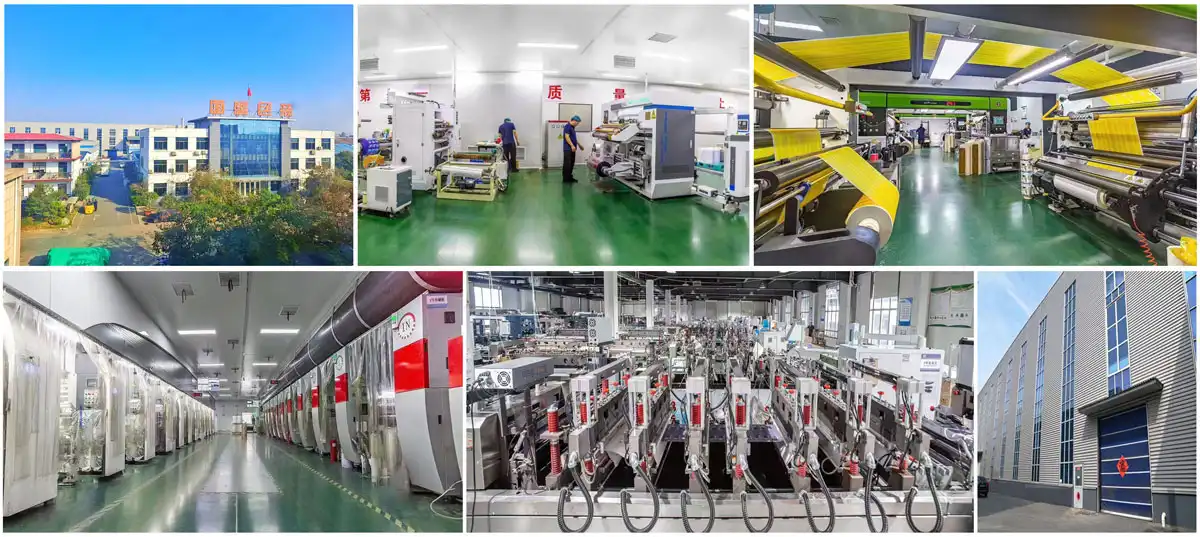
Need help developing a 250g custom flat bottom pouch for your coffee? Guoshengli Packaging has more than 25 years of flexible-packaging manufacturing experience and can support material selection, one-way degassing valves, zipper options, printing, sampling and production preparation.
Our production capabilities include seven rotogravure printing machines with up to 11-color capability, six laminating machines and 49 converting machines. Digital printing is also available for suitable smaller-run and multi-design projects. Relevant food-contact compliance and testing documentation can be provided according to the specified material structure and intended market.
Contact our team at sales@guoshengpacking.com to discuss your coffee packaging requirements.
References
Robertson, G. L. Food Packaging: Principles and Practice. CRC Press.
Marsh, K. & Bugusu, B. “Food Packaging—Roles, Materials, and Environmental Issues.” Journal of Food Science, 72(3), R39–R55.
Coles, R., McDowell, D. & Kirwan, M. J. Food Packaging Technology. Blackwell Publishing.
Yam, K. L. The Wiley Encyclopedia of Packaging Technology. John Wiley & Sons.
Selke, S. E. M., Culter, J. D. & Hernandez, R. J. Plastics Packaging: Properties, Processing, Applications, and Regulations. Hanser Publishers.