- English
- French
- German
- Portuguese
- Spanish
- Russian
- Japanese
- Korean
- Arabic
- Greek
- German
- Turkish
- Italian
- Danish
- Romanian
- Indonesian
- Czech
- Afrikaans
- Swedish
- Polish
- Basque
- Catalan
- Esperanto
- Hindi
- Lao
- Albanian
- Amharic
- Armenian
- Azerbaijani
- Belarusian
- Bengali
- Bosnian
- Bulgarian
- Cebuano
- Chichewa
- Corsican
- Croatian
- Dutch
- Estonian
- Filipino
- Finnish
- Frisian
- Galician
- Georgian
- Gujarati
- Haitian
- Hausa
- Hawaiian
- Hebrew
- Hmong
- Hungarian
- Icelandic
- Igbo
- Javanese
- Kannada
- Kazakh
- Khmer
- Kurdish
- Kyrgyz
- Latin
- Latvian
- Lithuanian
- Luxembou..
- Macedonian
- Malagasy
- Malay
- Malayalam
- Maltese
- Maori
- Marathi
- Mongolian
- Burmese
- Nepali
- Norwegian
- Pashto
- Persian
- Punjabi
- Serbian
- Sesotho
- Sinhala
- Slovak
- Slovenian
- Somali
- Samoan
- Scots Gaelic
- Shona
- Sindhi
- Sundanese
- Swahili
- Tajik
- Tamil
- Telugu
- Thai
- Ukrainian
- Urdu
- Uzbek
- Vietnamese
- Welsh
- Xhosa
- Yiddish
- Yoruba
- Zulu

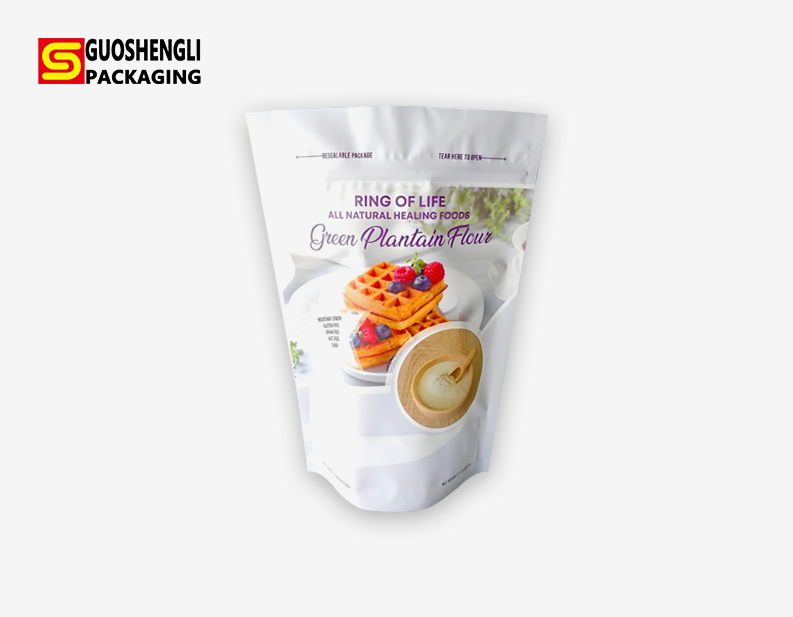
When premium brands need packaging that commands shelf presence while maintaining exceptional product protection, the 250g custom flat bottom pouch offers an ideal solution. This box-style flexible packaging combines the structural stability of rigid containers with the versatility and cost-efficiency of pouches. With five printable panels and a stable base, these pouches stand upright confidently on retail shelves, creating maximum brand visibility while protecting contents from moisture, oxygen, and light. For coffee roasters, specialty snack brands, pet treat manufacturers, and organic food producers targeting discerning consumers, this packaging format delivers the premium unboxing experience that builds brand loyalty.
Understanding 250g Custom Flat Bottom Pouches
What Makes Flat Bottom Pouches Unique
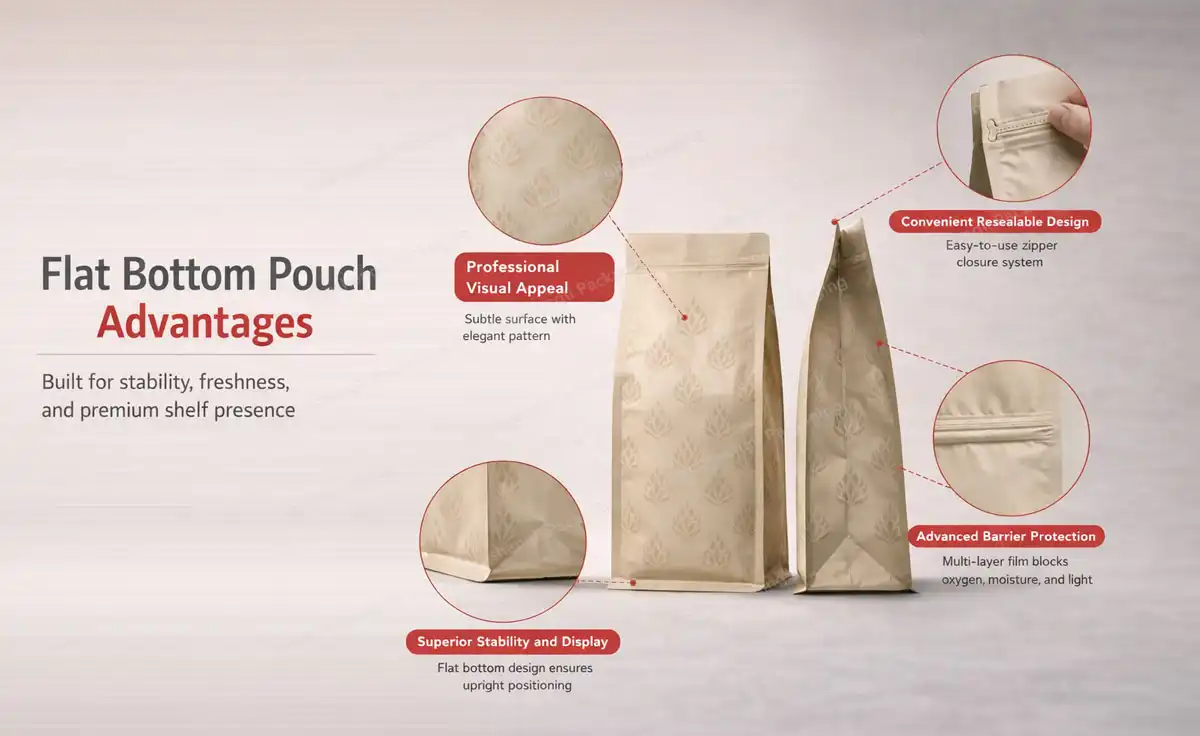
Flat bottom pouches, often called box pouches, are made with five panels, which is distinct from other forms of flexible packaging. Unlike standard stand-up pouches, these designs are made comprised of a front panel, a back panel, two side gussets and a flat bottom. This innovation makes the bag incredibly sturdy so it stands up straight even before it’s full. The box-like form makes the pouches highly beneficial for both shelf display and transportation as it maximises the space inside while keeping the footprint minimal. Brands use this format because it falls between high-end hard packaging and flexible choices.
Material Options and Barrier Performance
250g custom flat bottom pouches are made of multiple layers that work together to create a better barrier of protection that is necessary to extend the shelf life of food. Some common combinations of materials are PET for strength, aluminum foil for best barrier performance, PE for heat sealing, and kraft paper for a natural look. Each layer has a specific job to do. The outer layers protect against punctures and make printable surfaces, the middle layers stop the flow of air and wetness, and the inner food-contact layers make sure the safety of the product. Depending on how sensitive your product is and how long you want it to last, we have designs that range from basic three-layer laminates to advanced seven-layer setups.
Material choices are being influenced more and more by environmental concerns. Recycling single-material structures made of PE or PP on all layers makes the end-of-life process easier while still providing enough protection for many uses. Compostable choices with PLA and PBAT work for brands that believe in the cycle economy, but they need to be carefully tested to make sure they work with other products and last a long time. Our expert team helps you find a balance between your goods' real protection needs and your goals for sustainability. They do this by avoiding solutions that lower quality for the sake of marketing claims.
Key Features That Enhance Usability
In addition to being better for structure, flat bottom pouches can hold functional features that make the customer experience better. When used more than once, resealable zipper seals keep things fresh. This is especially helpful for coffee, nuts, and pet treats that are eaten over a few days. One-way degassing valves let CO2 out of freshly roasted coffee beans while blocking oxygen from getting in. This protects the flavors during the important time after roasting. Easy-tear notches make it easy to open flexible packaging without knives or other tools, which is a regular problem.
Transparent windows let customers see the products inside, which boosts their trust by showing them the quality before they buy. These windows can be built into the front panel or spread out over several areas, but each one needs to be carefully thot out in terms of the barrier. Selective window placement along with high-barrier base films works well for brands that want to balance visibility with protection.
Comparing 250g Custom Flat Bottom Pouches with Other Pouch Types
Structural Advantages Over Stand-Up Pouches
The bottom gussets of traditional stand-up pouches keep them stable. This makes the base round, which can tip over when the pouch is partly full or stacked. This weakness isn't present in flat bottom designs because they have a designed base panel that spreads weight evenly and keeps the product standing straight throughout its lifecycle. This stability is especially important in stores where people decide what to buy based on how things look. In comparison to the curved surfaces of standard stand-up formats, the four vertical panels of 250g custom flat bottom pouches offer superior graphics space, enabling more effective brand storytelling.
Another useful difference is the efficiency of the filling line. Because flat bottom pouches are shaped like boxes, the hole sizes stay the same during automatic filling operations. This lowers the number of jams and increases output. Stand-up bags may fall apart or twist while being filled quickly, so the line needs to be adjusted more often. For brands that are increasing the number of products they make, this operational reliability means less downtime and more stable manufacturing costs.
When Gusset Pouches Make More Sense
Side gusset pouches are better in some situations where flat bottom pouches might not be worth the extra money. Coffee roasters who need larger amounts—500g to 1 kg—of coffee often choose side gusset designs because they make the inside space bigger while being easier to build. These pouches also fit standard packaging equipment better, so businesses that already have equipment for gusset formats don't have to buy anything new. The difference in cost gets smaller as the number of orders goes up. This makes side gussets a good choice for well-known products that are always in demand.
But flat bottom pouches often make the investment worth it for specialty brands that want to position their products in stores with a lot of competition because they look better on the shelf. The choice will depend on how you position your brand in the market, the needs of your retail channels, and whether the packaging is a key part of your brand's differentiation or just a way to keep things safe.
Evaluating Resealable and Valve Options
Adding reusable zippers raises the cost per unit, but the goods are more valuable to customers because they can be used more than once. Based on our experience, the convenience premium pays off for products that are priced above the mid-market range. This is because the quality of the packaging shows how good the product is overall. Procurement managers should compare the cost of the feature to the amount of waste that could be cut down and the number of repeat purchases. Fresh products make people want to use them and buy more of them.
Degassing valves are especially useful for coffee packaging, where CO2 keeps escaping for weeks after the coffee is roasted. Without valves, pressure inside the package can cause bags to break or packages to swell up and look damaged. One-way valves solve this problem while stopping air from getting in, which quickly ruins coffee. Even tho valves are more complicated and cost more, they are still necessary for specialty coffee makers that want to keep the flavor.
Procurement Guide for 250g Custom Flat Bottom Pouches
Minimum Order Quantities and Customization Scope
Guoshengli Packaging offers practical MOQs for 250g custom flat bottom pouches, helping growing brands test markets without excessive inventory. Customization includes materials, structures, printing, finishes, barrier levels, zippers, and valves. Design support ensures brand concepts become practical specifications that perform reliably during production and filling.
Understanding Pricing Determinants and Lead Times
Custom flat bottom pouch prices depend on materials, printing methods, structural complexity, finishes, and features. Digital printing suits short runs with 7–10-day lead times, while rotogravure offers consistent colors and lower unit costs for larger orders but requires 15–20 days. Rush services support urgent launches and market opportunities.
Supplier Evaluation and Sourcing Strategy
Selecting a packaging supplier requires evaluating reliability, technical expertise, communication, and certifications. ISO 9001, BRC, and FDA compliance reduce quality and regulatory risks. Suppliers with strong production capacity can support growth and prevent shortages, while experienced international partners help manage sourcing costs, customs, documentation, and communication effectively.
Design and Printing Techniques for Optimized Branding
Advanced Printing Methods and Quality Implications
Rotogravure printing provides accurate, stable colors for large runs of 250g custom flat bottom pouches, supporting complex designs and consistent brand presentation. Up to 11 colors enable gradients, photos, and precise branding. Digital printing offers faster turnaround, lower setup costs, and flexibility for smaller runs, testing, and initial launches.
Design Strategies for Maximum Shelf Impact
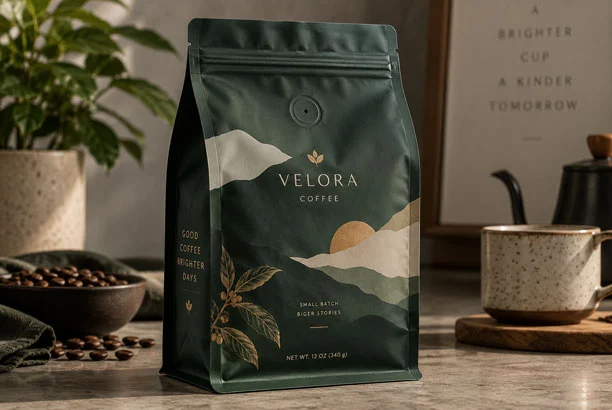
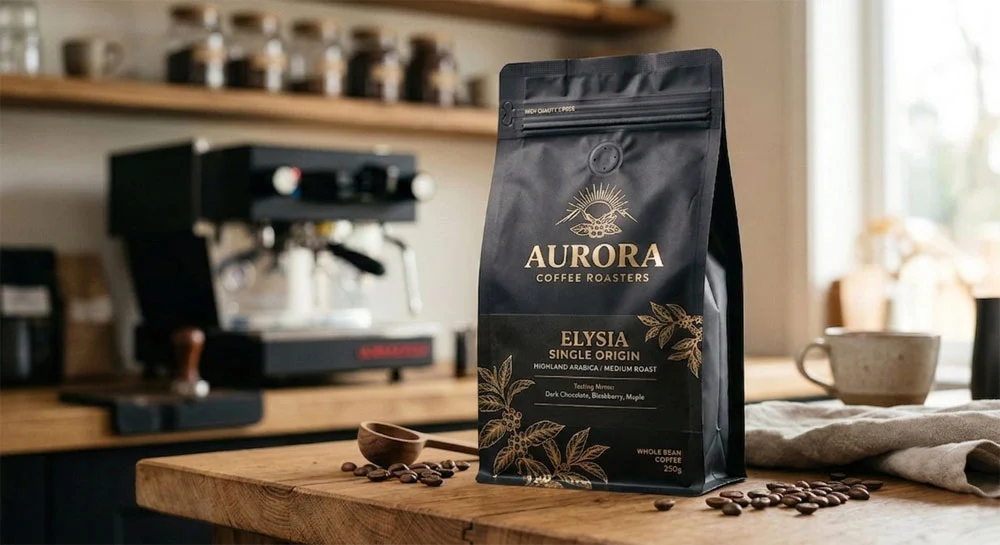
The five-panel form of flat bottom bags gives graphic designers both chances and problems to work with. All areas that can be seen—the front, back, sides, and bottom—should be used by good designs to tell full brand stories while keeping the visual order. The main brand name and important product features that make people want to buy should be on the front panel. Side panels hold extra details like certificates, highlighted ingredients, and cooking directions without taking away from the main images.
In North America and Europe, clean layouts with big fonts, lots of empty space, and the occasional use of high-end finishes are popular design trends right now. Matte lamination with spot gloss adds interest to the touch and a sense of quality. Metallic inks and foil stamping give off a sense of luxury that fits with a high-end brand. These finishing methods work especially well on kraft paper because its natural look fits with brand positioning that is natural and handmade.
Certification display requires strategic placement that satisfies compliance requirements without dominating brand storytelling. Certification displays need to be placed in a way that meets compliance standards without taking away from the brand's story. On the back panels, regulation information, certification logos, and batch codes are usually laid out in a way that keeps the professional look. When packaging is well-designed, it's easy to meet both law and business goals.
Communicating Sustainability Credentials
Clear recycling or composting labels help consumers dispose of packaging correctly and support sustainability goals. To avoid greenwashing, brands should use specific, verifiable environmental claims supported by materials and certifications.
Enhancing Packaging Performance and Sustainability
Barrier Properties and Shelf Life Extension
The main job of any food packaging is to keep the food inside from going bad. 250g custom flat bottom pouches are great at this because they have multiple layers that are designed to stop specific threats. Dry foods like coffee, nuts, and snacks go bad faster when they let moisture through. High-barrier films stop moisture vapor from passing through to almost nothing, keeping the crunch and taste. Oxygen causes oxidation reactions that break down fats, vitamins, and aromatic compounds. Aluminum foil layers or metalized films block almost all oxygen.
Light, especially UV bands, breaks down chemicals that are sensitive in coffee, tea, and nutraceuticals. Photodegradation can't happen because of opaque structures or films that stop UV light. We help brands set barrier standards based on the ingredients in the product, how long they want it to last, and how it will be distributed. Over-engineering barriers wastes money and time and causes problems with quality; the right way to design barriers strikes a balance between these two points of view.
Using good packing to make food last longer cuts down on food waste all along the supply chain. Products that stay fresh longer need to be thrown away less often at the retail and consumer levels because they are about to expire. Getting rid of less trash is a big part of being environmentally friendly, but this reduction also helps the environment in other ways.
Balancing Reusability with Practical Application
Reusable packaging is good for the environment in theory, but in practice, people don't always follow through. Most people don't have ways to clean and reuse food pouches, and contamination makes recycling dirty packaging impossible. Recognizing these facts leads to better ways of doing things. Single-use packaging made from easily recycled materials is often better for the earth than packaging that is supposed to be reused but ends up in landfills.
Using single-materials that are easily processed by recycling infrastructure in disposable packaging that is designed for circular material flows matches sustainability goals with practical reality. Our PE and PP structures can be recycled in existing systems, so they don't need any new infrastructure to be built. This kind of practical sustainability gives the environment real benefits instead of just nice words.
Material Innovation and Smart Packaging Technologies
The technology behind packaging keeps changing quickly. Barrier performance that used to require multi-material laminates can now be achieved by structures made of just one material. This makes recycling easier while still providing security. Bio-based products made from renewable resources lower the need for fossil fuels, but they still need to be tested for efficiency. Instead of pushing ideas that haven't been tested, we keep a close eye on these new ideas and introduce proven technologies as soon as they can be used in business.
For some uses, smart package technologies like QR codes that connect to product information, freshness signs, and authentication features are useful. If it makes sense for the brand plan, these features can be added to flat bottom pouch designs. The important thing is to make sure that the use of technology is based on real market value, not just on novelty.
Conclusion
250g custom flat bottom pouches are a smart choice for premium brands that need to stand out on the shelf, protect their products well, and allow for easy customization. The 250g size works well for coffee, specialty snacks, pet treats, and health products where the quality of the packaging shows how the brand is positioned overall. Knowing the different types of materials, comparing pouch sizes, carefully checking out suppliers, and designing for maximum impact are all things that can help you get the most out of your packaging investments. This will pay off in the form of better brand recognition and customer satisfaction. As concerns about sustainability become more important in buying choices, flat bottom pouches offer ways to be more eco-friendly without sacrificing the performance that keeps goods safe and profits high.
FAQ
1.What is the typical minimum order quantity for 250g custom flat bottom pouches?
Minimum order quantities vary a lot from one supplier to the next, but they are usually between 10,000 and 50,000 units. We at Guoshengli Packaging have more variable MOQs to meet the needs of growing companies and testing situations. Minimums are different for each printing method and level of customization. For example, digital printing usually has smaller minimums than rotogravure. We suggest that you talk about your expected volumes and growth to find the most cost-effective way to proceed.
2.Can I request samples before committing to large orders?
Of course. It is common practice to ask for samples when buying packaging, and it helps make sure that the specifications meet your needs. Once the design specs are set, we send samples of both regular configurations and prototypes made just for you. This sampling method finds problems before they happen in full production, which saves money on fixing them later. Lead times for samples are usually between 5 and 7 days, which lets you quickly evaluate and make a choice.
3.How do eco-friendly materials impact cost and performance?
When compared to regular materials, sustainable materials usually cost 10 to 30 percent more, but this can vary by material and volume. When looking at performance qualities, you need to be very careful. For example, some reusable mono-materials now have the same barrier properties as multi-layer materials, and some compostable films have shelf life limits. We give you clear information about our performance so that you can make smart choices that balance your needs for environment, product safety, and your budget.
Partner with Guoshengli Packaging for Your Custom Flat Bottom Pouch Needs
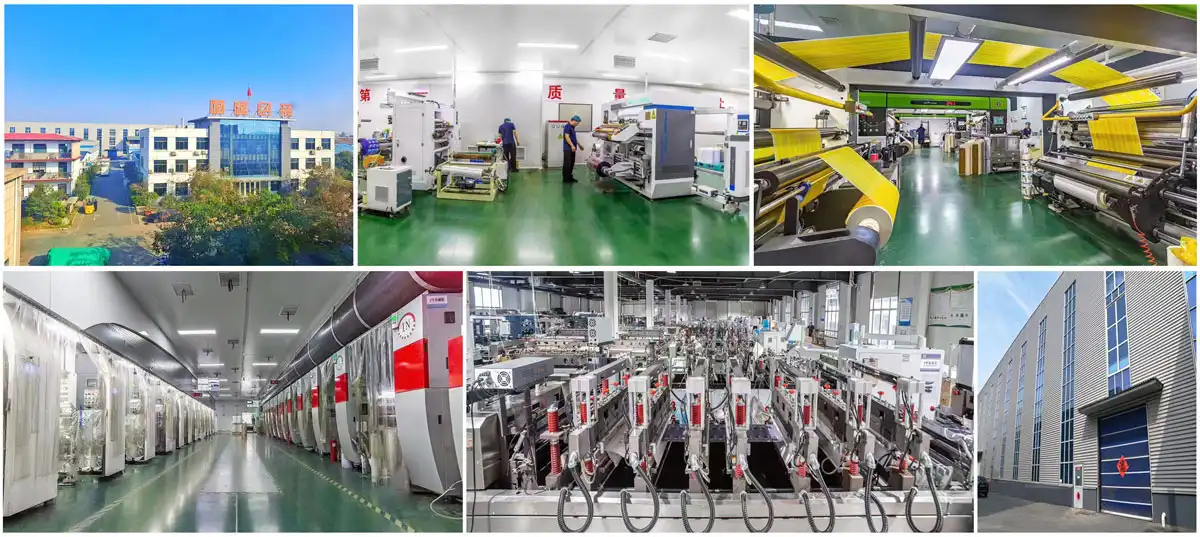
In competitive markets where shelf visibility and product safety can't be ignored, a brand's success depends on how well its packaging is made. As a manufacturer of 250g custom flat bottom pouches with more than 25 years of experience in flexible packaging, Guoshengli Packaging offers solutions that work reliably across production runs and market conditions. Our ISO 9001, BRC, FDA, and SGS certifications make sure that we follow international standards. This lowers your regulatory risk and speeds up the approval process for retail sales.
We know how hard it is for specialty brands to deal with things like small production runs, tight start dates, and the need for packaging that supports their premium branding. These problems are directly solved by our variable MOQs, quick response times, and full design support. We can make what you need, whether it's materials that can be recycled, high-barrier protection for fragile products, or up to 11-color printing for complex branding.
Ready to elevate your brand with packaging that stands out on shelves and protects products reliably? You can talk to our team about your needs by emailing sales@guoshengpacking.com. We offer reasonable prices, thorough technical specs, and samples that show how dedicated we are to making the best packaging possible. Let's come up with packaging ideas that will help your brand grow and do well in the market.
References
1. Robertson, Gordon L. Food Packaging: Principles and Practice, 3rd ed. Boca Raton: CRC Press, 2013.
2. Marsh, Kenneth and Betty Bugusu. "Food Packaging—Roles, Materials, and Environmental Issues." Journal of Food Science 72, no. 3 (2007): R39-R55.
3. Yam, Kit L., ed. The Wiley Encyclopedia of Packaging Technology, 3rd ed. Hoboken: John Wiley & Sons, 2009.
4. Coles, Richard, Derek McDowell, and Mark J. Kirwan, eds. Food Packaging Technology. Oxford: Blackwell Publishing, 2003.
5. Selke, Susan E.M., John D. Culter, and Ruben J. Hernandez. Plastics Packaging: Properties, Processing, Applications, and Regulations, 3rd ed. Munich: Hanser Publications, 2016.
6. Brody, Aaron L. and Kenneth S. Marsh, eds. The Wiley Encyclopedia of Food Science and Technology, 2nd ed. New York: John Wiley & Sons, 2000.