- English
- French
- German
- Portuguese
- Spanish
- Russian
- Japanese
- Korean
- Arabic
- Greek
- German
- Turkish
- Italian
- Danish
- Romanian
- Indonesian
- Czech
- Afrikaans
- Swedish
- Polish
- Basque
- Catalan
- Esperanto
- Hindi
- Lao
- Albanian
- Amharic
- Armenian
- Azerbaijani
- Belarusian
- Bengali
- Bosnian
- Bulgarian
- Cebuano
- Chichewa
- Corsican
- Croatian
- Dutch
- Estonian
- Filipino
- Finnish
- Frisian
- Galician
- Georgian
- Gujarati
- Haitian
- Hausa
- Hawaiian
- Hebrew
- Hmong
- Hungarian
- Icelandic
- Igbo
- Javanese
- Kannada
- Kazakh
- Khmer
- Kurdish
- Kyrgyz
- Latin
- Latvian
- Lithuanian
- Luxembou..
- Macedonian
- Malagasy
- Malay
- Malayalam
- Maltese
- Maori
- Marathi
- Mongolian
- Burmese
- Nepali
- Norwegian
- Pashto
- Persian
- Punjabi
- Serbian
- Sesotho
- Sinhala
- Slovak
- Slovenian
- Somali
- Samoan
- Scots Gaelic
- Shona
- Sindhi
- Sundanese
- Swahili
- Tajik
- Tamil
- Telugu
- Thai
- Ukrainian
- Urdu
- Uzbek
- Vietnamese
- Welsh
- Xhosa
- Yiddish
- Yoruba
- Zulu

Of course, Quad Seal Pouches & Bags are perfect for packing coffee. Their reinforced four-corner seal design provides great protection against moisture, oxygen, and light, which are three important things that lower the quality of coffee. The multi-layer laminate structure keeps smells and freshness for a much longer time than other types of packaging. Coffee roasters and wholesalers like the pouch's box-like sturdiness, which makes large goods from 250g to 1kg look better on shelves and increases the pouch's internal volume. With features that can be changed, like degassing valves and reusable zippers, these bags can meet the strict needs of speciality coffee brands and can be easily scaled up for high-volume production at a low cost.
Understanding Quad Seal Pouches and Their Design
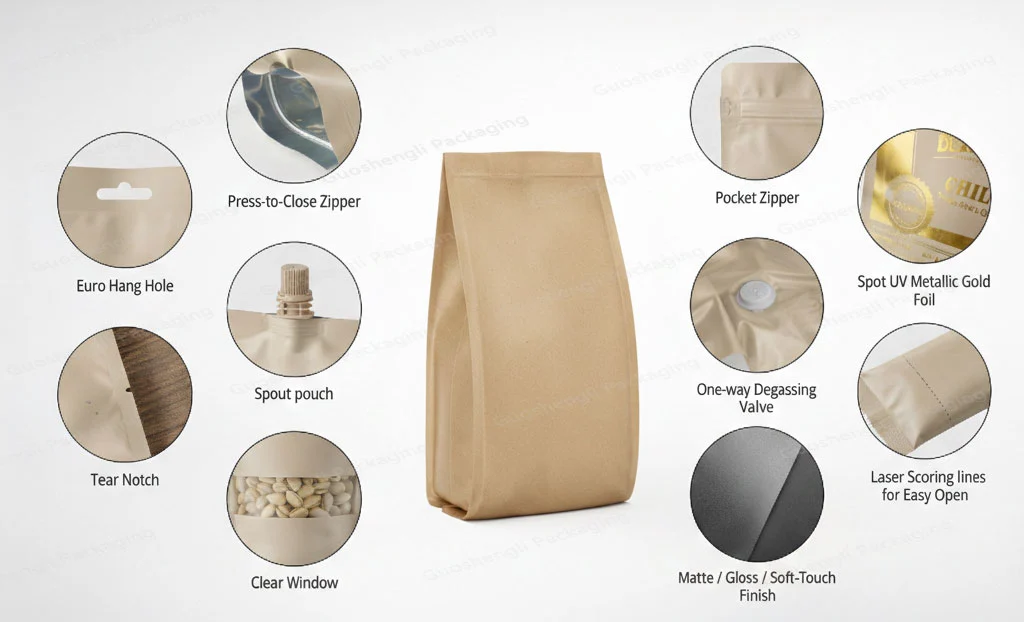
Quad seal bags are a big step forward in the making of bendable packaging. This style is different from regular three-side seal bags because it has four vertical seals at each corner. This makes a stronger rectangular structure that can stand on its own. This design gets rid of the center back seal, leaving five separate printable panels: the front, the back, two sides, and the bottom. This gives coffee companies that want a premium shelf presence the most branding opportunities.
Material Composition and Barrier Technology
Multi-layer laminates made of BOPP (biaxially orientated polypropylene), PET (polyethylene terephthalate), aluminium foil, and PE (polyethylene) are usually used to make Quad Seal Pouches and Bags. The oxygen transmission rate (OTR) and water vapour transmission rate (WVTR) goals are used to choose these materials. To keep volatile aromatic compounds from oxidising, coffee packaging needs OTR values that are very low, often below 1 cc/m²/day. In our manufacturing process, high-barrier metallised films and aluminium layers work together to meet these strict requirements. They also keep their flexibility and resistance to punctures throughout the supply chain.
The width of the laminate is usually between 120 and 180 microns, but this can change based on the fill weight and how it is handled. For heavier coffee goods, structures that are thicker are better because they have better burst power and keep the seal from breaking during shipping. Inner layers that are resistant to heat make sure that they can be used with hot-fill uses and keep the structure strong even when temperatures change, which is common in foreign shipping.
Size Variations and Structural Benefits
Coffee brands need packaging that can hold a range of product volumes while keeping quality high. There are a lot of different sizes and shapes of quad seal pouches, from small store packs of 250g to large wholesale forms of 1kg. Because the four-corner seal architecture is so stable vertically, filled pouches can keep their box-like shape even as the product settles during shipping. This "dead-fold" feature makes sure that the product looks the same on store shelves, which is important for differentiating brands in the coffee market.
When compared to flat-bottom or stand-up bags, the strengthened side seals can hold more weight. This structural benefit is especially useful when packing dense whole bean coffee or coarse ground coffee that puts a lot of pressure inside the package. Our engineering team figures out the best gap sizes to balance the internal volume efficiency with the external measurement. This helps coffee brands get the most out of their shipping containers while still making an appealing retail package.
Why Choose Quad Seal Pouches for Coffee Packaging?
Keeping three things in check in the environment is important for keeping coffee fresh: oxygen exposure, moisture infiltration, and light penetration. In all three areas, quad seal pouches do better than others thanks to their engineered barrier performance and structural design advantages that have a direct effect on how long a product lasts and how happy customers are with it.
Superior Barrier Protection
The many layers that make up Quad Seal Pouches & Bags make a winding path that makes gas and moisture barrier much slower. Metallised films offer great security at a lower cost, while aluminium foil layers make almost perfect shields. Because of this, coffee roasters can choose the right level of barriers based on the features of their products. For example, they can choose lower barriers for store settings with a lot of product movement and the highest levels of safety for foreign markets with long distribution cycles.
When coffee oils and aromatic compounds are exposed to oxygen, they oxidise. This makes the flavours go bad and the product less appealing to customers. Our high-barrier laminates keep the amount of air inside below critical levels for months, which protects the taste profile that makes expensive coffee brands stand out. Independent tests show that quad seal bags keep coffee 40–60% fresher longer than regular packing. This means that fewer products will be returned and the brand's image will improve.
Controlling moisture is just as important, especially for ground coffee that has a lot of surface area. Infiltration of humidity speeds up staling reactions and, in the worst cases, can help microbes grow. Because quad seal bags have a soldered seal and low WVTR laminate constructions, the humidity inside stays fixed no matter what the storage conditions are outside.
Enhanced Structural Integrity
Damage to transportation is a big cost factor in getting coffee to people. Quad seal pouches are very hard to cut, tear, or have their seal break while being handled. The placement of the corner seal spreads mechanical stress over four strengthened places instead of putting all of the force on one bottom seal. This engineering principle lowers the chance of package failures during automated filling and rough handling in distribution networks.
Coffee makers that ship abroad have to deal with a lot of problems, like having to load and unload their goods many times, dealing with changes in temperature, and having their goods squished together. In these situations, our bags keep their seals, which keeps product loss to a minimum and protects the brand's image across global supply lines. The strong construction also makes warehouse work easier because it doesn't need to be handled in the same way as more fragile packaging formats.
Comparison With Alternative Formats
While stand-up pouches and flat-bottom bags are useful for some things, quad seal pouches are the best way to package big coffee. Stand-up bags work best for smaller market sizes, but they might not be strong enough for heavy contents. Flat-bottom bags look great on shelves, but they usually cost more per unit because they are harder to make.
For coffee applications ranging from 500g to 2 kg, quad seal pouches are the best choice because they are both cost-effective and effective. The easier way of making them lowers the cost per unit while still giving them the same or better construction performance. Coffee distributors who are in charge of large production runs can really benefit from the reliable machinability of quad seal formats, which keep the same sizes that are important for the efficiency of automated filling lines.
Manufacturing and Customization Options for Coffee Businesses
Brands of coffee set themselves apart with packaging that talks about quality, location, and company values. Quad Seal Pouches and Bags allow for a lot of customisation while keeping production efficiency high, which is important for cost-effective scaling.
Production Process and Quality Control
Rotogravure printing with up to 11 colours is the first step in our manufacturing process. This lets us get images that look like photographs and match brand colours perfectly. The printing stage makes the visual base that tells people what the brand is on store shelves. High-resolution graphics stay clear across the large printed area of quad seal pouches. This lets coffee brands show images of the beans' location, boiling directions, and certification logos with great detail.
After printing, barrier layers are stuck together in a controlled temperature and pressure environment during the laminating process. This step decides how well the shield works and how strong it is. Our six laminating lines use solvent-less adhesive systems that get rid of any smells that might be left behind and are in line with FDA rules for food contact. Before the laminated film is turned into a pouch, it goes through quality checks that check for barrier properties, seal strength, and visual flaws.
Printed, laminated film is turned into finished bags in the conversion stage by cutting it precisely and closing it with heat. Our 49 changing machines can quickly switch between different pouch sizes, so they can handle both big production runs and smaller special orders. Each pouch is checked automatically to make sure the seal stays in place, the measurements are correct, and the valve is placed correctly when needed.
Custom Features for Coffee Applications
Standard pouches might not have all the functional features that coffee packaging needs. The most important part of newly roasted coffee is the degassing valve, which lets carbon dioxide leave but keeps oxygen from getting in. During pouch production, we put one-way valves in the right place so that they let out the most gas without weakening the structure. Choosing the right valve relies on the type of coffee being roasted and how long it will take to package. Dark roasts need more flow capacity because they release more strong gases than lighter roasts.
Resealable seals let you use the product for longer after opening it, which is a trait that people who buy bigger package sizes are increasingly asking for. Tin-tie closures are a cheap way to reseal traditional coffee bags, while press-to-close zipper systems are more convenient and reliable when opening and closing many times. To keep the barrier continuous across the closure mechanism, zip integration needs careful engineering. This is a skill we have honed over thousands of coffee packaging projects.
Handle features make it easier for customers to carry bigger packages. Adding die-cut handles or attached rope handles to bulk coffee pouches makes them easy to carry and works well for warehouse clubs and food service. These improvements need structural supports to keep them from tearing when they're loaded. We design these changes based on the expected fill weight and handling.
Lead Times and Minimum Order Quantities
When purchasing managers look at quad seal pouches, they need to know exactly when they can be made and how flexible the orders can be. Rotogravure printing production for standard bag shapes using current tools usually takes 15 to 20 days, which includes testing before production and quality approval stages. Lead times can be cut down to 7–10 days for rush orders that use digital printing technology. This helps with product launches and seasonal advertising needs.
Minimum order quantities depend on how complicated the customisation is and how the product is made. Rotogravure printing is most cost-effective when it's used in quantities greater than 50,000. This makes it perfect for well-known coffee brands whose demand is likely to stay steady. Digital printing makes short runs affordable starting at 5,000 units, so speciality roasters can try out new mixes or holiday products without having to keep a lot of stock on hand.
We keep our MOQ policies open because we know that new coffee brands need easy ways to get luxury packaging. Our team works closely with procurement managers to set up orders in a way that minimises costs and maximises cash flow. We often suggest phased production schedules that are in line with the growth paths of the market.
Procurement Considerations for Coffee Brands and Distributors
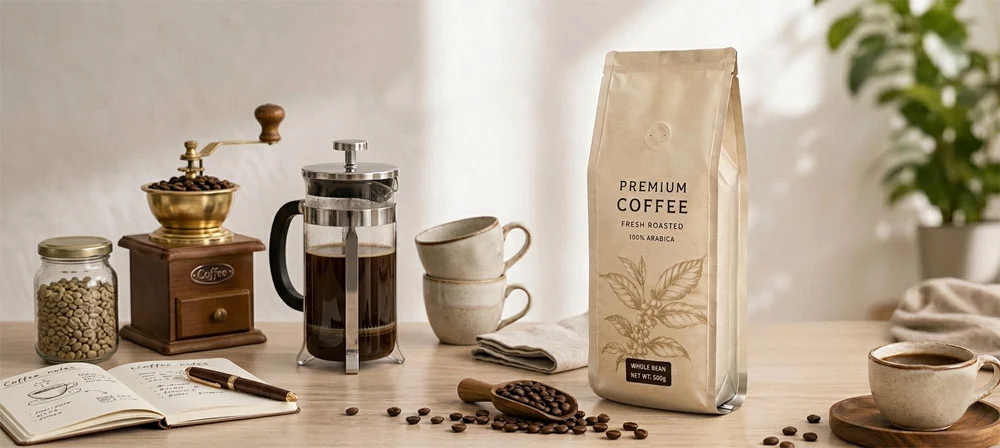
To find a trusted Quad Seal Pouches & Bags maker, you need to look at more than just price quotes. Coffee brands that want to stay in the market for a long time need package partners that can keep the quality of their work the same for return orders and help their businesses grow by being able to handle more orders and following all the rules.
Supplier Evaluation Criteria
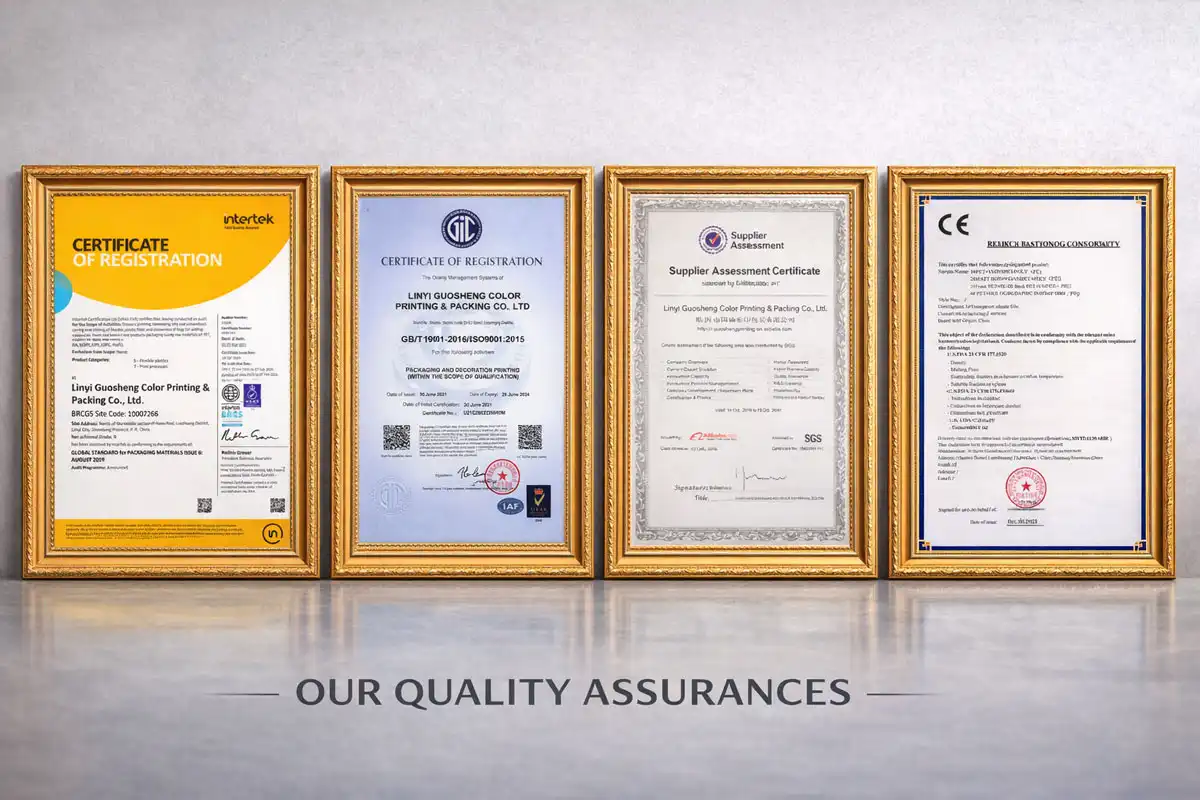
Quality certificates give third-party proof of a company's ability to make things and its process control systems. Standardised quality management is shown by ISO 9001 certification, and major retailers require BRC (Brand Reputation through Compliance) certification to make sure that food safety rules are followed. FDA compliance makes sure that materials meet U.S. rules about food contact, and SGS testing results, which are based on independent lab analysis, back up promises about barrier performance.
We keep all of these certificates up to date because coffee makers can't afford packing problems that lower the quality of their products or cause problems with the law. Our testing methods check the strength of the seal, its ability to form a barrier, and the movement of materials at higher frequency than what is required by certification. This adds an extra safety cushion that safeguards the brand's image.
Production capacity affects how reliably deliveries happen and how much the business can grow. When coffee brands grow quickly, they need packaging suppliers that can handle more orders without affecting quality or lead times. Our building has 49 converting machines, 7 printing machines, and 6 laminating lines. This gives us a lot of capacity headroom to handle the changes in volume that happen in seasonal coffee markets.
Sustainable Sourcing Strategies
As coffee brands try to meet customer standards and keep their business sustainability promises, environmental duty plays a bigger role in their buying choices. Quad Seal Pouches and Bags can be made from structures made of a single reusable material or bio-based laminates that can be broken down and reused. However, choosing the right material means weighing the benefits and drawbacks of barrier performance and end-of-life choices.
Structures made of a single material, polyethylene, can be recycled in many places, so they are environmentally friendly without needing new collection systems. Compared to multi-material laminates, these structures don't provide as good of a barrier, but they are good for coffee products that need to be kept fresh for a shorter time or in controlled distribution environments.
Compostable laminates made of PLA (polylactic acid) and PBAT (polybutylene adipate terephthalate) offer different ways to get rid of waste, but they need industrial composting facilities that aren't always available. We give clear advice on these trade-offs, which helps coffee brands choose environmentally friendly packaging options that meet performance needs and work with the way the market is set up.
Our factory uses RTO (regenerative thermal oxidiser) exhaust treatment technology to get rid of volatile organic compounds from the production process. This shows that we care about the environment in more ways than just packaging materials. This all-around approach to sustainability works for coffee brands that want to work with suppliers who share their values and can back up their environmental claims to customers who are becoming more knowledgeable.
Building Long-Term Supplier Relationships
Suppliers that are reliable are different from those that aren't because they use the same packaging for all orders. As production goes on for months or years, colour matching, measurement accuracy, and the security of the seal must stay the same. Our process control systems keep a very close eye on all important parameters and keep samples that can be used as a guide to look at past changes when figuring out what might happen in the future.
Misunderstandings that slow down production and throw off shipping plans can be avoided by being clear when communicating. Our team has experience exporting, so they can handle technical talks, production reports, and transportation planning all in English. This gets rid of the language hurdles that often come up when buying from manufacturing areas. We understand that procurement managers need partners who can respond quickly, see problems coming, and talk to them before they get worse.
Before committing to large quantities of production, it is important to test samples. We don't give best-case scenarios that make people have high hopes. Instead, we give representative samples that show how well the process can work. Being honest builds trust and makes sure that production runs meet the agreed-upon requirements without any shocks.
Practical Use Cases and Industry Feedback
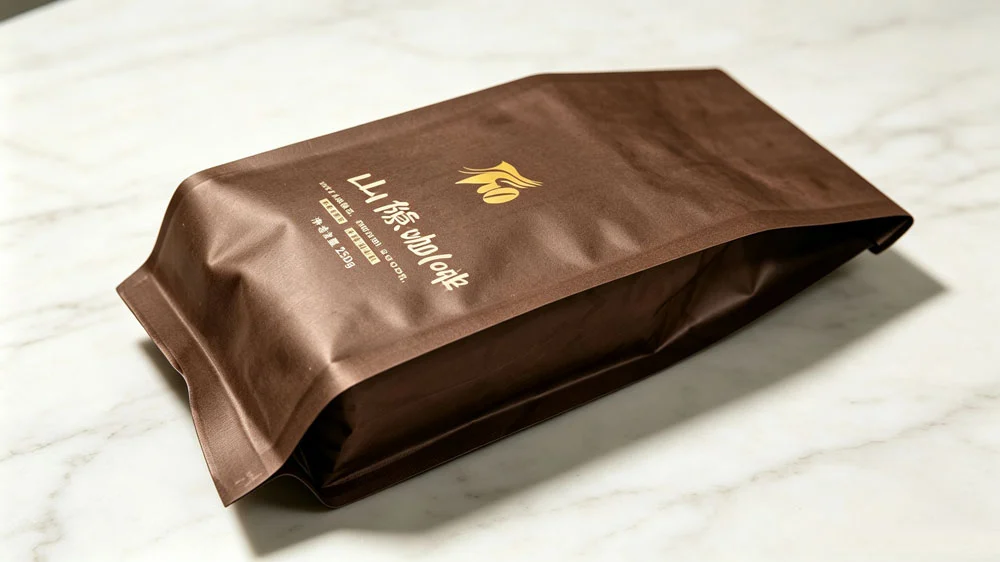
Quad Seal Pouches & Bags have been used by coffee brands in all market segments to solve specific packaging problems and take advantage of chances to differentiate their brands and improve operational efficiency.
Specialty Coffee Roasters
Small-batch speciality roasters need packaging that keeps the complex flavours and lets people know where they stand in the craft market. Quad seal pouches provide the necessary barrier protection and come in sizes that can be changed to fit both direct-to-consumer and café wholesale channels. The large printable area lets you tell in great detail about where the beans come from, how they are processed, and tasting notes that coffee lovers who know what they're doing will enjoy.
When a regional roaster switched from valve bags to quad seal pouches with built-in degassing valves, customers complained about bad coffee 35% less. The better barrier performance kept the food fresher for longer than the usual three weeks with their old packaging. This made it possible for them to sell more in stores that they couldn't reach before because of shelf-life restrictions.
Commercial Coffee Distributors
High-volume wholesalers that sell to restaurants and stores put stability, machine-ability, and low costs at the top of their list of priorities. These needs are met by quad seal pouches, which also have structural benefits that make them less likely to get damaged while being moved around in the building. The strengthened corner seals can handle the rough handling that happens a lot in distribution centers, so torn packages don't lose as much product.
When a national distributor that sells to institutions switched from flat-bottom bags to quad seal pouches, the efficiency of their packaging line went up by 18%. The uniform sizes and reliable seal area made automatic filling more accurate and cut down on downtime caused by misfeeds and jams that were a problem in their packing process before.
Private Label Coffee Brands
When stores start their own coffee programs, they need packaging that strikes a balance between keeping costs low and making the coffee look good. Quad seal bags look high-end and come at prices that support competitive pricing strategies for stores. Customisable printing lets brands stand out, and efficient production keeps unit costs in line with the economics of private label.
Limitations and Considerations
To be honest, you have to admit that quad seal pouches work better in some situations than others. When it comes to saving money, stand-up bags may be better for very small packages (less than 100g). Even though quad seal pouches offer similar barrier performance, the extra cost of rigid canisters or flat-bottom bags might be worth it for very high-end positioning.
For coffee makers that need packages in forms other than rectangles, there are other options available. Quad seal bags work best for structures that look like boxes; making methods for forms that aren't boxes need to be changed. During the initial consultations, we talk to coffee brands about these restrictions and make sure they choose packaging formats that meet both technical needs and market positioning strategies.
Conclusion
Quad Seal Pouches & Bags have many benefits for all types of coffee packagers, from small speciality roasters to large industrial sellers. The designed layer protection keeps the coffee fresh by being very resistant to air, moisture, and light. Structural stability stands up to handling during transport and gives the product a high-end look on the shelf that helps place the brand. Customisation needs can be met with manufacturing flexibility, which includes degassing valves and resealable closures, without slowing down production. Sustainable material choices take care of the earth while still meeting performance standards. When purchasing managers evaluate suppliers, they look at things like licenses, production ability, and making sure that quality is the same for each order. Because of these things, quad seal bags are a smart choice for coffee businesses that want to protect their product investments and support their market growth goals in global markets that are becoming more competitive.
FAQ
1. Can quad seal pouches integrate degassing valves for freshly roasted coffee?
Quad Seal Pouches & Bags accommodate one-way degassing valves positioned on the front or side panels. Valve integration occurs during pouch manufacturing, with placement optimized for gas release efficiency without compromising structural integrity. We recommend valve selection based on roast profile and expected outgassing rates—high-flow valves suit dark roasts producing aggressive carbon dioxide release, while standard valves serve light to medium roasts adequately.
2. What are typical production lead times for custom coffee pouches?
Rotogravure printing production requires 15-20 days, including proofing and quality approval stages. Digital printing alternatives reduce timelines to 7-10 days for urgent orders or smaller production runs. Lead times begin after artwork approval and deposit receipt, with shipping adding 4-5 days via air freight for international deliveries.
3. Are quad seal pouches recyclable or compostable?
Material selection determines end-of-life options. Mono-material polyethylene structures integrate with existing recycling infrastructure where available. Compostable bio-based laminates provide alternative disposal pathways requiring industrial composting facilities. Traditional multi-layer laminates with aluminum provide maximum barrier protection but currently lack widespread recycling options. We provide guidance matching packaging materials to sustainability objectives while maintaining required coffee protection.
Partner With a Trusted Quad Seal Pouches & Bags Manufacturer
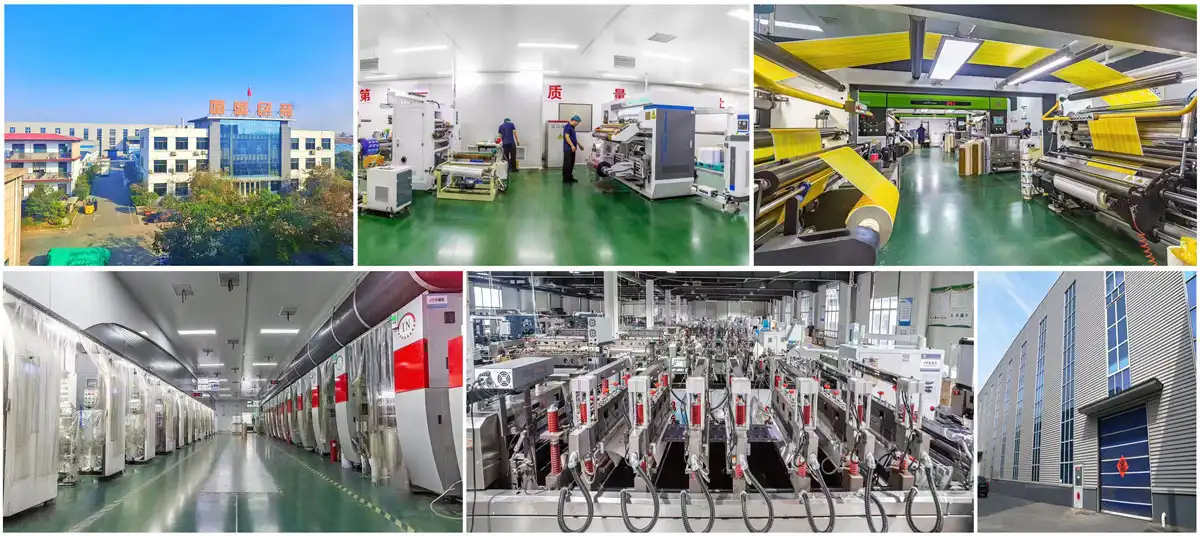
Guoshengli Packaging brings over 25 years of flexible packaging manufacturing expertise to coffee brands seeking reliable, high-performance packaging solutions. Our comprehensive capabilities span material engineering, rotogravure printing, lamination, and precision pouch converting—ensuring consistent quality across every production run. We maintain ISO 9001, BRC, FDA, and SGS certifications that validate our commitment to food-grade manufacturing standards your coffee brand depends on.
Coffee packaging represents more than product protection; it communicates your brand story and preserves the quality that defines your market position. We understand these dual requirements and deliver Quad Seal Pouches & Bags engineered specifically for coffee applications—from degassing valve integration to barrier optimization that extends shelf life. Our factory-direct supply model provides competitive pricing while maintaining the production flexibility that accommodates both established brands and emerging roasters.
Whether you are sourcing quad seal pouches as a supplier for an expanding product line or evaluating new packaging formats, our team provides expert guidance through material selection, structural engineering, and sustainable options aligned with your market objectives. Contact us at sales@guoshengpacking.com to request samples or discuss your specific coffee packaging requirements. We deliver packaging solutions you can depend on—order after order, shipment after shipment.
References
1. Robertson, Gordon L. Food Packaging: Principles and Practice, 3rd Edition. CRC Press, 2013.
2. Marsh, Kenneth and Betty Bugusu. "Food Packaging—Roles, Materials, and Environmental Issues." Journal of Food Science 72(3), 2007.
3. Santeramo, Fabio G. and Emilia Lamonaca. "Food Loss and Waste Policy: From Theory to Practice." Resources, Conservation and Recycling 182, 2022.
4. Yildirim, Selcuk et al. "Active Packaging Applications for Food." Comprehensive Reviews in Food Science and Food Safety 17(1), 2018.
5. Coles, Richard et al. Food and Beverage Packaging Technology, 2nd Edition. Wiley-Blackwell, 2011.
6. Ahvenainen, Raija. Novel Food Packaging Techniques. Woodhead Publishing, 2003.