- English
- French
- German
- Portuguese
- Spanish
- Russian
- Japanese
- Korean
- Arabic
- Greek
- German
- Turkish
- Italian
- Danish
- Romanian
- Indonesian
- Czech
- Afrikaans
- Swedish
- Polish
- Basque
- Catalan
- Esperanto
- Hindi
- Lao
- Albanian
- Amharic
- Armenian
- Azerbaijani
- Belarusian
- Bengali
- Bosnian
- Bulgarian
- Cebuano
- Chichewa
- Corsican
- Croatian
- Dutch
- Estonian
- Filipino
- Finnish
- Frisian
- Galician
- Georgian
- Gujarati
- Haitian
- Hausa
- Hawaiian
- Hebrew
- Hmong
- Hungarian
- Icelandic
- Igbo
- Javanese
- Kannada
- Kazakh
- Khmer
- Kurdish
- Kyrgyz
- Latin
- Latvian
- Lithuanian
- Luxembou..
- Macedonian
- Malagasy
- Malay
- Malayalam
- Maltese
- Maori
- Marathi
- Mongolian
- Burmese
- Nepali
- Norwegian
- Pashto
- Persian
- Punjabi
- Serbian
- Sesotho
- Sinhala
- Slovak
- Slovenian
- Somali
- Samoan
- Scots Gaelic
- Shona
- Sindhi
- Sundanese
- Swahili
- Tajik
- Tamil
- Telugu
- Thai
- Ukrainian
- Urdu
- Uzbek
- Vietnamese
- Welsh
- Xhosa
- Yiddish
- Yoruba
- Zulu

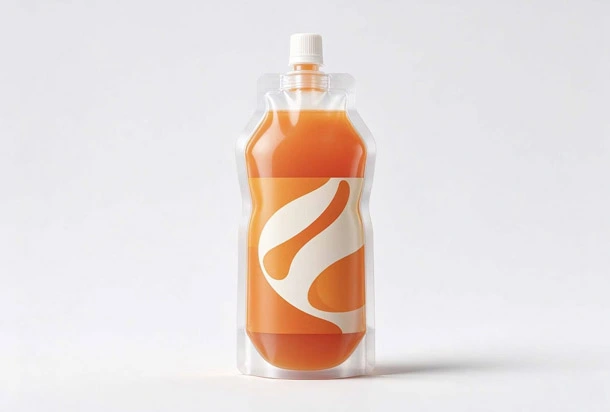
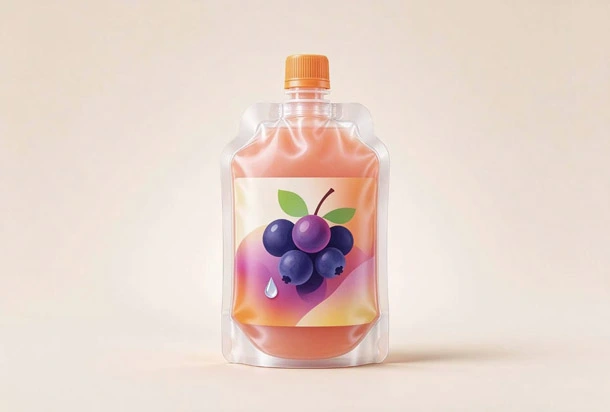
A bottle shape juice pouch is a precision die-cut flexible packaging solution that replicates the silhouette of a rigid bottle while delivering the cost and weight advantages of a high-barrier laminate pouch. For growing beverage brands in the U.S. and beyond, this format solves two persistent problems at once: the visual monotony of standard cartons and the logistical burden of glass or PET bottles. By combining a distinctive contoured profile with food-grade, BPA-free materials, the bottle shape juice pouch gives procurement teams a format that performs on the shelf, during transport, and across repeat production runs.
Understanding Bottle Shape Juice Pouches: Features and Benefits
The appeal of this format goes beyond aesthetics. A bottle shape juice pouch integrates structural engineering with branding capability in a single unit, which matters enormously when you are launching a new SKU into a competitive retail channel.
Here are the core technical and commercial advantages this format delivers:
- Durable barrier protection: The multi-layer laminate structure — typically PET/NY/AL/PE or PET/PE — has a Water Vapor Transmission Rate of less than 1.0 g/m²/24h and an Oxygen Transmission Rate of less than 1.5 cc/m²/24h. These numbers protect flavorings and vitamins that are sensitive to light in NFC smoothies and drinks.
- Ergonomic bottle silhouette: The curved waist on this ergonomic bottle shape is not just for looks. It makes the grip stronger while you're using it and keeps the structure strong when the pouch is only partly full, which is where most standard stand-up pouches break.
- Easy-tear notch: The built-in tear notch makes opening clean and easy without tools, which is useful for situations where you're on the go, like school lunches, gym bags, and outdoor events.
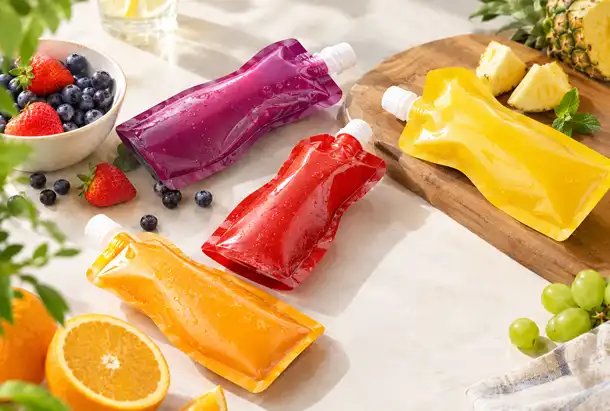
- 360-degree printable surface: Unlike rigid bottles where the label can only cover a certain area, the outside of a flexible juice pouch can be printed on all the way around. This gives brand managers more space for visual identity and telling stories.
- Hot-fill compatibility: This format can handle hot filling up to 95°C and has a puncture resistance of more than 50N. It can also handle standard juice pasteurization processes without delamination or shrinkage.
All of these benefits make up for the lack of shelf appeal that many new beverage brands have. When your packaging shows that your product is of high quality before the customer even reads it, they are more likely to buy it.
Comparing Bottle Shape Juice Pouches with Other Packaging Types
Understanding where this format wins — and where trade-offs exist — helps procurement teams make confident sourcing decisions.
Compared to Tetra Pak cartons, a contoured bottle shape juice pouch has a more recognizable shape in stores and uses less plastic per unit. Specialized laminate board and complicated recycle sources are needed for cartons. A mono-material PE/PE bottle shape juice pouch, on the other hand, complies with How2Recycle's "Recycle Ready" standards in the U.S. market.
Compared to rigid PET bottles, flexible pouches weigh up to 80% less. This lower weight leads to measurable freight savings, lower costs for palletizing, and a smaller carbon footprint per shipped unit. The Flexible Packaging Association says that for the same amount of product, flexible formats produce up to 60% less total package waste by weight than solid options.
Compared to standard stand-up pouches, the bottle shape juice pouch has a higher perceived value at store. The shaped outline shows that the brand has been carefully thought out and invested in, which helps organic juices, functional drinks, and specialty smoothies command higher prices.
Procurement Insights: Sourcing and Customization Options
Finding a source for a shaped flexible pouch is more difficult than finding one for a standard format. This is because the custom die-cutting tools and multi-layer laminate specs require tighter production tolerances.
When evaluating a bottle shape juice pouch manufacturer, procurement teams should confirm the following:
- Certifications: To get into the U.S. and EU markets, you need to have FDA food contact compliance, ISO 9001, BRC Food Packaging, and SGS third-party test results.
- MOQ flexibility: MOQs for custom silhouette tools are usually set at 10,000 to 20,000 units. When a supplier offers both rotogravure and digital printing, brands can test designs on smaller quantities before committing to full production runs.
- Lead times: Orders should be delivered in 7–10 days for digital print orders and 15–20 days for rotogravure orders from a reputable bottle shape juice pouch provider. Air freight options that take 4–5 days help launch schedules that need to be met on time.
- Sampling fidelity: Before you accept production tools, structural samples should show die-cut accuracy within ±1mm and the ability to stand stable on a flat surface.
At Guoshengli Packaging, we have 25 years of experience making flexible packaging and a production infrastructure of 7 printing lines, 6 laminating machines, and 49 converting machines. We offer full customization, from die-cut silhouette to ink color matching. Our bottle shape juice pouches are made to work on standard rotary filling lines. The neck design is customized to fit your filling rail's requirements.
Design and Innovation: Creating Impactful Bottle Shape Juice Pouches
The design layer of a shaped flexible pouch is where brand identity becomes tangible. Our up to 11-color rotogravure printing process makes it possible for Pantone-matched brand palettes to be printed clearly on every unit, which is hard to do with short-run flexographic methods.
Functional design features further elevate the format. Resealable spout fittings keep drinks fresh after they've been opened, which is especially important for kids' drinks and smoothies with amount controls. Matte laminate finishes give products a high-end feel that appeals to health-conscious shoppers in natural food stores.
Emerging trends in the U.S. beverage market increasingly favor sustainable packaging that does not sacrifice visual impact. Our recyclable mono-material PE/PE bottle shape juice pouch structure addresses retailer sustainability mandates while maintaining adequate barrier performance for ambient and refrigerated juice products.
Practical Guide: Recycling, Shelf Life, and Handling Best Practices
Maximizing the shelf life of juice in a flexible pouch depends on three interconnected factors: barrier integrity, seal quality, and handling protocol throughout the cold chain.
The aluminum foil layer in a PET/NY/AL/PE structure is the best protection against light and air. This is very important for NFC juices because vitamin C starts to break down within weeks of being exposed. For brands looking for alternatives that can be recycled, EVOH-based barrier structures offer good oxygen resistance without foil, but they don't do as well at OTR.
Seal integrity testing — including vacuum leak detection and burst pressure verification — should be a standard quality gate before each production batch ships. At Guoshengli Packaging, every bottle shape juice pouch order undergoes comprehensive in-house testing covering barrier properties, seal strength, ink adhesion, rub resistance, and spout pull-out strength.
For warehouse and transit handling, palletizing weight limits should account for the vertical stack pressure that shaped pouches experience differently than uniform rectangular boxes. Proper stacking orientation preserves the contoured shape and prevents seal stress at the shoulder curve.
Conclusion
The bottle shape juice pouch represents a practical convergence of shelf difference, barrier performance, and supply chain efficiency. The format gives growing beverage brands a way to stand out in the U.S.'s crowded retail channels without having to pay a lot or worry about breaking rigid containers. This pouch shape meets the real operational requirements for a successful beverage launch, with choices for hot-fill compatibility and reusable mono-material.
FAQ
1. Can a bottle shape juice pouch handle hot-fill pasteurization?
Yes. When hot-filled at temperatures between 85°C and 95°C, pouches made with RCPP or high-density PE layers inside stay rigid. They don't shrink or delaminate. In this way, they can be used with the normal tunnel pasteurization methods for NFC and HPP juices.
2. What certifications should I verify before sourcing?
At the very least, make sure that any box that is going to be sold in the U.S. or Europe has been tested for EU 10/2011 migration and FDA food contact compliance. ISO 9001 and BRC Food Packaging certifications show that quality management is done at the system level, not just at the batch level.
3. What is the typical MOQ for custom silhouette pouches?
Custom die-cut pouches usually start at 10,000 to 20,000 units, but this depends on how complicated the shape is. Digital printing choices let you test the market with smaller amounts before spending a lot of money on rotogravure tools.
4. Are these pouches recyclable?
Bottle shape juice pouches made of one material meet How2Recycle's "Recycle Ready" guidelines and can be recycled at some U.S. stores. Barriers made of multiple layers of foil work better, but they need special recycle agreements.
5. How does the shaped silhouette affect filling line compatibility?
When the neck geometry is exactly matched to filling rail specs, the bottle shape juice pouch works on regular rotating filling machines. We send you dimensional drawings ahead of time so that you can make sure they are compatible with your co-packer.
Elevate Your Beverage Brand with Guoshengli Packaging's Bottle Shape Juice Pouch Supplier Solutions
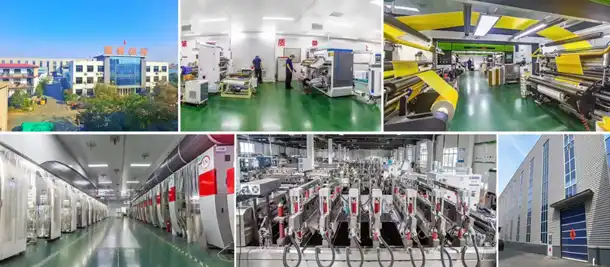
Guoshengli Packaging combines 25 years of manufacturing expertise with ISO 9001, BRC, FDA, and SGS certifications to deliver custom bottle shape juice pouches built for U.S. and global markets. Request a structural sample or tailored pricing quote today. Contact our team directly at sales@guoshengpacking.com to begin your packaging development process.
References
1. Flexible Packaging Association. Flexible Packaging: Sustainability Benefits Across Markets. Flexible Packaging Association, 2022.
2. Packaging World. Shaped Pouches and the Future of Beverage Differentiation. PMMI Media Group, 2023.
3. How2Recycle. Recycle Ready Certification Standards for Flexible Packaging. Sustainable Packaging Coalition, 2023.
4. Food and Drug Administration (FDA). Guidance for Industry: Packaging and Labeling for Food Contact Materials. U.S. Department of Health and Human Services, 2021.
5. Brody, Aaron L., and Marsh, Kenneth S. The Wiley Encyclopedia of Packaging Technology. 3rd ed., John Wiley & Sons, 2009.
6. Packaging Digest. Barrier Laminate Structures for Extended Shelf Life in Beverage Applications. UBM Canon, 2021.