- English
- French
- German
- Portuguese
- Spanish
- Russian
- Japanese
- Korean
- Arabic
- Greek
- German
- Turkish
- Italian
- Danish
- Romanian
- Indonesian
- Czech
- Afrikaans
- Swedish
- Polish
- Basque
- Catalan
- Esperanto
- Hindi
- Lao
- Albanian
- Amharic
- Armenian
- Azerbaijani
- Belarusian
- Bengali
- Bosnian
- Bulgarian
- Cebuano
- Chichewa
- Corsican
- Croatian
- Dutch
- Estonian
- Filipino
- Finnish
- Frisian
- Galician
- Georgian
- Gujarati
- Haitian
- Hausa
- Hawaiian
- Hebrew
- Hmong
- Hungarian
- Icelandic
- Igbo
- Javanese
- Kannada
- Kazakh
- Khmer
- Kurdish
- Kyrgyz
- Latin
- Latvian
- Lithuanian
- Luxembou..
- Macedonian
- Malagasy
- Malay
- Malayalam
- Maltese
- Maori
- Marathi
- Mongolian
- Burmese
- Nepali
- Norwegian
- Pashto
- Persian
- Punjabi
- Serbian
- Sesotho
- Sinhala
- Slovak
- Slovenian
- Somali
- Samoan
- Scots Gaelic
- Shona
- Sindhi
- Sundanese
- Swahili
- Tajik
- Tamil
- Telugu
- Thai
- Ukrainian
- Urdu
- Uzbek
- Vietnamese
- Welsh
- Xhosa
- Yiddish
- Yoruba
- Zulu

Creating custom printed coffee pouches has never been more accessible, thanks to coffee pouch digital printing technology. This advanced method allows specialty roasters and micro-batch coffee brands to produce stunning, high-definition packaging without the burden of expensive cylinder costs, high minimum order quantities, or lengthy production timelines. Whether you're launching a limited-edition single-origin blend or managing multiple SKUs across seasonal offerings, custom printed coffee pouches give you the flexibility to respond quickly to market demands while maintaining exceptional visual quality that captures your brand's unique character.
Introduction
The worldwide coffee packaging environment is seeing an extraordinary shift. The dilemma is one that increasingly plagues speciality roasters, subscription box companies, and private-label coffee brands alike: old-school printing techniques need commitments that don’t fit with their nimble business models. Purchasing managers and brand owners are stuck between the requirement for unique packaging that communicates their narrative, but they can’t because printing plates are costly, minimum orders are fixed in stone and wait periods are weeks lengthy. Digital printing of coffee pouches has become the bridge to this gap, providing B2B purchasers a means to bright, customised packaging that allows for brand distinctiveness and operational efficiencies. In this guide, we’ll break down everything procurement professionals should know about digital printing technology for coffee pouches – from technical capabilities and cost structures to material selection and supplier evaluation – so you can make confident packaging decisions that strengthen your supply chain and elevate your market presence.
Understanding Coffee Pouch Digital Printing
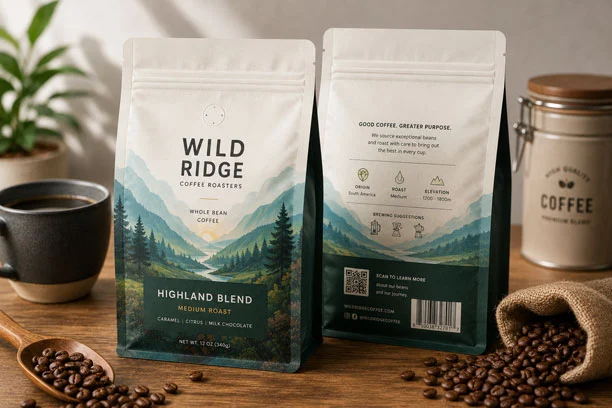
Digital printing on coffee pouches is a revolution in flexible packaging production. Unlike the traditional flexographic or rotogravure procedures that use engraved cylinders or printing plates, digital printing transfers pictures directly from digital files onto material substrates with the use of sophisticated inkjet or electrophotographic equipment. Without the plate, there are no setup expenditures of $480 to more than $1,200 per design, which makes it cost-effective for quantities as low as 500 units.
How the Technology Works
It begins with your artwork file being transferred straight to high-speed digital presses with precise printheads. These machines print using food safe inks that do not migrate onto properly prepared packaging films, at more than 1200 dpi. The result is photo-quality reproduction with colour accuracy up to 97% of the Pantone spectrum – perfect for presenting exquisite coffee bean images, sophisticated brand graphics and clear text to communicate premium quality. Traditional techniques may take 4 to 6 weeks, but with our full process from artwork approval right through to film printing, laminating, pouch conversion and quality control we can do it in as little as 7 to 10 working days.
Variable Data Capabilities
One of the most significant aspects of coffee pouch digital printing is the ability to add varied data within a single manufacturing run. Without pausing the press, or paying more, roasters may print custom QR codes for batch traceability, personalised roast dates, origin specific data or serialised numbering. This feature supports transparency efforts that are increasingly sought by speciality coffee customers, and it allows for complex inventory management for companies that deal with numerous estates or processing processes.
Compatible Materials and Structures
Digital printing technology is well suited for multi-layer laminate constructions meant to protect the freshness of coffee. Typical constructions include an exterior surface of PET or Matte PET for printing smoothness, a middle barrier layer of Aluminium foil, Metalized film or EVOH for oxygen and moisture barrier, and an inside layer of PE or CPP for heat sealing integrity and food contact compliance. Importantly, the technology also accommodates developing sustainable materials, such as recyclable mono-PE frameworks and biodegradable PLA-based films, enabling businesses to achieve environmental commitments without compromising barrier performance.
Comparing Digital Printing with Traditional Coffee Pouch Printing Methods
Understanding how coffee pouch digital printing measures against conventional approaches helps procurement teams make informed decisions aligned with their production volumes, budget constraints, and brand strategies.
Print Quality and Detail
Rotogravure has long been regarded the gold standard for large volume packaging owing to its exceptional colour constancy and durability. But now digital printing meets or surpasses gravure quality in reproduction of fine detail and registration accuracy, especially of complex gradients, photographic images and tiny text elements. The resolution of modern digital presses is 1200 dpi or greater, so the pictures are crisp and brilliant. They remain that way because of distribution and shelf life.” The main difference is in volume economics. Gravure only becomes economical on runs of more than 50,000 pieces per design, while digital printing is most economical on runs between 500 and 30,000 pieces.
Durability and Performance
In the past, digital printing has had limitations in the flexible packaging space due to concerns regarding ink adherence and rub resistance. Modern coffee pouches are digitally printed to overcome these issues using improved primer coatings and protective lamination processes that trap the layers of ink between film substrates. Properly made digital printed pouches can survive the mechanical pressures of automated filling lines, shipping and retail handling without scuffing or delaminating as verified by the Sutherland Rub Tests. Oxygen transfer rates and moisture barrier qualities are comparable to normally printed structures, maintaining coffee freshness for the whole shelf life of the product.
Environmental Considerations
Digital print is very compatible with environmental goals that are becoming more popular throughout procurement departments. The plate-free technique creates much less waste in production, while the on-demand approach decreases inventory obsolescence and storage costs. “Perhaps most importantly, digital printing technology can also be utilised with recyclable and compostable materials, without compromising print quality, which is a significant advantage as the European and North American markets increasingly demand environmentally responsible packaging solutions.
How to Design Artwork for Digital Printed Coffee Pouches
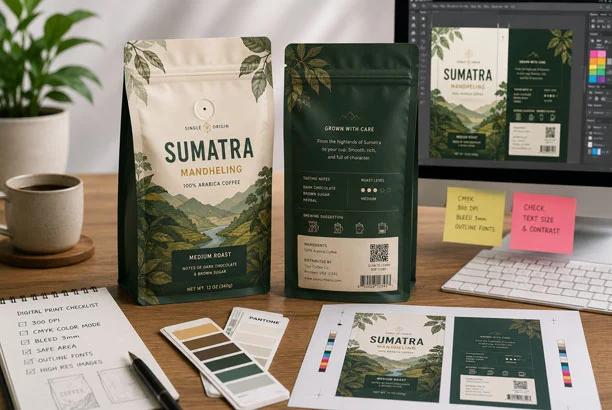
Successful outcomes with coffee pouch digital printing begin long before files reach the press. Design engineers and brand managers benefit from understanding technical specifications and best practices that maximize both visual impact and production efficiency.
Material Selection Fundamentals
The substrate selection directly affects the final print quality and the pouch functioning. For premium coffee applications, we suggest beginning with PET-based outer layers that provide a smooth, uniform surface for ink adherence and outstanding dimensional stability during printing and conversion. Standard gloss PET gives colours a richer look, while matte PET offers a refined touch and cuts down on glare from store lighting. Organic and artisanal brands are attracted to paper-laminate constructions for their natural look but they do need proper moisture control to minimise dimensional changes during storage and filling.
Technical File Requirements
Digital printing technologies operate best when the art piece fits certain technological requirements. Files should be supplied as high quality PDFs with embedded fonts and pictures at 300 dpi minimum at real print size. Colour management is key: prepare your artwork in CMYK colour space, not RGB, and convert spot colours using ICC profiles that match your digital print capabilities. Use bleed allowances (usually 3 to 5 millimetres beyond trim lines) and safety zones to avoid white borders and to keep important text and logos away from seal regions and any trim differences.
Leveraging Digital Advantages
Smart design decisions play to the inherent capabilities of coffee pouch digital printing. Avoid solid colours or plain designs, go instead for photographic images that highlight the origins of coffee, detailed representations of flavour notes or anecdotes about the founders that establish emotional ties. Variable data capabilities allow for personalisation programmes such as adding client names to subscription mailings or producing limited edition runs with consecutive numbering. It becomes easy with digital technology to do colour transitions and gradients that would be difficult or expensive to do with traditional printing. That opens up creative options that help a business stand out from the crowd.
Procuring Custom Digital Printed Coffee Pouches: What You Need to Know
Navigating the supplier landscape requires a systematic evaluation process focused on capabilities, reliability, and alignment with your operational requirements. Coffee pouch digital printing procurement professionals should assess potential partners across several critical dimensions.
Evaluating Supplier Credentials
Manufacturing certificates are a key guaranty for consistent quality and compliance with food safety standards. For food contact materials look for providers with ISO 9001 quality management, BRC Global Standard for Packaging Materials and FDA registration. The credentials provide evidence of established quality processes, frequent third-party audits and documented traceability. Ask for test results that show compliance with applicable migration requirements and oxygen transmission rates and seal strength parameters for coffee packaging applications.
Understanding MOQ and Pricing Dynamics
Coffee pouch digital printing minimum order numbers normally start at 500 pieces per design, however some vendors may ask for 1,000 units, depending on the intricacy and size of the pouch. Pricing structures tend to be tiered: a run of 500 units may cost $2.80 per pouch, 2,000 units might decrease to $1.90, and 5,000 units to $1.50. These economies of scale arise from spreading the fixed expenses of material preparation, quality control and logistical distribution among more units. Don’t just look at unit pricing when comparing estimates – include the total landed cost, including shipping, tariffs and payment processing expenses.
Supplier Responsiveness and Communication
Open communication and quick response frequently is the difference between having packaging on time or manufacturing delays that cost you money. First enquiries: How fast do suppliers respond with comprehensive quotations, technical advice and answers to particular questions? Ask about sample timelines: good digital printing vendors can usually generate and despatch samples within 3 to 5 business days. Open communication on production timeframes, possible delays and order monitoring instills trust in your supplier’s ability to provide consistent delivery cycles that are vital to managing your coffee inventory and hitting seasonal launch windows.
Sample Evaluation Process
Do not approve manufacturing numbers until you have seen actual samples that meet your requirements. Order samples printed with your preferred material structure, correct colours that meet your brand requirements, and all functional elements like zippers, degassing valves and windows. Test these samples on your filling equipment if feasible to check that the dimensions enable a smooth operation, and that the seal regions operate consistently. This validation stage reduces the chance of compatibility problems after putting money into complete production runs.
Why Digital Printing Is the Smart Choice for Your Coffee Packaging Needs
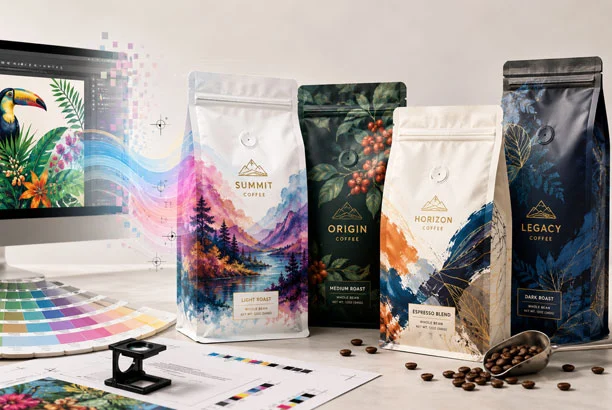
Real-world applications demonstrate how coffee pouch digital printing solves practical challenges faced by specialty coffee brands, subscription services, and private-label producers across diverse market segments.
Specialty Roaster Seasonal Launches
Specialty Roaster Seasonal Launches — Imagine a small-batch roaster releasing three limited-edition single-origin coffees for the Christmas season. With traditional printing you would spend a significant amount on cylinders for just a small run of each origin. That pricing structure does not make sense for products with unpredictable demand. The roaster can produce each design at a reasonable per-SKU cost with no setup fees and may evaluate the market reaction without any financial risk using digital printing. If one origin sells out quickly and others take longer to move, the roaster may swiftly restock the successful design without overcommitting to inventories of the slower sellers.
E-Commerce and Subscription Models
Personalisation and regular package refreshes are key to keeping direct-to-consumer coffee brands’ subscriber experience fresh. Digitally printed coffee pouches may enable various business models, enabling changes in design between shipping cycles that include customer names or personalised greetings, and QR codes linked to origin tales, brewing directions or subscription management webpages. A subscription business that handles a dozen releases a month may plan each month’s run in proportions that match real subscribers — often between 800 and 2,500 pouches — without the waste and cash-flow hit of acquiring six months’ worth of inventory up front.
Emerging Sustainability Trends
The packaging sector is innovating quickly in sustainable materials, with new recyclable and compostable structures coming on the market on a regular basis. The hurdle of costly plate commitments has also been removed by digital printing technology, helping to speed the usage of these materials. Brands have the opportunity to test paper-based pouches or mono-PE recyclable structures with consumers in smaller numbers before investing in bigger formats. This experimental flexibility allows forward thinking coffee firms to adapt to new regulations and customer tastes while rivals are left with traditional materials due to cylinder inventory.
Building Brand Trust Through Transparency
Today’s speciality coffee drinkers want authenticity and traceability. Coffee pouch digital printing gives marketers the opportunity to include specific information that may promote trust; farm coordinates, processing processes, cupping scores and certifications can all be added into package designs without the limits of standard label printing. Variable data capabilities enable printing of harvest dates, roast dates and batch numbers directly onto pouches to back quality claims with verifiable data. This openness enhances brand confidence and provides a reason for premium pricing in competitive retail contexts.
Conclusion
Coffee pouch digital printing has fundamentally changed packaging economics for specialty roasters, subscription brands, and private-label producers who need flexibility without compromising visual impact. By eliminating cylinder costs, reducing minimum orders to practical levels, and delivering production in days rather than weeks, this technology aligns packaging capabilities with the agile business models defining today's specialty coffee market. The ability to test designs, respond to seasonal opportunities, and incorporate sustainable materials positions brands to compete effectively while managing both cash flow and inventory risk. As consumer expectations for transparency, personalization, and environmental responsibility continue rising, digital printing provides the technical foundation to meet these demands profitably.
FAQ
1.What minimum order quantities should I expect for digital printed coffee pouches?
Most suppliers offering coffee pouch digital printing set minimum orders between 500 and 1,000 pieces per design. This range reflects the economics of material purchasing, machine setup, and quality control processes. Some manufacturers may accept smaller quantities for sample development or initial market testing, though per-unit costs will be higher. The key advantage is flexibility: you can order multiple designs totaling the minimum quantity rather than committing to thousands of identical pouches, which proves invaluable for brands managing multiple coffee origins or flavor profiles simultaneously.
2.How does digital printing support environmental goals?
Coffee pouch digital printing contributes to sustainability through several mechanisms. The plate-free process eliminates chemical etching and metal waste associated with cylinder manufacturing. On-demand production reduces packaging waste from expired or obsolete designs, while shorter production cycles minimize warehouse energy consumption. Perhaps most significantly, digital technology works effectively with emerging sustainable materials including recyclable mono-polymer structures and industrially compostable films, allowing brands to transition toward circular economy models without sacrificing the visual quality consumers expect from premium coffee packaging.
3.Why should I request samples before placing production orders?
Sample evaluation protects your investment by confirming that colors match your brand standards, materials provide appropriate barrier properties, and pouches function correctly on your filling equipment. Samples reveal how ink adhesion, seal strength, and dimensional accuracy translate from specifications to physical reality. This validation step catches potential issues—misaligned graphics, inadequate color saturation, or incompatible zipper placement—before they multiply across thousands of units. Reputable suppliers provide samples quickly and affordably, viewing this step as essential to building successful long-term partnerships rather than an inconvenient expense.
Partner with Guoshengli Packaging for Your Digital Printing Needs
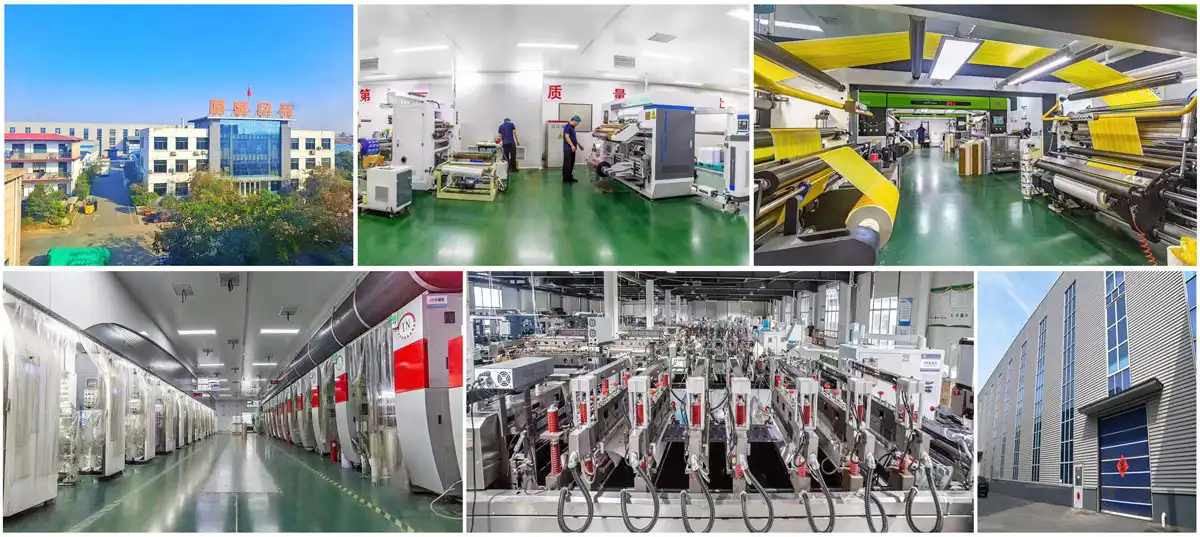
Guoshengli Packaging brings over 25 years of flexible packaging expertise to specialty coffee brands seeking a reliable coffee pouch digital printing supplier. Our certified facility operates advanced digital presses delivering 1200+ dpi resolution with color accuracy reaching 97% of Pantone standards, ensuring your brand vision translates into stunning shelf presence. We understand the challenges micro-batch roasters face: that's why we've structured our services around 500-piece minimum orders, 7 to 10 working day production cycles, and zero cylinder fees. Our technical team provides comprehensive support from initial artwork consultation through material selection, helping you choose barrier structures that preserve coffee freshness while supporting sustainability commitments. With ISO 9001, BRC, and FDA certifications backing every order, you gain quality assurance that protects your brand reputation. Whether you're launching a single-origin limited edition or managing multi-SKU subscription boxes, our digital printing solutions keep you agile and cost-effective. Contact our team at sales@guoshengpacking.com to discuss your specific requirements, request samples matching your exact specifications, and discover how the right packaging partner accelerates your growth in competitive coffee markets.
References
1. Smith, J. & Williams, R. (2022). Digital Printing Technologies in Flexible Packaging: A Comprehensive Industry Analysis. Packaging Technology Institute Press.
2. Chen, L. (2023). "Economic Comparison of Digital vs. Rotogravure Printing for Short-Run Flexible Packaging," Journal of Packaging Science and Technology, Vol. 18, No. 3, pp. 145-162.
3. European Flexible Packaging Association (2023). Sustainability Guidelines for Coffee Packaging: Material Selection and Barrier Performance Standards. EFPA Technical Publication.
4. Martinez, A. & Thompson, K. (2022). The Specialty Coffee Packaging Handbook: Materials, Printing Methods, and Brand Differentiation Strategies. Roasters Publishing Group.
5. Global Packaging Research Council (2023). "Emerging Trends in Variable Data Printing for Food and Beverage Applications," International Packaging Innovation Report, pp. 78-94.
6. Davidson, P. (2023). Quality Control Standards for Digital Printed Food Contact Packaging: Testing Protocols and Compliance Requirements. Food Safety Packaging Press.