- English
- French
- German
- Portuguese
- Spanish
- Russian
- Japanese
- Korean
- Arabic
- Greek
- German
- Turkish
- Italian
- Danish
- Romanian
- Indonesian
- Czech
- Afrikaans
- Swedish
- Polish
- Basque
- Catalan
- Esperanto
- Hindi
- Lao
- Albanian
- Amharic
- Armenian
- Azerbaijani
- Belarusian
- Bengali
- Bosnian
- Bulgarian
- Cebuano
- Chichewa
- Corsican
- Croatian
- Dutch
- Estonian
- Filipino
- Finnish
- Frisian
- Galician
- Georgian
- Gujarati
- Haitian
- Hausa
- Hawaiian
- Hebrew
- Hmong
- Hungarian
- Icelandic
- Igbo
- Javanese
- Kannada
- Kazakh
- Khmer
- Kurdish
- Kyrgyz
- Latin
- Latvian
- Lithuanian
- Luxembou..
- Macedonian
- Malagasy
- Malay
- Malayalam
- Maltese
- Maori
- Marathi
- Mongolian
- Burmese
- Nepali
- Norwegian
- Pashto
- Persian
- Punjabi
- Serbian
- Sesotho
- Sinhala
- Slovak
- Slovenian
- Somali
- Samoan
- Scots Gaelic
- Shona
- Sindhi
- Sundanese
- Swahili
- Tajik
- Tamil
- Telugu
- Thai
- Ukrainian
- Urdu
- Uzbek
- Vietnamese
- Welsh
- Xhosa
- Yiddish
- Yoruba
- Zulu

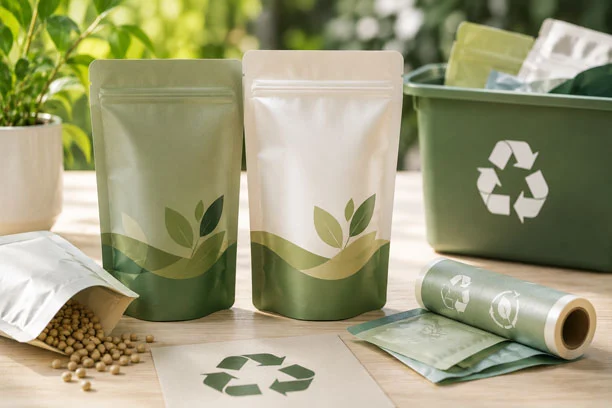
Before committing to sustainable packaging, understanding what makes recyclable pouches truly eco-friendly is essential. Recyclable pouches are flexible packaging solutions manufactured from mono-material structures—primarily polyethylene (PE #4) or polypropylene (PP #5)—that integrate seamlessly into existing municipal recycling systems. Unlike conventional multi-layer laminates combining incompatible materials, these single-substrate designs eliminate sorting challenges, reduce contamination risks, and support circular economy goals. For food brands, pet product companies, and personal care businesses facing Extended Producer Responsibility (EPR) regulations and plastic taxes across North America and Europe, transitioning to recyclable flexible packaging addresses compliance mandates while demonstrating genuine environmental commitment to eco-conscious consumers and stakeholders.
Understanding Recyclable Pouches: Materials, Types, and Environmental Impact
What Makes a Pouch Truly Recyclable
Recycling infrastructure varies a lot from place to place, but truly recyclable pouches have some things in common that make them easy to process. The unique feature is that they are made of only one type of polymer. This means that bags made from only one type of polymer can easily be recycled without the need for special sorting equipment. PE-based structures use MDOPE (machine direction oriented polyethylene) layered with extra PE layers to make a shield that protects while still being able to be recycled thru LDPE collection systems. PP-based alternatives combine BOPP (biaxially oriented polypropylene) and CPP (cast polypropylene), which makes them stiffer and clearer for products that need clear windows or a bigger presence on the shelf.
People start the recycling process by putting used pouches in the right bins for pickup. Recycling centers sort things by density and type of polymer. They then clean, shred, and melt plastics that are eligible into pieces. These pellets are used to make new packaging, building materials, and consumer goods. Biodegradable and compostable choices need special industrial facilities that aren't available in many cities or towns. Mono-material bags, on the other hand, use infrastructure that most people in North America and Europe already have access to.
The environmental impact goes beyond just being able to recycle. Production methods have a big effect on sustainability as a whole. When we make things at Guoshengli Packaging, we use water-based inks and solvent-free lamination technology, which cuts volatile organic compound emissions by over 85% compared to traditional systems that use solvents. The Spanish RTO (Regenerative Thermal Oxidizer) technology cleans up waste gasses while they are being made, which reduces pollution in the air. Our seven printing lines and six sealing machines all use energy-efficient tools that further lower the carbon footprint of each unit made.
Common Pouch Types and Their Applications
There are many various sustainable flexible packaging shapes and sizes that may be utilised for different goods and filling procedures. Stand-up bags are gusseted on the bottom enabling them to stand up on shop shelves. They are great for keeping coffee, almonds, pet treats and powdered vitamins. The solid foundation prevents them from tipping over and maximises the available area for advertising billboards. Box pouches, also known as flat bottom pouches, are much more sturdy, with squared sides that resemble standard cartons. This provides for an intriguing offering for premium food manufacturers who desire a better-looking product on the market.
Easy to use, three-side seal pouches save money on little, inexpensive products such as spices, tea bags, and sample packets. They are simply built which reduces garbage during manufacturing but yet provide sufficient barrier protection for short to medium term usage. These spouted pouches are ideal for baby food purees, sauces, beverage concentrates and other liquid and semi-liquid meals. If both the bag body and the spout are constructed of mono-PP materials, both may be recycled in the same rubbish stream.
Functional characteristics make products simpler to use but don’t make them less recyclable. Thanks to resealable zippers constructed from appropriate polymers, consumers can store food fresh for repeated use, which is particularly useful for snacks and pet food. Tear notches for simple opening without the need of scissors or other equipment. In establishments with holes to hang stuff on they employ peg hook displays . The mono-material purity is maintained and the result may be seen through window screens constructed of the same basic polymer.
Environmental Impact Compared to Alternatives
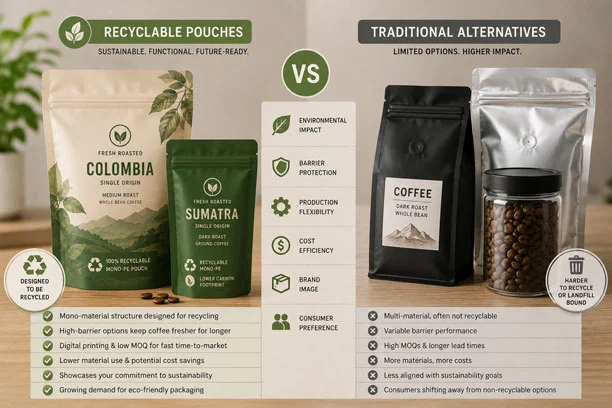
A meaningful assessment of how successfully a thing preserves the planet has to take into account its whole existence, not simply its disposal. Compostable pouches are constructed from either PLA (polylactic acid) or PBAT (polybutylene adipate terephthalate) and are designed to break down into organic waste in commercial composting facilities. People who do not have the right facilities sometimes put compostable bags in landfills where the lack of air means they cannot break down properly.
Traditional multilayer laminates of metal foil, polyester and various glues are good barriers but they cannot be recycled. If you want to separate the bound layers, you have to employ sophisticated chemical or mechanical procedures that are not offered in shops. Most multi-layer bendable packaging ends up in landfills or dumps that are burnt. Moving away from traditional laminates to single-material architectures is a great advancement for businesses that care about the environment.
Comparing Packaging Solutions: Recyclable Pouches vs Traditional Alternatives
Performance Characteristics Worth Evaluating
Procurement experts are still worried that moving to sustainable packaging will hurt performance. There are good reasons to be skeptical about barrier protection, especially when it comes to products that are sensitive to oxygen or wetness and need to last longer. Modern structures made of a single material use advanced shielding technologies that are on par with multi-layer structures. When EVOH (ethylene vinyl alcohol) coatings are put on PE or PP substrates, they act as oxygen barriers like aluminum foil in many situations. This keeps coffee, nuts, dried fruits, and pet food fresh longer.
Moisture vapor transmission rates (MVTR) show how well packaging keeps products like protein powders, nutritional supplements, and pet treats from getting wet. Products that need to have very low MVTR may need to be carefully chosen materials and structures that work best. When brands work with experienced makers, they can match the barrier needs of recyclable pouches with the sustainable material's abilities.
Sealing quality has a direct effect on how safe a product is and how happy customers are with it. When production is going quickly, weak seals can cause leaks, contamination, and stops in the filling line. Our quality control procedures check the power of the seals at different temperatures. This makes sure that the pouches always work the same way whether they are hot-filled, sterilized in a retort, or filled at room temperature. The BRC and ISO 9001 standards show that systematic quality control is used throughout the whole production process.
Cost Considerations and Long-Term Value
Cost talks that are open and honest help brands make smart choices. Sustainable packaging usually costs 10–30% more than regular options. This is because it uses special materials, more advanced barrier technologies, and less production volume than regular multi-layer films. When you look at the total cost of ownership, this extra is more of an investment than a price.
The way a customer perceives something impacts their purchase choice. According to study by McKinsey & Company, 60% of North American customers consider sustainability when making product choices, and are willing to spend 5-10% more for firms that really care about the environment. Clear, reusable packaging demonstrates that a firm is environmentally conscious, helping its products stand out in a crowded retail market and encouraging long-term brand loyalty.
Decision Framework for Packaging Transitions
The change has to be intentional, and you have to look beyond the cost of the materials. Packaging requirements vary according on the product. For example, liquids demand a greater seal integrity and a better puncture resistance than dry powders. The required shelf life will influence the barrier specification – a product that must be kept fresh for 6 months has a broader choice of materials than one that must be protected for 24 months.
Duration of packing is determined by distribution conditions. Products carried between continents change temperature and are handled numerous times therefore they require sturdy constructions that can resist punctures, rips and seal failures. Important criteria include the thickness of the pouch, the method it is made and the quality control requirements.
The packaging decisions are taken from the brand positioning. For premium businesses seeking to attract eco-friendly consumers, sustainable packaging expenditures may be justified as charges that assist grow the brand and provide quantitative returns via improved customer image and loyalty. Value-based firms must learn how to balance their commitment to sustainability with a requirement to keep margins low. They may need to phase in adjustments as prices decline and regulations tighten.
Streamlining Procurement: Buying Recyclable Pouches for B2B Clients
Supplier Selection and Vetting Procedures
When you are looking for certified manufacturers, you have to go beyond the price sheets. Certifications provide an independent third-party endorsement of quality systems, food safety standards and environmental claims. ISO 9001 accreditation means that quality management procedures are standardised. This ensures that each manufacturing run is of the same quality. BRC is focused about ensuring food packaging is safe. It involves things such as monitoring raw materials, avoiding contamination and managing allergies.
If a brand wants to sell into the U.S. it has to make sure it complies with FDA regulations.” All packaging material that comes in contact with food must comply with FDA standards for indirect food additives, and manufacturers must retain documents certifying the safety of the material. Our plant is still registered with the FDA and is in accordance with the regulation of Good Manufacturing Practice (GMP), giving North American brands the compliance foundation they require.
Claims about sustainability for recyclable pouches need to be checked out. Brands that are accused of "greenwashing" run the risk of losing customers and having their reputations hurt. Ask for testing reports from a third party that back up claims about recycling, material composition analysis, and barrier performance data. In Europe, groups like RecyClass offer certification programs that check whether packaging can be recycled using the current system. SGS and other testing labs like it offer independent confirmation of materials.
How reliable and scalable something is depends on how much it can be made. Established facilities with a wide range of equipment can handle orders of different sizes, changes in demand during different times of the year, and changes in format without affecting delivery times. Our 49 converting machines and high-tech printing equipment allow for flexible production timing, so we can work with both small businesses starting out with digital print runs of 500 units and well-known names that need container-load amounts.
Managing MOQ, Pricing, and Lead Times
Minimum order amounts make it hard for new brands to try out sustainable packing changes. For traditional rotogravure printing, cylinder engraving is needed, which means that setup costs are spread out over a lot of units, usually at least 20,000 to 50,000. Digital printing makes it easier for everyone to get what they need, and runs as low as 500 units can still be profitable. This gives brands the freedom to see how the market reacts, make sure the filling line works, and improve designs before starting mass production.
Lead time expectations require realistic planning. Custom packing includes multiple stages: material purchase, printing, lamination, curing, pouch conversion, quality checking, and shipping. For standard rotogravure production, it takes 15 to 20 business days from the time the artwork is approved until it is shipped. Rush possibilities exist for urgent needs—our digital printing capacity provides selected projects within 7 days, though choices may be format-limited.
Pricing structures represent order quantities, material specs, and customization complexity. As the number of units purchased goes up, discounts are applied based on volume, with breaks usually happening at 10,000, 50,000, and 100,000 units. Costs depend on the materials you choose. For example, simple mono-PE designs are cheaper than high-barrier EVOH-coated options. Complex printing costs more than simple designs with two to three colors. Full-color artwork with eleven colors printed by rotogravure costs more. Functional features like zippers, spouts, and windows may add extra costs, but they may make things easier for the customer, which makes the investment worth it.
Customization Options Supporting Brand Identity
Customization turns pouches into brand assets through high-quality printing, matte, gloss, and soft-touch finishes. Structural options such as stand-up, flat-bottom, side-gusset, and shaped bags improve presentation and capacity. Functional features, including zippers, tear notches, degassing valves, and compatible clear windows, enhance usability while supporting product freshness and mono-material recyclability.
Top Recyclable Pouch Manufacturers and Brands to Consider
Evaluating Manufacturing Partners
Experienced packaging manufacturers provide greater reliability, regulatory knowledge, and technical expertise during material transitions and integration. Production capacity and redundancy help maintain quality and delivery schedules during demand changes or maintenance. Supplier selection should also consider geographic advantages and total landed cost, including freight, customs, and inventory expenses, rather than factory price alone.
Certifications and Sustainability Credentials
Third-party certifications provide credible proof of quality, food safety, and sustainability claims. ISO 9001 verifies quality management, while BRC supports food-packaging safety and retailer compliance. FSC and Cradle to Cradle address material sourcing and sustainability. Where full certification is impractical, independent test reports can verify recyclability, composition, and barrier performance.
Practical Guidance: Recycling and Using Recyclable Pouches Efficiently
Maximizing Recyclability in Real-World Conditions
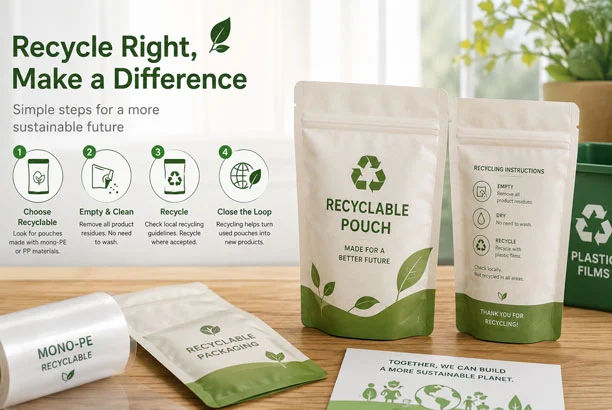
Maximizing recyclability requires suitable materials, clear disposal instructions, and consumer participation. Labels should explain recycling methods and encourage emptying, rinsing, and drying pouches to reduce contamination. Because municipal systems vary, store drop-off programs, How2Recycle guidance, and recycling locator tools can help consumers dispose of flexible packaging correctly.
Emerging Trends and Future Developments
Packaging regulations increasingly promote recyclability, reuse, and EPR through policies in Europe and North America. Advanced barrier coatings are improving mono-material performance, while water-based and biodegradable barriers offer further possibilities. Chemical recycling may complement mechanical recycling as technology and economics improve, helping brands adopt future packaging solutions as they mature.
Conclusion
Switching to flexible packaging that can be recycled is a smart investment in the strength of your brand, your ability to follow the rules, and your customers' trust. Mono-material bags made from PE or PP are better for the environment than traditional multi-layer laminates because they protect products and look good on shelves. By learning about the structures of materials, barrier technologies, and recycling infrastructure, you can make smart purchasing decisions that balance performance needs with environmental goals. Successful transfers are guarantyd when you work with experienced makers who offer certifications, quality controls, and the ability to make changes as needed. Adopting recyclable pouches makes brands sustainability leaders instead of followers who are just following the rules as rules get stricter and consumer expectations rise.
FAQ
1.Can recyclable pouches be processed in standard municipal recycling programs?
Mono-material PE and PP bags can be recycled using the systems that are already in place, but the ways that they are collected vary from place to place. Rigid plastic cases usually go into curbside programs, but flexible films need to be dropped off at store drop-off sites, which are common at big box stores across North America. Flexible boxes can be collected at the curb in more ways in European markets. Checking the local program's rules for safe dumping is important.
2.How do costs compare between recyclable and traditional pouches?
Because they use special materials and more advanced barrier technologies, recyclable pouches made of a single material usually cost 10 to 30 percent more than regular multi-layer options. When you look at the total cost, you should think about EPR fees, the benefits to the brand's image, and how willing customers are to support sustainable brands. For many businesses, the premiums are worth it because they help them meet regulations, lower their EPR costs, and improve their position in the market.
3.What customization options exist for recyclable flexible packaging?
You can choose from different pouch formats (stand-up, flat bottom, spouted), print up to 11 colors, and choose from different finishes (matte, gloss, soft-touch). The pouches also have functional features like resealable zippers, tear notches, and hanging holes. When properly stated, all modifications keep the ability to recycle a single material. Digital printing lets you customize a small number of products, starting at 500 pieces.
Partner With a Trusted Recyclable Pouch Manufacturer
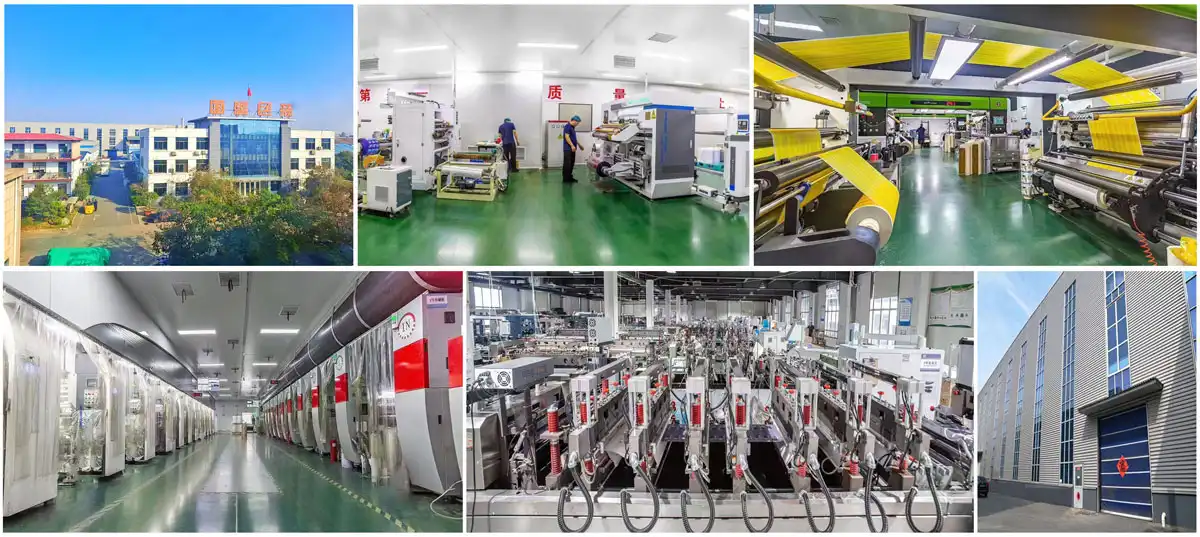
It is Guoshengli Packaging's specialty to make high-performance recyclable pouches that meet both environmental goals and strict product safety standards. Our 25 years of experience with flexible packaging, along with our ISO 9001, BRC, and FDA certifications, make sure that food, pet food, and personal care brands can rely on quality and compliance. As a way to help new businesses get started, we offer flexible 500-unit digital printing minimums. For established names, we offer container-load rotogravure production capability. Our structures made of only PE and PP work well with recycling systems in both North America and Europe. They also offer barrier protection, strong sealing, and print quality that is on par with traditional laminates. If you're starting a sustainable packaging program or making an existing one bigger, our team can help you choose the right materials, test their performance, and make sure that the production runs smoothly. Email our team at sales@guoshengpacking.com to talk about your needs for recyclable pouches and to get samples that show the quality and customization options.
References
1. Sustainable Packaging Coalition (2023). "Recyclability and Infrastructure Assessment for Flexible Packaging Materials." Washington, DC: GreenBlue.
2. McKinsey & Company (2023). "Consumer Sustainability Trends: North American Market Analysis." New York: McKinsey Sustainability Practice.
3. European Commission (2022). "Extended Producer Responsibility Implementation Guidelines for Packaging Materials." Brussels: EU Environmental Directorate.
4. Plastics Industry Association (2023). "Mono-Material Flexible Packaging: Technical Performance and Recycling Compatibility Study." Washington, DC: Plastics Industry Association.
5. Institute of Packaging Professionals (2023). "Barrier Technologies in Recyclable Flexible Structures: Performance Benchmarking Report." Naperville, IL: IoPP Technical Publications.
6. Association of Plastic Recyclers (2022). "Design Guide for Recyclable Flexible Packaging in North American Markets." Washington, DC: APR Flexible Film Recycling Committee.