- English
- French
- German
- Portuguese
- Spanish
- Russian
- Japanese
- Korean
- Arabic
- Greek
- German
- Turkish
- Italian
- Danish
- Romanian
- Indonesian
- Czech
- Afrikaans
- Swedish
- Polish
- Basque
- Catalan
- Esperanto
- Hindi
- Lao
- Albanian
- Amharic
- Armenian
- Azerbaijani
- Belarusian
- Bengali
- Bosnian
- Bulgarian
- Cebuano
- Chichewa
- Corsican
- Croatian
- Dutch
- Estonian
- Filipino
- Finnish
- Frisian
- Galician
- Georgian
- Gujarati
- Haitian
- Hausa
- Hawaiian
- Hebrew
- Hmong
- Hungarian
- Icelandic
- Igbo
- Javanese
- Kannada
- Kazakh
- Khmer
- Kurdish
- Kyrgyz
- Latin
- Latvian
- Lithuanian
- Luxembou..
- Macedonian
- Malagasy
- Malay
- Malayalam
- Maltese
- Maori
- Marathi
- Mongolian
- Burmese
- Nepali
- Norwegian
- Pashto
- Persian
- Punjabi
- Serbian
- Sesotho
- Sinhala
- Slovak
- Slovenian
- Somali
- Samoan
- Scots Gaelic
- Shona
- Sindhi
- Sundanese
- Swahili
- Tajik
- Tamil
- Telugu
- Thai
- Ukrainian
- Urdu
- Uzbek
- Vietnamese
- Welsh
- Xhosa
- Yiddish
- Yoruba
- Zulu

Recyclable pouches represent a transformative approach to flexible packaging, addressing the pressing needs of brands committed to sustainability without sacrificing performance or market appeal. As regulatory frameworks tighten around extended producer responsibility (EPR) and plastic waste management, businesses across food, pet care, and personal care sectors increasingly seek packaging solutions that align with circular economy principles. This guide explores the technical composition, performance characteristics, and strategic considerations essential for procurement managers and sustainability officers evaluating mono-material pouch structures. We examine how recyclable pouches compare against traditional multi-layer laminates, the certification standards that verify environmental claims, and practical implementation pathways for integrating these solutions into existing supply chains while maintaining product protection and cost efficiency.
Understanding Recyclable Pouches: What They Are and How They Work
Material Foundations That Enable True Recyclability
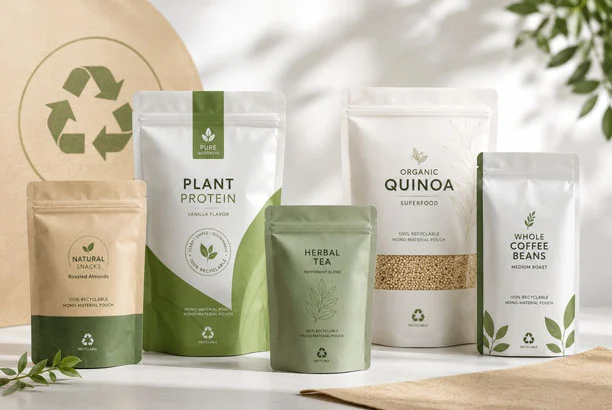
Recyclable pouches are made from a single material, either polyethylene (PE) or polypropylene (PP), which enables whole packages to enter existing recycling streams without the need for laborious separation procedures. Unlike most multi-layer laminates, which are made of materials that don't work well together, like aluminum foil, polyester, and different types of plastic films, these advanced bags have a consistent makeup all the way through. This way of thinking about design solves a big problem in waste management: most recycling centers can't process mixed-material packaging in a way that makes economic sense. PE-based pouches usually have the recycling code #4 and work well with the low-density polyethylene recycling systems that are already in place. #5 options made of polypropylene flow through recycling pathways that are already set up for containers and caps.
The technical improvement is keeping the performance of the barrier while getting rid of the variety of materials. Usually, moisture and oxygen are kept out of flexible packaging by layering different polymers that have properties that work well together. Mono-material options get similar results by using special coatings, like EVOH (ethylene vinyl alcohol) barriers that are applied in small amounts, or advanced extrusion methods that change the surface properties without adding materials that don't work with the mono-material. These pouches are put through a lot of tests to make sure they meet food safety standards and can still be recycled. Finding the right mix between these two needs a lot of knowledge in material science and careful manufacturing.
How Recycling Systems Process These Pouches
When people throw these pouches away in the right pickup streams, they start the recycling process. Municipal recycling centers use laser readers and density separation equipment to sort the materials that come in. They then send PE and PP products to separate processing lines. After the bags are cleaned and sorted, they are shredded into flakes, washed to get rid of dirt and glue, and then melted into pellets that are used to make new goods. Material purity is very important for this process to work, which is why mono-material building is so important.
Global recycling infrastructure is very different from one region to the next. European markets benefit from well-established EPR systems that require producers to pay for collection and processing, making strong ways for flexible packaging recovery. North America's infrastructure is still getting better, with bigger cities having a wider range of services than rural areas. This difference in geography affects how suppliers are chosen and what certifications are needed. Brands have to make sure that the packaging they choose is compatible with the recycle options their target customers have access to.
Distinguishing Recyclable From Biodegradable and Compostable Options
People frequently confuse the language used to speak about sustainable packaging. Recyclable pouches are designed to remain in a material recycling loop, ensuring that the material retains its value even after several usage. Biodegradable packaging breaks down via biological processes, although it may create microplastics or requires particular conditions in the environment to operate. Compostable materials, often produced from PLA or PBAT, break down in commercial composting facilities but may pollute recycling streams if lost.
Each one is done for distinct strategic reasons. Recyclable pouches are best suited for companies that currently operate in high recycling areas since they are compatible with existing waste management systems and consumer behaviours. Compostable options are useful for circumstances when contamination after use makes recycling impractical, such as food-soiled packaging. The trick is to ensure your form of packaging is compatible with the waste management systems and typical behaviours of individuals in the markets you’re targeting. This is something that goes beyond stating something is sustainable.
Pouch Formats Suited for B2B Applications
Stand-up pouches are the most common type of store packaging because they are stable and easy to see on shelves. This makes them perfect for snacks, coffee, and pet toys. Their bottom gusset gives them strength and makes the most of poster space for advertising. Flat-bottom pouches are better for higher-value products where the packaging makes a big difference in how good the product is seen to be. They are more stable and look more expensive. Three-side seal pouches are a cheap way to package products that don't need to be able to stand on their own. These pouches are often used for secondary packaging or in institutional settings.
Spouted bags hold liquid and semi-liquid foods like sauces, purees, and drinks, and they have a built-in way to dispense them. When made from mono-PP, including the spout and cap, these can still be recycled in full, even although they are more complicated. As long as these features are carefully defined during the design phase, zipper closures, tear notches, and hanging holes can all be added without affecting the structure of the mono-material. Because flexible packaging is naturally adaptable, it can be changed to fit different product needs without affecting recycling goals.
Comparing Recyclable Pouches with Alternative Packaging Solutions
Performance Against Traditional Multi-Layer Laminates
Recyclable single-material pouches increasingly approach traditional multi-layer laminates in barrier performance while offering better recyclability and regulatory compatibility. They suit most food, pet food, and personal care products, though highly sensitive products may still require advanced laminates. Despite premiums of up to 30%, lower EPR fees and brand value can improve total cost of ownership.
Evaluation Against Compostable and Biodegradable Alternatives
Compostable materials such as PLA, PBAT, and cellulose can reduce end-of-life waste but face limited composting infrastructure, contamination risks, higher costs, and weaker barrier performance. Recyclable pouches generally provide better performance, consistency, and broader infrastructure compatibility, while compostable options suit specific products and markets with suitable disposal systems.
Rigid Packaging Comparisons: Glass, Metal, and Plastic Containers
Rigid packaging provides excellent protection and has established recycling systems but is heavy and less efficient to carry. Flexible pouches require less material, take up less storage space and may dramatically save shipping costs and emissions. But glass, metal and plastic are still the preferred materials for luxury appearance, long-term barriers, reuse or refillability, depending on the product needs.
Selecting the Right Recyclable Pouches for Your Business Needs
Material Composition and Barrier Requirements
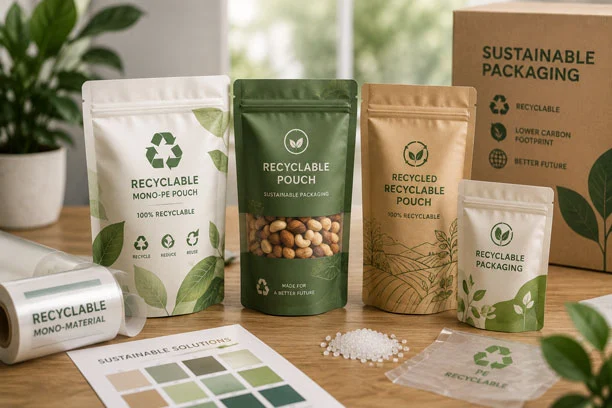
Pouch materials should be suitable for product protection demands including moisture and oxygen barriers using PE, EVOH or metalized structures as needed. PE gives flexibility, seal strength, and low temperature performance. PP delivers rigidity, clarity, and greater temperature tolerance. When constructed properly mono-material constructions may maintain recyclability and provide effective product protection
Certification Standards and Verification Protocols
Trusted certificates assist evaluate environmental claims and avoid greenwashing. RecyClass examines the recyclability of a packaging by sorting, washing and materials recovery and How2Recycle offers standardised disposal instructions according to regional recycling availability. Testing for food-contact, migration, seal, burst and drop further confirms pouch safety, durability, regulatory compliance and quality.
Customization Capabilities and Brand Expression
Customisation delivers significant shelf appeal with excellent printing, versatile finishes and useful features. Rotogravure is best for long runs and complicated graphics, whereas digital printing is best for small runs and quick prototyping. Glossy, matte and soft touch finishes increase presentation while zippers, rip notches, windows and peg holes boost utility without sacrificing recyclability.
Supplier Evaluation and Quality Assurance
Don’t only look at pricing, look at the supplier’s manufacturing competence, quality consistency, certifications, production flexibility, lead times, minimum order quantities and more. Increased printing, accuracy conversion and in line inspection reduces flaws and down time. Responsive technical assistance, clear documentation and traceability further improve quality assurance, compliance and efficient commercial production.
Environmental and Business Benefits of Using Recyclable Pouches
Carbon Footprint Reduction Across Supply Chains
Recyclable pouches help lower carbon emissions in a number of ways throughout the span of a product. When compared to rigid packaging options, lightweight construction cuts down on transportation energy use, and per-unit shipping emissions can be cut in half or more. This benefit is amplified by global transport networks that send goods thousands of miles from where they are made to where they are sold.
Because they use less energy to make, flexible packaging is better than most rigid options. Melting sand or metal at high temperatures is a process that uses a lot of energy to make glass and metal containers. On the other hand, plastic film extrusion uses a lot less energy per unit volume of packaging made. When you look at the whole life-cycle of a product, including how it is made, how it is transported, and how it is processed at the end of its useful life, flexible packaging often has a smaller overall carbon footprint, even although disposal infrastructure isn't as well developed.
Single-material bags that can be recycled make recycling possible in real life, not just in theory. Even although traditional multi-layer laminates technically contain recyclable materials, they don't usually end up in recycling streams because they are hard to separate. When people have access to collection programs for recyclable pouches, they actually recycle them, closing the material loop and lowering the demand for new materials and the emissions that go along with their production.
Brand Reputation and Consumer Preference Alignment
Recyclable pouches address the increasing need from consumers and retailers for sustainable packaging, particularly from younger purchasers. Obvious and verifiable certificates enhance confidence, loyalty and premiums paid, and precise environmental claims alleviate greenwashing worries. Early adopters also show more purchase intent, consumer involvement, and good market reaction.
Operational Efficiency and Cost Management
Recyclable pouches improve operational efficiency through lighter weight, reduced storage needs, better transport utilization, and lower shipping costs. Simpler material structures also streamline supply chains and quality control while reducing supply risks. Their recyclability can further lower EPR compliance fees, especially for brands operating across multiple international markets.
How to Implement Recyclable Pouches in Your Supply Chain Successfully
Assessing Current Packaging and Identifying Opportunities
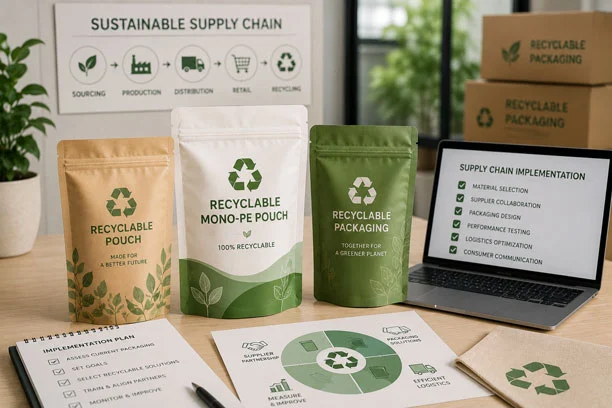
The first step in implementation is to take a close look at all of your current product packaging. For each SKU, write down the present material structures, barrier needs, graphic complexity, and source relationships. Find goods that can have structures made of only one material because of their shelf life requirements. This will allow for quick switching chances with little technical risk.
Look at how well the pouches work with the filling equipment that is already in use. This is important because you don't want to have to buy new equipment that doesn't work with the pouches. Most horizontal and vertical form-fill-seal machines can easily fit recyclable pouches, but they need to be validated first to make sure there aren't any problems during commercial production. Older technology might need to be fixed or replaced, which will cost money that needs to be planned for in the move.
Look at the recycling facilities in each market to make sure that the packing choices match up with the ways that people can get rid of them. Products that are mostly sold in places with well-developed flexible packaging collection systems can more easily make the case for using recyclable pouches than products that are aimed at places that don't have such infrastructure. Geographic selection lets adoption happen in stages that have the least impact on the environment and the most positive effect on consumers.
Supplier Partnership and Technical Development
With strong supplier connections, we provide mono-material packaging solutions via material selection, structural optimisation, sampling and technical issue resolution. The actual product testing should comprise accelerated shelf life testing, distribution drop testing, and thermal cycling to certify the performance. Close interaction with suppliers also helps ensure artwork, colours, finishes and graphics are appropriate for recyclable materials and printing methods.
Stakeholder Engagement and Communication Strategies
Cross-functional collaboration across procurement, operations, marketing and sustainability departments guarantees clear needs, operational preparedness, accurate environmental claims and effective communication and avoids implementation challenges. Consumers want clear recycling instructions and genuine advertising, while merchants benefit from earlier knowledge of packaging changes so they can coordinate shelf labelling and marketing assistance, and resolve problems.
Performance Monitoring and Continuous Improvement
Project performance should be tracked through recycling rates, customer feedback, sales changes, supply-chain efficiency, filling-line performance, packaging quality, logistics costs, and product shelf life. Regular supplier reviews should monitor color, measurements, and seal strength, allowing quality issues to be corrected quickly and supporting long-term ROI and sustainability.
Conclusion
Recyclable pouches are useful ways for brands to meet their sustainability goals while still protecting their products and keeping their prices low. Structures made of only PE and PP can be recycled using current systems, and they actually do help the environment more than marketing claims suggest. To make the right choice, you need to carefully look at the barrier standards, certification needs, and supplier skills. The success of an implementation relies on careful testing, clear communication with customers, and alignment among stakeholders. Less carbon emissions, better brand reputation, and more efficient operations are just a few of the business and environmental benefits that make transition investments worth it in most cases. As regulations get stricter and people want more environmentally friendly options, brands that use recyclable pouches will be able to stay ahead of the competition in responsible packing for a long time.
FAQ
1.Are recyclable pouches compatible with standard municipal recycling programs?
Compatibility depends on the type of material used and the infrastructure in the area. Mono-PE pouches marked #4 can be recycled with LDPE streams that are already in place in most developed markets, although collection programs do vary. Mono-PP pouches (#5) can be recycled with polypropylene when it is possible to do so. Check the recycling skills of your target markets against the type of material you're sending them. The level of infrastructure development varies a lot between areas like North America, Europe, and other places.
2.How can I verify a supplier's sustainability certifications are legitimate?
Ask for certification documents directly and check their authenticity with the organizations that issued them. You can check for RecyClass, BRC, ISO, and FDA registrations in official databases or by calling the organizations that issue the certifications. Suppliers with a good reputation always provide full paperwork. Performance claims are backed up by studies from reputable labs like SGS and Intertek. When possible, site audits give direct confirmation of how well products are made and how environmentally friendly they are.
3.What lead times should I expect for custom printed recyclable pouch orders?
Lead times depend on the type of printing, the size of the order, and how complicated the customization is. For standard specs and smaller orders, digital printing jobs can be finished in 7–10 days. Rotogravure printing usually takes 15 to 20 days because the cylinder needs to be set up and prepared. This method works well for medium to large production runs. Depending on the method used and the destination, international shipping adds time to the journey. For example, air freight gets to its destination in 4–5 days, but ocean shipping takes several weeks. For pressing needs, rush output may be possible at an extra cost.
Partner with Guoshengli Packaging for Your Recyclable Pouch Solutions
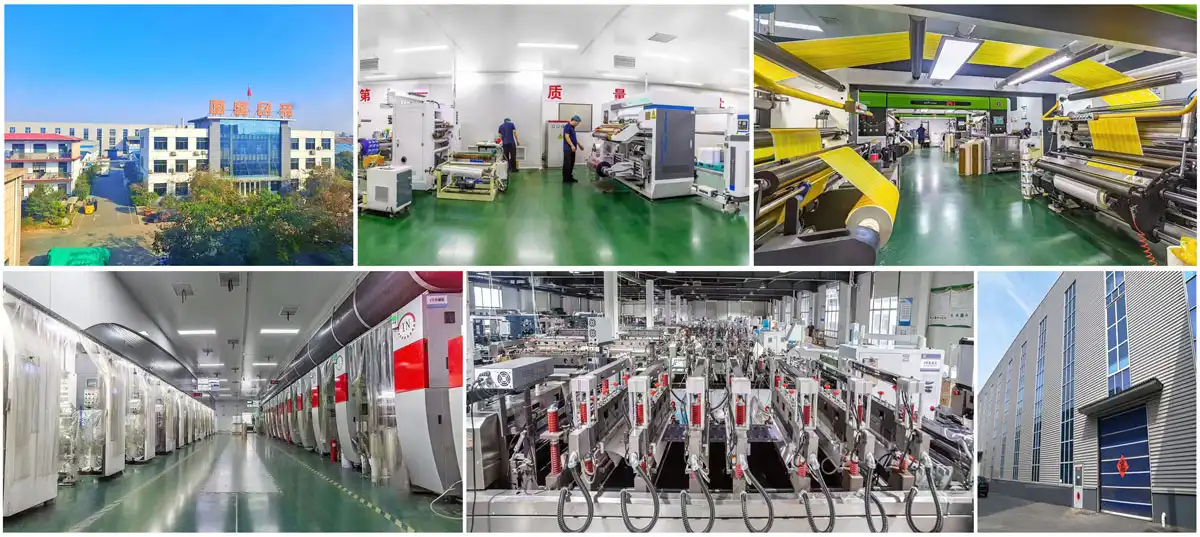
Guoshengli Packaging makes certified recyclable pouches that will help you reach your sustainability goals without sacrificing the safety of your products or the way your brand looks. Our PE and PP structures are made of just one material. They blend 25 years of experience with flexible packaging with cutting-edge barrier technologies and precise production systems that are certified to meet ISO 9001, BRC, and FDA standards.
Lead times start at 7 days, and we can handle production ranging from digital print runs of 500 units to high-volume rotogravure orders. Our technical team works together on all stages of development, from choosing the right materials and barriers to fine-tuning the artwork and making sure the filling equipment works properly. This makes sure that transition from traditional laminates to sustainable alternatives goes smoothly. Whether you're sourcing recyclable pouches as a manufacturer launching new product lines or upgrading existing packaging to meet EPR requirements, our experienced support helps you achieve environmental and business objectives.
Contact our team at sales@guoshengpacking.com to discuss your specific requirements. We'll provide material recommendations, sample options, and detailed quotations tailored to your application.
References
1. Chen, M., & Williams, K. (2022). Mono-Material Flexible Packaging: Performance Evaluation and Recycling Infrastructure Compatibility. Journal of Sustainable Packaging Technology, 15(3), 127-145.
2. European Plastics Recycling Association. (2023). Recyclability Guidelines for Flexible Packaging in European Collection Systems. Brussels: EPRA Publications.
3. Johnson, R., Thompson, L., & Martinez, A. (2021). Life Cycle Assessment of Flexible versus Rigid Packaging Systems. International Journal of Environmental Packaging, 9(2), 88-106.
4. Packaging Research Institute. (2023). Global Trends in Sustainable Flexible Packaging: Material Innovation and Market Adoption. Chicago: PRI Industry Reports.
5. Smith, J., & Anderson, P. (2022). Barrier Performance of Recyclable Mono-Material Pouch Structures for Food Applications. Food Packaging Science and Tec
6. RecyClass. Recyclability Evaluation Protocol for Flexible Packaging. RecyClass, 2024.