- English
- French
- German
- Portuguese
- Spanish
- Russian
- Japanese
- Korean
- Arabic
- Greek
- German
- Turkish
- Italian
- Danish
- Romanian
- Indonesian
- Czech
- Afrikaans
- Swedish
- Polish
- Basque
- Catalan
- Esperanto
- Hindi
- Lao
- Albanian
- Amharic
- Armenian
- Azerbaijani
- Belarusian
- Bengali
- Bosnian
- Bulgarian
- Cebuano
- Chichewa
- Corsican
- Croatian
- Dutch
- Estonian
- Filipino
- Finnish
- Frisian
- Galician
- Georgian
- Gujarati
- Haitian
- Hausa
- Hawaiian
- Hebrew
- Hmong
- Hungarian
- Icelandic
- Igbo
- Javanese
- Kannada
- Kazakh
- Khmer
- Kurdish
- Kyrgyz
- Latin
- Latvian
- Lithuanian
- Luxembou..
- Macedonian
- Malagasy
- Malay
- Malayalam
- Maltese
- Maori
- Marathi
- Mongolian
- Burmese
- Nepali
- Norwegian
- Pashto
- Persian
- Punjabi
- Serbian
- Sesotho
- Sinhala
- Slovak
- Slovenian
- Somali
- Samoan
- Scots Gaelic
- Shona
- Sindhi
- Sundanese
- Swahili
- Tajik
- Tamil
- Telugu
- Thai
- Ukrainian
- Urdu
- Uzbek
- Vietnamese
- Welsh
- Xhosa
- Yiddish
- Yoruba
- Zulu

Coffee pouch digital printing represents a transformative shift in specialty coffee packaging, enabling roasters and brands to translate artistic vision into tangible shelf appeal without the traditional constraints of plate-based printing. This advanced technology utilizes inkjet or electrophotographic processes to deliver high-resolution graphics—often exceeding 1200 dpi—directly onto flexible packaging substrates. Unlike gravure or flexographic methods that demand costly cylinders and minimum order quantities in the tens of thousands, digital printing empowers brands to launch small batches starting from just 500 units, test seasonal designs, and execute multi-SKU strategies with unprecedented speed and financial flexibility.
Understanding Digital Printing for Coffee Pouches
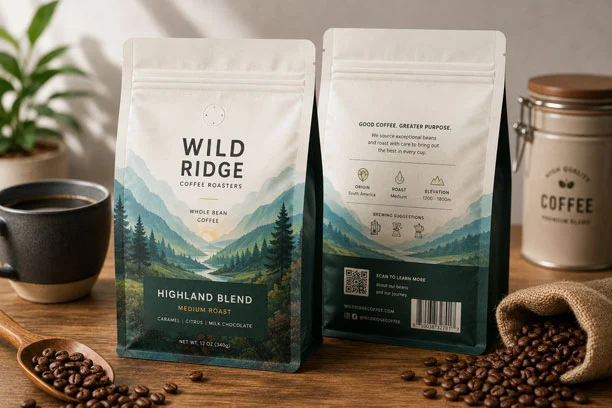
By getting rid of motorized plates, digital printing has changed the possibilities for coffee packing in a big way. With this plate-free method, specialty roasters can go from approved artwork to finished pouches in just seven business days. Precision inkjet heads or electrostatic toner systems are used to move digital files directly to the substrate. This keeps color consistency up to 97% of the Pantone range.
How Digital Printing Works on Flexible Packaging
The production process starts with preparing the digital files. This is where the artwork goes thru color analysis to make sure it works with the printer's color range. Then, food-safe printing inks that don't migrate are put on PET, matte PET, or paper surfaces one layer at a time by advanced print engines. After that, barrier films like aluminum, EVOH, or metalized PET are layered on top of these outer layers, and heat-sealable inner layers like PE or CPP are used to seal the whole thing. The end result is a multi-layer structure that keeps the volatile coffee aromas safe and shows off vivid, photo-quality graphics.
Key Technical Advantages Over Traditional Methods
Specialty roasters can get a lot out of digital workflows' performance advantages. With variable data printing, each pouch in a production run can have its own batch number, roast date, or QR code that leads to a story about the product's origin. This is not possible with static gravure cylinders. Not having to pay for plates saves between $480 and $1,200 per design, which makes it possible to update packaging for limited collaborations or single-origin releases. Turnaround times go from four to six weeks to seven to ten working days, which lets brands react quickly to crop cycles and feedback from the market.
Comparing Printing Technologies: Why Digital Printing Stands Out
When looking at different packaging choices, procurement teams have to compare different printing methods against how things work in the real world. Flexographic printing is still the best choice for very large orders, with unit costs below $0.05 when the number of products ordered is over 100,000. Rotogravure is perfect for multinational companies that make millions of identical pouches every year because it ensures perfect consistency.
Cost Analysis Across Production Volumes
Digital printing can match the cost of traditional methods at surprisingly low volumes. Digital channels usually charge $0.40 to $0.60 per unit for a 2,000-unit order of stand-up pouches, while flexography costs $0.35 to $0.50 per unit, but that's after $800 is paid for plate fees. When the prices of the cylinders are spread out over time, digital is cheaper for runs below 10,000 pieces. For about the same cost as making 5,000 units of a single flexographic design, brands can test three seasonal blends at the same time and make 1,500 units of each design.
Quality Benchmarks and Performance Standards
Modern digital presses can get ink to stick to paper well enough to pass the ASTM D3359 cross-hatch tests, and they can keep color stability within Delta E values below 2.0 across output runs. Rub resistance meets or exceeds 200 cycles according to Sutherland testing standards. This makes sure that graphics can handle being stacked in a building and handled by customers in a store. The printing method doesn't change the rate of oxygen transfer because the barrier's performance depends on the structure of the laminate, not the decoration technology.
Customization and Sustainability in Coffee Pouch Digital Printing
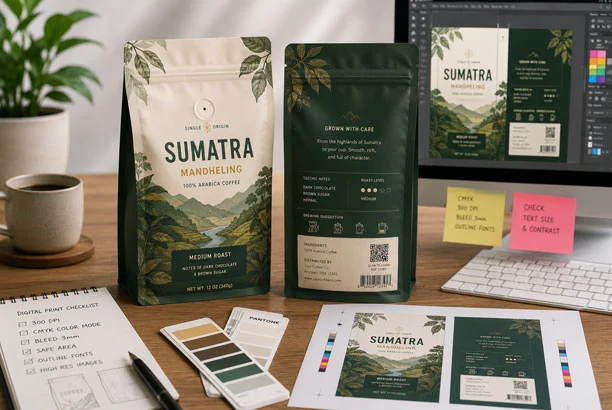
In the specialty coffee market, where people pay more for honesty and stories, personalization has become a way to stand out from the competition. Coffee pouch digital printing processes make customization options available that were only available for high-end goods before. This lets micro-roasters compete physically with well-known brands.
Variable Data and Consumer Engagement Features
Each pouch can show different details without having to stop production or change how it's set up. If a roaster has a subscription service, they might put the names of each customer or unique tasting notes on each month's shipment. Farm-to-cup brands use QR codes that can be scanned to see the GPS locations of the fields where the coffee comes from, how it was processed, and how well it was brewed. During production, batch-specific data like roast date, lot number, and elevation can be added on the fly, meeting the needs of European and North American markets for traceability.
Sustainable Ink and Substrate Options
Environmental duty is becoming more and more important in purchasing decisions. Water-based inks and UV-curable formulations keep food-contact safety while getting rid of solvent emissions. These inks stick well to structures made of a single reusable material, like all-PE laminates, that follow the CEFLEX design standards for taking part in the circular economy. Compostable PLA/PBAT films can be thrown away by industrial composting when they reach the end of their useful life, but their barrier properties usually limit their shelf life to six months. When brands try to be environmentally friendly and protect their products at the same time, they often choose reusable materials that keep the air and moisture barriers that are needed to keep coffee fresh.
Certifications and Compliance Considerations
To make sure the food is safe, responsible suppliers follow strict testing protocols. Migration testing acts out ten-day contact situations to see if ink parts move into food-like substances at levels higher than what is allowed by law. Spectrophotometric research shows that color differences are still very small between orders that were made months apart. Testing the quality of the seal makes sure that the heat-sealing process hasn't weakened the structure or made leak paths around the degassing valves. Suppliers with ISO 9001, BRC, or FDA certifications show that they handle quality in a way that goes beyond simple compliance routines.
Procurement Guide: How to Choose a Digital Printing Supplier for Coffee Pouches
When picking a factory partner, you need to look at both their professional skills and how stable they are in operation. Specialty roasters are often angry that big converters don't give small accounts enough attention, which causes replies to be slow and service quality to be all over the place.
Critical Evaluation Criteria
Minimum order amounts show how committed a seller is to new brands. True digital-first manufacturers set MOQs at 500 to 1,000 units per design. Hybrid operations, on the other hand, often set MOQs at 5,000 units, which takes away from digital's natural freedom. During busy times, like when the harvest starts in the fall and when holiday gifts need to be wrapped, lead time guaranties become very important. Suppliers with dedicated digital lines can meet response times of seven to ten days all year, but during Q4 those who use digital as extra capacity may have to extend timelines to three weeks.
Sampling and Prototyping Processes
Free or low-cost samples speed up the process of making a choice. Leading sellers offer digital proofs in 48 hours and real examples within five business days. This way, brands can make sure that the models match the colors, have the right finish, and are structurally sound before they commit to mass production. As part of the sampling process, the pouch should be sealed and filled with coffee to make sure it can be used with both automatic and manual filling machines. It costs a lot more in the long run to package something in a pouch that looks nice but gets stuck on a volumetric filler.
Pricing Transparency and Cost Escalation
It should be clear how unit costs go down as traffic goes up when you use a tiered price scheme. 500 units could be sold for $0.65 each, 1,000 units for $0.52 each, and 3,000 units for $0.43 each. The prices keep going down as you reach 10,000 units with coffee pouch digital printing. You can't plan your budget as well when there are hidden costs like artwork preparation fees, color matching prices, and expedite fines. You can trust that the quotes you get from suppliers will cover everything, such as supplies, printing, converting, and basic finishes like flaps and zippers.
Communication and Relationship Management
Communication with the respondent is often what makes a great partner different from a good supplier. When specialty roasters put out a lot of coffee from different sources, they need packing partners who know how busy the season can be and can answer technical questions in hours instead of days. Give smaller clients their own account managers. This shows that the supplier sees new brands as having a chance to grow. This makes connections that get stronger as the number of orders that come in grows.
Maximizing ROI with Digital Printing on Coffee Pouches
When you invest in high-quality packaging, you get measurable returns in the form of better brand recognition and more operational flexibility. Specialty coffee costs two to four times more than regular coffee, which means that investments in packaging that raises the perceived value are possible.
Brand Equity and Shelf Impact
Consumer study shows that packaging affects choices about what to buy at the point of sale. This is especially true for high-end products where quality cues are very important. Graphics in high definition that show simple typography, botanical drawings with lots of detail, or origin landscapes show that you are skilled and pay attention to the little things. Matte finishes with spot gloss add interest to the way things feel, and soft-touch coatings make things feel expensive. When a roaster switches from plain kraft boxes to digitally printed stand-up bags with a flat bottom, they can often get away with 15% to 25% price rises just because they think the quality is better.
Inventory Risk Management
When brands buy boxes the old-fashioned way, they need to keep a collection that could last longer than the twelve months of sales forecasts. There is a risk of obsolescence with a 50,000-unit gravure order for a single blend if consumer tastes change or green coffee supplies change without warning. Just-in-time inventory plans are possible with digital printing. This means that brands only need to buy 2,000 units a month instead of 24,000 units a year. With this method, you don't need as much working capital or office room, and you don't have to worry about having to throw away old packaging because the blend or brand has changed.
Market Testing and Product Development
When you launch a new product, there is a lot of doubt. Digital printing turns packing from a set cost into a tool for growth that can be used in many ways. A roaster that wants to introduce a honey-processed Ethiopian coffee can do a test run of 1,000 units to see how well it does with customers before committing to larger inventory positions. Subscription brands need flexible packaging that gravure economics can't give them because every month they change their seasonal products. Private-label makers who work with many retailers make different patterns for each one so there is no inventory confusion or risk of cross-contamination.
Conclusion
Digital printing has fully changed how much coffee packages cost and how creative they can be. That got rid of the things that made specialty roasters have to use generic solutions or commit to big, risky plans that cost a lot of money. By getting rid of plate costs, dropping the minimum order number to 500 units, and speeding up the turnaround time to seven working days, this coffee pouch digital printing method lets brands match their creative vision with how they can run their business. Digital printing is best for specialty roasters, subscription brands, and private-label manufacturers that need to change with the market while keeping their premium brand positioning. This is because it can handle high-resolution graphics, variable data, and substrate options that are good for the environment.
FAQ
1.What is the typical cost difference between digital and gravure printing for coffee pouches?
It costs between $0.40 and $0.65 per unit to print digitally for small sales of 500 to 3,000 products. For gravure printing, the cost per unit is between $0.30 and $0.45, but the cost per barrel is between $800 and $1,200. Digital is cheaper for runs of less than 8,000 to 10,000 units when plate costs are taken into account.
2.Can digital printing match the barrier performance of traditional coffee packaging?
Yes, the function of the barrier rests on the structure of the laminate rather than the printing method. The oxygen transmission rate of digitally printed bags with aluminum, EVOH, or metalized PET middle layers is less than 1 cc/m³/day, which is the same as or better than gravure-printed versions for a twelve-month shelf life.
3.How long does it take to receive finished pouches using digital printing?
After artwork approval, production times are between seven and ten working days. For gravure printing, the time frame is between four and six weeks. Digital proofing, printing, laminating, pouch conversion, and quality control are all part of this.
4.Are the inks used in digital printing safe for food contact?
Low-migration inks that are approved by FDA 21 CFR 175.300 and EU Regulation 1935/2004 are used by reputable providers. After these inks are put on top of the substrate, they are kept away from food by functional barrier films. This makes sure people follow the rules for safety.
Partner with Guoshengli Packaging for Your Digital Coffee Pouch Needs
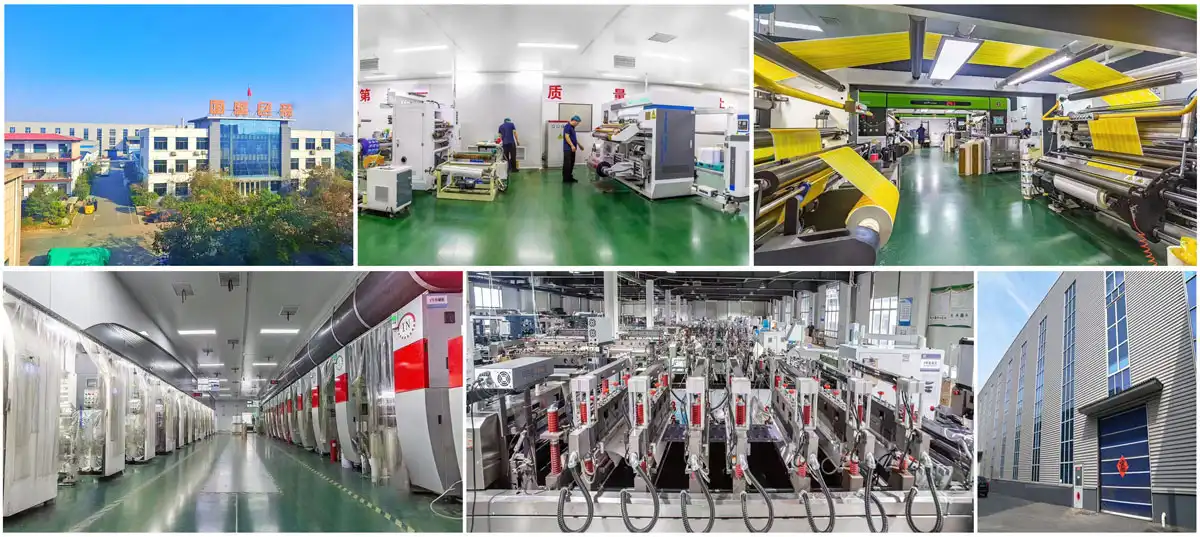
For more than 25 years, Guoshengli Packaging has helped food brands and specialty coffee roasters by providing flexible packaging solutions that balance how they look with how well they work. We don't have to deal with problems like high setup costs, long lead times, and high minimums because our company only prints on coffee pouches. Our coffee pouch digital printing options include 1200 dpi resolution, 97% Pantone color precision, and minimum order quantities (MOQs) as low as 500 pieces per design. This makes them perfect for small batches, seasonal starts, and strategies that use more than one SKU.
We offer full customization, such as flat-bottom structures for better shelf appearance, resealable zippers for longer freshness, and changeable data printing for tracking batches. Our building materials are a mix of high-barrier laminates and eco-friendly options like mono-PE that can be recycled and films that can be broken down in the soil. All of these options are approved by ISO 9001, BRC, and FDA. We give new brands the same amount of attention as old ones, with turnaround times of seven to ten days and quick technical support.
Email our team at sales@guoshengpacking.com to talk about your project needs, ask for samples, or get a full price that is based on your volume and specifics.
References
1. Smith, J. (2022). Flexible Packaging Technology: Innovations in Digital Printing for Food Applications. Packaging Science Institute Press.
2. Martinez, L., & Chen, K. (2023). "Comparative Analysis of Printing Technologies for Specialty Coffee Packaging." Journal of Food Packaging Engineering, 18(3), 145-162.
3. Thompson, R. (2021). Sustainable Packaging Solutions: Material Selection and Environmental Impact in the Coffee Industry. EcoPackaging Research Group.
4. Anderson, M. (2023). "Cost-Benefit Analysis of Digital Versus Gravure Printing for Small-Batch Production." International Packaging Economics Quarterly, 29(2), 78-94.
5. Williams, S., & Davis, P. (2022). Food Contact Compliance: Regulatory Standards for Printed Flexible Packaging in North America and Europe. Food Safety Publications.
6. Global Coffee Packaging Trends Report (2023). Market Research Insights: Digital Printing Adoption in Specialty Coffee Segments. Beverage Packaging Analytics Group.