- English
- French
- German
- Portuguese
- Spanish
- Russian
- Japanese
- Korean
- Arabic
- Greek
- German
- Turkish
- Italian
- Danish
- Romanian
- Indonesian
- Czech
- Afrikaans
- Swedish
- Polish
- Basque
- Catalan
- Esperanto
- Hindi
- Lao
- Albanian
- Amharic
- Armenian
- Azerbaijani
- Belarusian
- Bengali
- Bosnian
- Bulgarian
- Cebuano
- Chichewa
- Corsican
- Croatian
- Dutch
- Estonian
- Filipino
- Finnish
- Frisian
- Galician
- Georgian
- Gujarati
- Haitian
- Hausa
- Hawaiian
- Hebrew
- Hmong
- Hungarian
- Icelandic
- Igbo
- Javanese
- Kannada
- Kazakh
- Khmer
- Kurdish
- Kyrgyz
- Latin
- Latvian
- Lithuanian
- Luxembou..
- Macedonian
- Malagasy
- Malay
- Malayalam
- Maltese
- Maori
- Marathi
- Mongolian
- Burmese
- Nepali
- Norwegian
- Pashto
- Persian
- Punjabi
- Serbian
- Sesotho
- Sinhala
- Slovak
- Slovenian
- Somali
- Samoan
- Scots Gaelic
- Shona
- Sindhi
- Sundanese
- Swahili
- Tajik
- Tamil
- Telugu
- Thai
- Ukrainian
- Urdu
- Uzbek
- Vietnamese
- Welsh
- Xhosa
- Yiddish
- Yoruba
- Zulu

The correct flexible packaging type can substantially affect your product’s shelf life, brand appeal, and bottom line. The 3 sided pouch has evolved as an important option in B2B procurement spanning food, pet food, pharmaceutical, cosmetic, and industrial industries. This guide covers what procurement managers, distributors, and packaging engineers need to know—from construction basics to supplier evaluation and emerging trends. Whether you’re launching a new product line or optimising current supply chains, understanding the fundamentals of three-side seal pouches will help you make informed, cost-effective choices that safeguard product quality and enhance market competitiveness.
Understanding 3 Side Seal Pouches: Definition and Key Characteristics
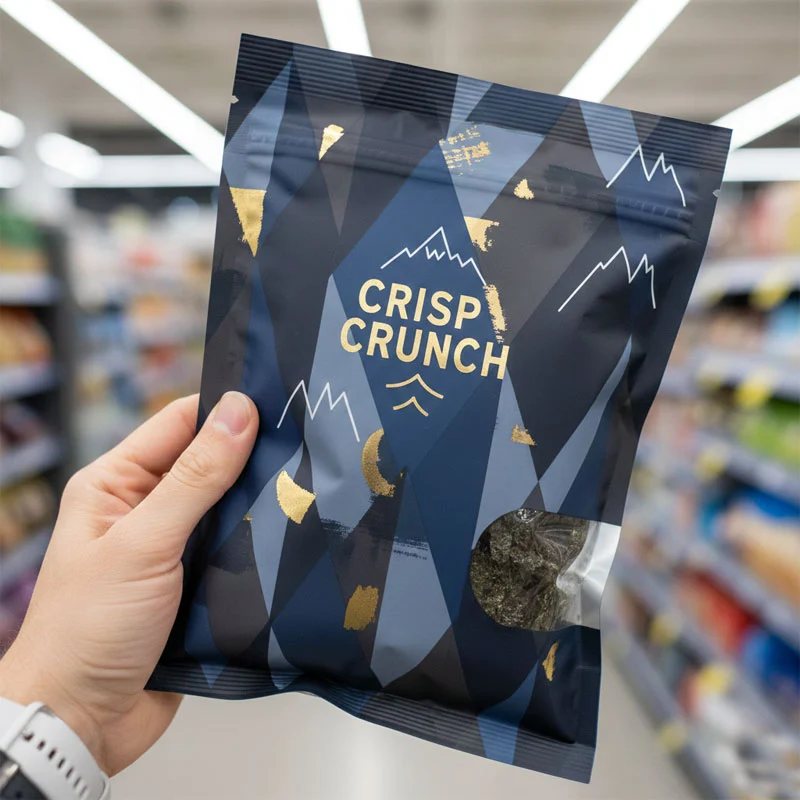
A 3 sided pouch is a flat pouch with three sides sealed during converting and one side left open for filling before the final seal is made. Depending on the converting process, it may be produced from a folded film web or from separate film webs. The relatively simple flat construction can support efficient converting and compact storage, although actual material use and production efficiency depend on pouch dimensions, laminate structure, and manufacturing method. Compared with many rigid containers or gusseted formats, the flat profile can also improve empty-package storage efficiency.
Construction and Material Options
Most 3 sided pouches are made from multi-layer laminates combining materials such as polyethylene, aluminium foil, PET, PA, or VMPET. Barrier performance varies widely by laminate. OTR and WVTR targets should therefore be specified under defined test conditions according to the product, target shelf life, filling process, and distribution route rather than assumed from the pouch format alone. High-barrier structures can help protect sensitive products from oxidation, moisture, aroma loss, and light exposure during storage.
Total material thickness may range from relatively thin sachet structures to much heavier laminates depending on product weight, pouch dimensions, barrier requirements, puncture risk, filling process, vacuum requirements, and distribution conditions. Thickness should therefore be selected as part of the complete package specification rather than by product weight alone.
Variations and Functional Features
The basic structure has three pre-sealed edges, but manufacturers can add a variety of functional features to meet different application needs. Options include resealable zippers, tear notches for easier opening, hang holes for retail display, and degassing valves for coffee or other products that continue to release gas after packing. For applications requiring additional internal volume, a gusseted pouch format may be considered instead of a conventional flat 3 sided pouch. B2B buyers should evaluate these options according to the product, filling method, consumer use, and retail requirements.
Seal Strength and Thermal Stability
Seal integrity is an important part of quality control in the production of 3 sided pouches. Seal strength can be measured using ASTM F88/F88M or another appropriate method, with acceptance criteria defined according to the laminate, seal width, product, and application rather than a universal force value. ASTM F1140 can be used to evaluate resistance to internal pressurization for suitable flexible packages, while leak or package-integrity methods should be selected according to the specific pouch construction and test objective.
ASTM F1929 is intended for certain porous medical packaging seals and should not be treated as a universal leak test for ordinary food or industrial pouches. Temperature capability also depends on the complete laminate and process. Selected 3 sided pouch structures may be designed for frozen storage, hot filling, or retort processing, but each application requires a validated material, adhesive, ink, sealant, and thermal process rather than assuming that all structures can withstand the same temperature range.
Key Benefits and Uses of 3 Side Seal Pouches in B2B Procurement
Because it can address important industry needs such as logistics efficiency, material use, shelf-life protection, and flexible customization, the 3-sided pouch format is widely used by procurement professionals. Its flat shape can support efficient storage and carton packing, although actual freight and warehouse savings depend on pouch dimensions, fill weight, shipment configuration, and the alternative packaging being compared.
Superior Barrier Protection
When 3-sided pouches use high-barrier laminates, they can help limit oxygen, moisture, aroma, light, and external contamination. This can support the required shelf life when combined with appropriate filling, sealing, storage, and distribution conditions. Food brands packaging coffee, meat, dried fruits, or spices may use high-barrier structures where flavour and aroma retention are important. Pharmaceutical or nutraceutical applications may also require carefully specified moisture, oxygen, or light protection depending on the product.
For suitable applications, high-barrier 3 sided pouches can provide effective product protection with lower packaging mass than many rigid formats, but performance should be compared application by application rather than assuming that a flexible pouch always provides equal or superior protection.
Versatility Across Industries
The 3 sided pouch can be used across a wide range of industries when the material structure and validation requirements are matched to the application. For terminally sterilized medical devices, sterile barrier packaging may need to meet ISO 11607 requirements. These applications are highly specialized and should not be assumed to use the same materials, converting methods, or validation protocols as ordinary food or industrial pouches.
Food manufacturers may use suitable 3 sided pouch structures for vacuum-packed jerky, smoked seafood, frozen products, and other foods. Vacuum applications require materials with adequate toughness, puncture resistance, and seal strength, validated using the actual product and vacuum process rather than one universal pressure value. Industrial chemical applications require product-specific compatibility testing and, where applicable, compliance with dangerous-goods transport requirements. Suitability should never be inferred from pouch format alone.
Sustainability and Eco-Friendly Materials
Sustainability has become an important consideration in B2B purchasing decisions. Suppliers may offer mono-PE structures designed to improve compatibility with suitable polyethylene recycling systems, as well as selected compostable structures that meet relevant certification requirements. Neither recyclability nor compostability should be assumed from a material name alone, and barrier, sealing, filling-line, and shelf-life performance must be validated for the actual application.
Selected compostable packaging structures may be assessed against standards such as EN 13432 where applicable, but industrial compostability is a separate end-of-life route from mechanical recycling. Manufacturing sites may also use systems such as regenerative thermal oxidizers (RTOs) to control VOC emissions from printing and lamination operations. These manufacturing controls can support environmental-management objectives but should not be used as proof that a specific pouch structure is automatically sustainable.
Cost-Effectiveness and Economic Efficiency
The 3-sided pouch can be cost-effective compared with some rigid formats or more complex pouch constructions because of its relatively simple flat design. However, total cost depends on material consumption, dimensions, barrier structure, printing, order quantity, converting complexity, functional features, and filling-line efficiency.
The flat format can also support efficient carton packing and warehouse storage in many applications. Flexible minimum order quantities may make custom packaging more accessible to smaller brands or market-test programmes, depending on the printing method and supplier. Procurement teams should therefore compare total packaging cost rather than assuming that every 3 sided pouch project will automatically be cheaper than alternative formats.
Comparing 3 Side Seal Pouches with Other Packaging Options
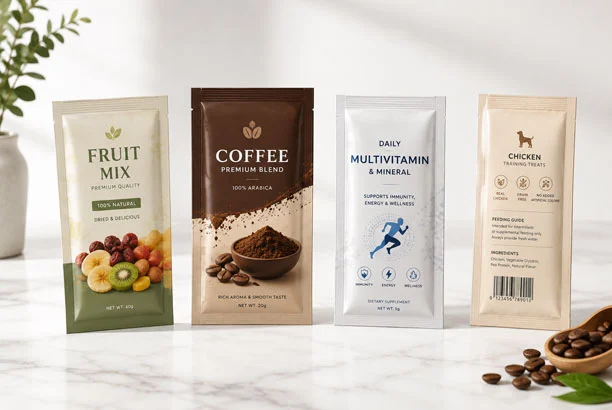
Procurement professionals can choose packaging that better matches product profiles, retail display needs, filling equipment, and budget constraints by understanding how the 3-sided pouch compares structurally and functionally with alternative formats.
Versus 4 Side Seal Pouches
A four-side-seal package has seals on all four edges in the finished format, while a pre-made 3 sided pouch is typically supplied with one side open for filling before the final seal is made. The exact converting and filling process varies by equipment and package design, so cost and production complexity should not be judged simply by the number of film webs used.
Four-side-seal formats may offer different panel and sealing configurations, but seal strength depends on the material, seal geometry, and sealing process rather than the number of sealed edges alone. For single-serve snacks, samples, or other flat-pack applications, 3-sided pouch formats can provide a practical balance of cost, protection, and production efficiency when correctly specified.
Versus Stand-Up Pouches
Stand-up pouches use a gusseted construction that allows the package to stand upright on retail shelves. This can improve presentation in applications where shelf visibility matters. The gusset also changes the film area, converting process, and filling behaviour compared with a flat 3 sided pouch.
Although a 3-sided pouch does not normally stand on its own, its flat profile can support compact storage and shipment. For B2B buyers focused on secondary packaging efficiency, samples, industrial materials, or applications where self-standing display is not required, the 3-sided pouch can be a practical alternative.
Versus Side Gusset Pouches
Side gusset pouches expand through folded side panels, increasing internal volume while maintaining a relatively compact footprint. This can suit products such as coffee beans, powders, and larger snack portions. Their cost and material use depend on the actual pouch dimensions, gusset depth, laminate, and converting process.
For products that fit comfortably within a flat format, the 3-sided pouch can provide a simpler construction while maintaining barrier performance when the correct laminate is selected. The decision should therefore be based on fill volume, display needs, material use, and filling method rather than assuming one format is always less expensive.
Resealable Zippers: Balancing Convenience and Cost
When a 3-sided pouch includes a resealable zipper, it can improve convenience for products used over multiple occasions. This feature is commonly considered for food, pet treats, supplements, and similar applications. Resealable zippers can help limit exposure between uses, but they do not restore the original factory-sealed barrier condition.
The trade-off is additional material cost and converting complexity. Procurement professionals should therefore compare the consumer benefit, pack size, filling method, product sensitivity, and target-market positioning before specifying a zipper.
Food Safety Compliance and Contamination Protection
All food-contact flexible packaging must meet the applicable safety requirements for the intended market and conditions of use. Food-contact safety depends on the complete material structure, including films, adhesives, inks, coatings, and other components. A 3-sided pouch does not itself prevent chemical migration; compliance depends on appropriate material selection and testing.
Compliance documentation may include ISO 9001 and BRCGS Packaging Materials certificates, applicable food-contact declarations or test reports, and third-party laboratory testing such as SGS where required. These documents can support compliance assessment for the relevant target market but should not be treated as proof that one certification automatically covers all international regulations.
Best Practices for Procuring and Using 3 Side Seal Pouches
Effective procurement combines quality, customization, cost, and supply-chain planning. Following a structured process can help packaging solutions support product value, production efficiency, and long-term growth.
Evaluating Supplier Credentials
Choosing a dependable supplier is the first step in sourcing packaging that performs consistently. Give priority to manufacturers with appropriate quality-management and packaging certifications such as ISO 9001 and BRCGS Packaging Materials, together with food-contact compliance documentation suitable for the intended market.
Review the supplier's equipment and production capabilities, including printing machines, laminating machines, slitting equipment, and pouch-making machines, to understand how repeat orders are controlled. Relevant experience with similar pouch structures, products, filling processes, and export markets can also reduce technical and supply risk. Ask for appropriate test reports and documentation to verify barrier performance, seal properties, and food-contact compliance where required.
Understanding Minimum Order Quantities and Lead Times
MOQ requirements vary widely by supplier, pouch size, material structure, printing method, and number of designs. Some manufacturers support smaller test runs, while others focus on high-volume production. Digital printing can often support lower quantities because conventional printing cylinders are not required, while rotogravure is generally more economical for larger repeat orders.
Lead times also vary according to artwork approval, material availability, printing method, curing, converting, quality inspection, and production schedule. Selected digital-printing projects may be completed relatively quickly, while rotogravure usually requires additional setup and processing time. Air freight may support urgent replenishment, but transit times should be confirmed for the actual route and delivery term rather than assumed from a universal number.
Custom Printing and Branding Advantages
Visual appeal can influence how products are presented and remembered. Rotogravure printing can use up to 11 colours on suitable projects to produce detailed, high-resolution graphics. Digital printing can support shorter runs, multiple SKUs, limited editions, and faster artwork changes.
Custom printing can communicate brand values, product benefits, instructions, and regulatory information. Buyers should work closely with suppliers on artwork preparation, colour matching, print tolerances, and proofing so the finished pouch matches the intended brand standard.
Bulk Buying Strategies to Optimize Pricing
Volume commitments can improve unit economics, but procurement teams should balance those savings against inventory, cash flow, storage, and forecast risk. Long-term forecasting and repeat business can support better production planning and may improve commercial terms.
Combining orders across compatible SKUs or coordinating repeat purchase schedules can also improve material utilisation and planning efficiency where the structures and printing requirements allow it. Clear communication with suppliers about expected growth, forecast volume, and order frequency can make production planning more predictable.
Ensuring Timely Delivery and Logistics Coordination
Packaging delays can disrupt production schedules and product launches. Buyers should establish clear delivery targets and allow time for artwork approval, production, quality inspection, freight booking, and customs clearance.
Work with suppliers that have experience coordinating both sea and air freight according to the project requirement. Export experience with North American, European, and Asia-Pacific markets can help reduce avoidable documentation and logistics delays. Shipment tracking and open communication allow potential issues to be addressed before they affect the production plan.
Future Trends and Innovations in 3 Side Seal Packaging
Packaging technology continues to evolve because of changing environmental requirements, consumer expectations, and advances in materials and manufacturing. Procurement teams that follow these developments can evaluate new solutions without sacrificing product performance.
Emerging Eco-Friendly Films and Circular Economy Initiatives
Recyclable and compostable material technologies continue to develop across flexible packaging. Mono-material PE/PE structures can improve compatibility with suitable polyethylene recycling systems when the complete package meets relevant design-for-recycling criteria and local infrastructure accepts the format.
Selected PLA-based or other compostable structures may be suitable where the complete pouch is certified for the intended industrial-composting route. B2B customers can use these options to support sustainability objectives while still validating product safety, barrier performance, sealing, and shelf life for the actual application. Third-party certification and transparent technical documentation can help support environmental claims.
Advanced Materials for Enhanced Performance
Developments in materials science continue to improve barrier performance, puncture resistance, sealability, and temperature capability. New laminate and coating technologies can reduce oxygen or moisture transmission while supporting downgauging where mechanical, barrier, and seal performance remain adequate.
Functional coatings can also add application-specific properties. Matte finishes can create a different visual and tactile effect, while anti-fog layers may improve visibility in selected refrigerated applications. These developments can expand the range of products suitable for 3-sided pouch packaging, including acidic foods or products requiring additional chemical compatibility, provided the complete structure is validated.
Smart Packaging Features
Interactive technologies can be incorporated into 3-sided pouches where technically and commercially justified. QR codes can link physical packaging to product information, authenticity checks, promotions, or traceability data. Tamper-evident features may support product integrity in sensitive categories such as pharmaceuticals or nutraceuticals.
Temperature-sensitive indicators may also be used for selected cold-chain applications where monitoring storage exposure is important. As connected-packaging technologies evolve, pouches can provide additional communication and traceability functions beyond basic containment.
Market Growth Drivers
Growing categories such as organic foods, plant-based proteins, personalized supplements, and e-commerce continue to create demand for lightweight, customizable flexible packaging. Regulations in many markets are also placing greater emphasis on packaging reduction, recyclability, producer responsibility, and more transparent environmental claims.
E-commerce creates additional requirements for packaging that can tolerate shipping and handling while presenting the brand effectively when the product reaches the consumer. These trends make the 3-sided pouch an adaptable format that can be engineered for changing product, market, and regulatory requirements.
Conclusion
The 3-sided pouch is a proven and flexible packaging option that can serve a wide range of B2B applications across food, pet food, pharmaceutical, cosmetic, and industrial sectors. Its flat construction, customizable barrier structures, printing flexibility, and broad material range make it useful for brands seeking to balance performance, cost, logistics, and presentation.
Businesses can make better packaging decisions by matching material structures to the product, comparing pouch formats objectively, defining appropriate seal and barrier requirements, and validating the final package under the intended filling, storage, and distribution conditions. Sustainability and smart-packaging technologies will continue to expand the options available for 3 sided pouches, but performance and environmental claims should remain application-specific and evidence-based.
FAQ
1. What are typical minimum order quantities for 3-sided pouches?
The MOQ for 3-sided pouches varies by supplier, pouch size, material structure, printing method, number of designs, and converting requirements. Digital printing can often support lower quantities for selected projects because no conventional printing cylinders are required. Rotogravure printing generally becomes more economical at larger volumes because cylinder and setup costs are distributed across the production run. Buyers should discuss expected volume, SKU count, and repeat-order needs with suppliers early in the project.
2. Can 3-sided pouches accommodate liquids and powders?
Yes, 3-sided pouches can be designed for both liquids and powders when the correct material structure, seal system, and filling process are used. Liquid applications require appropriate chemical compatibility, leak resistance, and barrier performance; aluminium foil may be used where strong light or gas barrier is required but is not mandatory for all liquids. Powder applications may use anti-static or other functional films where static behaviour, dust, or product sticking is a concern. Final performance should be validated using the actual product and representative filling and distribution conditions.
3. What are expected manufacturing lead times?
Lead times depend on printing method, material availability, pouch complexity, artwork approval, curing requirements, and production schedule. Digital printing can support relatively fast short-run production for selected projects, while rotogravure requires cylinder preparation and additional setup. Freight timing should be evaluated separately according to the shipping route, carrier, customs process, and delivery terms. Buyers should plan enough time for artwork approval, samples, production, inspection, and logistics coordination.
Partner with a Trusted 3 Sided Pouch Manufacturer for Your Packaging Needs
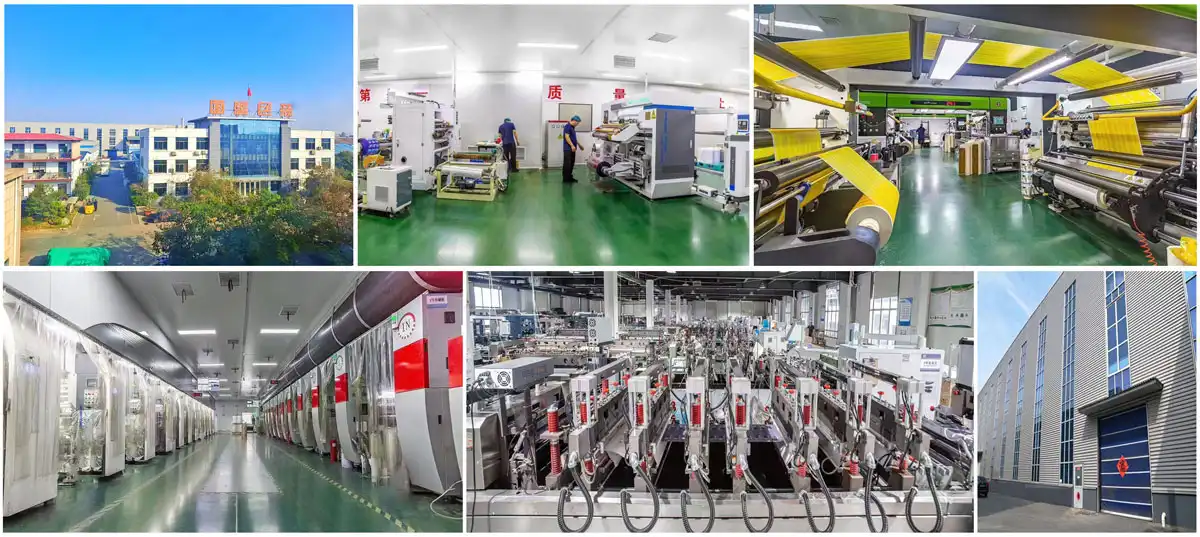
Guoshengli Packaging brings more than 25 years of flexible-packaging experience to B2B clients seeking reliable 3 sided pouch solutions. Our quality systems include ISO 9001 and BRCGS Packaging Materials certification, together with applicable food-contact compliance documentation for target markets. Our production capabilities include multiple rotogravure printing machines, laminating machines, slitting equipment, and pouch-making machines to support consistent repeat production.
Whether you require lower-volume market testing or larger repeat orders, we can evaluate digital printing, rotogravure printing, recyclable mono-material options, and selected compostable structures according to the application. Up to 11-colour rotogravure printing and digital printing are available for different project requirements, with lead times depending on material structure, artwork, order quantity, and production schedule.
Connect with our team at sales@guoshengpacking.com to discuss custom 3 sided pouch designs, request samples, or obtain a quotation tailored to your product, volume, filling process, and target market.
References
-
Robertson, Gordon L. Food Packaging: Principles and Practice. 3rd ed. CRC Press, 2012.
-
Marsh, Kenneth and Betty Bugusu. "Food Packaging—Roles, Materials, and Environmental Issues." Journal of Food Science 72, no. 3 (2007): R39–R55.
-
Selke, Susan E.M., John D. Cutler, and Ruben J. Hernandez. Plastics Packaging: Properties, Processing, Applications, and Regulations. 3rd ed. Hanser Publications, 2015.
-
Yam, K.L., ed. The Wiley Encyclopedia of Packaging Technology. 3rd ed. Wiley, 2009.
-
Coles, Richard and Mark Kirwan, eds. Food and Beverage Packaging Technology. 2nd ed. Wiley-Blackwell, 2011.
-
Emblem, Anne and Henry Emblem, eds. Packaging Technology: Fundamentals, Materials and Processes. Woodhead Publishing, 2012.