- English
- French
- German
- Portuguese
- Spanish
- Russian
- Japanese
- Korean
- Arabic
- Greek
- German
- Turkish
- Italian
- Danish
- Romanian
- Indonesian
- Czech
- Afrikaans
- Swedish
- Polish
- Basque
- Catalan
- Esperanto
- Hindi
- Lao
- Albanian
- Amharic
- Armenian
- Azerbaijani
- Belarusian
- Bengali
- Bosnian
- Bulgarian
- Cebuano
- Chichewa
- Corsican
- Croatian
- Dutch
- Estonian
- Filipino
- Finnish
- Frisian
- Galician
- Georgian
- Gujarati
- Haitian
- Hausa
- Hawaiian
- Hebrew
- Hmong
- Hungarian
- Icelandic
- Igbo
- Javanese
- Kannada
- Kazakh
- Khmer
- Kurdish
- Kyrgyz
- Latin
- Latvian
- Lithuanian
- Luxembou..
- Macedonian
- Malagasy
- Malay
- Malayalam
- Maltese
- Maori
- Marathi
- Mongolian
- Burmese
- Nepali
- Norwegian
- Pashto
- Persian
- Punjabi
- Serbian
- Sesotho
- Sinhala
- Slovak
- Slovenian
- Somali
- Samoan
- Scots Gaelic
- Shona
- Sindhi
- Sundanese
- Swahili
- Tajik
- Tamil
- Telugu
- Thai
- Ukrainian
- Urdu
- Uzbek
- Vietnamese
- Welsh
- Xhosa
- Yiddish
- Yoruba
- Zulu

If you run a specialty coffee brand or manage packaging procurement, coffee pouch digital printing may be the most practical upgrade you make this year. Unlike gravure or flexographic printing, digital printing eliminates cylinder costs, cuts lead times to 7–10 working days, and supports MOQs starting at just 500 units. For small-batch roasters, multi-SKU brands, and seasonal launch teams, this technology directly addresses the three biggest sourcing frustrations: high setup costs, slow turnaround, and rigid minimum orders.
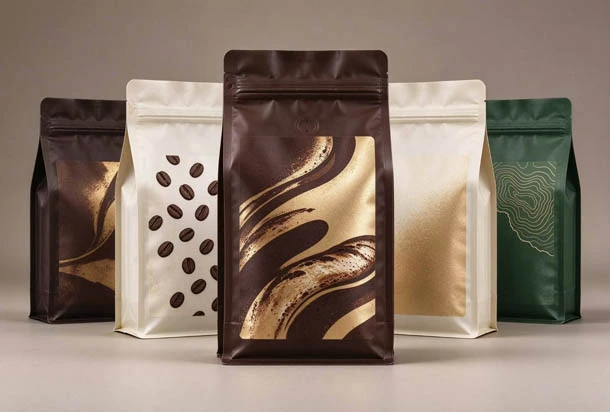
Understanding Coffee Pouch Digital Printing
What the Technology Actually Does?
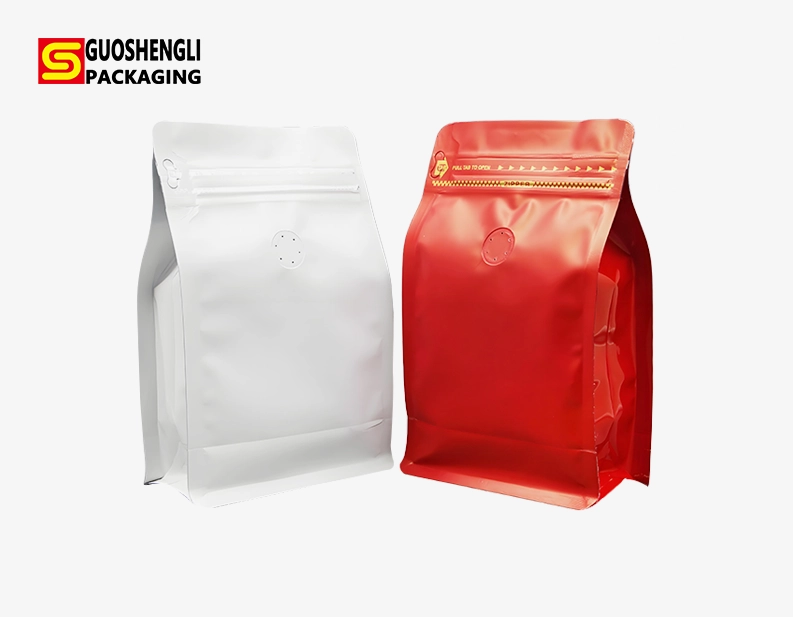
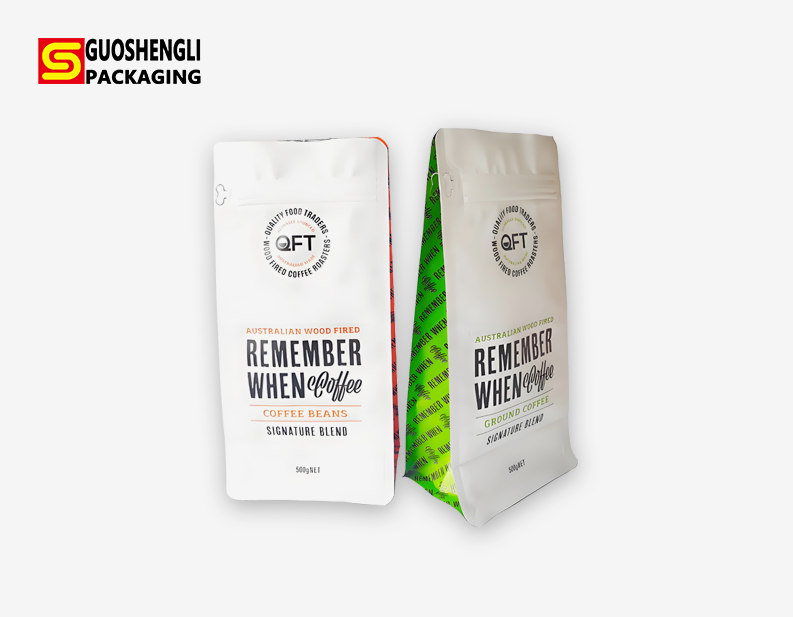
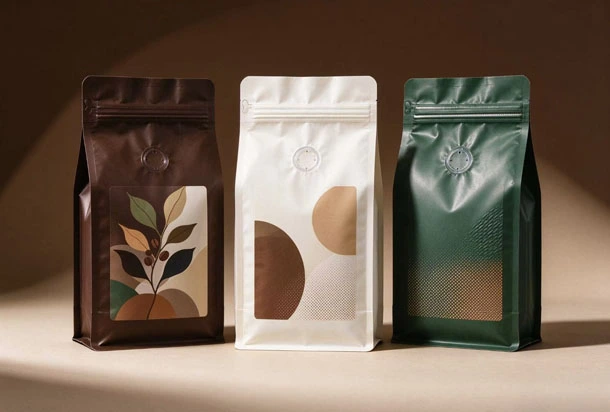
Using high-speed inkjet or electrographic systems, coffee pouch digital printing puts art directly from a digital file onto flexible packaging materials. There are no tubes for writing. That one difference changes everything about how much things cost and how quickly they can be turned around. Our digital presses at Guoshengli Packaging can print up to 97% of the Pantone color range and have resolutions higher than 1,200 dpi, so every pouch looks like a picture.
The inks used are water-based dyes with low migration that meet FDA and EU EC 1935/2004 food contact rules. The ink is sandwiched between layers of protective film, so it never comes into direct touch with the coffee and doesn't pose a food safety risk.
How It Differs From Conventional Methods?
Traditional gravure printing works great for large quantities, but making the plates costs between $480 and $1,200 per design and takes three to four weeks before even one pouch is made. When setting up flexography, the same rules apply. Coffee pouch digital printing doesn't need to do any of that. You send art, in three to five days you okay a digital proof, and within a week of that approval, you get the finished bags. Being flexible is not a nice-to-have for brands that have a lot of single-origin SKUs or that change their styles with the seasons, it's a must for staying competitive.
Benefits of Digital Printing on Coffee Pouches for B2B Businesses
Lower Cost at Small Volumes
It's easy to see how digital printing can save you money. A lot of people don't need gravure printing when their order size is between 500 and 3,000 units. The price of the cylinders alone can be more than the value of a small batch order. With digital printing, that fixed cost goes away completely, and as the number of units printed goes up, the price per unit goes down.
For specialty coffee brands and buying teams, these are the main benefits that mean the most:
- Zero cylinder cost: Every new design comes out without a setup fee. This means that small runs and seasonal collections can be done without having to keep too much stock.
- Variable data printing: With variable data printing, each pouch can have its own QR code, roast date, batch number, or origin marker. All of these can be printed at the same time, without stopping production.
- Multi-SKU production: When you print multiple SKUs at once, you can use different artwork for each origin, roast profile, or flavor variation. For each image, you don't need to place a separate order.
- Fast turnaround: Once the artwork is approved, the finished pouches leave our plant within 7–10 working days. This means that you can react to market demand right away instead of having to plan months in advance.
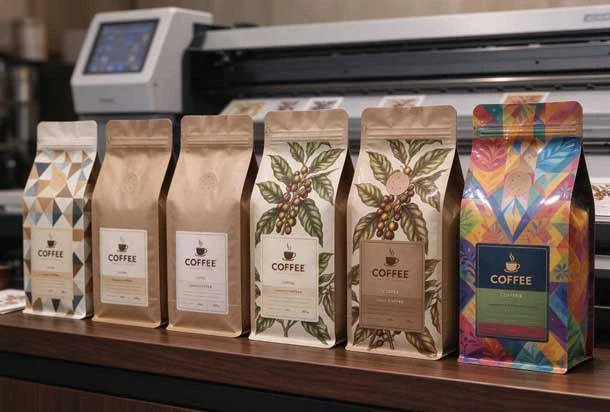
- Superior print clarity: With a resolution of 1,200 dpi, the roughness of a single coffee bean, the grain of kraft paper, and the gradient of a watercolor painting can all be reproduced with accuracy that makes them stand out on the shelf.
All of these benefits lower the risk of having too much inventory, improve cash flow, and let brands try out new goods without having to buy thousands of units all at once.
Digital Printing vs. Traditional Printing Methods for Coffee Pouches
The best way to print depends on how many products you need to print and how long the products will last. For runs over 50,000 units, gravure printing is still the most cost-effective option because the costs of the cylinders are spread out over a big number of units. When that level is dropped, the economics clearly shift in favor of digital.
When moving from gravure to offset, color uniformity is often a problem. Because the ink transfer is automatic and easy to repeat, gravure can get Delta E values that stay the same over long runs. Spectrophotometer-calibrated color management in modern digital printing takes care of this problem by keeping color deviation below 2.0 Delta E across production runs, which is a standard that meets the needs of luxury brands.
Another scientific thing to think about is how well the ink sticks to flexible materials. Primer coats or laminated overlay structures are used to stick digital prints to PET, matte PET, and kraft paper surfaces. According to ASTM D3359 adhesion tests, digital pictures on our multi-layer laminates—mostly PET/AL or NY/PE constructions—stay fully intact even after being heat sealed, vacuum packaged, and degassed.
A hybrid approach works well for brands that use gravure for their core SKUs that sell a lot but also want to add limited versions or try out new blends. Use gravure for your main lines and digital for everything that needs to be fast or has a low MOQ.
How to Choose the Right Coffee Pouch Digital Printing Supplier?
What to Evaluate Before You Place an Order?
There's more to choosing a coffee pouch digital printing provider than just how much they charge per unit. With a rising brand, it's not about getting the cheapest price on a single shipment. It's about how well the provider can handle low MOQs, meet tight deadlines, and keep print quality consistent across multiple orders.
When you look at suppliers, you should look for these qualities that they must have:
- Certified quality systems: ISO 9001 and BRC Food Packaging certifications show that the company has formal quality controls in place, not just informal ones. Brands that want to sell in the US must follow FDA rules.
- Transparent proofing process: A trustworthy provider sends digital copies within three to five days and fixes mistakes before the production starts, not after.
- Tiered pricing structure: As volume goes up, per-unit costs should go down. If a seller only charges flat rates, it can't help brands that are growing.
- Responsive communication: This is especially important for buyers who only want to buy a few products at a time. In twenty-four hours, you should get a real answer.
Guoshengli Packaging is certified by ISO 9001, BRC, and the FDA. For more than 25 years, they have worked with coffee and specialty food brands in North America, Europe, and the Middle East. Every question gets an answer from our team, and we treat a 500-unit order with the same level of care as a 50,000-unit order.
Case Studies: How Digital Printing Has Transformed Coffee Packaging for Businesses
Specialty Roaster: Seasonal Single-Origin Launch
Right before the holidays, a small specialty roaster in the US needed to package four different single-origin beans. It would have cost over $3,000 just to pay for the cylinders for four patterns, and the season could not have been met because of the six-week wait time. With coffee pouch digital printing, all four designs were printed at the same time, and there were no cylinder costs. Delivery was complete in nine business days. The roaster came out on time, sold out of its limited run, and two more versions were bought for the next quarter.
E-Commerce Subscription Brand: Multi-SKU Agility
A direct-to-consumer (D2C) coffee subscription brand with twelve current SKUs needed to change the artwork on the packaging every three months without throwing away any of the old stock. Digital printing made it possible to change the pattern for each batch, and QR codes on each pouch led to movies and notes about the roasting process. The brand said that the material on the packaging made customers more interested, and they cut down on overstock by buying closer to when demand actually happens.
Conclusion
Coffee pouch digital printing is a real operational advantage for specialty roasters, brands with multiple SKUs, and new product teams. It gets rid of the financial problems that come with cylinder costs, speeds up the time between idea and shelf, and makes print quality that fits with the image of an expensive brand. If a business is looking for flexible packaging in the US market, digital printing is the best option for runs less than 50,000 units because it has a low MOQ, short lead times, and high-resolution output. The technology is well-developed, the quality can be checked, and the savings are real.
FAQ
1. What is the minimum order quantity for digitally printed coffee pouches?
When you order from Guoshengli Packaging, you need to buy at least 500 pieces of each design. This means that coffee pouch digital printing can be used for releasing new products, seasonal mixes, and limited editions.
2. How long does production take?
Once the artwork is approved, finished bags are usually ready in 7–10 business days. There may be rush options available, based on how busy the production plan is right now.
3. Are the inks safe for food contact packaging?
Yes. We only use water-based inks that don't migrate and are in line with FDA and EU EC 1935/2004 food contact rules. The ink is sandwiched between layers of protection, so it doesn't touch the coffee.
4. Can I print different designs in the same order?
Yes. One production batch can make more than one SKU or design version, and there is no extra setup cost for each design.
5. Is digital print quality comparable to gravure?
For runs of less than 50,000 units, digital printing is just as good as gravure at reproducing colors, gradients, and alignment. Through precise spectrophotometer management, color variation is kept below 2.0 Delta E.
Partner With a Trusted Coffee Pouch Digital Printing Manufacturer
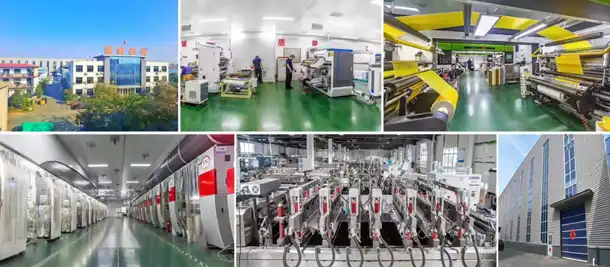
Guoshengli Packaging makes coffee packaging that is precisely designed and keeps your business moving. We are a certified coffee pouch digital printing supplier with more than 25 years of experience in flexible packaging. Our minimum order quantity is 500 units, our turnaround time is 7–10 days, there are no cylinder costs, and our quality meets ISO 9001, BRC, and FDA standards. To get a price right away, send your artwork and needs to sales@guoshengpacking.com.
References
1. Packaging World Magazine, 2023
2. FlexPackPRO — Flexible Packaging Industry Journal, 2022
3. Specialty Coffee Association (SCA) Annual Report, 2023
4. TAPPI Journal — Flexible Substrate Ink Adhesion Research, 2021
5. Smithers Pira — The Future of Digital Printing to 2026, 2021
6. Food Packaging Forum — Ink Migration and Food Safety in Flexible Packaging, 2022