- English
- French
- German
- Portuguese
- Spanish
- Russian
- Japanese
- Korean
- Arabic
- Greek
- German
- Turkish
- Italian
- Danish
- Romanian
- Indonesian
- Czech
- Afrikaans
- Swedish
- Polish
- Basque
- Catalan
- Esperanto
- Hindi
- Lao
- Albanian
- Amharic
- Armenian
- Azerbaijani
- Belarusian
- Bengali
- Bosnian
- Bulgarian
- Cebuano
- Chichewa
- Corsican
- Croatian
- Dutch
- Estonian
- Filipino
- Finnish
- Frisian
- Galician
- Georgian
- Gujarati
- Haitian
- Hausa
- Hawaiian
- Hebrew
- Hmong
- Hungarian
- Icelandic
- Igbo
- Javanese
- Kannada
- Kazakh
- Khmer
- Kurdish
- Kyrgyz
- Latin
- Latvian
- Lithuanian
- Luxembou..
- Macedonian
- Malagasy
- Malay
- Malayalam
- Maltese
- Maori
- Marathi
- Mongolian
- Burmese
- Nepali
- Norwegian
- Pashto
- Persian
- Punjabi
- Serbian
- Sesotho
- Sinhala
- Slovak
- Slovenian
- Somali
- Samoan
- Scots Gaelic
- Shona
- Sindhi
- Sundanese
- Swahili
- Tajik
- Tamil
- Telugu
- Thai
- Ukrainian
- Urdu
- Uzbek
- Vietnamese
- Welsh
- Xhosa
- Yiddish
- Yoruba
- Zulu

Choosing the right recyclable pouches for your product line starts with understanding what makes a pouch genuinely recyclable — not just labeled as "eco-friendly." True recyclable pouches use mono-material structures such as PE (#4) or PP (#5), which integrate cleanly into existing curbside or drop-off recycling streams. Unlike mixed-material laminates, these single-material formats reduce contamination at recycling facilities. For B2B buyers in food, pet care, or personal care sectors, selecting certified recyclable pouches means balancing barrier performance, compliance requirements, and brand messaging — all without compromising shelf appeal or product safety.
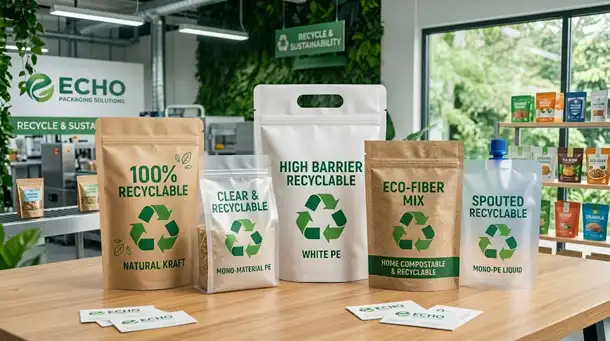
Understanding Recyclable Pouches and Their Benefits
Brands are really changing how they use flexible packaging with recyclable pouches. Mono-material pouches, which are made entirely of PE or PP, let the whole structure go into plastic recycling streams after use, instead of combining different materials into a laminate that ends up in a landfill.
For buying teams, this difference is important. The word "recyclable" does not mean "biodegradable" or "compostable." A mono-PE pouch goes through drop-off points for LDPE (#4), while a mono-PP bag goes into streams for polypropylene (#5). Neither one breaks down in dirt. Buyers who know the difference between these two terms protect their brands from accusations of "greenwashing," which is becoming a more real legal and social risk.
Why Certification Matters More Than Claims?
Verification by a third party tells the difference between real recyclable packaging and marketing language. Independently checked proof that a pouch structure works with real-world recycling systems can be found in certifications like How2Recycle, RecyClass, and APR (Association of Plastics Recyclers) Design Guidance. Verifiable certification is a must for brands that have to comply with EPR rules in Europe or extended producer responsibility reporting rules in North America. It is the proof that shows they are following the rules.
Core Criteria for Selecting Recyclable Pouches for Your Product Line
Not every bag made of a single material works the same way in all situations. As part of the selection process, the material's performance, functional features, and commercial viability must all be evaluated in a structured way.
Most of the time, barrier defense is the most disputed factor. Traditional metal foil laminates are very good at blocking air and water, but they can't be recycled. EVOH (Ethylene Vinyl Alcohol) barrier layers built into a PE or PP frame make modern single-material recyclable pouches that fill this need. Many recycle tests still consider the pouch fully recyclable as long as the EVOH content stays below about 5% of the total weight. EVOH-enhanced single-material pouches can be used for coffee, dry pet food, snacks, and personal care powders because of this.
Here are the main things that buying teams should look at when making decisions:
- Material structure and resin code compatibility: Make sure the pouch can be recycled as PE #4 or PP #5 in the country you want to sell it to. Ask the supplier for test results from a third party, not just their own internal standards.
- Barrier performance data: Ask for oxygen transmission rate (OTR) and water vapor transmission rate (WVTR) numbers that are specific to the structure you are looking for. Check these against the shelf life needs of your product.
- Print quality on mono-material substrates: You can print up to 11 colors with rotogravure on single-material films, and you can choose from glossy, matte, or soft-touch finishes. Before you commit to production, make sure that the seller can print in a way that fits with your brand's visual standards.
- MOQ and lead time flexibility: Digital printing choices starting at 500 units greatly lower brands' financial risk during approval phases as they try to switch to more environmentally friendly packaging.
Both of these factors work together. There is a legal risk with a pouch that has good barrier data but no recyclability approval. The purity of the product is at risk when an approved bag doesn't work well as a barrier. The goal is to find the areas that meet.
Cost-Benefit Reality Check
Flexible packaging that can be recycled usually costs 10–20% more than regular multi-layer laminates. For brands that promote sustainability as a core value, this extra cost can be recouped through higher consumer prices, better ESG reporting, and avoiding fines from regulators. Long-term calculations are becoming more and more in favor of the shift.
Matching Recyclable Pouch Types to Specific Industry Needs
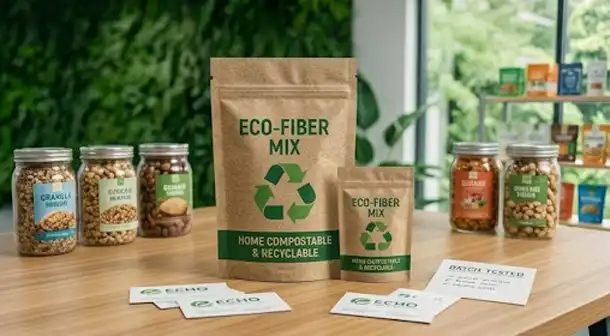
Different types of products have different technical needs when it comes to packing. For a dog food brand, they need a stand-up pouch with a strong moisture shield and a zipper that can be used more than once. A cosmetics brand needs a style that shows high quality and follows EU rules for cosmetic packing. Selecting the right recyclable pouches involves matching these specific performance needs to the correct mono-material structure.
Food and Pet Care Applications
Stand-up recyclable pouches with resealable zippers are the best way to package dry dog food, cat treats, and pet vitamins. The stand-up base makes it stable for retail display, and the zipper keeps the food fresh after it's been opened, which is a direct functional benefit for the customer. Adding hanging hole choices to shelves gives stores more ways to display their goods.
BOPP/CPP structures are great for snacks, coffee, and dried fruits because they are clear and stiff. This means that the product can be seen and the packaging can stand up straight on the shelf.
Personal Care and Household Products
Usually, bath salts, skin care powders, and cleaning concentrates for the home need to be resistant to air and wetness without using aluminum foil. For these uses, PE-based single-material pouches with EVOH barrier layers work well. Lamination without solvents and printing with water-based inks make sure that the package doesn't add any chemicals to the product, which is an important issue for personal care safety teams.
Evaluating Recyclable Pouch Suppliers and Manufacturers
Evaluation of a supplier is more than just price. A company that makes recyclable pouches needs to show not only that they can make them, but also that they have a quality system that can be tracked and that supports your legal paperwork.
Some important things to look for in a supplier are ISO 9001 certification for quality management, BRC food packaging certification for safety when food comes into touch with it, and FDA compliance paperwork for entering the North American market. It's also important that the provider can give third-party test results, not just declarations, for food safety, barrier performance, and the ability to be recycled.
Another dimension is the ability to make things. Suppliers with solvent-free lamination lines, dedicated pouch-converting equipment, and rotogravure printing that can handle up to 11 colors give more consistent results than facilities that can do a variety of things. Ask especially about color accuracy between orders and dimensional limits for pouch making.
For supply chain planning, being clear about lead times is important. Reliable companies that sell recyclable pouches should have digital printing choices for small orders (usually 7–10 days) and regular rotogravure production windows of 15–20 days for bigger orders.
Steps to Implement Recyclable Pouches in Your Supply Chain
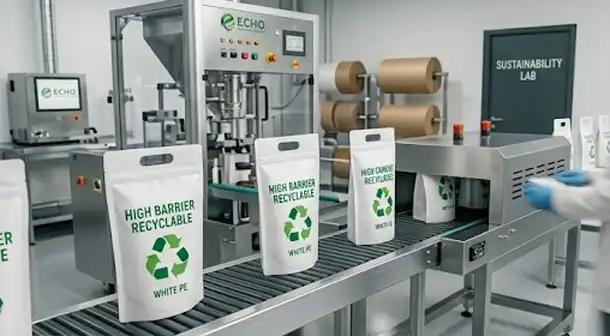
Changing from traditional laminates to eco-friendly single-material packing is a process, not a single purchase choice. A planned way of implementing recyclable pouches lowers risk at every stage.
Start by figuring out what you need. Write down what barriers your product needs, what recycling infrastructure your target market has, what regulations you have to follow (like the EPRC or the plastic packaging tax), and what your brand identity needs. This evaluation becomes the technical plan for talks with suppliers.
Get material samples and prototypes from the suppliers you've chosen. Ask for physical samples made from the structure you want to use, not just any film samples. Before you commit to a production order, put these through your filling line to make sure they seal well, have working zippers, and are the right size.
Using digital printing runs for pilot testing in small quantities lets you check how well it works in real life before rolling it out to everyone. After the start, keep an eye on key performance indicators (KPIs) like the number of customer complaints about packaging, the state of recycling claims, and the cost per unit of packaging. These metrics help with both internal ESG reporting and talks with your supplier about continuous improvement.
Conclusion
To choose the right recyclable pouches, you need to do more than just pick materials that say "eco-friendly." It needs certification that can be checked, performance data that fits the needs of your product, a provider with quality systems that can be tracked, and an organized transition process. By doing this, brands protect themselves from the risk of greenwashing, meet stricter government rules, and make packaging that really lives up to their environmental promises. Moving from traditional laminates to flexible packaging made of a single material is no longer something that needs to be thought about in the future; for many markets, it is already what they expect.
FAQ
1. Are recyclable pouches the same as compostable pouches?
No, recyclable pouches, which are usually made of mono-PE or mono-PP, are meant to go into plastic recycle lines after they are used. Most compostable bags are made from PLA or PBAT, and they are made to break down in certain composting circumstances. Putting a compostable pouch into a plastic recycling stream messes up the batch because the two systems don't work together. When making decisions about what to buy and when making claims to customers, brands must make it clear which version is which.
2. How do I verify that a pouch is genuinely recyclable in my market?
Check to see if the building has a well-known third-party approval, like APR Design Guidance, How2Recycle (North America), or RecyClass (Europe). Then, make sure that the recycling systems in your target market can handle that type of plastic. In many parts of the US, drop-off collection points are needed for PE #4 pouches instead of curbside bins. Test records, not just verbal promises, should be given by your seller.
3. What are typical lead times for custom mono-material pouch orders?
Digital printing runs usually take 7–10 days to finish and are good for small amounts and pilot tests. Rotogravure printing orders for larger quantities usually take 15–20 days from the time the artwork is approved until the production is finished. International shipping can take longer, based on where it's going and what mode of transport is picked.
4. Can mono-material pouches match the barrier performance of aluminum foil laminates?
Most of the time, EVOH-enhanced mono-material structures work well as barriers for dry food, pet food, snacks, and personal care products. On the other hand, foil laminates may still be useful for very high-barrier uses, like long-life retort goods. A good provider can give you detailed OTR and WVTR data to help you prove that your product has a shelf life.
Partner With Guoshengli Packaging for Verified Recyclable Pouch Solutions
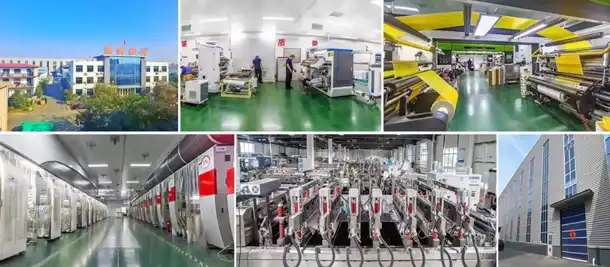
Guoshengli Packaging has been making flexible packaging for more than 25 years and can help brands that are ready to make a real shift to being more environmentally friendly. As a reliable company that makes recyclable pouches, we offer ISO 9001, BRC, and FDA-approved single-material pouches with third-party test reports, up to 11-color rotogravure printing, and a low minimum order quantity (MOQ) that starts with small digital runs. If you give our team the details of your product, we'll make a material suggestion based on real performance data. To get samples, email us at sales@guoshengpacking.com.
References
1. Ellen MacArthur Foundation. The New Plastics Economy: Rethinking the Future of Plastics. Ellen MacArthur Foundation, 2016.
2. Association of Plastics Recyclers (APR). APR Design® Guide for Plastics Recyclability. APR, 2023.
3. How2Recycle. How2Recycle Label Program Standards and Guidelines. Sustainable Packaging Coalition, 2022.
4. RecyClass. Recyclability Evaluation Protocols for Flexible Plastic Packaging. RecyClass, 2023.
5. Packaging Digest. Mono-Material Flexible Packaging: Performance and Recyclability Advances. Packaging Digest, 2022.
6. European Commission. Proposal for a Regulation on Packaging and Packaging Waste (PPWR). Official Journal of the European Union, 2022.