- English
- French
- German
- Portuguese
- Spanish
- Russian
- Japanese
- Korean
- Arabic
- Greek
- German
- Turkish
- Italian
- Danish
- Romanian
- Indonesian
- Czech
- Afrikaans
- Swedish
- Polish
- Basque
- Catalan
- Esperanto
- Hindi
- Lao
- Albanian
- Amharic
- Armenian
- Azerbaijani
- Belarusian
- Bengali
- Bosnian
- Bulgarian
- Cebuano
- Chichewa
- Corsican
- Croatian
- Dutch
- Estonian
- Filipino
- Finnish
- Frisian
- Galician
- Georgian
- Gujarati
- Haitian
- Hausa
- Hawaiian
- Hebrew
- Hmong
- Hungarian
- Icelandic
- Igbo
- Javanese
- Kannada
- Kazakh
- Khmer
- Kurdish
- Kyrgyz
- Latin
- Latvian
- Lithuanian
- Luxembou..
- Macedonian
- Malagasy
- Malay
- Malayalam
- Maltese
- Maori
- Marathi
- Mongolian
- Burmese
- Nepali
- Norwegian
- Pashto
- Persian
- Punjabi
- Serbian
- Sesotho
- Sinhala
- Slovak
- Slovenian
- Somali
- Samoan
- Scots Gaelic
- Shona
- Sindhi
- Sundanese
- Swahili
- Tajik
- Tamil
- Telugu
- Thai
- Ukrainian
- Urdu
- Uzbek
- Vietnamese
- Welsh
- Xhosa
- Yiddish
- Yoruba
- Zulu

The packaging business is going through a big change, and flat bottom pouches are at the front of it. It's more than just a container—a 250g custom flat bottom pouch is a sophisticated way to package things that looks good, works well, and is structurally stable. The bags are made in a unique box shape, with five separate panels: a front, a back, two side gussets, and a flat bottom. This design makes it possible for goods to stand straight and be very balanced, giving them a strong appearance on the shelf that is hard for other types of packaging to match. Flat bottom bags have become the package of choice for forward-thinking companies in the food, pet care, and health industries. They protect goods and help them stand out in the market.
Understanding 250g Custom Flat Bottom Pouches
What Makes These Pouches Different
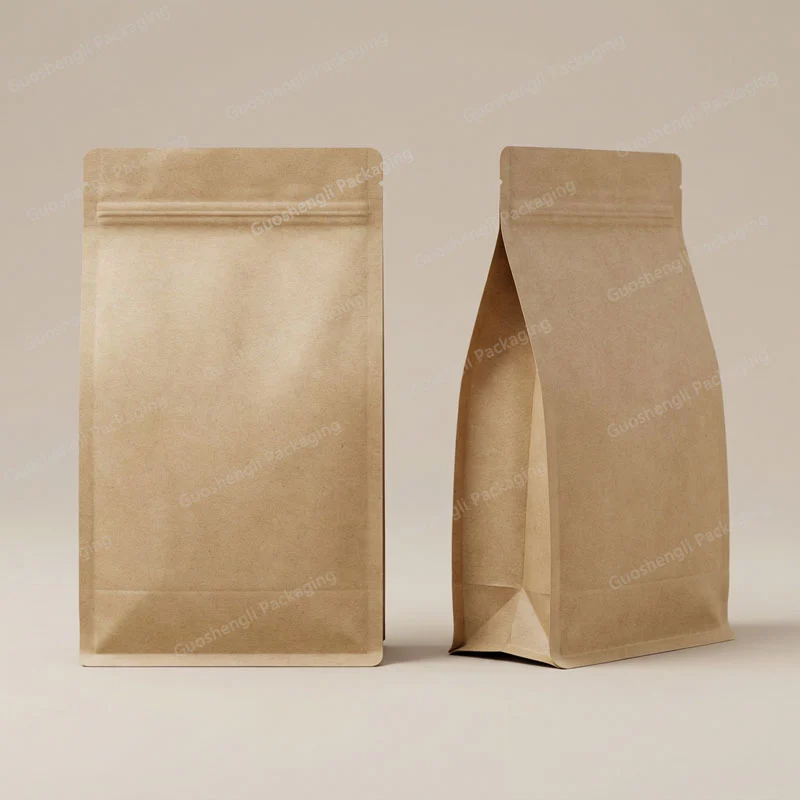
Flat bottom pouches, which are also sometimes called "box pouches," are very different from standard stand-up or three-side seal forms. The engineered flat base gives the unit a stable base that keeps it from tipping over, even if the products inside move around while being moved or handled. These packages stay upright before, during, and after filling, unlike traditional pouches that depend on the product inside to keep them stable.
The 250-gram volume is just the right size for many uses—it's big enough to give customers good value while still being easy to carry and store. This size works great for premium coffee blends, speciality pet treats, protein supplements and gourmet snacks that need to be portion controlled and kept fresh.
Material Construction and Barrier Performance
Flat-bottom packaging works best when it has structures made of multiple layers that are laminated together. Materials like polyethylene terephthalate (PET), aluminium foil, oriented polypropylene (OPP), and polyethylene (PE) are often used together in these structures to make better shields against air, light, and moisture.
The performance of the barrier has a direct effect on the shelf life. High-barrier designs are very helpful for products that are easily oxidised, like roasted coffee or omega-3 supplements. Our research team chooses material choices based on the product's moisture content, fat level, volatile flavour, and how long it needs to stay fresh.
More and more, brands want environmentally friendly options that don't hurt security. Companies that care about the environment can now choose from packaging structure made of recyclable materials and films that can be composted. Careful testing is needed to make sure that these options provide enough security throughout the supply chain.
Structural Features That Drive Performance
The flat bottom design has a number of technical benefits. Four straight panels make the most of the printable area, giving you lots of room for branding, legal information, and messages to customers. When compared to standard bag forms, this larger medium allows for more powerful graphic stories.
Side gussets grow to fit the size of the product while keeping the package small while it's being stored or shipped in a 250g custom flat bottom pouch. This saves space, which means less money spent on shipping and storage, two things that have a big effect on the total cost of ownership in large-scale operations.
Benefits and Applications of 250g Custom Flat Bottom Pouches
Superior Shelf Presence and Retail Performance
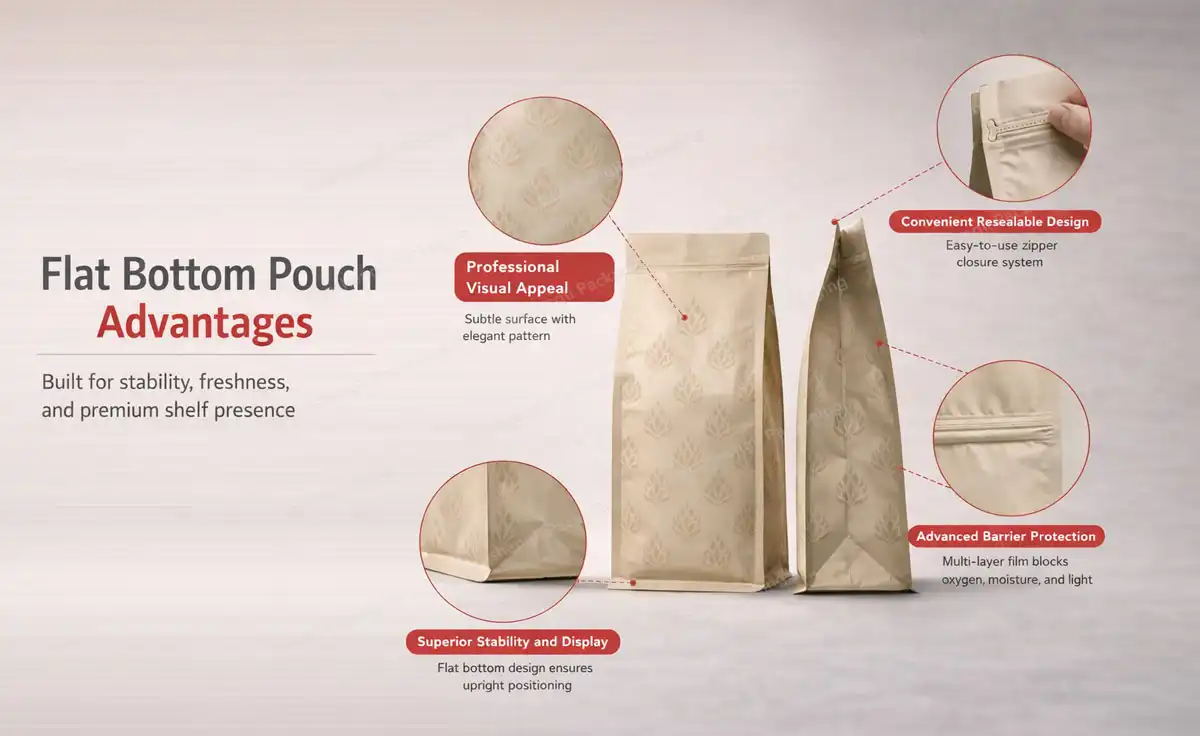
In retail settings, packaging needs to grab people's attention right away. The box-like shape of flat bottom pouches gives products a high-end look that makes them seem more valuable. This visual effect is especially important in crowded categories where buyers decide what to buy by how different the products are.
The stable base makes sure that products stay upright all the way from the factory to buyers' homes, from store displays to their homes. This reliability gets rid of the hassle of packages that lean or fall, which can hurt the brand's reputation and make it hard for stores to restock.
Functional Advantages for Product Protection
Barrier properties that are more advanced than those found in traditional packaging keep food fresh longer. We build multi-layer structures at our site that offer measured oxygen transmission rates (OTR) and water vapour transmission rates (WVTR) that are made to fit the needs of each product.
Resealable zipper seals keep food fresh even after being opened, so they can be used more often and less is wasted. This function is especially helpful for things like coffee, pet toys, dried veggies, and vitamin pills that are used more than once. The easy-tear notch makes it easy to get to things without using knives or other tools. This makes the user experience better and lowers complaints about packages.
Food-grade materials made to FDA, BRC, and ISO standards are used to make our 250g unique flat bottom bag choices. These approvals make sure that foreign rules are followed, which lowers the risk for brands that sell in more than one market.
Industry Applications and Use Cases
Coffee roasters like how flat-bottomed bags keep flavour compounds safe while also making the product look nice on the shelf, which shows that it is of high quality. The degassing valve choice lets carbon dioxide escape without letting oxygen in, which keeps speciality beans at their freshest.
Manufacturers of pet food like it when the structure stays strong so it doesn't tear when it's being handled. The strong design can handle stress from transportation while keeping the healthy content from breaking down. Premium positioning is easier when the quality of the packaging matches the quality of the product.
The professional look and protective barriers that stop moisture absorption and oxidative damage are good for health and wellness brands. If protein shakes, vitamin pills, and superfoods are packed in the right way, they stay effective for as long as they are stored.
Comparing 250g Custom Flat Bottom Pouches with Alternative Packaging
Flat Bottom vs. Stand-Up Pouches
Both types of pouches can stand up, but flat bottom pouches are more stable because they have an engineered base panel. Stand-up pouches have bottom gussets that fold inward, making the bag stand smaller. This difference stands out more on store shelves, where the way products are placed affects how well they can be seen.
When it comes to graphics and information, 250g custom flat bottom pouch designs with five panels have more space than three-panel stand-up formats. This extra room is helpful for brands that need to tell complicated stories or follow a lot of rules.
Material Efficiency and Sustainability Considerations
Instead of adding extra thickness, flat bottom pouches use structural engineering to get the most out of the material they have. This efficiency cuts down on the amount of raw materials needed while keeping the protective performance the same. The steady base evenly spreads the weight, which lets smaller gauge films be used in some situations.
Recyclability relies on the type of material used, not the shape of the bag. Structures made of a single material work just as well in flat bottom designs as they do in other styles. However, the high-end nature of flat-bottom packaging often makes it worth spending money on certified recyclable or compostable materials that support the environmental messaging of the brand.
Cost Analysis and Value Proposition
Because they are harder to make, flat-bottom bags usually have higher initial unit costs than basic three-side seal forms. But a total cost study shows that the investment is worth it because it improves brand placement, makes transportation more efficient, and lowers the number of damaged products.
Better shelf presence often leads to higher velocity at retail, which lowers the cost of keeping inventory and raises the return on shelf space. When it comes to high-end goods, the choice of style has a direct effect on how the product is positioned in the market and how much it costs.
How to Choose and Procure the Best 250g Custom Flat Bottom Pouch
Critical Selection Criteria
Packaging requirements are based on the features of the product. Goods that are sensitive to moisture need sheets with low WVTR, and goods that are sensitive to air need materials with low OTR. To keep the smell in, you need to use certain barrier ratios, which our technology team can suggest based on tests and experience.
Print quality changes how people think of a brand. Rotogravure printing is better than flexographic printing at reproducing colours and details, which is especially important for photos or colours that change slightly. Digital printing lets you do shorter runs or make changes to the design more often.
Features that are functional should match how they are used. Resealable closures are better for products that are used more than once, but the extra cost might not be worth it for single-use applications in a 250g custom flat bottom pouch. Windows let you see the goods, but they need extra material factors to keep the barrier intact.
Working with Manufacturing Partners
Minimum order quantities vary a lot from one manufacturer to the next, which can make it hard for new brands or test markets to get started. Our building can handle orders of different sizes because we plan our production well and set our minimum order quantities in a way that balances working efficiency with customer accessibility.
Lead times are based on the printing method and the schedule for production. Orders for digital printing are usually processed in 7–10 days, but orders for rotogravure printing take 15-20 days because the cylinders need to be prepared. Knowing these dates helps brands make good plans for managing their supplies and releasing new products.
Compliance risks can be avoided by verifying the certification. Manufacturers with a good reputation show proof that their products meet FDA food contact requirements, BRC packaging standards, and ISO quality management systems. These qualifications show that you know how to keep quality high and follow the rules that are needed for foreign shipping.
Quality Assurance and Testing Protocols
Reliable providers use inspection methods at all stages of production, including checking new materials, keeping an eye on work-in-progress, and testing finished products. Every time our facility makes something, the seal's strength is tested, the barrier's performance is confirmed, and the size is checked.
Quality records make things clear and easy to track. Detailed paperwork helps brands show stores and governmental officials that they have done their research and supports efforts to keep getting better. This information is very helpful when increasing production or figuring out problems in the field.
Maximizing the Performance and Efficiency of Flat Bottom Pouch Packaging
Design Optimization Strategies
The design of packaging should strike a balance between how it looks and what it needs to do. The four vertical panels of a 250g custom flat bottom pouch make it possible to tell stories in a logical order: the front panel shows the effect of the brand, the side panels show information about the product, and the back panel shows governmental information and company message.
Structures make things easier to use. Putting tear notches in places that are easy to reach, zip ends that line up with how products are dispensed, and clear views that show off the quality of the products all help to create good user experiences that keep people loyal to the brand.
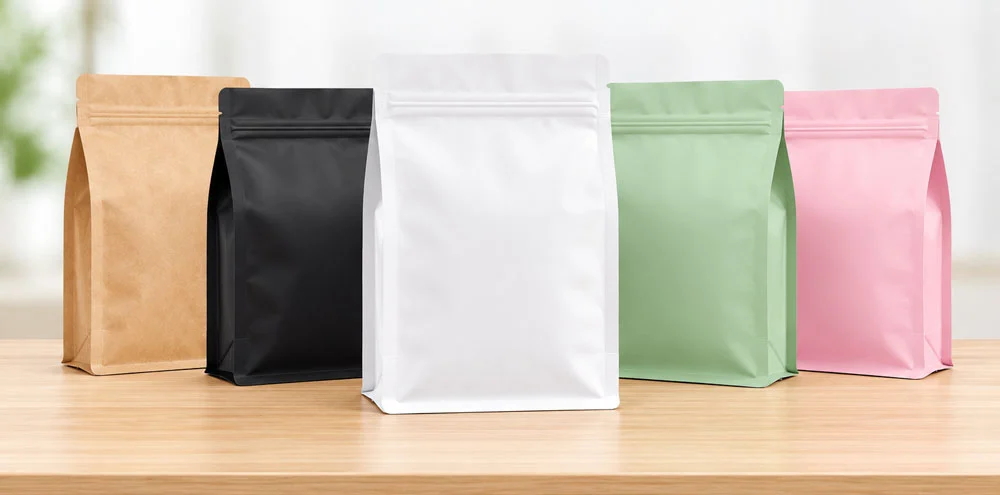
The choice of material changes both ability and how something is seen. Matte finishes show that something is natural or high-end, while shiny finishes make colours stand out. In competitive categories, tactile features like soft-touch finishes or engraving make products stand out.
Advanced Printing Capabilities
Our building has seven printing machines that can do up to eleven-color rotogravure printing. This feature lets you add photographic reproduction, subtle gradients, and metallic effects that make the package look better than average. As production volumes rise, brand integrity is kept up by matching colours consistently across runs.
Versioned packaging, like regional variations, limited editions, or personalised designs, can benefit from digital printing. The technology gets rid of the need for cylinders and shortens the time it takes to set up. This makes shorter runs affordable for testing or niche markets.
Hot printing and other special finishes add high-end touches that make goods stand out on the shelf. When it comes to expensive products or gifts, where the wrapping adds a lot to the perceived worth, these methods work especially well.
Real-World Performance Benefits
When brands move to flat bottom bags, they often see real changes in how well they do in stores. The better visibility on the shelf gets people's attention in categories that are already full, and the more expensive look supports higher prices that make the margins better.
Damage rates go down, which makes distribution more efficient. Handling stress that damages regular flexible packaging doesn't affect this packaging's structural integrity, so fewer shipments are rejected, and customers are less unhappy. This dependability is becoming more important as more stress points are added to packages through e-commerce platforms.
Metrics for sustainability get better when optimised material structures lower the total weight of packaging without lowering its protection. Our engineering approach aims for the least amount of material use that still meets performance standards. This helps both environmental goals and cost management goals.
Conclusion
250g custom flat bottom pouches are a good example of how form and function can work together to solve modern packaging problems. The one-of-a-kind structure design gives it stability, shelf appeal, and protection that are hard to find in other formats. New materials keep making it possible to be more environmentally friendly without lowering the safety of the products, and better printing methods help businesses stand out in crowded markets. Flat bottom bags have benefits that have been shown to work across production runs, marketing routes, and customer uses. These benefits are backed by technical concepts and market proof. The format has gone from being a niche application to a common solution as makers, stores, and customers have come to understand the many benefits these packages offer.
FAQ
1. What products work best in 250g flat bottom pouches?
This capacity suits premium coffee beans, specialty pet treats, protein supplements, gourmet snacks, dried fruits, and wellness products. The format works particularly well for products consumed over multiple occasions where resealability maintains freshness. Material barriers can be customized for moisture-sensitive, oxygen-sensitive, or aroma-volatile products based on specific protection requirements.
2. How do flat bottom pouches improve sustainability?
Material efficiency comes from optimized structures that use thinner films while maintaining protection. Recyclable mono-material options eliminate multi-material separation challenges. The stable structure reduces damage during distribution, lowering waste from rejected shipments. Extended shelf life through superior barriers reduces product spoilage, addressing sustainability across the entire value chain beyond just packaging materials.
3. What minimum order quantities should I expect?
MOQs vary based on printing method and customization complexity. Digital printing typically allows smaller initial orders, while rotogravure printing achieves better economics at higher volumes. Established manufacturers like Guoshengli structure MOQs to balance production efficiency with customer accessibility, offering flexibility for brands at different growth stages while maintaining quality consistency.
Ready to Elevate Your Product Packaging?
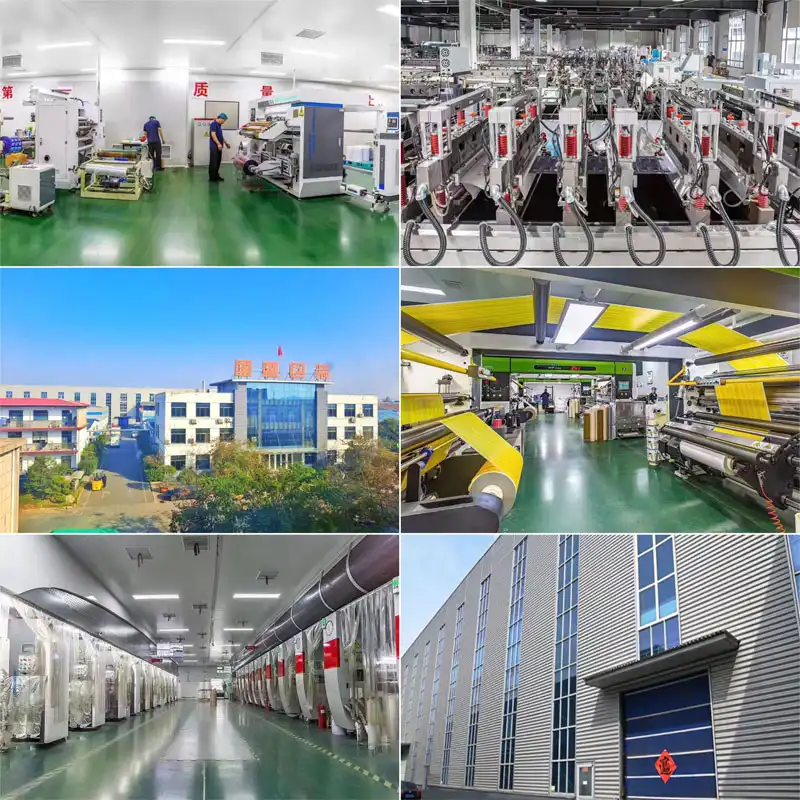
Guoshengli Packaging brings 25 years of flexible packaging manufacturing expertise to your 250g custom flat bottom pouch projects. As an experienced supplier serving food, pet food, coffee, and wellness brands across North America, Europe, and Asia-Pacific, we understand the operational realities behind successful packaging programs. Our facility maintains ISO 9001, BRC, FDA, and SGS certifications, ensuring your packaging meets international standards from the first production run through long-term repeat orders. We offer flexible MOQs, fast turnaround times, and complete customization—from material selection through final printing. Contact our technical team at sales@guoshengpacking.com to discuss how properly engineered flat bottom pouches can solve your specific packaging challenges and support your market growth objectives.
References
1. Robertson, Gordon L. Food Packaging: Principles and Practice. Third Edition. CRC Press, 2012.
2. Marsh, Kenneth and Betty Bugusu. "Food Packaging—Roles, Materials, and Environmental Issues." Journal of Food Science, Vol. 72, 2007.
3. Selke, Susan E.M., John D. Culter, and Ruben J. Hernandez. Plastics Packaging: Properties, Processing, Applications, and Regulations. Third Edition. Hanser Publications, 2015.
4. Yam, Kit L. The Wiley Encyclopedia of Packaging Technology. Third Edition. Wiley-Blackwell, 2009.
5. Coles, Richard and Mark Kirwan. Food and Beverage Packaging Technology. Second Edition. Wiley-Blackwell, 2011.
6. Emblem, Anne and Henry Emblem. Packaging Technology: Fundamentals, Materials and Processes. Woodhead Publishing, 2012.