- English
- French
- German
- Portuguese
- Spanish
- Russian
- Japanese
- Korean
- Arabic
- Greek
- German
- Turkish
- Italian
- Danish
- Romanian
- Indonesian
- Czech
- Afrikaans
- Swedish
- Polish
- Basque
- Catalan
- Esperanto
- Hindi
- Lao
- Albanian
- Amharic
- Armenian
- Azerbaijani
- Belarusian
- Bengali
- Bosnian
- Bulgarian
- Cebuano
- Chichewa
- Corsican
- Croatian
- Dutch
- Estonian
- Filipino
- Finnish
- Frisian
- Galician
- Georgian
- Gujarati
- Haitian
- Hausa
- Hawaiian
- Hebrew
- Hmong
- Hungarian
- Icelandic
- Igbo
- Javanese
- Kannada
- Kazakh
- Khmer
- Kurdish
- Kyrgyz
- Latin
- Latvian
- Lithuanian
- Luxembou..
- Macedonian
- Malagasy
- Malay
- Malayalam
- Maltese
- Maori
- Marathi
- Mongolian
- Burmese
- Nepali
- Norwegian
- Pashto
- Persian
- Punjabi
- Serbian
- Sesotho
- Sinhala
- Slovak
- Slovenian
- Somali
- Samoan
- Scots Gaelic
- Shona
- Sindhi
- Sundanese
- Swahili
- Tajik
- Tamil
- Telugu
- Thai
- Ukrainian
- Urdu
- Uzbek
- Vietnamese
- Welsh
- Xhosa
- Yiddish
- Yoruba
- Zulu

You can choose between a 1kilo side gusset pouch with valve and a flat-bottom coffee bag based on your brand's needs. If keeping the coffee fresh for longer and saving room are the most important things to you, side gusset pouches with degassing valves are the best option because they let CO2 out while blocking oxygen in. However, flat bottom bags stand out more on the shelf because they are shaped like boxes and have a larger surface area for marking. Both types of barriers are strong, but side gusset designs usually cost less to ship and work better with automatic filling lines. Your choice should be based on the features of the product, how it will be distributed, and whether your market positioning is based on freshness or visual impact.
Introduction
The way businesses buy and sell things has changed a lot when it comes to coffee packaging. Brands now want solutions that protect the purity of their products, make them look better on shelves, and make operations easier. Finding the right structure for one-kilogram coffee pouches means finding a balance between keeping the coffee fresh, making sure the bags work with other machines, and making the brand stand out. Side gusset pouches with valves and flat bottom coffee bags have become the most popular options. Each has its own technical and business benefits.
Side flap designs with built-in degassing holes solve the unique problem of freshly roasted beans giving off CO₂, which stops the pouch from expanding and going bad. Flat bottom structures, on the other hand, have a stable, rectangular footprint that makes them stand out visually. Procurement professionals can make smart choices that are in line with supply chain goals and market standards when they know how these forms differ in terms of barrier performance, filling efficiency, and branding potential.
This analysis makes things clear for packaging engineers, distributors, and brand managers who are investing in coffee packaging. To help you make your choice, we look at changes in structure, performance measures, buying factors, and actual usage issues.
Understanding Side Gusset Pouches with Valve and Flat Bottom Coffee Bags
Structural Design and Core Functionality
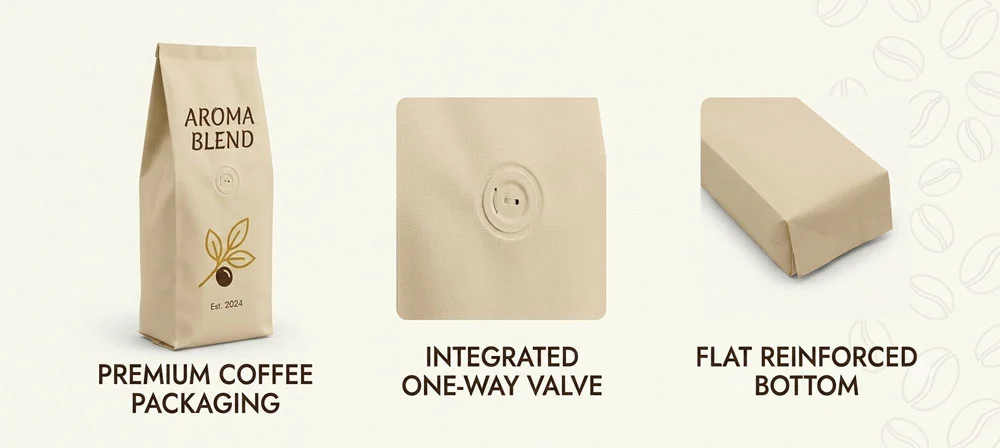
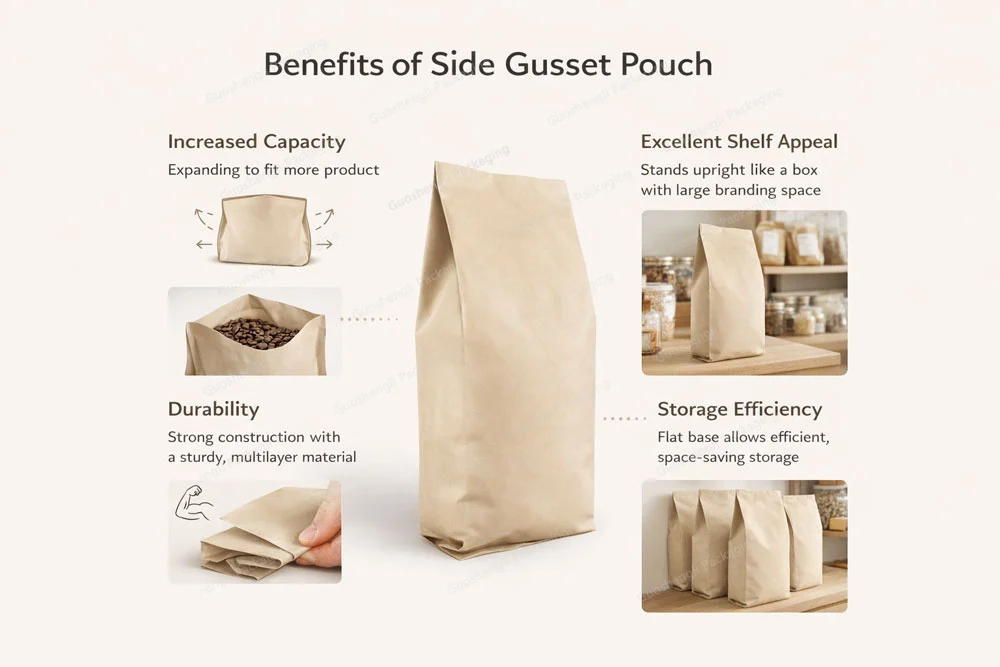
Side gusset pouches with valve have vertical expansion pleats on both sides, which lets the package hold more while still being small and saving space. The built-in one-way degassing valve is designed to let out the CO₂ that freshly roasted coffee beans give off while blocking oxygen from the outside.
Multi-layer laminate structures like PET/AL/PE or MOPP/VMPET/PE are often used in a 1 kg side gusset pouch with valve. These structures provide excellent protection against moisture, oxygen, and light. The thickness is between 120 and 160 microns so that it can hold a one-kilogram load without warping while it's being moved or stored. The side gussets spread the weight evenly across the base, which stops stress from building up that could damage the seal.
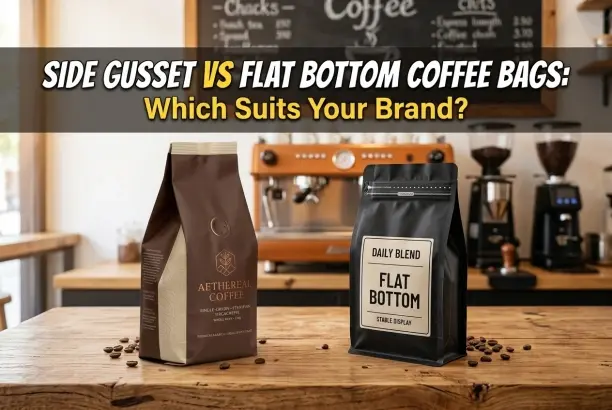
Flat bottom coffee bags, on the other hand, make the most of shelf space by having a strong rectangular base that lets the pouch stand up straight without any help. This design makes the front display area bigger, which is great for big branding and high visibility in stores. Flat bottom formats can also have valves, but their main benefit is the quality look and box-like stability that shoppers like when they're browsing store shelves, compared with a 1kilo side gusset pouch with valve.
Material Selection and Barrier Properties
High-barrier laminates can be used in both formats, but the choice of material is usually based on the needs of the application. Most side gusset bags with valves focus on keeping out as much air and wetness as possible to keep food fresh longer in storage and delivery settings. Some flat-bottom bags may have clear window films or special finishes added to them to make them look better, even if it means sacrificing some of their barrier performance.
The valve itself is an important point of quality control. Using vacuum methods to test the functionality of valves makes sure that air can only flow in one direction and not backwards. Tests that measure burst pressure show that side gusset seals can handle the stress of a full kilogram load. Oxygen Transmission Rate and Water Vapour Transmission Rate tests show that the barrier is strong enough to meet FDA and EU food contact compliance standards.
Performance and Functional Comparison
Freshness Preservation and Shelf Life Extension
Side gusset pouches with valves keep coffees that are sensitive to smells fresh longer. The degassing valve solves the biggest problem in the business, which is keeping the inside of the pouch oxygen-free while stopping the pouch from bloating. Over the next 7 to 14 days after being roasted, freshly roasted beans give off large amounts of CO2. Without a valve, internal pressure can build up and break the seal or make packaging take longer than planned. This problem is solved by the one-way valve, which lets you pack right away while keeping the best flavour and taste.
When used in side gusset designs, multi-layer barrier films offer strong protection against air, moisture, and light. This security can be seen through increased shelf life tests. When kept in controlled settings, properly made bags can keep coffee fresh for an extra 12 to 18 months. The small size cuts down on headspace, which lowers the amount of air left over that speeds up the staling process.
It is also possible to integrate valves into flat bottom bags, which can provide similar barrier performance. Their advantage comes from being able to handle bigger batches and making it easier to see the products inside through clear panels. Brands that want to be seen as high-end often choose flat bottom forms because they look more expensive, even if it means paying a little more for materials and needing more space to store them.
Space Efficiency and Logistics Optimization
A 1-kilogram side gusset bag with a zipper makes sending and storing things more efficient. When it's full, the side gusset design expands to its full size, but it stays narrower than flat-bottom versions of the same thing. This means fewer pallets, lower freight costs, and better use of warehouse space, all of which are important for B2B buyers who handle large orders.
Even though flat-bottom bags look nice, they take up more room per unit. Because their bases are rigid, they can't be nested or stacked as well as side gusset formats. Because of these logistical benefits, distribution centers that ship a lot of coffee often choose side gusset pouches with valves. This is especially true when shipping internationally.
Printing Capabilities and Brand Differentiation
Both types can handle high-quality rotogravure printing, which can produce images with up to 11 colours that catch people's eyes. Side gusset bags, including 1kilo side gusset pouch with valve, have four printable areas: the front, the back, and the two side panels. This gives you a lot of room to put your logo on them. The vertical layout works well with big graphics and a clear hierarchy of product information.
The stable, box-like shape of flat bottom bags makes them great for making a statement on the shelf. The front panel can be used as a natural sign, and the flat base can have more branding elements added to it. Premium coffee brands that want to sell in stores often choose this format to stand out from competitors who use standard pillow pouches.
Procurement Considerations for B2B Buyers
Cost Analysis and Pricing Structures
Because they use less material and are easier to make, side gusset sacks with valve usually cost 15 to 25 percent less per unit than similar flat bottom bags. For custom-printed rotogravure production, the minimum order quantity varies by supplier but is usually between 10,000 and 30,000 units. With digital printing, MOQs can be as low as 5,000 to 10,000 units, which makes them more suitable for smaller names or test market launches.
Lead times are different for each format and printing method. Rotogravure printing takes 15 to 20 days from the time the artwork is approved until the side gusset pouches with valve are delivered. For rush orders or seasonal products, digital printing cuts this time down to 7–10 days. Due to more complicated changes, flat bottom bags may add 2–5 days to wait times.
Due to their small size, side gusset designs are cheaper to ship. It usually takes four to five days to ship by air, and twenty to thirty-five days to ship by sea, depending on where it's going. When you add up all the costs, like packing, printing, and shipping, side gusset bags with valves are often the best deal for high-volume businesses.
Supplier Evaluation and Quality Assurance
Reliable makers show uniform quality across multiple orders, which is an important factor that is often missed when choosing the first provider. Baseline guarantee comes from ISO 9001 quality management approval, BRC food packing accreditation, and FDA compliance paperwork. Third-party testing results from SGS back up claims about the performance of barriers and the safety of the materials.
When processes are scaled up, production ability is important. Multiple rotogravure printing lines, advanced binding equipment, and precise pouch-making tools in a facility lower the risk of bottlenecks during times of high demand. Suppliers who offer in-house testing and inspection at every important stage reduce the number of defects that stop the filling line from working.
Professional packing partners are different from product providers because they can communicate clearly and offer expert help. You can expect thorough information about the materials, drawings of the sizes, and data on how well the valves work. Beyond just supplying products, manufacturers who offer design advice, artwork optimisation services, and filling trial help add a lot of value.
Sustainability and Eco-Friendly Options
Environmental duty is becoming more and more important when it comes to buying things, especially for brands that want to sell in Europe and North America. Using single-material PE or PP laminates in recyclable packaging supports the idea of a circular economy while still having good barrier properties for coffee uses. Compostable PLA/PBAT-based solutions are useful for people who care about the environment, but they need to be carefully tested for shelf life performance.
Concerns about sustainability come up with degassing valves themselves. Traditional valve materials have a lot of plastic parts that make recycling harder. New solutions for biodegradable valves are addressing this issue, but they are still not widely available in the market. When suppliers spend money on eco-friendly valve solutions, they show that they are ahead of regulation trends and buyer tastes.
The ways things are made are also important. RTO exhaust gas treatment systems keep printing and laminating operations as environmentally friendly as possible. Certifications that show sustainable practices improve the story of a brand and meet retailer needs in markets that care about the environment.
Matching Packaging Solutions to Your Brand Needs
Segment-Specific Recommendations
Side gusset pouches with valves are best for coffee roasters who want to keep their coffee fresh and save money. The improved degassing technology, better barrier protection, and better transportation optimisation work well with wholesale distribution models where keeping the integrity of the product during long storage periods is very important. This format is perfect for medium- to large-volume operations that handle 1-kilogram bulk packages because it keeps the smell and taste of the food fresh throughout the supply chain.
Speciality coffee brands that want to stand out on store shelves and be seen as high-end should think about using flat-bottom bags. The high-end design gets people's attention in busy stores, which makes up for the slightly higher packing costs by improving how people see the brand. This format is good for artisan roasters who want to sell to gourmet markets where visual differences are important for making decisions about what to buy.
Side gusset pouches with valves are also used by companies that make pet food and health supplements to package powdered products. The 1kilo side gusset pouch with valve shape is flexible enough to fit a wide range of dry goods that need to be kept dry and under controlled pressure while they are stored. The side panels that can be expanded make it easier to pour, which is good for customers in both store and food service settings.
Automated Packaging Line Compatibility
Compatibility with the filling line is an important but often overlooked factor in choosing packaging. Side gusset pouches with valves usually work well on vertical form-fill-seal machines and pre-made pouch fillers because they have consistent sizes and behave in predictable ways, which cuts down on downtime. Precision in valve placement affects the trustworthiness of the seal, which is why quality control standards set by the maker are so important.
To make the hard base that is typical of flat-bottom bags, you need special making tools. Not all filling lines can be used with this style without being changed. Checking for compatibility before placing big orders avoids the need for expensive updates or retrofitting. By asking for filling trials with sample bags, problems can be found before full production starts.
Practical Usage and Storage Tips for Side Gusset Pouches with Valve
Understanding Valve Mechanics
The one-way degassing valve works with a thin silicone membrane that opens when pressure inside the valve rises, letting CO2 escape while keeping air from the outside out. The best valve performance depends on how well it is calibrated to the coffee. For example, valves that need slightly lower opening limits are needed for darker roasts because they give off more gas. Valve placement is usually in the upper third of the back panel of the pouch to make it easier for gas to escape when the package is kept upright.
Filling and Sealing Best Practices
Using the right filling methods will increase the shelf life and lower the number of defects. To avoid problems with under- or over-filling, filling machines should always give accurate weights within ±2 grams. Keeping the right amount of headspace—usually between 15 and 20 mm—allows for changes in internal pressure without putting too much stress on seals. Temperatures between 160°C and 180°C, stay times between 1.5 and 2 seconds, and sealing pressures between 0.4 and 0.6 MPa are all important factors for heat sealing that need to be carefully calibrated.
The conditions of storage have a big effect on how well packing works. To keep things from breaking down because of moisture, warehouses should keep the temperature between 15°C and 25°C and the relative humidity below 60%. Palletised bags are better protected by wrapping that keeps them from getting damaged by light or handling. Following the first-in, first-out rule of regular rotation makes sure that customers get older stock within the best freshness windows.
Common Issues and Troubleshooting
Fine coffee droplets can sometimes block the membrane and cause the valve to get stuck. This risk is kept to a minimum by keeping production areas clean and adding inner screens to equipment used for filling. Limiting the height of the pallet and putting protective dividers between layers can stop the pouch from deforming under the weight of storage. Most seal failures are caused by incorrect heat-sealing settings or dirt along the seal areas. These problems can be fixed by properly teaching operators and maintaining equipment on a regular basis.
Conclusion
Which side gusset pouches with valve to use versus flat bottom coffee bags depends on how your brand wants to protect freshness, run its business efficiently, and place itself in the market. Side gusset forms are great for extending the shelf life of goods, cutting down on transportation costs, and working with automatic systems that handle large amounts of work. Flat-bottom bags stand out more on the shelf and are easier to see in stores. When designed correctly, both formats offer strong barrier properties, but the 1kilo side gusset pouch with valve consistently performs better for B2B buyers who value product integrity and cost-effectiveness across long supply chains.
FAQ
1. Can side gusset pouches with valves include resealable features?
Resealable zipper closures can be integrated into side gusset pouches with valves, combining degassing functionality with consumer convenience. This combination suits retail packaging where customers purchase one-kilogram quantities for home use. The zipper placement occurs below the valve, preserving freshness after initial opening. Manufacturing complexity increases slightly, affecting minimum order quantities and unit costs. Brands targeting premium retail segments find resealable formats enhance perceived value and repeat purchase rates.
2. What are typical minimum order quantities for custom-printed pouches?
Rotogravure printing requires 30,000-50,000 units to justify cylinder engraving costs, though some manufacturers accept 10,000-unit minimums with surcharges. Digital printing reduces MOQs to 5,000-10,000 units, ideal for new product launches or limited editions. Ordering larger quantities reduces per-unit costs through economies of scale. Balancing inventory investment against price optimization requires careful demand forecasting and supplier negotiation.
3. Are biodegradable valves commercially available?
Biodegradable valve technology has advanced significantly, with several manufacturers now offering compostable alternatives made from PLA and other plant-based materials. Performance validation remains critical, as valve reliability directly impacts product freshness. Not all biodegradable valves match conventional petroleum-based versions in pressure tolerance and longevity. Brands committed to sustainability should request testing data and conduct shelf life trials before full-scale adoption.
Partner with a Trusted 1Kilo Side Gusset Pouch with Valve Manufacturer
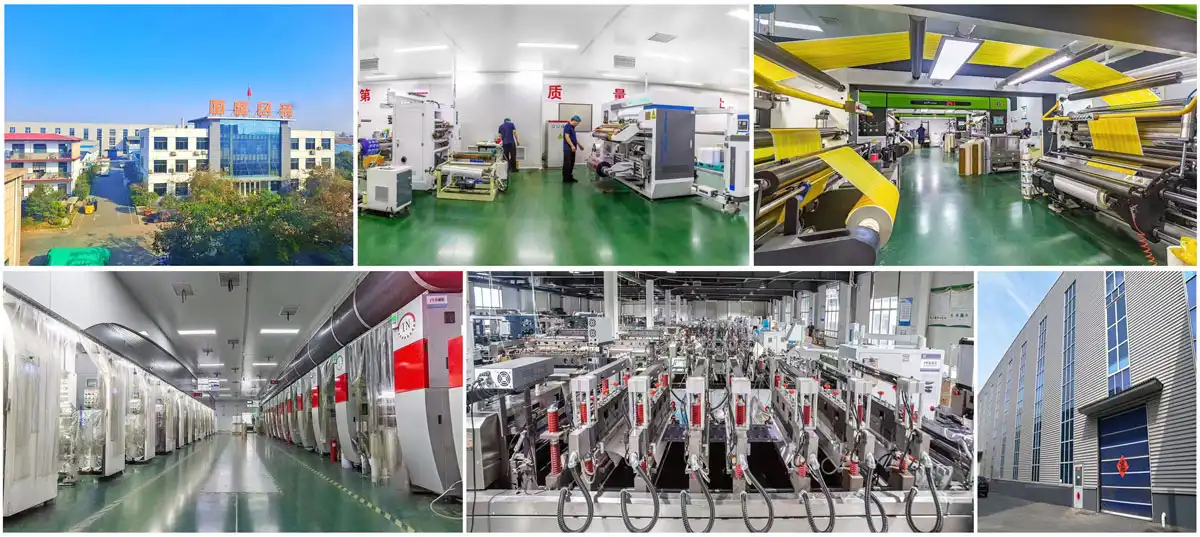
Guoshengli Packaging delivers reliable, export-ready packaging solutions engineered for consistent performance across repeat orders. Our 1kilo side gusset pouch with valve combines 25+ years of manufacturing expertise with advanced production capabilities, including 11-color rotogravure printing, ISO 9001 and BRC certifications, and 100% recyclable material options. We understand that packaging problems rarely appear in samples—they emerge during production scaling and market expansion. Our quality systems prevent costly failures through rigorous barrier testing, valve functionality validation, and dimensional consistency verification.
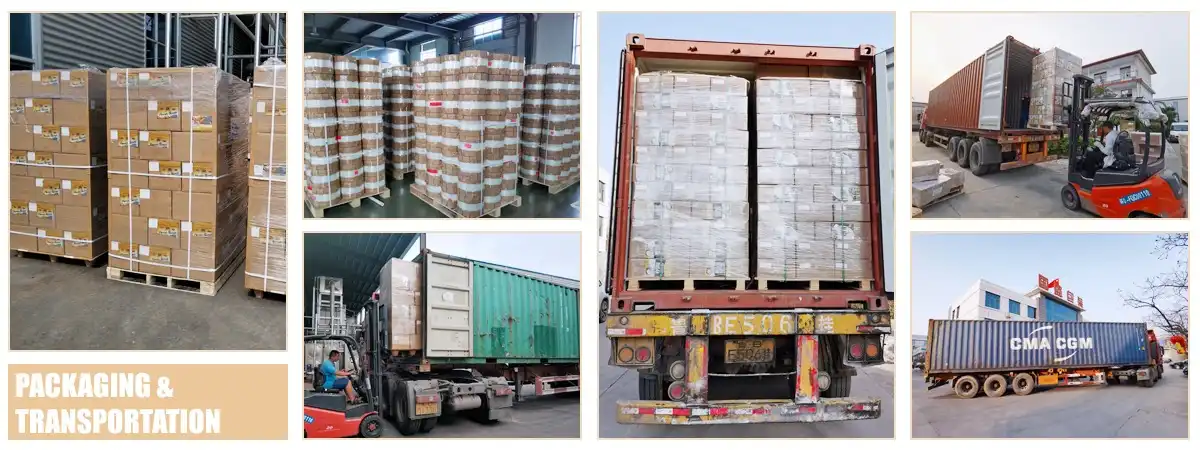
Whether you're a coffee roaster, pet food manufacturer, or health supplement brand, we provide customized solutions matching your filling equipment, regulatory requirements, and growth objectives. Contact our team at sales@guoshengpacking.com to request samples, discuss your specific needs, or receive detailed technical specifications. We offer flexible MOQs, rapid production timelines—7-10 days for digital printing—and fast global delivery. Connect with a 1kilo side gusset pouch with valve supplier committed to reducing your procurement uncertainty and supporting long-term success.
References
1. Smith, J. & Anderson, K. (2022). Flexible Packaging Engineering for Coffee Preservation: Barrier Properties and Valve Technology. Journal of Food Packaging Science, 15(3), 245-267.
2. Chen, L. (2021). Comparative Analysis of Coffee Packaging Formats in B2B Procurement. International Packaging Research Association, Technical Report Series No. 89.
3. Williams, R. (2023). Sustainability in Flexible Packaging: Materials, Manufacturing, and Market Trends. Packaging Technology Review, 28(1), 112-134.
4. Thompson, M. & Rodriguez, A. (2022). Optimizing VFFS Operations for Side Gusset Pouches with Degassing Valves. Automation in Packaging Conference Proceedings, pp. 567-582.
5. European Coffee Packaging Alliance (2023). Best Practices Guide for One-Kilogram Coffee Pouch Selection and Quality Control. Brussels: ECPA Publications.
6. National Coffee Association (2021). Packaging Impact on Coffee Freshness and Shelf Life Extension: A Technical White Paper. New York: NCA Research Division.