- English
- French
- German
- Portuguese
- Spanish
- Russian
- Japanese
- Korean
- Arabic
- Greek
- German
- Turkish
- Italian
- Danish
- Romanian
- Indonesian
- Czech
- Afrikaans
- Swedish
- Polish
- Basque
- Catalan
- Esperanto
- Hindi
- Lao
- Albanian
- Amharic
- Armenian
- Azerbaijani
- Belarusian
- Bengali
- Bosnian
- Bulgarian
- Cebuano
- Chichewa
- Corsican
- Croatian
- Dutch
- Estonian
- Filipino
- Finnish
- Frisian
- Galician
- Georgian
- Gujarati
- Haitian
- Hausa
- Hawaiian
- Hebrew
- Hmong
- Hungarian
- Icelandic
- Igbo
- Javanese
- Kannada
- Kazakh
- Khmer
- Kurdish
- Kyrgyz
- Latin
- Latvian
- Lithuanian
- Luxembou..
- Macedonian
- Malagasy
- Malay
- Malayalam
- Maltese
- Maori
- Marathi
- Mongolian
- Burmese
- Nepali
- Norwegian
- Pashto
- Persian
- Punjabi
- Serbian
- Sesotho
- Sinhala
- Slovak
- Slovenian
- Somali
- Samoan
- Scots Gaelic
- Shona
- Sindhi
- Sundanese
- Swahili
- Tajik
- Tamil
- Telugu
- Thai
- Ukrainian
- Urdu
- Uzbek
- Vietnamese
- Welsh
- Xhosa
- Yiddish
- Yoruba
- Zulu

Popcorn bag packaging stands out when it protects crunch, shows the brand clearly, and fits the way shoppers buy and eat the snack. Strong popcorn emballage (the French term for popcorn packaging) pairs a barrier structure that blocks moisture, oxygen, and oil with a pouch format and print design that catch the eye on a crowded shelf or an online thumbnail. In this guide, I cover formats, printing, materials, sustainability, and sourcing, using what we have learned from more than 25 years of flexible packaging manufacturing at Guoshengli Packaging. Each section gives a practical step you can apply to your next project.
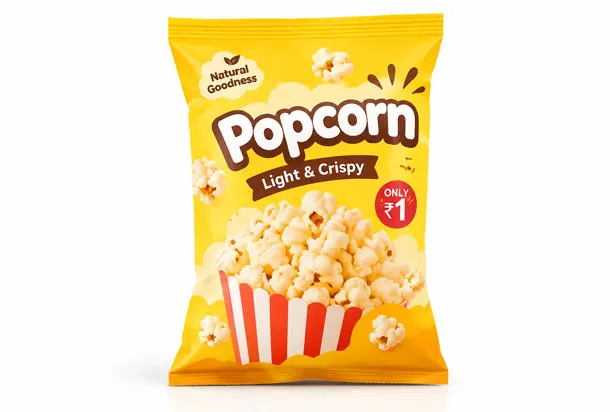
Choosing the Right Popcorn Emballage Format for Your Sales Channel
Pillow Pouches for High-Volume Snack Lines
Popcorn, chips, and other single-serve snacks are still kept in pillow bags. There is a line that can make roller film bags, fill them, and seal them all at the same time. They work well with machines that package things automatically. It doesn't cost much to store or ship the pouch because it's small and light. This helps places keep a lot of food.
When someone asks me which popcorn package is cheap and fills up quickly, this is where I usually start. A big picture window is on the front of this style, but it doesn't stand up straight on a shelf like a pouch with a flat bottom or a gusset does.
Stand-Up and Flat Bottom Pouches for Shelf Presence
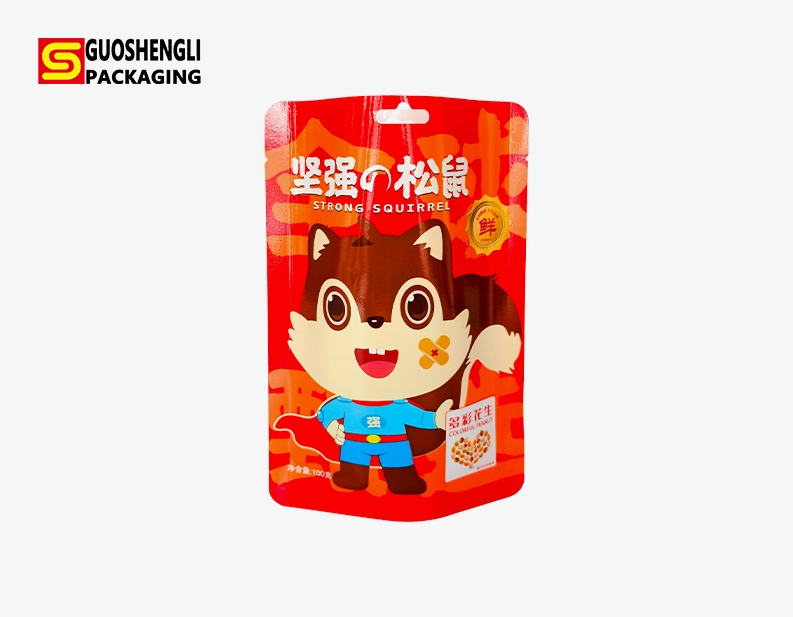
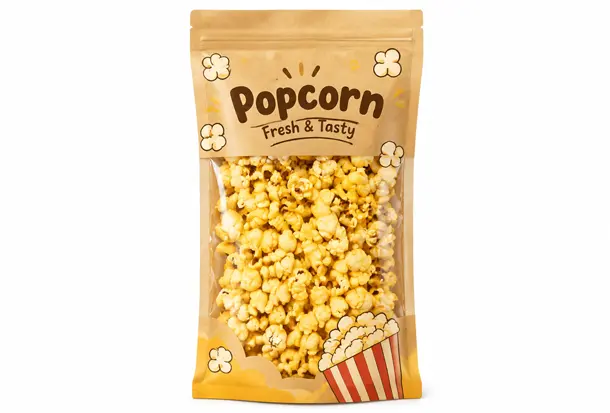
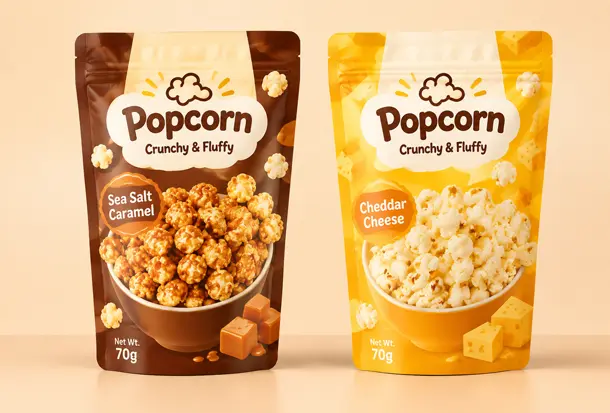
When you stand stand-up pouches and flat bottom bags, which are sometimes called box pouches, straight up, you can see the whole front screen. People who make gourmet or flavored popcorn can charge more if they use a light, bendable bag with a flat bottom. It looks like a little box. A stand-up bag has a zipper that can be used to make plates of different sizes. For bigger family packs, side gusset bags work better. Pillow pouches are good for impulse buys and multipacks, stand-up or flat bottom pouches are good for retail that faces the wall, and gusset bags are good for bulk and sharing sizes. The choice of popcorn packaging affects both the price and the first impression.
Windows, Shapes, and Closures That Match How People Eat Popcorn
Some tiny things regarding how a bag is constructed will affect how it performs in the real world. If a buyer can see the kernels and coating via a transparent glass, they will be more inclined to trust the goods. rip marks, simple to open, and hang holes, so you may display your popcorn on a peg. Zippers assist keep the popcorn crisp after it's been opened for the first time. We make bespoke, shaped pouches for businesses that ask for them. Shaped bags help products stand out on the shelf. Before you finalize your design, check sure it fits your filling machine and matches your barrier demands. Because with each new feature the structure changes. The ideal popcorn emballage balances aesthetics and functionality.
Making Popcorn Emballage Stand Out Through Branding and Design
Build a Clear Visual Hierarchy
People make snap decisions, thus popcorn packages should only communicate one thing clearly at a time. Then in bold, the brand name and color after the flavor name. Then add a proof, a QR code or a green note to support your assertions. A cheese bag and a caramel bag should seem different side by side. The graphics and barcodes should never be placed adjacent to the zipper or heat seal. Instead, give them more space. The nice artwork on the popcorn bag also looks fantastic on the phone screen when consumers only see a little image of the bag. Before you start producing anything you should read a copy & sign it.
Choose Gravure or Digital Printing by Order Size
The print method should be after the volume. Rotogravure may print up to eleven colors . With rotogravure the colors are consistent on numerous copies . We need 15-20 days to accomplish the first 20,000 pieces of gravure work you request. Digital printing begins at 500 to 1,000 pieces and usually takes 7 to 10 days to produce. This is long enough for a limited release, a seasonal taste, or a test run of a new flavor. There are a number of companies who do a digital run first to see what the taste is. Once sales are high enough to justify the higher volume, they move the best designs to gravure. Before you place big orders, a popcorn emballage design can take shape, lowering the risk of running out of stock.
Pick Matte or Gloss Finishes on Purpose
Finish makes people happy before they read. Luxury, kettle-style, and better-for-you popcorn all taste better when the top is smooth. Colors look brighter with a shiny finish, which goes well with strong flavors and movie-themed decor. The light from the store also reflects off of it, making bright aisles stand out. We can paint or polish your hair matte or glossy. Before you decide, I think you should read some samples of writing in a store and on your phone. In different lighting situations, the same popcorn emballage can appear very different. Choose a style that fits the story of your brand and the kind of customer you want to reach.
Protecting Crunch With Grease-Resistant Popcorn Emballage Structures
Why Oil, Moisture, and Oxygen Matter for Popcorn
Popcorn is thin and light, so it soaks up water fast and gets chewy. Add fat to the pouch with butter, oil, caramel, or cheese seasoning. This fat can move toward the wall and weaken a structure that wasn't chosen well. Over time, oxygen can mix with oils and make the taste dull and off-putting. And it's important to protect them physically because fragile kernels break when they're shipped, and online orders are treated rougher than shelf stock. Food packaging books like Robertson's Food Packaging: Principles and Practice show how air and water can speed up the expiration date of dry snacks. In a successful popcorn emballage plan, all of these risks are addressed.
Material Structures We Use for Popcorn Pouches
Spots for snack packaging often have laminates on them, such as PET/PE, PET/VMPET/PE, and BOPP/CPP. When metal is added to polyester film, you get VMPET. Light, water, and air can't get through it as well as clear film alone. Clear structures work if you want a big window and don't need something that will last a long time. On the other hand, layers made of metalized or aluminum foil last longer. We also make kraft paper pouches for a more natural look, and our team makes films that can handle heat, oil, and high barriers. What you need to do depends on the recipe, the type of filling machine you have, the amount of fat you want, and the length of time you want the food to last. I start by asking for those four facts because popcorn emballage problems usually happen during production, not in the sample.
Food Contact Compliance and Documentation
It should have been in the design from the beginning that compliance be a part of it. In the US, 21 CFR 176.170 covers parts made of paper or cardboard that come into contact with foods that are wet or greasy. Regulation (EC) No 1935/2004 tells people in the EU what they can and can't do with things that touch food. PFAS, a group of fluorinated chemicals, is another new problem. For food use in the US, the FDA said in January 2024 that grease-proofing agents with PFAS would no longer be sold. ISO 9001 and BRC have given our plant approval to pack food. It also works with SGS tests and helps you follow FDA and EU rules about food contact. Ask any popcorn emballage supplier for test results and proof of compliance before you give the go-ahead for a run.
Sustainable Popcorn Emballage Options Worth Comparing
Mono-Material Recyclable Pouches
A 2016 report from the Ellen MacArthur Foundation says it's hard to recycle flexible laminates that are made of more than one part. In The New Plastics Economy, this problem with plastic wrap was talked about. For ease of use, pouches made from a single material only use one family of polymers. Along with packaging that can be used again and again, we also have pouches made of mono-PE and mono-PP that can be recycled. A lot of our work goes into making high-barrier structures out of a single material and long-lasting, reusable packages. When you only use one material for a structure, it needs to be able to resist oil, moisture, and oxygen in order to have the shelf life you need. Test the shelf life of any reusable popcorn emballage if you want to make a claim about being environmentally friendly without spending a fortune.
Kraft Paper Looks and Compostable Options
Kraft paper has a rough, natural look that goes well with healthier, more natural popcorn lines. That's why we make their bags out of kraft paper. As long as there are window options, people will still want to see the item. PBAT and PLA are also being used to make solutions that can break down over time. Remember that biodegradable, recyclable, and reusable all mean different things. Also, you should throw away a bag with a metal or foil layer in a different way than a bag made of just one material. You should obtain proof of approval before making any claims on a popcorn emballage box. We don't use a structure that hasn't been tried if it makes the goods less safe, and I believe that buyers should do the same with all providers.
Match the Claim to Local Disposal Systems
Putting "recyclable" on the bag only helps if it can be picked up nearby. In the US, it's hard to recycle flexible film, and drop-off programs at stores aren't the same everyplace. So, I think you should make claims that are true and put clear instructions on how to throw it away on the pouch. It takes less energy to move flexible packaging than rigid packages because it is lighter. The technology we use to make things was brought in from other countries and is used to clean RTO exhaust gas. A simple green sign doesn't tell you as much as words, like the exact material and step for getting rid of it. True claims safeguard your brand and keep popcorn emballage talks with customers easy and honest.
Smart Procurement for Popcorn Emballage Buyers
Look at Total Cost, Not Only Unit Price
A low unit price can hide how much something costs. It depends on the kind of paper, how it is printed, how many cylinders and cartons there are, how much it costs to ship, store, throw away, and there are any flaws. It costs a little more for a pouch that works well than for one that gets stuck on the line where you fill it up. It's important to think about how much space you have in your warehouse, how many samples you can order, how long people will have to wait, and how easy it is to restock items. Digital runs start at 500 to 1,000 pieces, and gravure runs start at 20,000 pieces. This way, both small and large names can test and plan for growth. If you need something quickly, it will take 4–5 days to ship by plane. When comparing popcorn emballage quotes, keep these things in mind.
Choose a Supplier by Process, Not Catalog Alone
There's no catalog for it; it's in the plant, where you can find plenty of space and power. There are 49 machines that turn paper into other things, seven that print, and six that seal. We test and inspect every important step in-house, and we can keep track of things from the raw materials to the finished goods. Ask any provider how they handle art samples, filling-line fit, and orders that are the same every time. Use test pieces with your real popcorn recipe to see how well they print, how strong the seal is, and how well they resist grease. Also, check to see how bad the smell is. Technical communication that is quick to respond is just as important, especially for private-label and multi-market projects. We have a long history of working with packing companies in Europe, the US, and Australia, and we want every popcorn emballage order to be successful.
Prepare This Information Before You Request a Quote
It takes less time to quote when you give more information, and the price goes up. Tell them what kind of popcorn you want, how much oil or caramel you want, how it should be filled, what temperature it should be at, how it should be filled, and how long you want it to last. Then, write down the format, size, structure, choice of closure, window, finish, and environmental goals for the pouch. Write down the amount, where the artwork is being sent, the Incoterms, the number of cartons that are needed, and a budget range. Your order needs to be put on boxes, marked for export, and come with customs paperwork before it can be sent overseas. Before you start mass production, make sure the plan is clear and approve a proof or sample. Then, test it with the real product. Your supplier will be able to suggest a structure for your popcorn emballage once they have that list. Instead of guessing, they will be able to save you time and effort.
Conclusion
Packing for popcorn bags can stand out if the format, style, barrier, and sources are chosen well. It's easy to see and fill pillow pouches with a lot of things. Stand-up and flat bottom pouches make them stand out more on the shelf. Windows, zippers, and shaped pouches make them more useful and easy to find. Clear visual hierarchy, a print method that works for the size of the order, and a choice between a matte or gloss finish are all parts of a strong brand. To keep things safe, we need structures like PET/PE, PET/VMPET/PE, and BOPP/CPP. These structures need to be tested with a real recipe and have proof that they can come into contact with food. When something is said to be reusable or compostable, it should be put away in a way that matches how long it lasts. It will depend on the total cost, the supplier process, and all the specifics if popcorn emballage works well from the first taste through repeat sales.
FAQ
1. What pouch format works best for popcorn?
You can put a lot of stuff in pillow pouches and use them for multipacks. It looks better on shelves if the pouches stand up and have a flat bottom. For bigger sizes, side-gusset bags work better. The choice you make should depend on how you sell and the machine you use to fill orders.
2. How small can a first print run be?
Digital printing lets us make between 500 and 1,000 things, and the lead time is usually 7 to 10 days. It takes 15–20 days to print gravure, and the first 20,000 pieces cost money.
3. Which structure suits buttery or caramel popcorn?
You can choose from PET/PE, PET/VMPET/PE, and BOPP/CPP. The right one depends on how much fat it has, how long it will last, and how it will be filled, so try making some samples with your real recipe first.
4. Can I order recyclable popcorn emballage?
Yes. Mono-PE and mono-PP pouches can be recycled, and so can boxes that can be recycled once and for all. To make sure the barrier works, check its shelf life, and make sure that any claims are backed up by local systems for getting rid of waste. Is it possible to order reusable popcorn emballage?
5. Do you help people follow the rules for food contact?
Yes. As a company that deals with food, we follow the rules set by the FDA and the EU and are certified by ISO 9001 and BRC. We can also test for you by SGS or another company.
Request Custom Popcorn Emballage From Guoshengli Packaging
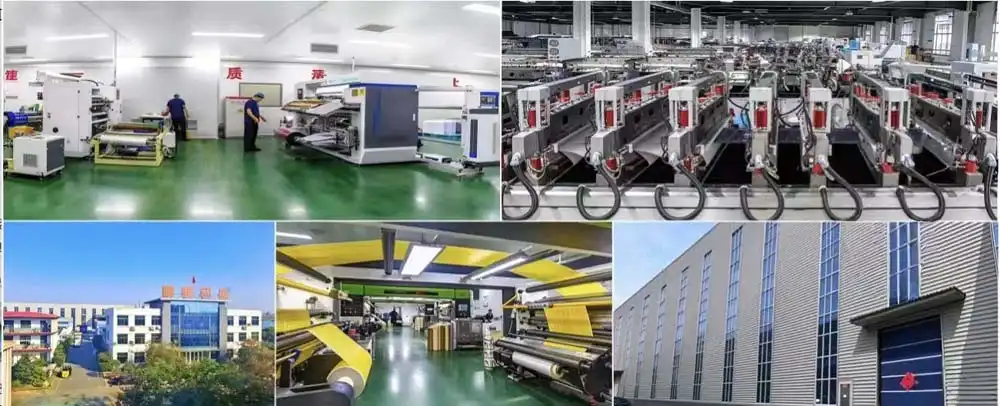
With ISO 9001, BRC, FDA, and SGS certifications and digital runs of 500 to 1,000 pieces, Guoshengli Packaging is a popcorn emballage manufacturer with more than 25 years of flexible packaging experience. Our team will help you pick the best structure and printing method after you send your artwork, bag format, structure needs, and number to sales@guoshengpacking.com. Visit guoshengpack.com to see the different kinds of boxes we have, and then let us know about your next popcorn project.
References
1. Robertson, G. L. Food Packaging: Principles and Practice, 3rd Edition, CRC Press, 2012.
2. Kirwan, M. J., Plant, S., and Strawbridge, J. W. Food and Beverage Packaging Technology, Wiley-Blackwell, 2011.
3. U.S. Food and Drug Administration, Authorized Uses of PFAS in Food Contact Applications, 2024.
4. U.S. Code of Federal Regulations, Title 21, Section 176.170: Components of Paper and Paperboard in Contact with Aqueous and Fatty Foods, 2023.
5. European Commission, Regulation (EC) No 1935/2004 on Materials and Articles Intended to Come into Contact with Food, 2004.
6. Ellen MacArthur Foundation, The New Plastics Economy: Rethinking the Future of Plastics, 2016.