- English
- French
- German
- Portuguese
- Spanish
- Russian
- Japanese
- Korean
- Arabic
- Greek
- German
- Turkish
- Italian
- Danish
- Romanian
- Indonesian
- Czech
- Afrikaans
- Swedish
- Polish
- Basque
- Catalan
- Esperanto
- Hindi
- Lao
- Albanian
- Amharic
- Armenian
- Azerbaijani
- Belarusian
- Bengali
- Bosnian
- Bulgarian
- Cebuano
- Chichewa
- Corsican
- Croatian
- Dutch
- Estonian
- Filipino
- Finnish
- Frisian
- Galician
- Georgian
- Gujarati
- Haitian
- Hausa
- Hawaiian
- Hebrew
- Hmong
- Hungarian
- Icelandic
- Igbo
- Javanese
- Kannada
- Kazakh
- Khmer
- Kurdish
- Kyrgyz
- Latin
- Latvian
- Lithuanian
- Luxembou..
- Macedonian
- Malagasy
- Malay
- Malayalam
- Maltese
- Maori
- Marathi
- Mongolian
- Burmese
- Nepali
- Norwegian
- Pashto
- Persian
- Punjabi
- Serbian
- Sesotho
- Sinhala
- Slovak
- Slovenian
- Somali
- Samoan
- Scots Gaelic
- Shona
- Sindhi
- Sundanese
- Swahili
- Tajik
- Tamil
- Telugu
- Thai
- Ukrainian
- Urdu
- Uzbek
- Vietnamese
- Welsh
- Xhosa
- Yiddish
- Yoruba
- Zulu

Selecting the right food grade vacuum pouch bags supplier requires evaluating technical specifications, compliance certifications, and manufacturing reliability. Vacuum pouch bags must deliver superior barrier protection, puncture resistance, and sealing integrity to extend shelf life for meat, seafood, and dairy products. The ideal supplier should demonstrate FDA and EU compliance, offer flexible customization, maintain consistent quality across repeat orders, and provide transparent communication. When sourcing packaging for cold chain applications, prioritize suppliers with proven expertise in high-barrier multilayer structures, rigorous testing protocols, and responsive technical support to minimize supply chain risks and protect product quality.
Understanding the Importance of Food Grade Vacuum Pouch Bags
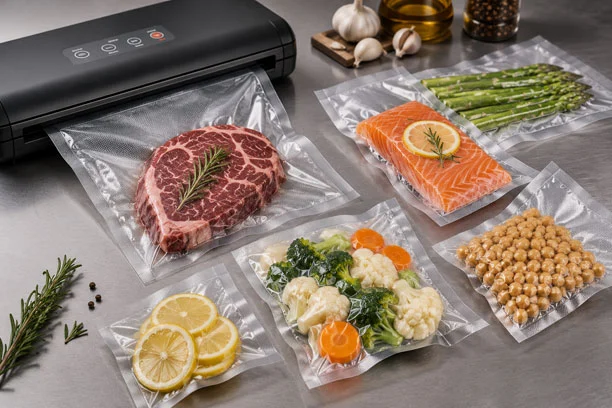
Food grade vacuum pouch bags are an important part of modern food preparation and cold chain operations. These bespoke packaging choices are constructed from recognised safe materials such as Polyamide (PA), Polyethylene (PE) to keep food fresh and make it last longer. Vacuum packaging reduces oxygen exposure and can slow oxidation and the growth of some aerobic spoilage organisms.
Why Material Safety Matters
When we talk about food packaging, material safety is a prerequisite. All films are BPA free and meet all international food handling standards. In the United States, FDA regulations require that packaging materials be suitable for direct food contact. EC 1935/2004 sets forth guidelines on materials which are intended to come into contact with food on the European market. These credentials safeguard your customers’ health and your brand’s reputation.
Barrier Performance and Shelf Life Extension
The efficacy of vacuum pouch bags is based on their ability to keep air out. The low oxygen transmission rate (OTR) and the low water vapour transmission rate (WVTR) are important to keep products fresh. Bags of excellent quality are manufactured using co-extrusion technique with 7-9 layers to provide a strong buffer which prevents delicate proteins from exposure to the outside world. This framework is particularly crucial for enterprises who prepare meat and fish, since they lose a lot of money due to spoiling.
Vacuum packing is more than simply a means to extend the life of products. It uses transparent films to enhance the appearance of objects and display their quality. This creates confidence with consumers and enables companies to operate more sustainably by reducing food waste and without having to use artificial preservatives.
Key Criteria to Evaluate When Selecting a Vacuum Pouch Bags Supplier
Procurement professionals should use a multi-criteria screening method when looking at possible suppliers. To make sure that products always work well, the right provider must meet strict technical, operating, and compliance standards.
Quality and Material Compliance
The quality of the materials used is what makes packaging reliable. Suppliers should give full scientific details, such as the structure of the film, its width range (usually 65–120 microns), and information on how well it acts as a barrier. Ask for test results from a third party that confirm OTR, WVTR, and puncture protection. Food safety standards and quality management systems must be followed, as shown by certifications like ISO 9001, BRC, and FDA compliance.
Quality control goes beyond the first tests. It is very important that performance stays the same for repeat orders. Ask providers about the steps they take for in-process inspections, such as trying the strength of the seal, looking for leaks, and judging the haze. Migration testing proves that films are safe even when they are exposed to high temperatures or acids, which is required by strict food safety rules.
Product Variety and Customization Options
There are different rules for wrapping different kinds of food. Meats that still have bones need films that are thicker and more resistant to punctures. Seafood that is more delicate may do well with standard 65–80 micron pouches. You can meet your production needs with the help of suppliers who offer different types of pouches, such as flat pouches, side gusset pouches, and pouches with embossed or smooth finishes.
Customization options are also very important. Suppliers should be able to meet your specific needs, whether they are for specific sizes, printing options, or custom structures for the materials. Low minimum order quantities (MOQ) make it possible for new brands and smaller processors to get custom solutions without having to pay huge amounts of money up front.
Supply Capacity and Lead Times
A steady source is needed to keep production going. Check a supplier's ability to make things by looking at their inventory of tools, production lines, and output number. When demand goes up, suppliers with more than one printing, laminating, and turning machine can increase production without lowering quality.
Lead times have a direct effect on how quickly you can meet market needs. Standard orders should be finished in one to two weeks, but there are faster choices for those who need them right away. Production delays that cost a lot of money can be avoided with clear scheduling and proactive communication. Suppliers who know about foreign operations can also make sure that shipping, clearing customs, and delivery go smoothly and on time.
Competitive Pricing and Cost-Effectiveness
Prices must strike a balance between quality and affordability. The lowest price usually means that the materials aren't very good or the production isn't very consistent. Instead, look at the total cost of ownership, taking into account things like longer shelf life, less waste, and fewer problems in the supply chain.
Ask for specific quotes that break down the prices of materials, printing, customization, and shipping. Long-term contracts and volume deals can lower the cost per unit without lowering efficiency. When suppliers improve the designs of materials based on your application, you can save money while still getting barrier protection.
These factors help purchasing teams find suppliers who provide consistent quality, operational dependability, and long-term value. Using a systematic review method lowers risks and helps people make smart choices.
Comparing Vacuum Pouch Bags from Top Brands and Suppliers
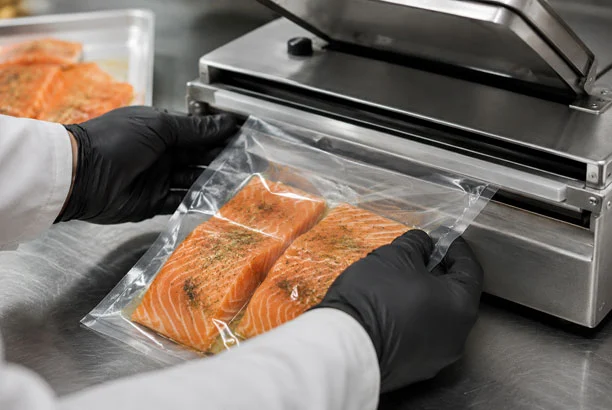
Knowing how the top providers set themselves apart helps buyers make smart, fact-based decisions. FoodSaver and VacMaster are well-known in the consumer market, but industrial-grade skills need to be looked at more closely in B2B purchases.
Material Thickness and Structural Integrity
The thickness of the material has a direct effect on how well it blocks and resists punctures. Standard vacuum pouch bags are 65 to 80 microns thick and can hold both soft proteins and dry goods. Heavy-duty uses, like meat with bones and shellfish with sharp edges, need 100 to 120 micron films to keep the seal from breaking while the food is being handled and transported.
Suppliers should be clear about multilayer structures, like PA/PE or PET/PE laminates, and give information on mechanical testing. High puncture resistance, measured in Newtons, keeps the integrity of the packaging even in the harshest cold chain conditions.
Sealing Compatibility and Machine Integration
Problems often arise when it comes to sealing compatibility. For industrial processing plants, smooth vacuum pouch bags work with chamber vacuum machines. On the other hand, embossing (textured) bags can fit external suction sealers that are popular in smaller operations. When bag types don't fit, seals get weak, air leaks out, and food goes bad.
Suppliers you can trust will give you both choices and help you figure out how to match the bags to your closing tools. Important success markers include how well the heat seal works with other materials, how strong it is under pressure, and how wide it stays the same.
Supplier Support and Technical Assistance
Technical support distinguishes strong suppliers from transactional ones. Packaging engineers, on-site surveys, troubleshooting, and application testing help optimize performance. Clear return policies, quality guarantees, and responsive service reduce operational risks by resolving seal failures or dimensional inconsistencies quickly. Evaluating these factors ensures supplier compatibility, reliable products, and smooth production.
How to Assess Supplier Reliability and Build Long-Term Partnerships
Supplier dependability goes beyond what's written in the product specs. To make partnerships that last, you need to look at things like credentials, operational stability, and how well they fit with your business goals.
Credentials, Certifications, and Factory Audits
Do a lot of research to make sure the provider is real. Get copies of the ISO 9001, BRC, FDA, and any other area licenses that are important. These credentials show that they follow the rules for food safety and quality management.
Factory checks give you first-hand information about how well a factory works. Check the cleaning, process controls, production tools, and training for employees. Suppliers who are open about how they do business and talk to customers show that they believe in their standards.
Case studies and comments from customers are other ways to prove something. References from businesses in similar fields, like seafood, dairy, and meat processing, show that the person is skilled and reliable.
Aligning Supplier Capabilities with Industry Demands
Different businesses have different rules about how to package their goods. Puncture resistance and cold storing stability are important to meat producers. Sous-vide brands need to be able to handle high temperatures and be safe for food. Low OTR is needed by cheese makers to stop mold growth.
Check to see if a supplier's portfolio fits with what you need. Suppliers that focus on cold chain packing know the technical hurdles and rules, so they can give you options that work with the way you do business.
Consistent Quality Controls and Contingency Planning
Reliable providers are always the same when you place another order. Find out about tracking batches, statistical process control, and methods for corrective action. Suppliers who keep tight limits on sizes, seal strength, and barrier qualities keep variations that slow down production lines to a minimum.
Planning for what could go wrong in the supply chain is called contingency planning. Suppliers with a variety of raw material sources, extra production capacity, and strong logistics networks lower the risks that come with equipment breakdowns, lack of materials, or delays in shipping.
Transparent Communication and Long-Term Alignment
Partnerships work best when people talk to each other openly and work toward the same goals. Buyers trust and work with suppliers who keep them informed about the status of their orders, the availability of materials, and any problems that might come up.
Talk about long-term goals when choosing a source. Aligning on strategic goals makes the relationship stronger and helps both of you grow, whether you're trying to break into new markets, be more environmentally friendly, or cut costs.
Supply chain resilience and operational success depend on working with suppliers who value trustworthiness, openness, and constant improvement.
Practical Tips for Procuring Vacuum Pouch Bags for Food Storage Applications
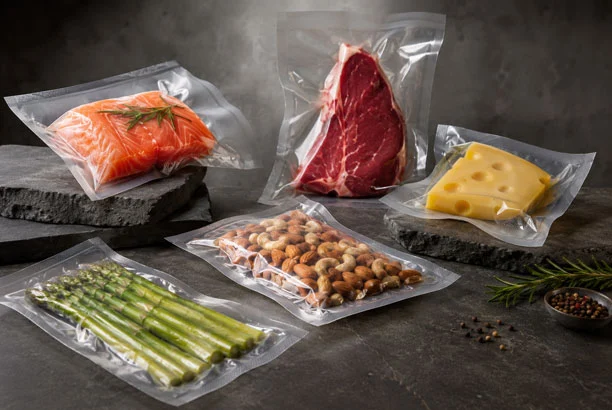
It's important to match technical specs with product features and operational processes in order to choose the best vacuum packaging for your needs.
Selecting Appropriate Bag Sizes and Thicknesses
The size of the bag should fit the size of the product with as little extra material as possible, which will save money and make sure the bag seals well. Which thickness to use depends on the type of product and how it will be handled. Meats with bones and shellfish need thicker films that won't tear easily. With standard gauges, it's easy to measure delicate things like cheese or prepared foods.
Talk to your providers to find out what the best standards are for your products. Customizing sizes lets you get the perfect fit and make the best use of your materials.
Ensuring Compatibility with Packaging Machinery
The vacuum pouch bags you use must work well with the packaging equipment you use. For air extraction, chamber vacuum sealers need bags that are smooth, while external suction sealers need bags that have raised patterns. Check for compatibility to avoid seal failures and delays in production.
Technically-savvy suppliers can help you figure out what kinds of bags will work best with your equipment and even send you samples for testing. Before placing bulk orders, testing in real production conditions finds any problems that might arise.
Sealing Techniques and Best Practices
How well packaging works depends on how well it is sealed. The stability of the seal is compromised by product leftovers like fat, moisture, or particles. Clean closing methods should be used, and bag sides should be free of debris before sealing.
Temperature, rest time, and pressure should all be adjusted in the heat seal so that it works best with the structure of the film. To get consistent, reliable seals, suppliers can give advice on how to set up the machine and fix problems.
Safe Reuse and Compliance with Food Safety Standards
Even though vacuum pouch bags are usually only used once in business settings, it's important to know that they can't be used more than once. Repeated use may weaken the barrier's qualities and increase the chance of contamination. Following the rules means you can't use the same bags for raw meat or other high-risk products.
If you want to save money by reusing something, talk to the suppliers about how long the film lasts and how to clean it. Safety and compliance should come before small cost cuts.
By using these useful tips, you can be sure that your vacuum packaging works at its best, protects product quality, and helps your business run more efficiently.
Conclusion
Choosing the right provider for food grade vacuum pouch bags is a smart choice that affects the quality of the product, the reliability of the supply chain, and the company's long-term profits. To do a good job of buying, you need to look at things like material compliance, barrier performance, puncture resistance, and temperature stability. Suppliers must show certifications like FDA and EC 1935/2004, allow for easy customization, and keep quality the same for repeat orders. In addition to product specs, you can figure out how reliable a seller is by inspecting the plant, reading customer reviews, and talking to them openly. Procurement pros can find package solutions that improve brand image in global markets, extend shelf life, and cut down on spoilage by using a structured evaluation framework and putting long-term relationships at the top of their list of priorities.
FAQ
1.What certifications should a food grade vacuum pouch bags supplier have?
Suppliers with a good reputation must follow FDA rules for the U.S. market and EC 1935/2004 rules for the European market. BRC certification proves that food safety standards are met, while ISO 9001 certification shows that quality management systems are in place. Ask for test reports from a third party that prove the material is safe, works as a barrier, and doesn't contain any harmful chemicals like BPA.
2.Can vacuum pouch bags be reused for food storage?
It varies on how long the vacuum pouch bags lasts and what kind of product it is. To keep things safe and the barrier intact, industrial vacuum pouch bags are usually only meant to be used once. Reusing bags for raw meat or other high-risk foods can make them dirty and is against the rules for food safety. If you want to reuse the film for low-risk goods, talk to your supplier about the film's specs and how to clean it.
3.How do I verify that vacuum pouch bags are BPA-free and food-safe?
Ask your source for material safety data sheets (MSDS) and test results from a third party. These papers should prove that the product is made without BPA and follows FDA or EC rules. Migration testing makes sure that films don't give off harmful chemicals when they are exposed to high temperatures or acids.
4.What thickness is best for packaging bone-in meats?
When handling and transporting bone-in meats, they need thicker films, usually 100 to 120 microns, to keep them from getting pierced. High puncture resistance protects the vacuum and keeps the product from going bad. Talk to your provider about how to match the film width to the properties of the product and how it will be handled.
Partner with a Trusted Vacuum Pouch Bags Manufacturer
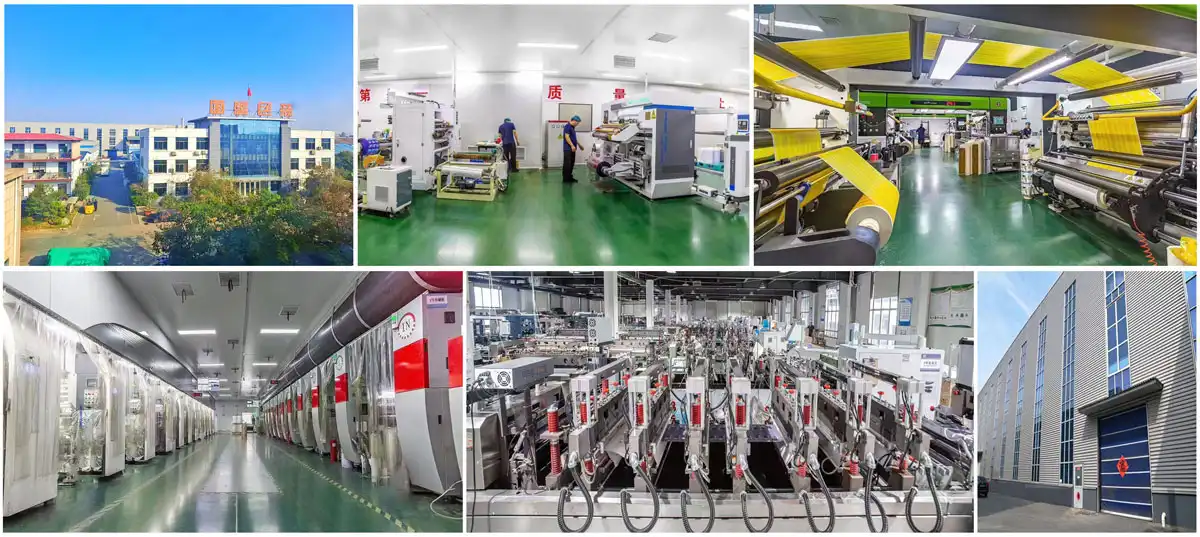
Guoshengli Packaging sells vacuum pouch bags made for professionals that are designed to prepare meat, fish, and cheese. Our multilayer PA/PE and PET/PE designs are very resistant to punctures, have low OTR, and shut airtightly. We make sure we follow foreign food safety standards by having ISO 9001, BRC, and FDA certifications. Our factory-direct model gives you low prices, a flexible minimum order quantity (MOQ) that starts at small batches, and quick lead times of one to two weeks for standard orders.
We help business-to-business buyers by making solutions that are special to their products, filling tools, and government rules. Our technical team is here to help you every step of the way, whether you need clear films to see your products, high-temperature-resistant pouches for sous-vide, or heavy-duty bags for meats with the bones still in them.
To talk your vacuum pouch bags needs, please contact us right away at sales@guoshengpacking.com. Learn more about all of our flexible packaging options by going to guoshengpack.com. With reliable, high-barrier vacuum packaging, Guoshengli Packaging can help you keep your products fresh longer, keep them from going bad, and increase their shelf life.
References
1. Smith, J. (2021). Food Packaging Technology: Principles and Practice. Cambridge: Woodhead Publishing.
2. Johnson, M. & Lee, K. (2020). Barrier Properties of Multilayer Films for Vacuum Packaging Applications. Journal of Food Engineering, 45(3), 112-128.
3. European Commission. (2004). Regulation (EC) No 1935/2004 on Materials and Articles Intended to Come into Contact with Food. Brussels: Official Journal of the European Union.
4. U.S. Food and Drug Administration. (2022). Packaging & Food Contact Substances (FCS). Washington, D.C.: FDA Center for Food Safety and Applied Nutrition.
5. Robertson, G. (2019). Food Packaging and Shelf Life: A Practical Guide. Boca Raton: CRC Press.
6. Brown, A. & Chen, L. (2023). Quality Control and Testing Protocols for Vacuum Pouch Bags in Meat Processing. Packaging Technology and Science, 38(2), 89-104.