- English
- French
- German
- Portuguese
- Spanish
- Russian
- Japanese
- Korean
- Arabic
- Greek
- German
- Turkish
- Italian
- Danish
- Romanian
- Indonesian
- Czech
- Afrikaans
- Swedish
- Polish
- Basque
- Catalan
- Esperanto
- Hindi
- Lao
- Albanian
- Amharic
- Armenian
- Azerbaijani
- Belarusian
- Bengali
- Bosnian
- Bulgarian
- Cebuano
- Chichewa
- Corsican
- Croatian
- Dutch
- Estonian
- Filipino
- Finnish
- Frisian
- Galician
- Georgian
- Gujarati
- Haitian
- Hausa
- Hawaiian
- Hebrew
- Hmong
- Hungarian
- Icelandic
- Igbo
- Javanese
- Kannada
- Kazakh
- Khmer
- Kurdish
- Kyrgyz
- Latin
- Latvian
- Lithuanian
- Luxembou..
- Macedonian
- Malagasy
- Malay
- Malayalam
- Maltese
- Maori
- Marathi
- Mongolian
- Burmese
- Nepali
- Norwegian
- Pashto
- Persian
- Punjabi
- Serbian
- Sesotho
- Sinhala
- Slovak
- Slovenian
- Somali
- Samoan
- Scots Gaelic
- Shona
- Sindhi
- Sundanese
- Swahili
- Tajik
- Tamil
- Telugu
- Thai
- Ukrainian
- Urdu
- Uzbek
- Vietnamese
- Welsh
- Xhosa
- Yiddish
- Yoruba
- Zulu

The best liquid food packaging is the one that matches your formula, your filling line, and your sales channel, not the one with the lowest unit price. For many beverage and sauce brands, a spout pouch offers a strong balance of low weight, leak control, and shelf appeal. Bottles, cartons, cans, and bag-in-box systems still win in some cases. At Guoshengli Packaging, we have made flexible packaging for more than 25 years, and we see the same pattern in every project. Brands that test early avoid leaks, swollen packs, and costly reorders. This guide helps you compare your options step by step.
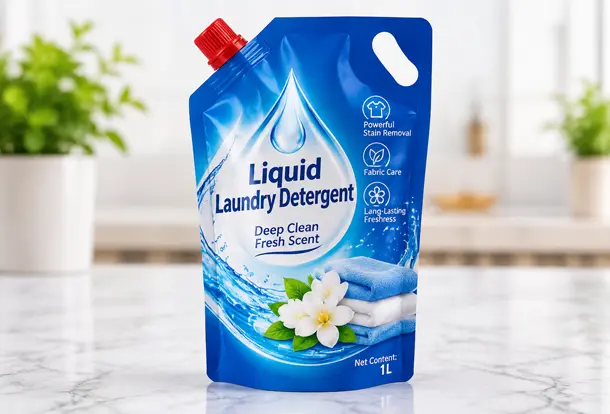
Understanding Liquid Food Packaging and How to Choose It
What Is Liquid Food Packaging?
When you hold, protect, ship, and hand out a liquid product, that's called liquid food packaging. Food comes into touch with first-level packing, such as a pouch, bottle, or box. The items are put together in secondary and tertiary packaging, such as shipping cartons and pallets, so they can be shipped. It can be used for so much more than just food. You can add it to juice, smoothies, sports drinks, gravy, and dairy drinks. It's also important that the process and the package match. The film, seals, and closure are under different amounts of heat and pressure when you hot fill, cold fill, aseptic fill, or retort. When we get a new question, the first thing our team looks at is the process. This is because it specifies what forms can be used.
Types of Liquid Food Packaging
Liquid food packaging can be divided into four main categories. You can find rigid containers like bottles, jars, and cups made of glass or plastic. Metal cans are a good way to store drinks that are acidic and don't go bad quickly. There are different kinds of boxes that can be used for milk, juice, and soup that can be kept on the shelf. Rollstock film for automatic filling machines comes in spout pouches, stand-up pouches, shaped pouches, flat pouches, and more. All of these can be used in different ways. People use bag-in-box systems for both food service and bulk shopping. Each group gives up different things in exchange for others. These include weight, barrier, filling speed, and brand show. Most of the time, solid containers are heavier than poly bags. This means that each unit costs less to ship, and you can put a lot of information on them about the brand and taste.
How to Choose the Best Packaging for Liquid Food Products
These seven questions will help you pick the best container for liquid foods. How acidic or basic is it, and is there fruit or acid in the formula? How thick does it feel? How much do light and oxygen hurt it? And what temperature will it be when it's being filled? How far does the thing need to go? How and where are you going to sell it? Most rules in the US use a pH of 4.6 to tell the difference between high-acid and low-acid foods. A sports drink with a lot of acid and a protein shake don't mix in the same way. A wider spout is also needed for a thick smoothie than for a thin juice. Write your replies on a single page before you ask for samples.
Liquid Food Packaging Materials and Format Comparisons
Liquid Food Packaging Materials at a Glance
Liquid foods can be packed in plastic, glass, metal, paperboard, and film that can be bent. A bottle made of PET or HDPE is strong and light. Glass is heavy and easy to break, but it looks nice and does a good job of keeping air out. A metal can is a good way to keep light and oxygen out. In cartons, you can find cardboard, plastic, and sometimes aluminum foil all mixed together. It's possible for the different layers of bendable films to work together to print, block, and close. A lot of beverage pouches are made with the PET/PA/PE, PET/VMPET/PE, and NY/PE shapes. The best one is chosen by what the product needs. Recycling goals can be met with structures made of only PE and PP. You should choose two or three materials and then test them on your real one.
Pouch vs. Bottle: A Practical Comparison
Both the bag and the bottle are better for different types of liquid beverage packaging. A bottle can work with carbonation, stand on its own, and follow the rules. A spout pouch is lighter because it ships flat, so it doesn't get full. When the drink is gone, it falls apart, which makes it easier to pack in a gym bag or lunchbox. So many people use pouches for their kids', sports, and outdoor gear. Even if a bottle is cheaper, it may cost more in the long run because of shipping, damage, and storage. It might not be worth the money if a pouch leaks. Don't look at the price per piece. Instead, look at the cost per full unit, which takes into account line speed and fails.
Barrier Structures for Flexible Pouches
Barrier protection determines how long something can be kept. Light can damage delicate ingredients like vitamins and colors, oxygen can change the taste and nutritional value, and water can change how stable something is. More metal is added by PET/VMPET/PE, which keeps gas and light out. The nylon added to PET/PA/PE makes it harder and less likely to get holes while being shipped. Most of the time, an aluminum foil-covered structure is the best barrier. On the other hand, a clear structure lets people see what there is to offer. We picked a coating based on how acidic it is, how thick it is, and how long it will last. Anyone who sells the structure can tell you the exact rate at which oxygen moves through it. A name like PET/PA/PE doesn't tell you anything about the protection level or layer thickness.
Safety, Shelf Life, and Compliance for Liquid Food Packaging
Leak Prevention and Pressure Resistance
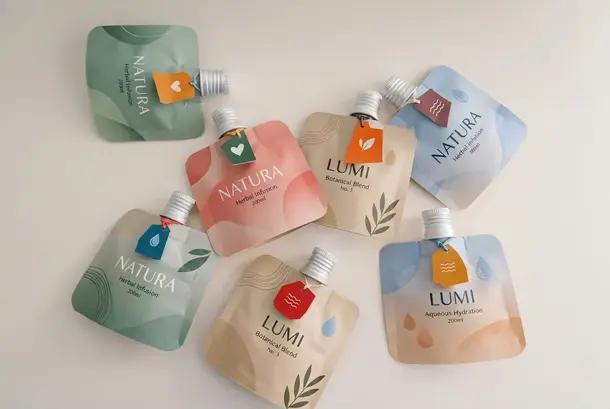
Leaks and swollen packs get bad reviews, which is bad for a new brand. The seal on liquid food packaging needs to stop these problems. Seal width, temperature, dwell time, and pressure can all change how strong something is. The spout fitting also needs to cleanly stick to the film. To check how strong the seal is, use a method like ASTM F88/F88M. Then, use ASTM D4169 to test for drops and simulate transport. When boxes are full, left out in the heat, and stacked, the pressure also goes up. If the pouch is swollen, it's probably because of heat or gas from fermentation. Make sure the formula is stable and that there is enough headspace. Put a test lot on hold, fill it up, and then ship it before the launch.
Hot Fill, Acidic, and High-Viscosity Formulas
Hot fill, processing, and UHT all stress a film in different ways. When it gets hot, a layer of sealant can become soft, and acidic solutions can break weak bonds. It's important for drinks with a high viscosity to have wider spouts because they put more weight and force on the seal. We don't give out a single set of temperature or pressure limits for all buildings because they change depending on the material and how it's being used. We write down our prices and compare them to your filling process before we give you a quote. Tell me about your pH, hold time, how you cool it, and viscosity. Then try it out on your own finishing line, since bench tests don't always match up with line conditions.
Food-Contact Compliance and Documents
The film, inks, glue, coatings, and fittings used for liquid food packaging must all be food-contact compliant. People in the US have to follow the FDA's rules, like 21 CFR Part 177 for polymers. Guoshengli Packaging has materials that can come in contact with food that are FDA-approved, follow the BRC and ISO 9001 systems, and help with SGS testing. Regulation (EU) No 10/2011 also says that brands that sell in Europe need to have a Declaration of Compliance and results from migration tests for plastic layers. It is better to get these papers from your supplier before you agree to a design than after. Test the item in its original package at room temperature and normal lighting to make sure it will last a long time. Also, keep the lot codes so that you can find the product again.
Sustainability, Cost, and Quality Control
Sustainable Liquid Food Packaging
The whole lifecycle of liquid food packaging should be looked at, not just the name of the material. Shipping weight and the amount of packing mass needed for each serving are both smaller when pouches are light. Most stores that sell mono-PE and mono-PP pouches have recycling rules that affect how well they work. The programs that collect them also have rules that affect how well they work. Ellen MacArthur Foundation said in 2016 that about 95% of the value of plastic packaging is lost after just one short use. Every year, this is worth USD 80–120 billion. That image shows why it's important to plan for the end of life of things. We think about whether a barrier should be reusable or compostable when we look at our needs. It's not in our suggestions to build something that could shorten the shelf life.
Comparing Total Cost Beyond Unit Price
There is more to the price of liquid food packaging than just the price per piece. You should add samples, tests, freight, import fees, storing, a minimum order number, and printing plates or digital setup. Add up the speed of the line that fills, the work, the rejects, the leaks, and the breaks. What makes a launch more or less expensive is how the prints are made. The minimum order for digital printing is 500 to 1000 items, and the lead time is usually 7 to 10 days. For small batches and taste tests, this works well. If you need more than 20,000 pieces printed gravure, you'll have to wait 15 to 20 days. Long runs with steady color work best. A lot of businesses try out flavors in digital first, and the ones that do well are then moved to gravure.
Manufacturing Steps and Quality Control
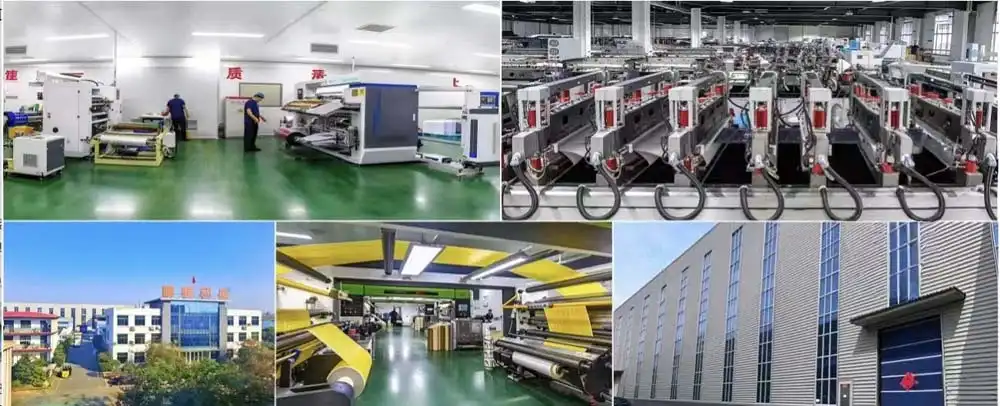
To make liquid food packaging bags, you need to print, laminate, make the pouch, put in the spout or fitting, and check it all over. In our plant, there are seven printing machines, six binding machines, and 49 machines that turn things. With gravure, we can print in eleven colors or more. We check the strength, size, look, and print registration of the seal at every important step. If something goes wrong, we can trace each order back to its batch. Your filling machine will keep going as long as the film thickness and print register stay the same. We will write your acceptance limits into the order specification so that everyone can use the same way to judge quality. Just let us know what those limits are early on.
Choosing a Supplier and the Right Format
How to Select a Liquid Food Packaging Supplier
A good company that sells liquid food packaging does what they say they will do. Check to see if the plant has the right licenses, such as BRC and ISO 9001, and ask what testing equipment is available. Find out how much experience they have with the way you fill, how acidic it is, and how thick it is. Take a look at your capacity, where you get your raw materials, how long you have to wait, and how you can keep track of each batch. Find out who owns the artwork and tooling files and how the provider will let you know when the materials change. It should be easy to rate compliance, quality, MOQ, price, shipping, and technical support. After that, order a test lot before you buy a lot of them. If you want to move providers after line validation, you will have to wait. Be careful when making your choice next.
Recommended Liquid Food Packaging Solutions by Product Type
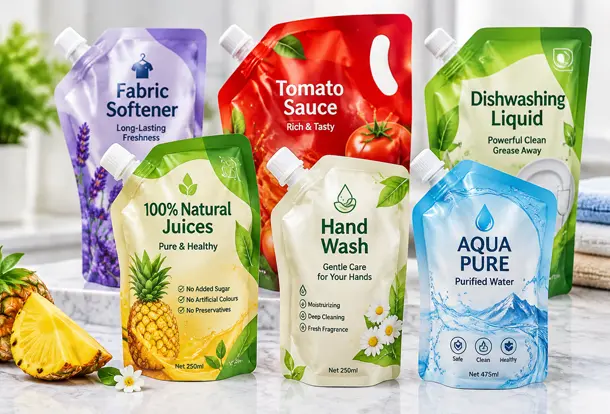
Don't take these liquid food packaging solutions as rules that you have to follow. They're just suggestions. The spout bags can be used for fruit juice, sports drinks, and energy drinks. The bags can be opened and closed. Blenders and protein drinks need bigger spouts and strong seals because they have thick ingredients. These drinks should be kept in the fridge for a long time, so they need strong laminates that have better barriers. Shelf life tests should make the choice clear. Plant-based drinks should not be exposed to air or light. Pouch styles for sauces, soups, oils, and baby food depend on how they are cooked. Spout pouches are better for standing up. We check this to be sure it's true. Flat bags are good for drinks that are given one at a time, and rollstock film works with lines that fill drinks automatically.
A Five-Step Process for Choosing Liquid Food Packaging
Do these five things. First, make a list of the prices, markets, volume, thickness, shelf life, size, filling method, and start date. Second, make a short list of forms. Cross out any that don't work with your rules or method. Third, check for leaks, resistance to heat, shelf life, drops, and how the food will be moved. Fourth, when you compare different companies, use the same details and total cost. Fifth, write down the approved design along with test standards, artwork, drawings, tolerances, and rules for how changes can be made. Spend more time testing the filler and seeing how long it will last. If you switch providers after line validation, you'll have to do a lot of this work all over again, so make sure you remember everything.
Conclusion
When picking liquid food packaging, it all comes down to how well it fits. What format and material will protect the product depends on how acidic, thick, or liquid it is, how it will be filled, and how it will be shipped. When it comes to price, weight, and barrier, each pouch, bottle, box, and can has its own pros and cons. Spout bags are good for drinks that are light and easy to move around as long as the seals, barrier layers, and caps pass tests that are based on real-life filling scenes. When there are compliance papers, shelf life checks, and seal and drop tests, leaks and swollen packs are less likely to happen. The total shipped cost, not the unit price, is the best way to compare prices, and claims of sustainability should be backed up by how easy it is to recycle in the area. Brands can get to production faster with a written five-step plan.
FAQ
1. What is the best liquid food packaging for functional drinks?
You can close a spout pouch back up, making it lighter and better for sports, kids, and drinks outside. First, check the heat, acidity, and thickness.
2. How do I prevent leaks and swollen packs?
You can fill a test lot on your own line and drop and move the seal to see how strong it is. And make sure the formula is stable and there is enough headspace.
3. What are the printing minimums?
Most of the time, digital printing takes 7 to 10 days and starts at 500 to 1000 items. Gravure printing costs more than 20,000 pieces and takes 15–20 days to begin.
4. Which documents should I request?
You should ask for reports from ISO 9001, BRC, SGS, and the FDA about food interactions. Law (EU) No 10/2011 says that you must include a Declaration of Compliance and movement records when you send something to Europe.
5. Is a mono-material pouch recyclable?
Mono-PE and mono-PP are made to be recycled, but it depends on the programs in each area.
CTA
Guoshengli Packaging's liquid food packaging experts can talk to you about your recipe, how you want to fill the pouches, and what size you want them to be. They can be sent to sales@guoshengpacking.com, and our team will help you pick out a pouch shape, closing, and printing method. We are BRC certified and have been in business for more than 25 years. We can digitally print as few as 500 items. Visit guoshengpack.com to find out more.
References
1. Robertson, G. L. Food Packaging: Principles and Practice, 2012.
2. European Commission. Commission Regulation (EU) No 10/2011 on plastic materials and articles intended to come into contact with food, 2011.
3. U.S. Food and Drug Administration. 21 CFR Part 177, Indirect Food Additives: Polymers, 2023.
4. ASTM International. ASTM F88/F88M, Standard Test Method for Seal Strength of Flexible Barrier Materials, 2021.
5. ASTM International. ASTM D4169, Standard Practice for Performance Testing of Shipping Containers and Systems, 2022.
6. Ellen MacArthur Foundation. The New Plastics Economy: Rethinking the Future of Plastics, 2016.