- English
- French
- German
- Portuguese
- Spanish
- Russian
- Japanese
- Korean
- Arabic
- Greek
- German
- Turkish
- Italian
- Danish
- Romanian
- Indonesian
- Czech
- Afrikaans
- Swedish
- Polish
- Basque
- Catalan
- Esperanto
- Hindi
- Lao
- Albanian
- Amharic
- Armenian
- Azerbaijani
- Belarusian
- Bengali
- Bosnian
- Bulgarian
- Cebuano
- Chichewa
- Corsican
- Croatian
- Dutch
- Estonian
- Filipino
- Finnish
- Frisian
- Galician
- Georgian
- Gujarati
- Haitian
- Hausa
- Hawaiian
- Hebrew
- Hmong
- Hungarian
- Icelandic
- Igbo
- Javanese
- Kannada
- Kazakh
- Khmer
- Kurdish
- Kyrgyz
- Latin
- Latvian
- Lithuanian
- Luxembou..
- Macedonian
- Malagasy
- Malay
- Malayalam
- Maltese
- Maori
- Marathi
- Mongolian
- Burmese
- Nepali
- Norwegian
- Pashto
- Persian
- Punjabi
- Serbian
- Sesotho
- Sinhala
- Slovak
- Slovenian
- Somali
- Samoan
- Scots Gaelic
- Shona
- Sindhi
- Sundanese
- Swahili
- Tajik
- Tamil
- Telugu
- Thai
- Ukrainian
- Urdu
- Uzbek
- Vietnamese
- Welsh
- Xhosa
- Yiddish
- Yoruba
- Zulu

For food packaging, the best high barrier film rollstock options include multi-layer structures with EVOH (Ethylene Vinyl Alcohol) coatings for better oxygen protection, metallised films for resistance to moisture and light, and PVDC (Polyvinylidene Chloride) coatings for balanced barrier performance. Newer choices have structures made of a single material that can be recycled and coated with aluminium oxide or silicon oxide. These offer good protection while also meeting the needs for sustainability. The choice is based on how sensitive the product is, how long it needs to last, how well it works with other machines, and the rules that must be followed.
Understanding High Barrier Film Rollstock for Food Packaging
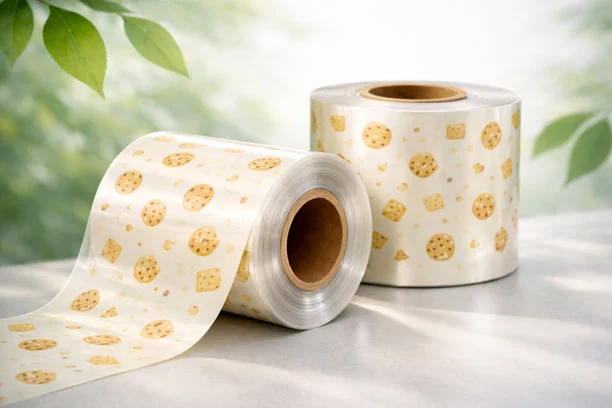
In order to keep food safe while it is being stored and shipped, barrier films are necessary. These special packaging materials make a shield around the product that keeps outside elements from hurting its quality.
What Makes a Film "High Barrier"?
The ability of a film to stop the passage of oxygen, moisture, light, and smells is called its barrier qualities. Standard packaging films let a lot of air through, which can cause oxidation, moisture absorption, or flavour loss. High barrier films use modern polymer science and layered building to cut these transfer rates by a huge amount. These structures are made of EVOH layers that block oxygen, aluminium foil that completely blocks light and gas, and special coatings that make the structures safer without making them too thick.
Common Barrier Materials and Their Functions
For each application, a different barrier approach is needed. EVOH is very resistant to oxygen, which makes it perfect for things like coffee, nuts, and cured meats that tend to go bad quickly. Metallised films have a thin layer of aluminium placed on top of polymer bases. They are better at blocking light and moisture than foil laminates and are less expensive. PVDC coatings provide appropriate shields against air and moisture, but they are limited in some areas because of environmental issues. Modern inventions include vacuum-deposited aluminium oxide and silicon oxide coatings that make barriers that are see-through, perfect for products where visibility is important.
Knowing about these different types of materials helps procurement teams match the packaging's abilities with the needs of protecting the product. A snack brand that needs to keep out moisture needs different structures than a coffee maker that needs to keep air out.
Multilayer Construction: The Key to Performance
To make barrier films, most people use coextrusion or layering to put together several polymer layers. Each layer does a specific job: the outer layers make it possible to print and give the seal strength, the middle layers work as a barrier, and the inner layers make sure that food contact is safe and that the heat seal works with the material. By using this designed method, makers can improve performance while keeping costs low. A common construction might have polyester for strength, EVOH for an air shield, and polyethylene for sealing. Each layer works to make the film work better as a whole.
Comparing High Barrier Film Rollstock Options: Metrics Procurement Teams Must Know
To choose the right protection films, you need to know how to measure the performance of high barrier film rollstock. To make smart choices, you need to know about testing standards and what numbers for product shelf life really mean.
Oxygen Transmission Rate (OTR) and Its Impact
OTR finds out how much oxygen moves through a certain film area in 24 hours. This is usually shown as cc/m²/day. Products that are easily damaged by oxygen need OTR values that are very low, often less than 1.0 cc/m²/day. For example, coffee gives off carbon dioxide but is still very vulnerable to damage from oxygen. If the film doesn't keep oxygen out well enough, the flavours will go bad within weeks. ASTM D3985 standards are used for testing, so data from different suppliers is comparable. When looking over technical data sheets, make sure you check the test settings, such as the temperature and relative humidity, because these have a big impact on the results.
Moisture Vapor Transmission Rate (MVTR) Considerations
In certain situations, MVTR measures water vapour penetration in grams per square metre per day. Low MVTR is needed for powdered supplements, pet treats, and dried fruits to keep them from clumping, microbes from growing, and the texture from breaking down. MVTR levels for standard films can be between 5 and 10 g/m²/day, while levels for barrier structures are less than 1 g/m²/day. Because of the link between differences in temperature and transfer rates, packaging needs to take into account how it will be stored and shipped. Products that are going to wet places need better moisture shields than products that will stay in climate-controlled places.
Mechanical Properties That Affect Production Efficiency
How well a barrier works doesn't matter if films can't be counted on to run smoothly on packing lines. Tensile strength, extension, resistance to punctures, and the spread of tears all affect how well a production goes. Form-fill-seal machines need films with certain coefficients of friction. If the coefficient of friction is too high, the film won't run properly, and if it's too low, it will slip. Seal strength testing (ASTM F88) makes sure that seams can handle distribution stresses without breaking. We've seen cases where packaging failed not because the barrier wasn't strong enough, but because the seal wasn't strong enough or wasn't resistant to punctures during handling.
Metallized vs. Transparent Barrier Films
Metallised structures are great barriers that don't cost too much. The aluminium shell fully stops light, which keeps light-sensitive products from oxidising. However, traditional multi-material metallized laminates are difficult to recycle. Transparent barrier sheets with EVOH or oxide coats keep the product visible, help the brand stand out, and are becoming more and more recyclable. The choice will depend on whether blocking light and saving money are more important than being clear and protecting the environment. A lot of coffee brands like metal structures, while high-end snack lines choose clear films to show off the quality of their products.
Environmental and Cost Trade-offs
Traditional barrier films often use materials that don't work well together, which makes recycling harder. Structures that mix polyester, aluminium, and plastic are hard to separate when they need to be recycled. Newer methods that only use one material have frames made of plastic, which keeps them recyclable while adding protective coats. Most of the time, these solutions cost 15 to 25 percent more at first, but they build brand value through claims of sustainability and agreement with the ideals of the circular economy. Calculations of return on investment need to take into account more than just the costs of the goods themselves. They also need to take into account possible market access, changes in consumer tastes, and the direction of regulations.
How to Choose the Best High Barrier Film Rollstock for Your Food Packaging Needs
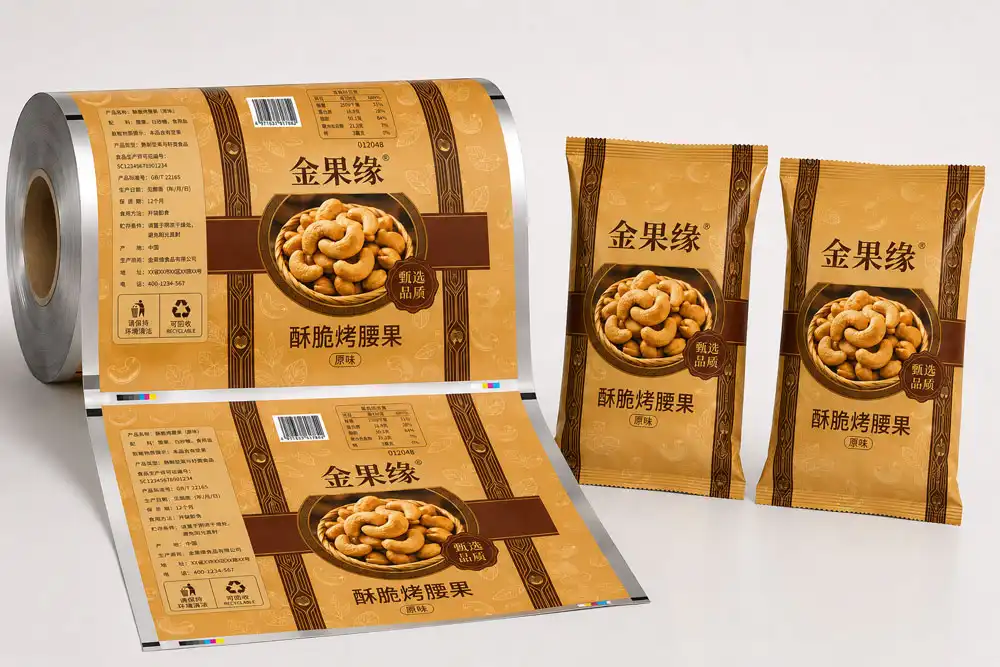
To make a choice, you have to match the properties of high barrier film rollstock to the needs of the application. A structured method keeps expensive mistakes from happening when the needs of the goods don't match the capabilities of the packaging.
Assessing Product Sensitivity and Shelf Life Targets
First, figure out what makes your offering worse. When foods are exposed to air, they quickly turn rancid. Powders that are hygroscopic soak up water and cake. Permeable packaging lets volatile compounds escape from aromatic goods. Testing shelf life under sped-up settings shows what causes quality to go down. If oxygen causes degradation, low OTR should be your top priority. If wetness is the main danger, pay attention to the MVTR specs. Products that are sensitive to more than one thing need complete barrier solutions that block all pathways at the same time.
Matching Films to Packaging Machinery
Packaging equipment compatibility is often forgotten until there are problems with production. Different types of machines—vertical form-fill-seal machines, horizontal flow wraps, and thermoforming lines—need different kinds of films. Film choice is affected by the speed of the machine, the temperature of the sealing jaw, the dwell time, and the tension control. We suggest giving possible providers full information about the tools you need, such as the brand, model, normal speeds, and any known quirks. Films that work great on one type of machine might not work at all on another because the seal mechanisms or handling characteristics are different.
Supplier Reliability and Technical Support
Long-term success in packaging depends on what the supplier can do beyond what is required by the product. Check to see if your sources can increase their production as your business grows. Use batch-to-batch performance data to check the uniformity of the quality. Check the documentation for food contact compliance and certifications like ISO 9001 and BRC. When dealing with production problems or making systems work better, technical help is very important. Suppliers should help with choosing materials, fixing problems, and making designs based on the problems that come up in a particular case. We value relationships where providers take the time to learn about how our customers run their businesses instead of just meeting orders.
Regulatory Compliance Across Markets
Food contact packaging has to follow strict rules that vary from place to place. In the US, FDA rules, EU Regulation 10/2011 in Europe, and extra rules in places like Australia and Japan all have specific requirements that must be met. Migration testing makes sure that no dangerous chemicals move from the packaging to the food. Compliance statements, migration test results, and material composition declarations should all be in the supplier documentation. To avoid having to pay more money to make new films, products that are going to be sold in more than one market need films that meet the strictest standards.
Volume Commitments and Lead Time Management
There are usually minimum order quantities for making barrier film that depend on the printing cylinders, lamination runs, and slitting configurations. Structures that are made to order may need pledges of several thousand kilograms. Lead times range from 7 to 10 days for digitally printed products to 15 to 20 days for larger quantities printed by rotogravure. Keeping a safety stock helps us deal with changes in the supply chain, especially when we buy from other countries. By building relationships that let you buy in a variety of ways, including both standard orders and special runs, you can keep your business running smoothly without having to pay too much for supplies.
Leading High Barrier Film Rollstock Products and Suppliers for Food Packaging
There are both large, well-known multinational companies and small, specialised manufacturers in the global packaging industry. Each has its own specialities. Knowing what the competitors are doing helps buying teams find good partners.
Global Industry Leaders and Their Offerings
International giants like Amcor, Berry Global, and Sealed Air keep huge inventories of high barrier film rollstock products that can be used in a wide range of situations. These companies have a lot of technical resources, make things all over the world, and spend a lot of money on research and development that leads to new materials. Because they are so big, they can keep up a steady supply even when the market is down. However, smaller names may not be able to meet the minimum order quantities, and standard production methods can make it hard to offer customisation choices.
Regional experts can often be more flexible and provide faster service. When manufacturers focus on certain market segments, they learn a lot about how to use their products. When we work with partners who know a lot about things like pet food safety, coffee packaging, and supplement protection, we can make better suggestions and avoid having to try things and see what works and what doesn't.
Material Innovations Advancing Performance
New developments in barrier technology have improved both performance and long-term viability. Mono-material polyethylene structures with oxide coatings can still be recycled and provide barrier properties that were previously only possible with mixed-material laminates. These films have OTR values below 5 cc/m³/day thanks to thin, clear layers that are put on using plasma-enhanced chemical vapour deposition. Even though they aren't as good as EVOH at extreme barriers, they work well enough for many uses and make end-of-life processing easier.
Compostable sheets made from PLA and PBAT plastics are appealing to brands that want to be seen as zero-waste. These materials break down in industrial composting facilities, but they aren't as good at blocking out light and heat as regular polymers. Careful application matching makes sure that recyclable films can be used on goods where simple barriers are enough and there is the right infrastructure for dumping. We advise against using recyclable packaging for goods that need to stay fresh for a long time or that are sold through outlets that don't allow composting.
Real-World Performance Validation
Case studies show how choosing the right barriers can help solve real-world problems. A company that makes pet treats noticed that their products were getting soft in the summer and switched from standard film to a structure that offered better MVTR protection. The shelf life was increased from 6 to 12 months, which cut down on waste and made distribution more flexible. A coffee roaster used metallised film with built-in degassing valve, which let the coffee be packaged right away after roasting while keeping air out. Customers were happier when they got fresher goods that still had their original smells.
These examples show that problems with packaging don't show up in samples, but when production goes up, changes with the seasons happen, and products are sent to more places. If you choose providers with a history of doing a good job, you're less likely to find problems after spending in packing equipment and supplies.
Environmental and Regulatory Considerations for High Barrier Film Rollstock
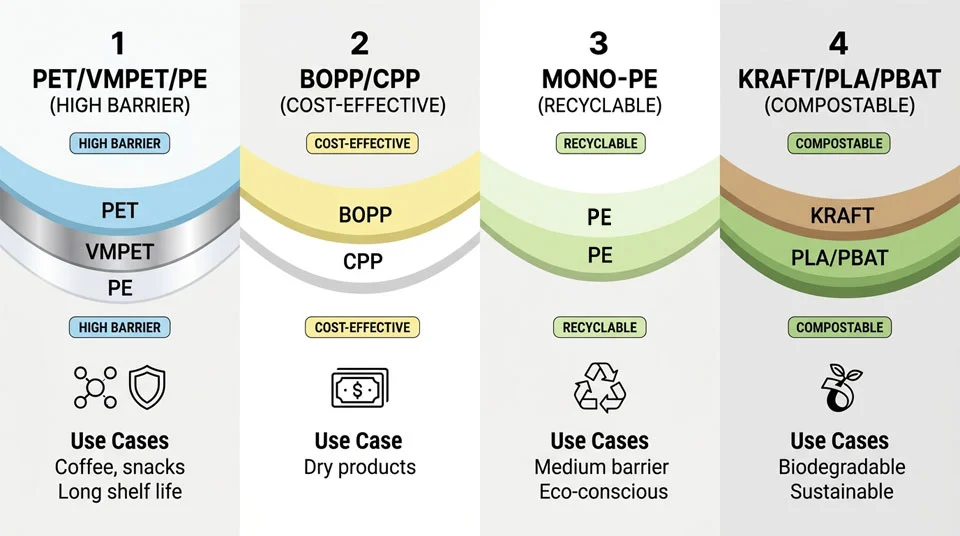
Today's packaging strategies are shaped by sustainability and compliance. When making procurement choices, people have to find a balance between performance standards, environmental duty, and legal duties.
Recycling Challenges and Emerging Solutions
Traditional barrier laminates made of plastics that don't mix well together don't allow recycling through mechanical means. Structures made of aluminium foil can block everything, but they can't be recycled with polyethylene or polyester. Most areas' waste management systems don't have the tools to separate complicated layered films, so they end up in landfills or are burnt.
As a response, the industry is coming up with recyclable alternatives that still meet the necessary safety standards. Structures made of polyethylene that are constructed entirely of polyethylene can be processed through established routes for reusing low-density polyethylene. When brands use these materials, they support the ideas behind the circular economy and meet customer expectations for caring for the environment. But making the switch means making sure that the new structures give the same shelf life in real-world distribution conditions. This takes a lot of testing and time.
Navigating FDA and EU Food Contact Regulations
Understanding the relevant frameworks is the first step to regulatory compliance. In the US, FDA rules focus on certain substances that are allowed to come into contact with food. Manufacturers must show that these substances are safe through migration testing and toxicological data. EU Regulation 10/2011 sets up lists of chemicals that are allowed to be used, along with specific limits on migration and makeup rules. Sometimes, extra partner state rules put even more limits on what can be done.
Suppliers should give a lot of paperwork, like declarations of compliance, migration test results done using standard methods, and lists of all the substances they offer. We suggest that you look over this paperwork during the seller approval process instead of thinking that it is correct. If there isn't enough governmental backing, there are risks of liability and possible barriers to market entry if officials question the safety of the material.
Balancing Performance and Sustainability Goals
There aren't any zero-compromise solutions yet because there are trade-offs between the best barrier performance and the best recycling ability. First, decision frameworks should put protecting the product first, and then they should try to make the environment as good as it can be while still meeting performance goals. If a nutrient powder needs to be protected from high wetness, it can't give up barrier integrity to make promises about being recyclable if the product breaks down. But a dry snack that can handle some hurdles can use recycled materials without losing any of its quality.
Being open and honest with customers about these trade-offs builds trust. Brands that say the choices they make about packaging put food safety first and reduce waste by making products last longer show that they are serious about sustainability and not just greenwashing. Life cycle studies, which measure the total environmental impact and include preventing food waste, often show that good packaging lowers the overall footprint, even when there are problems at the end of the product's life.
Conclusion
To choose the high barrier film rollstocks, you need to know about material science, performance measures, gear fit, and government rules. Depending on the needs of the application, multi-layer structures with EVOH, metallised coatings, or oxide barriers each have their own benefits. Suppliers must be judged on more than just their specs; they must also be reliable, offer good technical support, and be able to grow with the business. More and more, choices are based on environmental factors, and reusable single-material options are becoming more popular where performance allows. To be successful, you need to make sure that the film qualities fit the sensitivity of the product, the conditions of marketing, and the setting of the brand, all while keeping costs low. Working with experienced suppliers who can give you full technical support cuts down on trial and error and speeds up the time it takes to get products on the market with packaging solutions that keep them safe for as long as they last.
FAQ
1. How does humidity affect oxygen barriers in EVOH films?
EVOH exhibits moisture sensitivity, with barrier properties declining under high relative humidity conditions. Manufacturers address this by positioning EVOH layers between hydrophobic polymers like polyethylene or polypropylene, which protect the barrier layer from moisture exposure. Proper structure design ensures EVOH maintains effectiveness across varied storage environments.
2. Can barrier films support sustainability without compromising protection?
Recyclable mono-material structures using polyethylene with oxide coatings offer meaningful sustainability improvements while maintaining adequate barriers for many applications. These films achieve OTR values suitable for products with moderate oxygen sensitivity. Products requiring extreme barriers may still need traditional structures until technology advances further, though ongoing innovation continues improving recyclable options.
3. What distinguishes PVDC from EVOH barriers?
PVDC provides balanced oxygen and moisture resistance in thin coatings, making it efficient for applications requiring both barriers. EVOH delivers superior oxygen blocking but needs moisture protection. Regional environmental regulations increasingly restrict PVDC due to chlorine content, driving preference toward EVOH or oxide coating alternatives despite PVDC's performance advantages.
Partner with a Trusted Barrier Film Rollstock Manufacturer
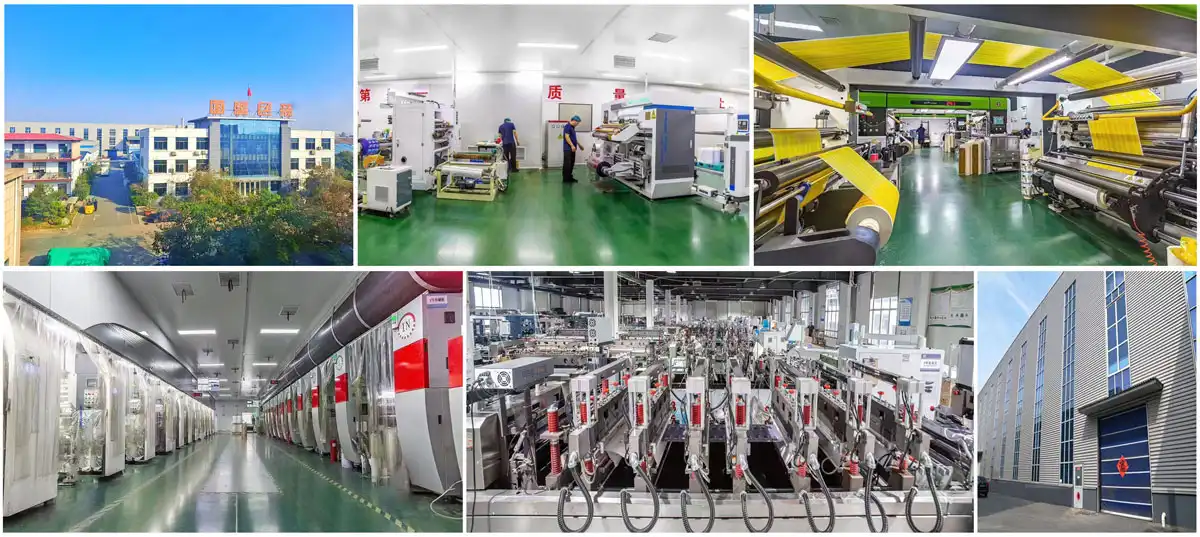
Guoshengli Packaging brings over 25 years of flexible packaging manufacturing experience to help food brands, pet food companies, and health product manufacturers solve protection challenges with reliable barrier film solutions. Our multi-layer structures deliver OTR values below 1.0 cc/m²/day and MVTR under 1.0 g/m²/day, extending shelf life while maintaining compatibility with automated form-fill-seal equipment. We maintain ISO 9001, BRC, and SGS certifications alongside FDA and EU food contact compliance, ensuring your packaging meets international regulatory standards.
Our production capabilities include seven rotogravure printing lines, six lamination machines, and 49 converting units, enabling lead times of 15-20 days for custom-printed high barrier film rollstock structures. We offer recyclable options utilizing mono-material polyethylene constructions without sacrificing protection performance. Technical support throughout material selection, structure optimization, and production troubleshooting helps you avoid costly delays and quality issues.
Contact our team at sales@guoshengpacking.com to discuss your specific barrier requirements. We provide flexible minimum order quantities and expedited delivery options, making it practical to validate film performance before committing to large volumes. As an established barrier film rollstock supplier serving North American and European markets, we understand the operational demands of international food packaging and deliver consistency across repeat orders.
References
1. Robertson, Gordon L. (2016). Food Packaging: Principles and Practice, Third Edition. CRC Press, Taylor & Francis Group.
2. Marsh, Kenneth and Betty Bugusu (2007). "Food Packaging—Roles, Materials, and Environmental Issues," Journal of Food Science, Volume 72, Issue 3, pages R39-R55.
3. Coles, Richard, Derek McDowell, and Mark J. Kirwan (2003). Food Packaging Technology. Blackwell Publishing, CRC Press.
4. Siracusa, Valentina (2012). "Food Packaging Permeability Behaviour: A Report," International Journal of Polymer Science, Volume 2012, Article ID 302029.
5. Lange, Judith and Yasmine Wyser (2003). "Recent Innovations in Barrier Technologies for Plastic Packaging—A Review," Packaging Technology and Science, Volume 16, Issue 4, pages 149-158.
6. Selke, Susan E.M., John D. Culter, and Ruben J. Hernandez (2004). Plastics Packaging: Properties, Processing, Applications, and Regulations, Second Edition. Hanser Publications.