- English
- French
- German
- Portuguese
- Spanish
- Russian
- Japanese
- Korean
- Arabic
- Greek
- German
- Turkish
- Italian
- Danish
- Romanian
- Indonesian
- Czech
- Afrikaans
- Swedish
- Polish
- Basque
- Catalan
- Esperanto
- Hindi
- Lao
- Albanian
- Amharic
- Armenian
- Azerbaijani
- Belarusian
- Bengali
- Bosnian
- Bulgarian
- Cebuano
- Chichewa
- Corsican
- Croatian
- Dutch
- Estonian
- Filipino
- Finnish
- Frisian
- Galician
- Georgian
- Gujarati
- Haitian
- Hausa
- Hawaiian
- Hebrew
- Hmong
- Hungarian
- Icelandic
- Igbo
- Javanese
- Kannada
- Kazakh
- Khmer
- Kurdish
- Kyrgyz
- Latin
- Latvian
- Lithuanian
- Luxembou..
- Macedonian
- Malagasy
- Malay
- Malayalam
- Maltese
- Maori
- Marathi
- Mongolian
- Burmese
- Nepali
- Norwegian
- Pashto
- Persian
- Punjabi
- Serbian
- Sesotho
- Sinhala
- Slovak
- Slovenian
- Somali
- Samoan
- Scots Gaelic
- Shona
- Sindhi
- Sundanese
- Swahili
- Tajik
- Tamil
- Telugu
- Thai
- Ukrainian
- Urdu
- Uzbek
- Vietnamese
- Welsh
- Xhosa
- Yiddish
- Yoruba
- Zulu

Spout pouch packaging is a flexible, multi-layer packaging format built around an integrated rigid spout that allows controlled dispensing and easy resealing. Unlike conventional rigid bottles or glass jars, spout pouch packaging combines high-barrier laminated films — typically PET, PE, aluminum foil, or RCPP — into a lightweight, durable structure that protects contents from moisture, oxygen, and contamination. Its self-supporting base, precision pour spout, and compact unfilled footprint make it a compelling alternative for brands across food, personal care, and industrial sectors seeking to reduce costs without sacrificing product integrity.


Understanding Spout Pouch Packaging
What It Is and How It Works
There is a thermoplastic fitting heat-sealed or ultrasonically welded into the top or side of a spout pouch packaging, which makes the bag stand up. The fitting, which comes in sizes from 8.5 mm for thin liquids to 33 mm for thick sauces or granular spices, directs the flow of the contents exactly, stopping drips and waste. The multi-layer film structure gets very low Oxygen Transmission Rates (OTR) and Water Vapor Transmission Rates (WVTR), which are both important for making sure that the product will last for a long time.
Key Industries Driving Adoption
Spout pouch packaging is useful for a very large number of different types of goods. It works just as well with baby food purees, salad sauces, soy sauce, energy bars, and specialty salts as it does with other foods and drinks. In personal care, the structure works for shampoo and soap refills that need to be resistant to chemicals. Industrial buyers depend on it for oils and screen wash fluids that can handle the high pressures of the sea and the hard conditions of workshops. One main reason procurement managers are moving their budgets away from rigid containers is that they can be used in a lot of different industries.
Advantages and Environmental Impact of Spout Pouch Packaging
Logistics, Space, and Cost Reduction
There is data that shows why moving to spout pouch packagings is a good business idea. Unfilled pouches take up about 90% less stock space than rigid bottles of the same size. This means that storing costs are lower and incoming operations run more smoothly. When it's full, a spout pouch packaging weighs a lot less than a glass or hard plastic container of the same size. This saves money on freight costs and fuel. The precision spout lets users empty up to 99% of the contents, which cuts down on product waste. This is an important feature for both cost-conscious and environmentally aware store buyers.
These gains in efficiency are not small. If the procurement team replaces 500mL glass sauce bottles with spout pouch packagings, the weight of each unit of packing can be cut by 60–70%. This will also increase the use of pallets and lower the amount of carbon dioxide released per package.
Sustainability and Recyclability
Brands that want to sell in North America and Europe can't avoid being environmentally responsible anymore. When EVOH barrier coatings are applied on the inside, all-PE spout pouch packagings can be recycled through regular municipal channels. This is because the film and the fitting are made of the same polymer family. Guoshengli Packaging uses imported RTO exhaust gas treatment technology to keep volatile organic compound emissions to a minimum while printing and laminating. As proof of responsible production practices from a third party, procurement teams can point to ISO 9001 quality management and BRC food packaging approval.
Comparing Spout Pouch Packaging with Other Packaging Solutions
Spout Pouches vs. Rigid Containers and Stand-Up Pouches
Choosing the right packaging format requires honest comparison. Here is how spout pouch packagings perform against common alternatives across criteria that matter to B2B buyers:
- Versus rigid bottles and glass jars: Spout pouch packagings are better than stiff bottles and glass jars because they don't break as easily, cost less per unit, and take up less space when they're not in use. In some storage layouts, rigid containers are easier to stack than flexible formats, but when it comes to large-scale logistics, flexible forms are the clear winner.
- Versus standard stand-up pouches without spouts: A plain stand-up pouch needs to be cut or torn open, which makes a mess and makes pouring less accurate. The built-in spout fixes both issues, giving users a controlled, resealable pouring experience they really like for sauces, dressings, and liquid personal care products.
- Versus bag-in-box solutions: Compared to bag-in-box options, spout pouch packagings (80mL–5L) are better for direct-to-consumer and food service channels where portability and shelf presence are important. Bag-in-box works well for very large volumes (3–20 liters).
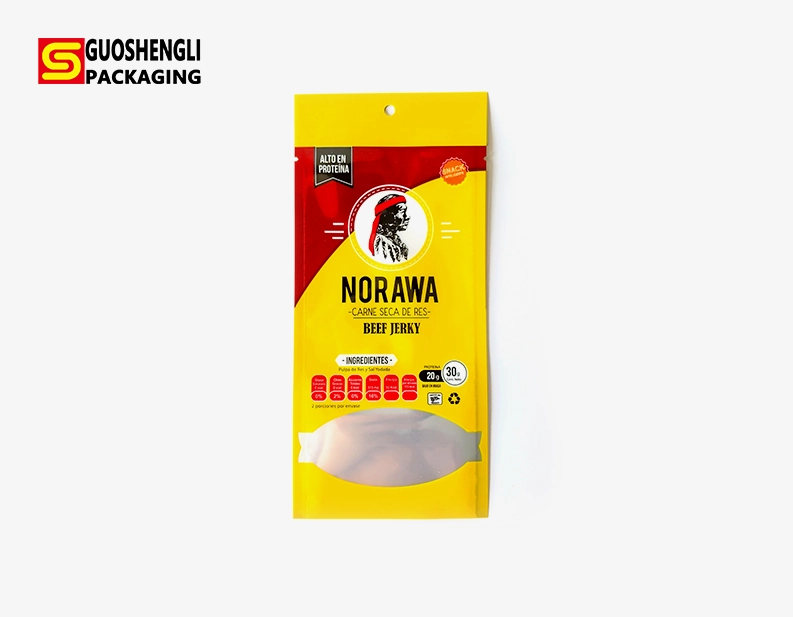
The emergence of resealable spout pouch packagings with child-resistant caps and transparent window panels adds further differentiation. A clear window lets consumers verify product quality and remaining quantity without opening the package — a trust signal that translates to repeat purchase behavior.

How to Source and Procure Spout Pouch Packaging for Your Business?
Supplier Evaluation Criteria
Sourcing a reliable spout pouch packaging manufacturer requires evaluating several non-negotiable criteria before placing a trial order. Quality procurement teams typically verify ultrasonic welding or precision heat-seal quality at the spout-to-film interface, since this junction is the primary leakage failure point. FDA food-contact compliance documentation, BRC certification, and SGS test reports should accompany every supplier shortlist candidate.
Beyond compliance, buyers should confirm spout diameter compatibility with their existing filling lines, heat resistance specifications for hot-fill or retort processes, and realistic lead times. Guoshengli Packaging offers digital printing in 7–10 days and rotogravure printing in 15–20 days, with air delivery available in 4–5 days for urgent orders — timelines that support rapid market entry without inflating procurement risk.
Procurement Process and Testing Protocol
A sound procurement cycle for spout pouch packagings follows a structured sequence: request samples for vacuum leakage testing (per ASTM D3078), conduct drop testing from 1.2–1.5 meters to stress-test spout welds, verify solvent residue levels via gas chromatography, and run a small-batch trial on the actual filling line before committing to full volume. This 1–3 month validation period protects against costly line stoppages and product recalls down the supply chain.
Design Ideas and Innovations in Spout Pouch Packaging
Printing, Barrier Materials, and Functional Features
Design innovation in spout pouch packagings now extends well beyond graphics. Guoshengli Packaging's 11-color rotogravure printing capability delivers shelf-impact graphics with consistent color registration across every production run — a requirement for brand equity maintenance across global retail channels. Full-surface printing options, combined with strategically placed transparent windows, create packaging that communicates both brand identity and product authenticity simultaneously.
Functional material advances are equally significant. RCPP inner layers enable hot-fill compatibility at 85–95°C and retort sterilization at 121°C, opening shelf-stable and pasteurized product applications that standard PE structures cannot support. Moisture-resistant laminate constructions protect granular contents — table salt, sea salt, specialty salts, and dry seasonings — from humidity-induced clumping throughout the supply chain, maintaining product integrity from factory floor to consumer kitchen. These engineering choices are not cosmetic; they directly determine whether a product arrives on shelf in sellable condition.

Conclusion
Spout pouch packaging has moved from a niche convenience format to a mainstream B2B procurement priority because it simultaneously addresses cost, logistics, sustainability, and consumer experience. Measurable advantages — 90% space reduction unfilled, 99% content evacuation, compatibility with hot-fill and retort sterilization, and recyclable mono-material options — give procurement managers concrete figures to present in capital expenditure justifications. As retail buyers in North America and Europe increasingly require sustainable packaging credentials, the flexible spouted pouch positions brands to meet those demands without penalty to margin or operational efficiency.
FAQ
1. What spout diameters are available, and how do I choose the right one?
Standard diameters range from 8.5mm for thin liquids such as soy sauce or beverages up to 33mm for thick sauces, dry spices, or granular salts. The correct diameter depends on product viscosity, desired flow rate, and filling line specifications. Guoshengli Packaging offers a range of standard fitment options and can advise based on your specific application.
2. How is leakage prevented at the spout weld?
Ultrasonic welding or precision heat-sealing with specialized W-profile sealing bars melts the film uniformly around the spout base, creating a hermetic bond. Every batch undergoes vacuum leakage testing per ASTM D3078 and drop testing from 1.2–1.5 meters to verify weld integrity before shipment.
3. Are spouted pouches compatible with hot-fill and retort processes?
Yes. Pouches with RCPP inner layers support filling temperatures of 85–95°C and retort sterilization at 121°C, making them suitable for shelf-stable sauces, baby food purees, and similar thermally processed products.
4. What recyclable options exist?
All-PE mono-material structures with internal EVOH barrier coatings are recyclable through many municipal streams. FDA and BRC documentation is available to support regulatory submissions.
Partner with Guoshengli Packaging — Your Trusted Spout Pouch Packaging Manufacturer

Your next packaging upgrade starts with a conversation. Guoshengli Packaging brings 25 years of flexible packaging manufacturing expertise, ISO 9001, BRC, FDA, and SGS certifications, and a production system built for consistent quality across every reorder. Whether you need a spout pouch packaging supplier for sauces, seasonings, baby food, or liquid personal care products, our engineering team guides you from material selection through sampling and production. Reach out today at sales@guoshengpacking.com to request samples.
References
1. \Flexible Packaging Association. Flexible Packaging: Market Data and Trends Report. Flexible Packaging Association, 2023.
2. Marsh, K., & Bugusu, B. "Food Packaging — Roles, Materials, and Environmental Issues." Journal of Food Science, 2007.
3. ASTM International. ASTM D3078: Standard Test Method for Determination of Leaks in Flexible Packaging by Bubble Emission. ASTM International, 2021.
4. Paine, F. A., & Paine, H. Y. A Handbook of Food Packaging. Blackie Academic & Professional, 1992.
5. British Retail Consortium. BRC Global Standard for Packaging and Packaging Materials, Issue 6. BRC Global Standards, 2019.
6. Emblem, A., & Emblem, H. (Eds.). Packaging Technology: Fundamentals, Materials and Processes. Woodhead Publishing, 2012.