- English
- French
- German
- Portuguese
- Spanish
- Russian
- Japanese
- Korean
- Arabic
- Greek
- German
- Turkish
- Italian
- Danish
- Romanian
- Indonesian
- Czech
- Afrikaans
- Swedish
- Polish
- Basque
- Catalan
- Esperanto
- Hindi
- Lao
- Albanian
- Amharic
- Armenian
- Azerbaijani
- Belarusian
- Bengali
- Bosnian
- Bulgarian
- Cebuano
- Chichewa
- Corsican
- Croatian
- Dutch
- Estonian
- Filipino
- Finnish
- Frisian
- Galician
- Georgian
- Gujarati
- Haitian
- Hausa
- Hawaiian
- Hebrew
- Hmong
- Hungarian
- Icelandic
- Igbo
- Javanese
- Kannada
- Kazakh
- Khmer
- Kurdish
- Kyrgyz
- Latin
- Latvian
- Lithuanian
- Luxembou..
- Macedonian
- Malagasy
- Malay
- Malayalam
- Maltese
- Maori
- Marathi
- Mongolian
- Burmese
- Nepali
- Norwegian
- Pashto
- Persian
- Punjabi
- Serbian
- Sesotho
- Sinhala
- Slovak
- Slovenian
- Somali
- Samoan
- Scots Gaelic
- Shona
- Sindhi
- Sundanese
- Swahili
- Tajik
- Tamil
- Telugu
- Thai
- Ukrainian
- Urdu
- Uzbek
- Vietnamese
- Welsh
- Xhosa
- Yiddish
- Yoruba
- Zulu

Brown kraft paper pouches have emerged as a leading packaging solution for brands seeking to combine a natural paper appearance with practical product protection. These pouches can pair kraft paper aesthetics with functional barrier layers, offering a flexible alternative to conventional all-plastic packaging for selected applications. Their strength, versatility, and authentic appearance resonate with sustainability-conscious consumers while still allowing brands to meet food safety, barrier, and performance requirements.
Understanding Brown Kraft Paper Pouches: Features and Benefits
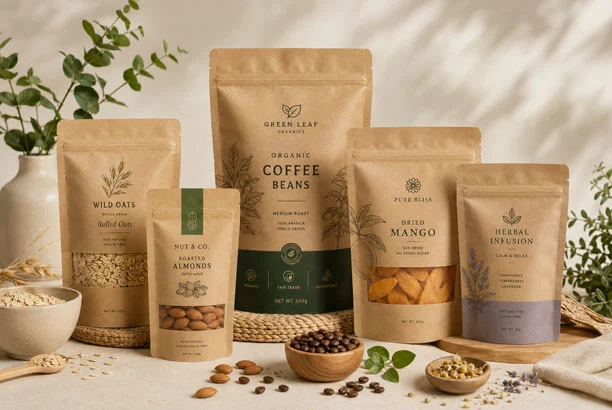
What Makes Brown Kraft Paper Pouches Unique
Brown kraft paper pouches are a hybrid type of packaging made with natural kraft paper and, in many applications, one or more laminated barrier layers. At Guoshengli Packaging, we make these pouches with kraft paper that is typically between 40 and 80 GSM together with functional layers such as PE, VMPET, or aluminum foil depending on product requirements. This construction helps solve an important packaging challenge: brands may want a natural, paper-based appearance while still needing adequate barrier, sealing, and mechanical performance. The kraft exterior provides a distinctive surface for branding while maintaining the rustic visual identity associated with natural paper packaging.
Core Structural Features
There are several pouch configurations available for brown kraft paper pouches, including three-side seal, stand-up, flat-bottom, and side-gusset formats. Depending on the application, material thickness may fall within a range such as 120 to 160 microns, although final thickness should be selected according to product weight, barrier requirements, puncture risk, and handling conditions. Tear notches can make the pouch easier to open without scissors, while optional hang holes can support retail display on hooks or racks. Because of these qualities, brown kraft paper pouches can work well for packaging beef jerky, coffee, pet treats, powdered supplements, and other dry or semi-dry products when the complete structure is properly specified.
Environmental and Brand Benefits
Brown kraft paper pouches can support selected sustainability strategies, but the environmental performance of the finished pouch depends on the complete material structure rather than the kraft layer alone. Kraft paper itself is fibre-based, but laminated plastic, metallized, foil, adhesive, coating, zipper, and window components all influence recyclability or compostability. Selected PLA- or PBAT-based structures may be considered where an appropriate industrial-composting route and relevant certification are available, while paper-plastic laminates may require specialised collection and recycling processes. The natural kraft look can still provide strong brand value by communicating a simple, premium, or artisanal visual identity and helping products stand out on crowded retail shelves.
How Brown Kraft Paper Pouches Outperform Traditional Packaging Solutions
Environmental Advantages Over Conventional Options
Brown kraft paper pouches can support brands that want to increase the use of fibre-based materials or create a more natural packaging appearance. Kraft paper is produced from wood fibre, which is a renewable feedstock, although the overall environmental footprint of the finished pouch depends on material weight, laminate construction, manufacturing, transport, and end-of-life route. Where certified fibre sourcing is important, buyers can request relevant FSC, PEFC, or supplier chain-of-custody documentation. Brands should therefore evaluate the complete packaging structure rather than assuming that all brown kraft paper pouches automatically have a lower carbon footprint than conventional plastic or foil packaging.
Functional Performance Characteristics
Our brown kraft paper pouches can use multiple layers that work together to provide moisture, oxygen, aroma, grease, or light protection according to the product requirement. Actual shelf life depends on the barrier structure, product sensitivity, filling process, residual oxygen, storage temperature, and distribution conditions. Aluminum foil barriers can provide strong oxygen, moisture, and light protection for demanding applications such as specialty coffee or roasted nuts, while metallized films can provide useful barrier performance with a thin deposited metal layer. For oily products, the complete laminate should also be evaluated for grease resistance and resistance to oil migration or staining. Where grease-resistant paper treatments are used, the relevant food-contact and chemical-compliance requirements should be verified.
Design Flexibility and Market Positioning
Brown kraft paper pouches can be sealed and converted in a number of different ways depending on the product and the filling equipment. Resealable zipper closures can improve convenience after first opening, making them suitable for coffee, snacks, and other multi-use products. Degassing valves can allow carbon dioxide to escape from freshly roasted coffee while helping limit outside air ingress when properly selected and installed. Clear windows can also be incorporated using suitable transparent films, although the window area may reduce light or gas barrier compared with an opaque metallized or foil structure. These customization choices allow brands to differentiate their products while maintaining the natural appearance that makes kraft paper packaging appealing.
Structural Configurations for Different Applications
Stand-up pouches with gusseted bottoms can stand upright on retail shelves, improving presentation and accessibility. Flat-bottom pouches provide a more structured shape and multiple printable panels, making them suitable for premium products and larger fill weights when properly sized. Side gusset pouches provide additional internal volume and are commonly considered for coffee, tea, powders, and other products where efficient use of pack volume matters. Three-side seal pouches provide a flat, compact format and can be suitable for beef jerky, dried meat, samples, and other products where a simple pouch structure is appropriate. Each configuration meets different operational and presentation needs while allowing brands to maintain a consistent brown kraft paper look.
Procurement Insights: How to Source the Best Brown Kraft Paper Pouches for Your Brand

Critical Supplier Evaluation Criteria
To find trustworthy suppliers of brown kraft paper pouches, buyers should review food-contact documentation, quality management systems, packaging certifications, production capabilities, and technical support. At Guoshengli Packaging, we maintain ISO 9001 and BRCGS Packaging Materials certification together with food-contact compliance documentation for applicable target markets. With more than 25 years of experience in flexible packaging manufacturing, we support stable production processes intended to reduce common procurement risks such as inconsistent quality across repeat orders, production delays, and communication gaps. When adding new products or entering new markets, procurement teams should also confirm that suppliers can scale production while maintaining agreed specifications.
Price Benchmarking and MOQ Considerations
Brown kraft paper pouches may have minimum order quantities in the range of 20,000 to 50,000 pieces for some rotogravure projects, but the actual MOQ depends on pouch size, material structure, number of designs, printing method, and customization requirements. Digital printing can support lower quantities for selected short runs, test markets, or seasonal products, with lead times depending on artwork, material availability, and production schedule. Rotogravure printing can reproduce up to 11 colours and is generally more suitable for larger-volume production, with typical lead times determined by cylinder preparation, material structure, and factory scheduling. Different material structures also carry different cost profiles. Procurement teams should therefore evaluate total packaging value, including material performance, waste, production efficiency, and product protection, rather than comparing unit price alone.
Customization as Competitive Advantage
Customizing packaging can strongly influence shelf appearance and consumer perception. Our rotogravure printing can support consistent colour reproduction across suitable repeat runs when artwork, cylinders, inks, and process controls are properly managed. Matte kraft finishes can preserve a natural paper texture, while selected coatings or finishes can create different visual effects. Window arrangements can help show the product, although they should be evaluated against the required barrier performance. Private-label programmes can also help wholesalers and manufacturers serve different customer groups efficiently. To get the most value from the packaging investment, customization should match brand positioning, target-market expectations, filling requirements, and product-protection needs.
Regional Manufacturing Considerations
Buying from established Chinese manufacturers such as Guoshengli Packaging can provide access to integrated printing, laminating, slitting, and pouch-making capabilities. Our production base includes seven rotogravure printing machines, six laminating machines, six slitting machines, and 49 pouch-making machines, with annual production capacity of approximately 20,000 tons. This scale supports growing brands that require stable production planning and repeat supply. We maintain technical communication with customers in North America, Europe, and other export markets, and our long experience in international packaging projects helps us understand documentation, quality, and buyer expectations. When choosing a regional supplier, buyers should balance cost, quality consistency, lead time, communication, technical capability, and supply-chain reliability.
Implementing Brown Kraft Paper Pouches Effectively in Your Packaging Strategy
Storage and Handling Best Practices
Brown kraft paper pouches maintain their performance more reliably when stored correctly before filling. Pouches should be kept in a clean, dry environment away from direct sunlight, excessive heat, and high humidity, following the supplier's recommended storage conditions. Before shipment, pouches can be checked for seal quality, print accuracy, dimensions, and relevant material-performance requirements according to the agreed specification. Filling-line teams should also confirm that pouch dimensions, opening characteristics, seal areas, and material behaviour are compatible with the intended manual or automatic filling equipment to reduce production interruptions.
Addressing Moisture Resistance Concerns
Although kraft paper itself is more moisture-sensitive than many plastic films, multi-layer lamination systems can provide the required moisture and oxygen protection for suitable products. PE and CPP inner layers can provide food-contact heat-seal surfaces and moisture protection, while EVOH can provide high oxygen barrier in appropriately designed structures. Metallized PET can contribute oxygen, moisture, aroma, and light barrier depending on the laminate design. Brands packaging hygroscopic powders such as matcha, protein isolates, or supplement mixes can use high-barrier structures where necessary to help reduce moisture uptake, caking, and quality changes. Final performance should be validated against the actual product, target shelf life, storage conditions, and distribution route.
Real-World Performance Examples
Coffee roasters often choose brown kraft paper pouches to combine a natural visual identity with high-barrier laminates, resealable zippers, and optional degassing valves. Pet treat manufacturers may use the format where the natural appearance supports product positioning, provided puncture resistance, grease resistance, and barrier performance are matched to the actual product. Snack brands can also use brown kraft paper pouches to create a simple, premium, or artisanal shelf presentation while selecting the barrier structure independently according to product needs. These application examples show how the visual benefits of kraft paper can be combined with functional packaging design rather than relying on appearance alone.
Anticipating Future Packaging Trends
Interest in sustainable packaging continues to increase as brands, retailers, and regulators place greater emphasis on packaging minimisation, recyclability, recycled content, responsible sourcing, and end-of-life management. New barrier coatings, mono-material structures, fibre-based designs, and selected compostable materials are expanding the range of available packaging options, although their actual performance and disposal routes still require application-specific validation. Brands that use brown kraft paper pouches can position themselves for changing market expectations when the complete structure is selected responsibly and environmental claims are supported by appropriate evidence. Procurement professionals who follow these trends can make packaging decisions that balance brand value, performance, compliance, and long-term sustainability objectives.
Conclusion
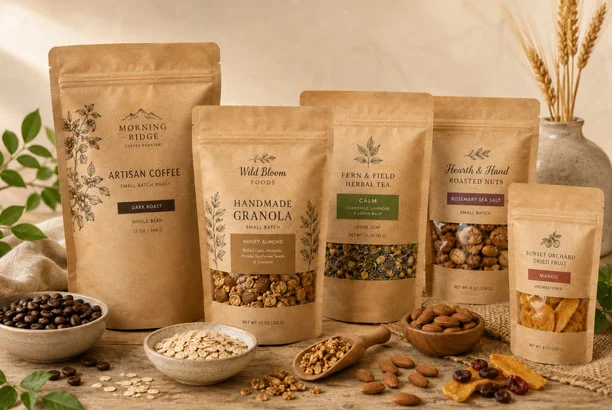
Brown kraft paper pouches offer brands a distinctive combination of natural appearance, flexible construction, and customizable product protection. Their kraft exterior can support premium, artisanal, or sustainability-oriented brand positioning, while functional laminate layers can be selected according to barrier, sealing, mechanical, and filling requirements. However, recyclability, compostability, shelf life, and environmental impact should be assessed from the complete finished structure rather than assumed from the presence of kraft paper alone. Successful implementation depends on selecting the right supplier, defining the appropriate barrier structure, validating filling compatibility, and making accurate environmental claims. At Guoshengli Packaging, our more than 25 years of flexible-packaging manufacturing experience helps procurement teams evaluate these choices for repeat production and changing market needs.
FAQ
1. Can Brown Kraft Paper Pouches Be Recycled?
It depends on the complete pouch structure. A brown kraft paper pouch laminated with PE, PET, metallized film, foil, adhesives, coatings, windows, or closures should not be assumed to be recyclable simply because the outer layer is paper. Fibre recovery, plastic content, adhesive system, pouch accessories, and local collection and recycling infrastructure all affect actual recyclability. Compostable structures are a separate category and should only carry compostability claims when the complete finished pouch meets the relevant certification and disposal requirements.
2. How Do These Pouches Handle Grease-Heavy Products?
Brown kraft paper pouches for grease-heavy products can be designed with inner laminate structures that help resist oil migration and staining of the outer paper layer. Performance depends on the complete material construction rather than the kraft paper alone. For products such as roasted nuts, beef jerky, and pet treats, the pouch should be evaluated for grease resistance, seal performance, and long-term compatibility with the actual product. Where grease-resistant paper treatments are used, the relevant food-contact and chemical-compliance requirements should also be confirmed.
3. What Shelf-Life Extension Can Be Expected?
The achievable shelf life depends on the product's sensitivity to oxygen, moisture, light, aroma loss, and grease, as well as the filling process, residual oxygen, storage conditions, and distribution route. Aluminum foil, metallized films, EVOH-containing structures, and standard PE-based laminates provide different levels of protection. The correct barrier should therefore be selected against the product's target shelf life, and the final shelf life should be validated with the actual product rather than estimated from the pouch material alone.
Partner with a Trusted Brown Kraft Paper Pouches Manufacturer

Guoshengli Packaging specializes in making custom brown kraft paper pouches for brands that need consistent quality, reliable delivery, and appropriate compliance support. Rotogravure printing in up to 11 colours, flexible barrier configurations, multiple pouch formats, and production capacity suitable for both one-time projects and long-term programmes are among the capabilities we provide. We work with brands in North America, Europe, Asia-Pacific, and other markets across food, pet care, coffee, and wellness categories. Our solutions are designed around repeatable production performance, product requirements, and target-market needs.
Email our technical team at sales@guoshengpacking.com to discuss your packaging requirements, request material recommendations, or ask for samples. Our integrated service includes pouch-format review, material selection, printing, laminating, and pouch making, helping simplify the procurement process and improve consistency from sampling through production.
References
-
Robertson, G. L. (2016). Food Packaging: Principles and Practice (3rd ed.). CRC Press.
-
Marsh, K., & Bugusu, B. (2007). Food Packaging—Roles, Materials, and Environmental Issues. Journal of Food Science, 72(3), R39–R55.
-
Yam, K. L. (2009). The Wiley Encyclopedia of Packaging Technology (3rd ed.). John Wiley & Sons.
-
Kirwan, M. J., & Strawbridge, J. W. (2003). Plastics in Food Packaging. In Food Packaging Technology (pp. 174–240). Blackwell Publishing.
-
Selke, S. E., Cutler, J. D., & Hernandez, R. J. (2004). Plastics Packaging: Properties, Processing, Applications, and Regulations (2nd ed.). Hanser Publishers.
-
Emblem, A., & Emblem, H. (2012). Packaging Technology: Fundamentals, Materials and Processes. Woodhead Publishing.