- English
- French
- German
- Portuguese
- Spanish
- Russian
- Japanese
- Korean
- Arabic
- Greek
- German
- Turkish
- Italian
- Danish
- Romanian
- Indonesian
- Czech
- Afrikaans
- Swedish
- Polish
- Basque
- Catalan
- Esperanto
- Hindi
- Lao
- Albanian
- Amharic
- Armenian
- Azerbaijani
- Belarusian
- Bengali
- Bosnian
- Bulgarian
- Cebuano
- Chichewa
- Corsican
- Croatian
- Dutch
- Estonian
- Filipino
- Finnish
- Frisian
- Galician
- Georgian
- Gujarati
- Haitian
- Hausa
- Hawaiian
- Hebrew
- Hmong
- Hungarian
- Icelandic
- Igbo
- Javanese
- Kannada
- Kazakh
- Khmer
- Kurdish
- Kyrgyz
- Latin
- Latvian
- Lithuanian
- Luxembou..
- Macedonian
- Malagasy
- Malay
- Malayalam
- Maltese
- Maori
- Marathi
- Mongolian
- Burmese
- Nepali
- Norwegian
- Pashto
- Persian
- Punjabi
- Serbian
- Sesotho
- Sinhala
- Slovak
- Slovenian
- Somali
- Samoan
- Scots Gaelic
- Shona
- Sindhi
- Sundanese
- Swahili
- Tajik
- Tamil
- Telugu
- Thai
- Ukrainian
- Urdu
- Uzbek
- Vietnamese
- Welsh
- Xhosa
- Yiddish
- Yoruba
- Zulu
BLOG LIST
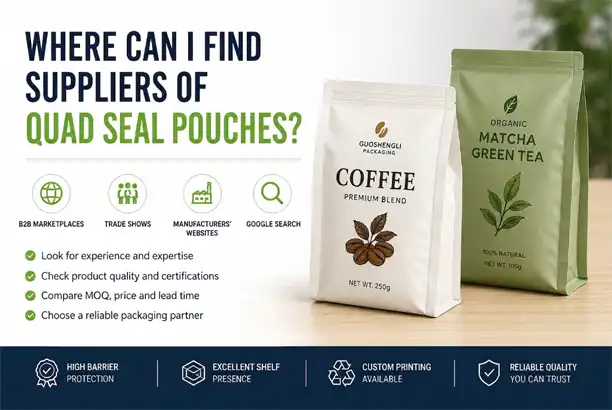
To find Quad Seal Pouches & Bags sellers you can trust, you need to know where to look and what to look for. Most of the time, companies that make goods do business at trade shows, direct plant routes, or business-to-business websites such as Alibaba and ThomasNet. The best sellers have proof that they work hard to make sure their goods are safe for food and are always made the same way, like having certificates from the FDA, BRC, and ISO 9001. Check to see how many of the four-seal pouches you want to buy, how they can be customised, how long the lead time is, and what kind of barrier protection technology they use. Most of the time, direct manufacturers have better prices, more flexible minimum order quantities, and the ability to make solutions that are unique to each customer. Businesses that want solid packaging for a long time should work with them because of this.
Understanding Quad Seal Pouches and Their Market Demand
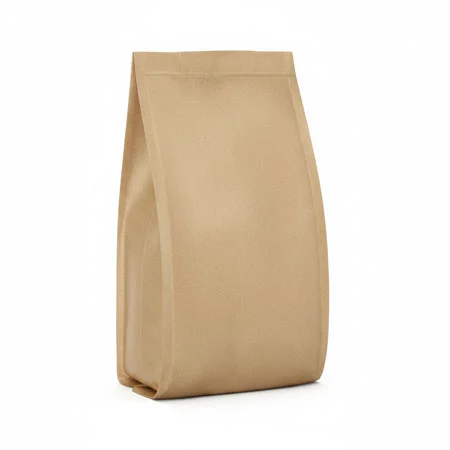
A new way to make flexible packaging is with quad seal pouches. They feature four vertical corner seals and side gussets, the base is formed when the pouch is filled, these pouches are more stable than regular three-side seal or stand-up pouches. These boxes can hold heavy things like flour, coffee, pet food, and grains without breaking because the stronger corner seals spread the weight out evenly.
These bags stand out because they are round and have flat sides. They stay straight on store shelves and give you more room to print your logo. It's easier to see the product and it looks more professional with this design. Both of these factors are very important in competitive markets where the way a store looks directly affects what people buy.
Materials and Customization Options
Multiple layers of materials, such as PET, PE, metal foil, and sometimes kraft paper, are used in quad seal packaging these days. The different layers allow certain amounts of air and water vapor to pass through, which keeps food fresh for as long as it's on the shelf. Oxygen, moisture, and light can't get through high-barrier films, so things last longer.
You can customise more than just the materials. Businesses can add many things, such as zippers that can be closed again, tear notches, one-way degassing valves for coffee use, and even ergonomic handles for bigger sizes. In terms of width, you can pick from 120 to 180 microns. Depending on how they are built, they can hold up to 20 kg of weight.
Why B2B Buyers Prefer Quad Seal Designs
The four-corner seal design gives these pouches great burst strength, which makes them perfect for automatic filling lines and rough handling in the supply chain. Their "dead-fold" design keeps the shape of the bag even as the products get smaller, so the shape is the same from the first use to the last. This dependability cuts down on stopping the filling line and rejects, which are common problems in high-volume production settings.
This style is being used more and more in the food packing, pet nutrition, health products, and beverage markets because it looks good and works well. The design works with strategies for buying in bulk and helps brands stand out by giving you flexible printing and finishing choices.
Key Criteria to Consider When Choosing Quad Seal Pouch Suppliers
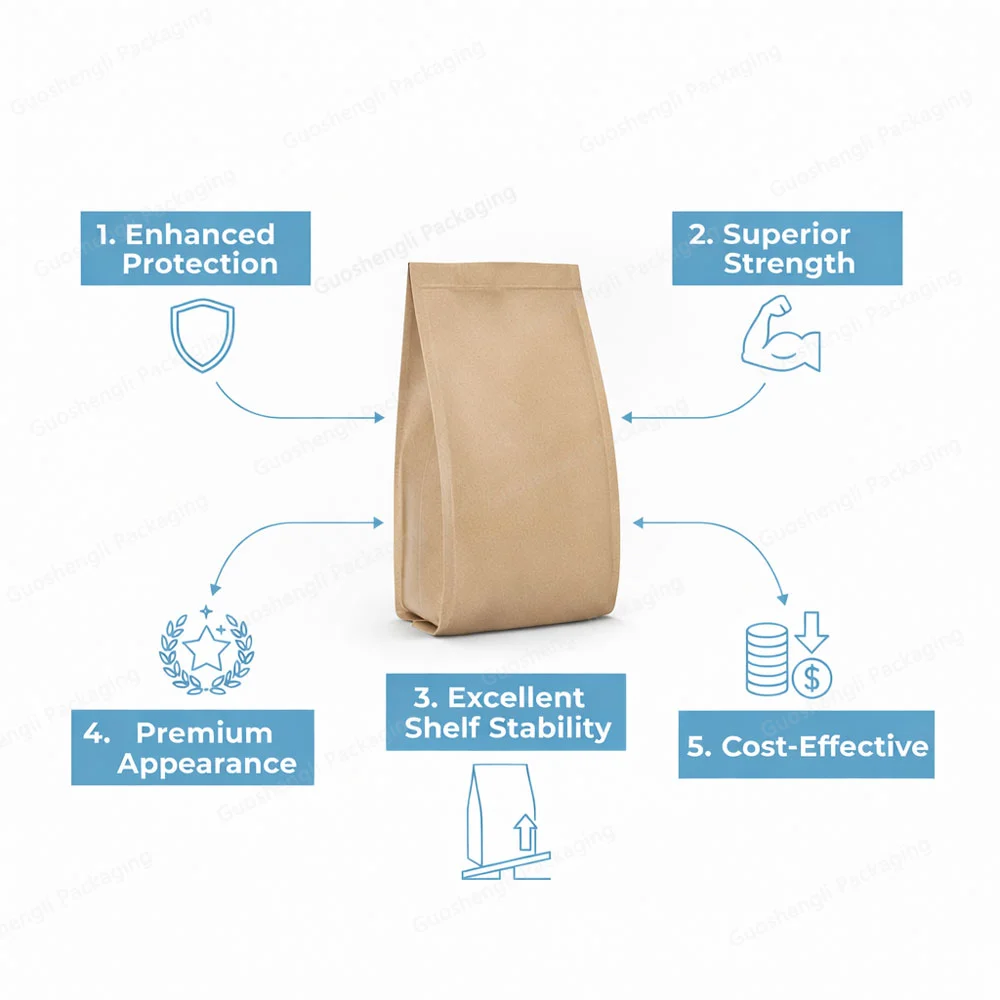
Comparing unit prices isn't the only way to find the right supplier. Quality badges are basic signs of how well a product meets standards and follows the rules for Quad Seal Pouches & Bags.
Certifications and Compliance Standards
When materials get FDA approval, it means they meet the safety standards for food contact in the US market. BRC approval shows that a company follows world standards for food safety, which is especially important for companies that sell their products in Europe. ISO 9001 certification means that the company has strong quality management systems that make sure that the same high-quality products are made for all of its customers. SGS test results confirm the barrier performance, puncture strength, and material makeup by a third party.
With these certificates, brands don't have to worry about expensive product returns or fines from the government. Suppliers who don't have the right paperwork may offer lower prices at first, but they will end up causing big problems later on.
Customization Capabilities and Production Flexibility
A good provider should offer a range of printing methods, such as rotogravure printing for large quantities with up to 11-color reproduction and digital printing for smaller quantities or fast development. Finishes on the surface, like smooth, shiny, soft-touch, or metallic, affect both how something looks and how it feels to the touch.
Different providers have very different minimum order amounts. Some need at least 50,000 units, but manufacturers who are flexible can make smaller batches, which helps businesses test new products or keep an eye on their inventory. Rotogravure printing usually takes 15 to 20 days to make, while digital printing only takes 7 to 10 days, though faster services may be available.
Pricing Structures and Value Analysis
Price per unit goes down as volume goes up, but to figure out overall cost, you have to look at the quality of the materials, the accuracy of the manufacturing, and the number of defects. It's possible that cheaper choices use thinner films or worse ways to seal, which could cause the package to fail during shipping or filling. Problems like these have secret costs that show up in the form of lost products, angry customers, and damaged brands.
Direct factory price gets rid of markups for distributors, giving businesses that want to build long-term ties with suppliers a better deal. Clear pricing that breaks down the prices of materials, printing, and tools helps buyers make smart choices that fit their budgets and meet their quality standards.
Comparison of Top Quad Seal Pouch Supplier Types for B2B Purchasers
Businesses have different needs that are met by different types of suppliers. Being aware of these differences makes it easier to match buying tactics with the needs of operations.
Global Brands Versus Specialized Manufacturers
Global package companies that have been around for a long time offer stable quality and huge production capacities, which makes them a good choice for international businesses that need to follow the same rules in many areas. These sellers keep up large delivery networks and provide a wide range of expert help.
Specialised manufacturers focus on making new materials or products for specific uses. Most of the time, they offer more customisation options and faster reaction times for specific needs. They are willing to work with companies on custom formulations and structures, such as Quad Seal Pouches & Bags, which helps companies that are making high-end products or looking for more environmentally friendly ways to package them.
Geographic Sourcing Considerations
Suppliers in the US and Europe usually charge more, but they are closer, which has benefits like faster shipping times, easier communication across fewer time zones, and compliance with regional regulatory frameworks. When handling just-in-time stocking systems or needing to make quick changes to orders, these things matter.
Asian producers, especially those in China, can offer reasonable prices because their supply lines are more established and the cost of labour is lower. Quality varies a lot, so it's important to check with the supplier. Asian makers with a good reputation combine low prices with certifications that meet international standards. This makes them a great choice for businesses that want to save money without losing quality. Companies that have been making things for more than 25 years usually have a good track record in foreign markets.
Direct Manufacturers Versus Distributors
When you buy directly from manufacturers, you avoid the costs of going through middlemen and can work together more closely on specifications. When it comes to technology needs, quality problems, and customisation changes, direct ties make it easier to talk to each other. Manufacturers are also more open about how their products are made and where they get their materials.
Distributors make things easier by combining orders and letting you place smaller ones, but they charge markups that make the total cost more expensive. They work well for companies that need different types of packaging from different suppliers or don't have the means to manage ties with many factories.
Sustainable Packaging Trends
Environmental duty is becoming more and more important in purchasing decisions. When it comes to recycling, mono-material structures made of polyethylene make it easier than mixed-material laminates. Brands that care about the environment like compostable papers made from PLA or PBAT, but they may not have the same protection qualities as standard materials.
Suppliers who offer packages that can be recycled in their entirety or use foreign RTO exhaust gas cleaning technology show that they care about the environment. These features help companies reach their sustainability goals and meet customer demands for better options without lowering the safety of their products.
How to Find and Verify Reliable Quad Seal Pouch Suppliers
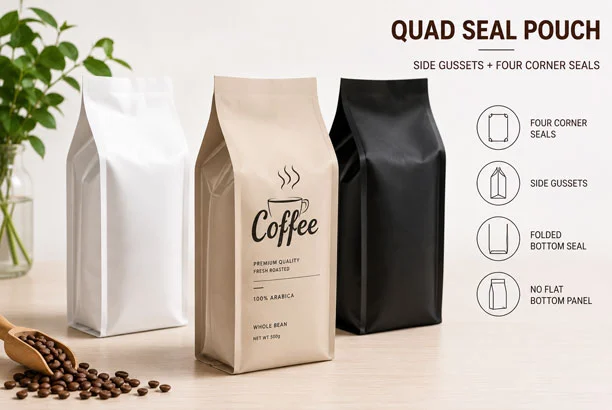
To find reliable partners, effective sourcing combines online research with strict verification steps.
Industry Platforms and Online Marketplaces
Alibaba is still the biggest business-to-business (B2B) site that connects buyers from around the world with Asian producers. Platform filters let you search by type of certification, minimum order quantity, and past transactions. Trade Assurance programs and stickers that say "Verified Supplier" add extra layers of security.
ThomasNet is an online directory that focuses on North American makers and wholesalers. It offers complete company descriptions, product catalogues, and direct contact information. Europages does the same things for European providers. These platforms make initial research easier by collecting information from suppliers and letting you compare them side-by-side.
Trade shows in the industry, such as Pack Expo, Anuga FoodTec, and PACK EXPO International, let you meet sellers in person, look at samples, and talk in depth about technical needs. Many long-lasting relationships start at these events where people meet.
Evaluating Supplier Credentials
In addition to certificates, you can figure out how much can be made by touring the building or looking at thorough photos. These days, modern buildings should have many printing machines, sealing lines, and converting machines. It's clear that a company with seven printing machines, six laminating units, and 49 converting machines can handle big orders and meet tight deadlines.
Sample evaluation is very important. Ask for samples that meet the requirements for your product, and then do fill tests, drop tests, and shelf-life simulations. Check the quality of the writing, the shape correctness, the strength of the seal, and the integrity of the barrier. Samples tell you more about how well a product can be made than any advertising material could.
Case studies and examples from clients can help you figure out how reliable a seller is. Talk to current customers to find out how often deliveries are made on time, how quickly they are responded to, how problems are solved, and how consistent the service is for repeat orders. Partnerships with names in Europe, the US, and Australia that can be proven show that the company has exported before.
Building Long-Term Supplier Relationships
When there are problems in the supply chain, transactional ways of buying things leave people open to harm. Stability is created by strategic relationships based on open communication and shared gain. Suppliers can better plan their capacity when they share production forecasts. Giving feedback on quality problems at the right time allows for ongoing growth. By negotiating outline deals, you can set stable prices and give production slots priority during busy times.
Reliable suppliers become like an extension of your operations team; they'll suggest ways to make things better, let you know when materials aren't available, and meet urgent requests when you need to be flexible. These relationships grow when both people are consistently involved, treat each other fairly, and understand that the success of the other person is good for both of them.
Practical Tips for Procuring Quad Seal Pouches for Your Business
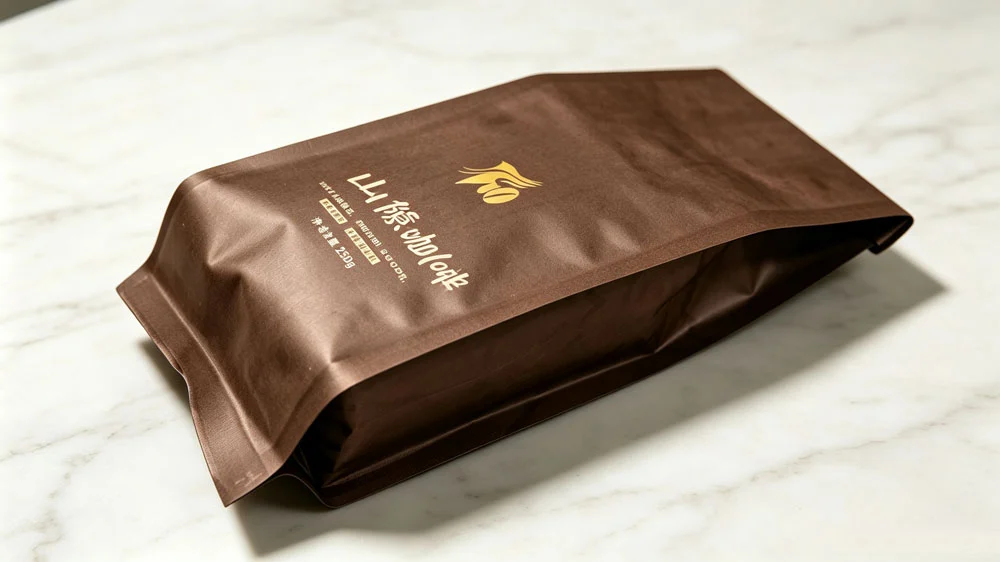
To get the best deals on things, you need to make sure that the package requirements match the features of the product and the way things work with Quad Seal Pouches & Bags.
Matching Features to Product Requirements
One-way degassing valves must be used on coffee packaging to let carbon dioxide out while blocking oxygen from getting in. This keeps the volatile aromas that define quality. Light and water are also kept out by high-barrier aluminium layers. For 5–15 kg bags of pet food, the seals need to be stronger, and the film needs to be thicker so that it can handle rough handling during palletisation and shipping. Anti-static treatments and micro-perforations keep flour and powdered goods from puffing up while they're being shipped.
Knowing how sensitive your product is to external factors will help you choose the right materials. Goods that are sensitive to moisture need low rates of water vapour transfer. Products that are sensitive to oxygen need layers of aluminium foil or metallized films. Puncture-resistant materials are needed for products with sharp edges.
Cost-Efficiency Strategies in Bulk Purchasing
The best way to make money is to find the balance between minimum order quantities, inventory carrying costs, and turnover rates. Ordering more lowers the cost per unit, but it takes up more cash and stock room. The best order size can be found by accurately predicting demand based on past sales and growth projections.
Custom branding makes marketing more effective and may allow for higher prices that increase profits. With high-quality rotogravure printing, even on multiple runs, the colours will look the same, making the brand more recognisable and increasing its value.
Changing the terms of payment has an effect on managing cash flow. A lot of Asian makers will take lines of credit or organised payment plans that work with the way businesses run. This makes it easier on their finances when they are growing.
Supply Chain Management Best Practices
International shipping adds variables that suppliers can't control, like unpredictable changes in port congestion, customs delays, and carrier availability. Adding lead time buffers helps protect against problems. Ordering packing supplies 60 to 90 days ahead of time gives you time in case something goes wrong.
Concentration risk can be reduced by using a variety of suppliers in different areas. Having a primary supplier and a qualified backup option in mind at all times helps keep things running smoothly when problems do happen. This approach was very important during the recent changes in the world supply chain.
Misunderstandings can be avoided by writing down clear quality standards in buy deals. Include standards for acceptable sizes, seal strength, barrier properties, and how the product looks. Set up protocols for incoming inspections that check for compliance before production runs.
For pressing needs, rapid production and transport services can help. Some manufacturers offer air freight options that can deliver in 4 to 5 days, but they charge more. Digital printing lets you make smaller batches more quickly when you need to respond quickly to a market opportunity.
Conclusion
To find reliable Quad Seal Pouches & Bags providers, you need to carefully look at their certifications, production capabilities, and customisation options. Direct relationships with manufacturers that offer clear pricing, flexible minimum orders, and technical support are good for business-to-business buyers. Platforms like Alibaba and ThomasNet make it easier to find things to buy, and samples, references, and facility inspections are used to make sure they are reliable. When making choices about geographic sources, cost benefits are weighed against wait times and regulatory consistency. As brands become more environmentally conscious, sustainable packaging choices have a bigger impact on what they buy. Matching the barrier qualities, valve integration, and structure specs of the bag to the needs of the product ensures that the package works reliably during production and distribution. Long-term partnerships based on open communication and mutual benefit create a stable supply chain that helps businesses grow and keep quality high in tough markets.
FAQ
1. What distinguishes quad seal pouches from flat bottom pouches?
Quad seal bags utilize product weight to form the base, creating a traditional side-gusset appearance with enhanced stability. Flat bottom pouches feature a discrete gusseted base engineered into the structure. Quad seal designs often prove more cost-effective for large-volume fills exceeding several kilograms.
2. Can quad seal pouches accommodate sustainable materials?
Yes, manufacturers can produce them using mono-material recyclable polyethylene or compostable laminates, though barrier properties may vary compared to traditional multi-layer constructions. Discussing specific shelf-life requirements with suppliers ensures sustainable materials meet product protection needs.
3. What reclosable options work with this format?
Integrated press-to-close zippers are commonly applied to the front panel, enabling repeated opening and closing. Some applications use tin-tie closures, particularly for products like coffee where maintaining freshness after opening matters significantly.
Partner With a Trusted Quad Seal Pouch Manufacturer
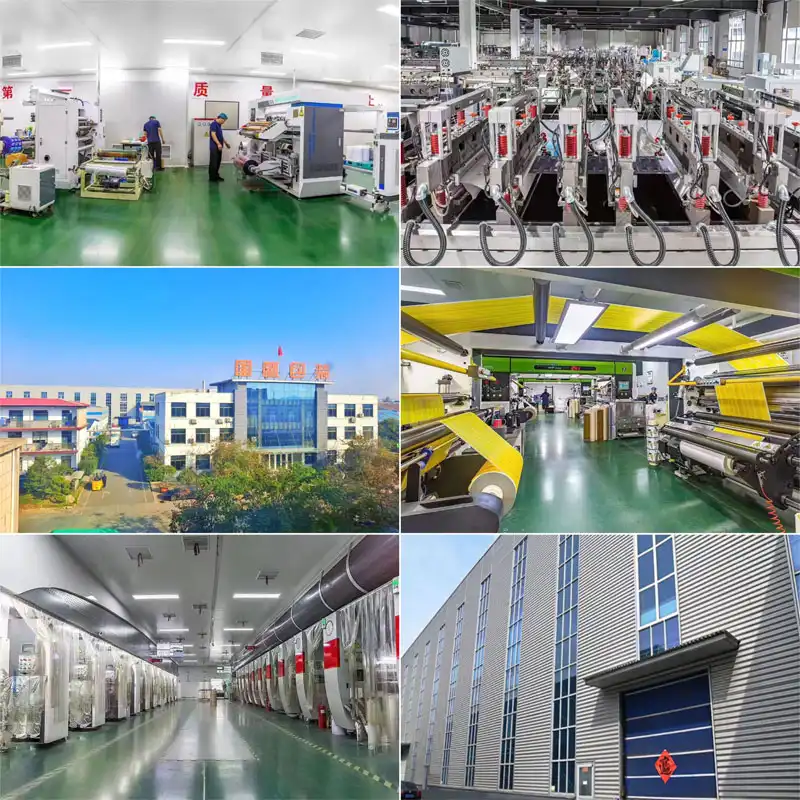
Guoshengli Packaging brings over 25 years of flexible packaging manufacturing expertise to businesses seeking reliable Quad Seal Pouches & Bags solutions. Our factory-direct supply model combines competitive pricing with flexible minimum order quantities, accommodating both emerging brands and established enterprises. We operate 7 printing machines, 6 laminating units, and 49 converting machines, ensuring production capacity meets your timeline requirements reliably. Our ISO 9001, BRC, FDA, and SGS certifications demonstrate commitment to quality standards that protect your brand reputation. Whether you need high-barrier films for extended shelf life, sustainable packaging development, or rapid production services with 7-10 day digital printing lead times, our team provides expert material selection guidance tailored to your specific applications. Contact our team at sales@guoshengpacking.com to discuss your packaging requirements. We offer sample evaluations, customized solutions, and transparent communication that simplifies international procurement.
References
1. Robertson, Gordon L. Food Packaging: Principles and Practice, 3rd Edition. CRC Press, 2013.
2. Marsh, Kenneth and Betty Bugusu. "Food Packaging—Roles, Materials, and Environmental Issues." Journal of Food Science, Volume 72, Issue 3, 2007.
3. Soroka, Walter. Fundamentals of Packaging Technology, 5th Edition. Institute of Packaging Professionals, 2014.
4. Selke, Susan E.M., John D. Culter, and Ruben J. Hernandez. Plastics Packaging: Properties, Processing, Applications, and Regulations, 3rd Edition. Hanser Publications, 2016.
5. Yam, Kit L. The Wiley Encyclopedia of Packaging Technology, 3rd Edition. John Wiley & Sons, 2009.
6. Coles, Richard and Derek McDowell. Encyclopedia of Food Sciences and Nutrition: Packaging of Foods, 2nd Edition. Academic Press, 2003.
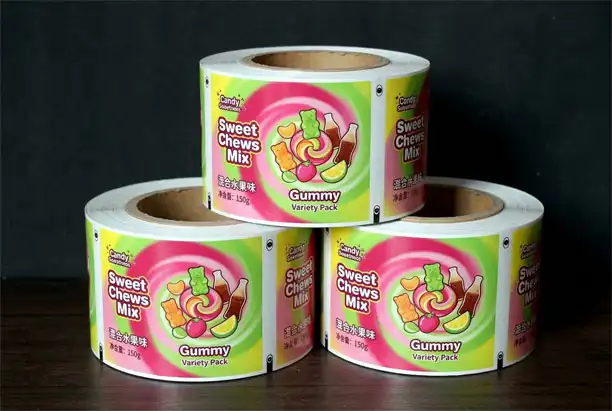
Rollstock packaging is an advanced flexible film option that comes in long rolls and is designed to be used in automatic form-fill-seal processes in a wide range of industries. High barrier film rollstock is made up of several polymer layers, some of which are specialised materials like EVOH and metallised coats. These layers work together to make airtight seals that make it very hard for oxygen, moisture, and contaminants to pass through. This advanced construction keeps the flexibility needed for high-speed production lines while extending the shelf life of products. This makes it a must-have for food manufacturers, pet food manufacturers, and health supplement brands that want reliable protection without the weight and cost of rigid containers.
Understanding Rollstock Packaging and High Barrier Film Rollstock
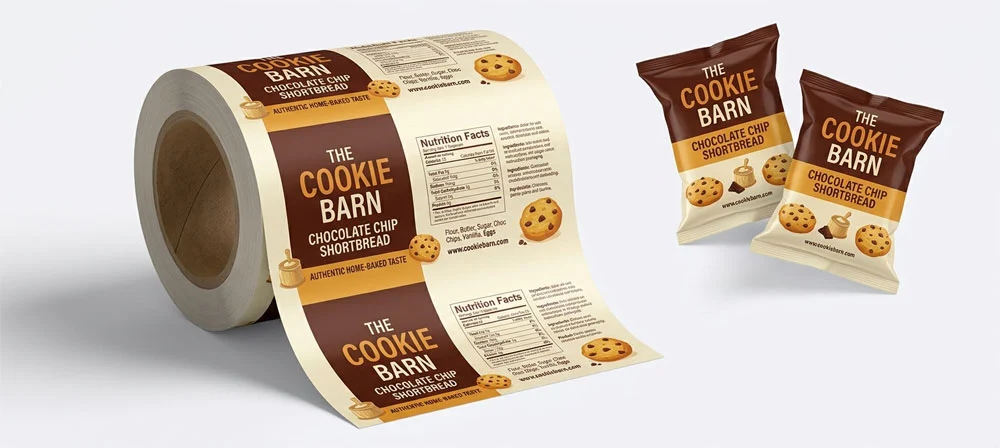
As a company makes more, it needs to switch from manual packaging tasks to automated systems. Rollstock films help with this change by providing continuous material that can be fed directly into vertical or horizontal form-fill-seal machines. This gets rid of the problems that come with handling pre-made bags during large-scale runs.
The way these films are built determines how well they protect. Standard rollstock can hold basic products, but when goods need to stay fresh for a long time, like roasted coffee, dried fruits, or protein powders, the structure of the material needs to actively fight environmental degradation. Because of this need, we come to barrier technology.
The Role of Barrier Technology in Modern Packaging
High barrier film rollstock combines several useful layers into a single structure. The outer layer makes it possible to print and gives it strength, while the inner layers contain things like ethylene vinyl alcohol copolymer, which forms a chemical maze that makes oxygen entry very slow. Laminates made of aluminium foil are an even better way to protect very fragile products, but they make things less clear and make recycling harder.
Adhesive resins hold the structure together between these barrier layers, and sealer layers make sure the heat seal stays strong during the packing process. The accuracy of this layering determines whether a film works the same way over thousands of production cycles or breaks down unexpectedly, stopping the queue and throwing away product.
Why Procurement Teams Prioritize Barrier Performance
B2B buyers look at rollstock films with the goal of lowering risk in mind. A coffee roaster that sends goods overseas can't pay for claims of rancidity six months after the goods have been sent. A company that makes pet treats needs to keep the treats from absorbing water, which can cause mould to grow. If the packaging of a health supplement lets sensitive vitamins break down due to oxygen, the government will be looking closely at that brand.
Because of these operational realities, barrier specifications can't be changed. Oxygen transmission rates, which are given in cubic centimetres per square metre per day, and water vapour transmission rates, which are given in the same way, become contract terms instead of technical notes. The people who work in procurement look for films not only to save money at first, but also to lower the total cost of ownership, which includes things like less product loss, fewer customer complaints, and stable recall specs.
Types and Materials of High Barrier Film Rollstock
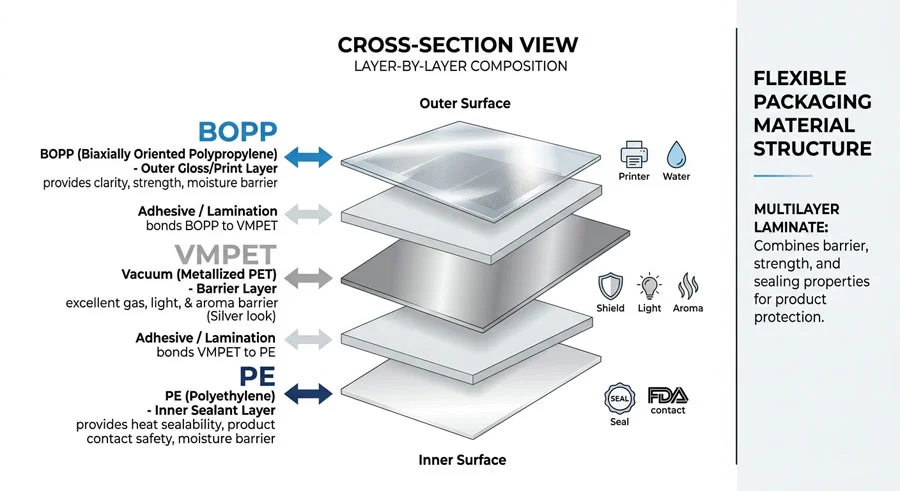
The choice of material for high barrier film rollstock has a direct effect on both how well it protects and how well it works with other things. The packaging industry has come up with a number of different structural approaches, each of which balances the effectiveness of the barrier with cost, mechanical properties, and other factors.
EVOH-Based Multi-Layer Films
EVOH is popular for snack foods, dried fruits, and ground coffee because it has great oxygen protection qualities for a relatively thin film. The material works by packing molecules so closely together that oxygen molecules have a hard time getting through. EVOH is sensitive to moisture, though, and its barrier properties get worse in places with a lot of humidity unless it is covered by layers of hydrophobic materials like polyethylene or polypropylene.
The normal structure puts EVOH between layers of protective polymer, making a sandwich that keeps the barrier strong and works with heat seals. If you make sure the film tension and temps are just right, this setup works well on form-fill-seal machines that can seal more than 100 bags per minute.
Aluminum Foil Laminates
When complete security is needed, like for pharmaceutical-grade supplements or industrial chemical powders, aluminium foil laminates block light and let almost no air through. The continuous metallic layer keeps oxygen, moisture, and aromatic compounds out while still being flexible through gauges that are usually between 7 and 20 microns thick.
The trade-off is that the product can't be seen because it's opaque, and recycling is hard because the metal layer makes it harder to separate trash during processing. Most of the time, brands that want to be seen as high-end are willing to deal with these restrictions in exchange for longer shelf lives.
Metallized Film Structures
A middle-ground approach uses vacuum casting to put a very thin layer of aluminium on top of a polymer base. This metallised film works better as a shield than clear plastics, but it is still somewhat see-through and lighter than foil laminates. The metallic layer is only a few nanometres thick, and it improves the barrier without being as rigid as foil.
Metallized structures are often used in coffee packages to protect against air while also giving brands shiny, eye-catching finishes. The structure can still work with degassing valves, which let carbon dioxide escape but stop oxygen from getting in.
Co-Extruded Multi-Layer Films
Modern extrusion technology can process many polymers simultaneously to generate glue-free forms. A single film is made by mixing polypropylene for stiffness, linear low-density polyethylene for toughness, and EVOH for barrier performance.
Co-extrusion reduces delamination and simplifies supply lines by integrating manufacturing operations. The films' uniform thickness and good visual qualities allow them to be used when package appearance influences a buyer's purchase.
Material combinations may be modified for a product. Fattier foods need structures that don't let oil through, while dry powders need structures that don't let water vapour through. Procurement teams can choose the best materials based on product science rather than general requirements when working with experienced makers.
Comparing High Barrier Film Rollstock with Alternative Solutions
Packaging decisions involve evaluating multiple options against operational priorities. Rollstock films compete with pre-made pouches, rigid containers, and alternative flexible structures, each offering distinct advantages depending on production scale and product characteristics.
Rollstock Versus Pre-Made Pouches
Pre-made pouches simplify initial equipment investment and suit lower-volume operations or frequent product changes. Operators manually or semi-automatically load pouches, fill them, and seal the opening. This approach offers flexibility but introduces higher per-unit costs and slower throughput compared to integrated high barrier film rollstock systems.
Rollstock films integrated with form-fill-seal machinery automate the entire process—forming the pouch, filling it, and sealing it in continuous motion. This automation reduces labor costs and accelerates production rates, making it economical for runs exceeding several thousand units. The capital investment in specialized equipment pays dividends through reduced operational costs and improved consistency.
Barrier Effectiveness Across Packaging Types
When comparing barrier performance, material structure matters more than format. A properly engineered rollstock film with EVOH layers delivers identical oxygen barrier performance to a pre-made pouch constructed from the same material. The difference lies in production efficiency rather than protective capability.
Rigid containers like jars and canisters provide excellent barrier properties and structural protection during shipping. Their weight, storage volume, and higher material costs make them less attractive for lightweight dry goods where flexible packaging provides adequate protection at a fraction of the weight.
Cost Efficiency and Total Ownership Analysis
Initial cost comparisons may mislead buyers. Material efficiency and manufacturing speed considerations may decrease the cost per packed unit of a rollstock film priced more per kilogram. Material consumption is reduced by thinner gauge films with acceptable barrier performance, affecting high-volume manufacturing line profitability.
Lead times are another major expense. Rotogravure-printed custom rollstock films take longer to produce than digitally printed pre-made pouches, affecting inventory planning and promotional campaign timing. Suppliers with flexible minimum order quantities and fast production schedules let brands test new products without stockpiling.
Environmental concerns increasingly affect sourcing. Multi-layer polymer architectures hinder recycling, while mono-material methods improve barrier performance and recyclability. Suppliers working in next-production materials that balance performance and environmental responsibility help brands balance sustainability and product protection.
Procurement Guide: How to Source High Barrier Film Rollstock Effectively
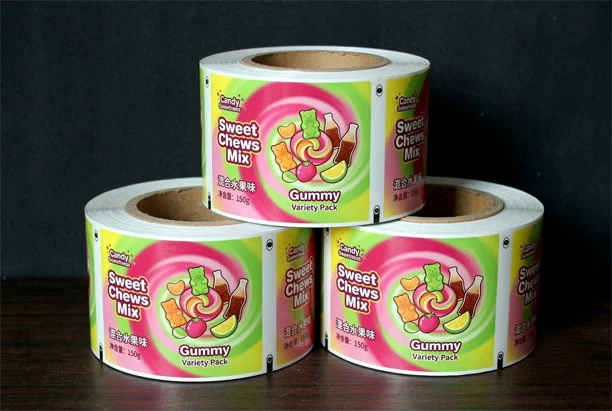
Securing reliable rollstock film supply involves more than comparing price quotes. Successful procurement teams evaluate manufacturing capabilities, quality systems, and supply chain reliability to minimize risks that manifest during production rather than sampling.
Evaluating Supplier Manufacturing Capabilities
Production capacity directly impacts order fulfillment reliability. Manufacturers operating multiple printing lines, laminating machines, and converting equipment can accommodate both large-scale orders and urgent requirements without compromising lead times. A supplier with seven rotogravure printing lines and six laminating units demonstrates the infrastructure to handle concurrent projects while maintaining consistent output quality.
Technical capabilities extend beyond equipment counts. Rotogravure printing systems capable of 11-color reproduction enable vibrant graphics that enhance shelf presence, while precision converting equipment ensures dimensional accuracy critical for automated filling lines. Brands experiencing frequent mis-feeds or seal failures often trace problems to inconsistent film dimensions rather than equipment malfunctions.
Certification Standards and Compliance Requirements
Food-contact packaging faces stringent regulatory oversight across global markets. FDA compliance for U.S. distribution and EU regulations for European sales represent baseline requirements. Suppliers maintaining ISO 9001 quality management systems and BRC food packaging certifications demonstrate systematic approaches to quality control that reduce the risk of non-conforming material reaching production lines.
Third-party testing through organizations like SGS provides independent verification of barrier performance, migration levels, and mechanical properties. Procurement professionals should request certificates of analysis for each production lot, documenting that specifications match purchase orders and regulatory requirements.
Customization Capabilities and Technical Support
It's rare for off-the-shelf pictures to work best in certain situations. Suppliers who offer help with choosing materials, improving barriers, and building structures help brands balance the need for protection with the need to stay within their budgets. This way of working together takes into account things like the amount of oil in the product, how wet it is, and how sensitive it is to air, along with the requirements for the filling tools and the conditions of distribution.
This form of technical teamwork is shown by Guoshengli Packaging. Their team has more than 25 years of experience with flexible packaging and helps customers find the best film widths, thicknesses, and finishes to work with their tools and keep the integrity of their products throughout the supply chain. This knowledge is especially helpful for companies that are entering new markets or changing the way they make old products.
Ordering Logistics and Supply Chain Management
Minimum order quantities affect the cost of holding inventory and the flow of cash for high barrier film rollstock. Suppliers with flexible MOQs let brands test films in production settings without having to buy too much inventory, which could go out of date as the product is changed. Rotogravure production has lead times of 10 to 20 days, while digital printing has lead times of 7 to 10 days. This means that you can plan your orders around marketing efforts and changes in yearly demand.
International shipping makes things more complicated. Even though it costs more than ocean transport, air freight can deliver films in 4 to 5 days, which keeps production going even when forecasts are wrong or demand surges happen out of the blue. Suppliers with a lot of experience make tracking easy and work directly with logistics partners to cut down on delays that affect production schedules.
Emerging Sustainability Considerations
Environmental concerns are becoming more and more important in determining what to buy. Brands that care about the environment look for rollstock options that keep products safe while also making the end-of-life process better. It is easier to recycle mono-material polyethylene structures that have been given better barrier properties through special coatings than traditional multi-polymer laminates, but performance validation is still needed.
Spending money on improving the manufacturing process, like importing technology to treat RTO waste gas, shows that suppliers care about the environment in more ways than just choosing the right materials. These investments match provider operations with customer environmental goals by lowering production pollution while keeping the quality of the output high.
Practical Applications and Future Trends in High Barrier Rollstock Packaging
Understanding how different industries use rollstock films sheds light on how to choose materials and set performance goals. Real-life examples show the trade-offs that brands have to make when they try to balance cost, security, and operating efficiency.
Food Preservation Applications
Coffee roasters employ high-quality barrier packaging technologies. Freshly roasted beans release carbon dioxide and are air-sensitive, so their flavours fade after a few weeks. Coffee rollstock films include degassing valves to release gas pressure while blocking outside oxygen.
The film has metallised layers that block light and EVOH barriers that inhibit oxygen. This protection increases distribution and reduces old stock waste, which boosts roasters' earnings in distant markets.
Dried snack producers face different issues. Oils in nuts, jerky, and fruit crisps become rancid when exposed to air. It tastes bad and makes people grumble. Films with the correct air barriers maintain flavour, and the flexible format makes packaging lighter than hard cases, lowering shipping costs.
Pet Food and Treat Packaging
The pet food business needs wrapping that keeps the food's nutritional value while also being able to handle rough handling during shipping. Treats with meat proteins and fats need both moisture barriers and air barriers to keep the texture from breaking down and slow the breakdown of lipids. For this industry, rollstock films that are strong enough to withstand the physical stresses of warehouse handling and store display are very important.
A lot of pet food brands use stand-up bag forms that start out as rollstock on form-fill-seal equipment. These combine the efficiency of automatic packing with the ease of use for customers of seals that can be resealed. For this format, the pictures need to stay stiff so they can be displayed on shelves and protect against damage for several months.
Health Supplement Powder Packaging
Protein powders, vitamins, and nutritional supplements need to be protected very carefully because the ingredients are sensitive and the government is very careful. Many active ingredients break down quickly in the presence of air or wetness, which lowers their effectiveness and could cause compliance problems if strength claims become false during shelf life.
Films for this market segment usually have aluminium foil laminates or high-EVOH structures that let less than 1 cubic centimetre of oxygen per square metre per day pass through. This great barrier performance keeps ingredients stable over long distribution cycles, which helps brands make specific nutritional claims that must be checked by regulators.
Innovations Addressing Environmental Pressures
Traditional multi-layer films made of several different plastics work very well as barriers, but they make recycling more difficult. It's hard for collection sites to separate bonded materials, so complicated laminates are often sent to the trash instead of being recycled.
New structures made of only one material are trying to solve this problem by making polyethylene films with better barriers by using special treatments or changing the way polymers are made. These improvements keep the useful resistance to air and moisture while letting it work with existing recycling infrastructure for polyethylene. When brands use these materials, they show they care about the environment without lowering the safety of their products. However, full shelf-life testing is still needed before these materials are widely used.
Compostable films made from PLA and PBAT materials are another option, especially for companies that want to reach people who care about the environment. These bio-based plastics break down in industrial waste facilities. However, because they are barrier and heat-sealable, they can only be used on less sensitive goods that need to last less time.
Smart Packaging Integration
Using technology together is a new idea that is being explored in rollstock uses. Printed sensors that change colour when foods get too hot or too fresh are a visual way to tell if they are of good quality without using electronic parts. QR codes and near-field communication tags built into packaging make it possible to track the supply chain and interact with customers through their smartphones.
These new ideas go beyond simple control, but they come with higher costs that need to be justified by better value for customers or better operations. Brands that want to stand out through technology-enhanced packaging find that rollstock forms can handle these features while still working with their current form-fill-seal systems.
Conclusion
Automated rollstock packaging technology protects products and increases efficiency across many industries. Barrier film structures allow for longer shelf life and quality maintenance. The protective performance is based on the choice of material, which can be EVOH layers, metallised coats, or foil laminates. Precise production ensures that high-speed filling equipment always works the same way. When doing business with other businesses, it's important to look at more than just price when choosing suppliers. You should check their abilities, make sure they have the right certifications, and make sure the supply chain is reliable. New innovations in sustainability promise better recycling without sacrificing protection, and this is particularly relevant when specifying high barrier film rollstock, because its advanced multilayer construction must remain compatible with emerging recycling streams. This makes advanced rollstock solutions long-term packaging strategies. When brands know about these technical and practical factors, they can choose films that protect the quality of their products while also lowering the total cost of ownership across production, transportation, and market appearance.
FAQ
1. What distinguishes high barrier film rollstock from standard packaging films?
Standard films provide basic moisture resistance suitable for short shelf-life products or secondary packaging applications. High barrier film rollstock incorporates specialized layers like EVOH or aluminum that dramatically reduce oxygen and moisture transmission rates, extending shelf life from weeks to months. This protection proves essential for products containing oils, sensitive nutrients, or flavors that degrade through oxidation. The investment in barrier technology pays dividends through reduced waste, broader distribution capabilities, and maintained product quality throughout extended supply chains.
2. How can buyers validate barrier performance before committing to large orders?
Reputable manufacturers provide technical data sheets specifying oxygen transmission rates and water vapor transmission rates measured through standardized testing protocols. Requesting certificates of analysis from independent laboratories like SGS offers objective verification. Conducting shelf-life studies using sample films under accelerated aging conditions reveals real-world performance before full-scale production commitments. Testing seal strength, dimensional consistency, and compatibility with filling equipment during trial runs identifies potential issues absent in static samples, ensuring the film performs reliably during actual production rather than just meeting specification sheets.
3. Are sustainable alternatives available that maintain adequate barrier properties?
Mono-material polyethylene structures engineered with specialized coatings or aluminum oxide layers provide enhanced barriers while remaining compatible with existing recycling infrastructure. These films maintain oxygen transmission rates suitable for many dry food and pet treat applications, though extremely sensitive products may still require traditional multi-layer laminates. Compostable films offer another option for brands prioritizing end-of-life biodegradability, though current formulations limit applications to shorter shelf-life products. Working with manufacturers investing in sustainable material development ensures access to emerging technologies balancing environmental responsibility with product protection requirements.
Partner with Guoshengli Packaging for Reliable High Barrier Film Rollstock Solutions
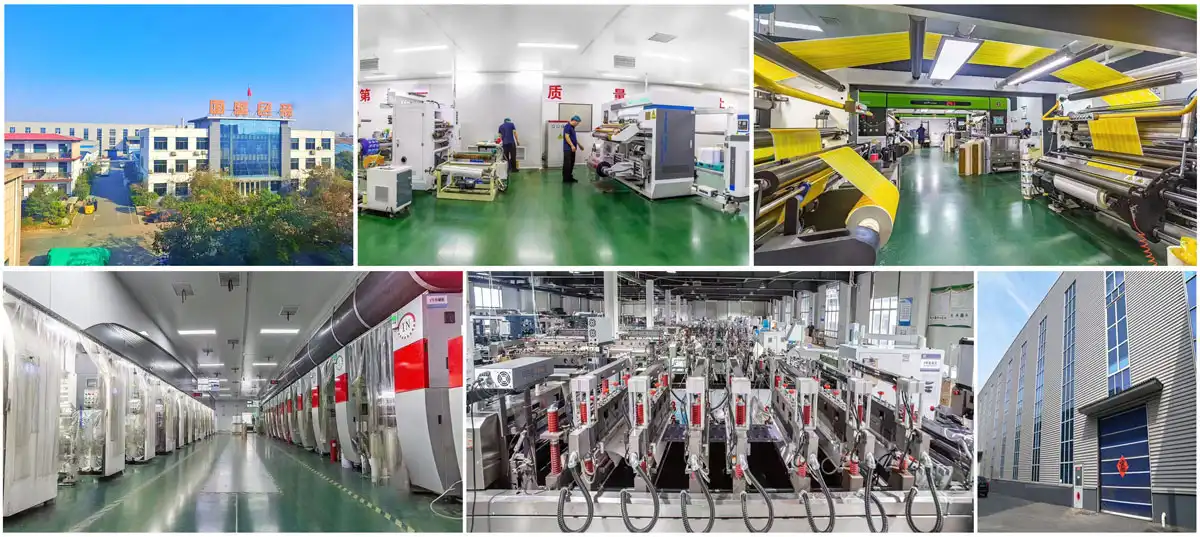
Guoshengli Packaging brings over 25 years of flexible packaging manufacturing experience to brands demanding consistent, export-ready solutions. Our high barrier film rollstock delivers exceptional moisture and oxygen protection through precisely engineered multi-layer structures that run reliably on automated form-fill-seal equipment. With seven printing lines, six laminating machines, and 49 converting units, we handle both large-scale production and urgent orders with lead times of 10 to 15 days for standard runs. Our films meet FDA and EU food-contact regulations, supported by ISO 9001, BRC, and SGS certifications that ensure quality consistency across repeat orders. As an experienced high barrier film rollstock manufacturer, we provide customizable widths, thicknesses, and finishes tailored to your specific product requirements and filling equipment. Contact our team at sales@guoshengpacking.com to discuss material optimization, request samples, and receive detailed technical recommendations that reduce packaging risks while supporting your growth objectives.
References
1. Robertson, Gordon L. "Food Packaging: Principles and Practice, Third Edition." CRC Press, Boca Raton, Florida, 2012.
2. Marsh, Kenneth and Betty Bugusu. "Food Packaging—Roles, Materials, and Environmental Issues." Journal of Food Science, Volume 72, Issue 3, Institute of Food Technologists, Chicago, Illinois, 2007.
3. Coles, Richard, Derek McDowell, and Mark J. Kirwan. "Food Packaging Technology." Blackwell Publishing, Oxford, United Kingdom, 2003.
4. Siracusa, Valentina, Pietro Rocculi, Santina Romani, and Marco Dalla Rosa. "Biodegradable Polymers for Food Packaging: A Review." Trends in Food Science & Technology, Volume 19, Issue 12, Elsevier Ltd., Amsterdam, Netherlands, 2008.
5. Yam, Kit L. "The Wiley Encyclopedia of Packaging Technology, Third Edition." John Wiley & Sons, Hoboken, New Jersey, 2009.
6. Selke, Susan E.M., John D. Culter, and Ruben J. Hernandez. "Plastics Packaging: Properties, Processing, Applications, and Regulations, Third Edition." Hanser Publications, Cincinnati, Ohio, 2016.
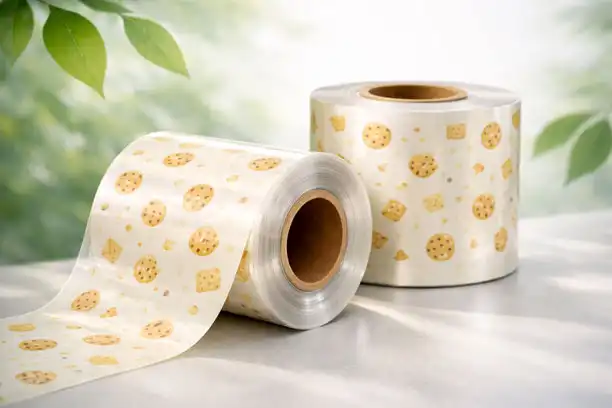
Because it provides proven safety, reliable performance, and compatibility with automatic packing lines, high barrier film rollstock has become the first choice in many businesses. Standard films let air and moisture pass through, but multi-layer barrier structures made with EVOH, metallised layers, and speciality plastics make a cover that keeps the product's integrity and extends its shelf life. This technology solves important problems in packaging for food, medicine, and pet food by stopping oxidative rancidity, moisture-induced degradation, and contamination, all while keeping costs low and production speeds high.
What Is High Barrier Rollstock Film and How Does It Work?
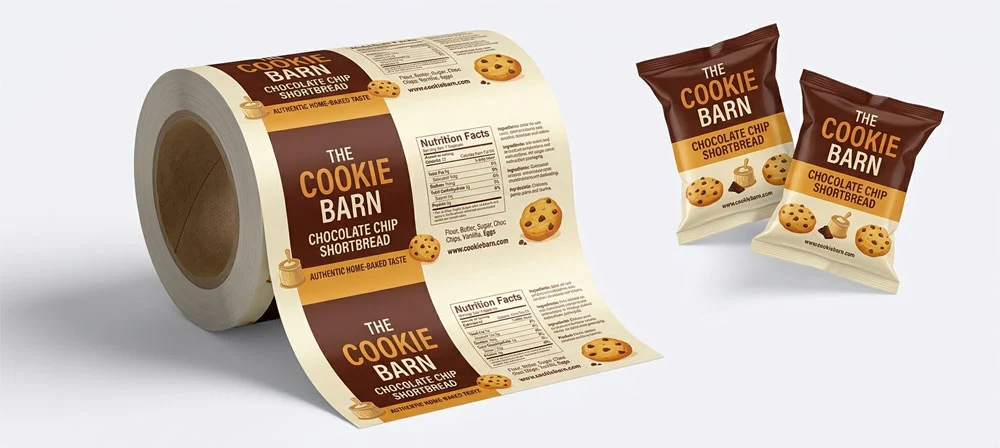
Understanding the Core Technology
The high barrier film rollstock is a complex, multi-layer packaging material that is designed to stop the flow of gases, water vapour, and volatile organic compounds. Each layer does a different job: it helps keep the structure stable, protects against damage, can be sealed with heat, and can be printed on. To get better barrier performance, materials like EVOH (ethylene vinyl alcohol) and PVDC (polyvinylidene chloride) are mixed into layers of polyethylene or polypropylene.
The Science Behind Barrier Protection
Standardised measurements are used to measure how well high barrier film rollstock works. Oxygen Transmission Rate (OTR) and Water Vapour Transmission Rate (WVTR) are controlled tests that measure how permeable something is. Premium barrier films have OTR levels below 1.0 cc/m²/24h and WVTR levels below 1.0 g/m²/24h, which is a lot better than what regular packaging materials can do. When packing powders that don't like water or coffee that doesn't like air, or things that need to stay stable on the shelf for a long time, this level of accuracy is important.
Layer Synergy and Performance Optimization
Engineers can balance different needs with multi-layer building, such as barrier performance, material strength, and processing compatibility. A normal structure might have an outer polyester layer to improve print quality, an EVOH core to keep air out, and inner sealant layers that are best for form-fill-seal machines. This collaboration makes packaging that keeps goods safe all along the supply chain, from the factory floor to the store shelf.
Benefits and Applications of High Barrier Film Rollstock
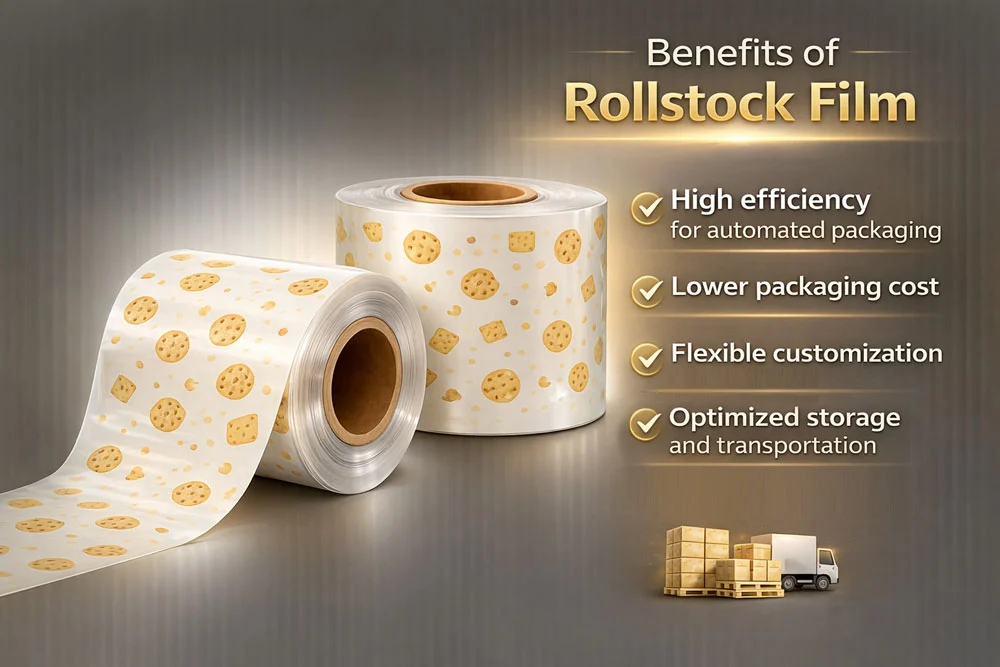
Learning about the real benefits of improved barrier films helps buying teams choose the right materials. These benefits go beyond basic safety and include making operations more efficient, cutting down on trash, and making the market more competitive.
Extending Shelf Life and Reducing Waste
Products that are packed in high barrier film rollstock stay fresh for a lot longer than products that are packed in regular films. Coffee roasters say that the flavour lasts for weeks longer than with normal packaging. Manufacturers of pet food have noticed that lipid-rich formulations have less oxidative rancidity. These changes directly lead to fewer returns, fewer complaints from customers, and a better image for the company.
Compatibility with Automated Packaging Lines
These days, companies that package things need materials that can be used safely with fast form-fill-seal machines. Specific coefficients of friction (COF) values are built into multi-layer barrier films to make sure they feed smoothly, print correctly, and form a consistent seal. This flexibility keeps production plans and cuts down on line stops and refused packages.
Versatile Applications Across Industries
The adaptability of barrier rollstock films serves diverse sectors with specific requirements:
- Food Packaging: Snack foods, dried fruits, coffee, tea, nuts, and confectionery benefit from moisture and oxygen barriers that maintain crispness, aroma, and nutritional value.
- Pet Food and Treats: High-fat content products require superior oxygen barriers to prevent rancidity while maintaining palatability throughout shelf life.
- Health and Wellness Products: Protein powders, dietary supplements, and functional foods demand moisture control to prevent clumping and preserve active ingredients.
- Pharmaceutical Applications: Moisture-sensitive diagnostic kits and active pharmaceutical ingredients rely on barrier films to maintain sterile integrity and chemical stability.
These applications demonstrate measurable ROI through reduced spoilage rates, extended distribution windows, and decreased reliance on chemical preservatives.
Comparing High Barrier Rollstock Films with Alternative Packaging Solutions
Performance Versus Flexibility Trade-offs
When people are looking at different types of packaging, they often compare barrier films to rigid containers and aluminium foil alternatives. Aluminium foils are great for protecting against damage, but they aren't flexible enough for automatic form-fill-seal processes. High barrier film rollstock provides similar protection but has important benefits: it's lighter, which lowers shipping costs, comes in a variety of formats to fit different package shapes, and is easier to recycle, which helps meet sustainability goals.
Multi-Layer Versus Mono-Layer Film Considerations
Standard one-layer sheets can't be used to protect private products because they're not strong enough. Specialised plastics are used in multi-layer designs to provide specific security. Which of these options to use relies on how sensitive the product is, how long it is expected to last, and how it will be distributed. Engineered multi-layer shields are very helpful for protecting things that need to be kept safe for a long time in environments that change a lot.
Cost-Performance Analysis
Even though premium barrier films cost more to make than standard ones, a total cost analysis shows that they save a lot of money. Less product waste, longer shelf life that lets more products be sold, and fewer customer returns more than cover the original costs of materials. More and more, procurement teams are realising that barrier success has a direct effect on the bottom line by cutting down on waste and opening up new markets.
Procurement Guide: How to Choose and Where to Buy High Barrier Film Rollstock
Defining Technical Specifications
Creating clear specifications is the first step to a successful procurement. Important factors include OTR and WVTR needs based on how sensitive the product is, mechanical qualities that match the capabilities of the packing tools, and size requirements that match the form of the box. If hot-fill processes or retort sterilisation are used, the thermal properties must be able to handle them. Making these requirements clearer keeps films from not meeting the needs of an application, which can be very expensive.
Evaluating Supplier Credentials
There are more than just price considerations to make when choosing the right high barrier film rollstock supplier. Quality management standards like ISO 9001 and BRC (BRCGS Global Standard Packaging Materials) show that quality control is done in a planned way. FDA and EU food contact compliance paperwork makes sure that the product is safe for use. Third-party testing reports from SGS or similar groups provide independent confirmation of claims about how well barriers work.
We at Guoshengli Packaging keep all the important certifications up to date and offer full technical data. Because we've been making things for 25 years, we know not only how to make films but also how materials work during the whole packing process.
Understanding Ordering Parameters
Different providers have very different minimum order amounts, wait times, and price systems. Digital printing lets you make smaller batches with wait times of 7–10 days, which is good for new products or special products. Rotogravure printing gives you more consistent colours for larger orders, and the production cycle lasts between 15 and 20 days. Knowing these parameters helps you make better plans and keep track of your inventory.
Prioritizing Sample Testing and Communication
Before placing an order for mass production, ask to see models that have been tried on real filling tools in real production settings. Costly line compatibility problems can be avoided with this validation. Set up clear lines of contact with technical support teams that know about both the science of materials and how to use them in real life. Suppliers who offer design help and advice on how to optimise barriers add a lot of value on top of providing materials.
Future Trends and Innovations in High Barrier Rollstock Film
Sustainable Barrier Technologies
Being responsible to the environment drives progress in the packaging business. Advanced PE (polyethylene) barrier designs with vapor-deposited layers (AlOx or SiOx) provide excellent barrier performance while still being recyclable. These structures meet the goals of the circular economy without lowering the safety of products, which was hard for older technologies to do.
Biodegradable and Compostable Options
Barrier films made from PLA (polylactic acid) and PBAT (polybutylene adipate terephthalate) can be composted, which is useful in situations where getting rid of old materials is hard. At the moment, these materials don't work as well as traditional barriers, but this gap is getting smaller as more is developed. Procurement plans should keep an eye on these changes while keeping performance goals reasonable.
Advanced Coating Technologies
Nanocoating uses are a new technology that improves protective qualities without making the material much thicker. These coats can be put on environmentally friendly bases, making mixed solutions that meet both environmental goals and safety needs. Such innovations help brands keep their promises to be environmentally friendly while still making sure their products meet quality standards.
Regulatory and Market Drivers
Advanced barrier technologies are being used more and more because of stricter rules about food safety and the need for longer shelf lives in pharmaceutical applications. Global supply chains need packaging that stays intact in a range of weather conditions. Because of these market forces, designed barrier options are more popular than regular materials. This has made high barrier film rollstock the standard for tough jobs.
Conclusion
The packaging industry is led by high barrier film rollstock because it solves basic problems that affect the quality of the product, the efficiency of operations, and the success of the market. Multi-layer structures made with precise barrier materials have measurable benefits, such as longer shelf life, less waste, compatibility with automated packaging lines, and the ability to be used in a wide range of situations. As technology keeps improving, it moves toward long-lasting answers that keep working well and also care for the environment. For buying to go well, clear specifications must be made, suppliers must be carefully evaluated, and expert teams must continue to work together. When companies put barrier performance at the top of their packaging plans, they lower their business risk, reach more customers, and improve their brand's image by making sure their products are always of high quality.
FAQ
1. What distinguishes high barrier film rollstock from standard packaging films?
High barrier film rollstock incorporates specialized polymer layers such as EVOH or metallized coatings that dramatically reduce gas and moisture permeability. Standard films typically achieve OTR levels of 50-100 cc/m²/24h, while high barrier structures deliver performance below 1.0 cc/m²/24h—representing a 50-100x improvement. This difference directly impacts shelf life for sensitive products.
2. Can high barrier films support sustainability goals?
Modern barrier films increasingly incorporate recyclable structures and sustainable materials. Mono-material PE constructions with vapor-deposited coatings maintain recyclability while delivering barrier protection. Some applications can utilize biodegradable PLA-based films, though performance validation remains critical. At Guoshengli Packaging, we offer 100% recyclable options engineered to balance environmental responsibility with product protection requirements.
3. How do I verify barrier performance claims?
Request third-party testing documentation showing OTR and WVTR measurements under standardized conditions (ASTM or ISO testing protocols). Conduct practical validation by packaging actual products and monitoring quality parameters throughout expected shelf life. Reputable suppliers provide comprehensive technical data sheets and support testing initiatives to confirm performance in real-world applications.
Partner with a Trusted High Barrier Film Rollstock Manufacturer
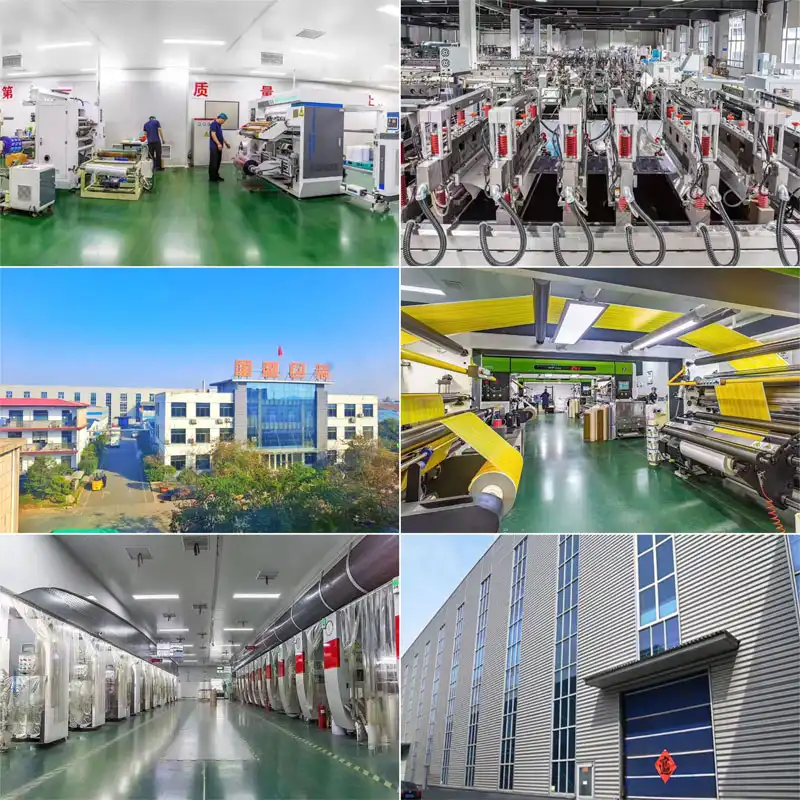
Guoshengli Packaging delivers engineered barrier solutions backed by 25 years of flexible packaging expertise. Our multi-layer film structures achieve OTR below 1.0 cc/m²/24h while maintaining compatibility with form-fill-seal equipment across food, pet food, and health supplement applications. With ISO 9001, BRC, FDA, and EU compliance certifications, we provide quality assurance that reduces procurement risk. Our production capacity—7 printing lines, 6 laminating machines, and 49 converting units—enables flexible order quantities with lead times of 10-20 days depending on printing method. We offer customizable widths, thicknesses, and finishes tailored to your specific requirements, plus expedited air delivery in 4-5 days when timing demands rapid fulfillment. Contact our team at sales@guoshengpacking.com to discuss your barrier film requirements, request samples, and receive detailed technical recommendations from a high barrier film rollstock supplier committed to your long-term success.
References
1. Robertson, Gordon L. "Food Packaging: Principles and Practice." CRC Press, 2016.
2. Marsh, Kenneth and Betty Bugusu. "Food Packaging—Roles, Materials, and Environmental Issues." Journal of Food Science, 2007.
3. Siracusa, Valentina et al. "Biodegradable Polymers for Food Packaging: A Review." Trends in Food Science & Technology, 2008.
4. Brody, Aaron L. "Packaging Technology for Modified Atmosphere and Vacuum Packaging of Foods." Food Technology, 2005.
5. Coles, Richard et al. "Food Packaging Technology." Blackwell Publishing, 2003.
6. Yam, Kit L. "The Wiley Encyclopedia of Packaging Technology." John Wiley & Sons, 2009.
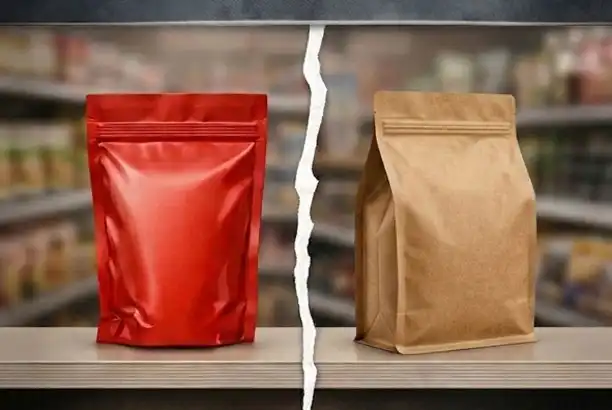
When it comes to flexible packaging, the choice between stand up pouches and block bottom bags makes a big difference in how the goods look, how stable they are on the shelf, and how well the supply chain works as a whole. Stand-up bags have a stronger bottom flap that lets them stand straight up. This makes them simple for customers to see and use. The straight, flat sides of block bottom bags make them great for heavy things that need a lot of room and need to be supported. Picking between the two forms is important for presenting the brand and running the business well, as they are used for different things in food boxes, pet products, and speciality goods.
Understanding Stand-Up Pouches and Block Bottom Bags
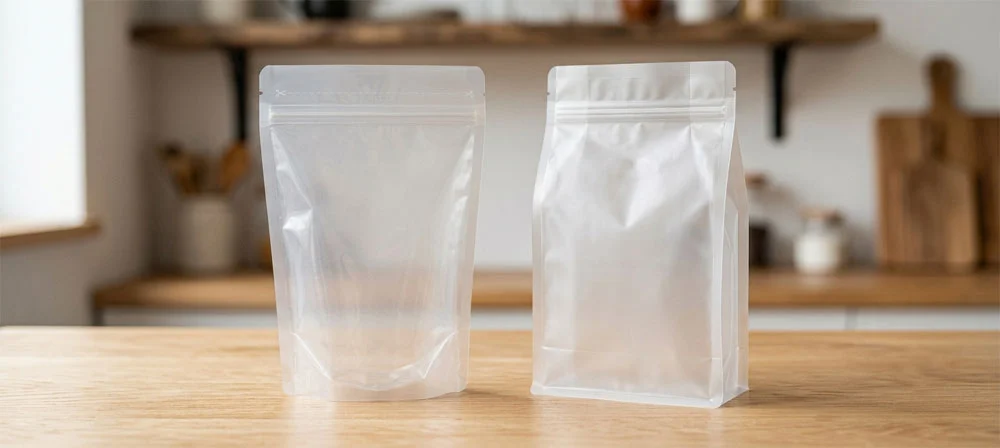
The way brands show off and protect their goods has changed a lot because of flexible packaging. When buying, workers know the basic features of each format, they can make choices that are in line with product needs and market standards.
The Structure of Stand-Up Pouches
The bottom flap of a stand-up bag opens up when it's full, giving you a stable place to stand. These bags are usually made from polyethylene (PE), polyester (PET), and new barrier films like VMPET (Vacuum Metallised Polyester). There are three ways to set up the gusset: with a round bottom, a K-seal, or a pillow bottom. Each is better for the weight and filling of the product in its own way. Extra features like tear grooves, spout fitments, and zippers that can be closed again and again make it easier for people to use and keep the product fresh. The stacked design can be changed to offer different levels of protection against air, light, and moisture. This helps fragile products stay fresh on the shelf for longer.
Block Bottom Bag Design Characteristics
Block bottom bags, which are also called flat bottom pouches or box pouches, have a unique squared base that stays flat when the package is standing up. This change in structure makes it look like a box with four vertical sides, which gives you the most space to put your logo. Multilayer films that are thicker and stronger are usually used in this type of construction to hold up heavier fill weights and keep the shape. The flat base spreads the weight of the product out evenly, which is better for support during shipping and store display and less stressful on the seals. This size works great for tasks that need a lot of space while still looking great on the shelf.
Material Composition and Barrier Technologies
Both types of packaging use advanced lamination techniques that combine different layers of film to meet certain performance standards. Some common structures are PET/PE, PET/VMPET/PE, and PET/aluminum foil/PE. VMPET layers produce great barrier protection against moisture, oxygen, and light damage—all of which are important for keeping the quality of snacks, coffee, and dried foods. Barriers made of aluminium foil work better for goods that need to last longer on the shelf. More and more sustainable alternatives are becoming available, like films that can be composted or materials that can be recycled. These options protect products without sacrificing the environment.
Key Differences Between Stand-Up Pouches and Block Bottom Bags
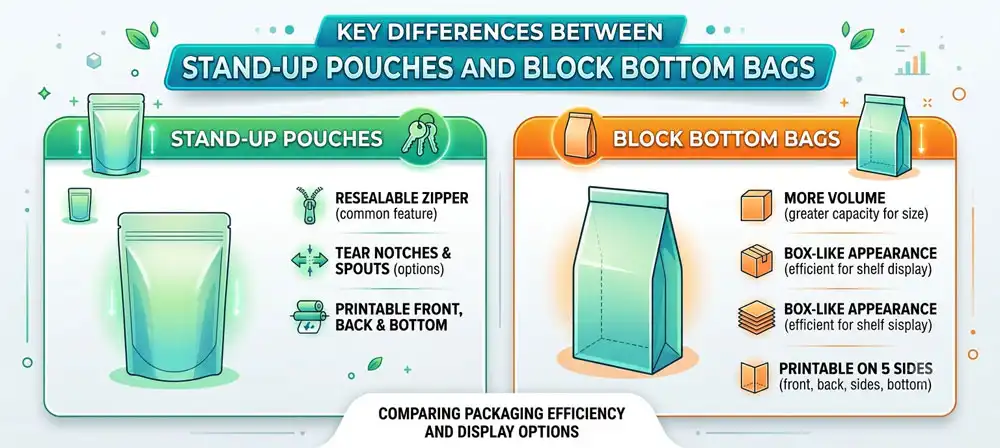
By pointing out the structural, functional, and cost differences between these types of packaging, procurement teams can make choices that meet operational needs and brand goals.
Structural Stability and Sealing Performance
The main difference in structure is the base configuration and how it impacts the stability of the package. Stand-up pouches' ability to stand up is based on seam growth. Because they have a flat bottom, block bottom bags are naturally more stable, which makes them better for heavier products or products that need to be filled to the brim. The four-panel design spreads the pressure inside more evenly, which lowers the risk of the seal breaking while it's being moved or handled. Technologies for sealing, like heat sealing and ultrasonic welding, make sure that the quality of the closure stays the same from one production run to the next.
Barrier Performance and Product Protection
The efficiency of the barrier rests on the type of material used and the quality of the coating, not just the shape of the box. The VMPET construction of stand-up pouches makes them great for protecting dry goods like nuts, dried fruits, and coffee beans. The metallized layer stops light and makes a strong shield against air, which keeps the flavours and nutrients. Block bottom bags usually use stronger gauge films, which make them less likely to tear when filled with products that have sharp edges or odd shapes. Both formats can have extra features added to them without affecting the barrier's integrity. For example, coffee packaging can have one-way degassing valves added, and products can be seen through clear windows.
Sustainability Considerations and Environmental Impact
Environmental duty is affecting packaging choices more and more. More and more people are using recyclable stand-up pouches made of a single material, PE. However, they might not be as good at blocking things out as multilayer options.The total environmental impact includes where the raw materials come from, how much energy is used in production, how efficient the movement is, and how the product is thrown away at the end of its useful life. When they are shipped, lighter stand-up bags usually produce less carbon dioxide than heavy hard packing options.
Cost Factors and Minimum Order Requirements
Prices depend on the type of material, how complicated the printing is, the features, and the number of orders. Stand-up bags usually have lower prices for modest numbers. Depending on the customisation needs, the minimum order quantity is usually between 10,000 and 50,000 pieces. Digital printing technologies now allow for shorter runs with lead times as short as seven days, which makes it easier to accommodate new products and seasonal products. Because they need more complicated conversion steps, block bottom bags usually have higher unit costs and higher MOQ requirements. Rotogravure printing has better colour reproduction and accuracy, but the cylinder needs to be prepared first, which raises setup costs but lowers unit prices as more are printed. Knowing about these economic factors helps people who work in procurement balance the need for quality with the need to stay within budget.
Application-Specific Insights: Which Packaging Fits Your Product?
To choose the best package style, you need to look at the features of the product, the people you want to sell it to, and how your business works to make sure it fits with your goals.
Food and Beverage Applications
Because they are flexible and easy for people to use, stand up pouches are the most popular type of food packaging. Coffee roasters like bags with degassing valves because they let carbon dioxide out while keeping air out, so the coffee stays fresh for months. Pouch makers for snacks use buttons and cuts that make them easy to tear, which makes them more convenient for eating on the go. VMPET construction keeps out moisture, which is good for dried fruits, nuts, and granola. Zip closures let you control how much you eat. Block-bottom bags are used for speciality products like high-end tea blends or artisan flour products, where the box-like shape shows that the product is of high quality. The bigger printed area lets you tell more thorough stories about products and show nutritional information.
Pet Food and Treat Packaging
Flexible packaging is becoming more popular among companies that make pet products because it is more useful than rigid containers. Stand-up pouches are great for keeping dry pet food and treats safe because they keep moisture out, which lowers the quality of the food. The tall shape makes it easy to pour and store in cupboards or dining areas. Brands of pet treats use clear screens in the boxes to show off how the treats look, which boosts customer trust. Block bottom bags can hold more, which makes them good for selling pet food in bulk, especially in the premium segment where the quality of the packaging shows how much the product is worth. Both formats can print in high definition, which does a good job of showing off the personality of the brand and the benefits of the product.
Health and Wellness Product Packaging
The vitamin and health industry needs packaging that keeps products' strength and shows what the brand stands for. Protein powder companies use stand-up bags with zippers that can be closed again and again. This lets customers access the contents more than once without affecting how fresh they are. The barrier properties keep out oxygen and moisture, which can break down active ingredients. Vitamin and supplement companies like the tamper-evident features that come with pouch designs because they make sure that the products are safe from the time they are made until they are sold to customers. Shipping costs for e-commerce distribution are lower with flexible packaging because it is light. This is an important thing to think about as direct-to-consumer sales grow.
Industrial and Specialty Product Uses
In addition to food, bendable bags are used in many other industries. Pouch packaging is small and effective, and it works well for cosmetic samples, medicine parts, and promotional materials. Custom forms and sizes can be made to fit different product specs without having to make expensive changes to the tools. Adding unique features like hang holes, tear cuts, or multi-chamber designs makes the product more useful in more situations. Multilayer films' ability to resist punctures and act as barriers is used in industrial component packing to keep fragile parts safe while they are being shipped and stored.
How to Choose Between Stand-Up Pouches and Block Bottom Bags: A Decision Support Guide
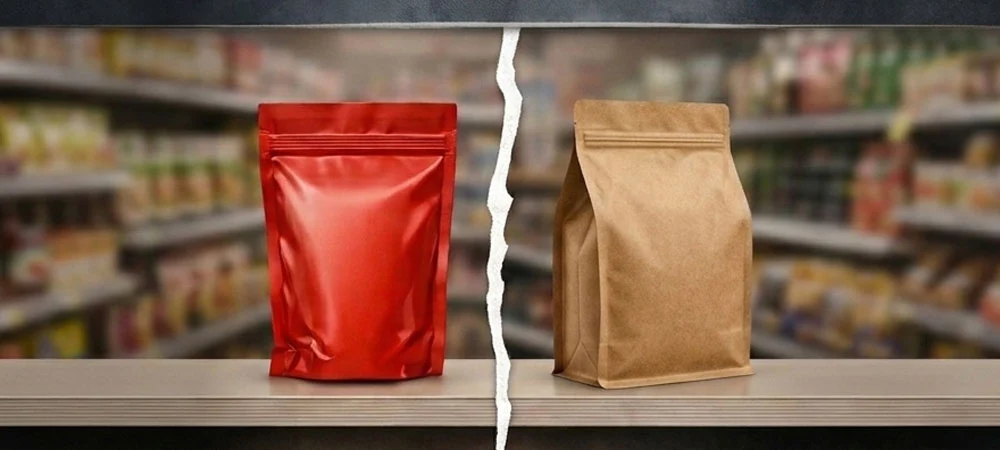
To choose the right package, you need to carefully consider a number of things that will affect both short-term operations and the long-term success of your brand.
Defining Your Packaging Requirements
Start by writing down exact product details, such as its weight, size, sensitivity to air and wetness, and how long it needs to stay fresh. Products that weigh more than three pounds may work better in block bottom designs that evenly distribute weight. No matter the format, moisture-sensitive things like coffee or dried foods need high-barrier VMPET or paper structures. Check out your filling method; automatic vertical form-fill-seal (VFFS) lines can usually handle rollstock film better than pre-made bags. Stand up pouches that are already made can help manual or semi-automated processes because they make handling and quality control easier. Think about how people will be using the product—single-serve amounts vs. sealed packages that can be used more than once—to choose the right closing types and sizes.
Evaluating Supplier Capabilities and Quality Assurance
Working with skilled makers guarantees the same level of quality for all orders. Check for qualifications like ISO 9001 for quality control, BRC for food safety, and FDA approval for products that come into contact with food. Ask for the material's specifications and test results that show how well the barrier works, how strong the seal is, and how the package stays together under the conditions that will be used for storage. Expert suppliers can help you choose the right materials and build structures that work well and don't cost too much. Production ability is important. Companies with more than one printing and turning line can handle rising numbers and tight delivery plans. Quality control systems that inspect every step of the production process cut down on flaws that stop the filling line or make customers unhappy.
Balancing Customization with Cost Efficiency
Customisation makes brands stand out more, but it also makes things more complicated and expensive. Standard sizes and simple printing cut down on setup costs and speed up the process. Custom shapes, spot UV coatings, and speciality finishes make the product look great, but they need to be ordered in large enough quantities to justify the cost of the tools. Digital printing is a cheap way to customise a small number of products quickly. Lead times are seven to ten days, which makes it perfect for testing products or making limited editions. Rotogravure printing gives known goods with numbers over 50,000 units better colour stability and detail. Look at the trade-offs between how the packaging looks and how much it costs, and think about how investments in packaging affect brand image and market entry tactics as a whole.
Supply Chain and Lead Time Considerations
Due dates for purchases have a big effect on managing goods and responding to the market. When compared to international sources, domestic suppliers may have higher prices but offer faster delivery. Asian manufacturers offer competitive prices and lead times of 30 to 45 days, which include ocean freight. Shipping by air freight cuts the time it takes to four or five days, but it costs a lot more. Keep enough safety stock on hand to protect against supply problems while avoiding the high costs of keeping too much overstock on hand. Set up clear ways for suppliers and you to talk about things like shipping plans, quality standards, and production schedules. Building long-term relationships with dependable makers lowers risk and makes it easier to keep improving the performance of packing.
Future Trends and Innovations in Flexible Packaging
The packaging industry is always changing because of new technologies and changing consumer tastes. This means that brands that are ready to change their strategies can find new possibilities.
Sustainable Material Development
Environmental concerns lead to new ideas in packaging materials that can be recycled or broken down in a compost pile. Polyethylene structures made of a single material can be recycled through existing plastic film streams, but they don't work as well as multilayer alternatives as barriers. Paper-based pouches with minimal plastic coatings are made from renewable materials and are water-resistant enough for many dry goods. Compostable films made from PLA (polylactic acid) or PBAT (polybutylene adipate terephthalate) can be thrown away at the end of their useful life in industrial composting facilities. The hard part is finding a balance between environmental goals and the need to protect products—letting them go bad too quickly because of poor barriers cancels out any environmental benefits. Manufacturers are working on new covering technologies that improve the blocking qualities of sustainable surfaces. This is helping to close the performance gap between them and standard materials.
Smart Packaging Technologies
When digital elements are added to packaging, it changes from a passive container to an interactive brand touchpoint. Smartphone users can use QR codes and NFC tags built into bags to get information about products, make sure they are real, and access ad material. Temperature-indicating inks let people know when the cold chain for sensitive goods is broken, which keeps quality high and keeps customers safe. Freshness signs that change colour based on the state of the product help both buyers and sellers decide if the product is still good to use. While adding little to the cost, these technologies make it possible for people to interact with brands in new ways that improve relationships and give brands useful information about their customers.
Advanced Printing and Decoration Techniques
As printing technology improves, bendable packages can now display brands in more complex ways. Using seven or more ink stations, extended colour gamut printing makes complex graphics look like photos. Tactile effects from textured finishes give products a unique look on the shelf and make them seem more expensive. Holographic films and metallic inks can make a big visual impact without using full metallic layers. Spot UV treatment draws attention to certain parts of a design, giving them more depth and visual interest that helps them stand out in stores with lots of other products. As production tools improve, these more advanced decorating methods can be used on smaller orders, making high-end packaging more affordable for new brands.
Conclusion
To choose between stand up pouches and block bottom bags, you need to carefully look at the features of the products, their use, and your brand's goals. Stand-up pouches can be used for a lot of different things, from snack foods to pet treats, and are flexible, easy for customers to use, and cost-effective. Because they are protective, can be customised, and look good on the shelf, they are the best choice for products that weigh less than five pounds and need to be reusable. Block-bottom bags are more stable and can hold heavy products. They also have larger printing areas that help premium brands stand out. Both formats are always changing as new materials and technologies are made available. Working with skilled manufacturers who know about material science, following rules, and producing consistently will make sure that your packaging works well throughout your supply chain and helps your business grow in the long term.
FAQ
1. What are the main advantages of stand up pouches compared to block bottom bags?
Stand up pouches offer exceptional versatility with lower minimum order quantities and faster turnaround times. Their gusset design creates efficient storage and transportation, reducing logistics costs. The format accommodates numerous features including resealable zippers, tear notches, and spout fitments that enhance consumer convenience. VMPET barrier construction protects moisture-sensitive products effectively while maintaining lighter weight compared to block bottom alternatives. These pouches suit automated filling lines and manual operations equally well, providing flexibility as production scales.
2. Can I source eco-friendly flexible pouches at commercial scale?
Sustainable flexible packaging options are increasingly viable for commercial applications. Recyclable mono-material polyethylene pouches maintain adequate barrier properties for many dry products while enabling recycling through established plastic film streams. Paper-based pouches with minimal plastic liners offer renewable content and consumer appeal, though they require careful evaluation for moisture-sensitive products. Compostable films provide end-of-life disposal options where industrial composting infrastructure exists. Material selection should balance environmental objectives with product protection requirements to prevent spoilage that negates sustainability benefits.
3. How can customization enhance brand visibility without excessive cost increases?
Strategic customization focuses investments on elements delivering maximum impact. Digital printing enables short-run customization with quick turnaround, ideal for testing designs or limited editions before committing to rotogravure cylinders. Spot UV coating on key branding elements creates premium perception at modest incremental cost. Clear windows showcase product quality without complex printing. Standard sizes with custom printing balance differentiation with cost control. Working with experienced suppliers who understand material optimization and production efficiency helps identify customization approaches that enhance brand presence while maintaining budget discipline.
Partner with a Trusted Stand Up Pouch Manufacturer
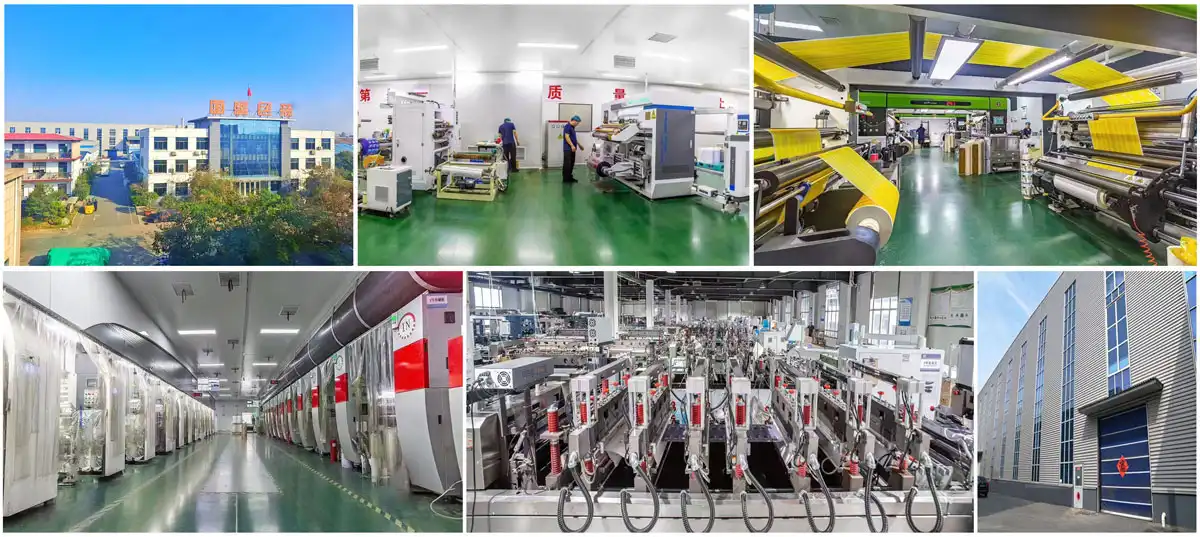
At Guoshengli Packaging, we deliver reliable flexible packaging solutions backed by 25 years of manufacturing expertise serving food brands, pet product companies, and health supplement manufacturers worldwide. Our stand up pouches feature advanced VMPET barrier construction, FDA and BRC compliance, and customizable printing up to 11 colors for distinctive brand presentation. Whether you need small-batch digital printing with seven-day turnaround or high-volume rotogravure production with consistent quality across repeat orders, our team provides comprehensive support from material selection through final delivery. We understand the operational challenges procurement professionals face—quality consistency, regulatory compliance, and supply chain reliability—and structure our processes to minimize risk at every stage. Contact our packaging specialists at sales@guoshengpacking.com to discuss your specific requirements, request samples, or receive detailed quotations. As your stand-up pouch supplier, we're committed to packaging solutions that protect your products and support your business growth across North American and global markets.
References
1. Robertson, G.L. (2016). Food Packaging: Principles and Practice (3rd ed.). CRC Press, Boca Raton.
2. Marsh, K. & Bugusu, B. (2007). "Food Packaging—Roles, Materials, and Environmental Issues," Journal of Food Science, 72(3), R39-R55.
3. Yam, K.L. (Ed.). (2009). The Wiley Encyclopedia of Packaging Technology (3rd ed.). John Wiley & Sons, Hoboken.
4. Soroka, W. (2009). Fundamentals of Packaging Technology (4th ed.). Institute of Packaging Professionals, Naperville.
5. Emblem, A. & Emblem, H. (Eds.). (2012). Packaging Technology: Fundamentals, Materials and Processes. Woodhead Publishing, Cambridge.
6. Coles, R., McDowell, D. & Kirwan, M.J. (Eds.). (2003). Food Packaging Technology. Blackwell Publishing, Oxford.
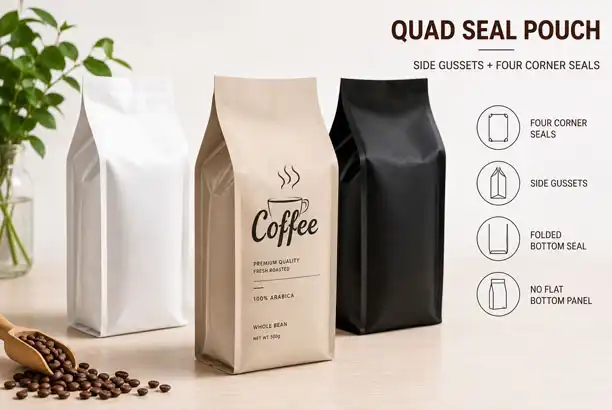
When searching for robust packaging that protects your products while enhancing shelf appeal, Quad Seal Pouches & Bags emerge as the practical choice for businesses across food, pet food, beverage, and supplement industries. These four-corner sealed packages deliver structural strength and branding versatility that traditional packaging formats struggle to match. Their reinforced design accommodates heavy loads—from flour and grains to coffee and pet treats—while maintaining shape integrity throughout distribution and retail display. With over 25 years of manufacturing experience, we've witnessed how the right packaging choice transforms product protection and brand perception in competitive markets.
Understanding Quad Seal Pouches: Design, Materials, and Functionality
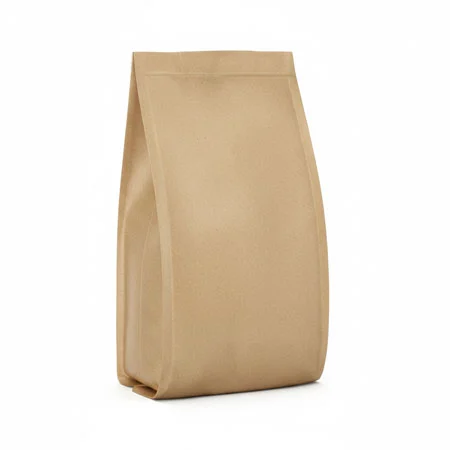
The structure of quad seal bags is different from regular flexible packaging because they have four vertical seals in each corner. This way of engineering makes a stable structure that looks like a box and provides improved shelf stability. In side-gusset bags, the seals are in the middle of the back panel. In quad seal designs, the seals are moved to the edges, making four separate printed surfaces: the front, the back, and two sides.
What Makes the Four-Corner Seal Different
The structural benefit comes from the way the weight of the product is spread out in these bags. When it's full, the products will settle into the strengthened corners on their own, making the base stable. This gets rid of the slouching issues that come up with other adjustable forms. Heat sealing creates a hermetic seal that preserves the integrity of the multilayer barrier structure. This makes the seal impermeable, which is important for granular products like rice, flour, or pet food. The flat panels have smooth, flat surfaces that are perfect for rotogravure printing. This means that your logo and other branding elements will look clean and professional from every angle.
Material Composition and Barrier Properties
Our quad seal bags are made from laminates, common structures include PET/VMPET/PE, PET/AL/PE, MOPP/VMPET/PE, Mono PE. The Oxygen Transmission Rate (OTR) and Water Vapour Transmission Rate (WVTR) goals for this lamination approach are based on the sensitivity of your product. Low OTR structures help coffee roasters keep aromatic compounds, while flour packaging needs moisture barriers to keep the flour from clumping while it's being stored. The thickness of the material is usually between 120 and 180 microns, and it is designed to handle products weighing between 500 grams and 20 kilograms without the seal breaking or the material wearing out.
Functional Features That Address Real Needs
In addition to closing, these bags can hold useful extras that make the user experience better. With resealable zipper seals, products stay fresh even after being opened. This is especially helpful for coffee and vitamin powders. One-way degassing valves let the CO2 out of roasted coffee but stop air from getting in. Tear notches make it easy to open without scissors. Clear windows let people see the quality of a product before they buy it. Having carrying handles makes it easier to move large products. We build these features into the production process instead of adding them after the fact. This way, the structural stability is not affected.
Quad Seal Pouches vs Other Flexible Packaging Options: A Rational Choice Approach
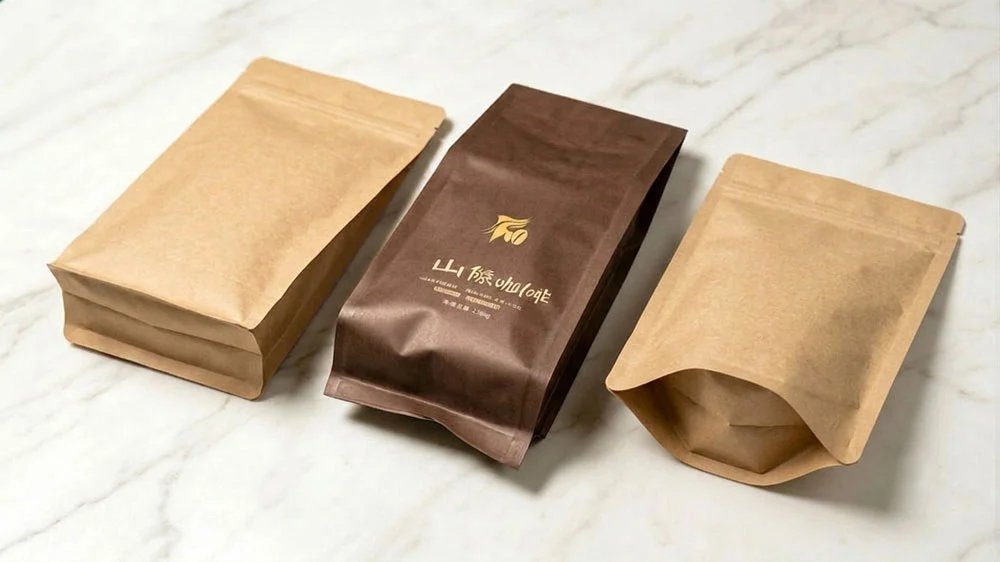
When making decisions about what to buy, it helps to know how different types of packaging work in real life. This comparison helps you understand when Quad Seal Pouches & Bags designs are a better value than other options that are often thought of in B2B sourcing.
Structural Stability Comparison
Bottom gussets help stand-up bags stay upright, but when they're full of heavy products, this design puts most of the stress at the gusset fold. Because their bases are designed flat, bottom pouches are more stable, but their three-seal construction means they don't have as many strengthened edges as quad seal forms. Three-side seal pouches don't have any vertical support, so they can't be used to show off bulk products on a shelf. The four-corner seal design spreads stress across several strengthened places, so the shape stays the same even when the product is being handled. This is especially important for things like pet food or flour that move around and get hit while being shipped.
Barrier Performance and Product Protection
The continuous seal around the edges of quad seal pouches makes a barrier zone that doesn't break. The back seal of side-gusset bags is in the center panel, which makes a possible weak spot where the material layers overlap. This weakness is taken care of by our quad seal design, which uses edge-positioned seals that join smoothly without interference from overlap.
Cost-Effectiveness Analysis
Quad seal pouches may cost a little more per unit than simple three-side seal bags, but for some uses, the total cost equation works out better for them. Because they can hold more, they need fewer packing pieces for large goods. Less damage to the product during shipping means less money spent on replacements and fewer complaints from customers. Better shelf presence can speed up sales, which can offset the cost of packaging by turning over inventory more quickly. When buying things between 1 and 20 kilograms that need a modest to high level of protection, quad seal designs usually offer better value throughout the whole supply chain, not just at the purchase order level.
Benefits of Quad Seal Pouches for B2B Food and Product Packaging
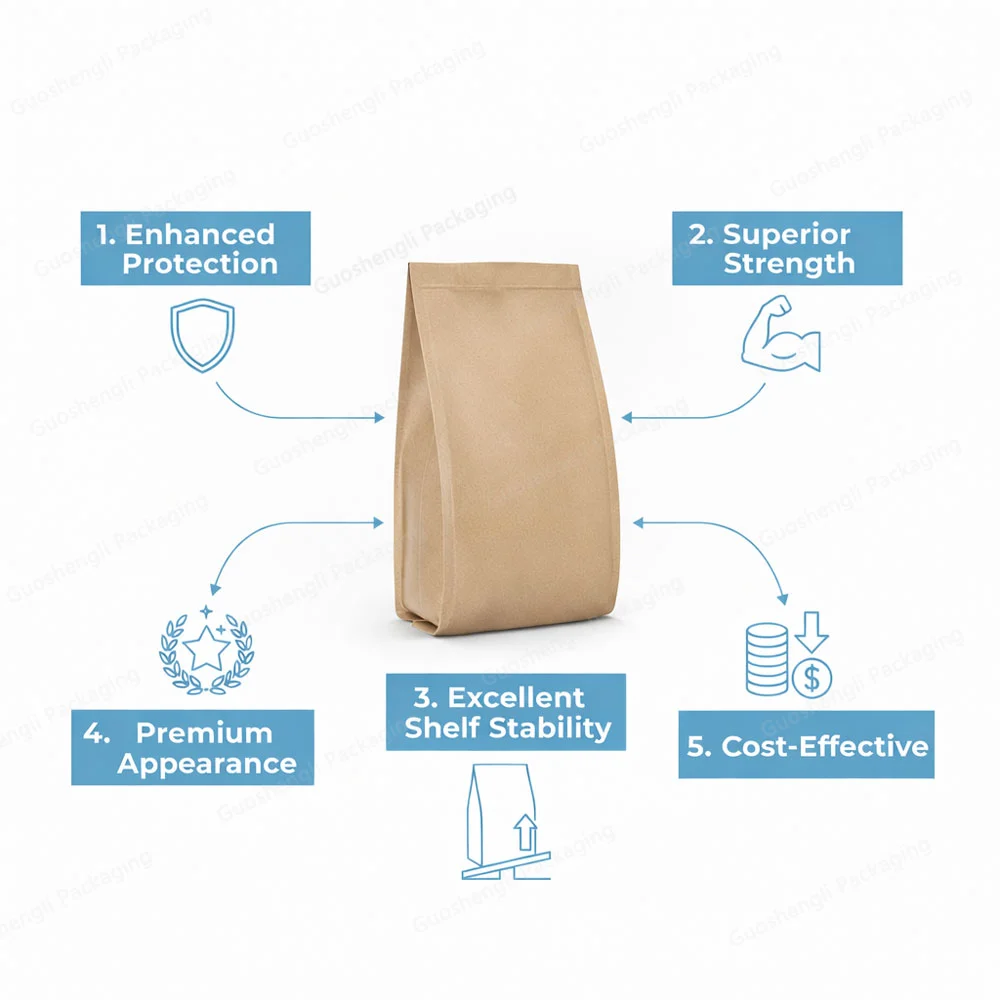
When manufacturers and distributors choose quad seal packaging for their product lines, they get real operational benefits. Not only do these benefits help with control, but they also help with supply chain efficiency and market placement.
Enhanced Transit Durability
Four-corner seal bags are better than lighter-duty forms for protecting goods during automatic filling lines, palletisation, and shipping because they can handle the mechanical pressures better. When the packages are stacked, the strengthened corner seals keep the other packages from poking holes in them. The hard structure keeps the package from deforming, which could lead to it being rejected at store delivery centers.
Branding and Marketing Advantages
Compared to regular pouches, the four-panel surface area gives a lot more room for brand messaging, nutrition facts, and visual design. With our 11-color rotogravure printing, we can make very clear copies of complicated drawings, patterns, and photos. The flat panels get rid of the distortion that comes from printing on curved surfaces. You can match the look of your packaging to how you want to position your brand. Matte surfaces communicate artisanal quality, while glossy finishes suggest a premium positioning. Customers can check the colour and texture of products like speciality flours, loose-leaf teas and natural pet treats by placing clear windows on the front panels in key places.
Sustainability Integration
As brands try to meet customer needs and government rules, environmental duty is becoming more and more important in B2B purchasing decisions. We have Quad Seal Pouches & Bags made from structures made of a single material polypropylene, that can be recycled in the usual ways. These choices can be recycled and still work well as barriers for many dry food uses, while also helping to reach goals for a circular economy. Our factory uses RTO (Regenerative Thermal Oxidiser) technology, which cuts VOC emissions by 99%. This helps to reduce the damage that printing does to the environment. When sustainability is important to your brand or your customers, we offer material choices and certifications that back up your environmental claims without putting product safety at risk.
How to Choose and Procure the Best Quad Seal Pouches for Your Business
To do strategic sourcing of packaging, you need to make sure that the right material specifications and supplier capabilities are in line with the brand's goals, the product's characteristics, and the needs of the supply chain. Procurement professionals can make decisions that balance performance, cost, and risk by keeping the following things in mind.
Defining Your Technical Requirements
First, write down how sensitive your product is to water, air, light, and damage. Products that absorb moisture, like flour or supplement powder, need low WVTR barriers, which may require metallized or aluminum-based barrier structures depending on the required shelf life.. To keep them from going bad, coffee and roasted nuts need low OTR structures. Set the shelf life you need for the way you plan to store the food, whether it's in an open building, a cold delivery area, or an area where the temperature changes often. Find out how much the package can weigh and how big it can be based on how dense your products are and how you want them to look in stores. These technical factors will be the basis of your buying criteria.
Evaluating Supplier Capabilities
Reliable sellers show that the quality of their goods is the same for all sales, not just the first few samples. Ask for proof of your abilities, such as proof of production equipment, quality certifications, and testing protocols. We run 49 converting machines, 7 rotogravure printing presses, and 6 laminating lines, which gives us the capacity to meet delivery dates without lowering quality during times of high demand. Our ISO 9001, BRC, FDA, and SGS standards show that we handle quality in an orderly way. If you need to look into product problems, you need to ask possible providers about their traceability systems. These should include ways to track everything from the lots of raw materials they use to the finished goods they make.
Understanding MOQ and Customization Flexibility
Minimum order amounts have a direct effect on the cost of investing in goods and storing them. Depending on the size and complexity, standard production of quad seal pouches usually needs MOQs of 10,000 to 50,000 units. We have flexible MOQ structures that let both new brands testing the market and established companies needing container-load volumes. You can customise by choosing the material, the size, the design, and even by adding functional features like zippers or valves. Digital printing lets you make unique orders in small quantities with wait times of 7–10 days, which is helpful for new product launches or seasonal changes. Rotogravure printing has better quality and lower unit prices for production runs of more than 50,000 units, and the wait time is between 15 and 20 days.
Pricing Strategies and Total Cost Optimization
Unit pricing is only one part of the cost of packaging. Consider the delivered cost from each seller, taking into account freight, border taxes, and the difficulty of the processes. Directly getting from factories can save you 15 to 25 percent on costs compared to buying from middlemen, and it also makes it easier to communicate and make changes. Think about the total cost of ownership, which includes protecting the product (less damage), making the filling line more efficient (fewer stops), and improving the brand's impact (faster sales). To accurately compare prices from different sources, you should ask for thorough quotes that include information about the materials used, how they will be printed, and what features will be included. Set up outline deals to make sure that prices for repeat orders are always the same, which will protect you from material cost changes.
Manufacturing and Ordering Process of Quad Seal Pouches
Knowing how production works helps business-to-business buyers predict lead times, find ways to customise products, and talk to manufacturing partners clearly about their needs. When manufacturing processes are clear, people have more faith in the quality of the final product and the reliability of the delivery.
Material Selection and Lamination
The first step in production is choosing food-grade film materials that meet your barrier needs and fit your budget. We get our PET, PE, aluminium foil, and speciality films from approved providers who give us information about the materials and proof that they are safe for food contact. During the lamination process, controlled temperature and pressure are used to stick these layers together with special glue. Our six laminating lines have precise tension control that keeps wrinkles and air bubbles from forming, which are typical problems that make barriers less effective. Before it goes to printing, each laminated roll is looked at and tested for its barrier properties.
Printing and Quality Control
Rotogravure printing uses etched cylinders to copy your artwork onto a coated base. This makes sure that the ink is applied consistently across production runs. To make sure the colours and graphics are correct, we digitally proofread the artwork and make press samples for you to approve before we start full production. With our 11-color printing, we can make complex designs on metallized films using metallic inks and opaque whites. During the whole print run, inline colour monitoring systems check the registration and density of the ink. This quality control stops colour shift between production runs, which is bad for brand stability.
Converting and Finishing
The printed rolls are sent to our transforming area, where 49 specialised tools cut, seal, and add features to make Quad Seal Pouches & Bags that are ready to use. Precision cutting ensures accurate measurements, which is necessary for automated filling equipment to work with the parts. Controlled temperature, pressure, and rest time are used for heat sealing, and they are different for each type of material. Attaching zippers, valves, and holes is made easier with hole punchers, valve inserters, and zipper applicators. Before putting pouches into cartons to ship, final inspection stations check the quality of the print, the integrity of the seal, and the compliance of the dimensions.
Lead Times and Logistics Coordination
Rotogravure printing usually takes 15 to 20 days from the time the artwork is accepted until the production is finished. For urgent jobs or test market amounts, digital printing choices cut wait times down to 7–10 days. We handle export paperwork and ensure that customs rules are followed for international shipments by coordinating goods forwarding. Air freight delivery gets to North American regions four to five days after production is finished, which is helpful when trying to quickly restock an inventory. Shipping by sea is cheap for container loads, and it takes 25 to 35 days to get there. Clear communication during production lets you know how things are going and lets you make changes ahead of time if your needs change.
Sustainability and Environmental Considerations for Modern Packaging
As brands try to meet government rules and customer tastes, environmental responsibility is becoming more and more important in their packaging choices. Strategies for sustainable packaging need to find a balance between protecting the environment, making money, and protecting products.
Recyclable Material Structures
Due to their single-material plastic design, quad seal bags can be recycled using current systems without needing to be processed in a special way. These structures take the place of laminates made of different materials that can't be separated by normal recycling systems. Pure PE constructions have average barrier qualities that make them good for many dry food uses, but they can't compare to the oxygen and moisture barriers of aluminium foil laminates, which are needed for very sensitive products. We help you figure out if single-material products that can be recycled have the right shelf life for your products or if you need higher-barrier structures for product safety and waste-to-energy systems for dumping at the end of their useful life.
Manufacturing Environmental Impact
The RTO exhaust gas treatment technology in our factory gets rid of 99% of the volatile organic compounds that are made during the printing and laminating processes. This investment shows that we are serious about lowering the environmental impact of industry in more ways than just the products themselves. Equipment that uses less energy and rules for minimising trash during production lower the amount of resources needed to make a package. We provide environmental compliance documentation to help you meet the requirements for customer transparency and corporate sustainability reporting.
Balancing Protection and Environmental Goals
Sustainable packaging is only useful when the goods inside are still usable when they get to the customers. Wasted product, energy, and resources from packaging that doesn't protect contents have a bigger effect on the environment than the packaging material itself. We work with you to figure out the minimum barrier protection and material thickness that will keep the food fresh for as long as you need it to. This way, we don't over-package or under-protect it. This method of optimisation achieves real sustainability by making the best use of resources, rather than making choices about materials that are purely symbolic and weaken product security.
Conclusion
Quad Seal Pouches & Bags are useful for buying things from other businesses because they have stronger four corners, better barrier properties, and better branding surfaces for food, pet food, drinks, supplements, and industrial goods. The strength of their structure keeps heavy loads safe during transport and helps brands stand out on store shelves. Material customisation options can be used for a wide range of products, from flours that are sensitive to moisture to coffee that is sensitive to oxygen. Manufacturing features like rotogravure printing, adjustable MOQs, and short production cycles make it possible for both new brands and established makers to get packaging that fits their needs in terms of scale and time. Materials that can be recycled and manufacturing methods that produce few emissions are both important for sustainability. Choosing package providers based on their technical skills, quality systems, and open communication lowers the risk of the purchase and helps keep product quality uniform across multiple orders.
FAQ
1. What products benefit most from quad seal pouch packaging?
Heavy or dense products including flour, rice, grains, coffee, pet food, and powdered supplements gain the most advantage from four-corner seal construction. The reinforced edges and stable base structure prevent package deformation and seal failure common with lighter-duty formats when handling bulk volumes. Products requiring extended shelf life through high-barrier protection also benefit from the reinforced edge sealing configuration that eliminates potential weak points.
2. How do I determine the right barrier properties for my application?
Product sensitivity testing establishes shelf life requirements under expected storage conditions. Moisture-sensitive products like flour need low WVTR films incorporating aluminum foil barriers. Oxygen-sensitive products like coffee require low OTR structures. We provide material recommendations based on your product characteristics and target shelf life, supported by accelerated aging tests that predict real-world performance. Our technical team helps match material specifications to your performance requirements without over-engineering.
3. Can quad seal pouches run on automated filling equipment?
Properly specified pouches integrate smoothly with VFFS (vertical form fill seal) equipment and pre-made pouch filling lines. Dimensional accuracy and material stiffness specifications must align with your equipment's handling capabilities. We provide technical data sheets covering pouch dimensions, seal strengths, and material properties that equipment manufacturers require for compatibility verification. Sample pouches enable filling trials before production commitments.
Partner With a Quad Seal Pouches & Bags Manufacturer You Can Trust
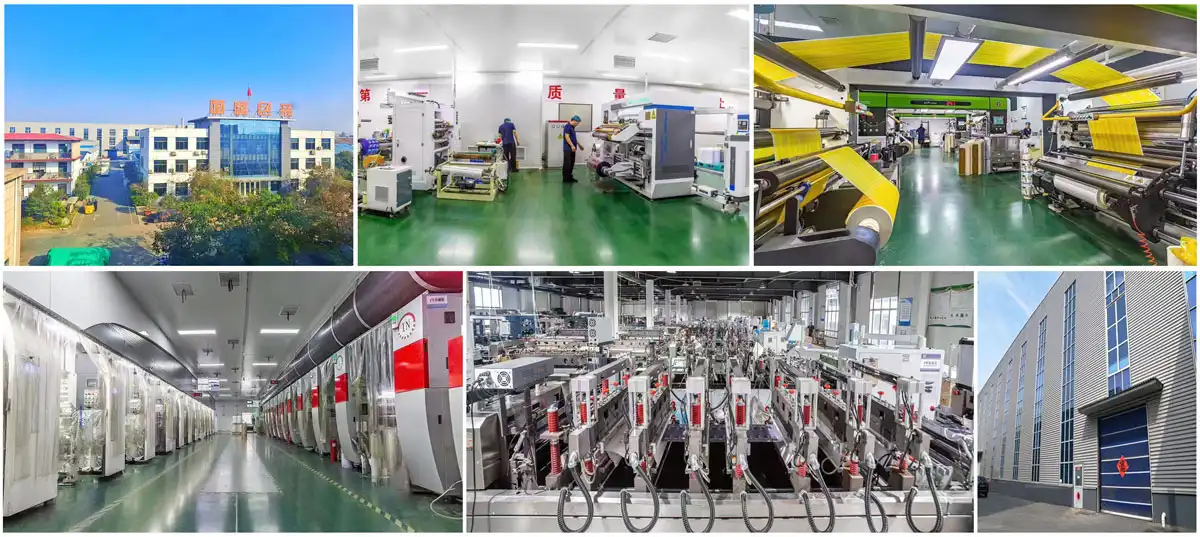
Guoshengli Packaging brings 25 years of flexible packaging manufacturing experience to your sourcing requirements. Our Quad Seal Pouches & Bags solutions combine structural engineering, barrier technology, and printing excellence that protect your products while elevating brand presentation. We understand the operational challenges B2B buyers face—inconsistent quality across orders, communication gaps, and production delays—and our systems specifically address these pain points through certified quality management, transparent production tracking, and reliable delivery schedules. Whether you're packaging flour, coffee, pet treats, or supplement powders, our customizable solutions match your technical specifications and volume requirements. Our ISO 9001, BRC, FDA, and SGS certifications provide the compliance documentation your quality assurance teams require. Flexible MOQs accommodate emerging brands testing market response alongside established companies requiring container volumes. Contact sales@guoshengpacking.com to discuss your packaging requirements with our technical team, request material samples, or receive detailed quotations.
References
1. Robertson, Gordon L. Food Packaging: Principles and Practice, 3rd Edition. CRC Press, 2012.
2. Marsh, Kenneth and Betty Bugusu. "Food Packaging—Roles, Materials, and Environmental Issues." Journal of Food Science 72.3 (2007): R39-R55.
3. Selke, Susan E.M., John D. Culter, and Ruben J. Hernandez. Plastics Packaging: Properties, Processing, Applications, and Regulations, 3rd Edition. Hanser Publications, 2016.
4. Coles, Richard and Mark Kirwan, editors. Food and Beverage Packaging Technology, 2nd Edition. Wiley-Blackwell, 2011.
5. Yam, Kit L., editor. The Wiley Encyclopedia of Packaging Technology, 3rd Edition. John Wiley & Sons, 2009.
6. Brody, Aaron L. and Kenneth S. Marsh, editors. Encyclopedia of Packaging Technology, 2nd Edition. John Wiley & Sons, 1997.
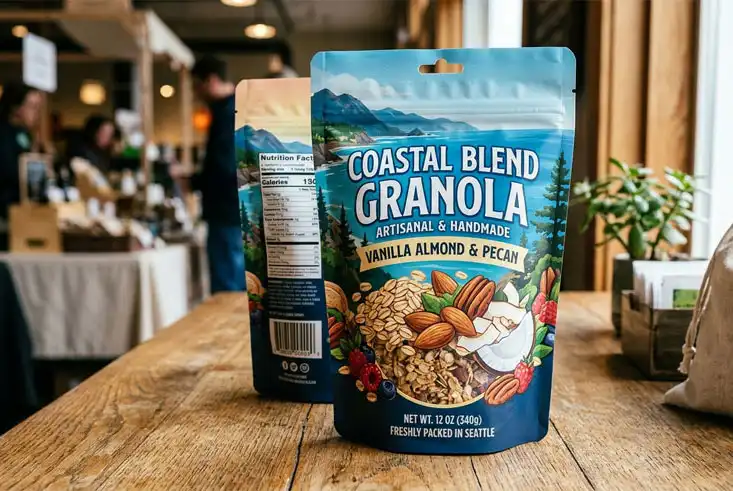
When picking stand up pouches for your products, you need to make a plan that takes into account how they will work, how they will affect your brand, and how much they will cost. The right flexible packaging keeps your product safe, makes it look better on the shelf, and helps filling lines and distribution networks run more smoothly. As the market gets more competitive, this detailed guide shows procurement managers, packaging engineers, and brand decision-makers how to choose pouches that work the same way every time, from the first sample to repeat production runs, while also meeting food safety standards and sustainability expectations.
Understanding Stand-Up Pouches and Their Benefits
Stand-up pouches are a versatile and flexible type of packaging. They have a reinforced bottom gusset that lets the package stand up straight on store shelves without any extra support. This structure can stand on its own and has changed the way food, drinks, pet care, and wellness products are packaged. It has clear advantages over rigid containers and flat bags.
Why Flexible Packaging Outperforms Rigid Alternatives
The structure of these boxes makes them easier to see on shelves than flat packaging. The bright prints and high-quality finishes will catch people's attention. Instead of taking up a lot of space in warehouses and on trucks, rigid containers, flexible pouches can significantly reduce storage and transportation space, which lowers logistics costs all along the supply chain. Material efficiency in manufacturing means using fewer raw materials and having less of an effect on the environment. This is important to think about because brands are under more and more pressure to show they care about sustainability.
Material Technologies That Extend Product Shelf Life
These days, pouches are made with complex laminate structures that combine layers of PET, PE, nylon, and VMPET to make unique protective qualities. VMPET material protects very well against moisture getting in, oxygen getting in, and light breaking down, which are the three main things that make products less fresh and of lower quality. With this multi-layer method, makers can create package solutions that are perfect for protecting aromatic coffee blends, snacks that are sensitive to moisture, or supplements that react to light.
Convenience features that make people want to buy things
Resealable zip seals make it possible to use a product more than once after opening it for the first time. This cuts down on waste and makes customers happier. Easy-tear marks get rid of the irritation of packages that are hard to open, making the experience better for people of all ages and backgrounds. One-way gas release is possible with valves built into bag structures. This is important for newly roasted coffee and other products that lose gas while being stored. Transparent windows let people see the product, which boosts customer trust, while strategically placed and sealed methods keep the barrier's integrity.
Core Criteria to Consider When Choosing Stand-Up Pouches
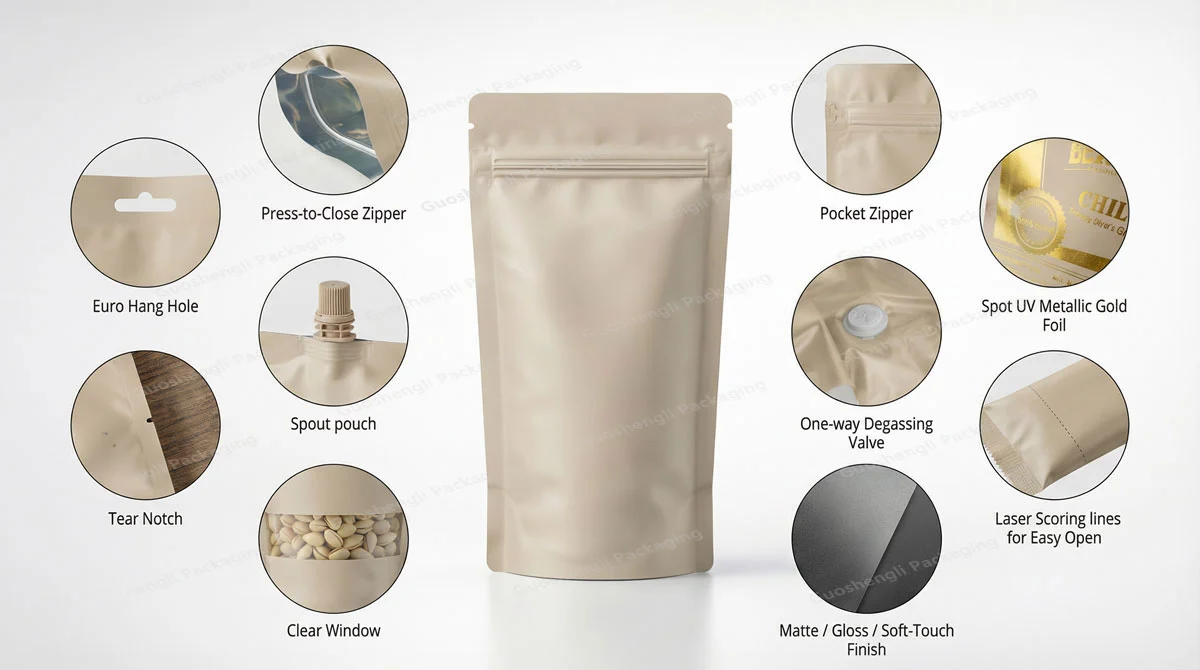
Before making a purchase decision, packaging solutions, including stand up pouches, need to be carefully looked at across a number of performance factors to make sure they meet the needs of the product, the production capabilities, and the market positioning. A structured approach cuts down on mistakes that cost a lot of money and makes sure that packaging works reliably throughout its lifecycle.
Barrier Performance Requirements Based on Product Sensitivity
To keep the quality of the product and make it last longer, different types of products need different protection features. Dried nuts and veggies need mild moisture barriers to keep them from getting soft. To keep the smell while letting carbon dioxide out, coffee products need both high oxygen barriers and degassing valves. Protein powders and nutritional supplements need to be well protected from moisture so they don't clump and keep their effectiveness. Knowing your product's specific weaknesses helps you choose the right materials and create the laminate structure, so your product is protected without having to use overly complex and expensive solutions.
Size, Format, and Structural Adaptations for Your Product
The dimensions of the pouch must be right for the size of your product while also making the best use of space and visibility on the shelf. For single-serve and sample programs, smaller bags work best. For big goods, larger forms lower the cost per unit of packing. Standing stability is based on the width of the bottom seam. This is especially important for automatic filler lines where packages falling over slow down production. Configurations with side gussets boost capacity within the same size, making the most of the shelf's effect. Custom shape development lets brands stand out by making forms that are unique and catch people's eyes in crowded stores.
Functional Features That Enhance Filling Efficiency and Consumer Experience
Zipper integration lets you reclose products that you use more than once, but it costs more and needs filling equipment that works with it. Tear notches make it easier to open, but they need to be placed so that the package doesn't break too soon while being handled. Hang holes let pegboards be used for display in stores, which increases the number of ways to merchandise products. Rounded corners cut down on stress points that can cause seals to fail. These features need to work with your filler line and the tastes of your target market in order to provide value without adding too much complexity.
Material Selection Balancing Safety, Sustainability, and Cost
Food-grade compliance is the minimum standard for all material that comes into contact with food. This is proven by FDA approval and movement testing. BRC and ISO standards show that quality control is used throughout the whole production process. Recycling single-material structures helps circular economy efforts, but they might not be as good at blocking things as multi-material laminates. People who care about the environment like biodegradable choices made from PLA and PBAT materials, but they need to be carefully looked at to see if they really are compostable and if there are proper dumping systems in place. Material choices have a big effect on unit cost, so performance needs and budget limits need to be weighed against projected volumes.
Printing Technologies and Design Capabilities for Brand Differentiation
Rotogravure printing is great for high-volume production runs because it reproduces colours and details very accurately. It can handle up to 11-color patterns that make products stand out on the shelf. With wait times as short as 7–10 days compared to 15–20 days for rotogravure, digital printing lets you do smaller runs and make changes to designs more quickly. Spot UV coating gives things a tactile dimension and visual contrast that make them seem more valuable. Matte finishes show that the brand is natural and handmade, while high-gloss finishes show that the brand is of the highest quality. The type of printing you choose affects the impact of your brand, the cost of production, and how quickly new products can hit the market.
Supplier Evaluation: Quality Systems, Capacity, and Reliability
When you make the same thing for multiple orders, problems like different sizes, colours, and broken seals don't happen, which can be very expensive. The supplier's production capacity shows if they can grow with your business without affecting delivery times. Third-party checks of quality control tools give people faith in their continued compliance and ability to stop defects. Communication timeliness and technology know-how make it possible for people to work together to solve problems when they come up. Choosing a supplier is an important part of building a strategic partnership. It's not just about price at first; it's also about long-term operational stability and support for new ideas.
These review factors help you make smart buying choices that make sure the performance of the packaging meets your business goals. Guoshengli Packaging has been making products for 25 years, so they can guarantee stable, export-ready solutions that are designed to work the same way across production cycles. This protects your brand's image and improves business efficiency.
Comparing Stand-Up Pouch Types for Specific Use Cases
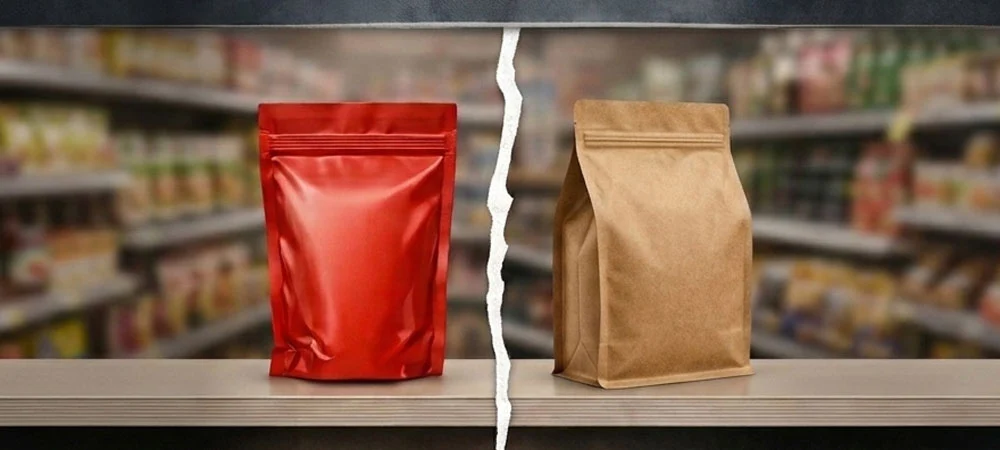
Different pouch configurations are used for different purposes and to target different markets. Knowing about these differences helps buying teams choose the best forms in terms of performance, cost, and customer appeal.
Stand-Up Versus Flat Pouch Configurations
When compared to flat pouches that lie flat or hang from clips, stand up pouches stand out more on the shelf because they are vertical and have more visible surface area. The standing style makes it easier to browse and choose in stores, which increases conversion rates. But flat bags might be cheaper for things like industrial chemicals or big components where security is more important than how they look on the shelf. Modern VFFS equipment prefers stand-up forms because they are more stable during automatic filling. This cuts down on line stops and rejected units.
Reusable Versus Single-Use Design Philosophy
Reusable pouches with strong zipper closures make products look like high-end products that reduce waste by being useful for longer. This method appeals to people who care about the environment and supports higher prices. Single-use forms save money on original packing costs and make handling easier for products that are only used once or in situations where being able to close the package again doesn't add any value. The choice is based on how the brand is perceived, how people usually use it, and how to handle waste in target markets with different levels of disposal infrastructure.
Valve Integration for Specialty Applications
Valve-equipped bags meet the specific needs of goods that release gas after being packaged, like newly roasted coffee. One-way valves let carbon dioxide escape but stop oxygen from getting in. This keeps aromatic chemicals safe without bursting the package. This unique feature costs more, but it's necessary to keep the quality of products in areas where freshness has a direct effect on customer happiness and return purchases. It can be used for fermented foods and other things that have biological processes going on that need to control gas exchange.
Biodegradable and Recyclable Material Considerations
Kraft paper bags with little to no plastic lining can be recycled through current paper lines, which makes them appealing to brands that want to be seen as more natural. But barrier limits mean that only goods that are less sensitive to air and wetness can be used. Recyclable buildings made of single-material polyethylene structures, keep obstacles stronger and support recycling infrastructure in places where collection systems are already in place. Materials that can be composted that use PLA and PBAT resins need industrial recycling facilities that aren't usually found in consumer markets. This makes people wonder if the environmental benefits are real or just marketing promises. An honest look at the waste management systems in the areas you want to reach will help you choose materials that are truly sustainable and not just greenwashed.
This comparison helps procurement workers match bag specs with product features and market standards, making the most of the investment in terms of performance, cost, and brand alignment.
How to Procure Stand-Up Pouches: Navigating the B2B Market
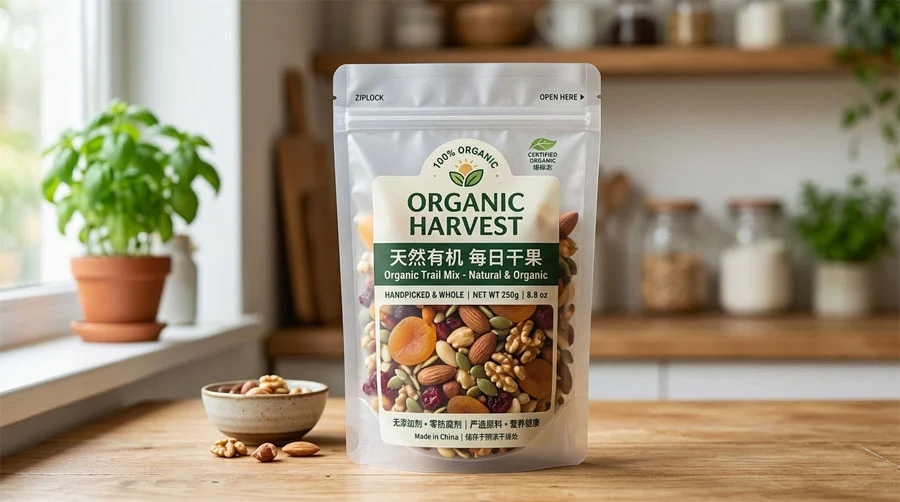
To set up reliable packaging supply lines that help businesses grow, good buying strategies balance the skills of suppliers, the cost of orders, and the control of risk.
Sourcing Strategies: Direct Manufacturers Versus Distributors
When you work directly with flexible packaging makers like Guoshengli Packaging, you can get professional help, the ability to customise your order, and low prices for large orders. Manufacturing partnerships let people work together to solve problems and support new ideas in ways that distributors can't. Distributors make it easier to get smaller amounts of goods and faster shipping on standard forms, but they charge a fee that raises the unit cost. Direct manufacturer relationships offer better value and more operational flexibility for brands that want to increase production or need specific specifications.
Volume Economics and Order Planning
When you order in bulk, you save money on each unit because the manufacturing process is more efficient and the setup costs are spread out over more products. When production runs below the minimum efficient size, prices go up, and the cost per unit can double compared to when numbers are optimised. Planning purchases based on accurate predictions of demand strikes a balance between the costs of holding goods and the benefits of lower unit prices. Because of lead times, you need to buy ahead of time to account for production plans, foreign shipping, and customs clearing. For example, it usually takes 4 to 6 weeks for ocean freight from Asian makers or 7 to 10 days for urgent air shipping needs.
Supplier Credential Verification and Sample Testing
Certification proof, like ISO 9001, BRC, and FDA compliance, gives people basic trust in quality systems and following the rules. Third-party test results from SGS and other similar labs back up claims about barrier performance, migration compliance, and seal strength. Before committing to production orders, testing a sample on your real filling equipment shows any compatibility problems. This keeps your line from being interrupted, which can be very expensive. Quality that stays the same across multiple sample runs is a sign of good quality control, not just picking the best efforts. Doing your research at this stage keeps problems from happening later on that hurt the brand's reputation and use up management resources.
Value-Added Services That Simplify Procurement
Full-service companies that offer design advice help brands get the best package for their goods and how they want to place themselves in the market. Help with choosing materials strikes a mix between performance needs, environmental concerns, and financial limitations. Before spending money on tools, prototype development checks that designs work. Some companies use digital printing for small runs when a new product is being released, but switch to rotogravure for established products that need to be made in large quantities. These services make buying things easier and speed up the time it takes to get new goods and line additions on the market.
When you use strategic buying methods, you build relationships with your suppliers that are more like partnerships than transactions for stand up pouches. This gives you a competitive edge through innovative packaging and reliable operations.
Best Practices and Tips for Long-Term Use and Brand Trust
To get the most out of packaging throughout the supply chain, it's important to pay attention to storage conditions, design optimisation, and being open about sustainability efforts.
Storage and Handling Protocols
When pouches are kept in places with controlled temperature and low humidity, the seal and protective function stay intact until they are used. Too much heat speeds up the breakdown of materials and can weaken laminating ties. Being exposed to humidity can make zippers less useful and may let wetness through, which weakens barrier protection. The right way to handle pouches keeps them from wrinkling and puncturing, which can lead to leaks. This is especially important for pouches that have high oxygen or moisture barriers, where even small flaws can have a big effect on protecting the product. By teaching warehouse and production staff about these requirements, you can stop quality problems that are caused by bad storage rather than bad manufacturing.
Custom Design Elements That Strengthen Brand Identity
Colour psychology, font, and images can be used in a smart way to create unique brand marks that people can spot right away on busy shelves. Consistent design elements across product lines help build brand loyalty and make it easier to add new products to the line. Spot UV coating on logos and key messages makes them more tactile, which keeps people interested as they handle the product. Positioning clear windows to show off the quality of the product helps build trust and sets it apart from competitors who use dark packaging. For these design efforts to work, you need to work with suppliers right away who can help with logo design and offer advanced printing services.
Sustainability Communication That Builds Consumer Trust
Real efforts to be more environmentally friendly, like using recyclable materials, making packaging lighter, or making sure it can be composted, should be clearly stated on packaging and marketing materials. Greenwashing claims that hurt a brand's trustworthiness must be backed up by specific claims and certificates. Making it clear how to get rid of things helps consumers support the goals of the circular economy by recycling or composting properly. When brands successfully include sustainability in their packaging strategy, customers often become more loyal and are willing to pay more for the product, especially younger people who care about the environment.
These practical practices and strategy methods make sure that investments in packaging get the best return on investment through protecting products, setting brands apart, and building trust with customers throughout the lifetime of a product.
Conclusion
To choose stand up pouches, you have to think about a lot of different performance factors, costs, and strategic business goals. This thorough evaluation process includes everything from barrier requirements and material choice to supplier credentials and positioning for sustainability. This makes sure that packaging solutions protect the integrity of products while making markets more competitive. When procurement professionals carefully consider functional needs, format options, and form relationships with skilled makers like Guoshengli Packaging, their brands are set up for practical success and market growth. As materials technology and sustainability innovations improve, the flexible packaging landscape continues to change. For brands trying to meet the complex needs of the market, supplier relationships that offer technical expertise and consistent manufacturing are becoming more and more valuable.
FAQ
1. What barrier properties should I specify for moisture-sensitive snack products?
Moisture-sensitive products like chips, nuts, and dried fruits typically require pouches with water vapor transmission rates below 0.5 g/m²/24hr. PET laminate structures combining aluminum oxide coating with polyester and polyethylene layers deliver this protection effectively. The specific barrier level depends on desired shelf life, storage conditions, and product moisture content at packaging. Working with experienced suppliers who can model barrier requirements against your shelf life targets ensures adequate protection without over-specifying costly materials.
2. Can I order custom sizes with resealable zippers for small production runs?
Many flexible packaging manufacturers accommodate custom specifications even for moderate volumes, though minimum order quantities vary by supplier. Digital printing technology enables custom designs on runs as small as 5,000-10,000 units, making customization accessible for emerging brands and product testing. Zipper integration requires compatible pouch-making equipment but represents standard capability for established manufacturers. Lead times for custom orders typically range from 15-25 days depending on complexity and production schedules.
3. How do recyclable pouches compare in cost and performance to traditional multi-layer packaging?
Recyclable mono-material structures generally carry 15-30% price premiums compared to conventional multi-layer laminates, though costs continue declining as technology matures. Barrier performance remains adequate for many applications but may not match conventional materials for products requiring extreme oxygen or moisture protection. Brands should evaluate whether recyclability advantages justify potential shelf life reductions or cost increases based on target market priorities and competitive positioning.
Partner with a Trusted Stand Up Pouch Manufacturer
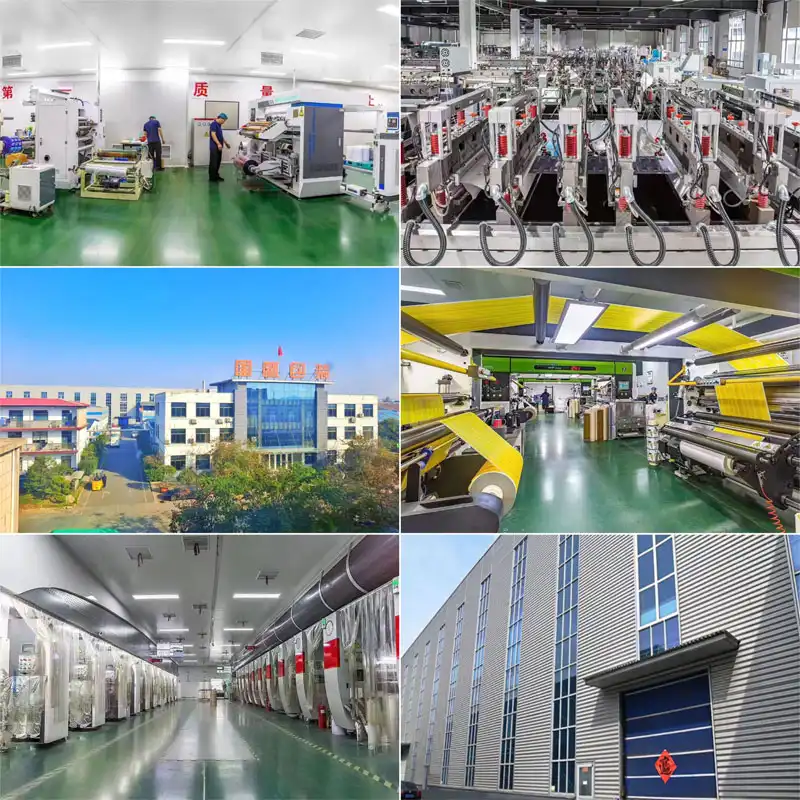
Guoshengli Packaging delivers consistent, export-ready flexible packaging solutions engineered for B2B procurement teams who value manufacturing reliability over short-term sourcing decisions. Our 25 years of production experience across food, pet care, and wellness industries ensures stable quality that performs batch after batch—eliminating the costly disruptions that plague brands working with inconsistent suppliers. We specialize in custom stand up pouches featuring VMPET barrier protection, spot UV printing, and consumer-friendly features like easy-tear notches and resealable zippers, all produced under FDA, BRC, and ISO certified quality systems that meet international regulatory requirements.
Whether you need rapid digital printing for product launches (7-10 days) or high-volume rotogravure production (15-20 days), our manufacturing capacity and technical expertise support your growth across market cycles. Contact our team at sales@guoshengpacking.com to discuss your specific requirements and request sample kits that demonstrate our quality commitment.
References
1. Robertson, G.L. (2016). Food Packaging: Principles and Practice, Third Edition. CRC Press, Boca Raton, Florida.
2. Marsh, K. & Bugusu, B. (2007). Food Packaging—Roles, Materials, and Environmental Issues. Journal of Food Science, 72(3), R39-R55.
3. Selke, S.E.M., Culter, J.D., & Hernandez, R.J. (2004). Plastics Packaging: Properties, Processing, Applications, and Regulations, Second Edition. Hanser Publications, Munich.
4. Yam, K.L. (2009). The Wiley Encyclopedia of Packaging Technology, Third Edition. John Wiley & Sons, Hoboken, New Jersey.
5. Coles, R. & Kirwan, M.J. (2011). Food and Beverage Packaging Technology, Second Edition. Wiley-Blackwell, Oxford.
6. Emblem, A. & Emblem, H. (2012). Packaging Technology: Fundamentals, Materials and Processes. Woodhead Publishing, Cambridge.
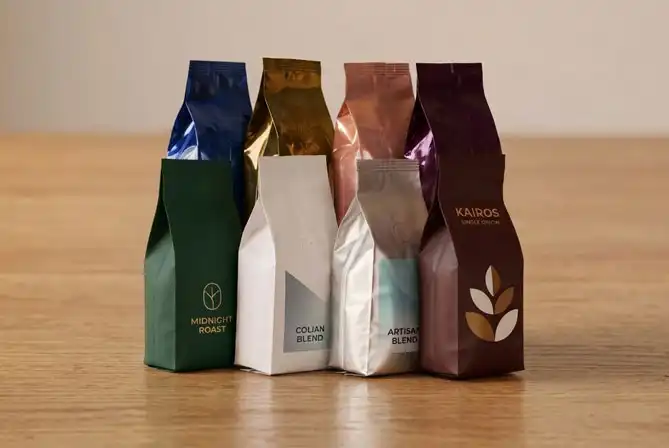
Side gusset bags with valves keep food fresh longer by blending advanced barrier protection with smart gas management. The multi-layer structure of the 1kilo side gusset pouch with valve keeps oxygen, wetness, and light out. The built-in one-way degassing valve lets internal gases escape, like CO2 from freshly roasted coffee, without letting outside air in. This two-part system stops oxidation, moisture absorption, and aroma loss, so the contents stay fresh for a lot longer than with regular packaging. The side gusset design makes the bag even more stable and efficient with space while it's being stored or shipped. It also protects the food from damage that could make it go bad.
Understanding Side Gusset Pouches with Valves
What Makes Side Gusset Pouches Unique?
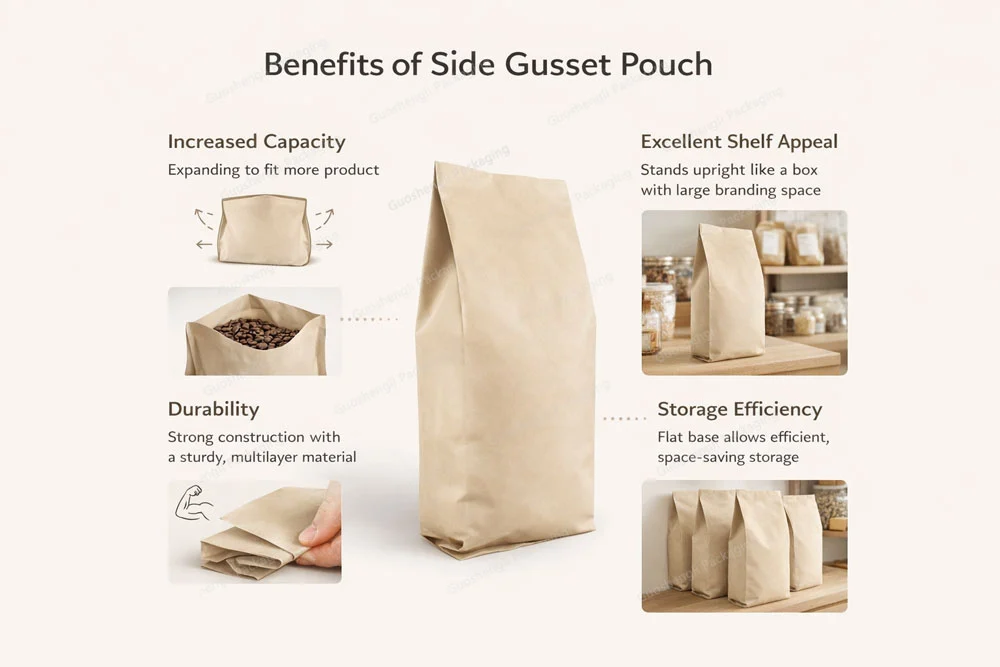
Specialised flexible packaging called side gusset bags are made for goods that need to stay fresh for a long time. Side gusset designs, unlike flat or stand-up pouches, have panels on both sides that can be expanded. When these walls are filled, they form a steady, rectangular shape that keeps the size small while increasing the space inside. This structural benefit makes them perfect for bulk products that need to be stored and transported easily, like coffee beans, tea leaves, pet treats, and powdered supplements.
The structure is usually made up of several bonded layers, such as PET for strength, aluminium foil or metallised films for barrier qualities, and polyethylene to seal heat. This mix provides strong defence against environmental factors that lower the quality of the product.
How the Degassing Valve Works
What really sets valve-equipped bags apart from regular flexible packaging is the built-in one-way degassing valve. For a few days after being roasted, freshly roasted coffee beans give off carbon dioxide. Without proper draining, this increase in gas creates pressure inside the pouches that can break seals or make them swell up and look broken on store shelves.
The valve solves this problem with a device that was carefully designed and built. The valve opens because of pressure inside, letting CO₂ escape. As soon as the internal pressure returns to normal, the valve shuts off, stopping air from entering. This managed gas exchange keeps aroma compounds safe while stopping oxidation, which is what breaks down flavours in coffee and other related goods.
Material Composition and Barrier Technology
For sensitive goods to last longer on the shelf, high-barrier materials are necessary. The layered structures used in the 1 kg side gusset pouch with valve are usually between 120 and 160 microns thick. Some common configurations are PET/AL/PE or MOPP/VMPET/PE, with each layer protecting something different. The aluminium or metallized layer blocks oxygen and light from getting through, and the PET layers on the outside don't get punctured or worn down when they're being handled.
Oxygen Transmission Rate and Water Vapour Transmission Rate tests are used to measure how well a barrier works. Most high-quality coffee bags, such as a 1kilo side gusset pouch with valve, have OTR values below 0.5 cc/m²/24hrs and WVTR values below 1.0 g/m²/24hrs, which means that there is very little leakage even after being stored for a long time. Because these technical specs are directly linked to how long something stays fresh, choosing the right material is an important buying decision for companies that make food packaging and health supplements.
Benefits of Side Gusset Pouches with Valves for Product Freshness
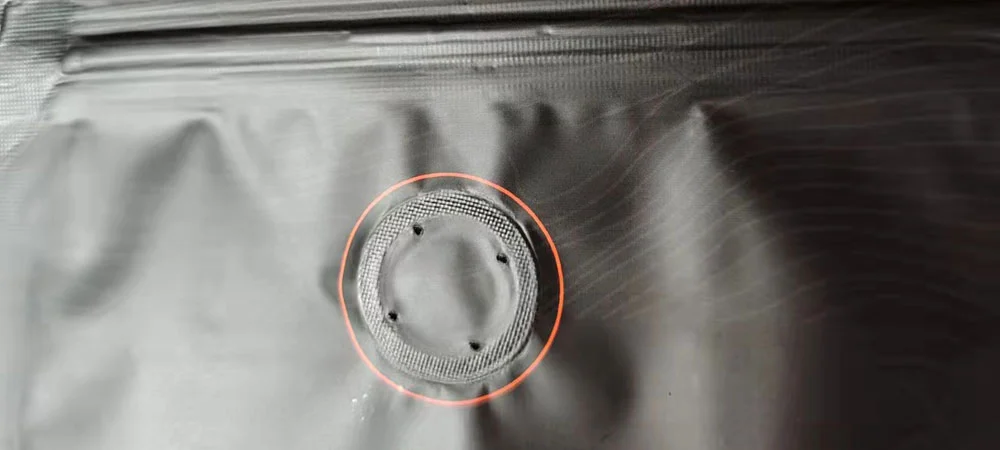
Superior Gas Management Compared to Traditional Packaging
Traditional packaging types, like solid cases or bendable bags without valves, have trouble managing gas for goods that need to be degassed. Rigid containers may have ways for air to flow through them, but they take up more room and cost more to ship. Standard bendable bags without openings either trap gases and damage the package, or they need to be packaged later until the gases are released, which makes production more difficult and lowers the freshness at the point of sale.
Side gusset pouches with valves are a beautiful way to solve these problems. The valve lets you package the food right away after roasting, keeping it at its freshest while safely controlling gas release. When compared to packaging that lets oxygen stay in for a long time, this feature greatly extends shelf life, often by several months.
Structural Advantages for Product Protection
The side gusset design has technical benefits that have a direct effect on freshness. When the pouch is full of one kilogram of coffee beans or similar products, it automatically takes on a stable, self-supporting shape. The weight is spread out evenly across the bottom gusset, which reduces stress points that could damage the seal while it is being stacked or moved.
The stability of the structure makes it less likely that holes and tears will appear and let the barrier protection through. This durability is especially important to companies that roast coffee and make pet food because their products are often handled many times before they reach customers. The small, rectangular shape also makes the best use of pallets, which cuts down on storage costs and the damage that shipping does to the earth.
Aroma and Flavor Preservation
Aroma preservation is a must for coffee roasters and speciality food makers. Aromatic chemicals that are volatile and give foods their unique flavours are very easily oxidised and evaporated. The 1kilo side gusset bag with valve has a better atmosphere inside because it is made of high-barrier materials and valve technology.
Oxygen levels stay low, which slows down the breakdown of oils and aromatic compounds by oxidation. At the same time, the valve stops pressure from building up, which could damage seals and cause tiny leaks. Independent tests show that coffee stored in valve pouches keeps its sensory quality scores much higher than coffee stored in non-barrier packaging for the same amount of time. This keeping of quality has a direct effect on customer happiness and the image of the company in markets where competition is high.
How to Choose the Right 1 Kilo Side Gusset Pouch with Valve for Your Products
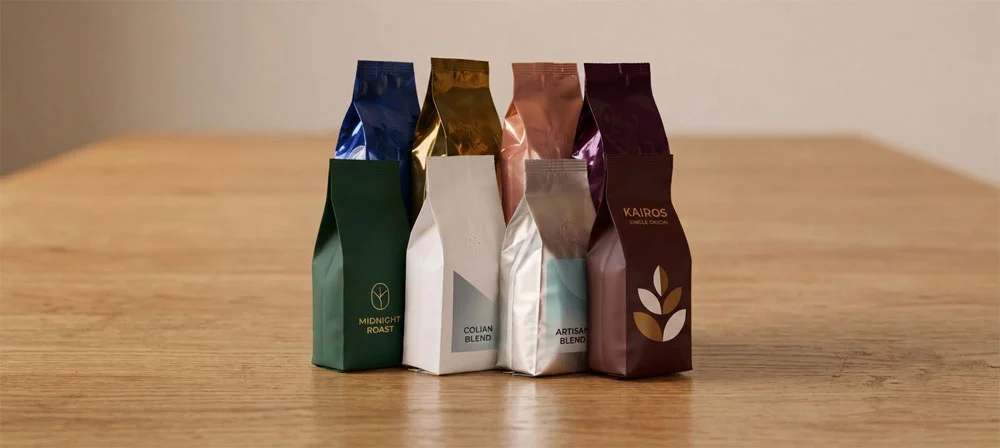
Evaluating Material Compatibility
To choose the right packing materials, you need to know what problems your product has. Foil-based laminates work great for coffee and dry foods that need to keep oxygen and moisture out. Clear high-barrier films made with EVOH or metallized PET layers may work better than aluminium foil for products that need to be see-through for aesthetic reasons.
Manufacturers of pet food and treats should think about whether their goods contain oils that could get into the packaging and weaken the seal over time. FDA-approved food-grade materials make sure they are safe, but extra suitability testing makes sure they will work well for a long time in real-life keeping situations. Before placing a large order, procurement managers should ask suppliers for migration test reports and shelf-life validation data.
Valve Quality and Performance Specifications
Not every degassing valve works the same way. A good valve has a direct effect on how fresh food stays and how well the package stays together in a 1kilo side gusset pouch with valve. Valve seals that aren't very good might not work right, letting air in and defeating the purpose of protective packing. On the other hand, valves with too high an opening pressure might not let gases out properly, which could cause the package to bend.
Ask providers for technical details like the range of opening pressures, the rates of back-leakage, and the results of rapid ageing tests when you are examining them. Reputable makers test the one-way operation with suction and the structural stability under load with burst pressure.
Customization Options for Brand Differentiation
These days, B2B buyers want packaging that protects the goods and promotes it at the same time. Rotogravure printing with a high resolution (up to 11 colours) lets you use complex graphics and bright brand presentations that stand out on the shelf. Soft-touch coats, matte or shiny finishes, and other feel effects all make an object seem even more valuable.
Depending on the needs of the program, more useful features can be added. Products with resealable zippers make it easier to use for more than one purpose. Tear cuts make things easier to use. Hang holes make it easier to display things in stores. The clear windows let you see the product inside, but they also keep most of the package's surface protected. Brand teams and experienced packaging manufacturers need to work together to find the best balance between customising the look and making sure the packaging works well.
Supplier Credentials and Reliability
When doing foreign business-to-business purchases, the dependability of the seller decides whether the packaging helps or hurts operations. ISO 9001 for quality management, BRC for food safety, FDA compliance for access to the U.S. market, and SGS testing verification are all examples of certifications that give basic peace of mind. But licenses don't ensure that the same level of work will be done on return sales.
When processes are scaled up, production ability is important. If a seller has modern manufacturing tools like multiple printing presses, sealing lines, and turning equipment, they can handle more orders without lowering the quality. Consistency in lead times is just as important. Digital printing in 7–10 days and rotogravure printing in 15–20 days from some suppliers give you options for both quick starts and planned production cycles. Transactional vendors are different from reliable partners because they don't offer clear communication, technical support, or quick service.
Practical Usage and Storage Tips for Maximizing Freshness
Optimal Storage Conditions During Warehousing
Using the right storage methods is just as important as using good packaging. Changes in temperature and high humidity can put stress on package materials and speed up the breakdown of products. Keeping storage temperatures between 15°C and 25°C and relative humidity below 60% improves barrier efficiency and makes products last longer.
Damage to the goods is avoided by properly palletising them. The height at which you stack the boxes should follow the manufacturer's instructions. For bags with one kilogram of goods, this is usually between 6 and 8 pallet layers. Stacking weights that are too high can damage bottom pouches, which could affect the integrity of the seal. Enough airflow around pallets keeps condensation from forming, which could damage the adhesion of labels or printing on the outside.
Transportation and Handling Best Practices
Even though the 1kg side gusset pouch with valve is built to last, logistics always cause stress. Frequent shaking during transport, extreme temperature changes in shipping containers, and rough treatment at distribution centers are all things that can hurt the performance of the packaging. Using cardboard boxes that are the right size for the pouches reduces movement and wear and tear during shipping.
When sending goods across international borders, climate-controlled containers keep the temperature and humidity stable, which protects both the goods and the packaging. Handling instructions should be written down, especially for high-end coffee and speciality foods whose market value is directly linked to how fresh they are, such as a 1kilo side gusset pouch with valve. Damage rates and prices are lowered by clear handling directions.
Sustainability Considerations and Disposal Methods
Multi-layer barrier packaging is usually hard to recycle because the materials are so complicated. But new ideas are being generated by better recycling tools and government push. Some companies now make structures out of a single material that keep their blocking properties while making them easier to recycle. These things are made of polymer layers that work well with each other and can be recycled together in existing systems.
As alternatives, you could design packaging for industrial composting facilities or start take-back programs where they are cost-effective. Brands can meet their environmental goals and protect products at the same time by being clear about what materials are used and how they can be disposed of. The move toward packaging that can be recycled in its entirety shows that companies are realising that being environmentally friendly and making great products don't have to be mutually exclusive.
Case Studies and Performance Verification
Coffee Industry Applications
The biggest group of people who use side gusset pouches with valves is speciality coffee roasters. Benefits can be seen and measured in case studies from the North American and European markets. The consumer feedback scores for stability in smell and flavour also went up, which led to fewer complaints and returns.
In a different case, a monthly coffee service had trouble with packages getting too big while they were being shipped. When bags with properly adjusted degassing valves were introduced, bloating problems went away completely while keeping the air barrier needed for freshness. As the quality of the goods at delivery got better, more customers stayed with the business.
Quality Assurance Protocols
Before going on the market, rigorous testing makes sure that the packaging works as it should. Following ASTM F88 standards for heat seal strength testing makes sure that seals can handle handling pressures. Burst pressure testing makes sure that filled pouches stay together in fake distribution situations. By exposing packages to high temperatures and humidity, accelerated ageing studies can predict how well barriers will work in the long term.
Verification by a third-party lab adds authority. Independent confirmation of barrier properties, material safety, and structural integrity is given by SGS testing reports. These written test results back up regulatory compliance submissions and give procurement teams objective data on vendor performance that they can use to compare vendors.
Metrics for Freshness Retention
To measure freshness, you need to use testing methods that are specific to the product. Sensory groups regularly judge the general quality, flavour profile, and strength of the aroma in coffee. Gas chromatography measures the retention of volatile compounds, giving accurate information on the preservation of aromatic compounds. Moisture content analysis measures how well a barrier stops the flow of water vapour.
By comparing these metrics across different types of packaging, we can see that the 1kilo side gusset pouch with valve performs better. When compared to other packaging formats, products kept in high-barrier valve pouches consistently show slower degradation rates across all measured parameters. This validation based on data gives people more confidence in their buying decisions and backs up brands that put an emphasis on quality and premium pricing strategies.
Conclusion
Side gusset pouches with valves are a sophisticated way to package things that helps coffee roasters, food manufacturers, and health supplement brands keep their products fresh. When you combine multi-layer barrier materials with precision-engineered degassing valves, you get the best setting for extending shelf life, keeping sensory qualities, and making sure the product stays intact throughout the distribution chain. The side gusset design has structural benefits that make it more space-efficient and more durable. These benefits lower transportation costs and make sure that goods get to customers in great shape. To choose the right package, you need to carefully consider how well the materials work together, how well the valves work, how reliable the provider is, and how well the customisation choices fit with your brand's image. When used with the right storage methods and backed by strict quality checks, these bags make a measured difference in performance that has a direct effect on customer happiness and company image in competitive markets.
FAQ
1. Can side gusset pouches with valves be reused by end consumers?
While the 1kilo side gusset pouch with valve is designed primarily for single-fill manufacturing use, many designs incorporate resealable zippers that allow consumers to open and close the package multiple times. The degassing valve continues functioning throughout the product's life, though barrier effectiveness gradually diminishes once the original seal is broken and the package experiences repeated opening.
2. What are typical lead times for custom-printed valve pouches?
Lead times vary based on printing method and order volume. Digital printing typically requires 7-10 days from artwork approval to shipment, making it suitable for small batches and market testing. Rotogravure printing—which delivers superior color consistency and lower unit costs at volume—generally requires 15-20 days. Cylinder preparation for rotogravure adds to initial setup time but enables efficient repeat production.
3. Are eco-friendly valve pouch options available?
The packaging industry is actively developing more sustainable alternatives. Current options include mono-material structures designed for improved recyclability, bio-based films incorporating renewable content, and compostable materials suitable for industrial composting facilities. Material selection involves balancing environmental goals with barrier performance requirements. Consultation with experienced manufacturers helps identify solutions that meet both sustainability objectives and product protection standards for specific applications.
Partner with a Trusted 1 Kilo Side Gusset Pouch with Valve Manufacturer
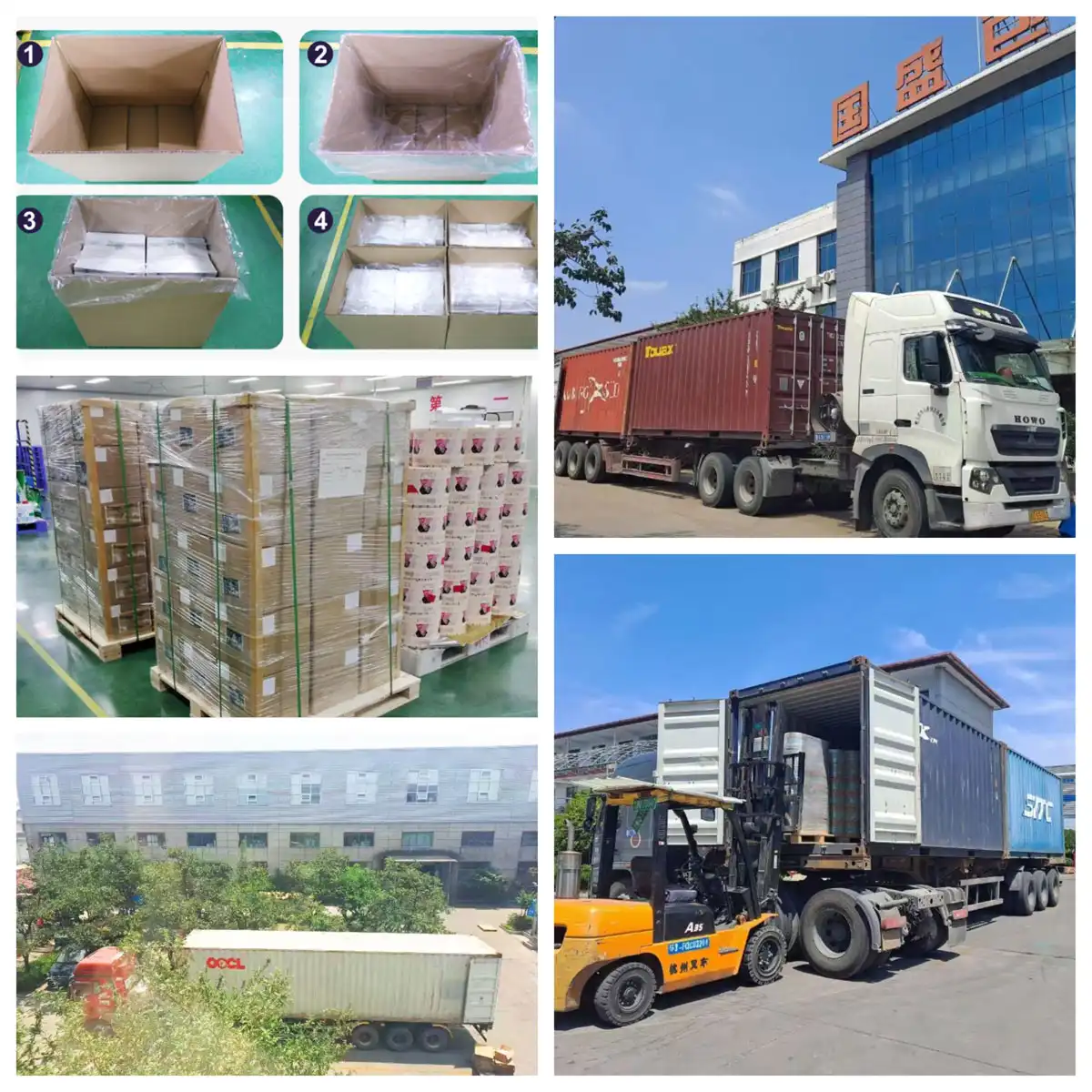
Guoshengli Packaging brings 25 years of flexible packaging expertise to help food brands, coffee roasters, pet food companies, and health supplement manufacturers solve freshness challenges with confidence. Our 1kilo side gusset pouch with valve combines multi-layer barrier protection, precision-calibrated degassing valves, and durable construction designed specifically for products requiring extended shelf life and aroma preservation. We support procurement teams with transparent quality verification, including ISO 9001, BRC, FDA, and SGS certifications that meet international market requirements.
Our manufacturing capabilities include up to 11-color rotogravure printing for impactful brand presentation, customizable features such as resealable zippers and eco-friendly materials, and flexible production timelines accommodating both urgent launches and planned scaling. Whether you need digital printing samples in 7-10 days or volume production with rotogravure consistency, our experienced team provides responsive technical support throughout the sourcing process.
Contact us at sales@guoshengpacking.com to discuss your specific requirements. Request samples to evaluate our valve pouch performance directly, or schedule a consultation to explore how our packaging solutions can enhance product freshness, reduce logistics costs, and strengthen your brand position in competitive markets.
References
1. Robertson, Gordon L. Food Packaging: Principles and Practice, 3rd Edition. CRC Press, 2012.
2. Marsh, Kenneth and Betty Bugusu. "Food Packaging—Roles, Materials, and Environmental Issues." Journal of Food Science, vol. 72, no. 3, 2007, pp. R39-R55.
3. Coles, Richard, Derek McDowell, and Mark J. Kirwan. Food Packaging Technology. Blackwell Publishing, 2003.
4. Siracusa, Valentina. "Food Packaging Permeability Behaviour: A Report." International Journal of Polymer Science, vol. 2012, Article ID 302029.
5. Ahvenainen, Raija. Novel Food Packaging Techniques. Woodhead Publishing, 2003.
6. Lee, Dong Sun, Kit L. Yam, and Luicano Piergiovanni. Food Packaging Science and Technology. CRC Press, 2008.
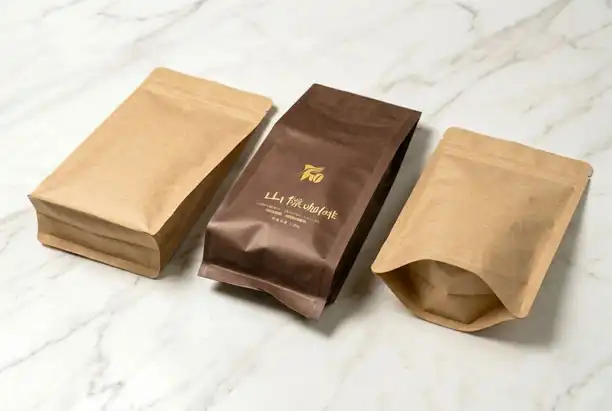
Quad Seal Pouches & Bags are a sophisticated type of packaging that can be identified by their four longitudinal seal design. The four longitudinal seals reinforce the side structure, allowing the pouch to maintain its shape and support heavier products. The strengthened ends of these bags make them look like boxes, which means they can hold more weight than standard three-seal designs. The multi-layer barrier films keep the food fresh for a longer time by blocking out air, wetness, and contamination. Their flat panel surfaces make it easy to brand them, and their stable bases let products stand up straight on store shelves without any extra help. With its unique design, this quad seal packaging is perfect for food makers, pet food companies, and beverage brands that need reliable, professional-grade packing solutions. It can hold big fills weighing between 500 grams and 20 kilograms.
Understanding Quad Seal Pouches: Design and Functionality
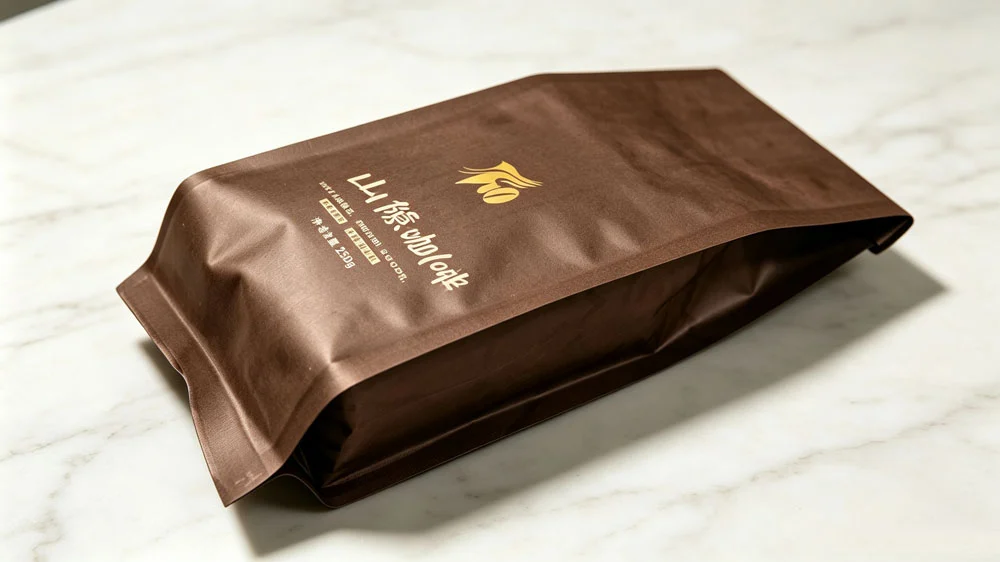
Because it has four sealed edges, quad seal construction is very different from other pouch formats from an engineering point of view. Instead of relying on a single bottom flap like stand-up bags do, this design spreads stress equally across strengthened corner seals, making it much less likely that something will break while being handled or transported.
Structural Engineering Principles
Through triangulated load distribution, the four-seal configuration makes the structure stronger. When the container is full, the weight of the product makes the base automatically, and strong side seals keep the walls upright.
Choosing the right materials is very important for efficiency. High-performance laminates usually have polyethylene for heat sealing, aluminum or metallized films for barrier protection, and PET for structural strength. This multi-layer method meets specific Oxygen Transmission Rate (OTR) and Water Vapor Transmission Rate (WVTR) goals that are needed for products that need to be dry, like coffee, powdered supplements, and flour.
Barrier Technology and Material Science
Advanced barrier films with a quad seal design provide protection that can be measured. A normal food-grade structure could get OTR levels below 0.5 cc/m²/24hrs and WVTR levels below 1.0 g/m²/24hrs, which is a lot better than single-layer options. For procurement managers looking at package expenses, these technical specs directly mean longer shelf life and lower rates of loss.
Using adhesive systems or extrusion coatings, the lamination process joins several substrate layers together to make a single barrier structure. FDA and EU rules say that surfaces that come into contact with food must be chemically resistant to oils, fats, and acidic substances that are common in food and drink uses.
Core Advantages of Quad Seal Pouches for B2B Procurement
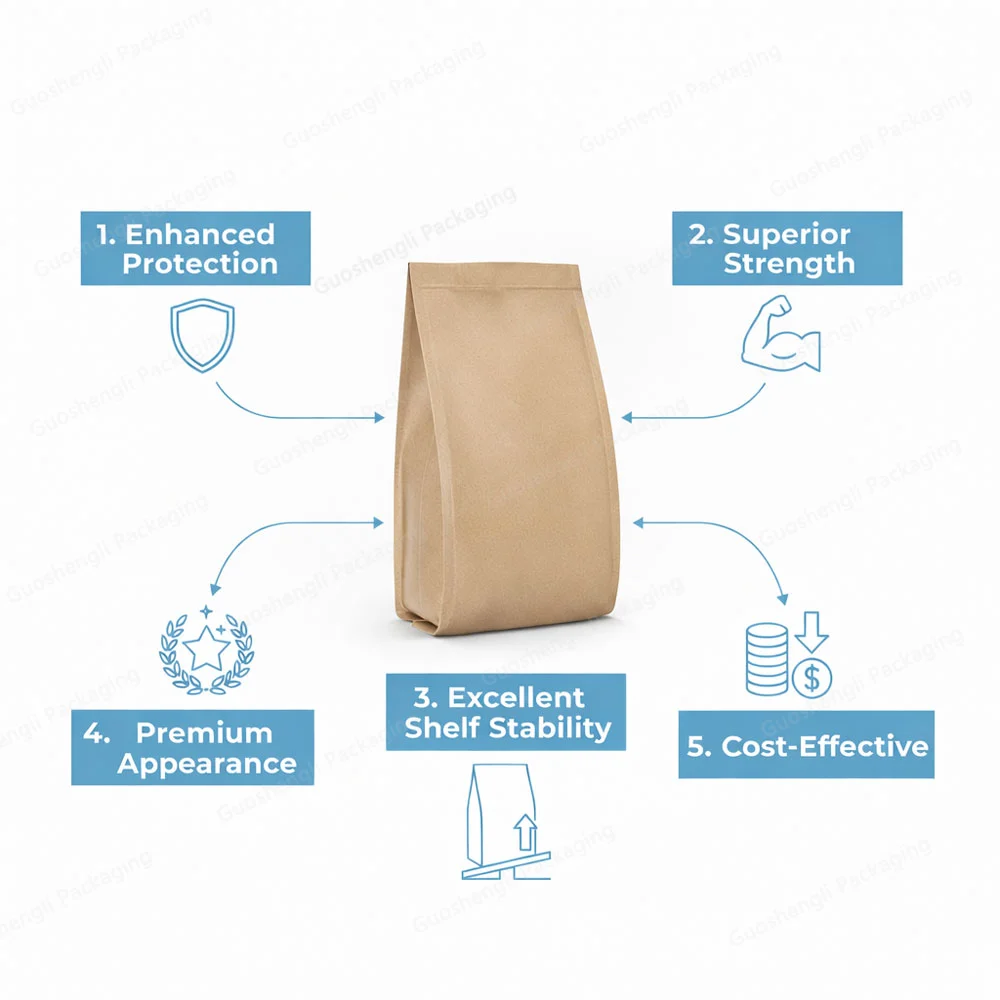
When purchasing managers look at different package options, they focus on performance measures that have a direct effect on how well the business runs and the quality of the products it sells. Quad Seal Pouches & Bags have measurable benefits across a number of evaluation criteria.
Superior Durability and Product Protection
When packing thick products like pet food kibble or grain-based foods, the strengthened corner seals are more important than three-side seal options because they have higher burst strength. Drop tests show that quad seal designs are more resistant to punctures, which means less product loss during storage and shipping. This means that there is less damage along the supply chain, which protects both the integrity of the product and the reputation of the brand.
Enhanced Shelf Presence and Branding Opportunities
The structure, which looks like a box, consists of four flat panels that are perfect for showing high-resolution images and product information. Rotogravure printing can use up to 11 colors, which lets brands make complicated patterns that look the same from one production run to the next. This visual uniformity is important, especially for high-end coffee brands and specialty foods whose package looks affect people's choices to buy them. The stable standing profile makes the product stand out on store shelves without the need for extra display supports, which is an advantage that stores like when they're deciding where to put things on the shelves.
Flexible Sizing and Customization Options
Quad seal pouches can hold a range of fill volumes because the panel and gusset widths can be changed. Sample sizes range from 250 grams to 20 kilograms, and a single design platform can be used for all of them. Custom features include built-in handles for easy transport, zippers that can be closed again for ease of use by consumers, and one-way degassing valves for use with roasted coffee. These changes meet the needs of certain products without needing completely new package designs.
Sustainability and Corporate Responsibility Alignment
More and more, modern quad seal construction uses recyclable single-material structures or compostable substrates that are good for the environment without lowering the performance of the barrier. PE-based laminates that can be recycled keep their useful qualities and can be recycled in regular ways. This feature helps brands meet their green goals and meet customer demands for packaging that is good for the environment.
Certifications and material documentation can help procurement teams check a supplier's skills. Companies that use imported RTO (Regenerative Thermal Oxidizer) exhaust treatment technology show that they are serious about lowering production emissions. This is a key factor for businesses that have strict environmental supply chain standards.
Quad Seal Pouches vs. Other Flexible Packaging Solutions
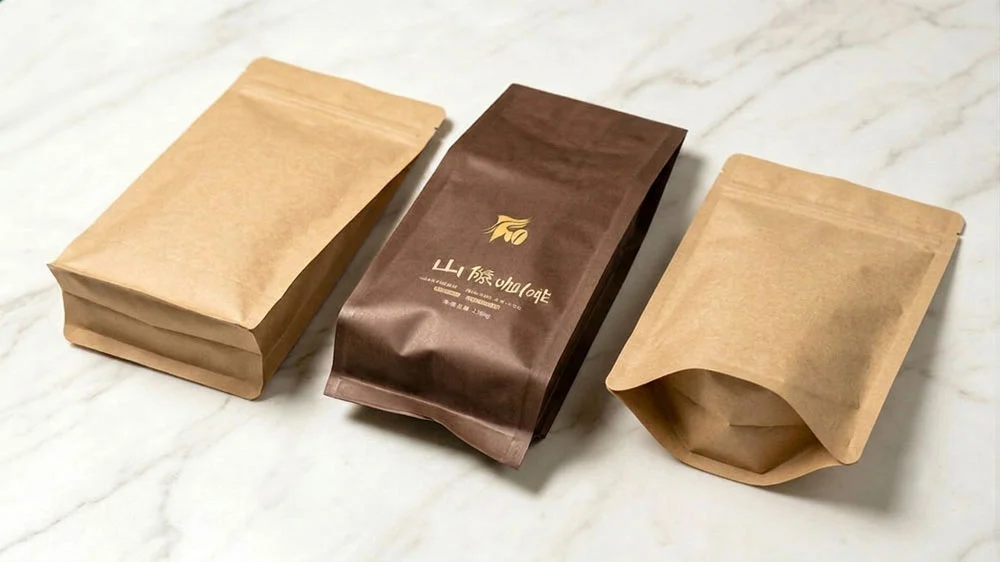
Knowing the relative benefits of different packaging forms such as Quad Seal Pouches & Bags helps purchasing professionals choose the best ones for each product and business.
Structural Comparison with Alternative Formats
Stand-up pouches have bottom gussets that fold flat when not in use but depend on the contents inside to keep the pouch standing. Even though they are cheap for small products, they are not as stable for heavy components. Flat bottom pouches have discrete gusseted bases that make them stand out on the shelf. However, they usually cost more per unit because they require more material and are harder to convert.
If you compare quad seal designs to standard stand-up pouches, they offer better support while still being more cost-effective than flat bottom forms. The side-gusset design makes the most of the pallet's internal space compared to its external dimensions, which helps it be used more efficiently during shipping. When you look at how much it costs to make, how quickly it can be filled, and how dense the shipment is, quad seal bags are often the most cost-effective way to ship large products that weigh 5 to 15 kilos.
Operational Considerations for Automated Filling
The total cost of ownership is greatly affected by how well packaging works on high-speed filling lines. When used with form-fill-seal tools, quad seal boxes open regularly and keep the bags in place even at speeds of more than 60 bags per minute. When free-flowing powders are filled aggressively, the strengthened edges keep the corners from breaking.
Micro-perforations or one-way valves stop air from moving during filling, which stops "ballooning" that can mess up automatic handling systems. These features make it easy to connect to existing production systems, which keeps lines running and meets throughput goals.
Market Demand and Adaptability
Industry data shows that quad seal formats are being used more and more in the coffee, pet food, and specialty food industries. This trend shows that more people are realizing how useful the format is for solving a wide range of packing problems. Quad seal designs work especially well for brands that need bulk packaging that projects a high-end image because the structured look conveys quality while still being useful.
The style is easy to change to meet the needs of new markets. New matte finishes, feel coats, and clear window panels make it possible to stand out in crowded store categories without having to make new bag shapes. This flexibility lowers the cost of development when adding new products or going after new market segments.
Customization and Procurement Considerations for Quad Seal Pouches
When you make strategic sourcing decisions, you have to look at more than just unit price to make sure that the packaging works the same way for all orders, no matter how many you place.
Printing Technologies and Brand Differentiation
Rotogravure printing produces images and colors that stay the same over long production runs for Quad Seal Pouches & Bags. This makes it perfect for well-known goods that need to be printed in large quantities. The process is more accurate than flexographic methods at reproducing fine features, curves, and digital pictures. Because printing cylinders cost a lot of money, the minimum order quantity is usually set at 100,000 units.
Digital printing technologies allow for faster production with lead times of 7–10 days and lower minimum quantities, which is helpful for testing the market or making products for specific times of the year. Even though the cost per unit is higher, being able to change designs quickly and make smaller batches lowers the risk of running out of stock when a new product comes out.
Supplier Selection and Quality Assurance
When looking at possible sources, you need to look at certifications that prove they can make things. ISO 9001 certification shows that quality management systems are documented, and BRC (Brand Reputation through Compliance) certification makes sure that food safety rules are followed throughout the whole production process. Following FDA rules makes sure that materials are safe for food contact, and SGS testing makes sure that the protective qualities and physical specs are correct.
Inventory of machinery and production rate are two measures of manufacturing capacity. Suppliers who have more than one printing, sealing, and turning line show that they can regularly meet delivery dates. Our Guoshengli Packaging facility has 49 converting machines, 7 printing machines, and 6 laminating units. This gives us production redundancy that keeps customers from having to wait for equipment to break down.
Minimum Order Quantities and Pricing Structures
MOQ requirements are very different between suppliers, which makes it hard to plan purchases. When compared to trading companies, factory-direct makers often have more options. For example, they can accept smaller initial orders for new goods while still offering reasonable prices on larger reorders. When you know how prices change at different levels of quantity, you can better balance the costs of keeping goods with the sizes of your orders.
Lead times are another important factor. Standard rotogravure production takes about 15 to 20 days from the time an order is confirmed until it is shipped. For faster processing, digital printing may be used for rush orders. When speed is more important than cost, air freight cuts travel time to four to five days.
Sustainable Material Options and Compliance
Eco-friendly quad seal options include mono-material laminates that can be recycled and structures made from PLA or PBAT that can be broken down and composted. Solicitation teams should ask for performance testing results that show sustainable materials meet the standards for shelf life in real-life storage situations. Some barrier properties may go down with compostable films, so it's important to weigh environmental goals against the need to protect products.
Transparency from suppliers about where materials come from and compliance paperwork lowers regulatory risk. This is especially true for brands that sell in many foreign markets with different packing requirements.
Use Cases and Industry Applications
Four-side seal construction is very flexible and can be used in many different industries with very different packaging needs and performance priorities.
Food and Beverage Packaging
A big part of the market for quad seal forms is specialty coffee roasters. The sturdy design can hold coffee grounds or whole beans weighing between 12 ounces and 5 pounds, and it has built-in degassing valves that let CO2 out without letting oxygen in. When kept properly, high-barrier metal layers keep the volatile chemical molecules that make coffee taste good for longer than six months.
The moisture barrier features keep the texture of dried fruits, nuts, and food mixes from breaking down. The reclosable zipper choices keep the product fresh after it has been opened, which meets the needs of consumers who want ease. Heavy-duty construction is used for flour, grain, and rice packaging, and reinforced handles make it easier to move 10–20 kilogram bulk sizes that are common in food service channels.
Pet Food and Animal Nutrition
Pet food companies need packages that can stand up to rough treatment while still keeping the food's nutritional value. For food, quad seal bags usually have a width of 120 to 180 microns, which makes them resistant to punctures during palletization and delivery. The stable base keeps the display from falling over, which is important for products that are set up at floor level in pet specialty stores.
Smaller formats are used for treat packaging and supplement powders that have similar barrier properties. These keep sensitive ingredients like vitamins and probiotics safe from moisture and oxidation. The professional look fits with tactics for expensive placement that are popular in markets that sell specialty cat food.
Health and Wellness Products
Protein powders, nutritional supplements, and plant ingredients can use the moisture-proof design to keep their flowability and stop them from clumping. Many brands that focus on health stress the importance of being environmentally friendly. For brand consistency, it is important that the quad seal options be recyclable or compostable. As needed by regulatory frameworks, the flat panel sides hold thorough nutritional information and directions for use.
Industrial and Chemical Applications
In addition to food uses, the quad seal design is used in industrial powder markets that need to keep materials that are sensitive to wetness inside. When technical goods are packed, chemical-resistant laminates keep them from stress-breaking, and the strengthened structure makes stacks stable in warehouses. Container-grade designs can handle the differences in pressure that happen during international shipping, which means that less product will be lost when the packaging fails.
Emerging Market Opportunities
More and more, cosmetic and personal care brands are using bendable packaging instead of hard cases to save money on materials. Quad seal pouches can hold bath salts, powdered cosmetics, and refill formats that people who care about the environment will like. The high-end look of the structure supports pricing in beauty stores, where how people see packaging has a big effect on their buying decisions.
Conclusion
Business-to-business buyers in the food, pet food, beverage, and specialty product industries can measure the performance benefits of Quad Seal Pouches & Bags. The four longitudinal seal design gives the structure more strength and allows for big fills while still looking professional on the shelf. Advanced protection technologies keep the quality of products safe during long distribution cycles, which keeps them from going bad and helps the brand's image. With customization choices for fabrics, printing, and useful features, you can make solutions that fit your unique needs. When procurement pros look for packaging, they should check the supplier's making skills, approval standards, and knowledge of the materials to make sure that the quality is the same for each order.
FAQ
1. Are quad seal pouches environmentally friendly packaging options?
Modern quad seal construction increasingly incorporates sustainable materials that balance environmental responsibility with functional performance. Recyclable mono-material polyethylene laminates qualify for existing recycling streams in many regions, though actual recycling rates depend on local infrastructure. Compostable alternatives using PLA or PBAT substrates meet ASTM D6400 standards for industrial composting, though oxygen barrier properties typically decrease compared to conventional materials. Brands should request testing data confirming that eco-friendly structures meet product shelf-life requirements under realistic storage conditions.
2. How do quad seal bags compare cost-wise to other pouch formats?
Pricing varies based on material specifications, printing complexity, and order volumes. Quad seal pouches typically cost more per unit than basic three-side seal bags due to additional material and converting steps, but less than flat-bottom formats requiring specialized equipment. The total cost analysis should include filling efficiency, shipping density, and damage rates. For heavy products requiring structural integrity, quad seal designs often deliver lower total packaging costs despite higher unit prices. Volume pricing becomes more favorable above 50,000-unit quantities, with significant breaks at 100,000+ volumes.
3. What customization features work best with quad seal pouch designs?
Popular modifications include press-to-close zippers for reclosability, tear notches for easy opening, and carrying handles for transport convenience. One-way degassing valves suit coffee applications by releasing CO2 while blocking oxygen ingress. Transparent windows enable product visibility, though they may reduce overall barrier performance depending on film selection. Matte or soft-touch finishes provide tactile differentiation on retail shelves. Spout fitments adapt the format for liquid or semi-liquid products, expanding application possibilities beyond dry goods.
Partner With a Trusted Quad Seal Pouches & Bags Manufacturer
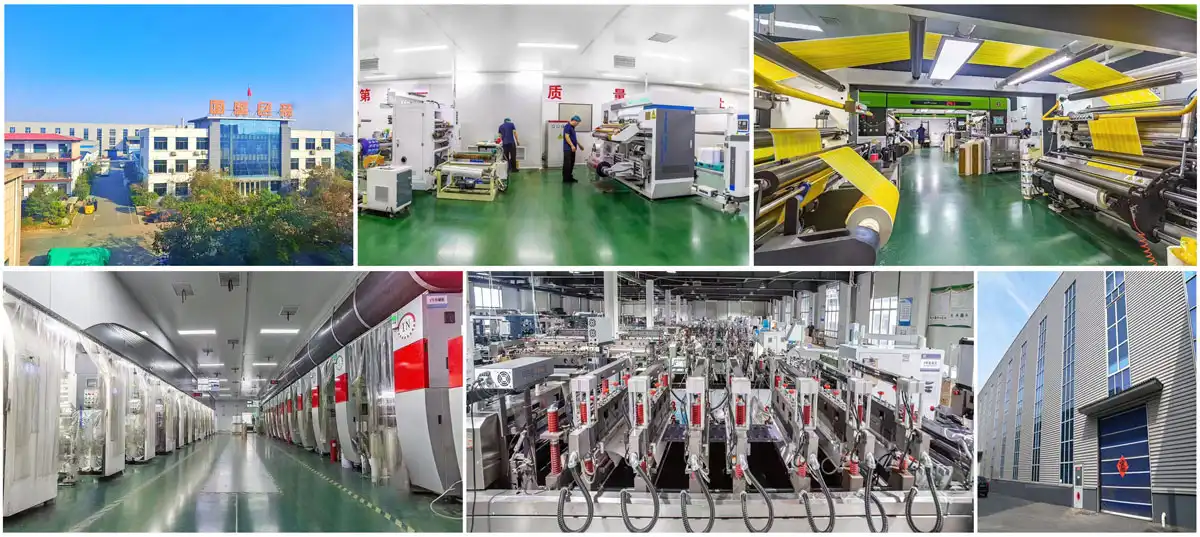
Guoshengli Packaging brings over 25 years of flexible packaging expertise to businesses seeking reliable, high-performance Quad Seal Pouches & Bags solutions. Our ISO 9001, BRC, and FDA certifications validate manufacturing quality, while our production capacity—7 printing machines, 6 laminating units, and 49 converting lines—ensures on-time delivery for both standard and rush orders. We specialize in custom quad seal designs tailored to your specific product requirements, offering material selection guidance, rotogravure printing up to 11 colors, and sustainable packaging options including recyclable structures. Contact our team at sales@guoshengpacking.com to discuss your project requirements, request samples, or explore how our quad seal pouches can enhance your product protection and brand presentation.
References
1. Robertson, Gordon L. Food Packaging: Principles and Practice, Third Edition. CRC Press, 2012.
2. Marsh, Kenneth and Betty Bugusu. "Food Packaging—Roles, Materials, and Environmental Issues." Journal of Food Science, Vol. 72, No. 3, 2007.
3. Selke, Susan E.M., John D. Culter, and Ruben J. Hernandez. Plastics Packaging: Properties, Processing, Applications, and Regulations, Third Edition. Hanser Publications, 2016.
4. Yam, Kit L. The Wiley Encyclopedia of Packaging Technology, Third Edition. John Wiley & Sons, 2009.
5. Coles, Richard and Mark Kirwan. Food and Beverage Packaging Technology, Second Edition. Wiley-Blackwell, 2011.
6. Brody, Aaron L. and Kenneth S. Marsh. The Wiley Encyclopedia of Packaging Technology. John Wiley & Sons, 1997.
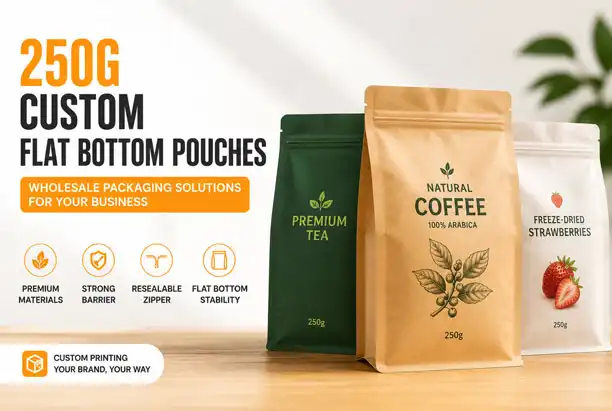
Yes, there are many sellers around the world that offer bulk 250g custom flat bottom pouches made just for businesses that need reliable, scalable packing solutions. Food brands, pet food makers, and health supplement makers all love the 250g capacity because it's the perfect size for holding a lot of product without taking up too much space on the shelf. Specialised companies that make flexible packaging can customise everything about your pouches, from the material you choose and the way they're printed to functional features like resealable zippers and barrier coatings. This way, your pouches will perfectly match your brand's image and meet your product protection needs.
Understanding 250g Custom Flat Bottom Pouches
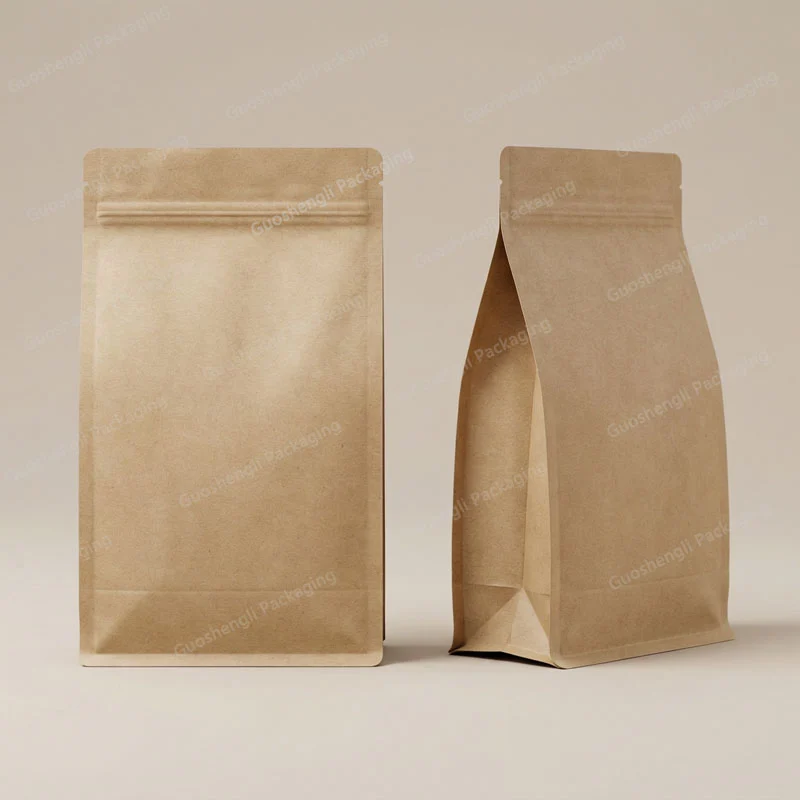
Box-style pouches have transformed how brands present products on retail shelves. Unlike traditional stand-up pouches that rely on product fill for stability, flat bottom pouches feature a unique five-panel construction: front, back, two side gussets, and a completely flat base. This engineering creates a box-like structure that stands firmly upright even when empty, maximizing shelf presence and consumer visibility.
Why the 250g Size Matters
The 250-gram capacity serves as a sweet spot for many product categories. This size offers enough volume to deliver value while remaining convenient for single households or trial purchases. Coffee roasters appreciate this capacity for specialty blends, pet food brands use it for premium treat lines, and supplement companies find it perfect for two-week to one-month supplies. The format reduces packaging waste compared to larger sizes while maintaining enough surface area for comprehensive branding and nutritional information.
Key Features That Drive Performance
Our 250g custom flat bottom bag has a lot of useful features that keep the product safe and make the user experience better. The multi-layer plastic structure successfully stops oxygen, light, and wetness, all of which make food less fresh. Single-layer packaging doesn't last as long as advanced barrier technology does.
A stable, flat-bottom form makes more than just looks better. The stability of the product makes it easier to handle in the supply chain, which means less damage during shipping and storage. For retailers, it's easier to keep shelves stocked and use store space more efficiently. Unlike bag designs, the four vertical panels give you enough room for photos of the product, information about the ingredients, and brand stories.
Now you need flaps that can be closed again. Customers want packaging that stays fresh after being opened and can be used more than once without losing its quality. Our pouches have strong zippers that stay closed even after being opened and closed hundreds of times. The easy-tear notch makes opening the package easier and keeps its shape.
Material Options and Sustainability Considerations
The choice of material has a direct effect on both the environmental impact and the safety of the product. For oxygen-sensitive products like coffee and nuts, traditional multi-layer laminates made of PET, aluminium foil, and PE films work best as a barrier. These laminates provide excellent oxygen, moisture and light barrier properties, but they make recycling harder.
Kraft paper laminates provide a natural appearance preferred by eco-conscious brands, although most laminated kraft structures are not recyclable. These materials look nice and protect, but their barrier properties are different from those of foil structures. Constructions made of only PE or PP are the most recyclable and are designed to work with circular economy initiatives. The material you choose should match the sensitivity needs of your product and how your brand positions itself when it comes to being environmentally friendly.
Certifications and Food Safety Standards
Tough safety rules must be followed for all packaging that comes in contact with food. Facilities that make bags for the US market have to follow FDA rules to make sure that materials don't pass dangerous substances to the contents. BRC certification shows that a company is committed to quality management systems that are designed to help companies that make food packaging. Having ISO 9001 approval means that all of your production methods follow the same quality standards.
These certifications are important for more than just following the rules. They let buyers know that sellers keep quality controls in place, test products regularly, and put customer safety first. When evaluating suppliers, asking to see proof of these certifications helps make sure they can reliably handle food-grade applications.
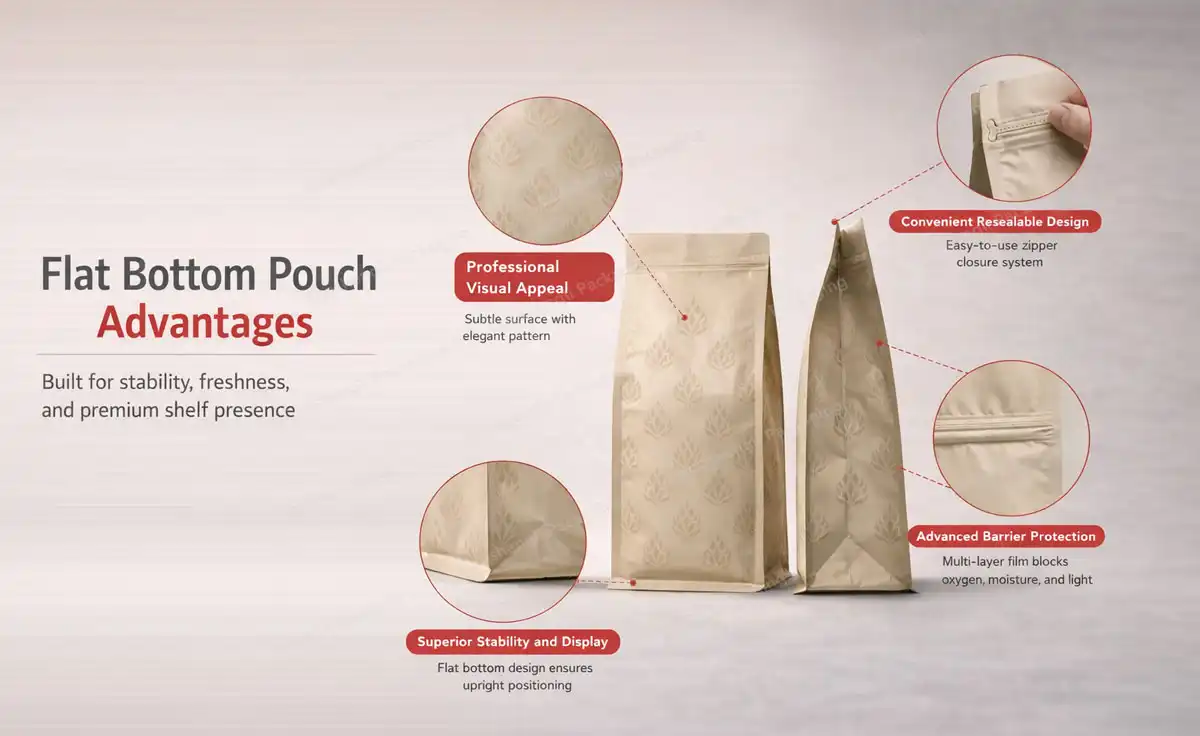
Wholesale Supplier Landscape for 250g Custom Flat Bottom Pouches
The global flexible packaging industry includes numerous suppliers capable of producing custom flat bottom pouches at wholesale volumes. Understanding where these suppliers concentrate and how to evaluate their capabilities streamlines your sourcing process considerably.
Major Manufacturing Hubs
Flexible packaging is mostly made in Asia, especially China. This region's manufacturers provide reasonable pricing, superior printing technology, and large production capacities. Photographic-quality graphics from 11-color rotogravure printing presses boost brand perception on crowded shelves. Efficiency gains are hard to reproduce due to the concentration of raw material suppliers, skilled labour, and supporting industries.
Sustainable innovations and high quality are European manufacturers' priorities. This market's suppliers pioneer recyclable constructions and bio-based materials. Major Western European consumer markets are nearby, giving companies logistical benefits.
North American manufacturing emphasises short-run digital printing and fast turnaround for local clients. Certain company models profit from faster delivery and better communication despite greater production costs than Asian competitors.
Supplier Credibility Indicators
Distinguishing reliable wholesale suppliers from inconsistent vendors requires examining several key indicators. Production capacity tells you whether a supplier can scale with your business. Manufacturers operating multiple printing lines, laminating machines, and converting equipment handle large orders while maintaining delivery schedules. A facility with seven printing machines, six laminating lines, and forty-nine converting machines demonstrates the infrastructure necessary for serious wholesale operations.
Certifications we discussed earlier—FDA, BRC, ISO 9001, and SGS testing—verify that quality systems exist beyond marketing claims. International client portfolios indicate experience navigating export regulations, currency transactions, and cross-cultural business practices. Suppliers serving customers across North America, Europe, and Asia-Pacific regions understand compliance requirements and buyer expectations in those markets.
Evaluating MOQ, Lead Times, and Pricing
Minimum order quantities vary widely among suppliers. Some need 50,000–100,000 250g custom flat bottom pouches per design to justify rotogravure setup. Digital printing can reduce MOQs to as low as several hundred or several thousand pouches. Knowing these criteria helps match supplier capabilities to order volume.
Printing process and production queue affect lead times. Digital printing takes 7–10 days, making it ideal for urgent orders or market testing with modest numbers. Though it delivers in 15–20 days and requires cylinder preparation, rotogravure printing has better colour consistency and lower volume unit costs. Early discussion of deadlines avoids miscommunication.
Professional suppliers are transparent about pricing, unlike those who change quotes randomly. Material, printing, and extras like zippers and valves should be included in detailed quotes. This breakdown lets you compare providers and identify the factors that most affect your final cost.
How to Choose the Best Wholesale Supplier for 250g Custom Flat Bottom Pouches
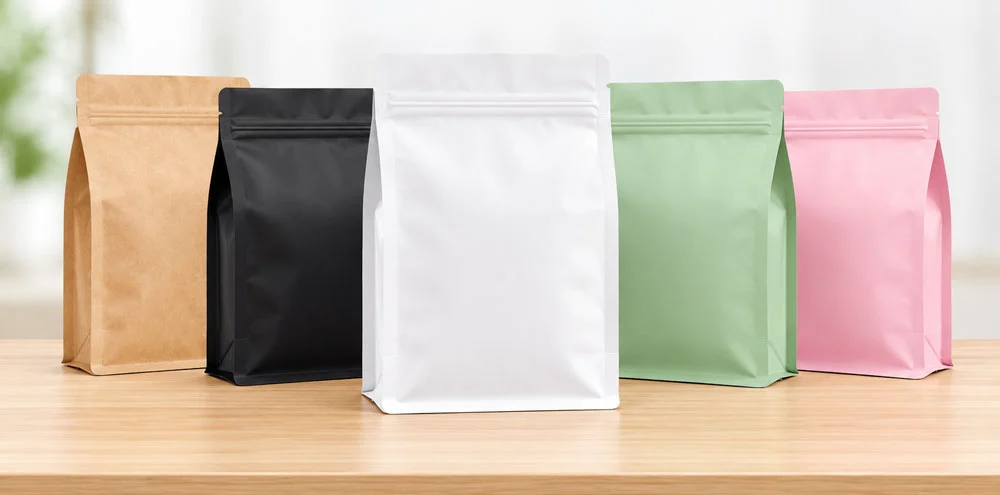
Selecting the right packaging partner involves more than comparing price lists. Your choice affects product quality, supply chain reliability, and ultimately customer satisfaction. A structured evaluation process reduces risk and positions your business for sustainable growth.
Defining Your Specific Requirements
Start by defining your products' packaging needs. Coffee needs strong oxygen barriers to avoid staling, whereas dried fruits need moisture preservation without unnecessary barrier qualities. Pet treats may prioritise puncture resistance for sharp kibble edges. To avoid pouch cling, supplement powders need anti-static characteristics.
Supply chain matching depends on order volume forecasts. Emerging companies exploring markets with 5,000-unit purchases require flexible MOQs, even if per-unit prices are greater. Established enterprises purchasing 100,000 pouches quarterly should choose suppliers with capabilities to maintain consistency throughout big manufacturing runs.
Budget goes beyond buying price. Shipping, duty fees, inventory carrying costs, and the possibility of quality failures requiring rework comprise total cost of ownership. A reliable supplier's slightly higher unit cost is often cheaper than chasing the lowest price without considering these factors.
Comparing Pouch Design Options
Flat bottom pouches affect product presentation and functionality differently. Flat bottom box-style pouches are more stable and have greater printing surface area than stand-up pouches with folded gussets. This makes them perfect for premium product placement with shelf impact.
Especially for fresh-roasted coffee, valve options release gases after packaging. CO2 escapes without oxygen entering via one-way degassing valves, ensuring freshness after roasting. Products without gas release demands may avoid this functionality, saving money and risk.
Consumption habits determine resealability. Instant-consumption products without zippers save money and simplify manufacturing. Zippers that keep products fresh and avoid spillage are invaluable for product usage over days or weeks. Multiple uses reveal the quality difference between premium and economy zippers, affecting consumer satisfaction.
Material Selection Strategy
Popular with organic and artisanal products, kraft paper laminates convey environmental sensitivity with natural beauty. Dry products with moderate barrier needs fit these structures. The matte surface and tactile quality set products apart in competitive areas.
Plastic laminates with PET, PE, and aluminium foil layers protect sensitive objects best. Bright printing on high-gloss paper grabs consumers' attention. Under tough circumstances, these materials withstand forceful filling and seal integrity better.
New all-PE or all-PP mono-material constructions prioritise recycling. Though more expensive, sustainable brands are specifying these materials. These materials are practical for forward-thinking firms since their recycling infrastructure is growing.
Understanding Lead Times and Order Processes
You should request samples early in your evaluation. Specifications cannot express quality like physical samples. Pull pouches apart at seams to test seal strength. Test zip functioning by opening and shutting. Compare print quality under various illumination. Hands-on evaluations reveal issues before mass production.
Production lead times need buffering. Shipping abroad takes two to five weeks, depending on the method. Ocean freight is cheaper but takes longer than air freight. Planning inventories to meet these dates eliminates expensive rush purchases and ensures product availability.
During sampling, communication habits predict future work relationships. Supplying quick replies and proactive ideas shows the collaboration attitude required for long-term success. Frustration may follow repeated follow-ups or vague information.
Practical Steps to Procure Wholesale 250g Custom Flat Bottom Pouches
Efficient procurement follows a structured workflow that reduces risk while accelerating time to market. Breaking the process into clear stages helps manage complexity and keeps projects moving forward.
Step One: Sample Request and Quality Evaluation
Inform prospective vendors about your application. List your product, capacity, materials, and special features like zippers or windows. Request samples of comparable pouches and technical information on barrier qualities and material structure.
When samples arrive, test thoroughly. Fill samples with your product to check fit and appearance. Unreliable seals cause product spoilage and customer complaints. To ensure compatibility, test samples on your filling equipment. Assess print quality by checking colour accuracy, registration alignment, and detail sharpness.
Compare samples from different vendors. Comparing material thickness, seal consistency, and printing clarity shows differences. This stage investment prevents costly full-production mistakes.
Step Two: Pricing Negotiation and MOQ Flexibility
Request detailed quotations breaking down all cost components. Pricing typically decreases at volume thresholds—perhaps 10,000, 25,000, and 50,000 units. Understanding these tiers helps you optimize order quantities for best economics while meeting inventory needs.
Negotiate trial run flexibility. Established suppliers sometimes accommodate lower MOQs for initial orders, allowing you to validate market acceptance before committing to larger quantities. This reduces inventory risk during product launches or market testing.
Payment terms affect cash flow significantly. Standard terms often require a 30-50% deposit with the balance due before shipping. Established relationships may earn you more favorable terms over time. Clarify these expectations upfront to avoid surprises.
Step Three: Confirming Customization Elements
Whether your brand concept is captured in pouches depends on artwork preparation. Suppliers demand AI or PDF print-ready files with outlined fonts and embedded graphics. Understanding their technological needs reduces delays and assures accurate visuals.
Careful colour matching is needed. For consistency, use Pantone numbers for logos and other brand elements. Request digital proofs of artwork on selected materials. Metallic or white base films and glossy or matte surfaces can display colours differently.
Special treatments emphasise quality and shelf distinction. The feel of matte lamination is elegant. Design features are highlighted by spot UV treatment. Metallic inks look expensive. Discuss these options early as they affect pricing and lead times.
Step Four: Logistics Planning and Compliance
International shipping involves several decisions affecting cost and timing. Air freight delivers within four to five days but costs substantially more than ocean transport, requiring four to six weeks. Balance urgency against budget constraints when choosing shipping methods.
Customs compliance requires proper documentation. Your supplier should provide commercial invoices, packing lists, and certificates of origin. Verify that material specifications meet FDA requirements for food contact if applicable. Proper documentation prevents customs delays that extend lead times unexpectedly.
Consider working with freight forwarders experienced in packaging imports. They navigate customs processes, arrange transportation from port to your facility, and handle documentation requirements. Their expertise often pays for itself through avoided delays and complications.
Why Partnering with Experienced Wholesale Suppliers Adds Value
Transactional relationships with suppliers rarely deliver optimal results long-term. Strategic partnerships with experienced manufacturers create competitive advantages beyond basic 250g custom flat bottom pouch supply.
Real-World Impact on Product Performance
A specialty coffee roaster struggled with inconsistent shelf life until partnering with an experienced pouch manufacturer. The supplier analyzed their product characteristics and recommended a high-barrier structure with degassing valves. This change helped improve freshness retention, allowing expanded distribution and reducing waste from expired inventory. The supplier's technical knowledge directly improved business economics.
A pet treat manufacturer experienced frequent seal failures causing product spoilage during distribution. Their packaging partner investigated and discovered that product oils were contaminating seal areas. By modifying the pouch material to resist oil penetration and adjusting sealing parameters, failures dropped below one percent. This problem-solving capability exemplifies the value experienced suppliers bring beyond simply producing pouches.
Value-Added Services That Strengthen Your Business
Design consulting creates efficient package graphics from brand ideas. Suppliers with experience know how designs translate to printing methods and materials. They spot faults before pricey printing plates are manufactured. This knowledge enhances outcomes and reduces revisions and delays.
Suppliers that understand market trends and technology create innovative packaging. You may not have considered rip notches for easy opening or window positions that highlight products while retaining structural integrity. These findings came from making millions of pouches for various uses.
Professional manufacturers differ from transactional sellers in after-sales service. Technical assistance saves production shutdowns by answering queries regarding storage conditions, filling equipment compatibility, and seal difficulties. This continual support is crucial for scaling operations.
Eco-friendly packaging solutions are complicated, but sustainability counsel helps. Experienced suppliers explain recyclable structure tradeoffs, help with material certifications, and inform you about new technologies. This partnership supports your environmental goals while protecting your products.
Building Long-Term Supplier Relationships
Repeat order quality relies on supplier commitment to your success. Manufacturers that follow your standards and manufacturing conditions provide brand consistency. This stability lets you expand your company instead of fixing packaging concerns.
Scalable manufacturing is essential as your firm grows. Suppliers with large infrastructure handle volume increases without quality issues or long lead times. To increase pouch production from 10,000 to 100,000, you need manufacturing partners with the capacity.
Continuous improvement projects benefit from supplier participation. Regular specification reviews may reveal cost-cutting or quality-boosting options. Suppliers invested in your success suggest improvements rather than just fulfilling orders. This relationship approach builds reciprocal value time after time.
Conclusion
Understanding your needs, systematically evaluating supplier capabilities, and building long-term partnerships are needed to find wholesale 250g custom flat bottom pouch suppliers. The 250g capacity is perfect for premium positioning in varied sectors while preserving convenience. Quality suppliers with certifications, production capacity, and transparent communication give your brand consistency and reliability. Material choice, customisation, and sustainability affect package performance and market perception. Following organised procurement procedures and hiring experienced manufacturing partners positions your firm for sustainable development with packaging that preserves product quality, boosts shelf presence, and consistently promotes brand values across orders.
FAQ
1. What is the typical MOQ for wholesale 250g custom flat bottom pouches?
Minimum order quantities vary depending on printing method and supplier policies. Digital printing often allows MOQs around 10,000 to 20,000 pouches, making it accessible for smaller brands or product testing. Rotogravure printing typically requires 50,000 to 100,000 units due to cylinder preparation costs, though it offers superior color consistency and lower per-unit pricing at volume. Some manufacturers accommodate flexible MOQs for trial runs, particularly when building new client relationships.
2. Are eco-friendly materials available for bulk orders?
Yes, sustainable material options continue expanding for flat bottom pouch production. Kraft paper laminates provide natural aesthetics with moderate barrier properties suitable for dry products. Mono-material PE or PP structures offer recyclability through existing plastic recycling infrastructure. Bio-based films using renewable resources appeal to environmentally conscious brands. Suppliers with a sustainability focus can guide material selection, balancing environmental goals with product protection requirements.
3. What delivery timelines should buyers expect?
Production timelines depend on printing technology and order complexity. Digital printing typically completes within seven to ten days, while rotogravure printing requires fifteen to twenty days due to cylinder preparation. International shipping adds significantly to total lead time—air freight delivers in four to five days but costs substantially more than ocean transport, requiring four to six weeks. Planning inventory with these timelines in mind prevents supply disruptions.
Partner with Guoshengli Packaging for Your 250g Custom Flat Bottom Pouch Needs
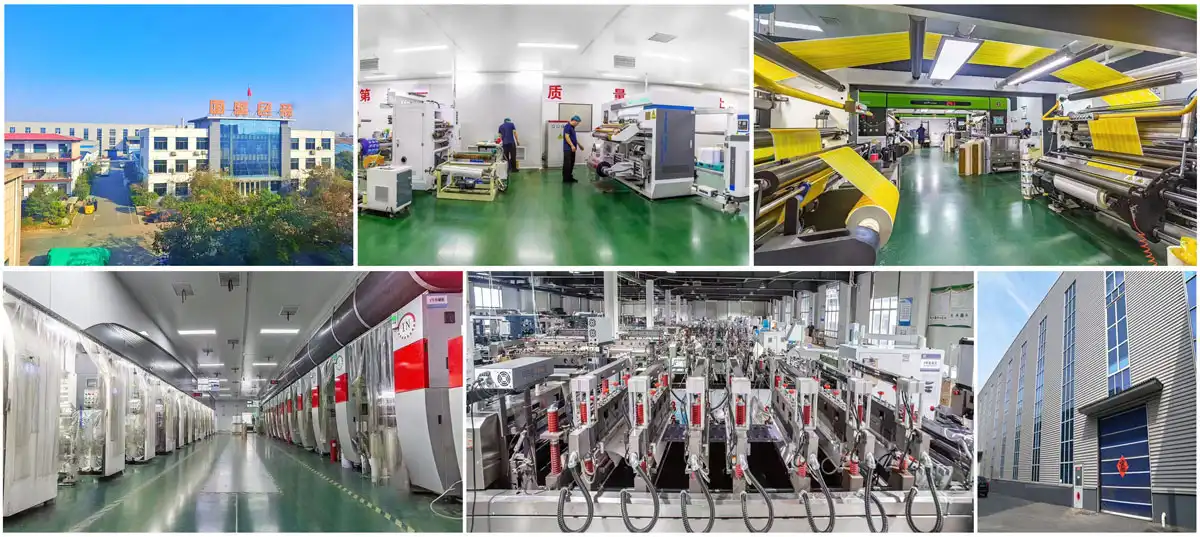
Reliable packaging starts with choosing manufacturers who understand your quality requirements and business objectives completely. Guoshengli Packaging brings 25 years of flexible packaging expertise specifically to wholesale 250g custom flat bottom pouch production. Our facility operates seven advanced printing machines, six laminating lines, and forty-nine converting machines, delivering consistent quality whether you order 10,000 or 1,000,000 units. We maintain FDA, BRC, ISO 9001, and SGS certifications, ensuring every pouch meets rigorous food safety standards. Customization options include eco-friendly materials, up to 11-color rotogravure printing, resealable zippers, and specialized barrier coatings protecting your products throughout their shelf life. Contact our team at sales@guoshengpacking.com to request samples, discuss your specific requirements, and receive detailed quotations from an experienced 250g custom flat bottom pouch supplier committed to your success.
References
1. Smith, J. & Anderson, K. (2022). "Flexible Packaging Innovations in Food Safety and Shelf Life Extension." Journal of Packaging Technology and Research, 15(3), 234-251.
2. Chen, L. (2023). "Global Trends in Sustainable Flexible Packaging Materials." International Packaging Review, 28(2), 112-128.
3. Roberts, M. (2021). "Box Pouch Design: Engineering Stability and Consumer Appeal." Packaging Design Quarterly, 19(4), 67-82.
4. Thompson, R. & Garcia, P. (2023). "B2B Procurement Strategies for Custom Packaging Solutions." Supply Chain Management Today, 31(1), 45-59.
5. Williams, E. (2022). "Barrier Properties in Multi-Layer Laminate Structures for Food Packaging." Food Packaging Science & Technology, 24(3), 189-206.
6. Zhang, W. (2023). "Comparative Analysis of Flat Bottom Pouches Versus Traditional Stand-Up Formats." Flexible Packaging Manufacturing, 17(2), 78-94.
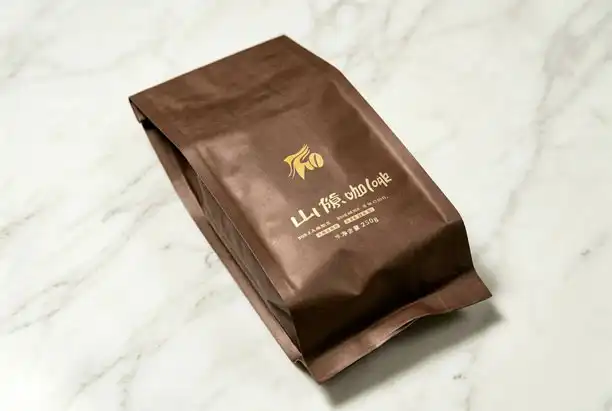
Quad Seal Pouches & Bags have become indispensable across multiple industries seeking robust, shelf-stable packaging solutions. These four-corner sealed bags offer exceptional structural integrity through reinforced edge seals, making them ideal for heavy-duty applications. Industries ranging from food manufacturing and pet nutrition to health supplements and personal care rely on this packaging format for its superior load-bearing capacity, premium shelf presentation, and efficient volume utilization. The distinctive box-like structure stands firmly on retail shelves while maximizing internal capacity, addressing critical needs for bulk product protection and brand visibility.
Understanding Quad Seal Pouches and Their Packaging Benefits
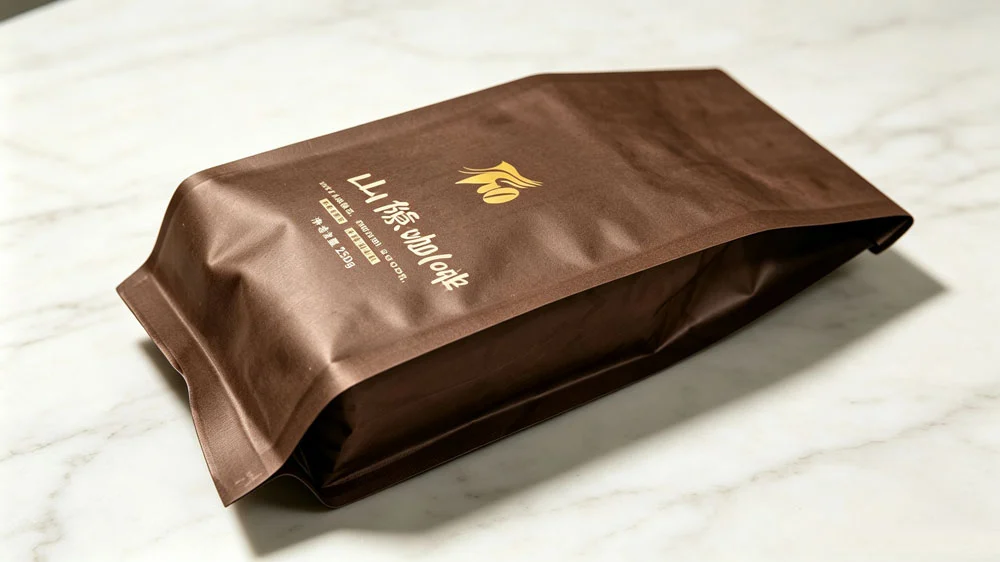
The engineering behind four-corner seal bags sets them apart from conventional flexible packaging. Unlike traditional three-side seal pouches where seals concentrate in the center back panel, quad seal designs position vertical seals at each corner. This architectural difference creates a reinforced square-shaped structure that eliminates package slouching—a common challenge with side-gusset formats carrying heavy fills.
Superior Structural Integrity Through Engineering
Multiple-layer laminate assembly using PET, metallized films, aluminum foil, and polyethylene is our production method. This combination targets OTR and WVTR to prolong shelf life. The four-corner seal distributes weight evenly across reinforced edges rather than stressing seams. Quad seal constructions generally provide higher burst resistance and load-bearing performance than conventional center-seal structures when designed with equivalent materials.
The dead-fold feature keeps bags form throughout use. As clients remove goods, the bag stays upright, ensuring brand visibility until empty. Precision heat-sealing procedures on our 49 conversion machines monitor temperature, pressure, and dwell time to achieve this performance.
Material Versatility Addressing Diverse Requirements
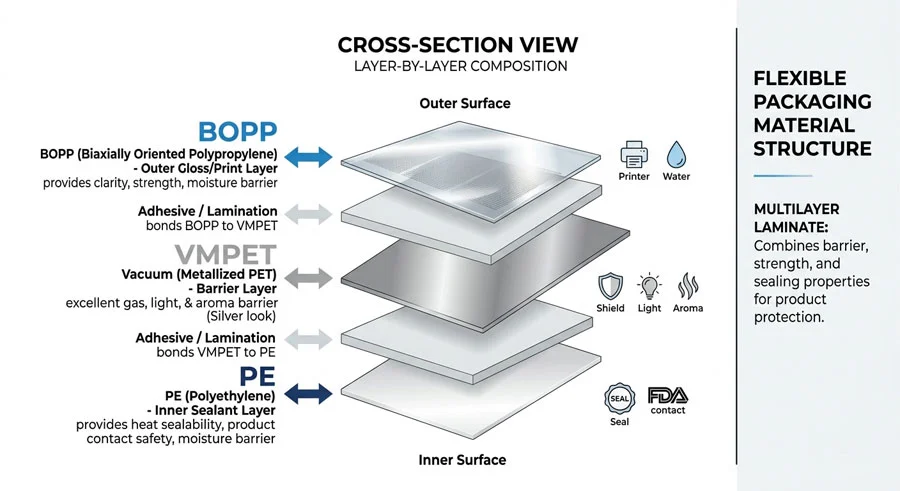
Material choice affects packaging performance across product categories. FDA and EU compliance and barrier properties are needed for food-grade applications. Coffee packaging needs one-way degassing valves to allow carbon dioxide out but not oxygen in. Manufacturers prioritize puncture resistance and moisture barriers to preserve nutritional quality during storage.
Standard PET/PE structures for dry materials and high-barrier aluminum foil laminates for moisture-sensitive powders are customizable. Mono-material polyethylene allows curbside recycling; however, barrier performance trade-offs exist. Compostable PLA/PBAT films assist circular economy brands if their shelf life meets permeability.
Rotogravure printing with 11 colors maintains brand consistency among runs. Our seven printers accurately capture complex pictures. Six laminating devices fuse film layers under controlled heat and pressure after printing to create unified structures with known mechanical properties. Pouches are tested for seal strength, layer adhesion, and size before filling lines.
Key Industries Utilizing Quad Seal Pouches for Packaging
Market analysis reveals concentrated adoption across sectors where product weight, shelf-life requirements, and premium positioning intersect. Understanding industry-specific applications of Quad Seal Pouches & Bags helps procurement managers match packaging attributes to operational needs.
Food and Beverage Applications
Most coffee roasters use quad seals. Ground and whole bean coffee produce carbon dioxide after roasting, requiring packaging that releases internal pressure without oxygen. Our pouches have one-way degassing valves to prevent bag expansion and preserve aromatic chemicals. Coffee brands can differentiate products with origin stories and brewing instructions on flat printable surfaces.
The format's 5-25 kilogram fill capacity benefits flour and grain mills. Distribution network handling stresses do not damage reinforced corner seals. Integrated lifting and carrying handles improve commercial kitchen ergonomics. Moisture barriers reduce humidity absorption that would clump or deteriorate bulk buyers.
These bags' shelf presence pleases snack makers. Boxes offer solid billboard area for graphics, enhancing visibility in congested retail settings. Zippers keep food fresh and reduce waste. Different dosage sizes and hygroscopic compounds in protein supplements and meal replacement powders are protected by the structure.
Pet Food and Treat Packaging
Pet feed packaging must be durable and appealing. Premium pet food businesses emphasize package quality, making structural integrity and print quality crucial. Quad seal bags can withstand 2-15 kg of feed and treats without bursting during transportation or shelf display.
Nutrient stability and palatability are protected by barriers. Oxygen and light may oxidize pet food fats and oils. Our multi-layer structures block UV transmission and significantly reduce oxygen transmission with metallized films or aluminum foil. This protection increases shelf life from months to years, depending on formulation.
Consumer sustainability demands are driving pet treat makers to use eco-friendly packaging. We provide recyclable polyethylene constructions and kraft paper laminates with barrier performance and environmental messaging. Material recyclability and moisture protection must be balanced, necessitating obvious performance trade-offs.
Health and Wellness Supplement Sector
Nutraceutical brands must meet performance and regulatory standards. Supplement powders, capsules, and tablets need moisture barriers to preserve active ingredients. Hygroscopic substances like vitamin C and probiotics lose effectiveness in humidity, making WVTR standards crucial for procurement.
Our quality management systems meet BRC food packaging and ISO 9001 standards, delivering regulatory compliance paperwork. Shipments include certificate of analysis reports validating food-contact and barrier performance. The paperwork simplifies importers' customs clearance and regulatory filings.
Supplement packaging uses resealable closures. Closures that last for weeks or months are needed since consumers open things regularly. Press-to-close zippers and tin-tie closures vary in ease and cost, depending on target market and price positioning.
Personal Care and Cosmetic Products
Powdered cosmetics, bath salts, and personal care products benefit from branding flexibility with Quad Seal Pouches & Bags. The five-panel printable surface—front, back, two sides, and bottom—provides ample space for ingredient lists, usage instructions, and lifestyle images. Matte and glossy finishes support premium market positioning through tactile differentiation.
For this category, moisture sensitivity determines material selection. Salt and clay bath products absorb ambient moisture, clumping and compromising user pleasure. High-barrier structures keep product texture intact during shelf life. Window panels with anti-fog coatings show products without condensation.
Quad seal bags ship more efficiently than rigid containers due to their small size. Reduced package weight saves freight costs and carbon impact, which sustainability-focused companies value. Dimensional efficiency increases pallet units, increasing supply chain economics.
Comparison of Quad Seal Pouches vs Other Packaging Solutions
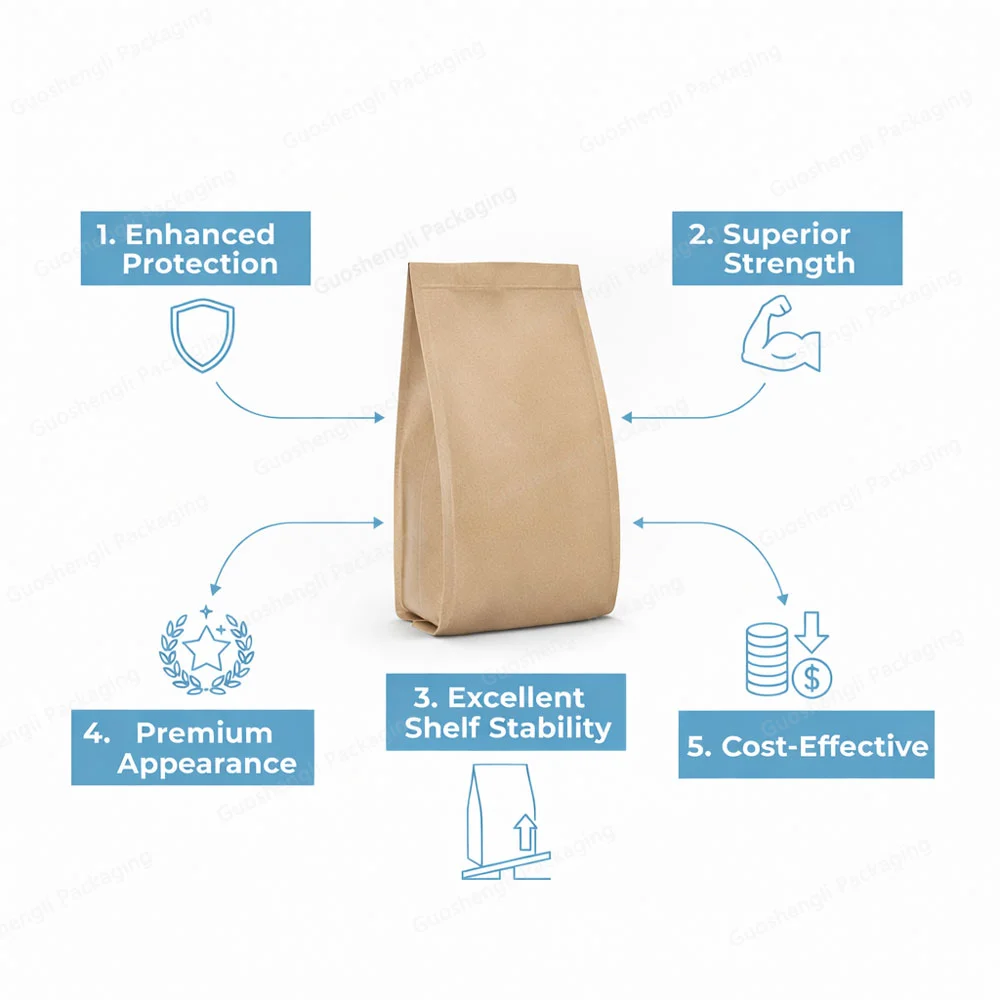
Procurement decisions benefit from understanding how different pouch formats address specific operational requirements. While multiple flexible packaging styles serve overlapping applications, each design offers distinct advantages and limitations.
Structural Stability and Load-Bearing Performance
Under heavy weights, quad seal bags are suitable for vertical stability. Corner seals form a self-supporting, shapely structure when half-filled. Unlike three-side seal bags, which flatten and lose shelf presence when consumed. Stand-up pouches are more commonly used for lighter products, although reinforced structures are also available for larger pack sizes.
Solid flat bottom pouches with gusseted folds create clean rectangular footprints for premium positioning. Complex manufacturing boosts per-unit costs compared to quad seal options. Quad seal forms work well at 3-20 kg for cost-effective applications.
Side gusset bags have center-back seals and expanded side panels. This design allows variable fill volumes; however, the center seal may conflict with visual schemes and be a weak place under stress. Quad seal designs remove the middle seam, providing continuous branding and mechanical stress distribution over four reinforced corners.
Cost Implications and Manufacturing Efficiency
Material consumption, manufacturing complexity, and production speed affect unit costs. Quad seal bags are cheaper than flat bottom pouches but more expensive than three-side seal bags. Improved shelf presence and structural performance justify modest cost premiums.
Manufacturing efficiency affects order flexibility and lead times. Our 49 converting machines allow rapid specification changes, allowing smaller minimum order quantities than competitors requiring dedicated production runs. Digital printing produces bespoke images in 7-10 days for orders under 10,000, whereas rotogravure printing takes 15-20 days.
Material optimization cuts expenses without sacrificing performance for Quad Seal Pouches & Bags. Our technicians propose film gauges and barrier levels based on product parameters including particle size, density, and moisture sensitivity. Over-specifying materials wastes money, while under-specifying risks product failure. This conversation ensures packaging parameters match performance needs, not assumptions.
Procurement Considerations for B2B Buyers in Quad Seal Pouch Sourcing
Successful sourcing extends beyond unit pricing to encompass supplier capabilities, quality systems, and partnership reliability. Procurement managers evaluating quad seal bag suppliers should assess multiple factors influencing long-term relationship viability.
Supplier Evaluation Criteria
How suppliers expand with company expansion depends on production capability. Our production facilities can handle 500 million pouches per year in various specifications. This capacity allows customer growth without secondary supplier relationships that vary in quality.
Certification portfolios demonstrate quality and regulatory compliance. ISO 9001 accreditation signifies rigorous quality controls, whereas BRC food packaging certification verifies worldwide food safety. FDA compliance assures products fulfill U.S. food-contact rules, essential for North American importers. Barrier characteristics and material composition claims are independently verified by SGS testing.
Customization sets providers apart in competitive sourcing. Buyers increasingly want custom sizes to fit filling equipment. Our design support team helps customers optimise pouch dimensions for automated filling lines to reduce material waste and maintain seal integrity. Variable data printing allows lot coding, QR codes, and promotions without labeling.
Cost Management and Pricing Transparency
Instead of volume breaks, bulk order pricing should reflect economies of scale. Our transparent pricing frameworks predictably lower unit costs with order quantities. MOQ flexibility lets smaller firms use quad seal packaging without investing in inventory, while volume savings help bigger purchasers compete at retail.
Cost against lead time and logistical complexity are considered in geographical sourcing. Chinese manufacturing is cheaper due to integrated supply networks and specialized industrial facilities. Our 25+ years of export experience have improved logistics coordination, documentation, and communication protocols to reduce international sourcing friction points.
Financial stability and payment conditions affect supplier dependability. Buyer cash flow improves with longer payment terms, but supplier finances may suffer. We have robust operating capital to provide flexible terms to existing clients and seek deposits from new accounts, managing risk for both sides.
Sustainability Verification and Environmental Claims
Environmental responsibility affects buying decisions as companies adapt to customer demands and sustainability regulations. Complex packaging sustainability trade-offs need careful study beyond marketing claims.
Material composition and municipal collection infrastructure affect recycling. Flexible film collection methods recycle mono-material polyethylene; however, barrier characteristics may not fit all applications. Multi-layer laminates with aluminum or metallized films are stronger but require rare recycling streams.
Compostable materials are appealing but require performance and end-of-life infrastructure testing. Industrial composting decomposes PLA/PBAT films, but not at home. Packaging benefits may be negated by barrier properties reducing shelf life and food loss.
We advise on material selection honestly, including recyclability infrastructure and performance trade-offs. Buyers may consider environmental goals, product protection, and market realities with this consulting.
Customization and Innovation Trends in Quad Seal Pouch Packaging
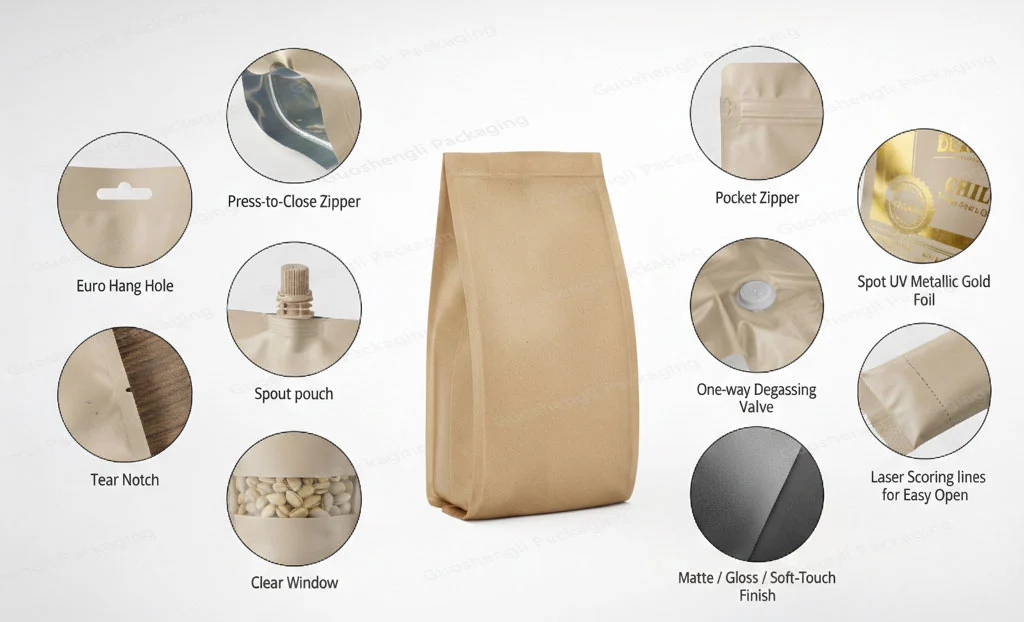
Market needs for convenience, sustainability, and customer interaction drive packaging innovation. Understanding emerging trends helps procurement managers predict needs and position brands competitively.
Advanced Printing and Branding Capabilities
Rotogravure printing produces photographic-quality designs with consistent color. Our 11-color printing allows complex gradients, fine typography, and detailed imagery that boost brand perception. For brands where packaging recognition drives purchase decisions, color matching protocols ensure batch-to-batch consistency.
The tactile difference of matte and soft-touch finishes supports premium positioning. These surface treatments decrease store lighting glare and express quality via touch. Visual depth from spot UV coatings draws attention to logos or key messaging on crowded shelves.
Digital printing is used for short-run and test-market applications where rotogravure setup is too expensive. Digital printing removes plate-making costs and allows runs as small as 1,000 units, but per-unit prices surpass rotogravure rates. This flexibility allows product launches, seasonal offerings, and regional variations without inventory risk.
Functional Enhancements Improving User Experience
Sealing keeps products fresh and convenient. Integrated press-to-close zippers during pouch manufacturing secure resealing after multiple open-close cycles. Tin-tie closures are cost-effective for occasional access applications. Closure selection considers cost, functionality, and market expectations.
One-way degassing valves are used in coffee packaging and gas-generating products. These valves release internal pressure without letting air in, limiting bag expansion and protecting the barrier. Side panels with proper valve placement work independent of product fill level.
Integrated handles make bulkier products easier to carry. Die-cut pouch handles replace attachments, keeping the pouch clean and making lifting and transport easier. Handle reinforcement prevents tearing under load, especially for packages over 5 kg.
Transparent window panels display products without compromising barrier integrity. Strategically placed windows showcase product quality without compromising moisture or oxygen protection. Anti-fog treatments keep contents clear throughout shelf life.
Sustainable Material Development
Material science advances allow environmentally friendly packaging without sacrificing performance. High-barrier mono-material constructions made of particular polyethylene grades increase oxygen barriers and recyclability. Although not as effective as aluminum foil, these materials are suitable for mild barrier applications.
Post-consumer recycled (PCR) content supports the circular economy. PCR films that meet food-contact regulations allow brands to communicate recycled content percentages for sustainability. Compare material availability and cost premiums to marketing value and corporate responsibility goals.
Bio-based films from renewable feedstocks minimize fossil fuel use. Bio-based origin doesn't guarantee biodegradability or compostability—a prevalent fallacy that needs clarification. Bio-polyethylene performed similarly to petroleum-based PE but used renewable sugarcane.
Through gauge optimization and structural engineering, lightweighting reduces material usage. Our technical team studies product attributes and distribution strains to reduce film thickness without affecting performance. Even small gauge reductions add up to economic and environmental savings over high manufacturing volumes.
Conclusion
Quad Seal Pouches & Bags are increasingly used in businesses that value structural integrity, premium appearance, and volume efficiency. This container type meets the needs of coffee roasters, wheat processors, pet food makers, and supplement companies with configurable materials, barrier qualities, and functional elements. Suppliers with production capacity, quality certifications, and technical skills supporting long-term partnership goals are essential for procurement success. Transparent conversation regarding material possibilities, performance trade-offs, and environmental claims is vital as sustainability influences sourcing decisions. Understanding how quad seal bags compare to other formats—cost, structural, and application suitability—helps optimize packaging strategies across product portfolios.
FAQ
1. Can quad seal pouches package liquid products effectively?
Quad seal bags primarily serve dry and semi-dry applications including powders, granules, kibble, and whole beans. While technically feasible to package liquids using appropriate seal configurations and spout fittings, stand-up pouches with bottom gussets typically prove more cost-effective for liquid applications. The four-corner seal design optimizes structural performance for products exerting vertical rather than hydrostatic pressure.
2. How do I verify food-grade safety certifications for packaging materials?
Request supplier documentation including FDA compliance letters, EU 10/2011 declarations, and material safety data sheets (MSDS) specifying food-contact suitability. Reputable suppliers provide certificates of analysis confirming materials meet regulatory standards. Third-party testing through SGS or similar laboratories offers independent verification. Our BRC certification and ISO 9001 quality management system ensure systematic compliance across production batches.
3. What lead times should I expect for custom-printed quad seal bags?
Lead times vary based on printing method and order complexity. Digital printing delivers finished pouches within 7-10 days for orders under 10,000 units, ideal for product launches and test markets. Rotogravure printing requires 15-20 days including plate preparation but offers superior print quality and lower per-unit costs for volumes exceeding 20,000 units. Rush production accommodates urgent requirements, with air freight delivery reaching North American destinations within 4-5 days of production completion.
Partner with a Trusted Quad Seal Pouch Manufacturer
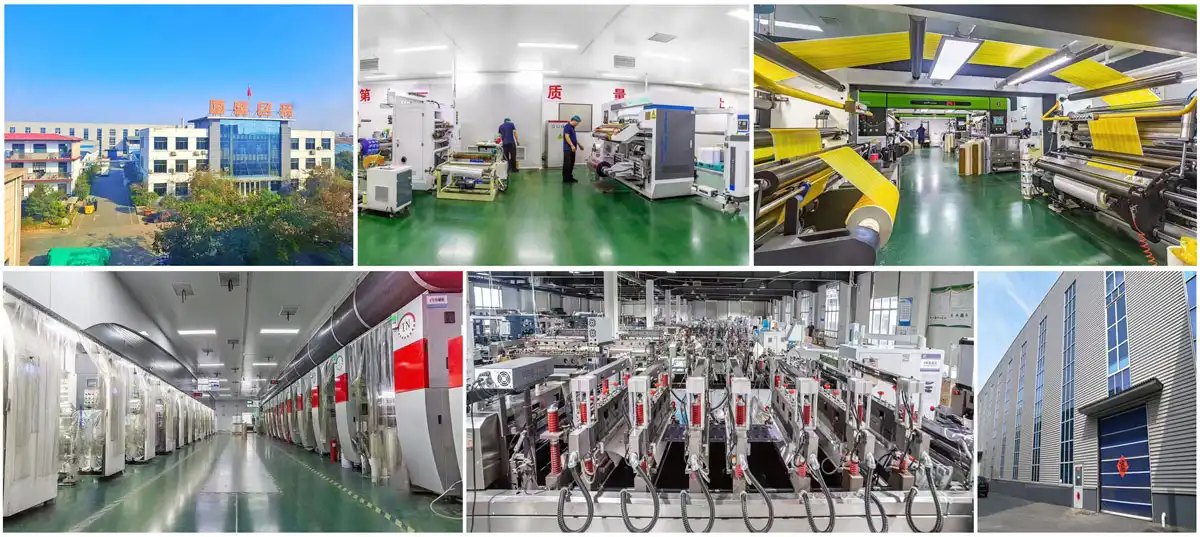
Guoshengli Packaging brings over 25 years of flexible packaging expertise to B2B clients seeking reliable, high-performance quad seal solutions. As an experienced manufacturer, we understand the operational challenges procurement managers face—balancing quality requirements, cost pressures, and sustainability objectives. Our comprehensive capabilities span material selection, custom printing, barrier optimization, and functional enhancements tailored to your specific applications. Whether you're packaging premium coffee, bulk flour, pet nutrition products, or health supplements, our quad seal bags deliver the structural integrity and shelf presence your brand deserves. Our ISO 9001, BRC, FDA, and SGS certifications provide assurance that quality controls meet international standards. Sustainable packaging options include recyclable structures and bio-based materials supporting corporate environmental commitments without compromising product protection. Contact our packaging consultants at sales@guoshengpacking.com to discuss your Quad Seal Pouches & Bags requirements. We'll provide technical guidance, competitive pricing for bulk orders, and customization options positioning your products for market success.
References
1. Robertson, G.L. (2016). Food Packaging: Principles and Practice (3rd Edition). CRC Press, Boca Raton.
2. Marsh, K. & Bugusu, B. (2007). Food Packaging—Roles, Materials, and Environmental Issues. Journal of Food Science, Vol. 72, Issue 3, pp. R39-R55.
3. Selke, S.E., Culter, J.D., & Hernandez, R.J. (2004). Plastics Packaging: Properties, Processing, Applications, and Regulations (2nd Edition). Hanser Publications, Munich.
4. Coles, R., McDowell, D., & Kirwan, M.J. (2003). Food Packaging Technology. Blackwell Publishing, Oxford.
5. Yam, K.L. (2009). The Wiley Encyclopedia of Packaging Technology (3rd Edition). John Wiley & Sons, Hoboken.
6. Soroka, W. (2009). Fundamentals of Packaging Technology (4th Edition). Institute of Packaging Professionals, Naperville.
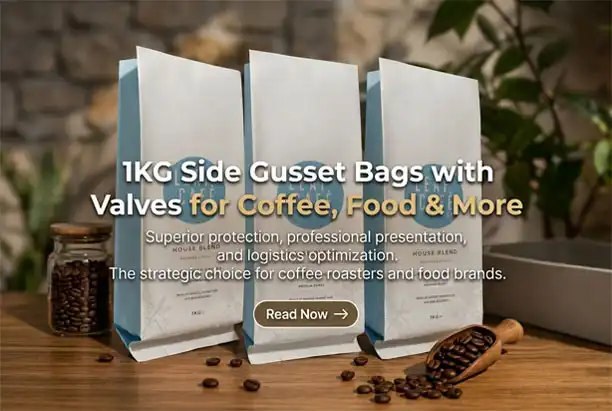
Custom side gusset bags with valves have changed the way coffee, food, pet treats, and supplements are packed. The 1kilo side gusset pouch with valve stands out as a great option for brands that need to keep their products fresh and present them professionally on the shelf. This type of packing solves some of the most important problems that procurement teams face, like keeping the quality of the product while it's being stored and shipped, making the best use of warehouse space, and making sure that repeat orders get the same quality. This type of bag has measurable benefits that affect product performance and customer happiness in competitive markets. Its design allows it to grow and has a built-in degassing system.
Understanding Custom Side Gusset Pouches with Valve
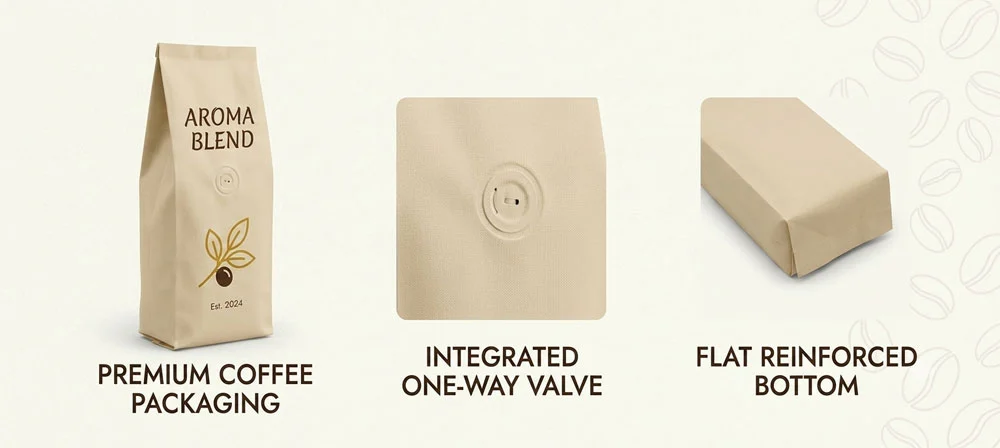
Structural Design and Functionality
Side gusset pouches have panels on both sides that can be expanded. These panels fold flat for shipping but open up into a box-like shape when they are full. This way of building structures makes them stable and gives brands more surface area. The flap design spreads the weight of the product evenly across the base, which cuts down on stress points that could damage the seal while it's being handled.
It has a W-shaped fold at the bottom because it is made by passing packaging material through special plows during production. Each side has a vertical seal, and the bottom folds are sealed to keep the structure together. To make the enclosed area, the pouch is cut vertically through each side flap. When filled properly, the pouch maintains a stable upright position through product weight and folded bottom construction.
The Role of Degassing Valves
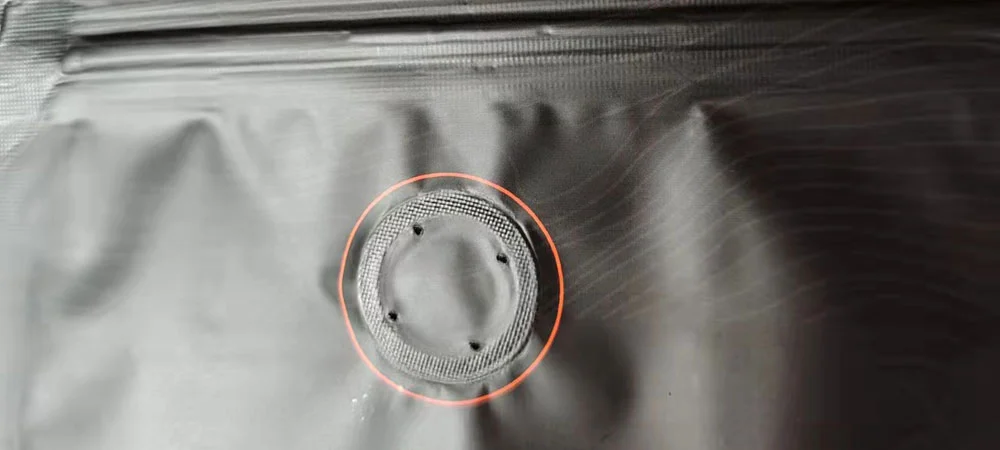
One-way degassing valves solve a persistent challenge in coffee packaging: freshly roasted beans release carbon dioxide for days after roasting. Without a release mechanism, gas buildup causes pouches to inflate and potentially burst. The valve allows CO₂ to escape while preventing oxygen and moisture from entering, maintaining an optimal internal environment.
Material Composition and Barrier Technology
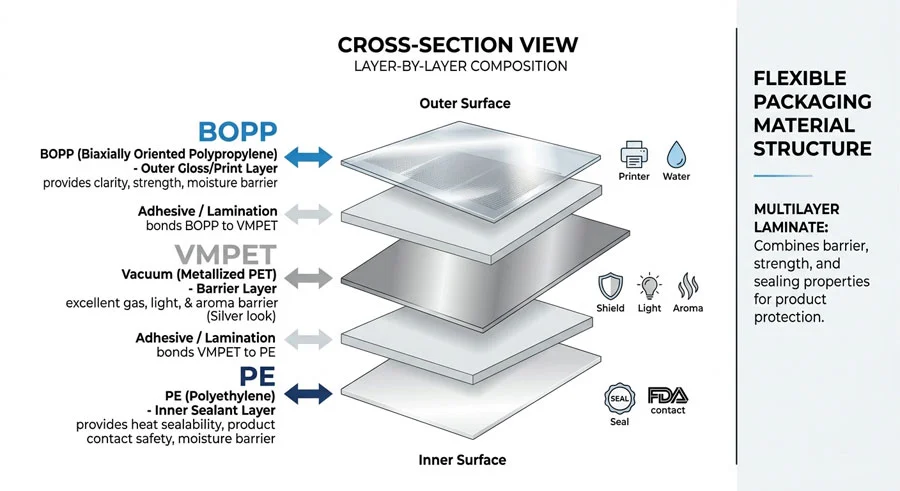
Multilayer lamination makes effective side gusset pouches. Each layer of PET/AL/PE or MOPP/VMPET/PE keeps things safe. Aluminum or metallized layers block oxygen and light, polyethylene can be heat-sealed and is safe for food, and polyester (PET) is strong and can be printed on.
A material between 120 and 160 microns can hold up to one kilogram without warping. The OTR and WVTR data show how well the shield is working; lower numbers mean better safety. Hyperbarriers stop rust and moisture uptake, two things that hurt the quality of a product and make it last longer on the shelf.
Eco-friendly packing is made from Kraft paper blends, PLA films, and PBAT films. These methods meet the growing needs of the environment while protecting acceptable uses. Consider efficiency, legal compliance, cost, and environmental factors while choosing materials.
Customization Capabilities
The 1kilo side gusset pouch with valve adapts to diverse branding requirements through multiple customization options. Rotogravure printing supports up to 11-color graphics with consistent color reproduction across production runs—critical for brand recognition. Digital printing offers faster turnaround for smaller volumes or product launches requiring market testing before committing to larger orders.
Finishing options include matte or glossy surfaces, spot UV coating, metallic effects, and transparent windows. Functional features such as resealable zippers, tear notches, and hang holes enhance user convenience. Dimensions can be adjusted to accommodate different product volumes while maintaining optimal material utilization to control costs.
Benefits and Practical Applications of Side Gusset Pouches with Valve
Extended Shelf Life Through Superior Protection
The combination of high-barrier materials and valve technology delivers measurable shelf life extension compared to standard packaging. When combined with high-barrier materials, one-way degassing valves help preserve coffee freshness throughout its intended shelf life. This extended protection reduces waste throughout the supply chain and allows brands to serve distant markets without quality degradation.
Protection extends beyond oxygen exclusion. Multi-layer films block UV light that accelerates flavor deterioration in sensitive products. Moisture barriers prevent clumping in powdered supplements and maintain texture in pet treats. These protective qualities translate to fewer customer complaints, reduced returns, and stronger brand reputation.
Space Efficiency and Logistics Optimization
The flat-folding characteristic of side gusset pouches creates significant logistics advantages. Empty pouches occupy minimal warehouse space before filling operations. During transport, the rectangular shape when filled allows efficient case packing with minimal void space, reducing shipping costs per unit.
Compared to rigid containers, flexible pouches reduce packaging weight substantially. A typical 1kilo side gusset pouch with valve weighs 15-25 grams, whereas equivalent rigid packaging might weigh 80-150 grams. This weight reduction lowers freight costs and supports sustainability goals by reducing transportation emissions. Procurement teams managing international shipments recognize these savings multiply across container loads.
Professional Appearance and Brand Positioning
The style of a package affects people's decisions to buy in stores and shapes how businesses think of a brand in B2B channels. Side gusset pouches have large front and back panels, as well as gusset surfaces that can be used for branding, product information, and aesthetic appeal. The standing shape makes it stand out on the shelf, which gets people's attention in busy stores.
Premium brands put a lot of value on being able to make complex graphics that communicate quality. Rotogravure printing is very good at making exact copies of photos, fine text, and graduated tones. Maintaining brand standards through consistent print quality across production batches is important when goods are sold in various areas at the same time.
Environmental Considerations and Recyclability
Consumers and government rules that require sustainability push container innovation. Traditional laminates made of more than one material are hard to recycle, but newer structures made of only one material and compatible polymer layers make recycling possible using existing systems. Some companies make 1 kg side gusset boxes that can be recycled in an environmentally friendly way and still work well in a variety of situations.
Because it uses less material than rigid packaging, it naturally has a smaller impact on the environment. When the whole process of making, transporting, and throwing away flexible packaging is looked at, life cycle assessments often show that it produces fewer carbon emissions. If brands want to make believable claims about sustainability, they shouldn't just rely on material claims. Instead, they should ask for third-party testing data to prove the environmental benefits.
Practical Storage Guidance
Valve bags are most effective at protecting things when they are stored correctly. Things should be kept in cool, dry places that are out of direct sunlight. Even though the barrier films are very good at protecting, big changes in temperature can weaken the seal. The best settings for package performance are kept in a warehouse at 15–25°C and below 60% relative humidity.
Rotation practices based on the first-in, first-out rule stop long-term storage that could go beyond even extended shelf life periods. For coffee in particular, the degassing valve keeps things at their best during the first few weeks after roasting, which is when CO2 release is at its highest. However, goods should still reach customers within the specified shelf life window to be at their best.
Comparison and Decision-Making Guide for Procurement
Structural Variations and Use-Case Compatibility
Packaging buyers see multiple pouch formats. Knowing structural differences helps choose. The cheapest and simplest choice, flat pouches cannot stand and have limited capacity. Bottom gusset pouches (flat bottom or box pouches) are stronger and offer more capacity than side gusset designs, but they need more material.
Doypacks or stand-up pouches without gussets work for modest quantities but may tilt. The 1kg side gusset pouch with valve is sturdy, high-capacity, and material-efficient. Coffee, pet food, and bulk supplements with one-kilogram packets benefit from its brick-like shape, which evenly distributes weight.
External display-supported three-side seal pouches are another economical solution. 1kilo side gusset pouch with valve format choice relies on product features, equipment compatibility, display needs, and pricing.
Valve Types and Performance Characteristics
Different degassing valves function. Valve seals at atmospheric pressure but open under internal pressure for nitrogen-flushed products.
Location affects valve operation. Corner-mounted valves work well in most cases; however, luxury products may use center-mounted valves for aesthetics. The valve adhesive must stick to the pouch film at different temperatures during storage and transit.
Product-lifetime valve quality. Poor valves leak or fail to open, compromising product safety. To verify valve suppliers meet criteria, buyers should request performance testing.
Material Trade-offs: Performance vs. Sustainability vs. Cost
Material selection must balance priorities. Aluminum-based laminates provide outstanding barrier protection in export markets with extended distribution chains, extending shelf life. Aluminum layers hinder recycling and cost more.
Metallic films are lighter and cheaper than aluminum structures and have intermediate barrier performance. Products with moderate protection needs and shorter distribution cycles benefit from metallic options' sustainability and cost savings.
Biodegradable materials appeal to green companies but require testing. Traditional films may offer better barrier performance and heat seal strength than biodegradable ones. Performance testing under actual storage conditions should replace material certifications in procurement.
Material costs can vary 15-30% depending on needs. Raw material markets, volume agreements, and supplier relationships impact price. Instead of unit pricing, procurement experts should consider total cost of ownership, including quality failure waste.
Pricing Structures and Minimum Order Quantities
Setup, material, and production costs affect flexible packaging prices. Rotogravure printing cylinder preparation costs are amortized over order quantities. Custom printing 1kilo side gusset pouches with valves requires 10,000–50,000 units, whereas digital printing permits shorter runs at higher rates.
Price depends on size, material, and feature complexity. Resealable zippers and valves cost more but improve usability. Clear windows need perfect registration and suitable materials, increasing complexity.
Reliable providers give detailed cost breakdowns. Knowing this framework helps procurement teams negotiate and save. Preferential pricing often comes with multi-SKU volume commitments or extended contracts.
Strategic Value of Custom Printing
Custom printing markets packaging. Visuals differentiate products in competitive markets, position them as high-quality, and build brand awareness. With their large surface area, side gusset pouches stand out.
Cross-product brand consistency improves client trust. Suppliers that maintain color standards across production runs and pouch configurations help multiple-product procurement teams. This uniformity requires advanced color and quality control.
Printing standards are complicated by regulations. Nutrition labels, ingredient disclosures, storage, and certification markings follow regional requirements. Expert package suppliers advise on target market regulation text needs, reducing compliance risk.
Procurement Considerations: How to Source the Best Custom Side Gusset Pouches with Valve
Evaluating Manufacturer Capabilities and Certifications
Selecting suppliers starts with manufacturer credentials. Food-contact packaging requires safety and production clearances. Certification for quality management ISO 9001 shows thorough process controls. Global brands accept BRC food packaging safety certification.
FDA compliance for U.S. markets and EU distribution restrictions are non-negotiable. Manufacturers must demonstrate food contact compliance for target markets. SGS third-party testing reduces buyer risk and ensures compliance.
Manufacturing capacity affects supply reliability. Multi-line manufacturers reduce equipment maintenance and failure. Overall capacity indicates a supplier's potential to grow with your company.
Guoshengli Packaging offers North American, European, and Asian brands after 25 years. Our facility offers supply stability with 7 printing lines, 6 laminating machines, and 49 conversion pieces of equipment. ISO 9001, BRC, FDA, and SGS certifications guarantee worldwide quality for every 1kilo side gusset pouch with valve.
Balancing Customization with Order Economics
Customization boosts competitiveness but hurts order economics. Purchasers must combine customization with minimum order quantities, working capital constraints, and demand forecasting confidence. If market reaction changes, early product customization increases risk.
Personalizing printing using basic sizes and materials is possible. Brand exposure is achieved with reduced tooling costs. More personalization makes sense when things sell.
The lead time affects inventory planning. Rotogravure printing takes 15-20 days from artwork approval to final products, while digital printing takes 7-10. Air freight speeds urgent travel to 4-5 days. Weighing time choices against expenses requires coordination with production and promotional schedules.
Guoshengli Packaging offers flexible production for different business stages. Rotogravure handles bulk production, whereas digital printing streamlines product launches and market testing. This flexibility lets customers enter the market and distribute in bulk.
Large Volume vs. Small Batch Sourcing Strategies
Volume commitments affect unit economics but raise inventory costs and obsolescence risk. Large wholesale orders of 50,000+ units provide the lowest unit costs but need warehouse space and finance.
Small batches provide flexibility, lower capital, and minimize formulation or design obsolescence. However, growing unit prices cut profitability. Mixed strategies—small inventories of fast-moving core products and smaller quantities for seasonal variants or new launches—are often best.
Supplier consolidation across packaging demands may enhance volume for varied product lines. Depending on company volume, a supplier with many pouch forms or product categories may offer better terms than SKU numbers.
Building Reliable Supplier Relationships
Packaging supply is strategic, not transactional. Technical support, responsiveness, and quality distinguish valued suppliers from commodity providers. Material suppliers and design optimizers provide value to product development.
Modern supply chain disruptions have shown the importance of supplier stability and communication. Suppliers that communicate delays, stock up for important clients, and fix difficulties are reliable.
Long-term relationships help suppliers understand your demands, preserve custom stocks, and prioritize requests during capacity constraints. These relationships are built on communication, fairness, and quality.
Future Trends and Innovations in Side Gusset Pouch Packaging
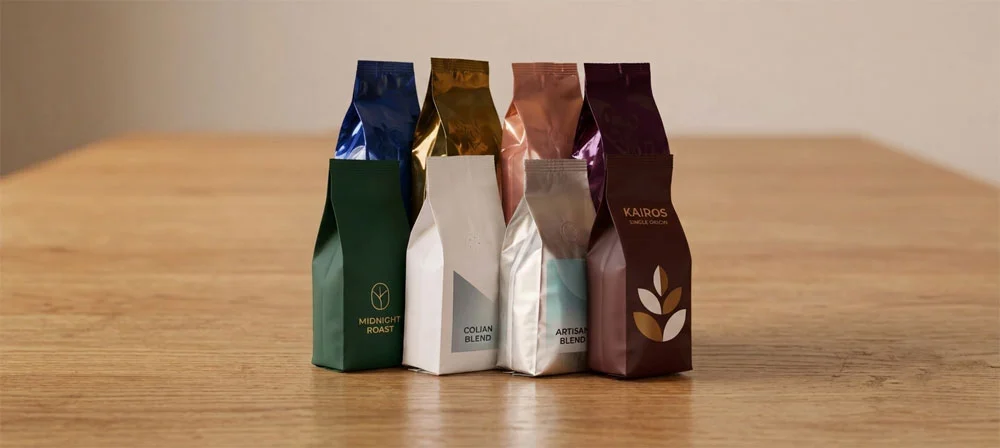
Sustainable Materials and Circular Economy Solutions
Packaging sustainability is evolving from incremental to circular economy-aligned redesign. Mono-material structures built of suitable polymers enable recycling using existing infrastructure, a short-term option until recycling technologies improve.
PLA and PBAT-based films can be composted where composting infrastructure exists. These materials are good for mild barrier and short shelf life. Laboratory compostability doesn't safeguard products; thus, storage validation is needed.
Recyclability claims need testing and target market recycling infrastructure. Technically recyclable products have minimal environmental effect if recycling facilities can't handle them or contamination hinders collection.
Smart Packaging Integration
Digitizing packaging makes it interactive. QR codes on 1kilo side gusset bags with valves may reveal origin, brewing, and legitimacy. Retail intermediate goods gain trust and brand communication via connectivity.
Freshness indicators like time-temperature monitoring and oxygen exposure detection demonstrate proper storage throughout distribution. These expensive features add value to premium products where quality is worth it.
NFC package tags offer sophisticated tack-and-trace, enhancing supply chain transparency and counterfeit protection. Tag prices will drop, making adoption mainstream.
Market Evolution in Coffee and Food Packaging
Convenience, transparency, and sustainability are growing consumer preferences. Single-serve quantities, resealable closures, and clear information meet these needs. The 1-kilo side gusset bag with valve addresses professionals and households seeking bulk value and freshness.
Specialty roasters stress origin traceability and distinct taste characteristics as coffee consumption diversifies. Packages that safeguard these features and present quality enhance premium positioning. This market positioning uses high-quality graphics and degassing valves.
Health and wellness products are likewise shifting toward natural and sustainable components. Recyclable and lightweight packaging represents corporate values and satisfies health-conscious client expectations.
Conclusion
Valved custom side gusset pouches protect products, enhance logistics, brand presentation, and environmental responsibility. The 1kilo side gusset pouch with valve is ideal for high-capacity, freshness-preserving applications. To succeed in procurement, understand structural options, material trade-offs, supplier skills, and emerging technologies. For company development, strategic sourcing with certified manufacturers provides quality, regulatory compliance, and supply dependability. As packaging technology becomes more sustainable and digital, side gusset pouches adapt to market demands while maintaining their protective and practical benefits.
FAQ
1. Can side gusset pouches with valves be reused by end consumers?
While the pouches themselves are durable enough for reuse, the one-way valve and heat-sealed closures are designed for single-use applications. Consumers may reuse pouches for storage after initial opening if they add external closures like clips, though barrier properties degrade once the original seal is broken. Some brands incorporate resealable zippers to extend usability after opening while maintaining reasonable freshness between uses.
2. How much shelf life improvement can valve technology provide?
Shelf life extension depends on multiple factors including product characteristics, storage conditions, and baseline packaging performance. Coffee packaged in 1kilo side gusset pouches with valves typically achieves 12-18 month shelf life compared to 6-9 months in standard packaging without valves. The degassing function prevents package deformation while maintaining low-oxygen internal environments that slow oxidation. Actual results require validation testing under anticipated distribution and storage conditions.
3. Are sustainable material options available for side gusset pouches?
Sustainable options continue expanding, including 100% recyclable mono-material structures, recyclable metallized films, and compostable materials for appropriate applications. Material selection should balance environmental objectives with performance requirements—some sustainable alternatives show reduced barrier properties compared to conventional multi-layer laminates. Reputable suppliers provide performance testing data helping buyers make informed decisions rather than relying solely on environmental claims. Guoshengli Packaging offers recyclable options and can guide material selection based on your specific product protection needs and sustainability goals.
Partner with Guoshengli Packaging for Superior Custom Side Gusset Pouch Solutions
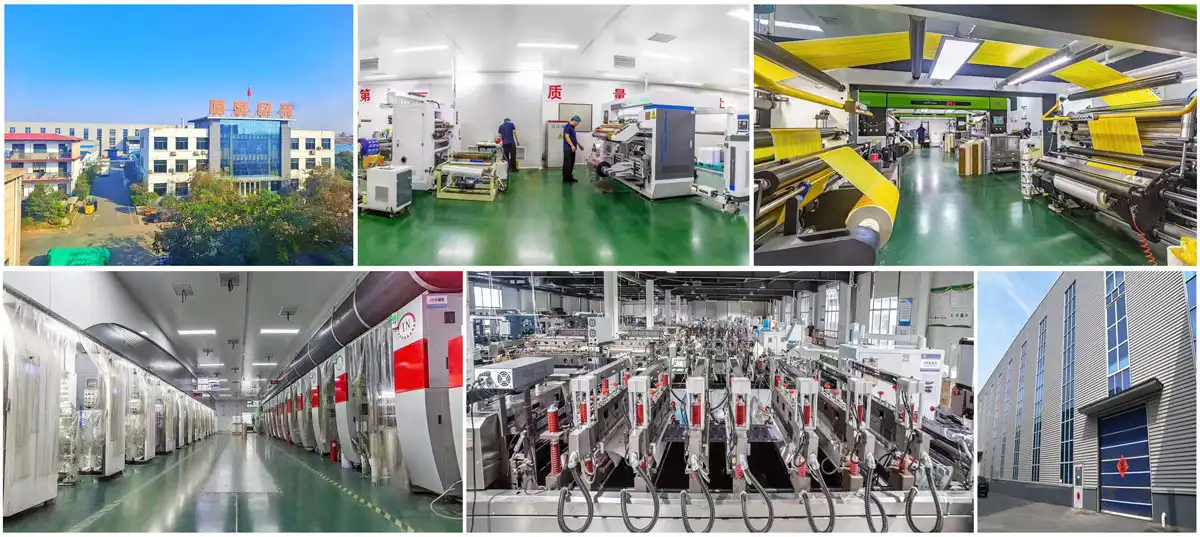
Guoshengli Packaging brings 25 years of flexible packaging manufacturing expertise to brands requiring reliable, high-performance packaging solutions. As an established 1kilo side gusset pouch with valve supplier, we understand the critical importance of consistent quality, regulatory compliance, and supply stability for your business success. Our comprehensive capabilities span custom material formulation, up to 11-color rotogravure printing, precision pouch manufacturing, and global logistics coordination.
We serve as a strategic partner for food brands, coffee roasters, pet food manufacturers, and supplement companies throughout North America, Europe, and Asia-Pacific markets. Our ISO 9001, BRC, FDA, and SGS certifications demonstrate our commitment to quality standards, while our environmental responsibility includes RTO exhaust treatment systems and 100% recyclable packaging options. Whether you need high-volume production for established products or flexible small-batch solutions for market testing, our production capabilities deliver the right balance of quality, timing, and cost-effectiveness. Contact our team at sales@guoshengpacking.com to discuss your packaging requirements, request samples, or receive a detailed quotation tailored to your specifications.
References
1. Robertson, Gordon L. Food Packaging: Principles and Practice. 3rd ed. CRC Press, 2012.
2. Marsh, Kenneth and Betty Bugusu. "Food Packaging—Roles, Materials, and Environmental Issues." Journal of Food Science 72.3 (2007): R39-R55.
3. Coles, Richard, Derek McDowell, and Mark J. Kirwan, eds. Food Packaging Technology. Blackwell Publishing, 2003.
4. Yam, Kit L., ed. The Wiley Encyclopedia of Packaging Technology. 3rd ed. Wiley, 2009.
5. Siracusa, Valentina, et al. "Biodegradable Polymers for Food Packaging: A Review." Trends in Food Science & Technology 19.12 (2008): 634-643.
6. Restuccia, Donatella, et al. "New EU Regulation Aspects and Global Market of Active and Intelligent Packaging for Food Industry Applications." Food Control 68 (2016): 239-252.